

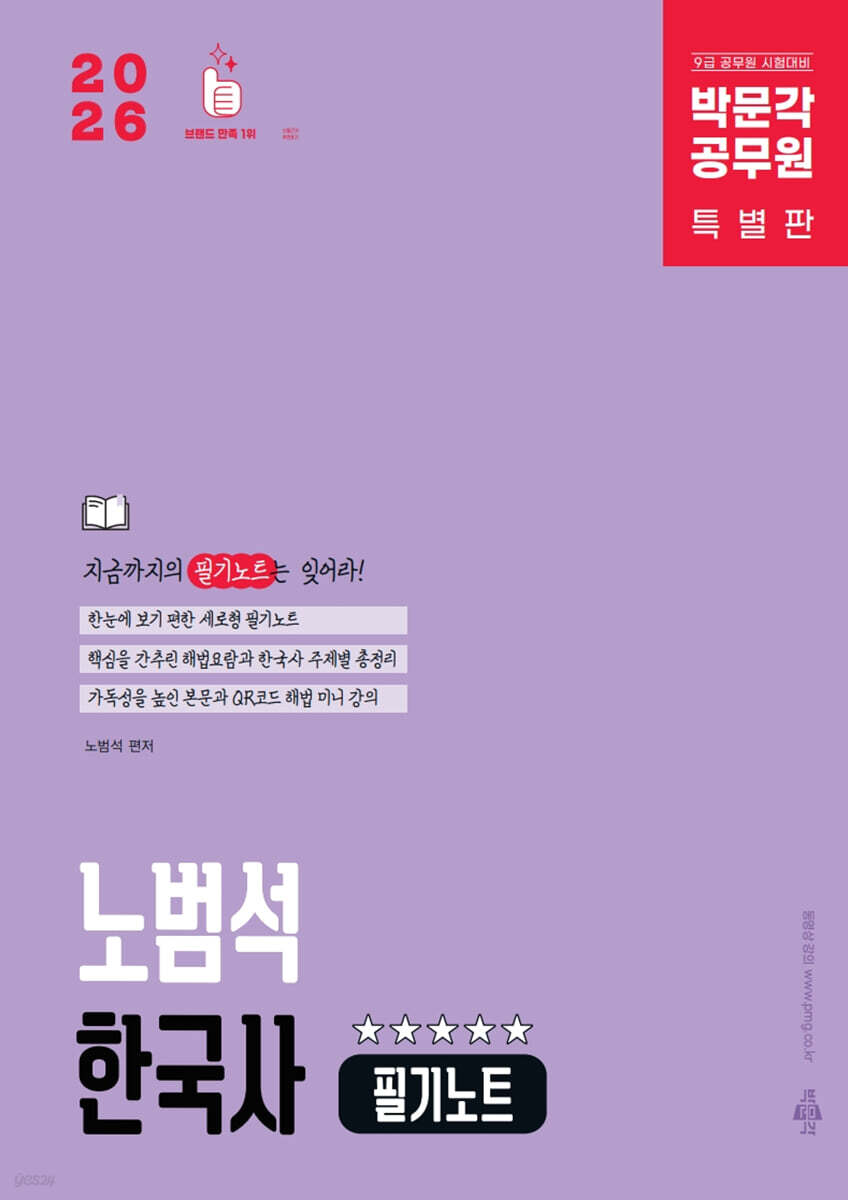
2026 Park Mun-gak Civil Servant Noh Beom-seok's Korean History Notes
 |
Description
Book Introduction
Forget about traditional handwritten notes! Get a vertical notebook that's easy to read at a glance!
The features of [2026 Park Moon-gak Civil Servant Noh Beom-seok's Korean History Notes], which helps you quickly comprehend the vast Korean history of civil servants, are as follows.
▶ A vertical notebook designed for test takers!
Existing Korean history handwritten notes were in a horizontal format, which was a copy of the lecture notes, making it inconvenient for students to study.
Instead, we have published vertical handwritten notes to help you study more efficiently.
▶ Handwritten notes within handwritten notes, the cradle of solutions!
The solution cradle is designed to help you understand the key contents of Korean history and quickly review them right before the exam.
▶ Text organized by color for improved readability!
The text is organized to improve readability by using black for basic content, red for important content, blue for in-depth content, and brown for supplementary explanations.
▶ Mini lectures with Post-it notes and solution codes that carefully cover topics and concepts that are easy to miss!
We have carefully included essential and advanced content, important materials frequently tested on exams, memorization techniques, and problem-solving methods to help you study.
Additionally, mini-lectures were provided via QR codes to help students understand the learning process.
▶ Essential codes for past exams in your notes!
We have presented the 57 most frequently asked topics in the Korean history civil service exam over the past seven years using mandatory codes, allowing you to easily identify key frequently asked topics.
▶ A comprehensive summary of the key Korean history found only in handwritten notes!
It includes a comprehensive compilation of key Korean history topics, including a comprehensive compilation of local history and cultural assets, a comprehensive compilation of UNESCO cultural heritage sites, a comprehensive compilation of capital cities, a comprehensive compilation of palaces, a comprehensive compilation of architecture, and a comprehensive compilation of paintings, providing a comprehensive overview of the vast history of Korea.
The features of [2026 Park Moon-gak Civil Servant Noh Beom-seok's Korean History Notes], which helps you quickly comprehend the vast Korean history of civil servants, are as follows.
▶ A vertical notebook designed for test takers!
Existing Korean history handwritten notes were in a horizontal format, which was a copy of the lecture notes, making it inconvenient for students to study.
Instead, we have published vertical handwritten notes to help you study more efficiently.
▶ Handwritten notes within handwritten notes, the cradle of solutions!
The solution cradle is designed to help you understand the key contents of Korean history and quickly review them right before the exam.
▶ Text organized by color for improved readability!
The text is organized to improve readability by using black for basic content, red for important content, blue for in-depth content, and brown for supplementary explanations.
▶ Mini lectures with Post-it notes and solution codes that carefully cover topics and concepts that are easy to miss!
We have carefully included essential and advanced content, important materials frequently tested on exams, memorization techniques, and problem-solving methods to help you study.
Additionally, mini-lectures were provided via QR codes to help students understand the learning process.
▶ Essential codes for past exams in your notes!
We have presented the 57 most frequently asked topics in the Korean history civil service exam over the past seven years using mandatory codes, allowing you to easily identify key frequently asked topics.
▶ A comprehensive summary of the key Korean history found only in handwritten notes!
It includes a comprehensive compilation of key Korean history topics, including a comprehensive compilation of local history and cultural assets, a comprehensive compilation of UNESCO cultural heritage sites, a comprehensive compilation of capital cities, a comprehensive compilation of palaces, a comprehensive compilation of architecture, and a comprehensive compilation of paintings, providing a comprehensive overview of the vast history of Korea.
- You can preview some of the book's contents.
Preview
index
Appendix: Local and Cultural Heritage in One Place
Act 1: A Correct Understanding of Korean History and Prehistoric Culture
Chapter 1: Studies of Korean History and Prehistoric Times
Lecture 1: Prehistoric Times
2. The Founding and Development of Gojoseon
Growth of the three major countries
Act 2: The Development of Ancient Society
Chapter 1: Political Development in Ancient Times
Political development of the Three Kingdoms
Foreign Relations of the Three Powers and Their Unification
Politics in the Three Powers North and South States Era
Chapter 2: Ancient Economy and Society
Lecture 1: Ancient Economic Policy and Economic Life
Lecture 2: Ancient Society
Act 3: The Development of Medieval Society
Chapter 1 Political Changes in the Middle Ages
Lecture 1: The Establishment of Medieval Society and the Kings of the Early Goryeo Dynasty
The establishment of a two-class aristocratic society and foreign relations
The Three Powers Coup and the Mongol Invasion
Political changes in the late Goryeo Dynasty
Chapter 2: Economy and Society in the Middle Ages
Lecture 1: Economic Policy and Economic Activity in the Middle Ages
Lecture 2: Society of Goryeo
Act 4: Development of Early Modern Society
Chapter 1: Modern Political Changes and the Reorganization of the Governing System
Lecture 1: The Formation of Modern Society and the Establishment of the Political System
The rise of the two-class Sarim and the formation of political factions
Joseon's Foreign Relations and Overcoming Difficulties
Chapter 2: Modern Economy and Society
Lecture 1: Modern Economy
Lecture 2: Modern Society
Act 5: Changes in the Early Modern Era
Chapter 1 Politics in the Dawn of Modernity
Lecture 1: Pre-modern institutional history
The Transformation of Two-Party Politics and the Politics of Peace
The politics of the three powers and foreign relations in the late Joseon Dynasty
Chapter 2: Economy and Society in the Dawn of Modernity
Lecture 1: The Economy of the Dawn of Modernity
Lecture 2: Society in the Early Modern Era
Act 6: Pre-modern cultural history
Chapter 1: Pre-Modern Buddhism
Chapter 2: Pre-modern Confucianism (+ Neo-Confucianism, Silhak)
Chapter 3 Other Beliefs
Chapter 4 History
Chapter 5: Development of Pre-Modern Science and Technology
Chapter 6: The Creation of Hangul and the Compilation of Various Books
Chapter 7: Pre-Modern Art (+Architecture)
Chapter 8 Cultural Exchanges of Ancient Nations
Appendix: A Comprehensive List of UNESCO-Designated Cultural Heritage Sites
Appendix: A Comprehensive Guide to Hanyang's Capital City during the Joseon Dynasty
Appendix: A Complete Guide to Joseon Palaces
Act 7: The Development of Modern Society
Chapter 1: The Invasive Approach of Foreign Powers and the Opening of Ports
Lecture 1: Heungseon Daewongun's reform policies
The opening of two ports and the conclusion of unequal treaties
The Three Powers of Wijeongcheoksa and Enlightenment
The Im-o Incident and the Gapsin Coup
Chapter 2: The Development of the National Salvation Movement
Lecture 1: The Development of the Donghak Peasant Movement
The Gabo Reform and the Eulmi Reform
The Three Powers Independence Association and the Korean Empire
The invasion of Japan by the four powers and the loss of national sovereignty
5. Anti-Japanese Righteous Army and Patriotic Enlightenment Movement
Chapter 3: Economy, Society, and Culture after the Opening of Ports
Lecture 1: Modern Economy and Society
Lecture 2: Modern Culture
Act 8: Japanese Invasion and the Korean Independence Movement
Chapter 1: Japanese Colonial Rule and the Suffering of the Nation
Lecture 1: The Establishment of a Colonial Regime and Economic Exploitation
Chapter 2: The March 1st Movement and the Provisional Government of the Republic of Korea
Chapter 2: Anti-Japanese Movements at Home and Abroad
Lecture 1: Anti-Japanese Movement in Korea
The development of the two-party armed independence war
Chapter 3: Economy, Society, and Culture during the Japanese Colonial Period
Lecture 1: Economy and Society during the Japanese Colonial Period
Lecture 2: Culture during the Japanese colonial period
Act 9: The Development of Modern Society
Chapter 1 Liberation and the Establishment of the Republic of Korea
Lecture 1: Liberation on August 15 and the Establishment of the Republic of Korea
2nd Korean War
Chapter 2: The Trials and Development of Democracy
Lecture 1: The April 19 Revolution and the Growth of Democracy
2nd lecture: The democratization movement and the development of democracy
Chapter 3: Peaceful Unification and Economic and Social Change
Lecture 1: Unification Policy and Changes in North Korea
Lecture 2: Economic Development and Social and Cultural Change
Act 1: A Correct Understanding of Korean History and Prehistoric Culture
Chapter 1: Studies of Korean History and Prehistoric Times
Lecture 1: Prehistoric Times
2. The Founding and Development of Gojoseon
Growth of the three major countries
Act 2: The Development of Ancient Society
Chapter 1: Political Development in Ancient Times
Political development of the Three Kingdoms
Foreign Relations of the Three Powers and Their Unification
Politics in the Three Powers North and South States Era
Chapter 2: Ancient Economy and Society
Lecture 1: Ancient Economic Policy and Economic Life
Lecture 2: Ancient Society
Act 3: The Development of Medieval Society
Chapter 1 Political Changes in the Middle Ages
Lecture 1: The Establishment of Medieval Society and the Kings of the Early Goryeo Dynasty
The establishment of a two-class aristocratic society and foreign relations
The Three Powers Coup and the Mongol Invasion
Political changes in the late Goryeo Dynasty
Chapter 2: Economy and Society in the Middle Ages
Lecture 1: Economic Policy and Economic Activity in the Middle Ages
Lecture 2: Society of Goryeo
Act 4: Development of Early Modern Society
Chapter 1: Modern Political Changes and the Reorganization of the Governing System
Lecture 1: The Formation of Modern Society and the Establishment of the Political System
The rise of the two-class Sarim and the formation of political factions
Joseon's Foreign Relations and Overcoming Difficulties
Chapter 2: Modern Economy and Society
Lecture 1: Modern Economy
Lecture 2: Modern Society
Act 5: Changes in the Early Modern Era
Chapter 1 Politics in the Dawn of Modernity
Lecture 1: Pre-modern institutional history
The Transformation of Two-Party Politics and the Politics of Peace
The politics of the three powers and foreign relations in the late Joseon Dynasty
Chapter 2: Economy and Society in the Dawn of Modernity
Lecture 1: The Economy of the Dawn of Modernity
Lecture 2: Society in the Early Modern Era
Act 6: Pre-modern cultural history
Chapter 1: Pre-Modern Buddhism
Chapter 2: Pre-modern Confucianism (+ Neo-Confucianism, Silhak)
Chapter 3 Other Beliefs
Chapter 4 History
Chapter 5: Development of Pre-Modern Science and Technology
Chapter 6: The Creation of Hangul and the Compilation of Various Books
Chapter 7: Pre-Modern Art (+Architecture)
Chapter 8 Cultural Exchanges of Ancient Nations
Appendix: A Comprehensive List of UNESCO-Designated Cultural Heritage Sites
Appendix: A Comprehensive Guide to Hanyang's Capital City during the Joseon Dynasty
Appendix: A Complete Guide to Joseon Palaces
Act 7: The Development of Modern Society
Chapter 1: The Invasive Approach of Foreign Powers and the Opening of Ports
Lecture 1: Heungseon Daewongun's reform policies
The opening of two ports and the conclusion of unequal treaties
The Three Powers of Wijeongcheoksa and Enlightenment
The Im-o Incident and the Gapsin Coup
Chapter 2: The Development of the National Salvation Movement
Lecture 1: The Development of the Donghak Peasant Movement
The Gabo Reform and the Eulmi Reform
The Three Powers Independence Association and the Korean Empire
The invasion of Japan by the four powers and the loss of national sovereignty
5. Anti-Japanese Righteous Army and Patriotic Enlightenment Movement
Chapter 3: Economy, Society, and Culture after the Opening of Ports
Lecture 1: Modern Economy and Society
Lecture 2: Modern Culture
Act 8: Japanese Invasion and the Korean Independence Movement
Chapter 1: Japanese Colonial Rule and the Suffering of the Nation
Lecture 1: The Establishment of a Colonial Regime and Economic Exploitation
Chapter 2: The March 1st Movement and the Provisional Government of the Republic of Korea
Chapter 2: Anti-Japanese Movements at Home and Abroad
Lecture 1: Anti-Japanese Movement in Korea
The development of the two-party armed independence war
Chapter 3: Economy, Society, and Culture during the Japanese Colonial Period
Lecture 1: Economy and Society during the Japanese Colonial Period
Lecture 2: Culture during the Japanese colonial period
Act 9: The Development of Modern Society
Chapter 1 Liberation and the Establishment of the Republic of Korea
Lecture 1: Liberation on August 15 and the Establishment of the Republic of Korea
2nd Korean War
Chapter 2: The Trials and Development of Democracy
Lecture 1: The April 19 Revolution and the Growth of Democracy
2nd lecture: The democratization movement and the development of democracy
Chapter 3: Peaceful Unification and Economic and Social Change
Lecture 1: Unification Policy and Changes in North Korea
Lecture 2: Economic Development and Social and Cultural Change
Detailed image

Publisher's Review
[2026 Park Moon-gak Civil Servant Noh Beom-seok's Korean History Handwritten Notes] was created as a vertical handwritten note focused on helping test takers efficiently study Korean history for the civil service exam, and the text's readability was improved by utilizing text color and font.
We used Post-it notes to present essential and advanced content that you absolutely must know, and we didn't miss out on materials and problem-solving methods that frequently appear on exams.
In addition, we have provided a solution mini-lecture provided via QR code and a summary of the key points of Korean history found only in handwritten notes, enabling you to study without any shortcomings.
[2026 Park Moon-gak Civil Servant Noh Beom-seok Korean History Notes] We hope that all test takers' efforts will shine with the greatest results.
We used Post-it notes to present essential and advanced content that you absolutely must know, and we didn't miss out on materials and problem-solving methods that frequently appear on exams.
In addition, we have provided a solution mini-lecture provided via QR code and a summary of the key points of Korean history found only in handwritten notes, enabling you to study without any shortcomings.
[2026 Park Moon-gak Civil Servant Noh Beom-seok Korean History Notes] We hope that all test takers' efforts will shine with the greatest results.
GOODS SPECIFICS
- Date of issue: October 15, 2025
- Page count, weight, size: 192 pages | 210*297*20mm
- ISBN13: 9791175192409
- ISBN10: 1175192406
You may also like
카테고리
korean


korean

![GQ KOREA Mark (Monthly): December [2025]](http://librairie.coreenne.fr/cdn/shop/files/8ef265dbbfbf186523ed75ba7319009d.jpg?v=1765340328&width=3840)


