

Sense of Wonder
 |
Description
Book Introduction
Rachel Carson, the world's greatest environmentalist, delivers her final eulogy for nature.
This is an essay praising nature by Rachel Carson, an environmentalist who widely raised awareness of the dangers of pesticide overuse through 'Silent Spring' in 1962.
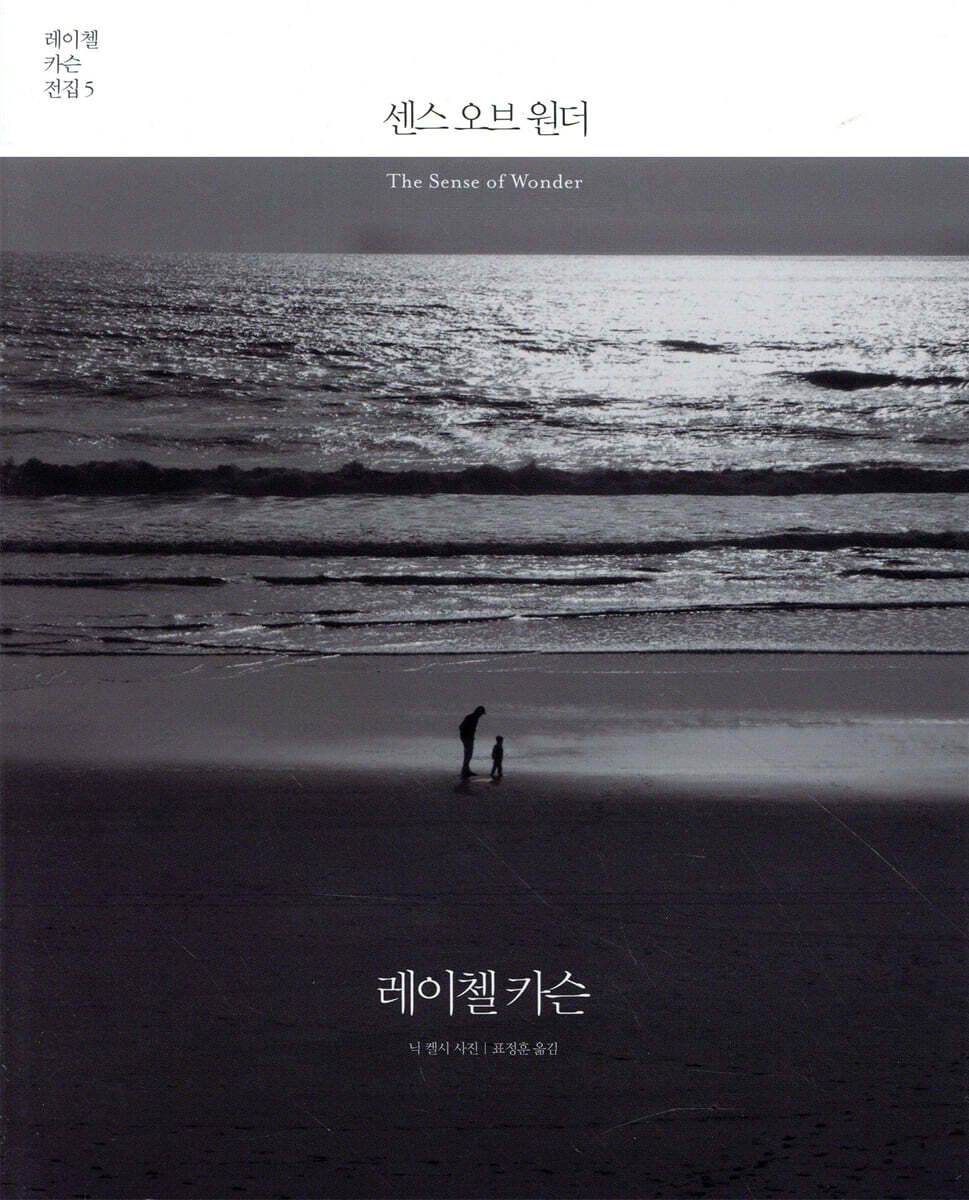
It describes the night sea, quiet forest paths, moonlight and storms that he walked with his young nephew Roger.
You can encounter her beautiful sentences that uniquely combine poetic prose and scientific knowledge.
Through poetic prose, Carson reveals the secrets of how we can cultivate a sense of wonder throughout our lives, how we can maintain the vivid sense of wonder we first felt when we encountered nature, and how we can maintain a sense of wonder and awe in our everyday lives, which often lead us far from nature.
Carson placed a great deal of emphasis on the theme of a sense of wonder about nature, and he particularly admired this sensitivity in children.
She says that the world before children is fresh, beautiful, and full of excitement, but adults have lost this innocence and have lost the clear eyes to see nature.
The author argued that emotions toward nature are far more important than knowledge about nature, saying that children need adults to share their feelings of wonder about nature, and adults need children to help them regain those feelings.
Readers will be able to feel Carson's naturalism while reading this book, and if they read it with children, they will be able to exchange their pure feelings about nature.
This is an essay praising nature by Rachel Carson, an environmentalist who widely raised awareness of the dangers of pesticide overuse through 'Silent Spring' in 1962.
It describes the night sea, quiet forest paths, moonlight and storms that he walked with his young nephew Roger.
You can encounter her beautiful sentences that uniquely combine poetic prose and scientific knowledge.
Through poetic prose, Carson reveals the secrets of how we can cultivate a sense of wonder throughout our lives, how we can maintain the vivid sense of wonder we first felt when we encountered nature, and how we can maintain a sense of wonder and awe in our everyday lives, which often lead us far from nature.
Carson placed a great deal of emphasis on the theme of a sense of wonder about nature, and he particularly admired this sensitivity in children.
She says that the world before children is fresh, beautiful, and full of excitement, but adults have lost this innocence and have lost the clear eyes to see nature.
The author argued that emotions toward nature are far more important than knowledge about nature, saying that children need adults to share their feelings of wonder about nature, and adults need children to help them regain those feelings.
Readers will be able to feel Carson's naturalism while reading this book, and if they read it with children, they will be able to exchange their pure feelings about nature.
- You can preview some of the book's contents.
Preview
index
Invitation letter
Night sea
summer forest
You and me, us
rainy day
magic carpet
Good Fairy
Another eye
Very small world
The sound of life, the pulse of life
Autumn Symphony
Eternal healing
some letter
Translator's Note
Night sea
summer forest
You and me, us
rainy day
magic carpet
Good Fairy
Another eye
Very small world
The sound of life, the pulse of life
Autumn Symphony
Eternal healing
some letter
Translator's Note
Publisher's Review
Rachel Carson, the world's greatest environmentalist, delivers her final eulogy of nature!
April 14, 1964, is the day Rachel Carson, revered as the 'patron saint of environmental protection,' passed away after a battle with breast cancer.
This year marks the 48th anniversary.
Initially, the copyright agent encouraged Carson to write something autobiographical.
When the magazine article received such a positive response, I decided to publish it as a book (it was published in the July 1956 issue of Woman's Home Companion under the title "Helping Your Child to Wonder").
So, in the summer of 1959, Carson spent a lot of time gathering his writings and recalling old experiences he wanted to add to them.
But in 1962, as Silent Spring (published 50 years ago) caused a huge stir throughout American society, Carson's energy was rapidly depleted.
Ultimately, Sense of Wonder was published without any additional material in 1965, after Carson's death.
This is a book that Carson wanted to finish before he died.
It is said that she said until shortly before she passed away, “I want to devote myself to this book.”
The book includes photographs that Carson wanted to add.
Carson is said to have told a friend:
“We plan to include a generous selection of the most beautiful photographs we can find, some in color, some in black and white.” Unfortunately, Carson never met photographer Nick Kelsey, nor did he ever see his photographs.
But the photographs included here are more than enough to illuminate her message (some of the photos in the text were obtained from the publisher).
A Scientist's New Writing: Poetic Language Written from the Heart
Through this poetic prose, Carson reveals the secrets of how we can cultivate a sense of wonder throughout our lives, how we can maintain the vivid sense of wonder we first felt when we encountered nature, and how we can maintain that sense of wonder and awe in our everyday lives, which often lead us far from nature.
For us, who live indifferently, burying the 'wonders of nature' in the bleak cement buildings, this short piece leaves a gentle yet long-lasting impression.
The joy of seeing poetic writings and matching photographs that capture the emotions shared with children in a beautiful style is a precious gift for children, as well as for mothers and fathers.
Carson said of the article:
“I thought this was an opportunity to say what I really wanted to say before I put down my pen, but in a different way than I have done before.”
Knowing nature is not half as important as feeling it.
She says nature is a place where children and adults can share joy and adventures of discovery together.
So rather than trying to explain or teach nature, I encourage you to engage with it using all your senses.
Accumulating knowledge about nature is only a secondary task, and a rich emotional connection with nature is the foundation of knowledge.
“For children, and for adults who must guide children, ‘knowing’ nature is not half as important as ‘feeling’ nature.
Facts about nature can be said to be seeds, so to speak.
That seed will later grow and bear fruit of knowledge and wisdom.
And the various emotions and impressions we feel from nature can be said to be fertile ground where seeds can take root and grow.
Childhood is the time to prepare for such fertile ground.
Sensitivity to beauty, excitement for the new and the unknown? Anticipation? Empathy? Sympathy? Respect? Love… … .
Only after these emotions have formed a fertile soil can one properly pursue knowledge of the things that gave rise to them.”
May the feeling of wonder towards nature continue forever
Carson placed great importance on the theme of the feeling of wonder at nature.
She goes out to the night sea with her nephew, Roger, walks through the forest paths, talks to flowers, trees, and animals, and looks at the night sky.
This series of experiences plays a crucial role in fostering trust and depth in adults and children through emotional empathy and interaction. It particularly highlights the profound impact childhood experiences with nature have on our entire lives.
That is, it was believed that whether one could maintain this feeling of wonder throughout one's life was determined during childhood.
So, I hoped that adults and children who read this book would develop a richer sensitivity to nature, and if they did, I believed they would refrain from actions that threaten the living world.
Carson said that if there were good fairies, he would ask them this:
“May the sense of wonder about nature that all children in the world possess last forever.”
Children need adults to share their sense of wonder about nature, and adults need children to help them regain that sense of wonder.
One of the great features of this book is that it deals with the theme of night.
Carson loved the silence and mystery of the night as much as he loved the rocky coast of Maine.
A significant portion of the adventures Carson encourages in this book involve going out alone at night.
But the effect is doubled when done with children or close friends.
The effect is inner healing and a new and deeper understanding and insight into the human mind.
In the book, Carson and his nephew, Roger, take walks along the coast or through dense forests, observing wild animals and nameless plants, appreciating moonlight and storms, and listening to the "vivid music" of insects in the undergrowth.
The important thing is that she taught her nephew nothing.
We just had fun together, got excited together, and laughed together.
She says that the world before children is fresh, new, beautiful, full of surprises and excitement, but adults have lost this pure instinct and have lost the clear eyes to see nature and the world.
Therefore, if children are to preserve their innate sense of wonder about nature, they need adults to share that feeling with them, and adults need children to help them regain that feeling.
What could be more beautiful than adults and children discovering and sharing together the mysteries, wonders, joys, and excitement of the world we live in?
April 14, 1964, is the day Rachel Carson, revered as the 'patron saint of environmental protection,' passed away after a battle with breast cancer.
This year marks the 48th anniversary.
Initially, the copyright agent encouraged Carson to write something autobiographical.
When the magazine article received such a positive response, I decided to publish it as a book (it was published in the July 1956 issue of Woman's Home Companion under the title "Helping Your Child to Wonder").
So, in the summer of 1959, Carson spent a lot of time gathering his writings and recalling old experiences he wanted to add to them.
But in 1962, as Silent Spring (published 50 years ago) caused a huge stir throughout American society, Carson's energy was rapidly depleted.
Ultimately, Sense of Wonder was published without any additional material in 1965, after Carson's death.
This is a book that Carson wanted to finish before he died.
It is said that she said until shortly before she passed away, “I want to devote myself to this book.”
The book includes photographs that Carson wanted to add.
Carson is said to have told a friend:
“We plan to include a generous selection of the most beautiful photographs we can find, some in color, some in black and white.” Unfortunately, Carson never met photographer Nick Kelsey, nor did he ever see his photographs.
But the photographs included here are more than enough to illuminate her message (some of the photos in the text were obtained from the publisher).
A Scientist's New Writing: Poetic Language Written from the Heart
Through this poetic prose, Carson reveals the secrets of how we can cultivate a sense of wonder throughout our lives, how we can maintain the vivid sense of wonder we first felt when we encountered nature, and how we can maintain that sense of wonder and awe in our everyday lives, which often lead us far from nature.
For us, who live indifferently, burying the 'wonders of nature' in the bleak cement buildings, this short piece leaves a gentle yet long-lasting impression.
The joy of seeing poetic writings and matching photographs that capture the emotions shared with children in a beautiful style is a precious gift for children, as well as for mothers and fathers.
Carson said of the article:
“I thought this was an opportunity to say what I really wanted to say before I put down my pen, but in a different way than I have done before.”
Knowing nature is not half as important as feeling it.
She says nature is a place where children and adults can share joy and adventures of discovery together.
So rather than trying to explain or teach nature, I encourage you to engage with it using all your senses.
Accumulating knowledge about nature is only a secondary task, and a rich emotional connection with nature is the foundation of knowledge.
“For children, and for adults who must guide children, ‘knowing’ nature is not half as important as ‘feeling’ nature.
Facts about nature can be said to be seeds, so to speak.
That seed will later grow and bear fruit of knowledge and wisdom.
And the various emotions and impressions we feel from nature can be said to be fertile ground where seeds can take root and grow.
Childhood is the time to prepare for such fertile ground.
Sensitivity to beauty, excitement for the new and the unknown? Anticipation? Empathy? Sympathy? Respect? Love… … .
Only after these emotions have formed a fertile soil can one properly pursue knowledge of the things that gave rise to them.”
May the feeling of wonder towards nature continue forever
Carson placed great importance on the theme of the feeling of wonder at nature.
She goes out to the night sea with her nephew, Roger, walks through the forest paths, talks to flowers, trees, and animals, and looks at the night sky.
This series of experiences plays a crucial role in fostering trust and depth in adults and children through emotional empathy and interaction. It particularly highlights the profound impact childhood experiences with nature have on our entire lives.
That is, it was believed that whether one could maintain this feeling of wonder throughout one's life was determined during childhood.
So, I hoped that adults and children who read this book would develop a richer sensitivity to nature, and if they did, I believed they would refrain from actions that threaten the living world.
Carson said that if there were good fairies, he would ask them this:
“May the sense of wonder about nature that all children in the world possess last forever.”
Children need adults to share their sense of wonder about nature, and adults need children to help them regain that sense of wonder.
One of the great features of this book is that it deals with the theme of night.
Carson loved the silence and mystery of the night as much as he loved the rocky coast of Maine.
A significant portion of the adventures Carson encourages in this book involve going out alone at night.
But the effect is doubled when done with children or close friends.
The effect is inner healing and a new and deeper understanding and insight into the human mind.
In the book, Carson and his nephew, Roger, take walks along the coast or through dense forests, observing wild animals and nameless plants, appreciating moonlight and storms, and listening to the "vivid music" of insects in the undergrowth.
The important thing is that she taught her nephew nothing.
We just had fun together, got excited together, and laughed together.
She says that the world before children is fresh, new, beautiful, full of surprises and excitement, but adults have lost this pure instinct and have lost the clear eyes to see nature and the world.
Therefore, if children are to preserve their innate sense of wonder about nature, they need adults to share that feeling with them, and adults need children to help them regain that feeling.
What could be more beautiful than adults and children discovering and sharing together the mysteries, wonders, joys, and excitement of the world we live in?
GOODS SPECIFICS
- Date of issue: April 10, 2012
- Page count, weight, size: 136 pages | 325g | 170*210*20mm
- ISBN13: 9788962630664
- ISBN10: 8962630664
You may also like
카테고리
korean


korean

![GQ KOREA Mark (Monthly): December [2025]](http://librairie.coreenne.fr/cdn/shop/files/8ef265dbbfbf186523ed75ba7319009d.jpg?v=1765340328&width=3840)


