

Areopagitica
 |
Description
Book Introduction
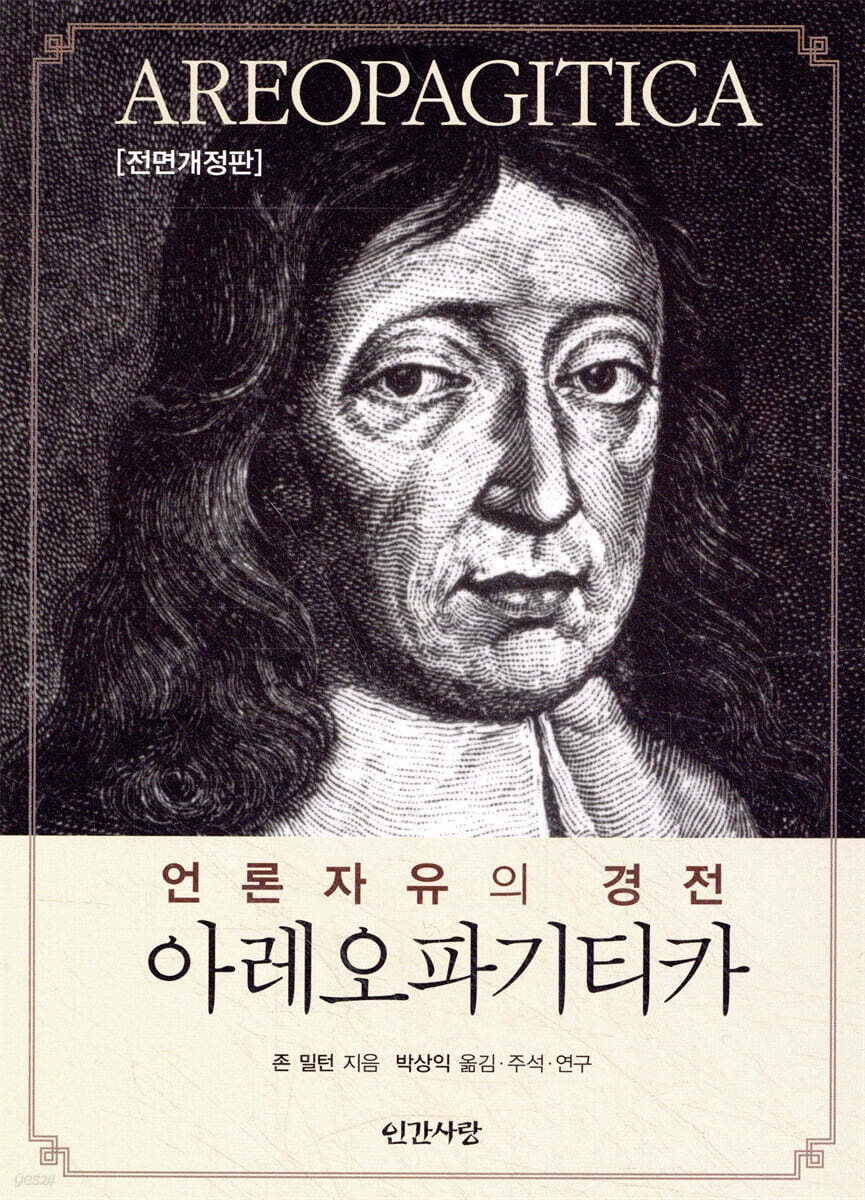
This book is a full-fledged translation, commentary, and study of the Areopagitica, widely known as the bible of freedom of the press or the “Magna Carta” of freedom of expression.
Part 1 contains “translations and commentaries” on the original text of “Areopagitica,” and Part 2 contains “studies” of “Areopagitica.”
Part 2, in particular, can be considered an independent study.
As Milton said in Areopagitica, a book should be the result of the author's "honest and mature skill" poured out to the utmost.
This book is the result of a long and thorough rewrite of a book first published in 1999.
In Part 1, we underwent a large-scale retranslation after 17 years, rereading the original text sentence by sentence to correct errors and revising or adding a significant number of footnotes.
Part 2 was also partially revised and supplemented to reflect new research findings.
As a result, the volume has increased significantly compared to the previous work.
Areopagitica is considered a valuable historical document that best demonstrates John Milton's radical response to the political and religious issues of the early English Revolution.
Moreover, this book is considered to be a representative work of Milton's prose. If Paradise Lost is the pinnacle of Milton's poetry, Areopagitica is considered the pinnacle of his prose.
But most importantly, this book is considered a canon of press freedom and is recognized as one of the most valuable documents in the history of press thought.
"Areopagitica" is a document of significant importance in the fields of history, English literature, and journalism, and is a great classic that should be universally enjoyed by all mankind. It is also a must-read for all readers interested in freedom of the press.
Part 1 contains “translations and commentaries” on the original text of “Areopagitica,” and Part 2 contains “studies” of “Areopagitica.”
Part 2, in particular, can be considered an independent study.
As Milton said in Areopagitica, a book should be the result of the author's "honest and mature skill" poured out to the utmost.
This book is the result of a long and thorough rewrite of a book first published in 1999.
In Part 1, we underwent a large-scale retranslation after 17 years, rereading the original text sentence by sentence to correct errors and revising or adding a significant number of footnotes.
Part 2 was also partially revised and supplemented to reflect new research findings.
As a result, the volume has increased significantly compared to the previous work.
Areopagitica is considered a valuable historical document that best demonstrates John Milton's radical response to the political and religious issues of the early English Revolution.
Moreover, this book is considered to be a representative work of Milton's prose. If Paradise Lost is the pinnacle of Milton's poetry, Areopagitica is considered the pinnacle of his prose.
But most importantly, this book is considered a canon of press freedom and is recognized as one of the most valuable documents in the history of press thought.
"Areopagitica" is a document of significant importance in the fields of history, English literature, and journalism, and is a great classic that should be universally enjoyed by all mankind. It is also a must-read for all readers interested in freedom of the press.
- You can preview some of the book's contents.
Preview
index
Preface_5
Part 1: Translation and Annotation of the Areopagitica 15
Note 18
1.
Introduction: For True Freedom 19
2.
The Origins of Censorship 34
3.
Knowledge of Good and Evil 56
4.
The Inefficiency of Censorship 71
5.
The Harm of Censorship 95
6.
The Greatness of the English 130
7.
The Value of Tolerance 143
8.
The Limits of Tolerance 155
Part II: Study of the Areopagitica 167
Note 168
Chapter 1: Defenders or Opponents of Freedom? 180
Chapter 2: The Completion of the English Reformation 183
1.
Millennialism 183
2.
Catholicism and the Antichrist 193
3.
Puritan Nationalism 209
Chapter 3: A History of Censorship in England 226
1.
The Origins of English Censorship 229
2.
Publication Licensing Law and "Divorce" 245
3.
The Reformation Mission of the Parliament 264
Chapter 4: Milton's Concept of Freedom 282
1.
Knowledge of Good and Evil 284
2.
Arguments Against Censorship 298
(1) Inefficiency of the censorship system 298
(2) Harmful Effects of Censorship 304
3.
The Value and Limits of Freedom 317
4.
Milton and the Open Society 333
(1) Free Market of Knowledge 333
(2) Reply to Wilmore Kendall 342
Chapter 5: The Philosophical Foundations of Liberalism 350
References_362
Appendix: Publishing Licensing Act of 1643_374
Search_378
Part 1: Translation and Annotation of the Areopagitica 15
Note 18
1.
Introduction: For True Freedom 19
2.
The Origins of Censorship 34
3.
Knowledge of Good and Evil 56
4.
The Inefficiency of Censorship 71
5.
The Harm of Censorship 95
6.
The Greatness of the English 130
7.
The Value of Tolerance 143
8.
The Limits of Tolerance 155
Part II: Study of the Areopagitica 167
Note 168
Chapter 1: Defenders or Opponents of Freedom? 180
Chapter 2: The Completion of the English Reformation 183
1.
Millennialism 183
2.
Catholicism and the Antichrist 193
3.
Puritan Nationalism 209
Chapter 3: A History of Censorship in England 226
1.
The Origins of English Censorship 229
2.
Publication Licensing Law and "Divorce" 245
3.
The Reformation Mission of the Parliament 264
Chapter 4: Milton's Concept of Freedom 282
1.
Knowledge of Good and Evil 284
2.
Arguments Against Censorship 298
(1) Inefficiency of the censorship system 298
(2) Harmful Effects of Censorship 304
3.
The Value and Limits of Freedom 317
4.
Milton and the Open Society 333
(1) Free Market of Knowledge 333
(2) Reply to Wilmore Kendall 342
Chapter 5: The Philosophical Foundations of Liberalism 350
References_362
Appendix: Publishing Licensing Act of 1643_374
Search_378
GOODS SPECIFICS
- Date of issue: December 30, 2016
- Page count, weight, size: 382 pages | 484g | 153*224*30mm
- ISBN13: 9788974185879
- ISBN10: 8974185873
You may also like
카테고리
korean


korean

![GQ KOREA Mark (Monthly): December [2025]](http://librairie.coreenne.fr/cdn/shop/files/8ef265dbbfbf186523ed75ba7319009d.jpg?v=1765340328&width=3840)


