

turmoil
 |
Description
Book Introduction
Why does sadness like me
Why do you want to ride a horse so noisily on top of me?
No, I wondered if I liked sadness
Written with a noisy and helpless heart
Poet Park Yeon-jun's first collection of prose
The revised edition of poet Park Yeon-jun's first prose essay, "Commotion," which states that the nature of love is helplessness, is being published by Nanda.
The constant love I have received since the first edition was published in 2014 has given me new clothes.
『Commotion』 is a book for those who love ‘roughness.’
The days of youth when things like tenderness, clarity, childishness, transparency, sadness, danger, passion, pettiness, fear, and blind love easily attach themselves (pp. 10-11).
As we grow into adults, we all experience that period of infancy, and even after becoming adults, that period of infancy follows us like a dream and exploits our weaknesses.
For the poet, those were times of great turmoil, a time of excess of emotion and aspiration, and a time of agonizing worry and anxiety.
When it seemed as if he was crying even though no tears were falling, the poet allowed his sadness to invade him.
I wrote poetry and threw it away, like a dead tree burning with sorrow (pp. 191-192).
The poet believes that in his twenties, when he embraced only the most intense sorrow and fatal pain, the sadness of that time, which cannot be returned to, has already disappeared like a firecracker exploding, but the things he loved in that season and the sorrow he harbored because of them will form the foundation of the rest of his life (p. 196).
Thus, the poet's wish to cherish his youth and keep it in a corner of his body until he grows old and dies (page 11) is like a promise to live on, embracing the fragile days of his youth and struggling to survive.
Why do you want to ride a horse so noisily on top of me?
No, I wondered if I liked sadness
Written with a noisy and helpless heart
Poet Park Yeon-jun's first collection of prose
The revised edition of poet Park Yeon-jun's first prose essay, "Commotion," which states that the nature of love is helplessness, is being published by Nanda.
The constant love I have received since the first edition was published in 2014 has given me new clothes.
『Commotion』 is a book for those who love ‘roughness.’
The days of youth when things like tenderness, clarity, childishness, transparency, sadness, danger, passion, pettiness, fear, and blind love easily attach themselves (pp. 10-11).
As we grow into adults, we all experience that period of infancy, and even after becoming adults, that period of infancy follows us like a dream and exploits our weaknesses.
For the poet, those were times of great turmoil, a time of excess of emotion and aspiration, and a time of agonizing worry and anxiety.
When it seemed as if he was crying even though no tears were falling, the poet allowed his sadness to invade him.
I wrote poetry and threw it away, like a dead tree burning with sorrow (pp. 191-192).
The poet believes that in his twenties, when he embraced only the most intense sorrow and fatal pain, the sadness of that time, which cannot be returned to, has already disappeared like a firecracker exploding, but the things he loved in that season and the sorrow he harbored because of them will form the foundation of the rest of his life (p. 196).
Thus, the poet's wish to cherish his youth and keep it in a corner of his body until he grows old and dies (page 11) is like a promise to live on, embracing the fragile days of his youth and struggling to survive.
- You can preview some of the book's contents.
Preview
index
Preface to the Revised Edition: Loving the 'Estimate' 8
Preface to the First Edition: All Noise Can Cultivate Stillness 14
Part 1 Who can stop someone from falling in love?
West, Lips 24
Lover trapped in a Go stone 29
Why of all things, the saying 32
You are sick 41
Nail Step 45
51 on the phone
53 Two Attitudes to Take When Love Goes Wrong
56 Forest of Birch Trees
Where can I suck myself? 64
Clementine, 66, seven years old
Part 2: How are you? How are you doing?
First, 80
Thirty-eighty-three
Winter Sea, Shell 88
I'm better than that 94
Even if life is as twisted as a snake, 97
100 with love for fool Ivan
Leaves 108
Cooking Sunday 110
About Wanchang 114
Apples are delicious 117
4:00 PM notation 120
Peony Diary - 124 at the Land Culture Museum
The third poem is 'still'
Your Broken Glasses Leg 132
I've left shit behind, and I've become the shit I left behind 135
The Fear of Writing 141
Poetry 147: Immersed in the Do-Re-Mi-Fa-Sol-La
High Heels - There's No Exit to Love 151
Cheonggukjang doesn't support 157
Tap 160
Penis 164
Sleep 166
Staircase 168
Dream 171
Nose - Cold Pre-Cold Sense Transmission 174
Cat 177
Dance, a language that precedes speech 179
Part 4: All the tears of a newly born child are owed to the past.
Sadness is joy in its own way 190
Aunt's Room 197
Grandmother 201
All that is lost lives in childhood 205
Death Sleeps Under My Bed 209
Spring Rain 216
Shoe Store 219
Winter doesn't disappear, it melts. 221
December, the month of hesitation and return 223
A Bow to the Passing Spring - To My Dead Father 227
Things That Come Slowly 233
Preface to the First Edition: All Noise Can Cultivate Stillness 14
Part 1 Who can stop someone from falling in love?
West, Lips 24
Lover trapped in a Go stone 29
Why of all things, the saying 32
You are sick 41
Nail Step 45
51 on the phone
53 Two Attitudes to Take When Love Goes Wrong
56 Forest of Birch Trees
Where can I suck myself? 64
Clementine, 66, seven years old
Part 2: How are you? How are you doing?
First, 80
Thirty-eighty-three
Winter Sea, Shell 88
I'm better than that 94
Even if life is as twisted as a snake, 97
100 with love for fool Ivan
Leaves 108
Cooking Sunday 110
About Wanchang 114
Apples are delicious 117
4:00 PM notation 120
Peony Diary - 124 at the Land Culture Museum
The third poem is 'still'
Your Broken Glasses Leg 132
I've left shit behind, and I've become the shit I left behind 135
The Fear of Writing 141
Poetry 147: Immersed in the Do-Re-Mi-Fa-Sol-La
High Heels - There's No Exit to Love 151
Cheonggukjang doesn't support 157
Tap 160
Penis 164
Sleep 166
Staircase 168
Dream 171
Nose - Cold Pre-Cold Sense Transmission 174
Cat 177
Dance, a language that precedes speech 179
Part 4: All the tears of a newly born child are owed to the past.
Sadness is joy in its own way 190
Aunt's Room 197
Grandmother 201
All that is lost lives in childhood 205
Death Sleeps Under My Bed 209
Spring Rain 216
Shoe Store 219
Winter doesn't disappear, it melts. 221
December, the month of hesitation and return 223
A Bow to the Passing Spring - To My Dead Father 227
Things That Come Slowly 233
Into the book
I have a peculiar hobby of loving only things that are inclined, and it may be something to do with my nature or personality.
The room faces west, the person has a slightly tilted shoulder, all flowers bloom and fall silently, and dreams are fluttering and fading dreams.
--- From "West, Lips"
It's really nice that you're saying it.
Because helplessness and helplessness are the properties of love.
I wonder if there could be a more appropriate word to express love.
I will confess that I loved you because I couldn't help it.
--- From the phrase "Why of all things?"
When someone you love is sick, your heart shrivels.
He who loves is not the one who bends his knees, but the one whose knees bend.
--- From "You Are Sick"
Sometimes the stairs looked like they were kneeling, but it was impossible to tell how many knees there were.
I stroked the round shape of my knees, which were standing up, with my palm.
It was a night when pale knees stretched out endlessly.
It was quiet, nothing happened.
I was happy that nothing happened.
--- From "Stairs"
When a dancer jumps, the emotions of fear, sadness, passion and joy that surge through his body take on a real height.
When a dancer performs love, he or she swirls love from the tips of his or her toes to the tips of his or her hair.
Inform the audience.
It's love, I'm love!
The room faces west, the person has a slightly tilted shoulder, all flowers bloom and fall silently, and dreams are fluttering and fading dreams.
--- From "West, Lips"
It's really nice that you're saying it.
Because helplessness and helplessness are the properties of love.
I wonder if there could be a more appropriate word to express love.
I will confess that I loved you because I couldn't help it.
--- From the phrase "Why of all things?"
When someone you love is sick, your heart shrivels.
He who loves is not the one who bends his knees, but the one whose knees bend.
--- From "You Are Sick"
Sometimes the stairs looked like they were kneeling, but it was impossible to tell how many knees there were.
I stroked the round shape of my knees, which were standing up, with my palm.
It was a night when pale knees stretched out endlessly.
It was quiet, nothing happened.
I was happy that nothing happened.
--- From "Stairs"
When a dancer jumps, the emotions of fear, sadness, passion and joy that surge through his body take on a real height.
When a dancer performs love, he or she swirls love from the tips of his or her toes to the tips of his or her hair.
Inform the audience.
It's love, I'm love!
--- From "Dance, a Language Before Words"
Publisher's Review
I am an unfinished work that time has drawn,
Completion will happen after I disappear
It will only happen in someone's memory
The title of 『Commotion』 has two meanings.
The commotion of 'noisy and messy' and 'an egg put in the nest so that the hen can find the right place to lay the egg.'
A nest egg, also called a ‘bottom egg’.
The poet continued to write poetry, hoping that light and heavy disturbances would come together to form a nest of disturbances in which to rest, and that no one would suffer too much (page 44).
It's been twenty years since I started writing like that.
In order to compile my clumsy and noisy hearts into one volume, I organized it into four parts with the keywords ‘love,’ ‘daily life,’ ‘poetry,’ and ‘family.’
Reopening 『Commotion』 now is an act of carefully examining the countless ‘approximations’ that poet Park Yeon-jun has gone through, and of caring for the times (p. 191) when he appeared to be crying even though no tears were flowing.
The poet says that he will become a willow tree that sings for love that is still broken and will stay up all day and night (page 31), and he estimates the past where he loved and lived and the future where love will arrive.
The time we have measured thus runs away, drawing a line across our faces (page 26), and the poet's affection for things that are tilted inevitably remains as an unfinished work that will never be completed.
Therefore, this book is a collection of writings that postpone completion and seek to reach an understanding of the world around oneself.
A passionate desire not to move away from the days when it seemed like I was crying even though no tears were falling (page 191), and a dense record of secrets that cannot be abandoned (page 65).
Here are traces of clear and passionate love, written in the place of the noisy things and loved in abundance.
With the strength to overcome sorrow
That we can even accept the new sorrows that will come in the future.
For poet Park Yeon-jun, who says, “Tangledness is the essence of love” (『Go and see if love is dead』, Munhakdongne, 2024), the essence of life is closer to sadness.
For a poet, enduring sadness is like taking the weight of falling flowers on your knees and moving forward little by little (p. 156).
He knows that sadness can be joyful, that without sadness no more poetry or song can be born (p. 196), and he welcomes the sadness that permeates life.
So, sadness becomes joy and love.
When you love, you become sad, and when you are sad, the world becomes truly beautiful.
Thus, in his latest collection of poems, the poet arrives at a place where 'broken things are called the face of love', and depicts a certain inevitability that in order for love to exist in this world, there must first be commotion.
Therefore, we cannot help but return to his first collection of prose.
As you read, as if caring about how desperately he loved and how earnestly he wrote poetry in his childhood days, when he wasted all his time on flowers, sunshine, and affection (page 230), you will naturally discover the tumult of sadness that poet Park Yeon-jun has harbored for a long time.
The sadness that comes to that place gradually piles up, creating a slanted thickness of love, and the poet uses it as fuel to live on.
Alive ‘without stopping even once’ (p. 214).
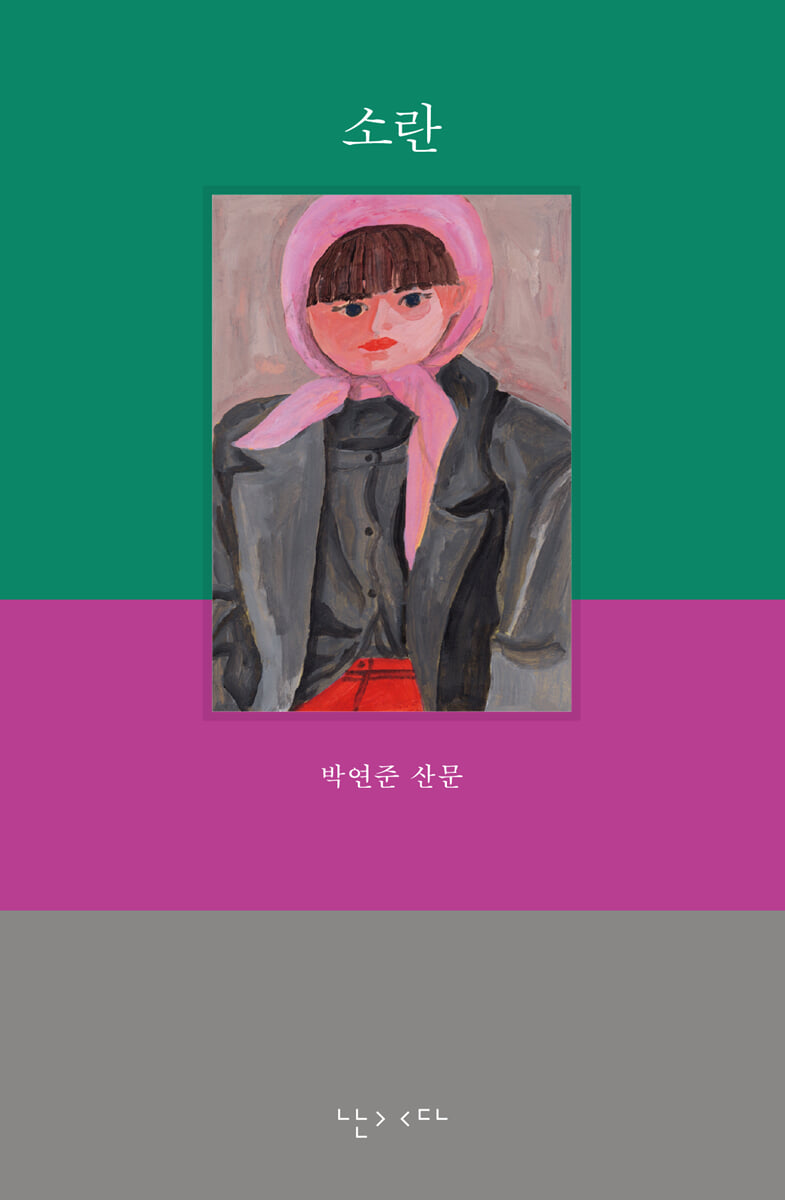
The work by Jeong Na-on featured on the cover is a painting that poet Kim Min-jeong gave poet Park Yeon-jun as a gift on his birthday, and which bears a striking resemblance to the poet.
A woman who is stubborn, cries easily, and has never experienced anything before.
A woman who is delicate yet tenacious, who pushes ahead on her own no matter what happens, and yet her fearful heart is revealed.
In the eyes that meet, the poet's affectionate yet noisy speech and expression that holds 'approximation' in 'Commotion' are clearly read.
Writing is an 'eternal whisper'.
It's like whispering into someone's ear with the rhythm of your wrist until their ears are numb.
There is no perfection.
All I can do is climb with poetry to the heights I like best, and then drop down.
Destruction brings about renewal.
(…) In the end, I will end up wasting my life in poetry.
_The “Fear of Writing” section
Completion will happen after I disappear
It will only happen in someone's memory
The title of 『Commotion』 has two meanings.
The commotion of 'noisy and messy' and 'an egg put in the nest so that the hen can find the right place to lay the egg.'
A nest egg, also called a ‘bottom egg’.
The poet continued to write poetry, hoping that light and heavy disturbances would come together to form a nest of disturbances in which to rest, and that no one would suffer too much (page 44).
It's been twenty years since I started writing like that.
In order to compile my clumsy and noisy hearts into one volume, I organized it into four parts with the keywords ‘love,’ ‘daily life,’ ‘poetry,’ and ‘family.’
Reopening 『Commotion』 now is an act of carefully examining the countless ‘approximations’ that poet Park Yeon-jun has gone through, and of caring for the times (p. 191) when he appeared to be crying even though no tears were flowing.
The poet says that he will become a willow tree that sings for love that is still broken and will stay up all day and night (page 31), and he estimates the past where he loved and lived and the future where love will arrive.
The time we have measured thus runs away, drawing a line across our faces (page 26), and the poet's affection for things that are tilted inevitably remains as an unfinished work that will never be completed.
Therefore, this book is a collection of writings that postpone completion and seek to reach an understanding of the world around oneself.
A passionate desire not to move away from the days when it seemed like I was crying even though no tears were falling (page 191), and a dense record of secrets that cannot be abandoned (page 65).
Here are traces of clear and passionate love, written in the place of the noisy things and loved in abundance.
With the strength to overcome sorrow
That we can even accept the new sorrows that will come in the future.
For poet Park Yeon-jun, who says, “Tangledness is the essence of love” (『Go and see if love is dead』, Munhakdongne, 2024), the essence of life is closer to sadness.
For a poet, enduring sadness is like taking the weight of falling flowers on your knees and moving forward little by little (p. 156).
He knows that sadness can be joyful, that without sadness no more poetry or song can be born (p. 196), and he welcomes the sadness that permeates life.
So, sadness becomes joy and love.
When you love, you become sad, and when you are sad, the world becomes truly beautiful.
Thus, in his latest collection of poems, the poet arrives at a place where 'broken things are called the face of love', and depicts a certain inevitability that in order for love to exist in this world, there must first be commotion.
Therefore, we cannot help but return to his first collection of prose.
As you read, as if caring about how desperately he loved and how earnestly he wrote poetry in his childhood days, when he wasted all his time on flowers, sunshine, and affection (page 230), you will naturally discover the tumult of sadness that poet Park Yeon-jun has harbored for a long time.
The sadness that comes to that place gradually piles up, creating a slanted thickness of love, and the poet uses it as fuel to live on.
Alive ‘without stopping even once’ (p. 214).
The work by Jeong Na-on featured on the cover is a painting that poet Kim Min-jeong gave poet Park Yeon-jun as a gift on his birthday, and which bears a striking resemblance to the poet.
A woman who is stubborn, cries easily, and has never experienced anything before.
A woman who is delicate yet tenacious, who pushes ahead on her own no matter what happens, and yet her fearful heart is revealed.
In the eyes that meet, the poet's affectionate yet noisy speech and expression that holds 'approximation' in 'Commotion' are clearly read.
Writing is an 'eternal whisper'.
It's like whispering into someone's ear with the rhythm of your wrist until their ears are numb.
There is no perfection.
All I can do is climb with poetry to the heights I like best, and then drop down.
Destruction brings about renewal.
(…) In the end, I will end up wasting my life in poetry.
_The “Fear of Writing” section
GOODS SPECIFICS
- Date of issue: November 11, 2025
- Page count, weight, size: 236 pages | 274g | 129*198*12mm
- ISBN13: 9791124065082
- ISBN10: 1124065083
You may also like
카테고리
korean


korean

![GQ KOREA Mark (Monthly): December [2025]](http://librairie.coreenne.fr/cdn/shop/files/8ef265dbbfbf186523ed75ba7319009d.jpg?v=1765340328&width=3840)


