

There is no such thing as a day that is taken for granted
 |
Description
Book Introduction
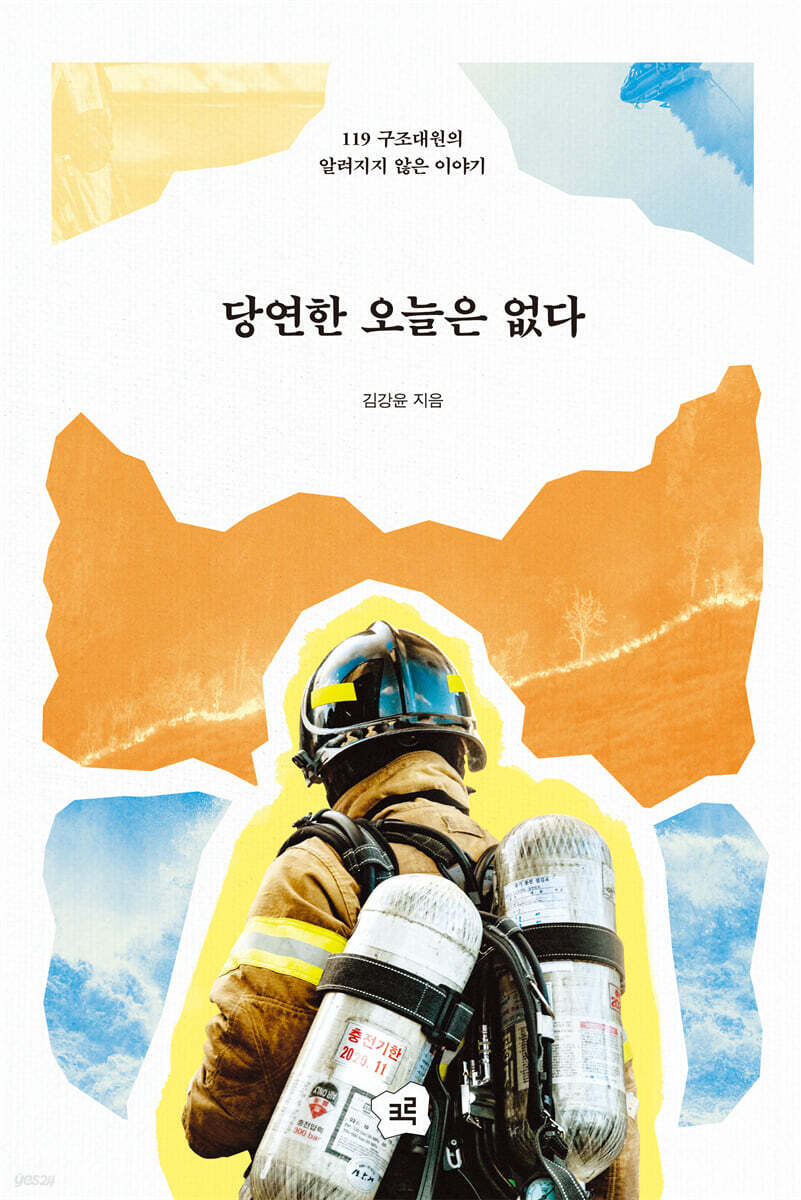
In the most dangerous and desperate moments of everyday life, there are people who come to the scene of an accident.
These are 119 firefighters and rescue workers.
They rescue people from burning houses, from broken and mangled car accident scenes, and from cold, dark water.
Even in the face of national disasters or natural disasters, we bravely stand up and protect everyone's safety.
Even though you did your best to save someone, you still have to witness death up close.
While several major incidents have exposed the treatment of firefighters, there are still many stories they don't know about.
This book, "There Is No Today That Is Taken for Granted," is a revised version of "Rescue," published by Leader Books in 2021.
All the things the author saw and felt on the border between life and death as a firefighter and rescue worker were taken to heart and compiled into one book.
This revised edition has undergone a process of detailed revision based on the manuscript of the first edition.
We also added new stories, such as the recent simultaneous forest fires.
I also tried to more faithfully convey the author's thoughts on valuing life.
While reading this book, readers will also feel a warm realization that the life we have been given was obtained through someone's help and sacrifice.
These are 119 firefighters and rescue workers.
They rescue people from burning houses, from broken and mangled car accident scenes, and from cold, dark water.
Even in the face of national disasters or natural disasters, we bravely stand up and protect everyone's safety.
Even though you did your best to save someone, you still have to witness death up close.
While several major incidents have exposed the treatment of firefighters, there are still many stories they don't know about.
This book, "There Is No Today That Is Taken for Granted," is a revised version of "Rescue," published by Leader Books in 2021.
All the things the author saw and felt on the border between life and death as a firefighter and rescue worker were taken to heart and compiled into one book.
This revised edition has undergone a process of detailed revision based on the manuscript of the first edition.
We also added new stories, such as the recent simultaneous forest fires.
I also tried to more faithfully convey the author's thoughts on valuing life.
While reading this book, readers will also feel a warm realization that the life we have been given was obtained through someone's help and sacrifice.
- You can preview some of the book's contents.
Preview
index
prolog
Chapter 1.
Firefighter appointment
Global
Making a living
Announcement of successful candidates
First job
Weight of clothes
Busan at night
Chapter 2.
unforgettable memories
Greetings with colleagues
While you were sleeping
Marine city, rip current
all living things
Near death
Mountain Chase
Child in the Fire
Fire Academy
Chapter 3.
Where the scream begins
Suicide commotion
Those who want to die, those who want to live
Couple's love
Volunteer Firefighter Father
Wildfires and natural disasters
closed door
entrapment accident
Give up love
lonely death
Chapter 4.
Supporting force
Firefighter's Wife
Mom and the ambulance
Trust your colleagues
Leader's seat
Restaurant manager
Best rescuer
Dedication and service
Colleagues who became stars
woman, mother, paramedic
Chapter 5.
Your last
The end of life
After becoming disabled
To avoid breaking up
Look down
Even if I were to be reborn, I would still be a firefighter
Epilogue
More stories I want to tell
Chapter 1.
Firefighter appointment
Global
Making a living
Announcement of successful candidates
First job
Weight of clothes
Busan at night
Chapter 2.
unforgettable memories
Greetings with colleagues
While you were sleeping
Marine city, rip current
all living things
Near death
Mountain Chase
Child in the Fire
Fire Academy
Chapter 3.
Where the scream begins
Suicide commotion
Those who want to die, those who want to live
Couple's love
Volunteer Firefighter Father
Wildfires and natural disasters
closed door
entrapment accident
Give up love
lonely death
Chapter 4.
Supporting force
Firefighter's Wife
Mom and the ambulance
Trust your colleagues
Leader's seat
Restaurant manager
Best rescuer
Dedication and service
Colleagues who became stars
woman, mother, paramedic
Chapter 5.
Your last
The end of life
After becoming disabled
To avoid breaking up
Look down
Even if I were to be reborn, I would still be a firefighter
Epilogue
More stories I want to tell
Detailed image

Into the book
Maybe it's just an ordinary firefighter's memory, nothing special.
If we have to compare, the emergency room or operating room of a hospital is where life and death intersect even more fiercely.
The industrial site of a steel mill, where molten iron is boiling, may be a more dangerous place than my workplace.
I am by no means trying to compare myself to those who work there.
I just want to tell you that what countless fellow firefighters across the country have kept in their hearts and never spoken about is not something that should happen naturally.
The guilt of not being able to save the nameless people who died in the burning house, at the broken and crushed car accident scene, and in the cold, dark water is another reason for writing.
--- p.7
“Get the rope out!”
The rescue team leader installed the rescue rope on the wall pillar in front of the elevator door without saying a word.
I put on my rescue seatbelt as I had been taught and prepared to go down from the third floor to the first floor where the car had fallen.
I hung the rope on the figure 8 descender, put my weight on my butt, and took each step up the wall to descend into the dark parking tower.
The team leader shone a lantern, but the darkness was not completely resolved.
The sight of the parking machines sticking out from the walls here and there was creepy.
I landed slowly on the first floor, avoiding the chains and large machinery.
--- p.41
The car ride back after seeing him off was quiet.
Everyone stared out the window in silence.
The grief of losing a colleague is the greatest shock to firefighters.
Because it is the departure of someone who is no different from a brother with whom you have eaten, slept, and washed together.
The world outside the car window seemed peaceful, as if nothing had happened.
I just found it annoying how the world just went on like that.
That was my first experience with the death of a colleague.
I personally experienced the fate of a firefighter, where the greetings during the morning and evening shifts could be the last greetings in their lives.
I had a hard time accepting reality for a while after that.
The empty space he left was left for a while.
--- p.63
“Rescue by attaching three or more people to the rescue tube.
And unconditionally fall to the left or right.
“Never try to go against it!”
A rip current is a phenomenon in which water quickly drains far out to sea.
If you try to catch someone who is swept away and try to get them back up the river, it could endanger even the rescue workers.
It was best to get out to the side and escape the rip current.
There were cries for help here and there.
The waves pushed people back violently, creating white foam.
Those who managed to grab the tube were lucky.
I first approached the people who were struggling naked.
--- p.77
Since my daughter was born, my heart sinks whenever I see children getting hurt.
Our children, who should be growing up in a safe and protected environment, are getting hurt and dying all over the place.
Sometimes they are killed directly.
We must no longer allow young lives, not even chosen ones, to be sacrificed by adults.
In all the years I've been doing this work, I've never seen more children killed or injured.
If that were my blessing, it would be a blessing, but my colleagues who witnessed the children's accidents complained that it was quite difficult and painful.
I still remember the girl in the fire.
How are you living?
--- p.113
The Yeongnam wildfire left us with many things.
I saw the fear and terror that disaster brings, but also the people who overcame it and tried to rise again.
Although you have lost a lot, I believe you have also learned the value of what you must protect.
Now is the time to stop focusing on emotions and change the system and reality.
For the sake of those who perished in this wildfire and all those who risked their lives fighting there, I hope we will never take lightly the warnings nature will give us in the future.
--- p.158
When those who sacrificed themselves and lost their lives for others are treated with respect, the survivors find comfort in them and the courage to rush back into the field.
To return to the dangerous field where the lives of colleagues who were like family were taken, I need the empathy of many people who believe that the risk I am taking is worth it.
When we do that, we gain more courage and can confidently speak to young people who dream of this.
I said that it was something precious enough to risk my everything for.
Otherwise, the selfish human nature of thinking, 'If I get hurt and die, I'm the only one who suffers' will obscure the light of the uniform.
--- p.245
Rescue workers, who must save the dying at the scene of an accident, fight to prevent separation between people.
Death is the most extreme form of separation.
Dying at the end of one's life can create an environment in which one can mentally prepare for death and overcome the sorrow, but death by accident cannot.
So we have to survive.
We must prevent the painful separation called death.
That is the hardest and most noble thing a rescue worker can do.
By saving one person from a stroke, you may prevent the sad parting of many who knew them.
If we have to compare, the emergency room or operating room of a hospital is where life and death intersect even more fiercely.
The industrial site of a steel mill, where molten iron is boiling, may be a more dangerous place than my workplace.
I am by no means trying to compare myself to those who work there.
I just want to tell you that what countless fellow firefighters across the country have kept in their hearts and never spoken about is not something that should happen naturally.
The guilt of not being able to save the nameless people who died in the burning house, at the broken and crushed car accident scene, and in the cold, dark water is another reason for writing.
--- p.7
“Get the rope out!”
The rescue team leader installed the rescue rope on the wall pillar in front of the elevator door without saying a word.
I put on my rescue seatbelt as I had been taught and prepared to go down from the third floor to the first floor where the car had fallen.
I hung the rope on the figure 8 descender, put my weight on my butt, and took each step up the wall to descend into the dark parking tower.
The team leader shone a lantern, but the darkness was not completely resolved.
The sight of the parking machines sticking out from the walls here and there was creepy.
I landed slowly on the first floor, avoiding the chains and large machinery.
--- p.41
The car ride back after seeing him off was quiet.
Everyone stared out the window in silence.
The grief of losing a colleague is the greatest shock to firefighters.
Because it is the departure of someone who is no different from a brother with whom you have eaten, slept, and washed together.
The world outside the car window seemed peaceful, as if nothing had happened.
I just found it annoying how the world just went on like that.
That was my first experience with the death of a colleague.
I personally experienced the fate of a firefighter, where the greetings during the morning and evening shifts could be the last greetings in their lives.
I had a hard time accepting reality for a while after that.
The empty space he left was left for a while.
--- p.63
“Rescue by attaching three or more people to the rescue tube.
And unconditionally fall to the left or right.
“Never try to go against it!”
A rip current is a phenomenon in which water quickly drains far out to sea.
If you try to catch someone who is swept away and try to get them back up the river, it could endanger even the rescue workers.
It was best to get out to the side and escape the rip current.
There were cries for help here and there.
The waves pushed people back violently, creating white foam.
Those who managed to grab the tube were lucky.
I first approached the people who were struggling naked.
--- p.77
Since my daughter was born, my heart sinks whenever I see children getting hurt.
Our children, who should be growing up in a safe and protected environment, are getting hurt and dying all over the place.
Sometimes they are killed directly.
We must no longer allow young lives, not even chosen ones, to be sacrificed by adults.
In all the years I've been doing this work, I've never seen more children killed or injured.
If that were my blessing, it would be a blessing, but my colleagues who witnessed the children's accidents complained that it was quite difficult and painful.
I still remember the girl in the fire.
How are you living?
--- p.113
The Yeongnam wildfire left us with many things.
I saw the fear and terror that disaster brings, but also the people who overcame it and tried to rise again.
Although you have lost a lot, I believe you have also learned the value of what you must protect.
Now is the time to stop focusing on emotions and change the system and reality.
For the sake of those who perished in this wildfire and all those who risked their lives fighting there, I hope we will never take lightly the warnings nature will give us in the future.
--- p.158
When those who sacrificed themselves and lost their lives for others are treated with respect, the survivors find comfort in them and the courage to rush back into the field.
To return to the dangerous field where the lives of colleagues who were like family were taken, I need the empathy of many people who believe that the risk I am taking is worth it.
When we do that, we gain more courage and can confidently speak to young people who dream of this.
I said that it was something precious enough to risk my everything for.
Otherwise, the selfish human nature of thinking, 'If I get hurt and die, I'm the only one who suffers' will obscure the light of the uniform.
--- p.245
Rescue workers, who must save the dying at the scene of an accident, fight to prevent separation between people.
Death is the most extreme form of separation.
Dying at the end of one's life can create an environment in which one can mentally prepare for death and overcome the sorrow, but death by accident cannot.
So we have to survive.
We must prevent the painful separation called death.
That is the hardest and most noble thing a rescue worker can do.
By saving one person from a stroke, you may prevent the sad parting of many who knew them.
--- p.278
Publisher's Review
When an unexpected accident occurs
How precious is life in that moment?
In the most dangerous and desperate moments of everyday life, there are people who come to the scene of an accident.
These are 119 firefighters and rescue workers.
They rescue people from burning houses, from broken and mangled car accident scenes, from cold, dark water, and from steep mountains.
Even in the face of national disasters or natural disasters, we bravely stand up and protect everyone's safety.
Even though we did our best to save someone, we had to witness death up close.
Some people are rescued and continue their lives, while others are handed over to paramedics and taken to the hospital, but eventually pass away.
Before becoming a firefighter, the author had no idea how many people were separated by unexpected accidents.
Every time I heard that someone I had rescued did not survive, I was plagued by feelings of unfamiliarity and trauma.
Sometimes we have to face events that are not accidents.
When I see and hear things that should not happen between people, I have serious, unresolved concerns.
After experiencing his first social life in the special forces UDT, the author entered society with overflowing confidence.
After being appointed as a rescue worker, I felt like I could do anything with my strong physical strength and passion.
But as I discovered this new world, I gradually learned to be grateful for what I had and to live a life of service.
As I gained more experience, I realized how precious and beautiful it is to enjoy life.
I wrote this book with the belief that readers will also feel the same way after seeing the story behind the safe daily life.
“Some people say firefighters are heroes,
“I still feel uncomfortable with that statement.”
Farewell to colleagues with whom I shared deep friendship
I return to that scene of death every day.
In the Hongje-dong house fire, which is recorded as the saddest response in the history of Korean firefighting, six firefighters entered the scene wearing waterproof suits and were killed when the building collapsed in an instant.
This incident led to the issue of firefighters wearing fire-retardant suits instead of waterproof suits.
While major incidents like this have brought the treatment of firefighters to light, there are still many stories they don't know about.
Some firefighters were involved in traffic accidents while on their way to support an event, some fell while trying to rescue a stray cat that had climbed onto a rooftop in a residential area, and some died while responding to a forest fire that had spread due to arson.
Firefighters who witness the death of a colleague feel fear when they have to go to the same place again or when they are deployed to a similar accident scene.
Although firefighters inevitably suffer from post-traumatic stress disorder, the public image of firefighters as tough individuals often prevents them from properly managing their mental health.
An average of ten firefighters die in the line of duty each year, and their fellow firefighters hear the news faster and more accurately than anyone else.
In the process of saving people, there are deaths that are sacrificed, but there are also cases of being unfairly harmed or getting sick due to the effects of work.
Because I work shifts day and night, my family is always anxious.
Looking at the funerals of firefighters in countries with more developed welfare systems than ours, we can see how their citizens honor the deaths of those who saved lives.
The author meticulously recorded the daily lives of rescue workers, previously unseen by the world, in the hope that we too can cultivate a higher level of gratitude and respect.
A story the world still needs
A completely revised edition for everyone!
"There is no such thing as a taken-for-granted day" is a revised version of "Rescue," published by Leader Books in 2021.
Everything the author saw and felt on the border between life and death as a firefighter and rescue worker was taken to heart and compiled into one book.
This revised edition has undergone a process of detailed revision based on the manuscript of the first edition.
We also added new stories, such as the recent simultaneous forest fires.
I also tried to more faithfully convey the author's thoughts on valuing life.
The author experienced being swept away by water and almost died when he was young and was rescued.
I've seen paramedics take my sick mother to the hospital and my father, a volunteer firefighter, come in after putting out a forest fire.
All these experiences led him to the rescue scene.
This book is a record of scenes that an ordinary person living a normal life might experience once or twice in their lifetime.
At that moment, everyone confesses their love to the person who was most precious to them.
I pray to heaven with all my heart.
There are probably more intense and brutal scenes in the world.
But rescuers see a more delicate side of life.
The owners of this bare face are the elderly who have to end their lives alone because they have no relatives, workers who have to live in hiding with their children to avoid being caught as illegal immigrants, business owners who commit suicide protests because they are not paid for construction, and young people who have lost hope and meaning in life and are wandering.
The author's insight that "Accidents can happen to anyone, but the circumstances in which they occur are not the same for everyone" resonates deeply.
The author asks a question:
How many people truly contemplate the end of their lives? The irony of life is that, despite witnessing the various deaths in the world, we cannot fully know what lies ahead for us.
If you can marvel at the fact that you are alive, you will feel precious regardless of the circumstances and conditions given to you.
The life given to us was obtained through the help and sacrifice of others.
You can hear their voices through this book.
As you read, the preciousness and joy of life will be warmly conveyed to the readers.
How precious is life in that moment?
In the most dangerous and desperate moments of everyday life, there are people who come to the scene of an accident.
These are 119 firefighters and rescue workers.
They rescue people from burning houses, from broken and mangled car accident scenes, from cold, dark water, and from steep mountains.
Even in the face of national disasters or natural disasters, we bravely stand up and protect everyone's safety.
Even though we did our best to save someone, we had to witness death up close.
Some people are rescued and continue their lives, while others are handed over to paramedics and taken to the hospital, but eventually pass away.
Before becoming a firefighter, the author had no idea how many people were separated by unexpected accidents.
Every time I heard that someone I had rescued did not survive, I was plagued by feelings of unfamiliarity and trauma.
Sometimes we have to face events that are not accidents.
When I see and hear things that should not happen between people, I have serious, unresolved concerns.
After experiencing his first social life in the special forces UDT, the author entered society with overflowing confidence.
After being appointed as a rescue worker, I felt like I could do anything with my strong physical strength and passion.
But as I discovered this new world, I gradually learned to be grateful for what I had and to live a life of service.
As I gained more experience, I realized how precious and beautiful it is to enjoy life.
I wrote this book with the belief that readers will also feel the same way after seeing the story behind the safe daily life.
“Some people say firefighters are heroes,
“I still feel uncomfortable with that statement.”
Farewell to colleagues with whom I shared deep friendship
I return to that scene of death every day.
In the Hongje-dong house fire, which is recorded as the saddest response in the history of Korean firefighting, six firefighters entered the scene wearing waterproof suits and were killed when the building collapsed in an instant.
This incident led to the issue of firefighters wearing fire-retardant suits instead of waterproof suits.
While major incidents like this have brought the treatment of firefighters to light, there are still many stories they don't know about.
Some firefighters were involved in traffic accidents while on their way to support an event, some fell while trying to rescue a stray cat that had climbed onto a rooftop in a residential area, and some died while responding to a forest fire that had spread due to arson.
Firefighters who witness the death of a colleague feel fear when they have to go to the same place again or when they are deployed to a similar accident scene.
Although firefighters inevitably suffer from post-traumatic stress disorder, the public image of firefighters as tough individuals often prevents them from properly managing their mental health.
An average of ten firefighters die in the line of duty each year, and their fellow firefighters hear the news faster and more accurately than anyone else.
In the process of saving people, there are deaths that are sacrificed, but there are also cases of being unfairly harmed or getting sick due to the effects of work.
Because I work shifts day and night, my family is always anxious.
Looking at the funerals of firefighters in countries with more developed welfare systems than ours, we can see how their citizens honor the deaths of those who saved lives.
The author meticulously recorded the daily lives of rescue workers, previously unseen by the world, in the hope that we too can cultivate a higher level of gratitude and respect.
A story the world still needs
A completely revised edition for everyone!
"There is no such thing as a taken-for-granted day" is a revised version of "Rescue," published by Leader Books in 2021.
Everything the author saw and felt on the border between life and death as a firefighter and rescue worker was taken to heart and compiled into one book.
This revised edition has undergone a process of detailed revision based on the manuscript of the first edition.
We also added new stories, such as the recent simultaneous forest fires.
I also tried to more faithfully convey the author's thoughts on valuing life.
The author experienced being swept away by water and almost died when he was young and was rescued.
I've seen paramedics take my sick mother to the hospital and my father, a volunteer firefighter, come in after putting out a forest fire.
All these experiences led him to the rescue scene.
This book is a record of scenes that an ordinary person living a normal life might experience once or twice in their lifetime.
At that moment, everyone confesses their love to the person who was most precious to them.
I pray to heaven with all my heart.
There are probably more intense and brutal scenes in the world.
But rescuers see a more delicate side of life.
The owners of this bare face are the elderly who have to end their lives alone because they have no relatives, workers who have to live in hiding with their children to avoid being caught as illegal immigrants, business owners who commit suicide protests because they are not paid for construction, and young people who have lost hope and meaning in life and are wandering.
The author's insight that "Accidents can happen to anyone, but the circumstances in which they occur are not the same for everyone" resonates deeply.
The author asks a question:
How many people truly contemplate the end of their lives? The irony of life is that, despite witnessing the various deaths in the world, we cannot fully know what lies ahead for us.
If you can marvel at the fact that you are alive, you will feel precious regardless of the circumstances and conditions given to you.
The life given to us was obtained through the help and sacrifice of others.
You can hear their voices through this book.
As you read, the preciousness and joy of life will be warmly conveyed to the readers.
GOODS SPECIFICS
- Date of issue: October 31, 2025
- Page count, weight, size: 296 pages | 152*223*18mm
- ISBN13: 9791174571953
You may also like
카테고리
korean


korean

![GQ KOREA Mark (Monthly): December [2025]](http://librairie.coreenne.fr/cdn/shop/files/8ef265dbbfbf186523ed75ba7319009d.jpg?v=1765340328&width=3840)


