

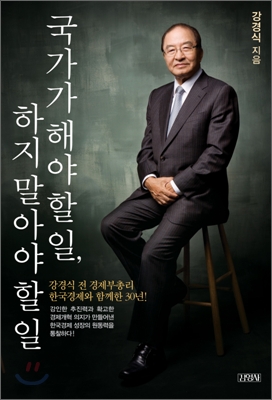
What the country should and should not do
 |
Description
Book Introduction
Establish the right intentions and lead people on the right path.
This is the path that the country and public officials should take!
This book was written by former Deputy Prime Minister and Minister of Economy and Finance Kang Kyung-sik, who served as Minister of Finance, Chief of Staff to the President, and member of the 12th, 14th, and 15th National Assembly.
He begins this book by saying, “I have spent the past ten years as an economic leader who failed to prevent the foreign exchange crisis.”
This is a statement made in reference to his time as Deputy Prime Minister and Minister of Strategy and Finance in 1997.
In this book, he candidly reveals his opinions on all the economic policies he and the government pursued before and after the foreign exchange crisis, the standards by which he planned, promoted, and evaluated work during his 30 years in public service, and what the government truly must do for the future development of the Korean economy.
He is a self-proclaimed orthodox economic bureaucrat.
He was promoted to the position of Deputy Prime Minister for Economic Affairs in recognition of his contributions to the Korean economy and his career, but in just eight months, amidst the sudden onslaught of the foreign exchange crisis, he was branded an “incompetent Deputy Prime Minister for Economic Affairs” and had to resign from all public posts, remaining silent for over ten years.
In the book, he does not shift this responsibility to anyone.
However, it only lists what the country should do and what it should not do.
Also, as an economic expert and a public official who has served the country, he is simply expressing his voice.
This is the path that the country and public officials should take!
This book was written by former Deputy Prime Minister and Minister of Economy and Finance Kang Kyung-sik, who served as Minister of Finance, Chief of Staff to the President, and member of the 12th, 14th, and 15th National Assembly.
He begins this book by saying, “I have spent the past ten years as an economic leader who failed to prevent the foreign exchange crisis.”
This is a statement made in reference to his time as Deputy Prime Minister and Minister of Strategy and Finance in 1997.
In this book, he candidly reveals his opinions on all the economic policies he and the government pursued before and after the foreign exchange crisis, the standards by which he planned, promoted, and evaluated work during his 30 years in public service, and what the government truly must do for the future development of the Korean economy.
He is a self-proclaimed orthodox economic bureaucrat.
He was promoted to the position of Deputy Prime Minister for Economic Affairs in recognition of his contributions to the Korean economy and his career, but in just eight months, amidst the sudden onslaught of the foreign exchange crisis, he was branded an “incompetent Deputy Prime Minister for Economic Affairs” and had to resign from all public posts, remaining silent for over ten years.
In the book, he does not shift this responsibility to anyone.
However, it only lists what the country should do and what it should not do.
Also, as an economic expert and a public official who has served the country, he is simply expressing his voice.
index
preface
Chapter 1: Becoming Deputy Prime Minister for Economic Affairs
Emergency measures to put out the fire
Austerity policies to curb imports
Strengthening public relations and establishing a cooperative system
Unemployment measures
National Task 21: Building a Foundation for a Leap Forward: An Open Market Economy
Overseas Focus: Non-Performing Loan Countermeasures
Promotion of financial reform
Don't go bankrupt
IMF assesses the Korean economy as sound.
Korea helplessly caught in the northward-moving typhoon
Korea in a liquidity trap
Chapter 2: Creating the Criminal
South Korea's Falling Economy: From Request for IMF Support to Agreement
Last attempt to pass financial reform bill
Change firefighters while putting out a fire
Strange things happened after I quit my position as Deputy Prime Minister.
Requesting IMF support again
The beginning of chaos is a cabinet reshuffle
Collecting guardianship nominations
Things that contributed to early graduation from the IMF
My Guardianship: A Standing in Illusion
Politics is always the problem
Chapter 3: Preparing the National Budget
Yes Man and No Man
Even in front of the president, 'no'
How to prepare a budget
Government funds are not 'ownerless money'.
Living on nothing
Matching Income and Expenses
Efforts to improve the budget system
Audit of budget execution
Budget cycle, living on a yearly basis
How I came to work in the budget field
Overseas education opportunities provided by Deputy Prime Minister Kim Hak-ryeol
Chapter 4: The Path to Price Stability
An Impossible Task: 3% Price Stability
The 3% target was achieved, but
The inflationary whirlwind brought about by the first oil shock
The Truth and Lies of Price Controls
Problems with administrative regulations
The consumer must be the 'gap'
A shift in price policy that can no longer be delayed
Creating a Basic Framework for Price Stability
Achieve single-digit price stability
Chapter 5: Planning for the Future
The first challenge is self-reliant economy
Most of the major national projects are unplanned projects.
The five-year economic development plan is a flag of advancement
The first thing I did as the planning director
Send all officers on overseas inspections
Features of the 4th Plan
Similarities and Differences Between the Five-Year Plan and Budget Compilation
Changing the way investment resources are allocated
Introduction of the health insurance system
Change the way telephone exchanges are done
Tasks reviewed for the future
A good opportunity to study current economic issues
Creating the 5th Five-Year Plan
Inspection of advanced countries
Introduction of full-scale inductive planning techniques
Five-Year Plan Preparation System
Key points of the 5th plan
Setting the direction for welfare issues
Chapter 6: Process of Developing Stabilization Measures
Is there really nothing wrong with our economy?
Our economy is at a turning point.
wait
Seeing Korea's future from the Soviet Union
Stabilization measures finally see the light of day
President Park Chung-hee's dissatisfaction
Stabilization measures finally become government policy
Significance of stabilization policies
The unique process of developing stabilization measures
Chapter 7 Stabilization Policy, the Keynote of the Fifth Republic Policy
Austerity is essential for stability.
Food price stability
Financial reform hasn't made any progress
Adjustment of the Deferred Export Support Financing and Economic Coup
Investment in the Heavy Chemical Industry: What's the Problem?
The Fifth Plan and the Fifth Republic's Economic Policy Direction
What changes have the stabilization measures brought about?
Chapter 8: Real-Name Financial Transactions and Tax Reform
Short term as Under Secretary of the Treasury
The Jang Young-ja case continues to grow like wildfire.
Be appointed Minister of Finance
The real-name financial system plan is the 7.3 measure.
Why is a real-name financial system necessary?
persistent opposition to the real-name financial transaction system
Real-name system
They say there is no 'if' in history.
The trickle-down effect of the real-name system controversy
tax reform
Chapter 9: Opening and Tariff System Reform
The first open, export-led development strategy
Closed policies hidden within openness
Second opening and import liberalization are not optional but essential.
Public debate surrounding import liberalization
Customs system reform for domestic liberalization
Tariff rates determined through public discussion
Liberalization: A Crossroads for the North and South Korean Economies
The third opening, FTA
Three Presidents Who Created an Open Market Economy
Chapter 10: Responding to Major Financial Accidents
A series of large-scale financial accidents continues
Handling of public construction projects
Handling reputational cases through legal procedures
Handling of the Yeongdong Development Case, Which Is Unclear in Principles
Sambo Securities market shortage incident
Improvement of the Certified Public Accountant System
We need to make it routine to deal with bad debts.
Chapter 11: Financial Reform at a Standstill
Why was financial reform rushed in the stabilization policy?
Simultaneous adjustment of interest rates and exchange rates and the June 28th measures
Financial reform efforts during his tenure as Minister of Finance
Finding a way to resolve the conflict between the Ministry of Finance and the Economic Planning Board
Joining the OECD is a good opportunity for financial reform.
Financial reform is being pursued again after 15 years.
Chapter 12: Managing the Economic Crisis
Aung San North Korea terrorist attack
The first oil shock and the national bankruptcy crisis
Crisis due to domestic factors
October 26 and the second oil shock
The severe foreign debt crisis
Revision of the Foreign Capital Attraction Act as a fundamental measure
Ubiquitous
Reviews
References
Chapter 1: Becoming Deputy Prime Minister for Economic Affairs
Emergency measures to put out the fire
Austerity policies to curb imports
Strengthening public relations and establishing a cooperative system
Unemployment measures
National Task 21: Building a Foundation for a Leap Forward: An Open Market Economy
Overseas Focus: Non-Performing Loan Countermeasures
Promotion of financial reform
Don't go bankrupt
IMF assesses the Korean economy as sound.
Korea helplessly caught in the northward-moving typhoon
Korea in a liquidity trap
Chapter 2: Creating the Criminal
South Korea's Falling Economy: From Request for IMF Support to Agreement
Last attempt to pass financial reform bill
Change firefighters while putting out a fire
Strange things happened after I quit my position as Deputy Prime Minister.
Requesting IMF support again
The beginning of chaos is a cabinet reshuffle
Collecting guardianship nominations
Things that contributed to early graduation from the IMF
My Guardianship: A Standing in Illusion
Politics is always the problem
Chapter 3: Preparing the National Budget
Yes Man and No Man
Even in front of the president, 'no'
How to prepare a budget
Government funds are not 'ownerless money'.
Living on nothing
Matching Income and Expenses
Efforts to improve the budget system
Audit of budget execution
Budget cycle, living on a yearly basis
How I came to work in the budget field
Overseas education opportunities provided by Deputy Prime Minister Kim Hak-ryeol
Chapter 4: The Path to Price Stability
An Impossible Task: 3% Price Stability
The 3% target was achieved, but
The inflationary whirlwind brought about by the first oil shock
The Truth and Lies of Price Controls
Problems with administrative regulations
The consumer must be the 'gap'
A shift in price policy that can no longer be delayed
Creating a Basic Framework for Price Stability
Achieve single-digit price stability
Chapter 5: Planning for the Future
The first challenge is self-reliant economy
Most of the major national projects are unplanned projects.
The five-year economic development plan is a flag of advancement
The first thing I did as the planning director
Send all officers on overseas inspections
Features of the 4th Plan
Similarities and Differences Between the Five-Year Plan and Budget Compilation
Changing the way investment resources are allocated
Introduction of the health insurance system
Change the way telephone exchanges are done
Tasks reviewed for the future
A good opportunity to study current economic issues
Creating the 5th Five-Year Plan
Inspection of advanced countries
Introduction of full-scale inductive planning techniques
Five-Year Plan Preparation System
Key points of the 5th plan
Setting the direction for welfare issues
Chapter 6: Process of Developing Stabilization Measures
Is there really nothing wrong with our economy?
Our economy is at a turning point.
wait
Seeing Korea's future from the Soviet Union
Stabilization measures finally see the light of day
President Park Chung-hee's dissatisfaction
Stabilization measures finally become government policy
Significance of stabilization policies
The unique process of developing stabilization measures
Chapter 7 Stabilization Policy, the Keynote of the Fifth Republic Policy
Austerity is essential for stability.
Food price stability
Financial reform hasn't made any progress
Adjustment of the Deferred Export Support Financing and Economic Coup
Investment in the Heavy Chemical Industry: What's the Problem?
The Fifth Plan and the Fifth Republic's Economic Policy Direction
What changes have the stabilization measures brought about?
Chapter 8: Real-Name Financial Transactions and Tax Reform
Short term as Under Secretary of the Treasury
The Jang Young-ja case continues to grow like wildfire.
Be appointed Minister of Finance
The real-name financial system plan is the 7.3 measure.
Why is a real-name financial system necessary?
persistent opposition to the real-name financial transaction system
Real-name system
They say there is no 'if' in history.
The trickle-down effect of the real-name system controversy
tax reform
Chapter 9: Opening and Tariff System Reform
The first open, export-led development strategy
Closed policies hidden within openness
Second opening and import liberalization are not optional but essential.
Public debate surrounding import liberalization
Customs system reform for domestic liberalization
Tariff rates determined through public discussion
Liberalization: A Crossroads for the North and South Korean Economies
The third opening, FTA
Three Presidents Who Created an Open Market Economy
Chapter 10: Responding to Major Financial Accidents
A series of large-scale financial accidents continues
Handling of public construction projects
Handling reputational cases through legal procedures
Handling of the Yeongdong Development Case, Which Is Unclear in Principles
Sambo Securities market shortage incident
Improvement of the Certified Public Accountant System
We need to make it routine to deal with bad debts.
Chapter 11: Financial Reform at a Standstill
Why was financial reform rushed in the stabilization policy?
Simultaneous adjustment of interest rates and exchange rates and the June 28th measures
Financial reform efforts during his tenure as Minister of Finance
Finding a way to resolve the conflict between the Ministry of Finance and the Economic Planning Board
Joining the OECD is a good opportunity for financial reform.
Financial reform is being pursued again after 15 years.
Chapter 12: Managing the Economic Crisis
Aung San North Korea terrorist attack
The first oil shock and the national bankruptcy crisis
Crisis due to domestic factors
October 26 and the second oil shock
The severe foreign debt crisis
Revision of the Foreign Capital Attraction Act as a fundamental measure
Ubiquitous
Reviews
References
Into the book
It's been well over ten years since I left public office.
He spent his time in self-restraint as an economic leader who failed to prevent the foreign exchange crisis.
Yet, I couldn't shake the feeling of unease that I was putting off doing the homework I needed to do.
It was because I felt I needed to leave a record of what I experienced while working in the economic field and what I thought while doing these things.
I decided that it was appropriate to record my thoughts, even if it seemed like I was putting myself out there too much.
I felt that even though we worked together, I couldn't determine on my own whether or not he actually thought the same way as me.
I have no intention of claiming that my thoughts are the best or correct.
I decided to simply reveal my thoughts at the time I was working and the thoughts I had when establishing policies.
And just because I thought that doesn't mean it was my idea.
You can't tell where the source is, whether it's something you heard from your boss, colleagues, experts, scholars, businesspeople, or something you saw or heard in a book, report, or media outlet.
If there is something in the book that you agree with or that was done well, please attribute it to us, and if there is something that was done wrong, please attribute it to me. --- From the 'Preface' on pp. 5-6
He received his appointment as Deputy Prime Minister for Economic Affairs on March 5, 1997.
It was a time when the whole country was in turmoil due to the prosecution's investigation into the bankruptcy of Hanbo.
Rumors of a financial crisis continued unabated.
The media gave a big story to his brief mention of the need to improve the real-name financial transaction system during a conversation with reporters who had gathered after the announcement of the cabinet reshuffle.
Although it was briefly plagued by a strange problem, the real-name system controversy soon died down when it was decided to change the emergency order that "not a single character can be changed" into a law.
When I returned nearly 14 years after leaving the post of Minister of Finance in October 1983, I found that not only the economy but also the organization and operation of the administration had changed significantly.
It is natural to establish policy directions after understanding the changes and work status during the gap period.
Even a simple status report showed that the economic problems were much more serious than outsiders had thought.
There was no time to even understand the details of the work.
Of course, there was no time for extensive and in-depth review and discussion.
Stabilizing the financial market was an urgent task.
We had to quickly come up with special measures that could have immediate effects.
However, there was no groundbreaking solution that could change the situation like the real-name financial transaction system.
As for Hanbo, which is currently in trouble, we decided to deal with it on the principle of bankruptcy first and countermeasures later.
Since the financial market is a domestic issue, there is no need to worry too much because if there is an emergency, there is a way to restore stability by releasing funds from the Bank of Korea or by taking appropriate measures.
The problem was overseas. --- pp.20-21 From 'Becoming Deputy Prime Minister for Economic Affairs'
As Hanbo went bankrupt, President Kim Young-sam began to suffer from a fear of bankruptcy.
The president always urged people not to default on their duties during business reports.
Less than a week after taking office as Deputy Prime Minister for Economic Affairs in 1997, Sammi Special Steel went bankrupt.
Since there was no other way than bankruptcy, they quickly filed for court receivership and moved on.
Less than a month later, Jinro was forced into bankruptcy.
The president regretted Hanbo's bankruptcy and gave instructions to prevent it from going bankrupt at all costs.
Who would want to go bankrupt even without the president's orders?
But unfortunately, there was no way to stop it.
The advice not to default should be directed to corporate executives, not the Ministry of Strategy and Finance or financial institutions.
Because 'insolvency is not something you do' but something you 'grow'. --- pp.85-86 From 'Becoming the Deputy Prime Minister for Economic Affairs'
In other countries, when something unexpected like a foreign exchange crisis occurs, a government-level investigation committee is usually created.
The United States produced the "9/11 Report" after investigating the 9/11 World Trade Center terrorist attacks for several years.
In the same way, we are gathering expert opinions on the causes and countermeasures for the 2008 financial crisis and developing countermeasures.
Among the Asian countries that experienced a foreign exchange crisis, Thailand also created an investigative committee composed of experts and published a report on the causes of the crisis, what went wrong, who was at fault, and what should be done.
He appointed Nukul, a veteran economist who served as the central bank governor, as chairman and entrusted the work to six economic experts.
They interviewed those involved for several months and then released a report.
The right and wrong of the process that led to the economic crisis were determined.
That is the "Nukul Report."
During the foreign exchange crisis, Korea never formed a government-level investigation committee.
Of course, there is no “IMF White Paper.”
Although it was once said to be the greatest national crisis since the Korean War, no committee of economic experts was ever created to determine why such a massive crisis occurred and what should be done to prevent a repeat of this in the future.
Of course, there are reports from scholars and private research institutes.
However, there is no report at the national level that identifies the causes of the crisis and outlines measures to address it and prevent recurrence.
It's a sad thing. --- pp. 171-172 from 'Creating the Mastermind of the Chaos'
Even now, I often get scolded for saying, "No," when someone talks to me.
This habit of speaking has become second nature to me, as I have worked in the Budget Bureau for a long time.
Even when I was working as an officer in the Treasury Department of the Ministry of Finance, I didn't have that kind of habit of speaking.
I think it started like that when I moved to the Budget Bureau of the Ministry of Planning and Budget.
When I asked for a budget, they started by saying “No” before even reviewing the content.
It was that difficult to run the country.
(Omitted) The Minister of Justice stood up and said, “Your Excellency! The prison guards are having a hard time.
“Please increase the allowances for these people,” he suggested.
It was customary to listen to the report at the final report meeting and approve it as is.
I didn't expect to make such a request.
As the Vice Prime Minister had to answer, I hurried over to his desk to help him figure out how to respond, but the President said, “Director Kang, don’t go, just talk to him there.”
The idea was to tell the budget director's opinion straight out.
He stood there and answered, “No.”
It is a true revelation of Norman's true nature.
Then, the meeting attendees burst into laughter.
The conference room was suddenly filled with laughter.
I didn't care and explained the reason.
“If the correctional officer allowance is increased, other allowances should be increased as well.” He listed various allowances that receive the same amount as correctional officers, such as police station constables and lighthouse guards.
Then the conference room became quiet.
The reason for opposing the increase was that it would not be enough to just raise the allowances of correctional officers, but other occupational allowances would also need to be raised, which would require a large budget. --- From 'Preparing the National Budget' pp. 198-200
We must avoid the overheated economy amidst high prices like in the past. This is because corporate profit growth rates are exceeding 40% per year and agricultural product prices are rising by 20-30% per year.
As the labor shortage worsens, wages are rising by more than 30% annually, and unusual real estate speculation and increased consumption are occurring. This reality cannot continue as it is.
Inflation not only erodes growth potential by reducing savings capacity and weakening international competitiveness, but also exacerbates social unrest by worsening income distribution.
To correct this, we must accept a temporary recession.
Today's economic downturn is a backlash from the unusually overheated economy of the past two to three years, coupled with worsening external conditions, including the surge in overseas raw material prices, including crude oil.
Therefore, we must establish more realistic and achievable targets for economic growth, an upper limit on the unemployment rate, price stability, and tolerable export and balance of payments goals, and then operate all policies consistently and flexibly within those targets.
To reduce the pressure on rising costs, we must pursue strong income policies, including stabilizing agricultural product prices, curbing excessive wage increases, and reducing corporate nominal profits. We must also swiftly pursue interest rate liberalization.
In this way, we made every effort to arouse the President's interest in stabilization policies. --- pp. 445-446 From 'Stabilization Policies, the Keynote of the Fifth Republic'
I am a former civil servant.
Although I was a member of the National Assembly and lived a life outside of public office, I was unable to escape the framework of a public official.
Civil servants work for the country.
That is why I worked with many presidents, including Park Chung-hee, Choi Kyu-ha, Chun Doo-hwan, and Kim Young-sam.
Civil servants naturally thought that was the case.
I even heard people ask how someone who served as President Chun Doo-hwan's chief of staff could serve as Deputy Prime Minister for Economic Affairs under President Kim Young-sam.
I never thought it was strange at all to work like that.
I thought I was working to fix the country's struggling economy, but I didn't think I was working with President Kim Young-sam at the center.
The country came before the president.
As a result, it became a habit to first verify the country's standards before thinking that one must follow the president's instructions even when it comes to work attitude.
It seems to have become second nature to me as I work on budget planning to manage a country that doesn't exist. --- From the 'Postscript' on pp.697-698
When thinking about how to change things, I tried to find my place by identifying what the government should be doing but is not doing, and what the government is doing but should not be doing.
To determine this, we begin by asking the question: Why should the government do it?
The stabilization policy was to find the right place for what should be decided in the market, not at the desk of a government official.
In other words, the idea was to ensure that the economy operates according to market economic principles and to reform the roles and functions of the government accordingly.
It goes without saying that quitting what the government has been doing means doing nothing.
This means that the role of the government must change.
He spent his time in self-restraint as an economic leader who failed to prevent the foreign exchange crisis.
Yet, I couldn't shake the feeling of unease that I was putting off doing the homework I needed to do.
It was because I felt I needed to leave a record of what I experienced while working in the economic field and what I thought while doing these things.
I decided that it was appropriate to record my thoughts, even if it seemed like I was putting myself out there too much.
I felt that even though we worked together, I couldn't determine on my own whether or not he actually thought the same way as me.
I have no intention of claiming that my thoughts are the best or correct.
I decided to simply reveal my thoughts at the time I was working and the thoughts I had when establishing policies.
And just because I thought that doesn't mean it was my idea.
You can't tell where the source is, whether it's something you heard from your boss, colleagues, experts, scholars, businesspeople, or something you saw or heard in a book, report, or media outlet.
If there is something in the book that you agree with or that was done well, please attribute it to us, and if there is something that was done wrong, please attribute it to me. --- From the 'Preface' on pp. 5-6
He received his appointment as Deputy Prime Minister for Economic Affairs on March 5, 1997.
It was a time when the whole country was in turmoil due to the prosecution's investigation into the bankruptcy of Hanbo.
Rumors of a financial crisis continued unabated.
The media gave a big story to his brief mention of the need to improve the real-name financial transaction system during a conversation with reporters who had gathered after the announcement of the cabinet reshuffle.
Although it was briefly plagued by a strange problem, the real-name system controversy soon died down when it was decided to change the emergency order that "not a single character can be changed" into a law.
When I returned nearly 14 years after leaving the post of Minister of Finance in October 1983, I found that not only the economy but also the organization and operation of the administration had changed significantly.
It is natural to establish policy directions after understanding the changes and work status during the gap period.
Even a simple status report showed that the economic problems were much more serious than outsiders had thought.
There was no time to even understand the details of the work.
Of course, there was no time for extensive and in-depth review and discussion.
Stabilizing the financial market was an urgent task.
We had to quickly come up with special measures that could have immediate effects.
However, there was no groundbreaking solution that could change the situation like the real-name financial transaction system.
As for Hanbo, which is currently in trouble, we decided to deal with it on the principle of bankruptcy first and countermeasures later.
Since the financial market is a domestic issue, there is no need to worry too much because if there is an emergency, there is a way to restore stability by releasing funds from the Bank of Korea or by taking appropriate measures.
The problem was overseas. --- pp.20-21 From 'Becoming Deputy Prime Minister for Economic Affairs'
As Hanbo went bankrupt, President Kim Young-sam began to suffer from a fear of bankruptcy.
The president always urged people not to default on their duties during business reports.
Less than a week after taking office as Deputy Prime Minister for Economic Affairs in 1997, Sammi Special Steel went bankrupt.
Since there was no other way than bankruptcy, they quickly filed for court receivership and moved on.
Less than a month later, Jinro was forced into bankruptcy.
The president regretted Hanbo's bankruptcy and gave instructions to prevent it from going bankrupt at all costs.
Who would want to go bankrupt even without the president's orders?
But unfortunately, there was no way to stop it.
The advice not to default should be directed to corporate executives, not the Ministry of Strategy and Finance or financial institutions.
Because 'insolvency is not something you do' but something you 'grow'. --- pp.85-86 From 'Becoming the Deputy Prime Minister for Economic Affairs'
In other countries, when something unexpected like a foreign exchange crisis occurs, a government-level investigation committee is usually created.
The United States produced the "9/11 Report" after investigating the 9/11 World Trade Center terrorist attacks for several years.
In the same way, we are gathering expert opinions on the causes and countermeasures for the 2008 financial crisis and developing countermeasures.
Among the Asian countries that experienced a foreign exchange crisis, Thailand also created an investigative committee composed of experts and published a report on the causes of the crisis, what went wrong, who was at fault, and what should be done.
He appointed Nukul, a veteran economist who served as the central bank governor, as chairman and entrusted the work to six economic experts.
They interviewed those involved for several months and then released a report.
The right and wrong of the process that led to the economic crisis were determined.
That is the "Nukul Report."
During the foreign exchange crisis, Korea never formed a government-level investigation committee.
Of course, there is no “IMF White Paper.”
Although it was once said to be the greatest national crisis since the Korean War, no committee of economic experts was ever created to determine why such a massive crisis occurred and what should be done to prevent a repeat of this in the future.
Of course, there are reports from scholars and private research institutes.
However, there is no report at the national level that identifies the causes of the crisis and outlines measures to address it and prevent recurrence.
It's a sad thing. --- pp. 171-172 from 'Creating the Mastermind of the Chaos'
Even now, I often get scolded for saying, "No," when someone talks to me.
This habit of speaking has become second nature to me, as I have worked in the Budget Bureau for a long time.
Even when I was working as an officer in the Treasury Department of the Ministry of Finance, I didn't have that kind of habit of speaking.
I think it started like that when I moved to the Budget Bureau of the Ministry of Planning and Budget.
When I asked for a budget, they started by saying “No” before even reviewing the content.
It was that difficult to run the country.
(Omitted) The Minister of Justice stood up and said, “Your Excellency! The prison guards are having a hard time.
“Please increase the allowances for these people,” he suggested.
It was customary to listen to the report at the final report meeting and approve it as is.
I didn't expect to make such a request.
As the Vice Prime Minister had to answer, I hurried over to his desk to help him figure out how to respond, but the President said, “Director Kang, don’t go, just talk to him there.”
The idea was to tell the budget director's opinion straight out.
He stood there and answered, “No.”
It is a true revelation of Norman's true nature.
Then, the meeting attendees burst into laughter.
The conference room was suddenly filled with laughter.
I didn't care and explained the reason.
“If the correctional officer allowance is increased, other allowances should be increased as well.” He listed various allowances that receive the same amount as correctional officers, such as police station constables and lighthouse guards.
Then the conference room became quiet.
The reason for opposing the increase was that it would not be enough to just raise the allowances of correctional officers, but other occupational allowances would also need to be raised, which would require a large budget. --- From 'Preparing the National Budget' pp. 198-200
We must avoid the overheated economy amidst high prices like in the past. This is because corporate profit growth rates are exceeding 40% per year and agricultural product prices are rising by 20-30% per year.
As the labor shortage worsens, wages are rising by more than 30% annually, and unusual real estate speculation and increased consumption are occurring. This reality cannot continue as it is.
Inflation not only erodes growth potential by reducing savings capacity and weakening international competitiveness, but also exacerbates social unrest by worsening income distribution.
To correct this, we must accept a temporary recession.
Today's economic downturn is a backlash from the unusually overheated economy of the past two to three years, coupled with worsening external conditions, including the surge in overseas raw material prices, including crude oil.
Therefore, we must establish more realistic and achievable targets for economic growth, an upper limit on the unemployment rate, price stability, and tolerable export and balance of payments goals, and then operate all policies consistently and flexibly within those targets.
To reduce the pressure on rising costs, we must pursue strong income policies, including stabilizing agricultural product prices, curbing excessive wage increases, and reducing corporate nominal profits. We must also swiftly pursue interest rate liberalization.
In this way, we made every effort to arouse the President's interest in stabilization policies. --- pp. 445-446 From 'Stabilization Policies, the Keynote of the Fifth Republic'
I am a former civil servant.
Although I was a member of the National Assembly and lived a life outside of public office, I was unable to escape the framework of a public official.
Civil servants work for the country.
That is why I worked with many presidents, including Park Chung-hee, Choi Kyu-ha, Chun Doo-hwan, and Kim Young-sam.
Civil servants naturally thought that was the case.
I even heard people ask how someone who served as President Chun Doo-hwan's chief of staff could serve as Deputy Prime Minister for Economic Affairs under President Kim Young-sam.
I never thought it was strange at all to work like that.
I thought I was working to fix the country's struggling economy, but I didn't think I was working with President Kim Young-sam at the center.
The country came before the president.
As a result, it became a habit to first verify the country's standards before thinking that one must follow the president's instructions even when it comes to work attitude.
It seems to have become second nature to me as I work on budget planning to manage a country that doesn't exist. --- From the 'Postscript' on pp.697-698
When thinking about how to change things, I tried to find my place by identifying what the government should be doing but is not doing, and what the government is doing but should not be doing.
To determine this, we begin by asking the question: Why should the government do it?
The stabilization policy was to find the right place for what should be decided in the market, not at the desk of a government official.
In other words, the idea was to ensure that the economy operates according to market economic principles and to reform the roles and functions of the government accordingly.
It goes without saying that quitting what the government has been doing means doing nothing.
This means that the role of the government must change.
---From 'Review' pp.700-701
Publisher's Review
Establish the right intentions and lead people on the right path.
This is the path that the country and public officials should take!
Former Deputy Prime Minister and Minister of Economy and Finance, Kang Kyung-sik, dedicated his life to the development of the Korean economy with unwavering tenacity despite countless hardships and adversities. This book culminates in his 30-plus years of dedicated economic reform policies! This book tells the story of a principled economic reformer who prioritized economics over ideology and practice over theory. From the "stabilization policy," hailed as a Copernican shift in economic policy, to solutions to the challenges facing the Korean economy today, this book offers clear insights into the 21st-century Korean economy.
Former Deputy Prime Minister and Minister of Economy and Finance Kang Kyung-sik, who served as Minister of Finance, Chief of Staff to the President, and member of the 12th, 14th, and 15th National Assembly.
Now, more than ten years after leaving public office, he has carefully published a book.
He begins this book by saying, “I have spent the past ten years as an economic leader who failed to prevent the foreign exchange crisis.”
This is a statement made in reference to his time as Deputy Prime Minister and Minister of Strategy and Finance in 1997.
In this book, he candidly reveals his opinions on all the economic policies he and the government pursued before and after the foreign exchange crisis, the standards by which he planned, promoted, and evaluated work during his 30 years in public service, and what the government truly must do for the future development of the Korean economy.
What should the state do and what should it not do?
What else is the state doing that it shouldn't be doing?
He is a self-proclaimed orthodox economic bureaucrat.
He was promoted to the position of Deputy Prime Minister for Economic Affairs in recognition of his contributions to the Korean economy and his career, but in just eight months, amidst the sudden onslaught of the foreign exchange crisis, he was branded an “incompetent Deputy Prime Minister for Economic Affairs” and had to resign from all public posts, remaining silent for over ten years.
But he doesn't pass the responsibility on to anyone.
However, it only lists what the country should do and what it should not do.
Also, as an economic expert and a public official who has served the country, he is simply expressing his voice.
First, he advises that when thinking about how to change, it is important to discern what the country should be doing but is not doing, as well as what the country is doing but should not be doing.
To determine this, we begin by asking the question, "Why should the government do this?"
It is necessary to find the right place for what should be decided in the market, not at the desk of a government official.
If we use a sports analogy, the government's role is to set the rules of the game, monitor whether players play fairly while following the rules, and impose appropriate sanctions when they commit a foul.
The government's role does not end here; it must establish a system that allows for the "resurrection of losers" for those who fail to compete, and provide policy considerations to make this possible.
There are also many people who cannot participate in the competition from the beginning.
For those in need of social assistance, the government must provide support measures to enable them to maintain a minimum standard of living as citizens.
To build a competitive society, we must also faithfully build these social safety nets.
However, the government repeatedly emphasizes that players should not play with one team to help the other team win.
The task of determining whether something is something the government should do or not is not a one-time thing.
You must always pay attention and take care of it carefully.
If you see signs of going down a different path, you must immediately step forward and correct it.
This is not a task that can be left solely to the government.
This is something that requires the combined will and strength of all our citizens.
The market economy system and liberal democracy must be continuously nurtured and developed.
Because it is a very fragile system that can be easily damaged by even the slightest indifference.
When we say 'Ming', we usually think of Bian Que.
Bian Que, the legendary Chinese physician known for raising even the dead, had two older brothers.
The older brother prevented illness before it occurred, the younger brother cured illness in its early stages, and the younger brother only cured seriously ill patients.
However, although Pyeonjak is remembered to this day, very few people know that Pyeonjak's older brothers were famous.
The world recognizes the 'preventive medicine' that cures the seriously ill as a famous medicine, but the 'preventive medicine' that prevents the disease from occurring in the first place is not well known.
Politicians should be as famous as the editors.
However, public officials must play a role similar to that of a collaborator.
Former Deputy Prime Minister and Minister of Economy and Finance Kang Kyung-sik also tried to play a role similar to that of Pyeon Jak when promoting reform efforts.
This book, reflecting on his career in public service, captures the path the Korean economy has taken and the path it should take. It is a book filled with his unvarnished hopes that his experiences will contribute, even if only slightly, to the success of the Korean economy and his juniors in public service.
This is the path that the country and public officials should take!
Former Deputy Prime Minister and Minister of Economy and Finance, Kang Kyung-sik, dedicated his life to the development of the Korean economy with unwavering tenacity despite countless hardships and adversities. This book culminates in his 30-plus years of dedicated economic reform policies! This book tells the story of a principled economic reformer who prioritized economics over ideology and practice over theory. From the "stabilization policy," hailed as a Copernican shift in economic policy, to solutions to the challenges facing the Korean economy today, this book offers clear insights into the 21st-century Korean economy.
Former Deputy Prime Minister and Minister of Economy and Finance Kang Kyung-sik, who served as Minister of Finance, Chief of Staff to the President, and member of the 12th, 14th, and 15th National Assembly.
Now, more than ten years after leaving public office, he has carefully published a book.
He begins this book by saying, “I have spent the past ten years as an economic leader who failed to prevent the foreign exchange crisis.”
This is a statement made in reference to his time as Deputy Prime Minister and Minister of Strategy and Finance in 1997.
In this book, he candidly reveals his opinions on all the economic policies he and the government pursued before and after the foreign exchange crisis, the standards by which he planned, promoted, and evaluated work during his 30 years in public service, and what the government truly must do for the future development of the Korean economy.
What should the state do and what should it not do?
What else is the state doing that it shouldn't be doing?
He is a self-proclaimed orthodox economic bureaucrat.
He was promoted to the position of Deputy Prime Minister for Economic Affairs in recognition of his contributions to the Korean economy and his career, but in just eight months, amidst the sudden onslaught of the foreign exchange crisis, he was branded an “incompetent Deputy Prime Minister for Economic Affairs” and had to resign from all public posts, remaining silent for over ten years.
But he doesn't pass the responsibility on to anyone.
However, it only lists what the country should do and what it should not do.
Also, as an economic expert and a public official who has served the country, he is simply expressing his voice.
First, he advises that when thinking about how to change, it is important to discern what the country should be doing but is not doing, as well as what the country is doing but should not be doing.
To determine this, we begin by asking the question, "Why should the government do this?"
It is necessary to find the right place for what should be decided in the market, not at the desk of a government official.
If we use a sports analogy, the government's role is to set the rules of the game, monitor whether players play fairly while following the rules, and impose appropriate sanctions when they commit a foul.
The government's role does not end here; it must establish a system that allows for the "resurrection of losers" for those who fail to compete, and provide policy considerations to make this possible.
There are also many people who cannot participate in the competition from the beginning.
For those in need of social assistance, the government must provide support measures to enable them to maintain a minimum standard of living as citizens.
To build a competitive society, we must also faithfully build these social safety nets.
However, the government repeatedly emphasizes that players should not play with one team to help the other team win.
The task of determining whether something is something the government should do or not is not a one-time thing.
You must always pay attention and take care of it carefully.
If you see signs of going down a different path, you must immediately step forward and correct it.
This is not a task that can be left solely to the government.
This is something that requires the combined will and strength of all our citizens.
The market economy system and liberal democracy must be continuously nurtured and developed.
Because it is a very fragile system that can be easily damaged by even the slightest indifference.
When we say 'Ming', we usually think of Bian Que.
Bian Que, the legendary Chinese physician known for raising even the dead, had two older brothers.
The older brother prevented illness before it occurred, the younger brother cured illness in its early stages, and the younger brother only cured seriously ill patients.
However, although Pyeonjak is remembered to this day, very few people know that Pyeonjak's older brothers were famous.
The world recognizes the 'preventive medicine' that cures the seriously ill as a famous medicine, but the 'preventive medicine' that prevents the disease from occurring in the first place is not well known.
Politicians should be as famous as the editors.
However, public officials must play a role similar to that of a collaborator.
Former Deputy Prime Minister and Minister of Economy and Finance Kang Kyung-sik also tried to play a role similar to that of Pyeon Jak when promoting reform efforts.
This book, reflecting on his career in public service, captures the path the Korean economy has taken and the path it should take. It is a book filled with his unvarnished hopes that his experiences will contribute, even if only slightly, to the success of the Korean economy and his juniors in public service.
GOODS SPECIFICS
- Date of issue: December 15, 2010
- Format: Hardcover book binding method guide
- Page count, weight, size: 712 pages | 1,182g | 153*224*40mm
- ISBN13: 9788934944607
- ISBN10: 8934944609
You may also like
카테고리
korean


korean

![GQ KOREA Mark (Monthly): December [2025]](http://librairie.coreenne.fr/cdn/shop/files/8ef265dbbfbf186523ed75ba7319009d.jpg?v=1765340328&width=3840)


