

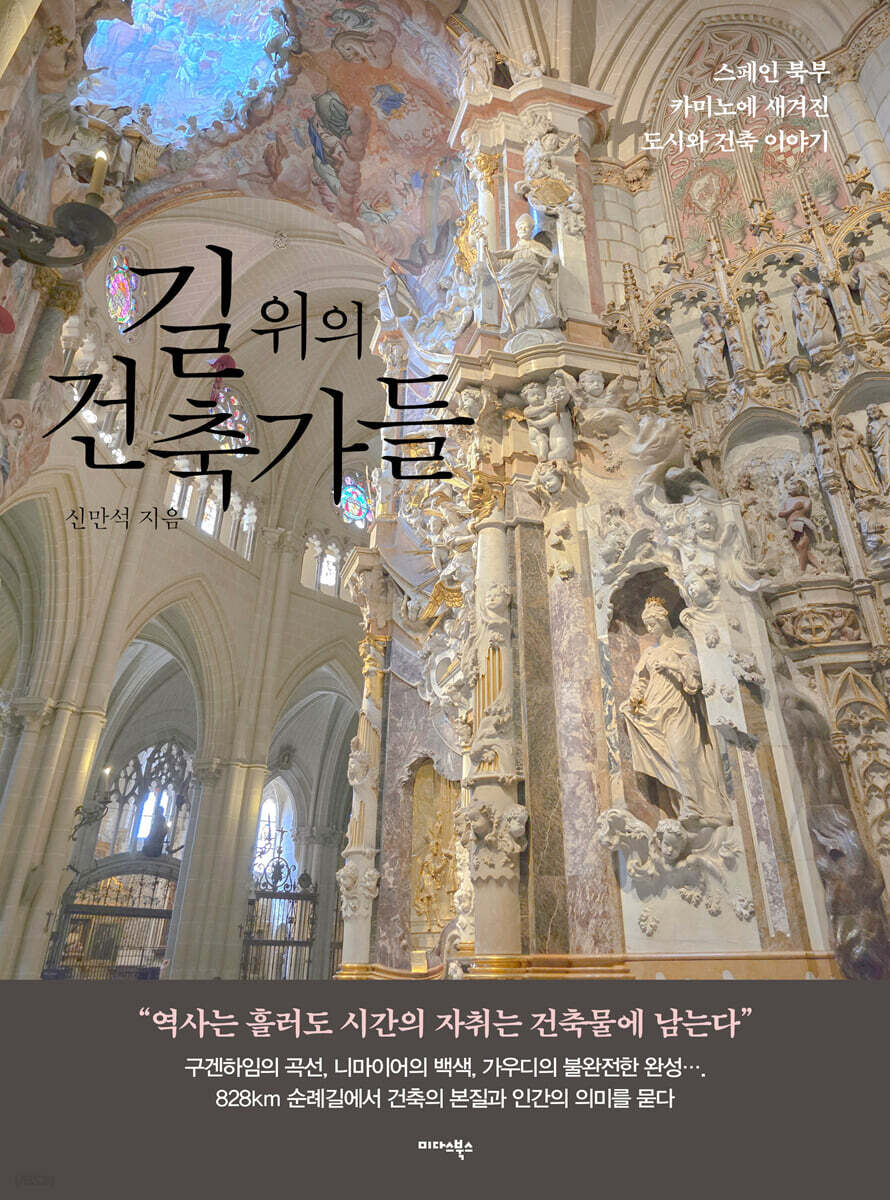
Architects on the Road
 |
Description
Book Introduction
Stories of Cities and Architecture Engraved on the Camino in Northern Spain
A sea of curves, a building of light, a city of memories
─An interpretation only those who walk obtain
“Architects design spaces,
Ultimately, it is people who complete the story of that space.
"
On the 828km pilgrimage route
Questioning the essence of architecture and the meaning of humanity
This book is a humanistic architectural travelogue that interprets the 'Camino de Santiago' in Northern Spain through the footsteps of an architect, restoring the meaning of a place where cities, architecture, people, and time overlap.
The author, who has been designing and supervising for over 40 years, covered the drawings, carried a backpack, and recorded what he encountered on the road.
Starting from the Basque Country's gateway, Anday-Irún, along the Camino in northern Spain, we read the rhythm of the port cities along the Atlantic Ocean, starting from La Concha in San Sebastián, Bilbao and the Guggenheim, the Plaza de Silence and the 'Tree of Guernica' in Guernica, through the eyes of an architect and understanding them through the feet of a pilgrim.
You can read humanistic insights that unfold along with the recorded photos at every step.
A sea of curves, a building of light, a city of memories
─An interpretation only those who walk obtain
“Architects design spaces,
Ultimately, it is people who complete the story of that space.
"
On the 828km pilgrimage route
Questioning the essence of architecture and the meaning of humanity
This book is a humanistic architectural travelogue that interprets the 'Camino de Santiago' in Northern Spain through the footsteps of an architect, restoring the meaning of a place where cities, architecture, people, and time overlap.
The author, who has been designing and supervising for over 40 years, covered the drawings, carried a backpack, and recorded what he encountered on the road.
Starting from the Basque Country's gateway, Anday-Irún, along the Camino in northern Spain, we read the rhythm of the port cities along the Atlantic Ocean, starting from La Concha in San Sebastián, Bilbao and the Guggenheim, the Plaza de Silence and the 'Tree of Guernica' in Guernica, through the eyes of an architect and understanding them through the feet of a pilgrim.
You can read humanistic insights that unfold along with the recorded photos at every step.
- You can preview some of the book's contents.
Preview
index
Prologue - An Architect on a Pilgrimage
Part 1.
A Path from the Border: Beginning a Pilgrimage at the Basque Country's Doorstep
Chapter 1.
Crossing the Border, Standing at the Threshold of Pilgrimage - Ungdai and Irun
Chapter 2.
City of Curves, Architecture of Curves - San Sebastián
Chapter 3.
Guernica: A City of Overlapping Memories and Symbols
Chapter 4.
How a city is reborn after the Guggenheim - Bilbao
Part 2.
Cities by the Sea: A Walking Architect's Perspective
Chapter 5.
Breathtaking Medieval Breath Above the Sea - Castro Urdiales
Chapter 6.
From the King's Sea to the Citizen's Sea - Santander
Chapter 7.
The Soul of Romanesque in the Alleys of Time - Santillana del Mar
Chapter 8.
Experiments with irregular form and decoration, a challenge for the young Gaudí - Comillas
Chapter 9.
Walking through the waves of memory - Ribadesella
Chapter 10.
The steel arms of industry and the gentle touch of the sea - Gijon
Chapter 11.
A Curved Future, Niemeyer's Melodies - Aviles
Chapter 12.
The Glory of the Final Destination - Santiago de Compostela
Chapter 13.
Hidden Architecture of the Pilgrimage Route - Oreo, Wisdom on the Road
Chapter 14.
The Sea, Stone, and Myths at the End of the World - Fisterra & Muxia
Part 3.
The Never-ending Journey: Madrid, Toledo, Valencia, Barcelona
Chapter 15.
The Heart of Modernity and the Soul of History - Madrid and Toledo
Chapter 16.
A Future Made of Water and Light - Valencia
Chapter 17.
Gaudí, the man who perfected the curve of God - Barcelona
Epilogue - Returning Feet, Still Walking Heart
Appendix - Complete Guide to the Camino de Santiago
A.
Camino de Santiago pilgrimage checklist
B.
Summary of features by recommended route
C.
Northern Road Itinerary and Major Albergues
D.
A Complete Guide to the Architectural Sites of the Northern Pilgrimage Route
E.
Comparative Chronology of Urbanism and Architecture in Korea and Spain
F.
Useful Spanish Expressions
[Architect's Perspective]
1] Kursaal Hall Focus Notes
2] Guernica's spatial strategy: a city that architects memory
3] Guggenheim Bilbao, a revolution in 21st-century architecture
4] Santa Maria Cathedral, Gothic wisdom in handling the wind
5] Centro Botín, architecture connecting the sea and the city
6] Collegiata Cathedral, the perfect example of Romanesque architecture
7] Altamira Cave, the first spatial art in human history
8] El Capricho, the secret of the house that follows the sun
9] Ribadesella, an organic city in harmony with nature
10] Chilida, the architecture of emptiness
11] Laboral Ciudad, the transition from authority to culture
12] Centro Niemeyer, The Future Singing in Curves
13] Santiago de Compostela Cathedral, architecture created by a thousand years of pilgrimage
14] Cathedral of Our Lady of the Ship
15] Toledo Cathedral, a masterpiece created by the layers of time
16] Science and Art City, City of Water and Light Stage
17] Sagrada Familia, the architectural lessons from the unfinished cathedral
Part 1.
A Path from the Border: Beginning a Pilgrimage at the Basque Country's Doorstep
Chapter 1.
Crossing the Border, Standing at the Threshold of Pilgrimage - Ungdai and Irun
Chapter 2.
City of Curves, Architecture of Curves - San Sebastián
Chapter 3.
Guernica: A City of Overlapping Memories and Symbols
Chapter 4.
How a city is reborn after the Guggenheim - Bilbao
Part 2.
Cities by the Sea: A Walking Architect's Perspective
Chapter 5.
Breathtaking Medieval Breath Above the Sea - Castro Urdiales
Chapter 6.
From the King's Sea to the Citizen's Sea - Santander
Chapter 7.
The Soul of Romanesque in the Alleys of Time - Santillana del Mar
Chapter 8.
Experiments with irregular form and decoration, a challenge for the young Gaudí - Comillas
Chapter 9.
Walking through the waves of memory - Ribadesella
Chapter 10.
The steel arms of industry and the gentle touch of the sea - Gijon
Chapter 11.
A Curved Future, Niemeyer's Melodies - Aviles
Chapter 12.
The Glory of the Final Destination - Santiago de Compostela
Chapter 13.
Hidden Architecture of the Pilgrimage Route - Oreo, Wisdom on the Road
Chapter 14.
The Sea, Stone, and Myths at the End of the World - Fisterra & Muxia
Part 3.
The Never-ending Journey: Madrid, Toledo, Valencia, Barcelona
Chapter 15.
The Heart of Modernity and the Soul of History - Madrid and Toledo
Chapter 16.
A Future Made of Water and Light - Valencia
Chapter 17.
Gaudí, the man who perfected the curve of God - Barcelona
Epilogue - Returning Feet, Still Walking Heart
Appendix - Complete Guide to the Camino de Santiago
A.
Camino de Santiago pilgrimage checklist
B.
Summary of features by recommended route
C.
Northern Road Itinerary and Major Albergues
D.
A Complete Guide to the Architectural Sites of the Northern Pilgrimage Route
E.
Comparative Chronology of Urbanism and Architecture in Korea and Spain
F.
Useful Spanish Expressions
[Architect's Perspective]
1] Kursaal Hall Focus Notes
2] Guernica's spatial strategy: a city that architects memory
3] Guggenheim Bilbao, a revolution in 21st-century architecture
4] Santa Maria Cathedral, Gothic wisdom in handling the wind
5] Centro Botín, architecture connecting the sea and the city
6] Collegiata Cathedral, the perfect example of Romanesque architecture
7] Altamira Cave, the first spatial art in human history
8] El Capricho, the secret of the house that follows the sun
9] Ribadesella, an organic city in harmony with nature
10] Chilida, the architecture of emptiness
11] Laboral Ciudad, the transition from authority to culture
12] Centro Niemeyer, The Future Singing in Curves
13] Santiago de Compostela Cathedral, architecture created by a thousand years of pilgrimage
14] Cathedral of Our Lady of the Ship
15] Toledo Cathedral, a masterpiece created by the layers of time
16] Science and Art City, City of Water and Light Stage
17] Sagrada Familia, the architectural lessons from the unfinished cathedral
Detailed image

Into the book
Architects design spaces, but ultimately, it is people who complete the story of those spaces.
Am I simply a pilgrim walking the path, or am I another architect, living the path? To find the answer, I decided to walk.
--- From the "Prologue"
Cities are rebuilt not by the fingertips of artists, but by the everyday body heat of people.
--- Chapter 2.
From "San Sebastian"
Architecture is not a material but an attitude, and the restoration of a city comes from will, not design.
--- Chapter 4.
From "Guggenheim Bilbao"
I learned that being 'special' doesn't mean destroying the existing landscape, but rather quietly breathing new life into it.
--- Chapter 8.
From "Komiyatsu"
Instead of discarding its past, this city knows how to embrace it and speak anew.
--- 「Chapter 10.
From "Gijon"
On that road I realized.
“Architecture is not a wall built by humans, but the oldest story that time tells to humans.”
--- 「Chapter 15.
From "Madrid and Toledo"
What architecture taught me was not some grand philosophy.
It is an attitude that designs daily life, building time with a living rhythm.
Building a day like building a wall, opening your heart like accepting light.
It's all architecture.
Am I simply a pilgrim walking the path, or am I another architect, living the path? To find the answer, I decided to walk.
--- From the "Prologue"
Cities are rebuilt not by the fingertips of artists, but by the everyday body heat of people.
--- Chapter 2.
From "San Sebastian"
Architecture is not a material but an attitude, and the restoration of a city comes from will, not design.
--- Chapter 4.
From "Guggenheim Bilbao"
I learned that being 'special' doesn't mean destroying the existing landscape, but rather quietly breathing new life into it.
--- Chapter 8.
From "Komiyatsu"
Instead of discarding its past, this city knows how to embrace it and speak anew.
--- 「Chapter 10.
From "Gijon"
On that road I realized.
“Architecture is not a wall built by humans, but the oldest story that time tells to humans.”
--- 「Chapter 15.
From "Madrid and Toledo"
What architecture taught me was not some grand philosophy.
It is an attitude that designs daily life, building time with a living rhythm.
Building a day like building a wall, opening your heart like accepting light.
It's all architecture.
--- Chapter 17.
From "Barcelona"
From "Barcelona"
Publisher's Review
Guggenheim's curves, Niemeyer's white,
Gaudí's imperfect completion...
"History flows, but the traces of time remain in buildings."
The author reaffirms the classic proposition that “architecture is an art to be experienced while walking” on his pilgrimage.
The gentle curves of La Concha are a 'beauty to stay in' created through the harmony of nature, engineering, and the city, and the Miramar Palace shows the democratization of space, transformed from a royal villa to a public park.
The Kursaal Hall, which shines like a lighthouse at night, is an example of translating the memory of a place into modern language through the topographical metaphor of 'two rocks'.
In contrast, in Guernica, the architecture of absence speaks.
Instead of exaggerated monuments, low benches and empty spaces invite people to linger, and the 'Tree of Guernica' and the axis of the parliament evoke the hierarchy of the city, where "trees are more central than buildings."
Even in the same place, if the walking speed changes, the meaning also changes.
This book occupies a pleasant middle ground between a technical text and a travelogue.
In the 'Architect's View' corner, the exterior and acoustic proportions of Kursaal, the density and walking rhythm of San Sebastián's old town are calmly unraveled, while scenes filled with laughter, such as a plate of pinchos shared at an albergue, a short boat ride across the Bay of Pasayia, or a greeting from a local in an alley, are not missed.
So it's professional but not difficult, humanistic but not heavy.
Above all, the author suggests “breaking down boundaries” as an attitude toward life.
Letting go of the habit of designing land boundaries and indoor-outdoor boundaries, we discover urban devices that 'relax' boundaries through material properties, levels, light, and wind on the streets.
In the second half, the journey expands to Madrid, Toledo, Valencia, and Barcelona, exploring the intersection of the "heart of modernity and the soul of history" and how Calatrava's water and light and Gaudí's curves resonate with the cities.
The appendix includes a checklist, route summary, northern route albergues, architectural landmark guide, a comparative timeline of Korea and Spain, and even useful Spanish expressions, making it a practical guide that will have you ready to go right after reading it.
The moment we close this book, we naturally realize that the aesthetics of a city are born from the time people spend there, and that good architecture is completed in a way that welcomes everyone's footsteps.
Architecture learned again on the road, the path that architecture leads to - these two stories will open new directions for your perspective and thinking.
Gaudí's imperfect completion...
"History flows, but the traces of time remain in buildings."
The author reaffirms the classic proposition that “architecture is an art to be experienced while walking” on his pilgrimage.
The gentle curves of La Concha are a 'beauty to stay in' created through the harmony of nature, engineering, and the city, and the Miramar Palace shows the democratization of space, transformed from a royal villa to a public park.
The Kursaal Hall, which shines like a lighthouse at night, is an example of translating the memory of a place into modern language through the topographical metaphor of 'two rocks'.
In contrast, in Guernica, the architecture of absence speaks.
Instead of exaggerated monuments, low benches and empty spaces invite people to linger, and the 'Tree of Guernica' and the axis of the parliament evoke the hierarchy of the city, where "trees are more central than buildings."
Even in the same place, if the walking speed changes, the meaning also changes.
This book occupies a pleasant middle ground between a technical text and a travelogue.
In the 'Architect's View' corner, the exterior and acoustic proportions of Kursaal, the density and walking rhythm of San Sebastián's old town are calmly unraveled, while scenes filled with laughter, such as a plate of pinchos shared at an albergue, a short boat ride across the Bay of Pasayia, or a greeting from a local in an alley, are not missed.
So it's professional but not difficult, humanistic but not heavy.
Above all, the author suggests “breaking down boundaries” as an attitude toward life.
Letting go of the habit of designing land boundaries and indoor-outdoor boundaries, we discover urban devices that 'relax' boundaries through material properties, levels, light, and wind on the streets.
In the second half, the journey expands to Madrid, Toledo, Valencia, and Barcelona, exploring the intersection of the "heart of modernity and the soul of history" and how Calatrava's water and light and Gaudí's curves resonate with the cities.
The appendix includes a checklist, route summary, northern route albergues, architectural landmark guide, a comparative timeline of Korea and Spain, and even useful Spanish expressions, making it a practical guide that will have you ready to go right after reading it.
The moment we close this book, we naturally realize that the aesthetics of a city are born from the time people spend there, and that good architecture is completed in a way that welcomes everyone's footsteps.
Architecture learned again on the road, the path that architecture leads to - these two stories will open new directions for your perspective and thinking.
GOODS SPECIFICS
- Date of issue: November 6, 2025
- Page count, weight, size: 376 pages | 173*233*30mm
- ISBN13: 9791173555725
- ISBN10: 1173555722
You may also like
카테고리
korean


korean

![GQ KOREA Mark (Monthly): December [2025]](http://librairie.coreenne.fr/cdn/shop/files/8ef265dbbfbf186523ed75ba7319009d.jpg?v=1765340328&width=3840)


