

on
 |
Description
Book Introduction
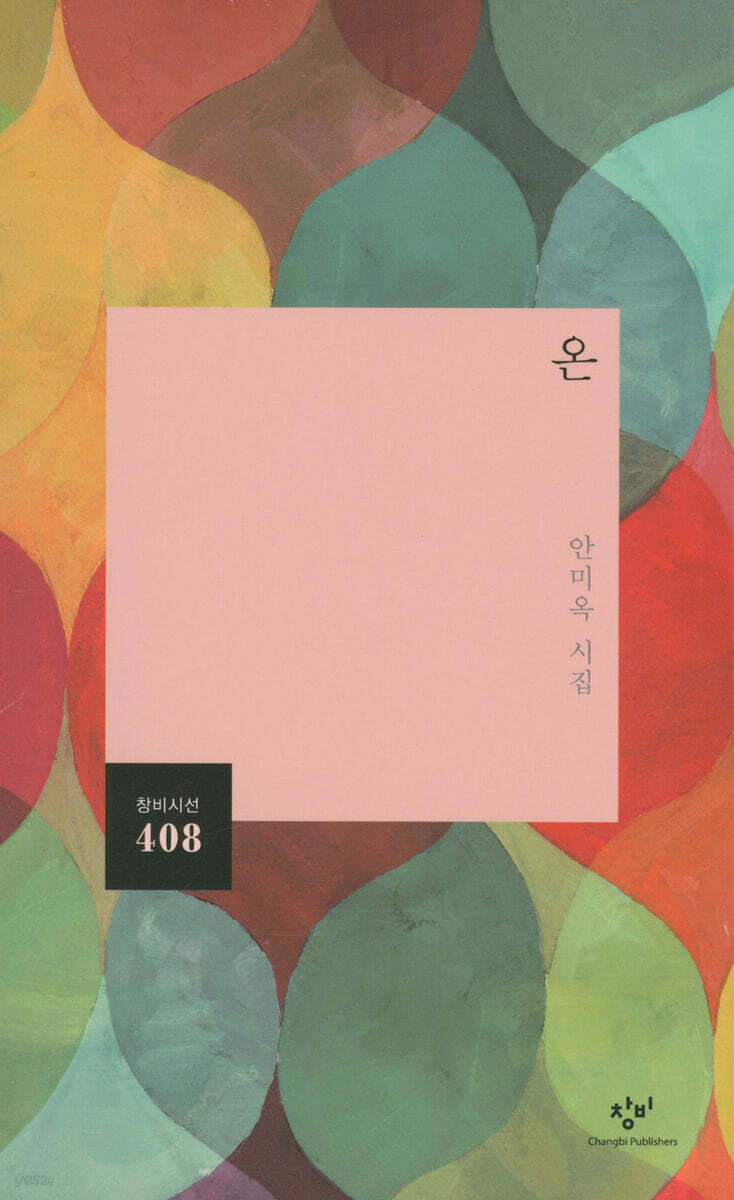
“Some memories only work on sad things.” Poet Ahn Mi-ok, who debuted in the 2012 Dong-A Ilbo New Year's Literary Contest and has been actively writing, has published her first poetry collection, "On," as volume 408 of the "Changbi Poetry Series." The poet, who showed an extraordinary perspective that “finds the unfamiliar in the familiar, the not-so-trivial in the trivial” and “an extraordinary imagination and a unique, untainted voice” in his debut works “At the Table” and “My Orphanage,” unfolds a world of “poetic hospitality that welcomes the pain and sorrow of others with language as if it were their bare skin” in this poetry collection published five years after his debut. The shining poems, woven with the earnest desire to “become weak in pain and sorrow” (Kim Haeng-suk, recommendation) and “strong words in a low voice” (Kim Young-hee, commentary), offer a gentle yet sharp sense of empathy and emotion. Why is a poet's first poetry collection so special? The poetry collection of this young poet with 'unforgettable eyes' is filled with 'poems that come from everywhere'. Poems like seeds that have become stronger through prayer and reducing unnecessary words. It's almost time to welcome summer. |
- You can preview some of the book's contents.
Preview
index
Part 1 / Until You Have a True Heart
Before you were born
Daily Onion
saw tooth
spider
Noon with one person
balanced diet
Night and day
A letter for me
At the table
candle
paint
friday
Indian tent
Treatment Tower
To the child
Part 2 / Some Memories Only Work on Sad Things
Q&A
search
carrying capacity
heaven
home
Confession with the lights off
on
Open
lamp
Recipe for boiling stale bread
Therapists
advice
September
The role of light
Thomason
Part 3 / The less you know about what's going to happen, the better.
At the threshold
The ninth summer
trigger
My Orphanage
Heaven 2
Wooden forest
Purity
cotton
someone close to you
birthday letter
flower vase
Fargo
blackout
Family colors
My door
Part 4 / Touching the young leaves that are breaking and opening
divan
cornfield
Cliff and Ants
herbarium
nap
Today's Diary
Innocent
water cup
The Crow and Me
Title
crooked sign
prism
Two walks
The origin of summer
Commentary | Kim Young-hee
Poet's words
Before you were born
Daily Onion
saw tooth
spider
Noon with one person
balanced diet
Night and day
A letter for me
At the table
candle
paint
friday
Indian tent
Treatment Tower
To the child
Part 2 / Some Memories Only Work on Sad Things
Q&A
search
carrying capacity
heaven
home
Confession with the lights off
on
Open
lamp
Recipe for boiling stale bread
Therapists
advice
September
The role of light
Thomason
Part 3 / The less you know about what's going to happen, the better.
At the threshold
The ninth summer
trigger
My Orphanage
Heaven 2
Wooden forest
Purity
cotton
someone close to you
birthday letter
flower vase
Fargo
blackout
Family colors
My door
Part 4 / Touching the young leaves that are breaking and opening
divan
cornfield
Cliff and Ants
herbarium
nap
Today's Diary
Innocent
water cup
The Crow and Me
Title
crooked sign
prism
Two walks
The origin of summer
Commentary | Kim Young-hee
Poet's words
Publisher's Review
“Some memories only work on sad things.”
A multi-layered language of the mind that speaks more by speaking less
An Mi-ok's first poetry collection, earnest, bright, and sad, is coming to you.
I need some pressure.
Wallpaper always wants to flow/It wants to show what it's like to run out of viscosity//You shouldn't trust your refrigerator.
With the hand that closes the door.
Don't forget that you have an open door. //The house next door became the house next door because it couldn't get far away.
The noise of pushing against the wall.
It's impossible to share // On a table that has four legs and shakes easily.
Faces eating with their elbows raised.
Bam.
Bam.
Like playing Go (from "At the Table")
Poet Ahn Mi-ok, who debuted in the 2012 Dong-A Ilbo New Year's Literary Contest and has been actively writing, has published her first poetry collection, "On," as volume 408 of the "Changbi Poetry Series."
The poet, who showed an extraordinary perspective that “finds the unfamiliar in the familiar, the not-so-trivial in the trivial” and “an extraordinary imagination and a unique, untainted voice” in his debut works “At the Table” and “My Orphanage,” unfolds a world of “poetic hospitality that welcomes the pain and sorrow of others with language as if it were their bare skin” in this poetry collection published five years after his debut.
The shining poems, woven with the earnest desire to “become weak in pain and sorrow” (Kim Haeng-suk, recommendation) and “strong words in a low voice” (Kim Young-hee, commentary), offer a gentle yet sharp sense of empathy and emotion.
It is neither a shackle nor a prison/It is not salvation//With the look in the carpenter's eyes when he recognizes the wood/Like weather that cannot be cut//When I sit down and say//Tulip, tulip//It seems like I've said it all//It's sharp and sharp//I didn't know how to write comfortably/Like I don't know how to live comfortably//(...)//Is it really true that it starts from the heart/When I see a bee flying through the middle of winter//Is it the transparent flapping of wings/If so//It's terrible/That this is all a matter of the heart (Excerpt from "Poetry Collection")
In the poetry of Ahn Mi-ok, who “says more by saying less” (Kim Haeng-sook, recommendation), the word “heart” is particularly repeated frequently through concise form and concise vocabulary.
For the poet, life and poetry seem to be “all a matter of the heart” (“Poetry Collection”).
However, the positive mind, such as “a good mind” and “a mind that wants to touch tenderness in order to become accustomed to sadness” (“Before You Were Born”) or “a mind that wants to like me” (“Advice”), is described in a state of absence and deficiency.
Here, negative feelings are added, such as “a crumbling heart” or “a broken heart” (“Saw”) or “a broken heart” (“Heaven”) or “a heart that gets scratched when scratched” (“Vase”).
Meanwhile, in the present moment, when “nothing comes to mind when I think of living things” (“The Healing Tower”), the poet speaks of existence and absence, of things that do not disappear and things that have disappeared.
Even fish in a fishbowl need a place to hide/We need an old sofa/(…)/Can it be softened with bare hands/I have become darker/Foolish candlestick and foolish loneliness/I prayed for a long time to have the same heart as you/But I will have to be my own heart forever/Pricking/Twisting/The face of the person who cuts his own bone looked bright/I could not pass/Even if my knees break, my knees fall again/Until I have a real heart (Excerpt from “Noon with One Person”)
The poet, who “thought that time that had not been lived was already ruined” (“Therapy Tower”) and “spoke only of what was not there,” “now speaks of what remains” (“On”).
But some memories that become one with sadness are never forgotten, and “some things never disappear/float in the air” and “hold onto your wrist and won’t let go” (“Trigger”).
Among the memories that “only work on sadness,” the poet wishes, “I wish all things like sadness would just disappear.”
However, because “when I think about it/I think about it” (“Questions and Answers”), the poet shares the pain of the “Sewol Ferry” in the “black, low, and deep” (“Questions and Answers”) silence, calling out to the “children of heaven” who “all went on a picnic and never came back” (“Friday”) and “remain in the pouring water” (“Heaven”).
I let go of the hands I had clasped together. I don't pray anymore. // The vase is hardened. // I don't put pretty flowers in it. // I know a little about the feeling when the state of stillness continues for a long time. // Holding the glass bottle and lid that don't fit together. // With a feeling that I can't express, I tap your back. // It breaks. // The night is dim. // Sitting with the face of a bird. // I'm looking inside the window. // If I speak as if singing, I can avoid stuttering. // The inside seems brighter. // The nightmares I often have seem like they happened yesterday. // When I listen to the melody ringing in my ears. // The name spreading in the water. / I said, "Let's stay alive." (Full text from "To a Child")
Reading Ahn Mi-ok's first poetry collection, we come to realize the simple truth that 'poetry' is fundamentally speaking 'as if singing', and that it touches the heart before meaning or sensation.
And it becomes a “face holding its breath” (“Spider”) when “trying to see what could not be seen” with a “heart that wants to start from the scar.”
The poet pretends to promise, “For the time being/I will not write sad poems,” but then “I suddenly remember the latter part of the song/that was cut off” (“September”).
Therefore, the poet is a person who “still knocks” (“Questions and Answers”) on “the door that reaches the end of the deep sea” until “he has a true heart” (“Noon with One Person”).
“I want to live together” (the poet’s words) is a person with a small, soft, and gentle heart who “walks to the end while being afraid” (from “Birthday Letter”).
In the middle of summer, I go to the river/I remember the frozen river every day/If the river had frozen, if the road had been blocked/I want to enter a world made of what-ifs/A very small person becomes an even smaller person/The clouds are gray and the noisy heart/Your face is the same color as the clouds/A person trapped in closed lips and closed eyes/There is something left even in a place that has been burned/When you squat down and dig the floor with a stick/If you thought you had escaped, you had not escaped/Even if you hung with your whole body on a swing with one end broken/No one knew that you were trapped in your prayers (Full text from “The Origin of Summer”)
A multi-layered language of the mind that speaks more by speaking less
An Mi-ok's first poetry collection, earnest, bright, and sad, is coming to you.
I need some pressure.
Wallpaper always wants to flow/It wants to show what it's like to run out of viscosity//You shouldn't trust your refrigerator.
With the hand that closes the door.
Don't forget that you have an open door. //The house next door became the house next door because it couldn't get far away.
The noise of pushing against the wall.
It's impossible to share // On a table that has four legs and shakes easily.
Faces eating with their elbows raised.
Bam.
Bam.
Like playing Go (from "At the Table")
Poet Ahn Mi-ok, who debuted in the 2012 Dong-A Ilbo New Year's Literary Contest and has been actively writing, has published her first poetry collection, "On," as volume 408 of the "Changbi Poetry Series."
The poet, who showed an extraordinary perspective that “finds the unfamiliar in the familiar, the not-so-trivial in the trivial” and “an extraordinary imagination and a unique, untainted voice” in his debut works “At the Table” and “My Orphanage,” unfolds a world of “poetic hospitality that welcomes the pain and sorrow of others with language as if it were their bare skin” in this poetry collection published five years after his debut.
The shining poems, woven with the earnest desire to “become weak in pain and sorrow” (Kim Haeng-suk, recommendation) and “strong words in a low voice” (Kim Young-hee, commentary), offer a gentle yet sharp sense of empathy and emotion.
It is neither a shackle nor a prison/It is not salvation//With the look in the carpenter's eyes when he recognizes the wood/Like weather that cannot be cut//When I sit down and say//Tulip, tulip//It seems like I've said it all//It's sharp and sharp//I didn't know how to write comfortably/Like I don't know how to live comfortably//(...)//Is it really true that it starts from the heart/When I see a bee flying through the middle of winter//Is it the transparent flapping of wings/If so//It's terrible/That this is all a matter of the heart (Excerpt from "Poetry Collection")
In the poetry of Ahn Mi-ok, who “says more by saying less” (Kim Haeng-sook, recommendation), the word “heart” is particularly repeated frequently through concise form and concise vocabulary.
For the poet, life and poetry seem to be “all a matter of the heart” (“Poetry Collection”).
However, the positive mind, such as “a good mind” and “a mind that wants to touch tenderness in order to become accustomed to sadness” (“Before You Were Born”) or “a mind that wants to like me” (“Advice”), is described in a state of absence and deficiency.
Here, negative feelings are added, such as “a crumbling heart” or “a broken heart” (“Saw”) or “a broken heart” (“Heaven”) or “a heart that gets scratched when scratched” (“Vase”).
Meanwhile, in the present moment, when “nothing comes to mind when I think of living things” (“The Healing Tower”), the poet speaks of existence and absence, of things that do not disappear and things that have disappeared.
Even fish in a fishbowl need a place to hide/We need an old sofa/(…)/Can it be softened with bare hands/I have become darker/Foolish candlestick and foolish loneliness/I prayed for a long time to have the same heart as you/But I will have to be my own heart forever/Pricking/Twisting/The face of the person who cuts his own bone looked bright/I could not pass/Even if my knees break, my knees fall again/Until I have a real heart (Excerpt from “Noon with One Person”)
The poet, who “thought that time that had not been lived was already ruined” (“Therapy Tower”) and “spoke only of what was not there,” “now speaks of what remains” (“On”).
But some memories that become one with sadness are never forgotten, and “some things never disappear/float in the air” and “hold onto your wrist and won’t let go” (“Trigger”).
Among the memories that “only work on sadness,” the poet wishes, “I wish all things like sadness would just disappear.”
However, because “when I think about it/I think about it” (“Questions and Answers”), the poet shares the pain of the “Sewol Ferry” in the “black, low, and deep” (“Questions and Answers”) silence, calling out to the “children of heaven” who “all went on a picnic and never came back” (“Friday”) and “remain in the pouring water” (“Heaven”).
I let go of the hands I had clasped together. I don't pray anymore. // The vase is hardened. // I don't put pretty flowers in it. // I know a little about the feeling when the state of stillness continues for a long time. // Holding the glass bottle and lid that don't fit together. // With a feeling that I can't express, I tap your back. // It breaks. // The night is dim. // Sitting with the face of a bird. // I'm looking inside the window. // If I speak as if singing, I can avoid stuttering. // The inside seems brighter. // The nightmares I often have seem like they happened yesterday. // When I listen to the melody ringing in my ears. // The name spreading in the water. / I said, "Let's stay alive." (Full text from "To a Child")
Reading Ahn Mi-ok's first poetry collection, we come to realize the simple truth that 'poetry' is fundamentally speaking 'as if singing', and that it touches the heart before meaning or sensation.
And it becomes a “face holding its breath” (“Spider”) when “trying to see what could not be seen” with a “heart that wants to start from the scar.”
The poet pretends to promise, “For the time being/I will not write sad poems,” but then “I suddenly remember the latter part of the song/that was cut off” (“September”).
Therefore, the poet is a person who “still knocks” (“Questions and Answers”) on “the door that reaches the end of the deep sea” until “he has a true heart” (“Noon with One Person”).
“I want to live together” (the poet’s words) is a person with a small, soft, and gentle heart who “walks to the end while being afraid” (from “Birthday Letter”).
In the middle of summer, I go to the river/I remember the frozen river every day/If the river had frozen, if the road had been blocked/I want to enter a world made of what-ifs/A very small person becomes an even smaller person/The clouds are gray and the noisy heart/Your face is the same color as the clouds/A person trapped in closed lips and closed eyes/There is something left even in a place that has been burned/When you squat down and dig the floor with a stick/If you thought you had escaped, you had not escaped/Even if you hung with your whole body on a swing with one end broken/No one knew that you were trapped in your prayers (Full text from “The Origin of Summer”)
GOODS SPECIFICS
- Date of issue: April 17, 2017
- Page count, weight, size: 136 pages | 196g | 125*200*8mm
- ISBN13: 9788936424084
- ISBN10: 8936424084
You may also like
카테고리
korean


korean

![GQ KOREA Mark (Monthly): December [2025]](http://librairie.coreenne.fr/cdn/shop/files/8ef265dbbfbf186523ed75ba7319009d.jpg?v=1765340328&width=3840)


