

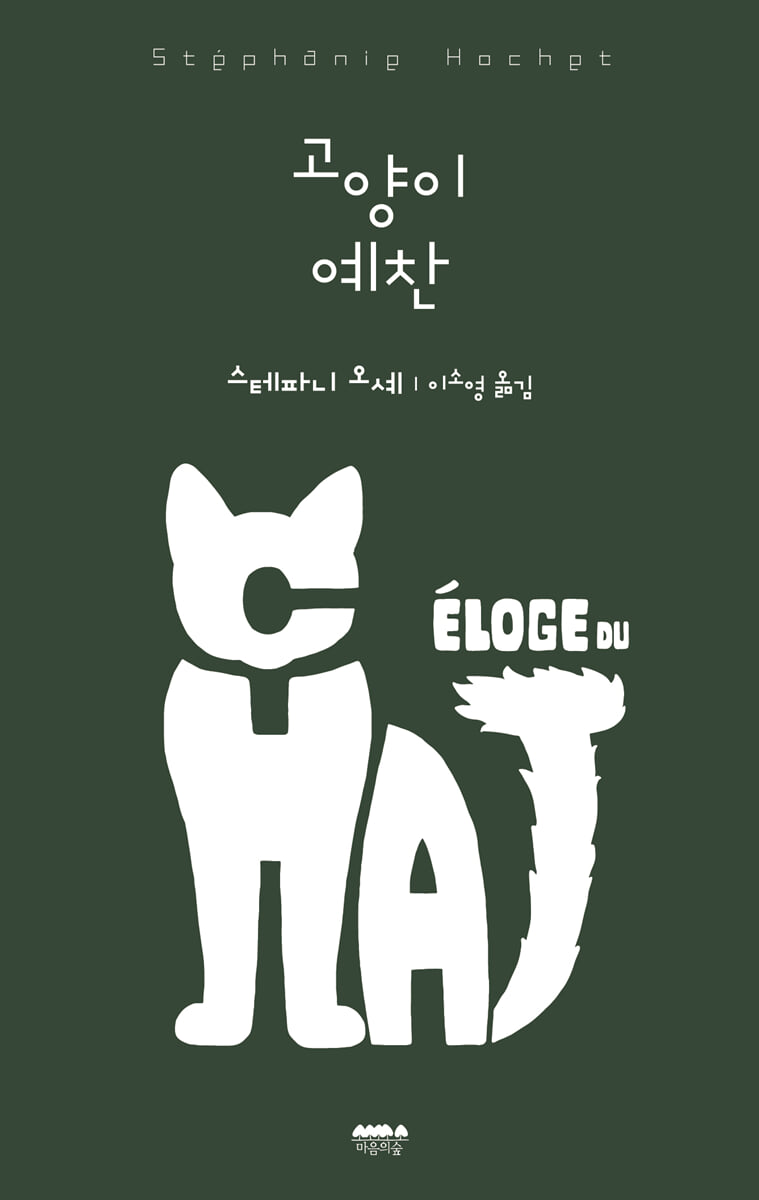
In praise of cats
 |
Description
Book Introduction
★ Korea's first literary, artistic, and humanities essay that reads humans through the lens of cats!
★ The most intellectual and delightful hymn to the powerful men on the sofa loved by Baudelaire and Natsume Soseki!
★ Beyond cuteness, a story about cats as symbols of freedom, sensuality, power, and mystery.
Cats are cute pets that monopolize the love of their owners, but they are also animals that are difficult to understand.
This book is the first in Korea to explore cats beyond mere cute pets, but as symbols of freedom, power, sensuality, and mystery.
Baudelaire called him a 'despot', Rilke called him a 'god', and Natsume Soseki and T.
Following the reasons why countless artists and philosophers, including S. Eliot, were fascinated by cats, the book explores the perspectives of literature, art, history, and philosophy through the prism of cats.
The 'master on the sofa' cat, who opens the butler's wallet, strides around the house, and always looks down on us.
This book will bring even deeper affection to those who already love cats, and to those who do not yet know cats, it will provide instant enjoyment and food for thought.
★ The most intellectual and delightful hymn to the powerful men on the sofa loved by Baudelaire and Natsume Soseki!
★ Beyond cuteness, a story about cats as symbols of freedom, sensuality, power, and mystery.
Cats are cute pets that monopolize the love of their owners, but they are also animals that are difficult to understand.
This book is the first in Korea to explore cats beyond mere cute pets, but as symbols of freedom, power, sensuality, and mystery.
Baudelaire called him a 'despot', Rilke called him a 'god', and Natsume Soseki and T.
Following the reasons why countless artists and philosophers, including S. Eliot, were fascinated by cats, the book explores the perspectives of literature, art, history, and philosophy through the prism of cats.
The 'master on the sofa' cat, who opens the butler's wallet, strides around the house, and always looks down on us.
This book will bring even deeper affection to those who already love cats, and to those who do not yet know cats, it will provide instant enjoyment and food for thought.
- You can preview some of the book's contents.
Preview
index
[Preface] A Cat Named 'Hochet' 11
Introduction 17
Libertarian 24
Absolute Monarch 42
Female 68
Fat 110
New 134
Conclusion 165
170 works that inspired this book
Introduction 17
Libertarian 24
Absolute Monarch 42
Female 68
Fat 110
New 134
Conclusion 165
170 works that inspired this book
Detailed image

Into the book
Why do we volunteer to be the butlers of this utterly elusive creature, and why do we so assiduously serve it without question? We are strangely drawn to this tiny creature, clad in a soft fur coat day and night, whose sharp, jagged claws, whether playfully or intentionally, mercilessly scratch our skin, ultimately leaving us with painful wounds.
--- pp.18-19
Cats crave the comfort of home and human affection, but they also want to roam freely, can't stand being confined, and only allow themselves to be petted when the mood strikes them.
They want a place to sleep, food, and human attention, but this is on the premise that they do not lose their wild beast nature, which is beyond human control.
--- p.33
In the history of human love, cats have replaced women, and it is no different now.
Less wasteful and fussy, but more loyal, this animal became the perfect lover for the so-called "sweethearts," that is, men who were extremely grumpy and always complained about things.
--- p.82
A fat cat is something that makes you smile just by looking at it.
The plump cat looks enviably happy, perhaps even a half-awakened 'animal Buddha'.
The reason why it is said to be 'not fully awake' is because even cats that have had a good night's sleep like Garfield still have a sleepy expression and usually look lethargic.
And yet, it couldn't be more overwhelming.
Everyone turns to ice as soon as Garfield appears.
Obesity, which is frowned upon in Western society today, has become a guarantee of success for this character, suggesting that being overweight in cats is not taboo.
--- pp.118-119
So, is a cat just a question mark, plodding along on soft, jelly-like paws? To paraphrase Gertrude Stein, all that can be said about a cat is that "a cat is a cat."
What more needs to be said!
--- pp.18-19
Cats crave the comfort of home and human affection, but they also want to roam freely, can't stand being confined, and only allow themselves to be petted when the mood strikes them.
They want a place to sleep, food, and human attention, but this is on the premise that they do not lose their wild beast nature, which is beyond human control.
--- p.33
In the history of human love, cats have replaced women, and it is no different now.
Less wasteful and fussy, but more loyal, this animal became the perfect lover for the so-called "sweethearts," that is, men who were extremely grumpy and always complained about things.
--- p.82
A fat cat is something that makes you smile just by looking at it.
The plump cat looks enviably happy, perhaps even a half-awakened 'animal Buddha'.
The reason why it is said to be 'not fully awake' is because even cats that have had a good night's sleep like Garfield still have a sleepy expression and usually look lethargic.
And yet, it couldn't be more overwhelming.
Everyone turns to ice as soon as Garfield appears.
Obesity, which is frowned upon in Western society today, has become a guarantee of success for this character, suggesting that being overweight in cats is not taboo.
--- pp.118-119
So, is a cat just a question mark, plodding along on soft, jelly-like paws? To paraphrase Gertrude Stein, all that can be said about a cat is that "a cat is a cat."
What more needs to be said!
--- p.166
Publisher's Review
Cats, animals loved by artists and philosophers
Who knows cats? Can you really say that?
- Rainer Maria Rilke
Cats are not just pets that wander around the house.
Countless artists and philosophers have knelt before him, written poems, and left their reflections.
Cats have been muses for artists and objects of thought for philosophers for centuries.
Some of humanity's greatest writers have thought and been inspired by cats.
Rainer Maria Rilke, a representative German poet, viewed cats as symbols of the inexplicable mystery, and Natsume Soseki satirized human desire and hypocrisy in “I Am a Cat.”
The cat appears as a metaphor for power, a symbol of freedom, and the embodiment of sensuality and solitude.
Mark Twain asserted, “If you could mix a man with a cat, you would raise the man, but lower the cat,” showing that the independence and dignity of cats stimulate human thought and reasoning.
Stephanie Oshe meticulously examines the representation of cats in literature, history, and art, showing why countless artists and philosophers have been captivated by them.
Reflecting on humans through the prism of cats
In Praise of Cats is not just a pet book.
Rather than providing guidance on raising or caring for cats, the author explores human freedom, desire, power, and mystery through cats.
Cats are always around, yet they are not easily understood.
It is an unpredictable creature that can be leisurely strolled around the house without being strayed from, and is lovable but quickly becomes unfamiliar.
This appearance directly reflects the desires and contradictions within human beings.
“In that sense, cats are a mysterious prism that allows us to explore anywhere.
“Cats can be guides, allowing us to peer into the dark abyss of our souls as deeply as the shady back alleys of the city, and unfolding a colorful panorama of the human spirit as deeply as the dizzying views from the rooftops.” (p. 13)
Cats are guides on a philosophical journey that allows humans to confront themselves.
The way she walks leisurely through the house, step by step, evokes the figure of a proud woman; the moments when she lounges leisurely on the sofa, the leisurely feeling of a free spirit, and each movement as she scans her surroundings with a sharp gaze, evokes the agility of a smart and nimble politician.
Each of these free and unpredictable movements goes beyond simple observation to illuminate the inner desires and contradictions of human nature, naturally leading the reader on a path of self-reflection and thought.
When we look at cats, we naturally encounter our own shadows and look into our hidden emotions and longings.
Seeing humans and the world again through cats
In Praise of Cats is a book about cats, but it is also a book about humans.
The author explores the human mind and civilization, power and freedom, desire and mystery through the eyes of a cat.
This is not a simple zoological approach or a cat lover's appreciation, but an intellectual journey that makes us think again about humans and the world through the medium of cats.
The beauty of cats is that they allow us to look into ourselves.
Even though they look different from humans, what we encounter when we look at a cat is ultimately our 'illusory self.'
(p.165)
A cat that lives proudly at home, rejecting its owner's control, and becomes a beast when hunting, but at other times, it becomes an affectionate companion that snuggles into your lap.
This contrasting appearance resembles the shadows and longing for freedom that humans have.
Stephanie Oshe captures the countless stories, metaphors, and traces of literature and art surrounding cats, leading readers on a journey of reflection.
As we look at cats, we will not only understand cats, but also encounter humans and the world in a new way.
Who knows cats? Can you really say that?
- Rainer Maria Rilke
Cats are not just pets that wander around the house.
Countless artists and philosophers have knelt before him, written poems, and left their reflections.
Cats have been muses for artists and objects of thought for philosophers for centuries.
Some of humanity's greatest writers have thought and been inspired by cats.
Rainer Maria Rilke, a representative German poet, viewed cats as symbols of the inexplicable mystery, and Natsume Soseki satirized human desire and hypocrisy in “I Am a Cat.”
The cat appears as a metaphor for power, a symbol of freedom, and the embodiment of sensuality and solitude.
Mark Twain asserted, “If you could mix a man with a cat, you would raise the man, but lower the cat,” showing that the independence and dignity of cats stimulate human thought and reasoning.
Stephanie Oshe meticulously examines the representation of cats in literature, history, and art, showing why countless artists and philosophers have been captivated by them.
Reflecting on humans through the prism of cats
In Praise of Cats is not just a pet book.
Rather than providing guidance on raising or caring for cats, the author explores human freedom, desire, power, and mystery through cats.
Cats are always around, yet they are not easily understood.
It is an unpredictable creature that can be leisurely strolled around the house without being strayed from, and is lovable but quickly becomes unfamiliar.
This appearance directly reflects the desires and contradictions within human beings.
“In that sense, cats are a mysterious prism that allows us to explore anywhere.
“Cats can be guides, allowing us to peer into the dark abyss of our souls as deeply as the shady back alleys of the city, and unfolding a colorful panorama of the human spirit as deeply as the dizzying views from the rooftops.” (p. 13)
Cats are guides on a philosophical journey that allows humans to confront themselves.
The way she walks leisurely through the house, step by step, evokes the figure of a proud woman; the moments when she lounges leisurely on the sofa, the leisurely feeling of a free spirit, and each movement as she scans her surroundings with a sharp gaze, evokes the agility of a smart and nimble politician.
Each of these free and unpredictable movements goes beyond simple observation to illuminate the inner desires and contradictions of human nature, naturally leading the reader on a path of self-reflection and thought.
When we look at cats, we naturally encounter our own shadows and look into our hidden emotions and longings.
Seeing humans and the world again through cats
In Praise of Cats is a book about cats, but it is also a book about humans.
The author explores the human mind and civilization, power and freedom, desire and mystery through the eyes of a cat.
This is not a simple zoological approach or a cat lover's appreciation, but an intellectual journey that makes us think again about humans and the world through the medium of cats.
The beauty of cats is that they allow us to look into ourselves.
Even though they look different from humans, what we encounter when we look at a cat is ultimately our 'illusory self.'
(p.165)
A cat that lives proudly at home, rejecting its owner's control, and becomes a beast when hunting, but at other times, it becomes an affectionate companion that snuggles into your lap.
This contrasting appearance resembles the shadows and longing for freedom that humans have.
Stephanie Oshe captures the countless stories, metaphors, and traces of literature and art surrounding cats, leading readers on a journey of reflection.
As we look at cats, we will not only understand cats, but also encounter humans and the world in a new way.
GOODS SPECIFICS
- Date of issue: September 26, 2025
- Page count, weight, size: 176 pages | 164g | 114*180*14mm
- ISBN13: 9791162851784
- ISBN10: 1162851783
You may also like
카테고리
korean


korean

![GQ KOREA Mark (Monthly): December [2025]](http://librairie.coreenne.fr/cdn/shop/files/8ef265dbbfbf186523ed75ba7319009d.jpg?v=1765340328&width=3840)


