

Case conceptualization by abnormal psychological symptoms
 |
Description
Book Introduction
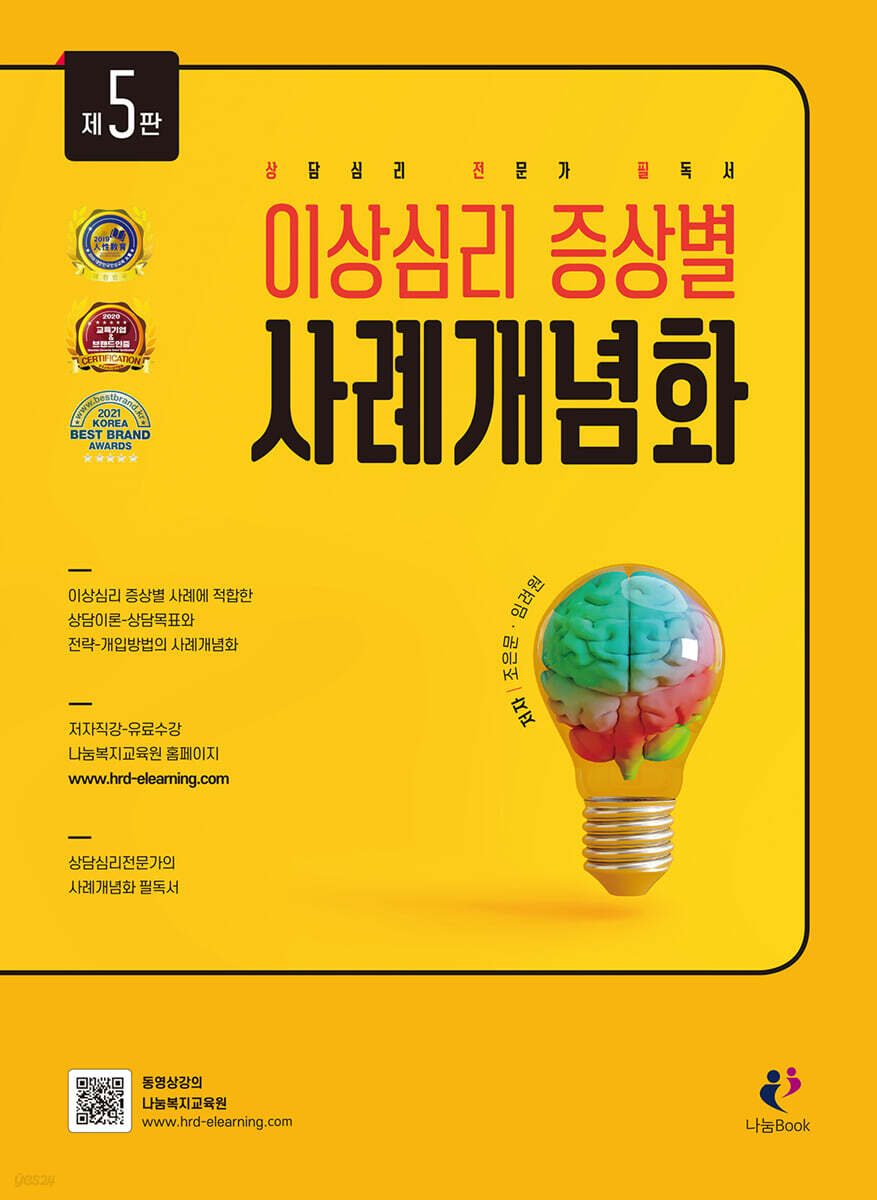
This book presents a quick and easy method for counselors engaged in counseling practice to conceptualize cases. Each chapter is organized by DSM-5 abnormal psychological symptom.
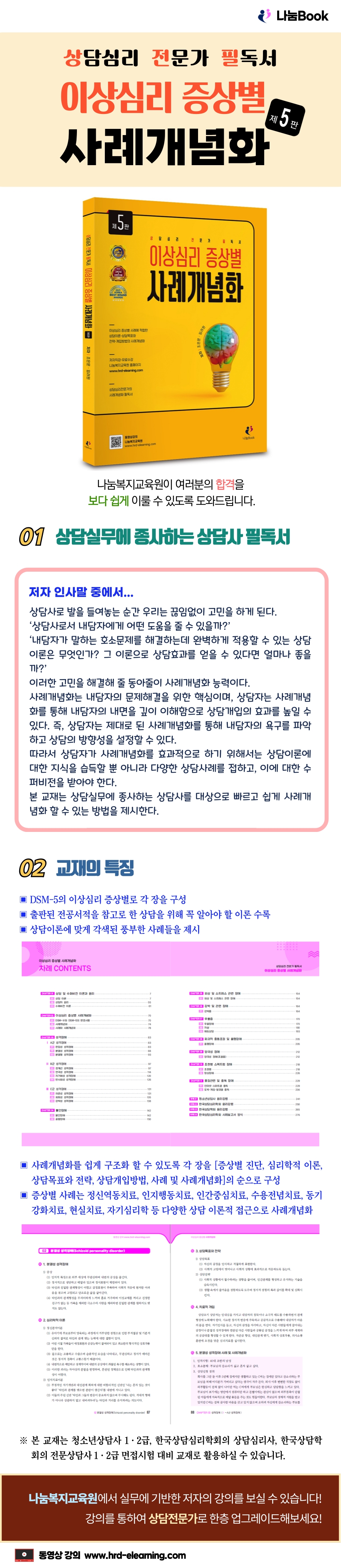
Each chapter is organized in the following order: [Diagnosis by Symptom, Psychological Theory, Counseling Goals and Strategies, Counseling Intervention Methods, Cases and Case Conceptualization] to help structure case conceptualization.
Symptom-specific cases were conceptualized using various counseling theoretical approaches, including psychodynamic therapy, cognitive behavioral therapy, person-centered therapy, acceptance and commitment therapy, motivational enhancement therapy, reality therapy, and self-psychology.
Each chapter is organized in the following order: [Diagnosis by Symptom, Psychological Theory, Counseling Goals and Strategies, Counseling Intervention Methods, Cases and Case Conceptualization] to help structure case conceptualization.
Symptom-specific cases were conceptualized using various counseling theoretical approaches, including psychodynamic therapy, cognitive behavioral therapy, person-centered therapy, acceptance and commitment therapy, motivational enhancement therapy, reality therapy, and self-psychology.
index
CHAPTER 01.
Counseling and Supervision Theory and Ethics
1.
Counseling theory
2.
Counselor Ethics
3.
Supervision theory
CHAPTER 02.
Case conceptualization by abnormal psychological symptoms
1. Changes between DSM-Ⅳ and DSM-5
2.
Case conceptualization
3.
Cases and Case Concepts
CHAPTER 03.
personality disorder
Ⅰ.
Cluster A personality disorder
1.
Paranoid personality disorder
2.
schizoid personality disorder
3.
schizotypal personality disorder
Ⅱ.
Cluster B personality disorder
1.
borderline personality disorder
2.
histrionic personality disorder
3.
narcissistic personality disorder
4.
antisocial personality disorder
Ⅲ.
Cluster C personality disorder
1.
dependent personality disorder
2.
avoidant personality disorder
3.
obsessive-compulsive personality disorder
CHAPTER 04.
anxiety disorder
1.
anxiety disorder
2.
panic disorder
CHAPTER 05.
Trauma and stress-related disorders
1.
Trauma and stress-related disorders
CHAPTER 06.
Obsessive-Compulsive and Related Disorders
1.
Obsessive-Compulsive and Related Disorders
CHAPTER 07.
melancholia
1.
Subtypes of depressive disorder
2.
suicide
3.
grief counseling
CHAPTER 08.
Disruptive impulse control and conduct disorder
1.
Conduct disorder
CHAPTER 09.
bipolar disorder
1.
bipolar disorder (manic depression)
CHAPTER 10.
schizophrenia spectrum disorder
1.
schizophrenia
2.
paranoia
CHAPTER 11.
Substance-related and addiction disorders
1.
Internet and smartphone addiction
2.
Gambling, gaming, and alcohol addiction
Appendix 1.
Code of Ethics for Youth Counselor
Appendix 2.
Korean Counseling Psychology Association Code of Ethics
Appendix 3.
Korean Counseling Association Code of Ethics
Appendix 4.
Korean Counseling Psychology Association Case Report Form
Counseling and Supervision Theory and Ethics
1.
Counseling theory
2.
Counselor Ethics
3.
Supervision theory
CHAPTER 02.
Case conceptualization by abnormal psychological symptoms
1. Changes between DSM-Ⅳ and DSM-5
2.
Case conceptualization
3.
Cases and Case Concepts
CHAPTER 03.
personality disorder
Ⅰ.
Cluster A personality disorder
1.
Paranoid personality disorder
2.
schizoid personality disorder
3.
schizotypal personality disorder
Ⅱ.
Cluster B personality disorder
1.
borderline personality disorder
2.
histrionic personality disorder
3.
narcissistic personality disorder
4.
antisocial personality disorder
Ⅲ.
Cluster C personality disorder
1.
dependent personality disorder
2.
avoidant personality disorder
3.
obsessive-compulsive personality disorder
CHAPTER 04.
anxiety disorder
1.
anxiety disorder
2.
panic disorder
CHAPTER 05.
Trauma and stress-related disorders
1.
Trauma and stress-related disorders
CHAPTER 06.
Obsessive-Compulsive and Related Disorders
1.
Obsessive-Compulsive and Related Disorders
CHAPTER 07.
melancholia
1.
Subtypes of depressive disorder
2.
suicide
3.
grief counseling
CHAPTER 08.
Disruptive impulse control and conduct disorder
1.
Conduct disorder
CHAPTER 09.
bipolar disorder
1.
bipolar disorder (manic depression)
CHAPTER 10.
schizophrenia spectrum disorder
1.
schizophrenia
2.
paranoia
CHAPTER 11.
Substance-related and addiction disorders
1.
Internet and smartphone addiction
2.
Gambling, gaming, and alcohol addiction
Appendix 1.
Code of Ethics for Youth Counselor
Appendix 2.
Korean Counseling Psychology Association Code of Ethics
Appendix 3.
Korean Counseling Association Code of Ethics
Appendix 4.
Korean Counseling Psychology Association Case Report Form
Detailed image
Publisher's Review
The moment we step into the world of counseling, we find ourselves constantly struggling.
"As a counselor, how can I help my clients?" "What counseling theory can be perfectly applied to address the issues my clients are complaining about? How great would it be if I could achieve effective counseling outcomes using that theory?" The lifeline to these concerns is the ability to conceptualize cases.
Case conceptualization is the key to solving a client's problem, and counselors can enhance the effectiveness of counseling intervention by deeply understanding the client's inner self through case conceptualization.
In other words, counselors can identify the client's needs and set the direction of counseling through proper case conceptualization.
Therefore, in order for counselors to effectively conceptualize cases, they must not only acquire knowledge of counseling theories, but also be exposed to various counseling cases and receive supervision on them.
This book presents a method for counselors engaged in counseling practice to quickly and easily conceptualize cases.
The features of this book are as follows:
Each chapter is organized by DSM-5 abnormal psychological symptoms.
Each chapter is organized in the following order: [Diagnosis by Symptom, Psychological Theory, Counseling Goals and Strategies, Counseling Intervention Methods, Cases and Case Conceptualization] to help structure case conceptualization.
Symptom-specific cases were conceptualized using various counseling theoretical approaches, including psychodynamic therapy, cognitive behavioral therapy, person-centered therapy, acceptance and commitment therapy, motivational enhancement therapy, reality therapy, and self-psychology.
The theories in this book are based on published textbooks, and the cases have been adapted to fit counseling theory.
I hope that this book will help counselors improve their case conceptualization skills and find specific ways to understand their clients and find counseling directions.
September 2024 Co-authors Eunmoon Cho and Ryeowon Lim
"As a counselor, how can I help my clients?" "What counseling theory can be perfectly applied to address the issues my clients are complaining about? How great would it be if I could achieve effective counseling outcomes using that theory?" The lifeline to these concerns is the ability to conceptualize cases.
Case conceptualization is the key to solving a client's problem, and counselors can enhance the effectiveness of counseling intervention by deeply understanding the client's inner self through case conceptualization.
In other words, counselors can identify the client's needs and set the direction of counseling through proper case conceptualization.
Therefore, in order for counselors to effectively conceptualize cases, they must not only acquire knowledge of counseling theories, but also be exposed to various counseling cases and receive supervision on them.
This book presents a method for counselors engaged in counseling practice to quickly and easily conceptualize cases.
The features of this book are as follows:
Each chapter is organized by DSM-5 abnormal psychological symptoms.
Each chapter is organized in the following order: [Diagnosis by Symptom, Psychological Theory, Counseling Goals and Strategies, Counseling Intervention Methods, Cases and Case Conceptualization] to help structure case conceptualization.
Symptom-specific cases were conceptualized using various counseling theoretical approaches, including psychodynamic therapy, cognitive behavioral therapy, person-centered therapy, acceptance and commitment therapy, motivational enhancement therapy, reality therapy, and self-psychology.
The theories in this book are based on published textbooks, and the cases have been adapted to fit counseling theory.
I hope that this book will help counselors improve their case conceptualization skills and find specific ways to understand their clients and find counseling directions.
September 2024 Co-authors Eunmoon Cho and Ryeowon Lim
GOODS SPECIFICS
- Date of issue: September 20, 2024
- Page count, weight, size: 280 pages | 190*260*20mm
- ISBN13: 9791191871623
- ISBN10: 1191871622
You may also like
카테고리
korean


korean

![GQ KOREA Mark (Monthly): December [2025]](http://librairie.coreenne.fr/cdn/shop/files/8ef265dbbfbf186523ed75ba7319009d.jpg?v=1765340328&width=3840)


