

Night train to Lisbon
 |
Description
Book Introduction
“A marvelous work that established a new artistic tradition in literature” _La Quinzanne Littérère
Like a night train crossing the endless night, this is a story that will be remembered as an unforgettable experience.
The monotonous sound of wheels, the rattling of objects… Lisbon, the city I was brought to by the train I impulsively boarded, feeling disillusioned with life.
An old tram running down a sloping alleyway, and new people meeting each other while struggling with an unfamiliar language.
Pascal Mercier's 'Night Train to Lisbon' has been newly published by Vichae.
This masterpiece has been loved by 2 million readers in German-speaking countries alone and has been translated into over 30 languages. In Korea, it has been consistently referred to as a modern classic since its first publication in 2007.
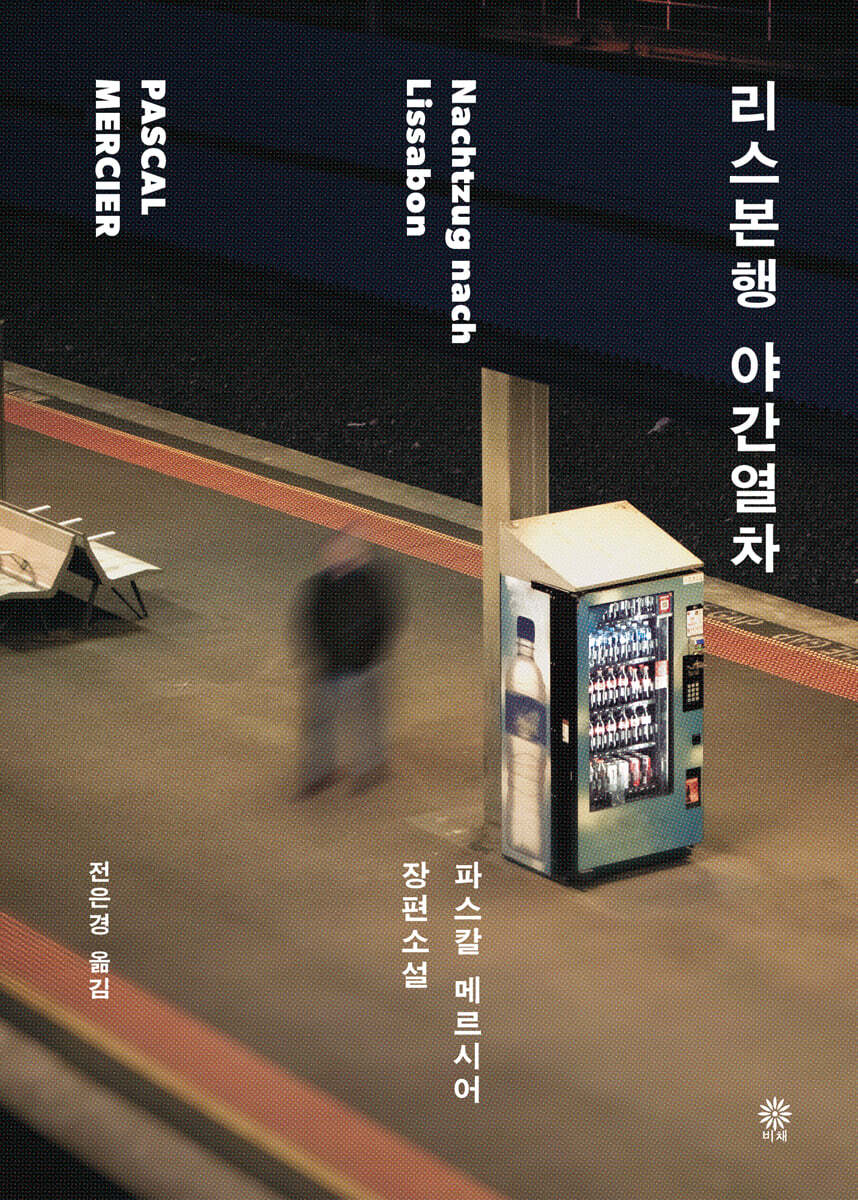
The 2022 edition of "Night Train to Lisbon" has been stylishly presented with a heavy, hardcover binding and a modern cover befitting its class. From beginning to end, the text has been meticulously reviewed and refined with a contemporary sensibility.
A sensual and flowing style, the author, winner of the Tractatus Prize for the best German philosophy essay, builds his intellectual thinking on the foundation of the novel.
The brilliant story, described by the German weekly [Die Zeit] as “a psychological drama of consciousness that delves into the abyss,” unfolds again.
Like a night train crossing the endless night, this is a story that will be remembered as an unforgettable experience.
The monotonous sound of wheels, the rattling of objects… Lisbon, the city I was brought to by the train I impulsively boarded, feeling disillusioned with life.
An old tram running down a sloping alleyway, and new people meeting each other while struggling with an unfamiliar language.
Pascal Mercier's 'Night Train to Lisbon' has been newly published by Vichae.
This masterpiece has been loved by 2 million readers in German-speaking countries alone and has been translated into over 30 languages. In Korea, it has been consistently referred to as a modern classic since its first publication in 2007.
The 2022 edition of "Night Train to Lisbon" has been stylishly presented with a heavy, hardcover binding and a modern cover befitting its class. From beginning to end, the text has been meticulously reviewed and refined with a contemporary sensibility.
A sensual and flowing style, the author, winner of the Tractatus Prize for the best German philosophy essay, builds his intellectual thinking on the foundation of the novel.
The brilliant story, described by the German weekly [Die Zeit] as “a psychological drama of consciousness that delves into the abyss,” unfolds again.
- You can preview some of the book's contents.
Preview
Detailed image

Into the book
We only talk about one of our many experiences.
Even that is only spoken of casually, without any regard for the nuances of the experience.
Among the silent experiences, those that give shape, color, and melody to our lives without our knowledge are hidden and unnoticed.
(syncopation)
If we can only experience a tiny fraction of what is within us, what happens to the rest?
--- pp.30~31
Gregory sat down, out of breath.
As the train pulled away for Irun, the thoughts that had assailed him in Geneva returned to him.
It occurred to him that it was not he, but the train, that would decide whether this journey, so clear and so real, would continue, a journey that would take him further and further from the life he had known as a man with each passing station.
--- pp.57~58
Essa closed her eyes as she grabbed the teacup.
It's as if when you close your eyes, other people won't see your ugly hands either...
His hands were covered in earthquake marks from a hot cigarette, trembled as if he had Parkinson's disease, and had two missing fingernails.
Essa glared at Gregory as if testing whether he could bear to look at his own hands.
Gregorius raised his teacup to his lips, trying to suppress the shock that was rushing through him like dizziness.
“My glass should be half full.”
Esaga said in a low, locked voice.
Gregory never forgot these words after that.
My eyes stung so much that I felt like crying.
He did something that will forever be remembered in his relationship with this abused old man.
I picked up Essa's teacup and drank half of the hot tea.
My tongue and throat felt hot, as if they were being burned, but that didn't matter.
He quietly put the half-empty teacup back in its place and turned it so that the handle was facing Essa's thumb.
Essa looked at him for a long time.
--- p.161
We do not live extensively only in time.
Spatially, we live far beyond what is visible to the eye.
When we leave a place, we leave a part of ourselves behind.
Even if we leave, we will remain there.
There are things within us that we can only find again if we return there.
When the monotonous sound of wheels takes us to a specific place in our lives—however brief the journey may be—we come closer to ourselves and embark on a journey toward ourselves.
When we step a second time onto the platform of a station where we once stayed, when we hear the sound coming from the loudspeaker and smell a distinct smell, we have not only arrived at a distant place in appearance, but also at a distant place in our hearts.
Maybe in a very remote corner of ourselves, a place that doesn't seem so dark when we're elsewhere...
--- pp.338~339
Gregory asked them if they were satisfied with their lives.
Mundus, a classical philologist from Bern, was at the end of the world asking Galician fishermen their views on life… .
He enjoyed this situation.
He thoroughly enjoyed this situation, which was a mixture of irrationality, fatigue, exaggerated pleasure, and a sense of liberation he had never known before, beyond boundaries.
The fishermen didn't quite understand his question, so he asked twice more in broken Spanish.
Then finally one of them answered loudly.
“Are you satisfied? I don’t know about other lives!”
The fishermen's laughter grew louder and louder, eventually turning into a sea of unending laughter.
Gregory laughed so happily that he was on the verge of tears.
Even that is only spoken of casually, without any regard for the nuances of the experience.
Among the silent experiences, those that give shape, color, and melody to our lives without our knowledge are hidden and unnoticed.
(syncopation)
If we can only experience a tiny fraction of what is within us, what happens to the rest?
--- pp.30~31
Gregory sat down, out of breath.
As the train pulled away for Irun, the thoughts that had assailed him in Geneva returned to him.
It occurred to him that it was not he, but the train, that would decide whether this journey, so clear and so real, would continue, a journey that would take him further and further from the life he had known as a man with each passing station.
--- pp.57~58
Essa closed her eyes as she grabbed the teacup.
It's as if when you close your eyes, other people won't see your ugly hands either...
His hands were covered in earthquake marks from a hot cigarette, trembled as if he had Parkinson's disease, and had two missing fingernails.
Essa glared at Gregory as if testing whether he could bear to look at his own hands.
Gregorius raised his teacup to his lips, trying to suppress the shock that was rushing through him like dizziness.
“My glass should be half full.”
Esaga said in a low, locked voice.
Gregory never forgot these words after that.
My eyes stung so much that I felt like crying.
He did something that will forever be remembered in his relationship with this abused old man.
I picked up Essa's teacup and drank half of the hot tea.
My tongue and throat felt hot, as if they were being burned, but that didn't matter.
He quietly put the half-empty teacup back in its place and turned it so that the handle was facing Essa's thumb.
Essa looked at him for a long time.
--- p.161
We do not live extensively only in time.
Spatially, we live far beyond what is visible to the eye.
When we leave a place, we leave a part of ourselves behind.
Even if we leave, we will remain there.
There are things within us that we can only find again if we return there.
When the monotonous sound of wheels takes us to a specific place in our lives—however brief the journey may be—we come closer to ourselves and embark on a journey toward ourselves.
When we step a second time onto the platform of a station where we once stayed, when we hear the sound coming from the loudspeaker and smell a distinct smell, we have not only arrived at a distant place in appearance, but also at a distant place in our hearts.
Maybe in a very remote corner of ourselves, a place that doesn't seem so dark when we're elsewhere...
--- pp.338~339
Gregory asked them if they were satisfied with their lives.
Mundus, a classical philologist from Bern, was at the end of the world asking Galician fishermen their views on life… .
He enjoyed this situation.
He thoroughly enjoyed this situation, which was a mixture of irrationality, fatigue, exaggerated pleasure, and a sense of liberation he had never known before, beyond boundaries.
The fishermen didn't quite understand his question, so he asked twice more in broken Spanish.
Then finally one of them answered loudly.
“Are you satisfied? I don’t know about other lives!”
The fishermen's laughter grew louder and louder, eventually turning into a sea of unending laughter.
Gregory laughed so happily that he was on the verge of tears.
--- p.543
Publisher's Review
“Life is not what we live, but what we imagine we live.”
A quiet explosion sparked by a chance book discovery, a journey to find "another me."
Gregory, the 'walking dictionary', a classical philology teacher from Bern, Switzerland.
One rainy day, he heads to school as usual, but a chance incident causes him to reflect on his life.
Unlike the students before him, who will experience countless challenges in the future, what remains for him? After pondering this poignant question, he impulsively interrupts class and storms out of school. He then discovers a passage in a Portuguese book called "The Alchemist of Language" that perfectly reflects his feelings.
“If we can only experience a tiny part of ourselves, what becomes of the rest?” Consumed by a desire he cannot explain, Gregory boards the night train to Lisbon.
In Lisbon, Gregory traces the life of Amadeu de Prado, author of The Alchemist of Language.
During the Salazar dictatorship, Amadeu was a respected doctor, but after saving the life of a notorious secret police officer, he lost all trust and secretly participated in the resistance movement until his death.
The brilliant thoughts of Amadeus, recorded during his lifetime, are spread over Gregory's journey of finding another self by following the lives of others.
An unfamiliar city brought to me by a train I boarded with uncertain passion.
A timeless encounter unfolds between a person trying to hold on to his flowing life and a dead person fighting against the world's injustice.
An elegant coming-of-age story that begins at the end of life and a brilliant record of life that permeates a passionate era.
A groundbreaking thought following Montaigne's Essays and Pessoa's Book of Disquiet
Night Train to Lisbon begins with Gregory, now in his prime, giving up his life and setting off.
It is precisely this bold separation that draws readers in from the very beginning.
Gregory faces the cracks in his life head-on and moves beyond them.
The novel then unfolds with the stories of Amadeu, who lived through the turbulent times of Salazar's dictatorship, and Gregorius, a wandering modern man.
A record of Portugal's history and struggles, a sanctuary of contemplation encompassing religion and God, and a sharp ideological conflict with his parents... What changes will Gregory face as he navigates this sea of vivid testimonies and reflections that permeate the flow of history?
In Night Train to Lisbon, Amadeu's writing seems to break away from the form of a novel.
Author Pascal Mercier, a novelist and one of Germany's greatest philosophers, uses Amadeus's voice to lay the foundation for his philosophical insights into the novel.
A groundbreaking thought comparable to Montaigne's Essays and Pessoa's Book of Disquietude closely connects each story, crossing the boundaries between literature and non-literature.
Based on Amadeus's essay, Gregory's journey from mere escapism to an exploration of the human spirit will be, as author Isabel Allende raves, "a gift for the mind and heart."
A classic of modern European literature, refined with a new sensibility in 2022.
A hardbound book with a modern cover adds to its collectible value… and now available as an e-book.
Is it because the story of the era of resistance against dictatorship is not so far away from us, or is it because the vivid characters that show the hardships of life across time resonate with us?
Despite the fact that the setting of "Night Train to Lisbon" is somewhat distant from domestic readers, it was first published in Korea in 2007 and received explosive response and great love.
With its unfamiliar format that combines a novel and a philosophical essay, and its flowing writing style that creates a unique atmosphere… 《Night Train to Lisbon》, which has been widely recognized for its artistic value worldwide, was made into a film of the same name in 2013, further broadening its popularity and establishing itself as a modern classic that is still talked about today.
Living up to the reputation of this work, this revised edition has been enhanced with hardcover binding and a cover that sensually reinterprets the work's atmosphere, adding to its collection value. To reach a wider audience, it has also been released as an e-book.
Additionally, all foreign words were completely revised to match the current notation, and sentences and expressions were meticulously refined to match the current sensibility of 2022.
A quiet explosion sparked by a chance book discovery, a journey to find "another me."
Gregory, the 'walking dictionary', a classical philology teacher from Bern, Switzerland.
One rainy day, he heads to school as usual, but a chance incident causes him to reflect on his life.
Unlike the students before him, who will experience countless challenges in the future, what remains for him? After pondering this poignant question, he impulsively interrupts class and storms out of school. He then discovers a passage in a Portuguese book called "The Alchemist of Language" that perfectly reflects his feelings.
“If we can only experience a tiny part of ourselves, what becomes of the rest?” Consumed by a desire he cannot explain, Gregory boards the night train to Lisbon.
In Lisbon, Gregory traces the life of Amadeu de Prado, author of The Alchemist of Language.
During the Salazar dictatorship, Amadeu was a respected doctor, but after saving the life of a notorious secret police officer, he lost all trust and secretly participated in the resistance movement until his death.
The brilliant thoughts of Amadeus, recorded during his lifetime, are spread over Gregory's journey of finding another self by following the lives of others.
An unfamiliar city brought to me by a train I boarded with uncertain passion.
A timeless encounter unfolds between a person trying to hold on to his flowing life and a dead person fighting against the world's injustice.
An elegant coming-of-age story that begins at the end of life and a brilliant record of life that permeates a passionate era.
A groundbreaking thought following Montaigne's Essays and Pessoa's Book of Disquiet
Night Train to Lisbon begins with Gregory, now in his prime, giving up his life and setting off.
It is precisely this bold separation that draws readers in from the very beginning.
Gregory faces the cracks in his life head-on and moves beyond them.
The novel then unfolds with the stories of Amadeu, who lived through the turbulent times of Salazar's dictatorship, and Gregorius, a wandering modern man.
A record of Portugal's history and struggles, a sanctuary of contemplation encompassing religion and God, and a sharp ideological conflict with his parents... What changes will Gregory face as he navigates this sea of vivid testimonies and reflections that permeate the flow of history?
In Night Train to Lisbon, Amadeu's writing seems to break away from the form of a novel.
Author Pascal Mercier, a novelist and one of Germany's greatest philosophers, uses Amadeus's voice to lay the foundation for his philosophical insights into the novel.
A groundbreaking thought comparable to Montaigne's Essays and Pessoa's Book of Disquietude closely connects each story, crossing the boundaries between literature and non-literature.
Based on Amadeus's essay, Gregory's journey from mere escapism to an exploration of the human spirit will be, as author Isabel Allende raves, "a gift for the mind and heart."
A classic of modern European literature, refined with a new sensibility in 2022.
A hardbound book with a modern cover adds to its collectible value… and now available as an e-book.
Is it because the story of the era of resistance against dictatorship is not so far away from us, or is it because the vivid characters that show the hardships of life across time resonate with us?
Despite the fact that the setting of "Night Train to Lisbon" is somewhat distant from domestic readers, it was first published in Korea in 2007 and received explosive response and great love.
With its unfamiliar format that combines a novel and a philosophical essay, and its flowing writing style that creates a unique atmosphere… 《Night Train to Lisbon》, which has been widely recognized for its artistic value worldwide, was made into a film of the same name in 2013, further broadening its popularity and establishing itself as a modern classic that is still talked about today.
Living up to the reputation of this work, this revised edition has been enhanced with hardcover binding and a cover that sensually reinterprets the work's atmosphere, adding to its collection value. To reach a wider audience, it has also been released as an e-book.
Additionally, all foreign words were completely revised to match the current notation, and sentences and expressions were meticulously refined to match the current sensibility of 2022.
GOODS SPECIFICS
- Publication date: December 20, 2022
- Format: Hardcover book binding method guide
- Page count, weight, size: 608 pages | 728g | 131*191*35mm
- ISBN13: 9788934940715
- ISBN10: 8934940719
You may also like
카테고리
korean


korean

![GQ KOREA Mark (Monthly): December [2025]](http://librairie.coreenne.fr/cdn/shop/files/8ef265dbbfbf186523ed75ba7319009d.jpg?v=1765340328&width=3840)


