

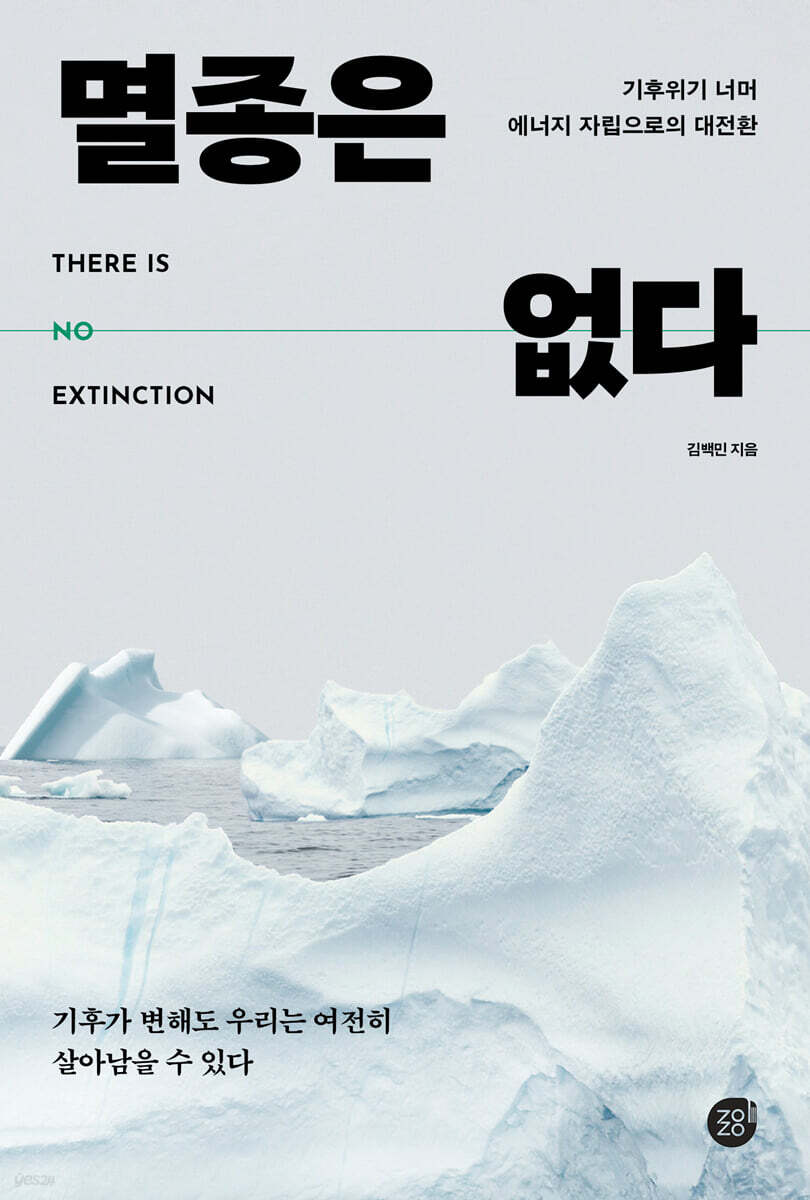
There is no extinction
 |
Description
Book Introduction
★★2025 Journalist's Scientist of the Year Award★★
★★Professor Baekmin Kim's Hot New Book★★
Transition, not extinction
In the age of climate crisis, speak of hope instead of fear.
We have been experiencing record heat waves and cold spells in recent years.
In an era where once-in-a-hundred-year meteorological disasters are no longer unfamiliar, the media is fueling people's fear and anxiety by promoting the "climate crisis doomsday theory."
But is humanity truly headed for extinction? "The Earth may be destroyed by 2100." This is a classic warning slogan, emblematic of the current climate crisis discourse.
However, Professor Baekmin Kim, author of “There is no extinction” and a renowned climatologist, directly refutes this exaggerated narrative that “climate crisis = apocalypse.”
The climate crisis clock is merely a symbolic indicator that oversimplifies complex science, and the Earth will not be destroyed immediately when the clock reaches 0:00:00.
He also points out that “the message of doom delivered by the media is actually making the public feel helpless,” and emphasizes that what is needed now is the will to act without giving up.
Humanity has already escaped the worst-case scenario (SSP5-8.5) and will move toward a sustainable future through the transformation of energy and economic systems.
This book proposes that we move beyond fear narratives like, “If the average global temperature rises by 1.5℃, humanity will be finished,” and explore practical responses we can implement now.
The message this book delivers is hopeful.
Climate is not an apocalypse, it's a transition, and our choices and actions will determine our future.
Now is the time to discuss realistic solutions for humanity's energy transition, from a perspective of hope rather than fear.
★★Professor Baekmin Kim's Hot New Book★★
Transition, not extinction
In the age of climate crisis, speak of hope instead of fear.
We have been experiencing record heat waves and cold spells in recent years.
In an era where once-in-a-hundred-year meteorological disasters are no longer unfamiliar, the media is fueling people's fear and anxiety by promoting the "climate crisis doomsday theory."
But is humanity truly headed for extinction? "The Earth may be destroyed by 2100." This is a classic warning slogan, emblematic of the current climate crisis discourse.
However, Professor Baekmin Kim, author of “There is no extinction” and a renowned climatologist, directly refutes this exaggerated narrative that “climate crisis = apocalypse.”
The climate crisis clock is merely a symbolic indicator that oversimplifies complex science, and the Earth will not be destroyed immediately when the clock reaches 0:00:00.
He also points out that “the message of doom delivered by the media is actually making the public feel helpless,” and emphasizes that what is needed now is the will to act without giving up.
Humanity has already escaped the worst-case scenario (SSP5-8.5) and will move toward a sustainable future through the transformation of energy and economic systems.
This book proposes that we move beyond fear narratives like, “If the average global temperature rises by 1.5℃, humanity will be finished,” and explore practical responses we can implement now.
The message this book delivers is hopeful.
Climate is not an apocalypse, it's a transition, and our choices and actions will determine our future.
Now is the time to discuss realistic solutions for humanity's energy transition, from a perspective of hope rather than fear.
- You can preview some of the book's contents.
Preview
index
prolog
Part 1: Dissecting the Absurdity of "Climate Doomsday"
Chapter 1 Stop the Clock of Terror
Will the climate crisis ultimately lead to humanity's extinction?
The Truth About the Climate Crisis Clock and Tipping Points
Why extinction at 6℃ is unrealistic
We're already avoiding the worst path.
Chapter 2: The Weather Became Brutal, But Humanity Became Stronger
Is extreme weather truly an 'unprecedented' phenomenon?
An era where extreme weather has become the new normal.
Is violent weather threatening humanity?
Chapter 3: Raising Climate Crisis Literacy
Climate-related terminology
The strange term 'abnormal climate'
Inaccurate use and abuse of terminology obscures the essence.
Part 2: The Great Transformation, Humanity's Only Hope
Chapter 4: Rewriting the History of Human Civilization with Energy
Stages of civilization determined by energy density
The unexpected rapid growth of solar energy
Global emissions are approaching a peak.
Chapter 5: The Geopolitics of the Energy Transition
The great powers' different dreams
China's Green Paradox
A New Energy War Triggered by the AI Revolution
Part 3: How Should Humanity Respond to the Climate Crisis?
Chapter 6: Survival Skills More Urgent Than Reduction
The wavering dream of carbon neutrality
South Korea, on the front lines of the climate crisis, prioritizes adaptation.
Is the climate crisis threatening our food supply?
Chapter 7 What's more important than the 'Energy Highway'
A country can survive only if it has electricity.
The problem is software rather than hardware.
South Korea's dream of energy independence
Chapter 8: The Magic of Positive Tipping Points
The trap of 'personal responsibility'
Use the mechanism of catastrophe to your advantage.
How to Deal with Rational Climate Skepticism
How to turn the 'problem' of climate change into an 'opportunity'
Epilogue
Americas
Part 1: Dissecting the Absurdity of "Climate Doomsday"
Chapter 1 Stop the Clock of Terror
Will the climate crisis ultimately lead to humanity's extinction?
The Truth About the Climate Crisis Clock and Tipping Points
Why extinction at 6℃ is unrealistic
We're already avoiding the worst path.
Chapter 2: The Weather Became Brutal, But Humanity Became Stronger
Is extreme weather truly an 'unprecedented' phenomenon?
An era where extreme weather has become the new normal.
Is violent weather threatening humanity?
Chapter 3: Raising Climate Crisis Literacy
Climate-related terminology
The strange term 'abnormal climate'
Inaccurate use and abuse of terminology obscures the essence.
Part 2: The Great Transformation, Humanity's Only Hope
Chapter 4: Rewriting the History of Human Civilization with Energy
Stages of civilization determined by energy density
The unexpected rapid growth of solar energy
Global emissions are approaching a peak.
Chapter 5: The Geopolitics of the Energy Transition
The great powers' different dreams
China's Green Paradox
A New Energy War Triggered by the AI Revolution
Part 3: How Should Humanity Respond to the Climate Crisis?
Chapter 6: Survival Skills More Urgent Than Reduction
The wavering dream of carbon neutrality
South Korea, on the front lines of the climate crisis, prioritizes adaptation.
Is the climate crisis threatening our food supply?
Chapter 7 What's more important than the 'Energy Highway'
A country can survive only if it has electricity.
The problem is software rather than hardware.
South Korea's dream of energy independence
Chapter 8: The Magic of Positive Tipping Points
The trap of 'personal responsibility'
Use the mechanism of catastrophe to your advantage.
How to Deal with Rational Climate Skepticism
How to turn the 'problem' of climate change into an 'opportunity'
Epilogue
Americas
Into the book
The biggest problem with the climate crisis clock is that it reduces a complex reality to a simple countdown.
It creates the illusion that if only the numbers that are ticking down like a time bomb would stop, everything would be solved.
The reality is not like that at all.
Even if the clock reaches zero and stops, your daily life won't suddenly fall apart that day.
--- p.41~42
Blaming all disasters solely on greenhouse gases obscures the essence of the problem and underestimates the power of the vast system that is nature.
We must face the human-induced crisis, but we must not forget the inherent terror of weather.
--- p.70
People often use the terms 'global warming' and 'climate change' interchangeably.
Global warming refers to the phenomenon in which the average temperature of the Earth rises.
Climate change, on the other hand, is a comprehensive concept that encompasses long-term changes in the entire Earth system, including not only temperature but also precipitation patterns, sea level, wind, and humidity.
It's like the difference between a "high fever" and a "cold." If global warming is simply a symptom of a fever, then climate change is like a cold.
--- p.103
The climate crisis is now a concrete reality unfolding on our land, and our response must be tailored to the unique circumstances of our lives. Global studies like the IPCC report are a crucial compass that illuminates the broader trends of the climate crisis, but they alone cannot prevent flooding in our neighborhoods.
Because global climate models only show us low-resolution maps of the world, what we really need are high-resolution maps that detail down to the streets of our towns.
--- p.185
If 'carbon neutrality' is a duty and task imposed on us by the international community, 'energy independence' is a long-held national aspiration and desire of the Republic of Korea that has persisted for decades.
The geopolitical shackle of being an energy-poor nation has been a shackle holding back the South Korean economy for the past half-century, and an Achilles' heel threatening national security amid rapidly changing international circumstances.
--- p.230
Carbon dioxide is invisible, but our actions are.
Every tree we plant, every solar panel we install, every public transportation and low-carbon product we choose, and every vote we cast for a better world all come together to create visible hope.
It creates the illusion that if only the numbers that are ticking down like a time bomb would stop, everything would be solved.
The reality is not like that at all.
Even if the clock reaches zero and stops, your daily life won't suddenly fall apart that day.
--- p.41~42
Blaming all disasters solely on greenhouse gases obscures the essence of the problem and underestimates the power of the vast system that is nature.
We must face the human-induced crisis, but we must not forget the inherent terror of weather.
--- p.70
People often use the terms 'global warming' and 'climate change' interchangeably.
Global warming refers to the phenomenon in which the average temperature of the Earth rises.
Climate change, on the other hand, is a comprehensive concept that encompasses long-term changes in the entire Earth system, including not only temperature but also precipitation patterns, sea level, wind, and humidity.
It's like the difference between a "high fever" and a "cold." If global warming is simply a symptom of a fever, then climate change is like a cold.
--- p.103
The climate crisis is now a concrete reality unfolding on our land, and our response must be tailored to the unique circumstances of our lives. Global studies like the IPCC report are a crucial compass that illuminates the broader trends of the climate crisis, but they alone cannot prevent flooding in our neighborhoods.
Because global climate models only show us low-resolution maps of the world, what we really need are high-resolution maps that detail down to the streets of our towns.
--- p.185
If 'carbon neutrality' is a duty and task imposed on us by the international community, 'energy independence' is a long-held national aspiration and desire of the Republic of Korea that has persisted for decades.
The geopolitical shackle of being an energy-poor nation has been a shackle holding back the South Korean economy for the past half-century, and an Achilles' heel threatening national security amid rapidly changing international circumstances.
--- p.230
Carbon dioxide is invisible, but our actions are.
Every tree we plant, every solar panel we install, every public transportation and low-carbon product we choose, and every vote we cast for a better world all come together to create visible hope.
--- p.278~279
Publisher's Review
Beyond carbon reduction,
Energy independence as a national vision
The climate crisis is a universal challenge that requires global cooperation to solve, and it is a strategic issue that determines the survival and competitiveness of each country.
Since the Paris Agreement, 195 countries have joined in reducing carbon emissions. While the European Union's Green Deal, China's green growth policy, the UK's carbon neutrality law, and Costa Rica's decarbonization economic model ostensibly promote the realization of universal human values, they are in fact the result of fierce competition for national interests.
Humanity has developed civilization by repeatedly transitioning energy sources from wood to coal, and from coal to oil and natural gas. In this process, countries that have been able to read the flow of change first have seized new wealth and influence.
Now, as the AI era begins in earnest, electricity is emerging as the most crucial resource determining national capabilities. To secure the massive power consumption of AI infrastructure, producing electricity cheaply, reliably, and sustainably has become a key variable in national industrial strategy.
The country that leads this will kill three birds with one stone: carbon neutrality, energy security, and AI technology supremacy.
So, what strategy should South Korea, which is at a crossroads, adopt to respond?
The climate crisis is an area that requires a systematic response at the national level, beyond individual action.
We must strengthen climate analysis capabilities, including meteorological observation and climate modeling, to enable more precise forecasts, and secure food systems and energy supply chains that are prepared for climate change.
Above all, we must establish "climate science sovereignty" by building customized climate data and analysis capabilities for the Republic of Korea and incorporating them into policies and systems.
Only when supported by bold investment and technological innovation from industry, ongoing basic and applied research from academia and research, and public consensus and participation can the energy transition truly become a national driving force.
By pooling national capabilities under the common goal of "energy independence," South Korea can transform the immense challenge of the climate crisis into an opportunity for new growth and advancement.
Energy independence as a national vision
The climate crisis is a universal challenge that requires global cooperation to solve, and it is a strategic issue that determines the survival and competitiveness of each country.
Since the Paris Agreement, 195 countries have joined in reducing carbon emissions. While the European Union's Green Deal, China's green growth policy, the UK's carbon neutrality law, and Costa Rica's decarbonization economic model ostensibly promote the realization of universal human values, they are in fact the result of fierce competition for national interests.
Humanity has developed civilization by repeatedly transitioning energy sources from wood to coal, and from coal to oil and natural gas. In this process, countries that have been able to read the flow of change first have seized new wealth and influence.
Now, as the AI era begins in earnest, electricity is emerging as the most crucial resource determining national capabilities. To secure the massive power consumption of AI infrastructure, producing electricity cheaply, reliably, and sustainably has become a key variable in national industrial strategy.
The country that leads this will kill three birds with one stone: carbon neutrality, energy security, and AI technology supremacy.
So, what strategy should South Korea, which is at a crossroads, adopt to respond?
The climate crisis is an area that requires a systematic response at the national level, beyond individual action.
We must strengthen climate analysis capabilities, including meteorological observation and climate modeling, to enable more precise forecasts, and secure food systems and energy supply chains that are prepared for climate change.
Above all, we must establish "climate science sovereignty" by building customized climate data and analysis capabilities for the Republic of Korea and incorporating them into policies and systems.
Only when supported by bold investment and technological innovation from industry, ongoing basic and applied research from academia and research, and public consensus and participation can the energy transition truly become a national driving force.
By pooling national capabilities under the common goal of "energy independence," South Korea can transform the immense challenge of the climate crisis into an opportunity for new growth and advancement.
GOODS SPECIFICS
- Date of issue: November 19, 2025
- Page count, weight, size: 288 pages | 504g | 152*226*17mm
- ISBN13: 9791194508632
- ISBN10: 1194508634
You may also like
카테고리
korean


korean

![GQ KOREA Mark (Monthly): December [2025]](http://librairie.coreenne.fr/cdn/shop/files/8ef265dbbfbf186523ed75ba7319009d.jpg?v=1765340328&width=3840)


