

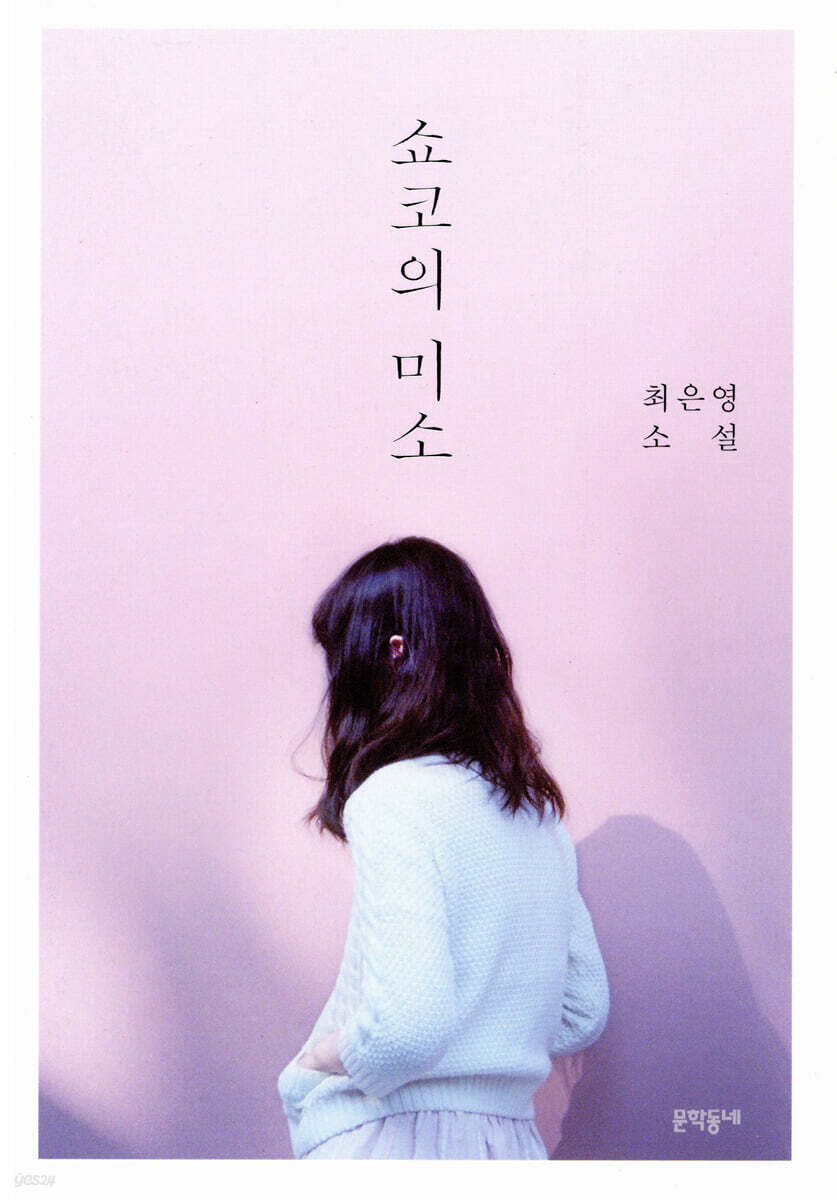
Shoko's smile
 |
Description
Book Introduction
“Choi Eun-young’s greatest virtue as a novelist is The point is that whatever the quest, it will inevitably turn into a great story. “The wonderful stories she would write in the future began with this book.” _Kim Yeon-su (novelist) This is the new novelist who made a special impression on many people when her novella “Shoko’s Smile” won the New Writer’s Award in the winter of 2013 from the 『Writer’s World』, and then won the Young Writer’s Award the following year for that work. However, this 'special impression' does not only mean that a new writer with only one published work, "Shoko's Smile," won the Young Writer's Award less than two months after debuting. Its special quality lies in the fact that it elicits a common sentiment from novelists and critics, each with their own keen discernment. I am not trying to say that a work that receives the same evaluation from everyone without any controversy is an excellent novel. The special nature of "Shoko's Smile" lies in the fact that it departs from the expectations we often have for a debut work—the demand for "strangeness" and "avant-garde" that distinguishes it from existing works—and unfolds the story simply and without any special techniques, moving the hearts of readers through that authentic method. That is, it gives a feeling of “truthfulness” in almost every area, like the films of directors Hirokazu Koreeda and Isshin Inudo (literary critic Shin Hyeong-cheol), and because of that, it “made me think anew about what kind of emotion a novel gives” (novelist Lim Cheol-woo). From the beginning of her career, Choi Eun-young has expressed her desire to humbly open her ears to the pain of others, something she could never have imagined, saying, “Just as there are people who are born with weak eyes or stomachs, there are also people whose hearts are especially weak and easily broken.” This is probably why people are everywhere Eunyoung Choi's gaze lands. Choi Eun-young's first collection of short stories, "Shoko's Smile," which contains a total of seven stories, leads us to that "human place" by creating a precise path through which the human heart can flow. |
- You can preview some of the book's contents.
Preview
index
Shoko's Smile _ 007
Xin Zhao, Xin Zhao _ 065
Sister, my little, innocent sister _ 095
Hanji and Yeongju _ 123
Songs from afar _ 183
Michaela _ 213
Secret _ 243
Commentary│Seo Young-chae (literary critic)
The Power of Pure and Clear Narrative _ 267
Author's Note _ 291
Xin Zhao, Xin Zhao _ 065
Sister, my little, innocent sister _ 095
Hanji and Yeongju _ 123
Songs from afar _ 183
Michaela _ 213
Secret _ 243
Commentary│Seo Young-chae (literary critic)
The Power of Pure and Clear Narrative _ 267
Author's Note _ 291
Into the book
Pure dreams belong only to those who are talented and can enjoy this work.
And the glory should have been theirs.
Film and art reveal their true face not through the efforts of ordinary people, but through the efforts of those who are born with it.
I covered my face with both hands and shed tears.
Because it was difficult to admit that fact.
The moment those without talent begin to cling to the illusion of a dream, that illusion slowly eats away at their lives.
---From "Shoko's Smile"
As time passed and each relationship ended, I thought about who was leaving and who was being left behind.
Sometimes I left, and sometimes I was left behind, but when truly precious relationships were broken, I couldn't tell who was leaving and who was being left behind.
---From "Xin Zhao, Xin Zhao"
If you can't share the other person's pain, if you don't have the courage to live a part of the other person's life with them, it's better to choose indifference rather than shallow affection.
---From "Sister, My Little, Pure Sister"
The most important people surprisingly appear early in life.
At some point, I couldn't even get through the first chapter of a relationship that I had been able to enter into relatively easily as a child.
People lock their hearts at some point in their lives, as if they had made a promise.
And outside that lock, we met people who would never hurt each other, we made plans together, went on couples' trips, and went hiking.
At twenty, sometimes we exchange words that we never want to go back.
Talking about what you didn't know back then.
---From "Sister, My Little, Pure Sister"
We politely covered each other's eyes.
Finally, at the very end, I was the first to take my hands off his eyes, and we parted ways cleanly.
The end of loved ones could not have been so clean, so that parting proved that there was no love left between us.
We just moved from one point to another.
---From "Hanji and Yeongju"
Time passes, people leave, and we are alone again.
If we do not accept that fact, memories will corrode the present, wear out our minds, and make us old and sick.
That's what my grandmother said.
I always remember those words.
---From "Hanji and Yeongju"
The woman felt such respect whenever she saw the elderly.
Living long means letting go of the people you love and leaving them behind for a long time.
After going through such things, I have to get up again, eat, and walk down the street alone.
And the glory should have been theirs.
Film and art reveal their true face not through the efforts of ordinary people, but through the efforts of those who are born with it.
I covered my face with both hands and shed tears.
Because it was difficult to admit that fact.
The moment those without talent begin to cling to the illusion of a dream, that illusion slowly eats away at their lives.
---From "Shoko's Smile"
As time passed and each relationship ended, I thought about who was leaving and who was being left behind.
Sometimes I left, and sometimes I was left behind, but when truly precious relationships were broken, I couldn't tell who was leaving and who was being left behind.
---From "Xin Zhao, Xin Zhao"
If you can't share the other person's pain, if you don't have the courage to live a part of the other person's life with them, it's better to choose indifference rather than shallow affection.
---From "Sister, My Little, Pure Sister"
The most important people surprisingly appear early in life.
At some point, I couldn't even get through the first chapter of a relationship that I had been able to enter into relatively easily as a child.
People lock their hearts at some point in their lives, as if they had made a promise.
And outside that lock, we met people who would never hurt each other, we made plans together, went on couples' trips, and went hiking.
At twenty, sometimes we exchange words that we never want to go back.
Talking about what you didn't know back then.
---From "Sister, My Little, Pure Sister"
We politely covered each other's eyes.
Finally, at the very end, I was the first to take my hands off his eyes, and we parted ways cleanly.
The end of loved ones could not have been so clean, so that parting proved that there was no love left between us.
We just moved from one point to another.
---From "Hanji and Yeongju"
Time passes, people leave, and we are alone again.
If we do not accept that fact, memories will corrode the present, wear out our minds, and make us old and sick.
That's what my grandmother said.
I always remember those words.
---From "Hanji and Yeongju"
The woman felt such respect whenever she saw the elderly.
Living long means letting go of the people you love and leaving them behind for a long time.
After going through such things, I have to get up again, eat, and walk down the street alone.
---From "Michaela"
Publisher's Review
“Choi Eun-young’s greatest virtue as a novelist is
The point is that whatever the quest, it will inevitably turn into a great story.
“The wonderful stories she would write in the future began with this book.”
_Kim Yeon-su (novelist)
In February 2016, an event titled [The Night of Novels We Hear for the First Time] was held, planned by novelist Kim Yeon-su.
A new writer decided to present a short story that had never been published before for the first time that day in the form of a reading.
After Kim Yeon-su's introduction, which stated that she had planned the event because she had always admired the author's work and hoped that he would continue writing novels, the author's reading followed immediately.
The title of the work revealed that day was “Xin Zhao, Xin Zhao,” and the name of the new writer was Choi Eun-young.
This is the new novelist who made a special impression on many people when her novella “Shoko’s Smile” won the New Writer’s Award in the winter of 2013 from the 『Writer’s World』, and then won the Young Writer’s Award the following year for that work.
However, this 'special impression' does not only mean that a new writer with only one published work, "Shoko's Smile," won the Young Writer's Award less than two months after debuting.
Its special quality lies in the fact that it elicits a common sentiment from novelists and critics, each with their own keen discernment.
I am not trying to say that a work that receives the same evaluation from everyone without any controversy is an excellent novel.
The special nature of "Shoko's Smile" lies in the fact that it departs from the expectations we often have for a debut work—the demand for "strangeness" and "avant-garde" that distinguishes it from existing works—and unfolds the story simply and without any special techniques, moving the hearts of readers through that authentic method.
That is, it gives a feeling of “truthfulness” in almost every area, like the films of directors Hirokazu Koreeda and Isshin Inudo (literary critic Shin Hyeong-cheol), and because of that, it “made me think anew about what kind of emotion a novel gives” (novelist Lim Cheol-woo).
From the beginning of her career, Choi Eun-young has expressed her desire to humbly open her ears to the pain of others, something she could never have imagined, saying, “Just as there are people who are born with weak eyes or stomachs, there are also people whose hearts are especially weak and easily broken.”
This is probably why people are everywhere Eunyoung Choi's gaze lands.
Choi Eun-young's first collection of short stories, "Shoko's Smile," which contains a total of seven stories, leads us to that "human place" by creating a precise path through which the human heart can flow.
“Some relationships are like friendships, and some friendships are like relationships.
“When I thought about Shoko, I was afraid that she might not like me anymore.”
The title piece, "Shoko's Smile," depicts the process of two people of different nationalities and languages meeting and passing the threshold of growth. It can also be read as Choi Eun-young's honest question about what can be done to understand others who are completely unpredictable.
Soyou, a first-year high school student from a small town in the countryside, describes the moment when she first met Shoko, a Japanese exchange student.
“It seems like Shoko is not laughing because it’s funny, or nodding in sympathy, but just striking that pose to make the other person feel comfortable.”
Regardless of the actual state of mind in which Shoko smiled, Soyou felt a strange distance from Shoko's smile due to an inexplicable sense of alienation.
This could be said to be a natural reaction of someone who encounters a stranger, but the key is how 'Shoko's smile' changes as the story progresses.
This is because Choi Eun-young's ethical sense toward others, which runs through this entire collection of short stories, is contained in that very direction.
The situation is like this.
Rather than guessing what was on Shoko's mind as she watched him, her heart broken, Soyou read a "weak and defensive attitude" in his smile and felt a strange sense of superiority that she was stronger than Shoko.
As the novel progresses through this climax of misunderstanding and toward mutual understanding, we expect the story to end on a refreshing aftertaste.
I hope the story ends with a refreshing smile.
But what we finally encounter is, “Shoko looked at me with that polite smile.
The sentence is, “My heart became cold, like when I saw Shoko’s smile as a child.”
This coolness that you witness when you think that after a long time, you have finally resolved the misunderstanding between you.
Isn't this precisely where Choi Eun-young's attitude toward others lies? So, understanding others isn't possible when you think you know everything, but when you face the reality that the person before you is a completely different person from yourself, when you stand face to face with each other as 100 percent strangers, then the possibility of understanding opens up.
The 'hope' and 'hope' of each other
A pure and clear power spreading from that chain
So, it is only natural that since her debut work, "Shoko's Smile," Choi Eun-young's interest has been focused on the possibility of 100 percent communication with others.
This is where the verb 'imagine', which appears repeatedly throughout the novel collection, becomes meaningful.
In front of Aunt Nguyen, who had to just watch as her close friends died in the Vietnam War, 'I' and my mother do not easily say that they understand how she feels.
However, he can only imagine and imagine the situation she might be in, even to the point where he cannot even imagine it. ("Xin Zhao, Xin Zhao") When he meets Han Ji, a young man from Kenya, at a monastery in France, Yeong-ju does not hastily add anything about the family history he reveals.
Just as veterinarian Hanji imagines the mind of a rhinoceros, we can only imagine his mind. (Hanji and Yeongju) As if ‘imagining’ is the most we can do for others.
And when this 'imagination' is not limited to one side but becomes directed towards each other, Choi Eun-young records the small miracles that occur without fail.
When an old man and a middle-aged woman, who can tell at first sight how much hardship they have endured, head together to Gwanghwamun, the site of the Sewol Ferry protests ("Michaela"), or when So-eun and Mi-jin look at each other with eyes filled with support amidst the pressure of their overbearing seniors at a drinking party ("A Song from afar"), we cannot help but believe in the powerful power of imagining others and willingly putting ourselves in their place.
In “A Song from afar,” Eunyoung Choi remembers the voice of senior Mijin who held her when Soeun was most unsteady, and says the following.
“No matter what song you sing or whose song you sing, that song becomes your senior’s song.
Her voice, which was husky when she spoke, became clear and soft when she sang.
(…) The senior did not appeal.
“He was dry when singing sad songs, and he was calm when singing passionate songs.”
After reading Choi Eun-young's first novel collection, "Shoko's Smile," you will realize that this sentence refers precisely to Choi Eun-young's novels.
Novels that continue calmly and calmly with a clear and transparent voice, novels that believe in the power of the chain of 'waiting' and 'being waited on' by each other.
So, novels that lead us back to the ‘place of humans’ once again.
As our sense of ethics toward others gradually fades, Eunyoung Choi gently awakens that sense with her “pure and clear” power.
★
I would like to thank everyone who gave me a chance, who believed in an unproven and uncertain writer.
I want to live as a writer who writes good articles for a long time without forgetting that precious heart.
I want to become a writer who looks at the world and people from the perspective of those who are objects of contempt and hatred simply for being who they are.
On that path, I hope to become my complete self without fear.
_From the author's note
The point is that whatever the quest, it will inevitably turn into a great story.
“The wonderful stories she would write in the future began with this book.”
_Kim Yeon-su (novelist)
In February 2016, an event titled [The Night of Novels We Hear for the First Time] was held, planned by novelist Kim Yeon-su.
A new writer decided to present a short story that had never been published before for the first time that day in the form of a reading.
After Kim Yeon-su's introduction, which stated that she had planned the event because she had always admired the author's work and hoped that he would continue writing novels, the author's reading followed immediately.
The title of the work revealed that day was “Xin Zhao, Xin Zhao,” and the name of the new writer was Choi Eun-young.
This is the new novelist who made a special impression on many people when her novella “Shoko’s Smile” won the New Writer’s Award in the winter of 2013 from the 『Writer’s World』, and then won the Young Writer’s Award the following year for that work.
However, this 'special impression' does not only mean that a new writer with only one published work, "Shoko's Smile," won the Young Writer's Award less than two months after debuting.
Its special quality lies in the fact that it elicits a common sentiment from novelists and critics, each with their own keen discernment.
I am not trying to say that a work that receives the same evaluation from everyone without any controversy is an excellent novel.
The special nature of "Shoko's Smile" lies in the fact that it departs from the expectations we often have for a debut work—the demand for "strangeness" and "avant-garde" that distinguishes it from existing works—and unfolds the story simply and without any special techniques, moving the hearts of readers through that authentic method.
That is, it gives a feeling of “truthfulness” in almost every area, like the films of directors Hirokazu Koreeda and Isshin Inudo (literary critic Shin Hyeong-cheol), and because of that, it “made me think anew about what kind of emotion a novel gives” (novelist Lim Cheol-woo).
From the beginning of her career, Choi Eun-young has expressed her desire to humbly open her ears to the pain of others, something she could never have imagined, saying, “Just as there are people who are born with weak eyes or stomachs, there are also people whose hearts are especially weak and easily broken.”
This is probably why people are everywhere Eunyoung Choi's gaze lands.
Choi Eun-young's first collection of short stories, "Shoko's Smile," which contains a total of seven stories, leads us to that "human place" by creating a precise path through which the human heart can flow.
“Some relationships are like friendships, and some friendships are like relationships.
“When I thought about Shoko, I was afraid that she might not like me anymore.”
The title piece, "Shoko's Smile," depicts the process of two people of different nationalities and languages meeting and passing the threshold of growth. It can also be read as Choi Eun-young's honest question about what can be done to understand others who are completely unpredictable.
Soyou, a first-year high school student from a small town in the countryside, describes the moment when she first met Shoko, a Japanese exchange student.
“It seems like Shoko is not laughing because it’s funny, or nodding in sympathy, but just striking that pose to make the other person feel comfortable.”
Regardless of the actual state of mind in which Shoko smiled, Soyou felt a strange distance from Shoko's smile due to an inexplicable sense of alienation.
This could be said to be a natural reaction of someone who encounters a stranger, but the key is how 'Shoko's smile' changes as the story progresses.
This is because Choi Eun-young's ethical sense toward others, which runs through this entire collection of short stories, is contained in that very direction.
The situation is like this.
Rather than guessing what was on Shoko's mind as she watched him, her heart broken, Soyou read a "weak and defensive attitude" in his smile and felt a strange sense of superiority that she was stronger than Shoko.
As the novel progresses through this climax of misunderstanding and toward mutual understanding, we expect the story to end on a refreshing aftertaste.
I hope the story ends with a refreshing smile.
But what we finally encounter is, “Shoko looked at me with that polite smile.
The sentence is, “My heart became cold, like when I saw Shoko’s smile as a child.”
This coolness that you witness when you think that after a long time, you have finally resolved the misunderstanding between you.
Isn't this precisely where Choi Eun-young's attitude toward others lies? So, understanding others isn't possible when you think you know everything, but when you face the reality that the person before you is a completely different person from yourself, when you stand face to face with each other as 100 percent strangers, then the possibility of understanding opens up.
The 'hope' and 'hope' of each other
A pure and clear power spreading from that chain
So, it is only natural that since her debut work, "Shoko's Smile," Choi Eun-young's interest has been focused on the possibility of 100 percent communication with others.
This is where the verb 'imagine', which appears repeatedly throughout the novel collection, becomes meaningful.
In front of Aunt Nguyen, who had to just watch as her close friends died in the Vietnam War, 'I' and my mother do not easily say that they understand how she feels.
However, he can only imagine and imagine the situation she might be in, even to the point where he cannot even imagine it. ("Xin Zhao, Xin Zhao") When he meets Han Ji, a young man from Kenya, at a monastery in France, Yeong-ju does not hastily add anything about the family history he reveals.
Just as veterinarian Hanji imagines the mind of a rhinoceros, we can only imagine his mind. (Hanji and Yeongju) As if ‘imagining’ is the most we can do for others.
And when this 'imagination' is not limited to one side but becomes directed towards each other, Choi Eun-young records the small miracles that occur without fail.
When an old man and a middle-aged woman, who can tell at first sight how much hardship they have endured, head together to Gwanghwamun, the site of the Sewol Ferry protests ("Michaela"), or when So-eun and Mi-jin look at each other with eyes filled with support amidst the pressure of their overbearing seniors at a drinking party ("A Song from afar"), we cannot help but believe in the powerful power of imagining others and willingly putting ourselves in their place.
In “A Song from afar,” Eunyoung Choi remembers the voice of senior Mijin who held her when Soeun was most unsteady, and says the following.
“No matter what song you sing or whose song you sing, that song becomes your senior’s song.
Her voice, which was husky when she spoke, became clear and soft when she sang.
(…) The senior did not appeal.
“He was dry when singing sad songs, and he was calm when singing passionate songs.”
After reading Choi Eun-young's first novel collection, "Shoko's Smile," you will realize that this sentence refers precisely to Choi Eun-young's novels.
Novels that continue calmly and calmly with a clear and transparent voice, novels that believe in the power of the chain of 'waiting' and 'being waited on' by each other.
So, novels that lead us back to the ‘place of humans’ once again.
As our sense of ethics toward others gradually fades, Eunyoung Choi gently awakens that sense with her “pure and clear” power.
★
I would like to thank everyone who gave me a chance, who believed in an unproven and uncertain writer.
I want to live as a writer who writes good articles for a long time without forgetting that precious heart.
I want to become a writer who looks at the world and people from the perspective of those who are objects of contempt and hatred simply for being who they are.
On that path, I hope to become my complete self without fear.
_From the author's note
GOODS SPECIFICS
- Date of issue: July 4, 2016
- Page count, weight, size: 296 pages | 406g | 145*210*20mm
- ISBN13: 9788954641630
- ISBN10: 8954641636
You may also like
카테고리
korean


korean

![GQ KOREA Mark (Monthly): December [2025]](http://librairie.coreenne.fr/cdn/shop/files/8ef265dbbfbf186523ed75ba7319009d.jpg?v=1765340328&width=3840)


