

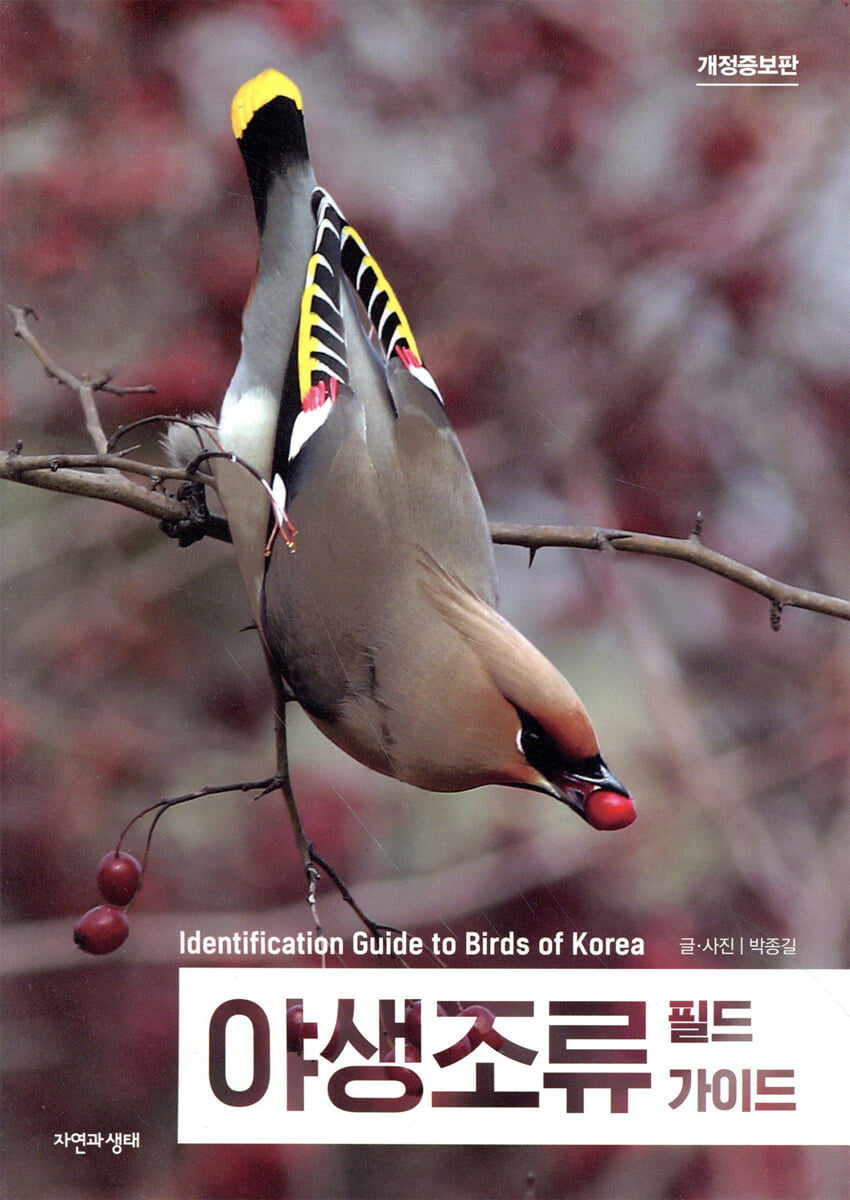
Wild Bird Field Guide
 |
Description
Book Introduction
Rich explanations and friendly structure
A comprehensive guide optimized for bird identification
Contains all birds recorded on the Korean Peninsula (84 families and 586 species).
By collecting research data and taxonomic papers from over 30 years, and through specimen and field verification and actual measurement verification, we have clearly explained the classification system, morphology, and ecology of all birds found in Korea.
You can feel the amount of accumulated data and the fidelity of the explanations in the densely packed text and photos.
We recorded in detail the migration characteristics and arrival status of each species, as well as the threat factors, distribution, and spread status.
Similar species are arranged side by side to help you compare and distinguish them.
Within the same species, we show males and females, juveniles, adults, and seasonal plumage patterns, allowing us to identify differences according to sex, age, and time of year.
To help you intuitively understand the morphological characteristics of each species, arrows are used to indicate the parts where the characteristics are evident, and explanations are provided.
A comprehensive guide optimized for bird identification
Contains all birds recorded on the Korean Peninsula (84 families and 586 species).
By collecting research data and taxonomic papers from over 30 years, and through specimen and field verification and actual measurement verification, we have clearly explained the classification system, morphology, and ecology of all birds found in Korea.
You can feel the amount of accumulated data and the fidelity of the explanations in the densely packed text and photos.
We recorded in detail the migration characteristics and arrival status of each species, as well as the threat factors, distribution, and spread status.
Similar species are arranged side by side to help you compare and distinguish them.
Within the same species, we show males and females, juveniles, adults, and seasonal plumage patterns, allowing us to identify differences according to sex, age, and time of year.
To help you intuitively understand the morphological characteristics of each species, arrows are used to indicate the parts where the characteristics are evident, and explanations are provided.
- You can preview some of the book's contents.
Preview
index
Finding Species by Habitat 10
Composition and Terminology 13
Wild bird classification and ecology
Phasianidae 36
Anatidae 39
Gaviidae 94
Albatross Diomedeidae 98
Procellariidae 98
Hydrobatidae 104
Grebe family Podicipedidae 105
Ciconiidae 110
Threskiornithidae 112
Flamingos Phoenicopteridae 116
Heron family Ardeidae 117
Frigatebird family Fregatidae 138
Pelecanidae 140
Sulidae 142
Phalacrocoracidae 145
Falconidae 150
Pandionidae 159
Accipitridae 160
Otididae 193
Rallidae 194
Gruidae 203
Turnicidae 210
Haematopodidae 210
Recurvirostridae 212
Charadriidae 214
Rostratulidae 226
Jacanidae 227
Scolopacidae 228
Glareolidae 279
Laridae 280
Stercorariidae 319
Alcidae 322
Desert Pheasant Family Pteroclidae 330
Columbidae 330
Cuculidae 340
Tytonidae 352
Strigidae 353
Caprimulgidae 364
Apodidae 365
Bluebird family Coraciidae 371
Alcedinidae 372
Upupidae 376
Picidae 377
Pittidae 386
Artamidae 388
Campephagidae 390
Laniidae 392
Oriolidae 402
Dicruridae 403
Monarchidae 406
Corvidae 409
Bombycillidae 420
Paridae 422
Remizidae 429
Hirundinidae 430
Aegithalidae 437
Alaudidae 438
Cisticolidae 444
Pycnonotidae 446
Cettiidae 448
Locustellidae 453
Acrocephalidae 462
Phylloscopidae 470
Stenostiridae 488
Paradoxornithidae 489
Panuridae 491
Sylviidae 492
Zosteropidae 494
Regulidae 496
Troglodytidae 497
Sittidae 498
Certhiidae 500
Sturnidae 501
Turdidae 510
Muscicapidae 528
Cinclidae 565
Passeridae 566
Estrildidae 569
Prunellidae 570
Motacillidae 572
Fringillidae 593
Emberizidae 611
Calcariidae 634
Passerellidae 636
Appendix 1: Missing text 639
Appendix 2: North Korean Species 653
Reference 661
Search 672
700 people who participated in the creation of the guide, including providing photos
Composition and Terminology 13
Wild bird classification and ecology
Phasianidae 36
Anatidae 39
Gaviidae 94
Albatross Diomedeidae 98
Procellariidae 98
Hydrobatidae 104
Grebe family Podicipedidae 105
Ciconiidae 110
Threskiornithidae 112
Flamingos Phoenicopteridae 116
Heron family Ardeidae 117
Frigatebird family Fregatidae 138
Pelecanidae 140
Sulidae 142
Phalacrocoracidae 145
Falconidae 150
Pandionidae 159
Accipitridae 160
Otididae 193
Rallidae 194
Gruidae 203
Turnicidae 210
Haematopodidae 210
Recurvirostridae 212
Charadriidae 214
Rostratulidae 226
Jacanidae 227
Scolopacidae 228
Glareolidae 279
Laridae 280
Stercorariidae 319
Alcidae 322
Desert Pheasant Family Pteroclidae 330
Columbidae 330
Cuculidae 340
Tytonidae 352
Strigidae 353
Caprimulgidae 364
Apodidae 365
Bluebird family Coraciidae 371
Alcedinidae 372
Upupidae 376
Picidae 377
Pittidae 386
Artamidae 388
Campephagidae 390
Laniidae 392
Oriolidae 402
Dicruridae 403
Monarchidae 406
Corvidae 409
Bombycillidae 420
Paridae 422
Remizidae 429
Hirundinidae 430
Aegithalidae 437
Alaudidae 438
Cisticolidae 444
Pycnonotidae 446
Cettiidae 448
Locustellidae 453
Acrocephalidae 462
Phylloscopidae 470
Stenostiridae 488
Paradoxornithidae 489
Panuridae 491
Sylviidae 492
Zosteropidae 494
Regulidae 496
Troglodytidae 497
Sittidae 498
Certhiidae 500
Sturnidae 501
Turdidae 510
Muscicapidae 528
Cinclidae 565
Passeridae 566
Estrildidae 569
Prunellidae 570
Motacillidae 572
Fringillidae 593
Emberizidae 611
Calcariidae 634
Passerellidae 636
Appendix 1: Missing text 639
Appendix 2: North Korean Species 653
Reference 661
Search 672
700 people who participated in the creation of the guide, including providing photos
Detailed image

Publisher's Review
Publishing the revised and expanded edition
The Wild Bird Field Guide, which has maintained its position as the number one photo guide in Korea, is being republished in a revised and expanded edition after eight years.
I would like to express my gratitude to all the readers who have shown me so much love.
When it was first released eight years ago, many people were delighted, saying, “This is a really refreshing Pokedex.”
On the one hand, there were opinions such as the book was too heavy, the spine was cracked, and they wanted it to be bound in hardcover.
We have been considering ways to reflect the opinions of our readers while applying the research results and additional species so far.
As a result, we have published two types of editions: a general edition and a special edition. Please use them according to your needs.
Reflecting recent research trends and additional species
As research on phylogenetic classification through DNA analysis has become more active, many species have changed their taxonomic positions, and 35 new species have been observed.
We reviewed the classification system to incorporate recent data, added new species, and examined changes in the status of arrivals and factors that have changed over the past eight years.
Increase information and make photos bigger
The text is packed with information, with almost no margins.
The content has become richer and the photos larger, making it much easier to examine the characteristics of the species.
Standard and Collector's Editions, Choose the One That Suits Your Needs
It's a book with over 700 pages, so it's bound to be heavy, and since I'm always flipping through it to compare different books, it tends to get ruined quickly.
To compensate for that, we published it in two versions: a general edition and a special edition.
Both types have a spine that is stitched with thread to prevent damage, but the general edition is made of a paperback with a 20% thinner main text paper to reduce weight, while the limited edition is made of a hardcover with a thick main text paper.
Please note that thin paper is lighter but has slightly lower image quality, while thick paper is heavier but has better image quality.
The Wild Bird Field Guide, which has maintained its position as the number one photo guide in Korea, is being republished in a revised and expanded edition after eight years.
I would like to express my gratitude to all the readers who have shown me so much love.
When it was first released eight years ago, many people were delighted, saying, “This is a really refreshing Pokedex.”
On the one hand, there were opinions such as the book was too heavy, the spine was cracked, and they wanted it to be bound in hardcover.
We have been considering ways to reflect the opinions of our readers while applying the research results and additional species so far.
As a result, we have published two types of editions: a general edition and a special edition. Please use them according to your needs.
Reflecting recent research trends and additional species
As research on phylogenetic classification through DNA analysis has become more active, many species have changed their taxonomic positions, and 35 new species have been observed.
We reviewed the classification system to incorporate recent data, added new species, and examined changes in the status of arrivals and factors that have changed over the past eight years.
Increase information and make photos bigger
The text is packed with information, with almost no margins.
The content has become richer and the photos larger, making it much easier to examine the characteristics of the species.
Standard and Collector's Editions, Choose the One That Suits Your Needs
It's a book with over 700 pages, so it's bound to be heavy, and since I'm always flipping through it to compare different books, it tends to get ruined quickly.
To compensate for that, we published it in two versions: a general edition and a special edition.
Both types have a spine that is stitched with thread to prevent damage, but the general edition is made of a paperback with a 20% thinner main text paper to reduce weight, while the limited edition is made of a hardcover with a thick main text paper.
Please note that thin paper is lighter but has slightly lower image quality, while thick paper is heavier but has better image quality.
GOODS SPECIFICS
- Date of issue: March 31, 2022
- Format: Paperback book binding method guide
- Page count, weight, size: 704 pages | 148*201*40mm
- ISBN13: 9791164500444
You may also like
카테고리
korean


korean

![GQ KOREA Mark (Monthly): December [2025]](http://librairie.coreenne.fr/cdn/shop/files/8ef265dbbfbf186523ed75ba7319009d.jpg?v=1765340328&width=3840)


