

The Grapes of Wrath 2
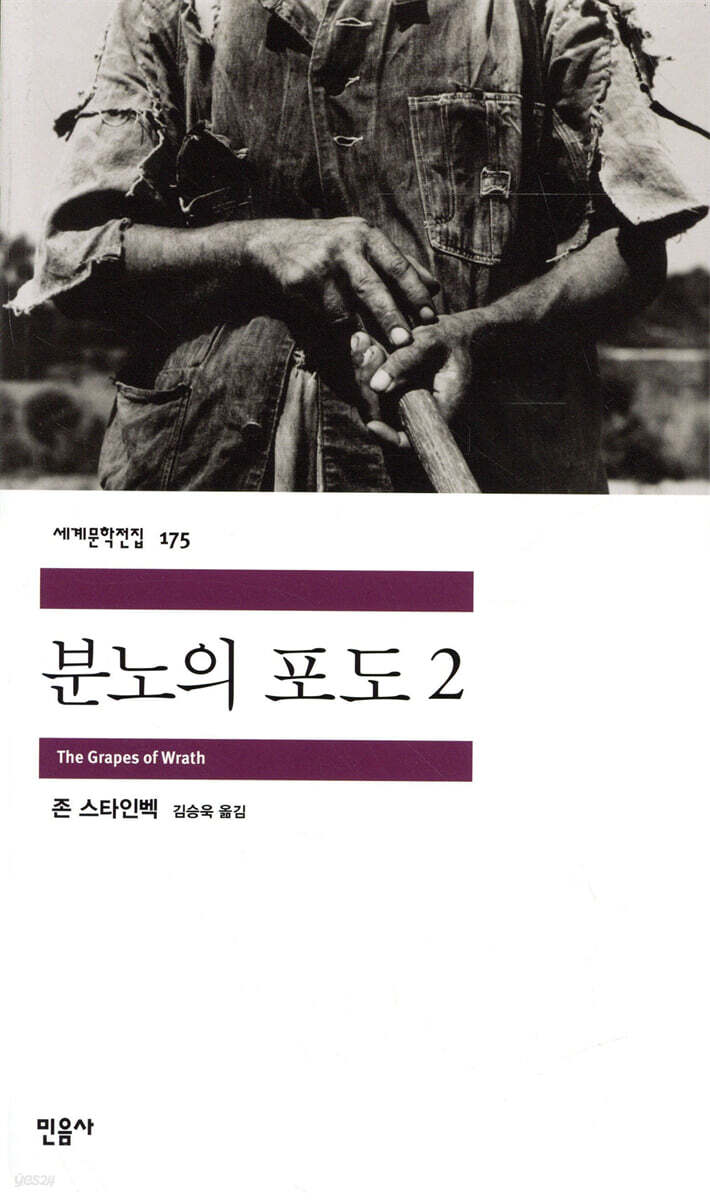 |
Description
Book Introduction
John Steinbeck's The Grapes of Wrath. This book, consisting of two volumes, is set in the late 1930s, when the United States was still struggling to recover from the Great Depression. It depicts the harsh reality of the United States at the time through the Joad family, who had lived an honest life but suddenly fell into miserable immigrant labor. Tom Joad, who was paroled after serving four years in prison for murder, heads to his parents' farm when he sees corn and empty farms parched by sandstorms. His family was also gathered at his uncle's house nearby and preparing to leave. After suffering from crop failures due to drought and sandstorms, and struggling with debt collection from banks, and with the arrival of tractors making manpower unnecessary, he was about to leave the farm where he had lived for a long time and head to California to find workers. But as soon as they hit the road, they realize that the highways are full of people like them, headed to California. During the arduous journey to California, his grandparents die, Tom's older brother disappears without a word, and his pregnant sister's husband runs away. But the family moves forward with vague expectations, with no choice. When I actually arrived in California, I found that there were many people willing to work, but the corporate farms had colluded to keep wages extremely low. In it, the main characters acquire strong mental power and grow. The author paints a picture of a miserable America, but that is not all the book shows. Through the protagonists who struggle in poverty and despair, yet strive to maintain their human dignity until the very end, it shows that the possibility of hope still exists within humanity. |
- You can preview some of the book's contents.
Preview
Into the book
I will be everywhere.
Wherever hungry people fight for food, I will be there.
I'll be there wherever the police beat people.
I'll be there when people are angry and yelling, and I'll be there when hungry children are laughing over dinner.
Wherever hungry people fight for food, I will be there.
I'll be there wherever the police beat people.
I'll be there when people are angry and yelling, and I'll be there when hungry children are laughing over dinner.
--- From the text
Publisher's Review
A masterpiece by Nobel Prize-winning author John Steinbeck
A Pulitzer Prize-winning work that confronts the harsh realities of America during the Great Depression
A painful journey toward the Promised Land, discovering the human vitality and possibility of hope amid despair.
The Grapes of Wrath (2 volumes) by representative American author John Steinbeck has been published in Minumsa World Literature Collection (174, 175).
Set in the late 1930s, when the United States was still struggling to recover from the Great Depression, this work vividly captures the harsh reality of the United States at the time through the Joad family, who had lived an honest life but were suddenly reduced to miserable migrant workers.
John Steinbeck shows that the possibility of hope still exists within humanity through his protagonists who struggle with poverty and despair, yet strive to maintain their human dignity until the very end.
With this work, John Steinbeck won the Pulitzer Prize and the Nobel Prize in Literature, establishing himself as a true representative American writer.
Minumsa's "The Grapes of Wrath" was published under a formal contract with the copyright holder, and its meaning is enhanced by the in-depth commentary of Professor Cho Cheol-won (Department of English Language and Literature, Seoul National University).
A masterpiece by Nobel Prize-winning author John Steinbeck
The possibility of finding hope in a miserable reality lies within humanity!
The Grapes of Wrath is the work that won John Steinbeck the Pulitzer Prize.
When he received the Nobel Prize in Literature in 1962, the Swedish Academy stated, “The Grapes of Wrath is a great work and is the main reason why Steinbeck received the Nobel Prize in Literature.”
Also, the 1940 film of the same name, starring Henry Fonda as the son Tom Joad, was a huge hit, winning the Academy Award for Best Director (John Ford).
Tom Joad, who was released on parole after serving four years in prison for murder, meets Reverend Casey, a man he knew from childhood, on his way home.
As the two head together to Tom's parents' farm, they see corn and empty farms parched by sandstorms.
Tom's house was empty too.
The whole family was gathered at my uncle's house nearby and preparing to leave.
After suffering from crop failures due to drought and sandstorms, and struggling with debt collection from banks, and with the arrival of tractors making manpower unnecessary, he was about to leave the farm where he had lived for a long time and head to California to find workers.
Tom is on parole and is not allowed to cross state lines, but he joins the journey for the sake of his family.
But as soon as they hit the road, they realize that the highways are full of people like them, headed to California.
During the arduous journey to California, his grandparents die, Tom's older brother disappears without a word, and his pregnant sister's husband runs away.
But the family moves forward with vague expectations, with no choice.
When I actually arrived in California, I found that there were a lot of people willing to work, but the corporate farms had colluded to keep wages ridiculously low.
Children who skip meals fall ill, and families are torn apart.
Eventually, workers begin to join a union in protest against labor exploitation, and an incident occurs where Casey, who was leading the strike, is hit by a shovel and dies.
Tom is also implicated in this incident and ends up on the run, leaving his family behind.
Published in 1939, The Grapes of Wrath was a sensation at the time, selling a record 430,000 copies.
The novel is set in the post-World War I era when industrial capitalism was taking hold, and with the exception of a very wealthy few, many people were struggling in poverty.
During the Great Depression, when more than ten million people were unemployed, John Steinbeck realistically portrayed the spiritual growth of a family through the protagonists suffering from the miserable reality.
Tom Joad, a reckless man who went to prison for killing a man, grows up to be a man who sacrifices himself for his family and then gradually for the marginalized and fights for them.
Roger Shan also dreamed of a rosy future, thinking only of the baby in her womb, but she was deeply devastated after her husband abandoned her and ran away.
The novel ends with her having a stillbirth in harsh circumstances, and ultimately proving that she possesses greater strength than anyone else.
A Pulitzer Prize-winning work that confronts the harsh realities of America during the Great Depression
A painful journey toward the Promised Land, discovering the human vitality and possibility of hope amid despair.
The Grapes of Wrath (2 volumes) by representative American author John Steinbeck has been published in Minumsa World Literature Collection (174, 175).
Set in the late 1930s, when the United States was still struggling to recover from the Great Depression, this work vividly captures the harsh reality of the United States at the time through the Joad family, who had lived an honest life but were suddenly reduced to miserable migrant workers.
John Steinbeck shows that the possibility of hope still exists within humanity through his protagonists who struggle with poverty and despair, yet strive to maintain their human dignity until the very end.
With this work, John Steinbeck won the Pulitzer Prize and the Nobel Prize in Literature, establishing himself as a true representative American writer.
Minumsa's "The Grapes of Wrath" was published under a formal contract with the copyright holder, and its meaning is enhanced by the in-depth commentary of Professor Cho Cheol-won (Department of English Language and Literature, Seoul National University).
A masterpiece by Nobel Prize-winning author John Steinbeck
The possibility of finding hope in a miserable reality lies within humanity!
The Grapes of Wrath is the work that won John Steinbeck the Pulitzer Prize.
When he received the Nobel Prize in Literature in 1962, the Swedish Academy stated, “The Grapes of Wrath is a great work and is the main reason why Steinbeck received the Nobel Prize in Literature.”
Also, the 1940 film of the same name, starring Henry Fonda as the son Tom Joad, was a huge hit, winning the Academy Award for Best Director (John Ford).
Tom Joad, who was released on parole after serving four years in prison for murder, meets Reverend Casey, a man he knew from childhood, on his way home.
As the two head together to Tom's parents' farm, they see corn and empty farms parched by sandstorms.
Tom's house was empty too.
The whole family was gathered at my uncle's house nearby and preparing to leave.
After suffering from crop failures due to drought and sandstorms, and struggling with debt collection from banks, and with the arrival of tractors making manpower unnecessary, he was about to leave the farm where he had lived for a long time and head to California to find workers.
Tom is on parole and is not allowed to cross state lines, but he joins the journey for the sake of his family.
But as soon as they hit the road, they realize that the highways are full of people like them, headed to California.
During the arduous journey to California, his grandparents die, Tom's older brother disappears without a word, and his pregnant sister's husband runs away.
But the family moves forward with vague expectations, with no choice.
When I actually arrived in California, I found that there were a lot of people willing to work, but the corporate farms had colluded to keep wages ridiculously low.
Children who skip meals fall ill, and families are torn apart.
Eventually, workers begin to join a union in protest against labor exploitation, and an incident occurs where Casey, who was leading the strike, is hit by a shovel and dies.
Tom is also implicated in this incident and ends up on the run, leaving his family behind.
Published in 1939, The Grapes of Wrath was a sensation at the time, selling a record 430,000 copies.
The novel is set in the post-World War I era when industrial capitalism was taking hold, and with the exception of a very wealthy few, many people were struggling in poverty.
During the Great Depression, when more than ten million people were unemployed, John Steinbeck realistically portrayed the spiritual growth of a family through the protagonists suffering from the miserable reality.
Tom Joad, a reckless man who went to prison for killing a man, grows up to be a man who sacrifices himself for his family and then gradually for the marginalized and fights for them.
Roger Shan also dreamed of a rosy future, thinking only of the baby in her womb, but she was deeply devastated after her husband abandoned her and ran away.
The novel ends with her having a stillbirth in harsh circumstances, and ultimately proving that she possesses greater strength than anyone else.
GOODS SPECIFICS
- Date of issue: March 24, 2008
- Page count, weight, size: 508 pages | 578g | 130*224*35mm
- ISBN13: 9788937461750
- ISBN10: 8937461757
You may also like
카테고리
korean


korean

![GQ KOREA Mark (Monthly): December [2025]](http://librairie.coreenne.fr/cdn/shop/files/8ef265dbbfbf186523ed75ba7319009d.jpg?v=1765340328&width=3840)


