

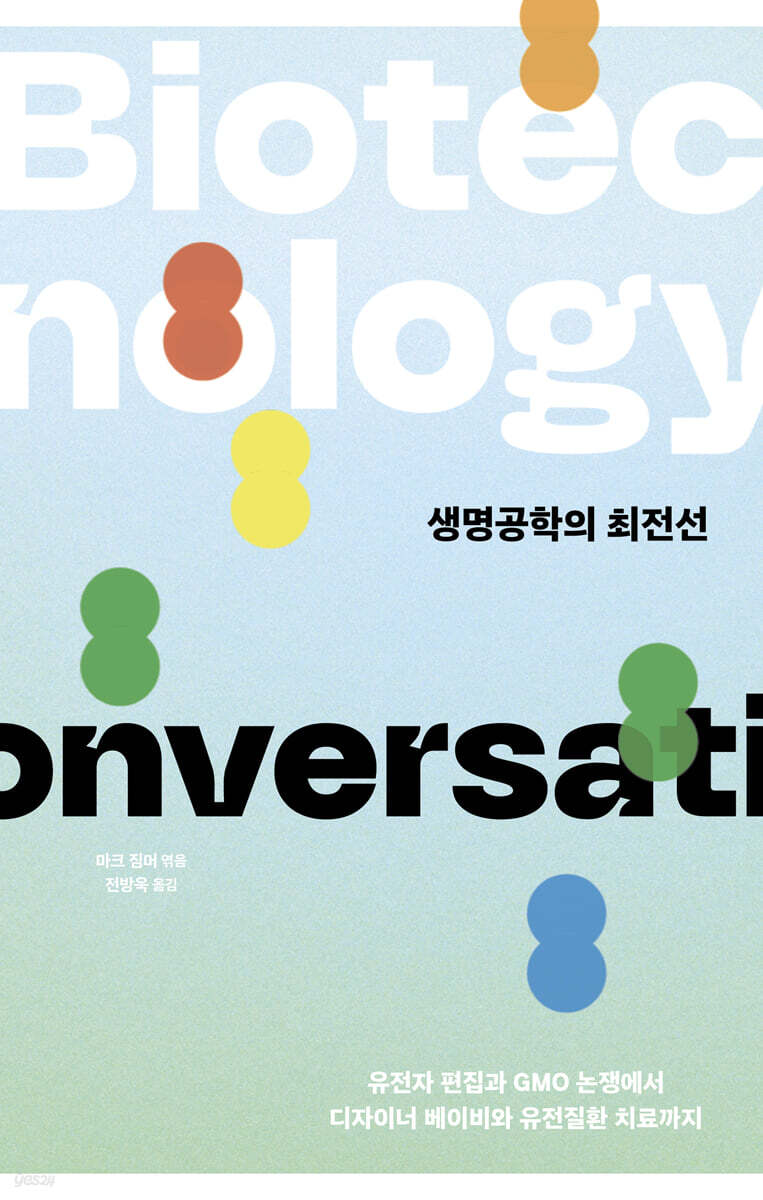
The forefront of biotechnology
 |
Description
Book Introduction
Biotechnology beyond our imagination!
The latest information and issues in biotechnology, examined from diverse perspectives and arguments.
The rapid development and successful deployment of mRNA vaccines during the COVID-19 pandemic has highlighted the critical role biotechnology can play in addressing global health crises.
Beyond this, various innovations in biotechnology, ranging from disease diagnosis and new drug development to the possibility of treating various genetic diseases, are fundamentally changing our lives.
This book, "Frontlines of Biotechnology," examines the radical developments and challenges of modern biotechnology in specific and diverse areas.
It comprehensively introduces various research trends, including the development and application of gene editing technology, especially CRISPR, mRNA vaccine development, stem cell research, and organ transplantation using 3D printing.
It also covers a wide range of biotechnology fields, including the production of genetically modified foods, the use of gene drives to eradicate pests, and the use of CRISPR gene scissors to combat antibiotic-resistant bacteria.
Based on articles from The Conversation US, this book, a collaboration between prominent scholars and journalists, presents the latest information in biotechnology in an accessible, everyday language.
Furthermore, it addresses the ethical, social, and regulatory issues of scientific discovery in a balanced way, and even suggests potential risks and countermeasures that may arise from technological advancements.
This book covers not only the latest research trends in biotechnology but also the ethical issues and social impacts that technological advancements will bring, and is written to make complex topics accessible.
Therefore, not only researchers but also the general public and students can easily understand the overall content of biotechnology.
Furthermore, this book clearly presents the possibilities and limitations of biotechnology by envisioning its future at the intersection of science and ethics.
The latest information and issues in biotechnology, examined from diverse perspectives and arguments.
The rapid development and successful deployment of mRNA vaccines during the COVID-19 pandemic has highlighted the critical role biotechnology can play in addressing global health crises.
Beyond this, various innovations in biotechnology, ranging from disease diagnosis and new drug development to the possibility of treating various genetic diseases, are fundamentally changing our lives.
This book, "Frontlines of Biotechnology," examines the radical developments and challenges of modern biotechnology in specific and diverse areas.
It comprehensively introduces various research trends, including the development and application of gene editing technology, especially CRISPR, mRNA vaccine development, stem cell research, and organ transplantation using 3D printing.
It also covers a wide range of biotechnology fields, including the production of genetically modified foods, the use of gene drives to eradicate pests, and the use of CRISPR gene scissors to combat antibiotic-resistant bacteria.
Based on articles from The Conversation US, this book, a collaboration between prominent scholars and journalists, presents the latest information in biotechnology in an accessible, everyday language.
Furthermore, it addresses the ethical, social, and regulatory issues of scientific discovery in a balanced way, and even suggests potential risks and countermeasures that may arise from technological advancements.
This book covers not only the latest research trends in biotechnology but also the ethical issues and social impacts that technological advancements will bring, and is written to make complex topics accessible.
Therefore, not only researchers but also the general public and students can easily understand the overall content of biotechnology.
Furthermore, this book clearly presents the possibilities and limitations of biotechnology by envisioning its future at the intersection of science and ethics.
- You can preview some of the book's contents.
Preview
index
Translator's Preface
Series Editor's Preface
Introduction: Jigsaw Puzzles and the "Genetic Gap"
Part 1: The Components of Life
Chapter 1: mRNA in the spotlight for vaccine development _Penny Rix
Chapter 2: CRISPR Gene Editing Technology, Winner of the Nobel Prize in Chemistry _ Dimitri Perin
Chapter 3: Proteins Explained by a Biologist _Nathan Algren
Chapter 4: Three Ways RNA Will Be Used in Next-Generation Medicine _ Oliver Rogoitzki
Chapter 5: Limitations of Human Genome Sequencing for Disease Treatment _Ari Berkowitz
Chapter 6: Somatic Gene Editing: Don't Be So Afraid _ Eleanor Feingold
Chapter 7 How many genes does it take to make a human? _Sean Ni
Chapter 8: Everything About Dolly, the First Cloned Sheep _George E.
Seidel
Chapter 9: CRISPR, Fluorescent Proteins, and Optogenetics _Mark Zimmer
Part 2 Biotechnology, Food, and Environment
Chapter 10: Biotech Foods Explained by an Agricultural Expert _ Kathleen Merrigan
Chapter 11: Organic Farming Through Gene Editing? _Rebecca McElfrench
Chapter 12: Differences in the U.S. and Europe on Genetically Modified Foods _Paul B.
Thompson
Chapter 13: Can Genetic Engineering Save Our Disappearing Forests? _Jason A.
Delvon
Chapter 14: Improving the Taste and Appearance of Plant-Based Meats _Mariana Lamas
Chapter 15: Genetically Modified Mosquitoes That Suppress Disease Transmission_Jason Lasgon
Chapter 16: Cleaning Up Oil Sands Contamination and Mine Waste with Manipulative Bacteria _Vikramaditya G.
Yadav
Part 3: Powerful Tools for Medicine and Health
Chapter 17: A New Gene Therapy That's Very Expensive _ Kevin Docgen
Chapter 18: Viruses That Fight Antibiotic-Resistant Bacteria _ Kevin Docgen
Chapter 19: Mini Livers Extend the Lifespan of Mice with Liver Disease _ Mo Ebrahimkani
Chapter 20: 'Humanized Pigs' for Studying Human Disease and Treatment _Christopher Tuggle and Adeline Bocher
Chapter 21: A New Structure of a Protein That AI 'Hallucinates' _ Ivan Anishchenko
Chapter 22: Engineering Bacteria to Treat Genetic Diseases _ Pedro Velda-Pere
Chapter 23: Gene Editing Human Brain Cells to Prevent Opioid Overdose _Craig W.
Stevens
Chapter 24: CRISPR: Combating Immune Responses in Gene Therapy _ Samira Kiani
Chapter 25: 3D Printing to Solve the Organ Transplant Shortage _Saman Nagie
Chapter 26: In Search of the Longevity Gene _ Amanda Kowalczyk
Part 4: The Frontiers of Genetics and Ethics
Chapter 27 CRISPR from the Perspective of Test Tube Babies _ Patricia A.
Stapleton
Chapter 28: Three Parents Baby _ Jennifer Barfield
Chapter 29: Flexible Tools for Evaluating Gene-Edited Foods _Christopher J.
Preston, Trinh Antonsen
Chapter 30: Laboratory-Grown Embryos and Human-Monkey Hybrids _Sahotra Sarkar
Chapter 31 Designer Baby Possibility _A.
Cecil J.
W. Janssens
Chapter 32: The Dangers of Biological Weapons Research _Gary Samore
Chapter 33: The Power of DIY Science as Revealed by Biohackers _ Andrew Lapworth
main
Search
Series Editor's Preface
Introduction: Jigsaw Puzzles and the "Genetic Gap"
Part 1: The Components of Life
Chapter 1: mRNA in the spotlight for vaccine development _Penny Rix
Chapter 2: CRISPR Gene Editing Technology, Winner of the Nobel Prize in Chemistry _ Dimitri Perin
Chapter 3: Proteins Explained by a Biologist _Nathan Algren
Chapter 4: Three Ways RNA Will Be Used in Next-Generation Medicine _ Oliver Rogoitzki
Chapter 5: Limitations of Human Genome Sequencing for Disease Treatment _Ari Berkowitz
Chapter 6: Somatic Gene Editing: Don't Be So Afraid _ Eleanor Feingold
Chapter 7 How many genes does it take to make a human? _Sean Ni
Chapter 8: Everything About Dolly, the First Cloned Sheep _George E.
Seidel
Chapter 9: CRISPR, Fluorescent Proteins, and Optogenetics _Mark Zimmer
Part 2 Biotechnology, Food, and Environment
Chapter 10: Biotech Foods Explained by an Agricultural Expert _ Kathleen Merrigan
Chapter 11: Organic Farming Through Gene Editing? _Rebecca McElfrench
Chapter 12: Differences in the U.S. and Europe on Genetically Modified Foods _Paul B.
Thompson
Chapter 13: Can Genetic Engineering Save Our Disappearing Forests? _Jason A.
Delvon
Chapter 14: Improving the Taste and Appearance of Plant-Based Meats _Mariana Lamas
Chapter 15: Genetically Modified Mosquitoes That Suppress Disease Transmission_Jason Lasgon
Chapter 16: Cleaning Up Oil Sands Contamination and Mine Waste with Manipulative Bacteria _Vikramaditya G.
Yadav
Part 3: Powerful Tools for Medicine and Health
Chapter 17: A New Gene Therapy That's Very Expensive _ Kevin Docgen
Chapter 18: Viruses That Fight Antibiotic-Resistant Bacteria _ Kevin Docgen
Chapter 19: Mini Livers Extend the Lifespan of Mice with Liver Disease _ Mo Ebrahimkani
Chapter 20: 'Humanized Pigs' for Studying Human Disease and Treatment _Christopher Tuggle and Adeline Bocher
Chapter 21: A New Structure of a Protein That AI 'Hallucinates' _ Ivan Anishchenko
Chapter 22: Engineering Bacteria to Treat Genetic Diseases _ Pedro Velda-Pere
Chapter 23: Gene Editing Human Brain Cells to Prevent Opioid Overdose _Craig W.
Stevens
Chapter 24: CRISPR: Combating Immune Responses in Gene Therapy _ Samira Kiani
Chapter 25: 3D Printing to Solve the Organ Transplant Shortage _Saman Nagie
Chapter 26: In Search of the Longevity Gene _ Amanda Kowalczyk
Part 4: The Frontiers of Genetics and Ethics
Chapter 27 CRISPR from the Perspective of Test Tube Babies _ Patricia A.
Stapleton
Chapter 28: Three Parents Baby _ Jennifer Barfield
Chapter 29: Flexible Tools for Evaluating Gene-Edited Foods _Christopher J.
Preston, Trinh Antonsen
Chapter 30: Laboratory-Grown Embryos and Human-Monkey Hybrids _Sahotra Sarkar
Chapter 31 Designer Baby Possibility _A.
Cecil J.
W. Janssens
Chapter 32: The Dangers of Biological Weapons Research _Gary Samore
Chapter 33: The Power of DIY Science as Revealed by Biohackers _ Andrew Lapworth
main
Search
Detailed image

Into the book
Science is not only advancing rapidly, it is also becoming more and more powerful.
CRISPR, machine learning, optogenetics, and gene drives are powerful technologies that will lead to biotechnology that will transform our lives and the lives of our children, and indeed, they have already led to such advancements.
Of these, CRISPR and artificial intelligence are naturally receiving the most attention.
--- p.20
Humans have been altering the genomes of species through selective breeding for thousands of years.
Genetic engineering, which involves humans directly manipulating DNA, has been around since the 1970s.
CRISPR-based systems have fundamentally transformed the field by making it possible to edit the genomes of living organisms cheaply, easily, and with great precision.
--- p.42
It is clear that a single cell does not have to be particularly complex to produce very complex results.
Therefore, it is not surprising that the number of human genes is the same as that of single-celled microorganisms such as viruses and bacteria.
--- p.67
I was trained as a plant molecular biologist and appreciate the incredible potential of CRISPR and genetic engineering technologies.
And I don't think that goes against the goals of organic farming.
In fact, biotechnology can help achieve these goals.
Reviving the debate over genetic engineering may seem counterproductive, but genome editing could bring both sides to a healthy dialogue.
--- p.92
While many people might find the thought of taking a pill filled with millions of bacteria ready to colonize their gut terrifying, it could be an effective new tool in the fight against disease.
Mutant genes cause hereditary diseases that prevent the body from making essential substances needed to grow, develop, or function.
Sometimes this problem can be solved with synthetic pills, which you may need to take daily to replace the substances your body must make naturally.
--- p.171
We must focus our attention on answering ethical questions that have remained unanswered for a long time.
Where are the boundaries for this type of research? Who gets to decide the ethical use of CRISPR? What responsibilities do we have toward those affected by genetic disorders? Who should pay for these medical procedures? How will this research and its potential clinical applications be regulated?
CRISPR, machine learning, optogenetics, and gene drives are powerful technologies that will lead to biotechnology that will transform our lives and the lives of our children, and indeed, they have already led to such advancements.
Of these, CRISPR and artificial intelligence are naturally receiving the most attention.
--- p.20
Humans have been altering the genomes of species through selective breeding for thousands of years.
Genetic engineering, which involves humans directly manipulating DNA, has been around since the 1970s.
CRISPR-based systems have fundamentally transformed the field by making it possible to edit the genomes of living organisms cheaply, easily, and with great precision.
--- p.42
It is clear that a single cell does not have to be particularly complex to produce very complex results.
Therefore, it is not surprising that the number of human genes is the same as that of single-celled microorganisms such as viruses and bacteria.
--- p.67
I was trained as a plant molecular biologist and appreciate the incredible potential of CRISPR and genetic engineering technologies.
And I don't think that goes against the goals of organic farming.
In fact, biotechnology can help achieve these goals.
Reviving the debate over genetic engineering may seem counterproductive, but genome editing could bring both sides to a healthy dialogue.
--- p.92
While many people might find the thought of taking a pill filled with millions of bacteria ready to colonize their gut terrifying, it could be an effective new tool in the fight against disease.
Mutant genes cause hereditary diseases that prevent the body from making essential substances needed to grow, develop, or function.
Sometimes this problem can be solved with synthetic pills, which you may need to take daily to replace the substances your body must make naturally.
--- p.171
We must focus our attention on answering ethical questions that have remained unanswered for a long time.
Where are the boundaries for this type of research? Who gets to decide the ethical use of CRISPR? What responsibilities do we have toward those affected by genetic disorders? Who should pay for these medical procedures? How will this research and its potential clinical applications be regulated?
--- p.206
Publisher's Review
The world of biotechnology, where puzzle pieces are revealed every day and a new puzzle begins.
Where is biotechnology headed?
This book consists of 33 articles divided into 4 parts.
Part 1, “The Building Blocks of Life,” consists of nine articles and introduces the basics of proteins, genes, mRNA, replication, and CRISPR, which manipulates the building blocks of life.
A common thread running through most of the writing is that the technologies described originate in nature and were developed through the gradual work of many researchers over decades.
Part 2, “Biotechnology, Food, and the Environment,” examines the potential of genetic engineering in food production and environmental protection, and discusses some of the regulatory challenges this new technology raises.
It highlights how controversial and complex this field is, and how it is driven in different directions by public opinion, expert knowledge, regulation, and hype.
The articles in Part 2 were selected to provide an overview of GMOs, focusing on the scientific aspects but also covering some literary and ethical perspectives.
Part 3, “Powerful Tools for Medicine and Health,” discusses the potential of today’s biotechnology to address some of the most pressing challenges in medicine and describes pioneering experiments that are pointing the way forward for the life sciences.
Over several chapters, each contributor discusses the pros and cons of CRISPR and explains how model organisms can be used to achieve the long-term goal of improving outcomes for human patients.
Part 4, “Frontiers of Genetics and Ethics,” examines in detail the ethical issues raised in Part 3.
Establishing principles for regulating biotechnology is challenging because each country must consider safety, ethics, and competitiveness.
What roles should funders, journal editors, tenure committees, regulators, and philosophers play in establishing new ethical standards and regulations, and who should be responsible for overseeing them? The four essays in this part will stimulate our thinking and help frame and inform the debate.
Collaboration between journalists and researchers
The Conversation is an independent, non-profit news organization that brings expert knowledge to the public through journalism.
A collaborative effort between scholars and editors produces 10-12 articles daily, with scholars drafting explanatory and analytical drafts based on their research and editors assisting in translating these into everyday language.
This book is the first in the Critical Conversations series, a collaborative publication between The Conversation and Johns Hopkins University Press, which selects articles from The Conversation on specific topics and features guest editors from experts on the topic. Mark Zimmer, a professor of chemistry at the University of Connecticut, served as guest editor.
Where is biotechnology headed?
This book consists of 33 articles divided into 4 parts.
Part 1, “The Building Blocks of Life,” consists of nine articles and introduces the basics of proteins, genes, mRNA, replication, and CRISPR, which manipulates the building blocks of life.
A common thread running through most of the writing is that the technologies described originate in nature and were developed through the gradual work of many researchers over decades.
Part 2, “Biotechnology, Food, and the Environment,” examines the potential of genetic engineering in food production and environmental protection, and discusses some of the regulatory challenges this new technology raises.
It highlights how controversial and complex this field is, and how it is driven in different directions by public opinion, expert knowledge, regulation, and hype.
The articles in Part 2 were selected to provide an overview of GMOs, focusing on the scientific aspects but also covering some literary and ethical perspectives.
Part 3, “Powerful Tools for Medicine and Health,” discusses the potential of today’s biotechnology to address some of the most pressing challenges in medicine and describes pioneering experiments that are pointing the way forward for the life sciences.
Over several chapters, each contributor discusses the pros and cons of CRISPR and explains how model organisms can be used to achieve the long-term goal of improving outcomes for human patients.
Part 4, “Frontiers of Genetics and Ethics,” examines in detail the ethical issues raised in Part 3.
Establishing principles for regulating biotechnology is challenging because each country must consider safety, ethics, and competitiveness.
What roles should funders, journal editors, tenure committees, regulators, and philosophers play in establishing new ethical standards and regulations, and who should be responsible for overseeing them? The four essays in this part will stimulate our thinking and help frame and inform the debate.
Collaboration between journalists and researchers
The Conversation is an independent, non-profit news organization that brings expert knowledge to the public through journalism.
A collaborative effort between scholars and editors produces 10-12 articles daily, with scholars drafting explanatory and analytical drafts based on their research and editors assisting in translating these into everyday language.
This book is the first in the Critical Conversations series, a collaborative publication between The Conversation and Johns Hopkins University Press, which selects articles from The Conversation on specific topics and features guest editors from experts on the topic. Mark Zimmer, a professor of chemistry at the University of Connecticut, served as guest editor.
GOODS SPECIFICS
- Date of issue: July 11, 2024
- Page count, weight, size: 280 pages | 358g | 135*212*17mm
- ISBN13: 9791194144014
- ISBN10: 1194144012
You may also like
카테고리
korean


korean

![GQ KOREA Mark (Monthly): December [2025]](http://librairie.coreenne.fr/cdn/shop/files/8ef265dbbfbf186523ed75ba7319009d.jpg?v=1765340328&width=3840)


