

Coincidence and necessity
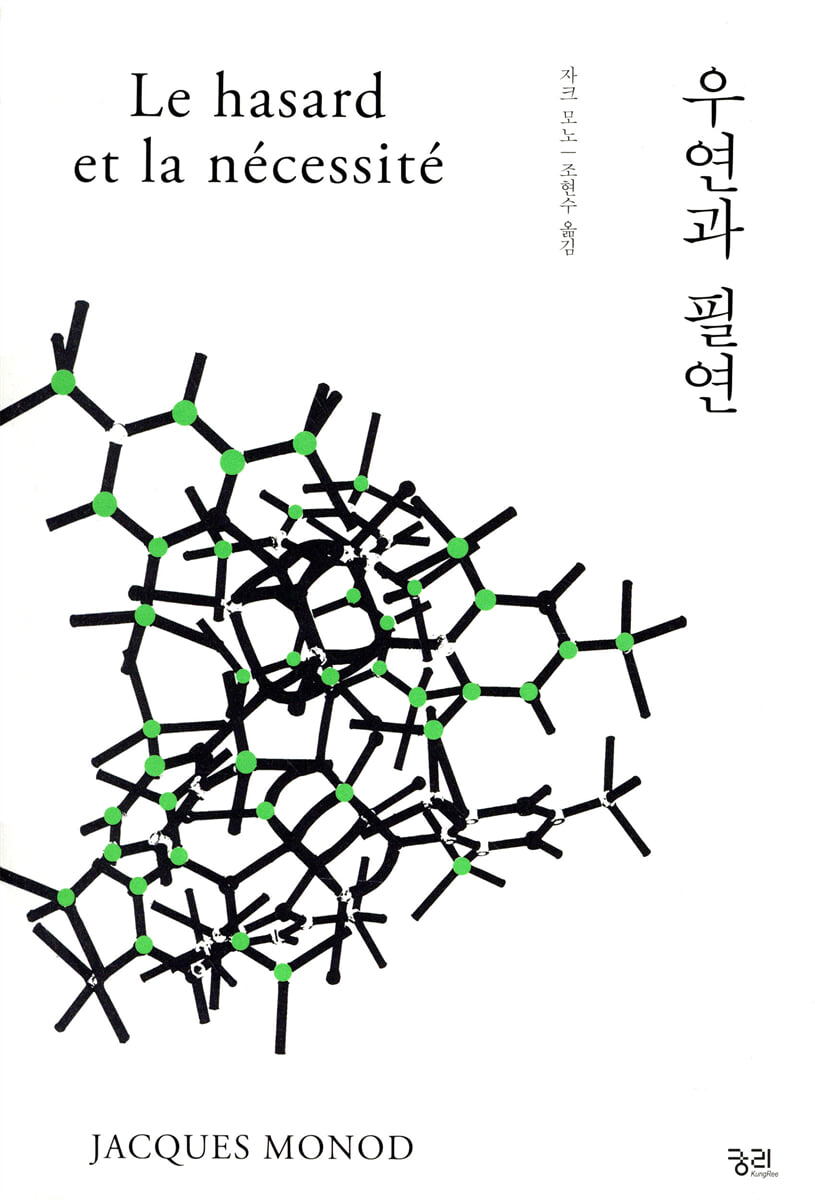 |
Description
Book Introduction
Shining Nobel Prize in Physiology or Medicine
A famous book on the philosophy of science by the renowned French molecular biologist Jacques Monod
Molecular biology, born in the 20th century, revealed that the 'microscopic' structures of all living things, from bacteria to humans, are surprisingly monotonous.
The bodies of all living things, including humans, are made up of proteins, and proteins are made up of only 20 types of amino acids.
So then, how can we explain the appearance of all kinds of strange and bizarre animals and plants?
Where does the enormous diversity of 'macroscopic' structures that living things exhibit come from?
In this book, which was met with both fierce criticism and enthusiastic response when it was published in 1970, Jacques Monod declares that the emergence of life is merely the result of a 'mutation' that occurred by chance in the microscopic world of the molecular level.
This book, which developed the basic knowledge of molecular biology into other fields such as philosophy, religion, politics, ethics, and culture, is considered a masterpiece that pioneered the course of human thought.
This is a classic book on the philosophy of science written by the renowned French molecular biologist Jacques Monod, and it is even more meaningful because it is being introduced under an official contract for the French version by Gungri Publishing.
A famous book on the philosophy of science by the renowned French molecular biologist Jacques Monod
Molecular biology, born in the 20th century, revealed that the 'microscopic' structures of all living things, from bacteria to humans, are surprisingly monotonous.
The bodies of all living things, including humans, are made up of proteins, and proteins are made up of only 20 types of amino acids.
So then, how can we explain the appearance of all kinds of strange and bizarre animals and plants?
Where does the enormous diversity of 'macroscopic' structures that living things exhibit come from?
In this book, which was met with both fierce criticism and enthusiastic response when it was published in 1970, Jacques Monod declares that the emergence of life is merely the result of a 'mutation' that occurred by chance in the microscopic world of the molecular level.
This book, which developed the basic knowledge of molecular biology into other fields such as philosophy, religion, politics, ethics, and culture, is considered a masterpiece that pioneered the course of human thought.
This is a classic book on the philosophy of science written by the renowned French molecular biologist Jacques Monod, and it is even more meaningful because it is being introduced under an official contract for the French version by Gungri Publishing.
- You can preview some of the book's contents.
Preview
index
preface
1.
Strange beings
2.
Vitalism and Materialism
3.
Maxwell's Goblin
4.
Microscopic cybernetics
5.
Molecular ontogeny
6.
Constancy and noise
7.
evolution
8.
The forefront of knowledge
9.
The Kingdom and the Abyss of Darkness
supplement
Translator's Note
Publisher's Review
The origin and evolution of life, a long-standing mystery in biology,
Unraveling it creatively from a microscopic perspective!
Jacques Monod, a philosopher and winner of the 1965 Nobel Prize in Physiology or Medicine, uniquely unravels the age-old mystery of biology—the origin and evolution of life—from the perspective of the microscopic world, a world difficult to see with the naked eye.
For a long time, people believed that a superior being created life with purpose and plan.
He also believed that everything that exists in nature has a soul and possesses a vital force of its own.
However, according to Mono, the emergence of life was merely the result of a 'mutation' that occurred by chance in the microscopic world of the molecular level.
Going a step further, Mono argues that evolution is not an essential property of life.
Unlike non-living inanimate objects, all living things have the intention of preserving and propagating their species.
The uniqueness of living things lies not in their pursuit and realization of change (evolution), but rather in their ability to resist change, that is, their dull ability to replicate their structure invariably over generations.
Therefore, the constant self-replication that resists change is the essence of life.
Change in living things, that is, evolution, is not the realization of the essence of living things, but rather the failure of the realization of this unchanging self-replication, which is the essence of living things, to be interrupted by accidental disturbances.
Evolution is not an intrinsic property of life, but rather an entirely accidental property.
But once etched into the DNA structure, these random events are mechanically and faithfully replicated and translated.
That is, it multiplies and propagates, creating millions or tens of millions of identical copies.
It is about escaping from the world of pure chance and entering the world of necessity, the world of merciless certainty.
Coincidences that occur in the microscopic world create inevitabilities in the macroscopic world.
The specialized knowledge of molecular biology can be transferred to other areas of thought such as religion, philosophy, and politics.
A philosophical reflection from a scientist who has developed it!
For a long time (and even now) humanity has relied on a world governed by necessity.
Humans wish that, unlike the pebbles on the road, we exist for a necessary reason, that our existence was predetermined from the beginning.
All the world's religions and philosophies have been the product of desperate efforts to deny the contingency of human nature.
What about science? Einstein said, "God doesn't play dice."
The 'deterministic worldview', which holds that causes and effects are singular and predictable, has dominated the scientific community since the Scientific Revolution of the 17th century.
In this universe, where inevitable causality reigns, there is no place for chance.
So, Monod's work, which declared that the emergence of mankind was merely an accidental event through molecular biological analysis of genes, was met with both enthusiastic response and fierce criticism when it was published in 1970.
For Mono, the source of evolution lies in the random disturbances that occur in the quantum world, the microscopic dimension of matter, that is, random disturbances whose occurrence is essentially impossible to predict in advance due to the dominance of the 'principle of uncertainty.'
The same goes for the history of the universe and mankind.
For him, the history of the universe and humanity does not unfold according to some inevitable plan, as many religious and philosophical systems explain (as, for example, Marx or Hegel thought).
This is precisely why it is natural for Mono's discussion, which elucidates the contingency and necessity inherent in life itself, to lead to a request for a new worldview.
Mono criticizes the materialistic worldview found in existing philosophies and ideologies, including Judeo-Christian thought, vitalism, animism, and Marxist materialism, and proposes that the 'ethics of knowledge' is the only way to overcome the spiritual illnesses faced by modern people.
The materialistic ethics that Mono criticizes so harshly are ethics imposed on humans from the outside.
At this point, science becomes a means to express the glory of God or, as Marx or Hegel did, to justify their ideas.
Mono tells us that we should aim for true science (knowledge) that has internal consistency in itself, rather than relying on objectively unverifiable concepts such as 'divine authority' or 'scientific laws of history'.
The virtue of this book lies in the philosophical reflections of a scientist.
Mono does not simply explain the concepts of modern biology.
By developing the basic knowledge of molecular biology into other areas of thought (philosophy, religion, politics, ethics, culture, etc.), he seeks to view science as knowledge that has ‘human’ significance, not just ‘technically’ important knowledge.
This book fundamentally questions the power of 'true' science, and as a classic that pioneered the course of human thought, its value remains valid even today.
Unraveling it creatively from a microscopic perspective!
Jacques Monod, a philosopher and winner of the 1965 Nobel Prize in Physiology or Medicine, uniquely unravels the age-old mystery of biology—the origin and evolution of life—from the perspective of the microscopic world, a world difficult to see with the naked eye.
For a long time, people believed that a superior being created life with purpose and plan.
He also believed that everything that exists in nature has a soul and possesses a vital force of its own.
However, according to Mono, the emergence of life was merely the result of a 'mutation' that occurred by chance in the microscopic world of the molecular level.
Going a step further, Mono argues that evolution is not an essential property of life.
Unlike non-living inanimate objects, all living things have the intention of preserving and propagating their species.
The uniqueness of living things lies not in their pursuit and realization of change (evolution), but rather in their ability to resist change, that is, their dull ability to replicate their structure invariably over generations.
Therefore, the constant self-replication that resists change is the essence of life.
Change in living things, that is, evolution, is not the realization of the essence of living things, but rather the failure of the realization of this unchanging self-replication, which is the essence of living things, to be interrupted by accidental disturbances.
Evolution is not an intrinsic property of life, but rather an entirely accidental property.
But once etched into the DNA structure, these random events are mechanically and faithfully replicated and translated.
That is, it multiplies and propagates, creating millions or tens of millions of identical copies.
It is about escaping from the world of pure chance and entering the world of necessity, the world of merciless certainty.
Coincidences that occur in the microscopic world create inevitabilities in the macroscopic world.
The specialized knowledge of molecular biology can be transferred to other areas of thought such as religion, philosophy, and politics.
A philosophical reflection from a scientist who has developed it!
For a long time (and even now) humanity has relied on a world governed by necessity.
Humans wish that, unlike the pebbles on the road, we exist for a necessary reason, that our existence was predetermined from the beginning.
All the world's religions and philosophies have been the product of desperate efforts to deny the contingency of human nature.
What about science? Einstein said, "God doesn't play dice."
The 'deterministic worldview', which holds that causes and effects are singular and predictable, has dominated the scientific community since the Scientific Revolution of the 17th century.
In this universe, where inevitable causality reigns, there is no place for chance.
So, Monod's work, which declared that the emergence of mankind was merely an accidental event through molecular biological analysis of genes, was met with both enthusiastic response and fierce criticism when it was published in 1970.
For Mono, the source of evolution lies in the random disturbances that occur in the quantum world, the microscopic dimension of matter, that is, random disturbances whose occurrence is essentially impossible to predict in advance due to the dominance of the 'principle of uncertainty.'
The same goes for the history of the universe and mankind.
For him, the history of the universe and humanity does not unfold according to some inevitable plan, as many religious and philosophical systems explain (as, for example, Marx or Hegel thought).
This is precisely why it is natural for Mono's discussion, which elucidates the contingency and necessity inherent in life itself, to lead to a request for a new worldview.
Mono criticizes the materialistic worldview found in existing philosophies and ideologies, including Judeo-Christian thought, vitalism, animism, and Marxist materialism, and proposes that the 'ethics of knowledge' is the only way to overcome the spiritual illnesses faced by modern people.
The materialistic ethics that Mono criticizes so harshly are ethics imposed on humans from the outside.
At this point, science becomes a means to express the glory of God or, as Marx or Hegel did, to justify their ideas.
Mono tells us that we should aim for true science (knowledge) that has internal consistency in itself, rather than relying on objectively unverifiable concepts such as 'divine authority' or 'scientific laws of history'.
The virtue of this book lies in the philosophical reflections of a scientist.
Mono does not simply explain the concepts of modern biology.
By developing the basic knowledge of molecular biology into other areas of thought (philosophy, religion, politics, ethics, culture, etc.), he seeks to view science as knowledge that has ‘human’ significance, not just ‘technically’ important knowledge.
This book fundamentally questions the power of 'true' science, and as a classic that pioneered the course of human thought, its value remains valid even today.
GOODS SPECIFICS
- Publication date: February 25, 2022
- Page count, weight, size: 292 pages | 472g | 148*214*18mm
- ISBN13: 9788958207450
- ISBN10: 8958207450
You may also like
카테고리
korean


korean

![GQ KOREA Mark (Monthly): December [2025]](http://librairie.coreenne.fr/cdn/shop/files/8ef265dbbfbf186523ed75ba7319009d.jpg?v=1765340328&width=3840)


