

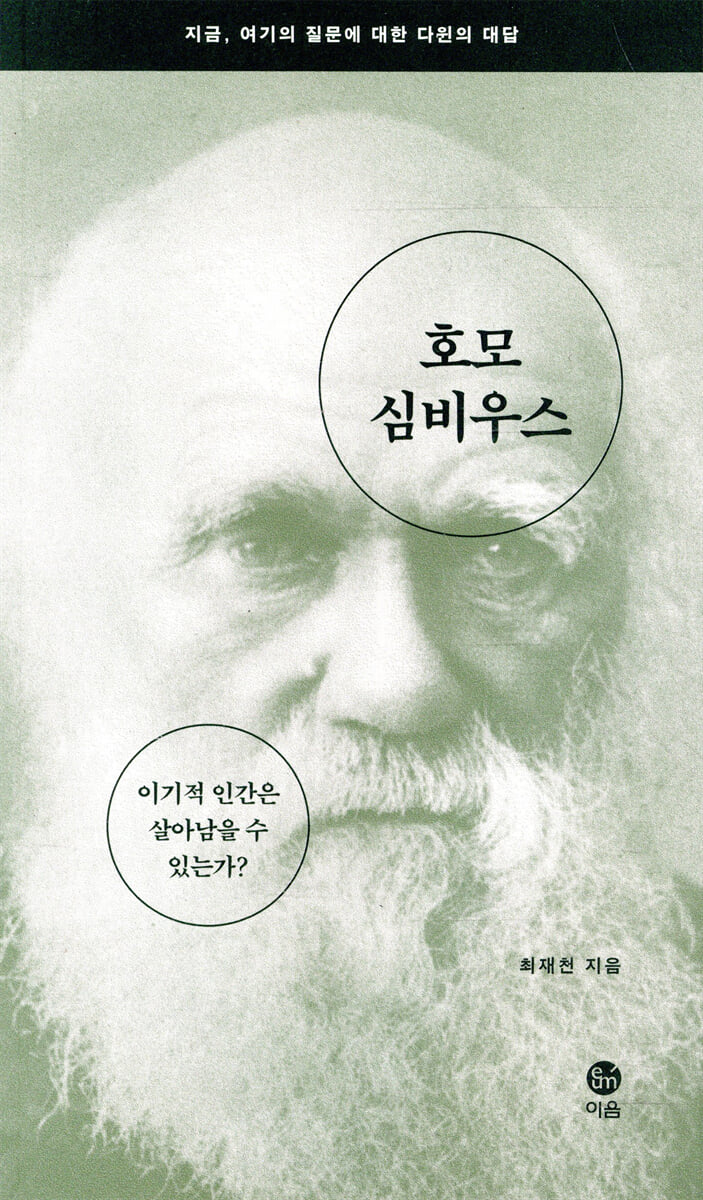
Homo Symbius (Recovered Edition)
 |
Description
Book Introduction
The theory of evolution is often seen as a logic of survival of the fittest, competition, and discrimination.
But evolutionary biologist Choi Jae-cheon says that's not the case.
Based on Darwin's theory, he examines the ecology of various animals and plants and discovers that creatures that practice symbiosis can achieve greater development than those that only compete.
Because humans have made good use of nature, they have risen to the position of lord of all creation.
But now, we must find a way to live with nature on our one and only Earth.
As an answer, Choi Jae-cheon proposes a new type of human, 'Homo Symbius', who knows how to live together with all living things on Earth.
But evolutionary biologist Choi Jae-cheon says that's not the case.
Based on Darwin's theory, he examines the ecology of various animals and plants and discovers that creatures that practice symbiosis can achieve greater development than those that only compete.
Because humans have made good use of nature, they have risen to the position of lord of all creation.
But now, we must find a way to live with nature on our one and only Earth.
As an answer, Choi Jae-cheon proposes a new type of human, 'Homo Symbius', who knows how to live together with all living things on Earth.
- You can preview some of the book's contents.
Preview
index
Introduction: Reasons for Cooperation
1 Competition: An Inescapable Fate
Darwin meets Malthus
The more similar the opponents, the fiercer the competition.
Forms of competition
2 Predation: Are large, ferocious animals necessary?
Are predators evil?
Lessons from the Kiebab Plateau
The existence of the mysterious starfish
Long-term ecological studies of predator communities
Accusations and Explanations
3 Parasites: Parasites are half the world.
Parasite ecology
Parasitism is fundamentally predatory.
Parasite dispersal and island biogeography
Parasites rule the world
Parasitology Renaissance
4 Symbiosis: Joining Hands to Survive
Ants' symbiotic strategy
Symbiosis and coexistence
Symbiosis and Extinction
The evolution of symbiosis
5 From Homo sapiens to Homo symbius
Facing a crisis for humanity
The New Human Image of the 21st Century: Homo Symbius
References
1 Competition: An Inescapable Fate
Darwin meets Malthus
The more similar the opponents, the fiercer the competition.
Forms of competition
2 Predation: Are large, ferocious animals necessary?
Are predators evil?
Lessons from the Kiebab Plateau
The existence of the mysterious starfish
Long-term ecological studies of predator communities
Accusations and Explanations
3 Parasites: Parasites are half the world.
Parasite ecology
Parasitism is fundamentally predatory.
Parasite dispersal and island biogeography
Parasites rule the world
Parasitology Renaissance
4 Symbiosis: Joining Hands to Survive
Ants' symbiotic strategy
Symbiosis and coexistence
Symbiosis and Extinction
The evolution of symbiosis
5 From Homo sapiens to Homo symbius
Facing a crisis for humanity
The New Human Image of the 21st Century: Homo Symbius
References
Detailed image
.jpg)
Into the book
In natural biomes, many species usually coexist.
The concept of niche was devised to explain how species that would competitively exclude each other can coexist in one habitat.
A niche originally referred to a decorative space carved into a wall to hold a small sculpture or vase, but in ecology, it refers to the role, function, or position that an organism has in its environment.
Niche is the concept that each organism occupies its own unique space, or role or status, within its environment.
If we are to explain it in terms of the concept of space, it refers to the multidimensional space occupied by living things in the environment.
Through the long history of evolution, life on Earth has evolved to reduce similarities among themselves and coexist in different niches.
The result is the immense biodiversity that unfolds before us like a panorama today.
--- p.28-30
However, nature has evolved so that we do not have to harm others to survive.
There are many instances where creatures have helped each other and thus far fared much better than other creatures around them who have not yet realized the beauty and power of cooperation.
Examples of symbiosis or mutualism are truly diverse, including ants and aphids, bees and flowers (flowering plants), fruits (the sugars that encapsulate the seeds) and animals that eat the fruits and then excrete them far away.
So, ecologists used to think that competition, or hatred, jealousy, and power, like an eye for an eye or a tooth for a tooth, always dominated our lives, but now they recognize that nature also embraces love, sacrifice, reconciliation, and peace.
--- p.106
We call ourselves 'Homo sapiens'.
'Wise mankind', he said.
I agree that we are very intelligent animals with quick minds, but I can never agree that we are wise.
If we were truly wise humans, we should not have committed the foolish act of burning down our own homes.
If we want to survive longer on this planet, I believe we must now humbly be reborn as Homo symbius.
Homo symbius maintains close relationships with fellow humans as well as other species.
The concept of Homo symbius is both environmental and social.
Homo symbius desires to coexist with other creatures and to live in peace with all people on Earth.
--- p.108
Even if science reveals differences between individuals and between races, and that competition based on those differences is a natural consequence, the conditions given to humans force cooperation beyond competition.
As conditions change, the rules of the game change as well.
In the future, there is no place for selfish humans.
No, only humans who cooperate will survive.
The conditions of survival again define ethics, and those ethics become human survival strategies.
In this sense, the symbiotic human, Homo symbius, has come full circle and meets the wise human, Homo sapiens.
The concept of niche was devised to explain how species that would competitively exclude each other can coexist in one habitat.
A niche originally referred to a decorative space carved into a wall to hold a small sculpture or vase, but in ecology, it refers to the role, function, or position that an organism has in its environment.
Niche is the concept that each organism occupies its own unique space, or role or status, within its environment.
If we are to explain it in terms of the concept of space, it refers to the multidimensional space occupied by living things in the environment.
Through the long history of evolution, life on Earth has evolved to reduce similarities among themselves and coexist in different niches.
The result is the immense biodiversity that unfolds before us like a panorama today.
--- p.28-30
However, nature has evolved so that we do not have to harm others to survive.
There are many instances where creatures have helped each other and thus far fared much better than other creatures around them who have not yet realized the beauty and power of cooperation.
Examples of symbiosis or mutualism are truly diverse, including ants and aphids, bees and flowers (flowering plants), fruits (the sugars that encapsulate the seeds) and animals that eat the fruits and then excrete them far away.
So, ecologists used to think that competition, or hatred, jealousy, and power, like an eye for an eye or a tooth for a tooth, always dominated our lives, but now they recognize that nature also embraces love, sacrifice, reconciliation, and peace.
--- p.106
We call ourselves 'Homo sapiens'.
'Wise mankind', he said.
I agree that we are very intelligent animals with quick minds, but I can never agree that we are wise.
If we were truly wise humans, we should not have committed the foolish act of burning down our own homes.
If we want to survive longer on this planet, I believe we must now humbly be reborn as Homo symbius.
Homo symbius maintains close relationships with fellow humans as well as other species.
The concept of Homo symbius is both environmental and social.
Homo symbius desires to coexist with other creatures and to live in peace with all people on Earth.
--- p.108
Even if science reveals differences between individuals and between races, and that competition based on those differences is a natural consequence, the conditions given to humans force cooperation beyond competition.
As conditions change, the rules of the game change as well.
In the future, there is no place for selfish humans.
No, only humans who cooperate will survive.
The conditions of survival again define ethics, and those ethics become human survival strategies.
In this sense, the symbiotic human, Homo symbius, has come full circle and meets the wise human, Homo sapiens.
--- p.111-112
Publisher's Review
The theory of evolution is often seen as a logic of survival of the fittest, competition, and discrimination.
But evolutionary biologist Choi Jae-cheon says that's not the case.
Based on Darwin's theory, he examines the ecology of various animals and plants and discovers that creatures that practice symbiosis can achieve greater development than those that only compete.
Because humans have made good use of nature, they have risen to the position of lord of all creation.
But now we must find a way to live together on our one and only Earth.
As an answer, Choi Jae-cheon proposes a new type of human, 'Homo Symbius', who knows how to live together with all living things on Earth.
His proposal offers a different perspective on competition.
The law of the jungle has long been accepted as meaning that only the winners survive through competition.
However, he shows through examples from nature that many people can join forces to achieve victory.
Competition is inevitable, but we can achieve greater progress by cooperating with each other rather than focusing on winning.
Applying this logic to the relationship between nature and humans further increases the need for coexistence and cooperation.
Nature is no longer a treasure trove of endless opportunities for humans to exploit.
If we do not take care of and protect them, their survival is at risk.
It is time to be reborn as ‘Homo Symbius’ who cooperates and coexists with nature.
As a renowned scientist and intellectual who has raised various topics in Korean society, author Choi Jae-cheon examines the ecology of various animals and plants and says that while nature may seem at first glance to be made up of nothing but competition, in fact, living things find their own place in countless different ways to survive.
There are many cases where living things survive better than other living things by helping each other and competing with each other.
And we can realize that competition, predation, and parasitism, which may seem to be unfavorable or even detrimental to the survival of living things, are actually intricate mechanisms that maintain the ecosystem.
The author, a zoologist himself, explains these facts in an easy-to-understand way based on his long-term research on the ecology of feather mites that parasitize the feathers of gulls and sea ducks, the symbiotic relationship between Aztec ants and trumpet trees, and the ecological data of numerous other plants and animals.
Because humans have made good use of nature, they have risen to the position of lord of all creation.
However, we are facing an unprecedented crisis due to the development of biotechnology, indiscriminate globalization, the gap between rich and poor among countries, and environmental pollution.
Now is the time to find a way for us all to live together on our one and only Earth.
It's not like it's an instinct written in our genes.
We must learn from nature how to coexist with all other creatures that share this planet.
As an answer, Choi Jae-cheon proposes 'Homo Symbious', a human being who coexists with humans and nature.
But evolutionary biologist Choi Jae-cheon says that's not the case.
Based on Darwin's theory, he examines the ecology of various animals and plants and discovers that creatures that practice symbiosis can achieve greater development than those that only compete.
Because humans have made good use of nature, they have risen to the position of lord of all creation.
But now we must find a way to live together on our one and only Earth.
As an answer, Choi Jae-cheon proposes a new type of human, 'Homo Symbius', who knows how to live together with all living things on Earth.
His proposal offers a different perspective on competition.
The law of the jungle has long been accepted as meaning that only the winners survive through competition.
However, he shows through examples from nature that many people can join forces to achieve victory.
Competition is inevitable, but we can achieve greater progress by cooperating with each other rather than focusing on winning.
Applying this logic to the relationship between nature and humans further increases the need for coexistence and cooperation.
Nature is no longer a treasure trove of endless opportunities for humans to exploit.
If we do not take care of and protect them, their survival is at risk.
It is time to be reborn as ‘Homo Symbius’ who cooperates and coexists with nature.
As a renowned scientist and intellectual who has raised various topics in Korean society, author Choi Jae-cheon examines the ecology of various animals and plants and says that while nature may seem at first glance to be made up of nothing but competition, in fact, living things find their own place in countless different ways to survive.
There are many cases where living things survive better than other living things by helping each other and competing with each other.
And we can realize that competition, predation, and parasitism, which may seem to be unfavorable or even detrimental to the survival of living things, are actually intricate mechanisms that maintain the ecosystem.
The author, a zoologist himself, explains these facts in an easy-to-understand way based on his long-term research on the ecology of feather mites that parasitize the feathers of gulls and sea ducks, the symbiotic relationship between Aztec ants and trumpet trees, and the ecological data of numerous other plants and animals.
Because humans have made good use of nature, they have risen to the position of lord of all creation.
However, we are facing an unprecedented crisis due to the development of biotechnology, indiscriminate globalization, the gap between rich and poor among countries, and environmental pollution.
Now is the time to find a way for us all to live together on our one and only Earth.
It's not like it's an instinct written in our genes.
We must learn from nature how to coexist with all other creatures that share this planet.
As an answer, Choi Jae-cheon proposes 'Homo Symbious', a human being who coexists with humans and nature.
GOODS SPECIFICS
- Date of issue: January 14, 2022
- Page count, weight, size: 120 pages | 125*210*20mm
- ISBN13: 9791190944595
- ISBN10: 1190944596
You may also like
카테고리
korean


korean

![GQ KOREA Mark (Monthly): December [2025]](http://librairie.coreenne.fr/cdn/shop/files/8ef265dbbfbf186523ed75ba7319009d.jpg?v=1765340328&width=3840)


