

Learn electrical circuits easily with comics
 |
Description
Book Introduction
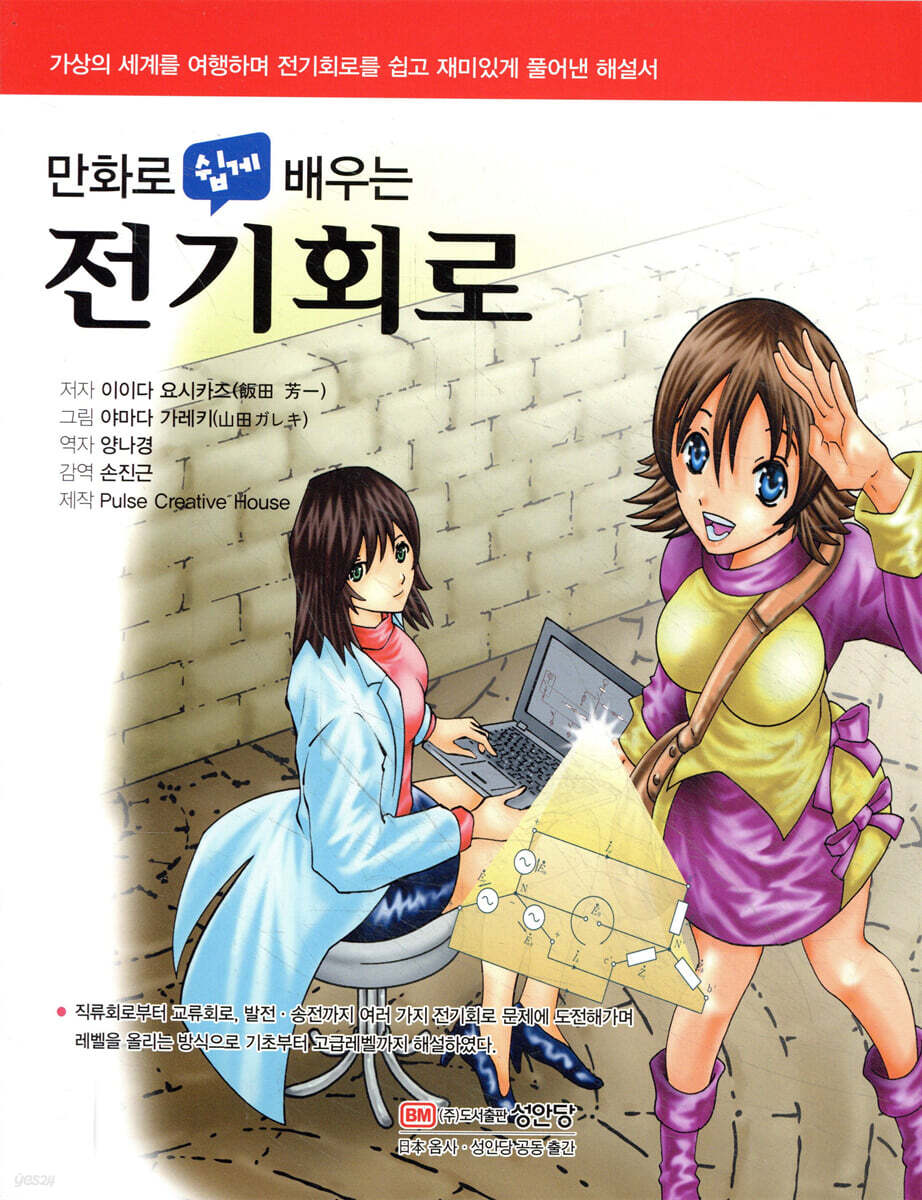
A guidebook that explains electrical circuits in an easy and fun way while traveling through a virtual world.
『Learning Electrical Circuits Easily with Comics』
For those who want to learn about electricity, electrical circuits are probably the first obstacle they encounter.
Without overcoming this difficulty, it is difficult to understand the next steps, such as power generation, transmission, and electronic circuits.
However, when trying to study electrical circuits, many people give up because the content is full of math and formulas.
This book is a story about the Hughes and Cosmo duo leveling up by tackling various electrical circuit problems, from DC circuits and AC circuits to power generation and transmission, in a virtual world called Parallel World. It is structured so that those who want to learn about electrical circuits can understand it as enjoyably as possible.
『Learning Electrical Circuits Easily with Comics』
For those who want to learn about electricity, electrical circuits are probably the first obstacle they encounter.
Without overcoming this difficulty, it is difficult to understand the next steps, such as power generation, transmission, and electronic circuits.
However, when trying to study electrical circuits, many people give up because the content is full of math and formulas.
This book is a story about the Hughes and Cosmo duo leveling up by tackling various electrical circuit problems, from DC circuits and AC circuits to power generation and transmission, in a virtual world called Parallel World. It is structured so that those who want to learn about electrical circuits can understand it as enjoyably as possible.
index
preface
prolog
Chapter 1 What is electricity?
1.
Stagnation of electricity
Nucleus and electrons
electrostatic induction
2.
What electricity does
Chapter 2 DC Circuits
1.
series circuit
Schematic diagram and circuit diagram
2.
parallel circuit
Schematic diagram and circuit diagram
3.
Ohm's law
The most basic of the basics, "Ohm's Law"
Circuit diagram and solution
* Master Yota's Force Up Course ① Synthetic Resistance
4.
Equivalent circuit
* Master Yota's Force Up Course ② Equivalent Circuit Thinking
5.
Kirchhoff's laws
Fundamentals of Electrical Circuit Theory
Follow Up
Power / Conductance / Wheatstone Bridge / Superposition Theorem
Chapter 3 AC Circuits
1.
electromagnetic induction
2.
Sinusoidal alternating current
3.
Average/effective value
Effective value mindset
How to find the effective value
Definition of effective value
* Master Yota's Force Up Course ③ Vectors and Complex Numbers
Theorem of vectors and complex numbers
4.
Impedance and admittance
inductance
Inductive reactance
electrostatic capacity
Capacitive reactance
5.
Vectors and phase differences
6.
AC power
How to represent AC power
The relationship between power, impedance, and power factor
Vector representation of power
* Master Yota's Force Up Course ④ AC Power
Follow Up
Resonant circuit / Thévenin's theorem
Chapter 4 Three-phase AC circuit
1.
Advantages of three-phase AC
Why three-phase AC is used
2.
Connection of three-phase AC
Plastic and phantom
3.
Think of three-phase AC as a vector
Vector operator
Why there are three wires
4.
Three-phase AC created by Y and ?
Y-connection and ?-connection
YY connection and Y-? connection
The simplest ?power
5.
Three-phase AC power
* Master Jung's Force Up Course ⑤ Three-Phase AC
Follow Up
Rotating field / inverter
Chapter 5 Power Generation and Transmission
* Master Yota's Force Up Course ⑥ Power Generation and Transmission
Follow Up
Smart grid / microwave transmission technology / superconductivity technology / space-based solar power generation / nuclear fusion power generation / fuel cells / solar power generation / wind power generation / heat pumps / LED lighting / power line internet
* Master Yota's Force Up Course ⑦ Electrical Circuit Terminology
Basics / Practical / Greek Letters / Electrical Circuit Units / Electrical Circuit Symbols
Epilogue
prolog
Chapter 1 What is electricity?
1.
Stagnation of electricity
Nucleus and electrons
electrostatic induction
2.
What electricity does
Chapter 2 DC Circuits
1.
series circuit
Schematic diagram and circuit diagram
2.
parallel circuit
Schematic diagram and circuit diagram
3.
Ohm's law
The most basic of the basics, "Ohm's Law"
Circuit diagram and solution
* Master Yota's Force Up Course ① Synthetic Resistance
4.
Equivalent circuit
* Master Yota's Force Up Course ② Equivalent Circuit Thinking
5.
Kirchhoff's laws
Fundamentals of Electrical Circuit Theory
Follow Up
Power / Conductance / Wheatstone Bridge / Superposition Theorem
Chapter 3 AC Circuits
1.
electromagnetic induction
2.
Sinusoidal alternating current
3.
Average/effective value
Effective value mindset
How to find the effective value
Definition of effective value
* Master Yota's Force Up Course ③ Vectors and Complex Numbers
Theorem of vectors and complex numbers
4.
Impedance and admittance
inductance
Inductive reactance
electrostatic capacity
Capacitive reactance
5.
Vectors and phase differences
6.
AC power
How to represent AC power
The relationship between power, impedance, and power factor
Vector representation of power
* Master Yota's Force Up Course ④ AC Power
Follow Up
Resonant circuit / Thévenin's theorem
Chapter 4 Three-phase AC circuit
1.
Advantages of three-phase AC
Why three-phase AC is used
2.
Connection of three-phase AC
Plastic and phantom
3.
Think of three-phase AC as a vector
Vector operator
Why there are three wires
4.
Three-phase AC created by Y and ?
Y-connection and ?-connection
YY connection and Y-? connection
The simplest ?power
5.
Three-phase AC power
* Master Jung's Force Up Course ⑤ Three-Phase AC
Follow Up
Rotating field / inverter
Chapter 5 Power Generation and Transmission
* Master Yota's Force Up Course ⑥ Power Generation and Transmission
Follow Up
Smart grid / microwave transmission technology / superconductivity technology / space-based solar power generation / nuclear fusion power generation / fuel cells / solar power generation / wind power generation / heat pumps / LED lighting / power line internet
* Master Yota's Force Up Course ⑦ Electrical Circuit Terminology
Basics / Practical / Greek Letters / Electrical Circuit Units / Electrical Circuit Symbols
Epilogue
Publisher's Review
· A guidebook that will help you learn about electrical circuits!
· A fun and engaging explanation of what an electric circuit is!
· Step-by-step explanations from basic to advanced levels, allowing you to challenge yourself with various electrical circuit problems, from DC circuits to AC circuits, and even power generation and transmission!
· A fun and engaging explanation of what an electric circuit is!
· Step-by-step explanations from basic to advanced levels, allowing you to challenge yourself with various electrical circuit problems, from DC circuits to AC circuits, and even power generation and transmission!
GOODS SPECIFICS
- Date of issue: July 11, 2018
- Page count, weight, size: 240 pages | 494g | 182*235*20mm
- ISBN13: 9788931582697
- ISBN10: 8931582692
You may also like
카테고리
korean


korean

![ELLE 엘르 스페셜 에디션 A형 : 12월 [2025]](http://librairie.coreenne.fr/cdn/shop/files/b8e27a3de6c9538896439686c6b0e8fb.jpg?v=1766436872&width=3840)


