

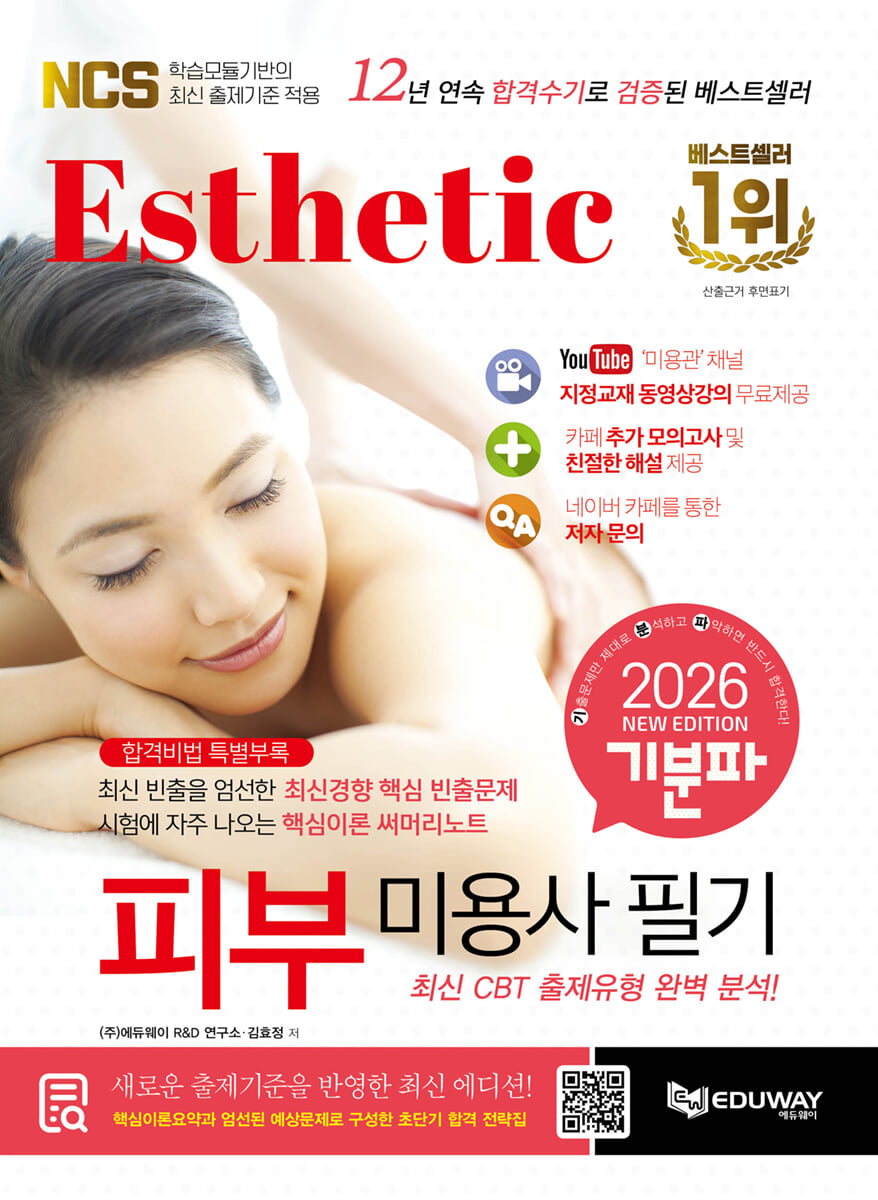
2026 Mood-Based Skin Care Technician Written Exam
 |
Description
Book Introduction
It consists of core theories that are guaranteed to appear on the exam, expected questions for each unit, and five mock exams for the CBT regular exam, allowing test takers to pass the exam in a short period of time.
This book's greatest strengths include providing key frequently asked questions that will serve as a guide for learning, a selection of the latest trends and key frequently asked questions, a summary note on key theories that frequently appear on exams that must be reviewed 30 minutes before the exam, and a video of notes taken.
This book's greatest strengths include providing key frequently asked questions that will serve as a guide for learning, a selection of the latest trends and key frequently asked questions, a summary note on key theories that frequently appear on exams that must be reviewed 30 minutes before the exam, and a video of notes taken.
index
· Preface
· Examination criteria table
· Qualification acquisition process at a glance
Chapter 1 | Dermatology
01 Understanding skin care and hygiene management
The Concept of Skin Care / The Field of Skin Care / The Skin Care Industry and Skin Care Technicians / Hygiene Management of Skin Care Salon Workplaces and Equipment / The History of Skin Care
02 Skin analysis and customer consultation
Skin Analysis / Skin Analysis Methods / Customer Consultation / Skin Consultation / Customer Care Card / Post-treatment Consultation
03 Cleansing
Cleansing Overview / Washing and Cleansing Products / Cleansing Steps and Procedures
04 Deep Cleansing
Deep Cleansing Overview / Types of Deep Cleansing and Product Applications
05 Applying cosmetics according to skin type
Overview of Cosmetic Application / Normal Skin / Dry Skin / Oily Skin / Combination Skin / Sensitive Skin / Acne Skin / Aging Skin / Telangiectatic Skin / Pigmented Skin
06 Manual Technique
Manual Technique Overview / Manual Technique Types and Methods / Manual Technique Treatment Methods
07 Pack and Mask
Overview of packs and masks / Classification of packs and masks / How to use and precautions for packs and masks / Finishing facial care
08 Hair removal
Overview of Hair Removal / Temporary Hair Removal / Permanent Hair Removal / Hair Removal Methods and Precautions for Each Area Using Wax
09 Full body care (arms, legs, etc.) and finishing
Skin care lymphatic care / full body care and other therapies / hand, arm, leg care / finishing touches
Chapter 2 | Dermatology
01 Skin and skin appendages
Structure and function of the skin / Structure of skin appendages / Skin appendages
02 Skin Type Analysis
03 Skin and Nutrition
General Nutrition / 3 Major Nutrients and Skin / Vitamins / Minerals and Water
04 Skin disorders and diseases
Primary and secondary rashes / skin diseases
05 Skin and Light, Immunity, and Aging
Skin and Light / Skin Immunity / Skin Aging
Chapter 3 | Anatomy and Physiology
01 Structure and function of the human body
Human Body Overview / Cells / Tissues / Organs and Organ Systems
02 Skeletal system
Overview and Function / Composition of Bone / Classification of Bone / Joints
03 Muscular System
Overview / Skeletal Muscle / Whole Body Muscle
04 Nervous System
Overview / Classification of the Nervous System
05 Circulatory and Digestive Systems
Overview / Blood Circulatory System / Lymphatic Circulatory System / Digestive System
Chapter 4 | Skin Beauty Devices
01 Basic Science of Skin Beauty Devices
Classification of Materials / Electricity and Current
02 Types and Uses of Skin Beauty Devices
Skin analysis and diagnosis device / facial beauty device / full body beauty device / light beauty device
Chapter 5 | Cosmetology
01 Cosmetic Basics
Definition of Cosmetics / Classification of Cosmetics
02 Cosmetics Manufacturing
Cosmetic raw materials / Cosmetic manufacturing technology / Cosmetic characteristics
03 Types and functions of cosmetics
Basic cosmetics / Makeup cosmetics / Hair cosmetics / Body care cosmetics / Nail cosmetics / Fragrance cosmetics (perfume) / Essential (aroma) oils and carrier oils / Functional cosmetics
Chapter 6 | Public Health Management
01 General Public Health
Concepts of Public Health / Health and Disease / Population Health and Health Indicators
02 Disease Management
Epidemiology and stages of infectious disease outbreaks / Pathogens and reservoirs / Immunization and vaccination timing for major infectious diseases / Quarantine / Classification of statutory infectious diseases / Characteristics of major infectious diseases / Reporting and notification of infectious diseases
03 Parasitic Disease Management
04 General Health
Mental Health and Family/Geriatric Health / Environmental Health / Occupational Health
05 Food Hygiene and Nutrition
Food hygiene concepts / food poisoning / nutrients
06 Health Administration
Definition and System of Health Administration / Social Security and the World Health Organization
07 General Disinfection
General Disinfection / Physical Disinfection / Chemical Disinfection / Disinfection Methods for Beauty Equipment
08 General Theory of Microbiology
Classification of Microorganisms / Factors Affecting Microbial Growth
09 Public Health Management Act
Purpose and definition of the Public Health Management Act / Business registration and closure report / Business succession / License issuance and cancellation / Business operator compliance / Hairdresser's duties / Administrative guidance and supervision / Business hygiene rating and hygiene education / Delegation and consignment / Administrative dispositions, penalties, double penalty provisions, and fines
Chapter 7 | CBT Regular Exam Practice Test
CBT Regular Exam Practice Test 1st Session
CBT Regular Exam Practice Test 2nd Session
CBT Regular Exam Practice Test 3rd Session
CBT Regular Exam Practice Test 4th
5th CBT Regular Exam Practice Test
Chapter 8 | 120 Key Questions on the Latest Trends
· Appendix | Summary Notes on Core Theories
· Appendix | [2010-2011] 6 sets of open-access exam questions and 2 mock exams, provided by Eduway Cafe (Data Room)
· Examination criteria table
· Qualification acquisition process at a glance
Chapter 1 | Dermatology
01 Understanding skin care and hygiene management
The Concept of Skin Care / The Field of Skin Care / The Skin Care Industry and Skin Care Technicians / Hygiene Management of Skin Care Salon Workplaces and Equipment / The History of Skin Care
02 Skin analysis and customer consultation
Skin Analysis / Skin Analysis Methods / Customer Consultation / Skin Consultation / Customer Care Card / Post-treatment Consultation
03 Cleansing
Cleansing Overview / Washing and Cleansing Products / Cleansing Steps and Procedures
04 Deep Cleansing
Deep Cleansing Overview / Types of Deep Cleansing and Product Applications
05 Applying cosmetics according to skin type
Overview of Cosmetic Application / Normal Skin / Dry Skin / Oily Skin / Combination Skin / Sensitive Skin / Acne Skin / Aging Skin / Telangiectatic Skin / Pigmented Skin
06 Manual Technique
Manual Technique Overview / Manual Technique Types and Methods / Manual Technique Treatment Methods
07 Pack and Mask
Overview of packs and masks / Classification of packs and masks / How to use and precautions for packs and masks / Finishing facial care
08 Hair removal
Overview of Hair Removal / Temporary Hair Removal / Permanent Hair Removal / Hair Removal Methods and Precautions for Each Area Using Wax
09 Full body care (arms, legs, etc.) and finishing
Skin care lymphatic care / full body care and other therapies / hand, arm, leg care / finishing touches
Chapter 2 | Dermatology
01 Skin and skin appendages
Structure and function of the skin / Structure of skin appendages / Skin appendages
02 Skin Type Analysis
03 Skin and Nutrition
General Nutrition / 3 Major Nutrients and Skin / Vitamins / Minerals and Water
04 Skin disorders and diseases
Primary and secondary rashes / skin diseases
05 Skin and Light, Immunity, and Aging
Skin and Light / Skin Immunity / Skin Aging
Chapter 3 | Anatomy and Physiology
01 Structure and function of the human body
Human Body Overview / Cells / Tissues / Organs and Organ Systems
02 Skeletal system
Overview and Function / Composition of Bone / Classification of Bone / Joints
03 Muscular System
Overview / Skeletal Muscle / Whole Body Muscle
04 Nervous System
Overview / Classification of the Nervous System
05 Circulatory and Digestive Systems
Overview / Blood Circulatory System / Lymphatic Circulatory System / Digestive System
Chapter 4 | Skin Beauty Devices
01 Basic Science of Skin Beauty Devices
Classification of Materials / Electricity and Current
02 Types and Uses of Skin Beauty Devices
Skin analysis and diagnosis device / facial beauty device / full body beauty device / light beauty device
Chapter 5 | Cosmetology
01 Cosmetic Basics
Definition of Cosmetics / Classification of Cosmetics
02 Cosmetics Manufacturing
Cosmetic raw materials / Cosmetic manufacturing technology / Cosmetic characteristics
03 Types and functions of cosmetics
Basic cosmetics / Makeup cosmetics / Hair cosmetics / Body care cosmetics / Nail cosmetics / Fragrance cosmetics (perfume) / Essential (aroma) oils and carrier oils / Functional cosmetics
Chapter 6 | Public Health Management
01 General Public Health
Concepts of Public Health / Health and Disease / Population Health and Health Indicators
02 Disease Management
Epidemiology and stages of infectious disease outbreaks / Pathogens and reservoirs / Immunization and vaccination timing for major infectious diseases / Quarantine / Classification of statutory infectious diseases / Characteristics of major infectious diseases / Reporting and notification of infectious diseases
03 Parasitic Disease Management
04 General Health
Mental Health and Family/Geriatric Health / Environmental Health / Occupational Health
05 Food Hygiene and Nutrition
Food hygiene concepts / food poisoning / nutrients
06 Health Administration
Definition and System of Health Administration / Social Security and the World Health Organization
07 General Disinfection
General Disinfection / Physical Disinfection / Chemical Disinfection / Disinfection Methods for Beauty Equipment
08 General Theory of Microbiology
Classification of Microorganisms / Factors Affecting Microbial Growth
09 Public Health Management Act
Purpose and definition of the Public Health Management Act / Business registration and closure report / Business succession / License issuance and cancellation / Business operator compliance / Hairdresser's duties / Administrative guidance and supervision / Business hygiene rating and hygiene education / Delegation and consignment / Administrative dispositions, penalties, double penalty provisions, and fines
Chapter 7 | CBT Regular Exam Practice Test
CBT Regular Exam Practice Test 1st Session
CBT Regular Exam Practice Test 2nd Session
CBT Regular Exam Practice Test 3rd Session
CBT Regular Exam Practice Test 4th
5th CBT Regular Exam Practice Test
Chapter 8 | 120 Key Questions on the Latest Trends
· Appendix | Summary Notes on Core Theories
· Appendix | [2010-2011] 6 sets of open-access exam questions and 2 mock exams, provided by Eduway Cafe (Data Room)
Detailed image

Publisher's Review
First, we are creating the certification exam preparation book VER 2.0!
Many test takers were dissatisfied with the fact that existing exam theory books dealt with content that was far removed from the actual exam questions.
Many test takers found the exam difficult because it only listed theories without sufficient explanation or because they were unable to solve the problems presented using the given theories.
The Eduway R&D Research Institute's writing team listened carefully to these test takers, analyzed past exam questions, established new theories, and meticulously crafted each word to make it easy for test takers to understand.
Second, if you know the previous exam questions, you can see that you will pass!
The first thing to do to prepare for the written exam for the technician is to find out what questions have appeared on the exam in the past.
Due to the nature of the technical engineer exam, more than 80% of the questions are repeated from past exam questions.
The textbook, "Feeling Skin Care Technician Written Exam," has been thoroughly analyzed and organized based on past exam questions and restored questions from the regular exams over the past 10 years. The textbook has been reorganized to meet the standards of the NCS (National Competency Standards) implemented by the government.
Third, arm yourself with detailed theoretical explanations and various learning tools!
Rather than simply summarizing the theoretical content, it is organized in a systematic and readable manner, using as few sentences as possible, and using tables, diagrams, and illustrations to enable the content to be understood at a glance.
Additionally, it is designed to help students study by providing study guides, useful tips, summary of content, glossary of terms, and underlining of frequently appearing sections.
Fourth, easy-to-understand illustrations included!
Eduway R&D Lab's writing team and professional designers have included images and illustrations at every necessary point to make the content easier to understand, enabling students to study efficiently.
Fifth, a CBT mock exam that fully reflects the latest exam trends!
We have included mock exams with a high hit rate by analyzing the most important core points in theory and analyzing past exam questions and the latest exam trends.
Test takers can assess their skills through mock exams, and with a high hit rate, they will be able to enjoy the joy of passing more easily.
Sixth, online and offline support to maximize learning effectiveness!
The purpose of Eduway's exam preparation book is not simply to produce a book.
If you have any questions about any part of the learning content that you find difficult, errors or incorrect answers in the book, or study methods, please visit the Eduway Cafe (www.eduway.net - search for 'Eduway' on the portal site).
Our expert editor will provide you with feedback as soon as possible.
We have made it possible for test takers to prepare for the exam efficiently.
▶ Special features of the book
1.
Exam points
It provides a study direction for test takers by pointing out the areas that need to be studied intensively in each section.
2.
Core theory
We analyzed recent exam questions and compressed them as much as possible to reconstruct the core theories that must be memorized.
3.
Past questions by section
We have included past exam questions to help you understand the types of questions and understand recent question types.
4.
Final mock exam questions
A total of 5 mock exam questions + the latest trends in key frequently appearing questions carefully selected + summary notes on key theories that frequently appear on the exam were provided to help test takers assess their abilities and supplement any shortcomings, and to understand recent exam trends.
Many test takers were dissatisfied with the fact that existing exam theory books dealt with content that was far removed from the actual exam questions.
Many test takers found the exam difficult because it only listed theories without sufficient explanation or because they were unable to solve the problems presented using the given theories.
The Eduway R&D Research Institute's writing team listened carefully to these test takers, analyzed past exam questions, established new theories, and meticulously crafted each word to make it easy for test takers to understand.
Second, if you know the previous exam questions, you can see that you will pass!
The first thing to do to prepare for the written exam for the technician is to find out what questions have appeared on the exam in the past.
Due to the nature of the technical engineer exam, more than 80% of the questions are repeated from past exam questions.
The textbook, "Feeling Skin Care Technician Written Exam," has been thoroughly analyzed and organized based on past exam questions and restored questions from the regular exams over the past 10 years. The textbook has been reorganized to meet the standards of the NCS (National Competency Standards) implemented by the government.
Third, arm yourself with detailed theoretical explanations and various learning tools!
Rather than simply summarizing the theoretical content, it is organized in a systematic and readable manner, using as few sentences as possible, and using tables, diagrams, and illustrations to enable the content to be understood at a glance.
Additionally, it is designed to help students study by providing study guides, useful tips, summary of content, glossary of terms, and underlining of frequently appearing sections.
Fourth, easy-to-understand illustrations included!
Eduway R&D Lab's writing team and professional designers have included images and illustrations at every necessary point to make the content easier to understand, enabling students to study efficiently.
Fifth, a CBT mock exam that fully reflects the latest exam trends!
We have included mock exams with a high hit rate by analyzing the most important core points in theory and analyzing past exam questions and the latest exam trends.
Test takers can assess their skills through mock exams, and with a high hit rate, they will be able to enjoy the joy of passing more easily.
Sixth, online and offline support to maximize learning effectiveness!
The purpose of Eduway's exam preparation book is not simply to produce a book.
If you have any questions about any part of the learning content that you find difficult, errors or incorrect answers in the book, or study methods, please visit the Eduway Cafe (www.eduway.net - search for 'Eduway' on the portal site).
Our expert editor will provide you with feedback as soon as possible.
We have made it possible for test takers to prepare for the exam efficiently.
▶ Special features of the book
1.
Exam points
It provides a study direction for test takers by pointing out the areas that need to be studied intensively in each section.
2.
Core theory
We analyzed recent exam questions and compressed them as much as possible to reconstruct the core theories that must be memorized.
3.
Past questions by section
We have included past exam questions to help you understand the types of questions and understand recent question types.
4.
Final mock exam questions
A total of 5 mock exam questions + the latest trends in key frequently appearing questions carefully selected + summary notes on key theories that frequently appear on the exam were provided to help test takers assess their abilities and supplement any shortcomings, and to understand recent exam trends.
GOODS SPECIFICS
- Date of issue: February 28, 2026
- Page count, weight, size: 464 pages | 188*257*30mm
- ISBN13: 9791194328360
- ISBN10: 1194328369
You may also like
카테고리
korean


korean

![GQ KOREA Mark (Monthly): December [2025]](http://librairie.coreenne.fr/cdn/shop/files/8ef265dbbfbf186523ed75ba7319009d.jpg?v=1765340328&width=3840)


