

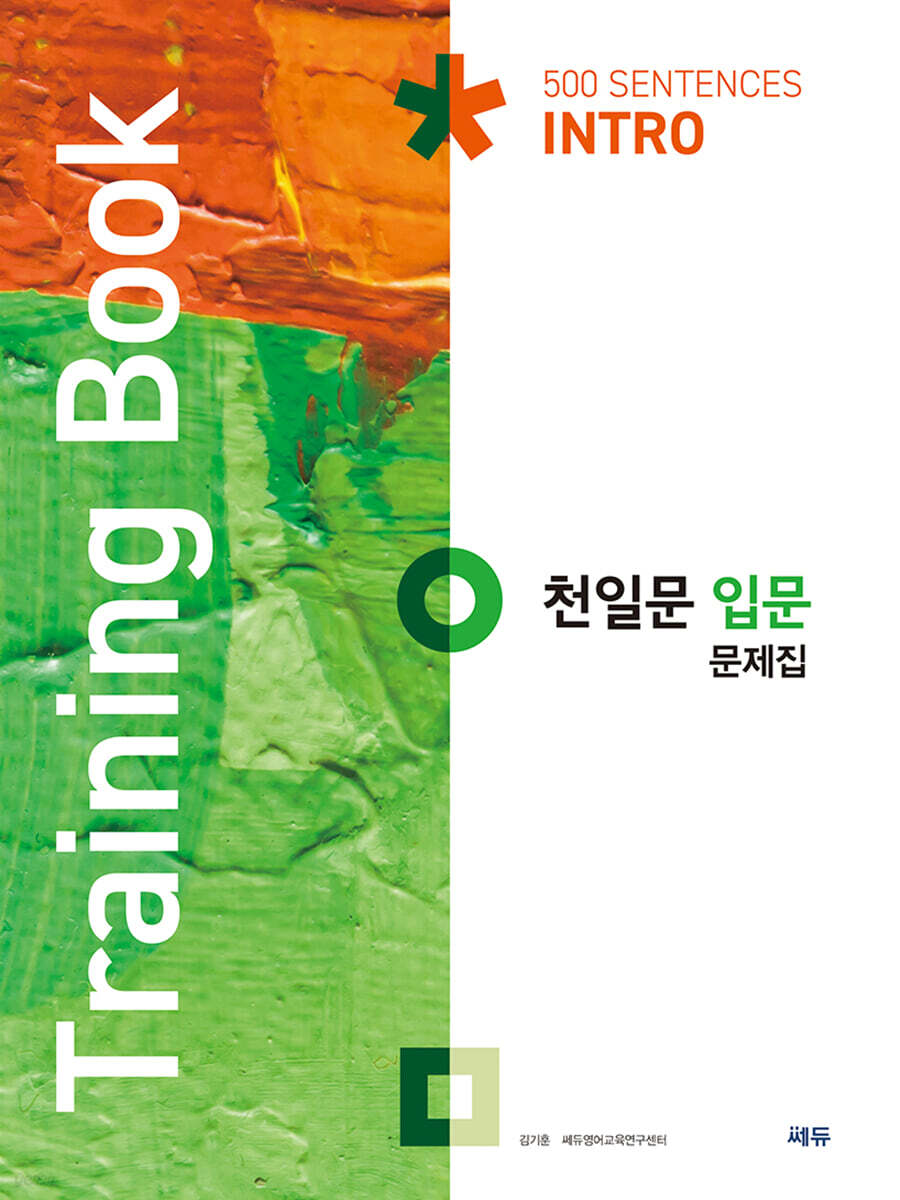
Thousand Character Classic Introductory Workbook Training Book
 |
Description
Book Introduction
A collection of practice problems that allow you to practice your grammar with various problems.
The Thousand Character Classic series, which first appeared in 2004, became the number one bestseller in Korean literature, with cumulative sales exceeding 4.3 million copies.
The Thousand-Yil Classic, which has established itself as the best English textbook in Korea, has been reborn in a new way to fit learning trends.
The Thousand-Yil Classic is characterized by learning English structure by reading representative phrases separately, and it allows for quick direct reading and accurate sentence interpretation.
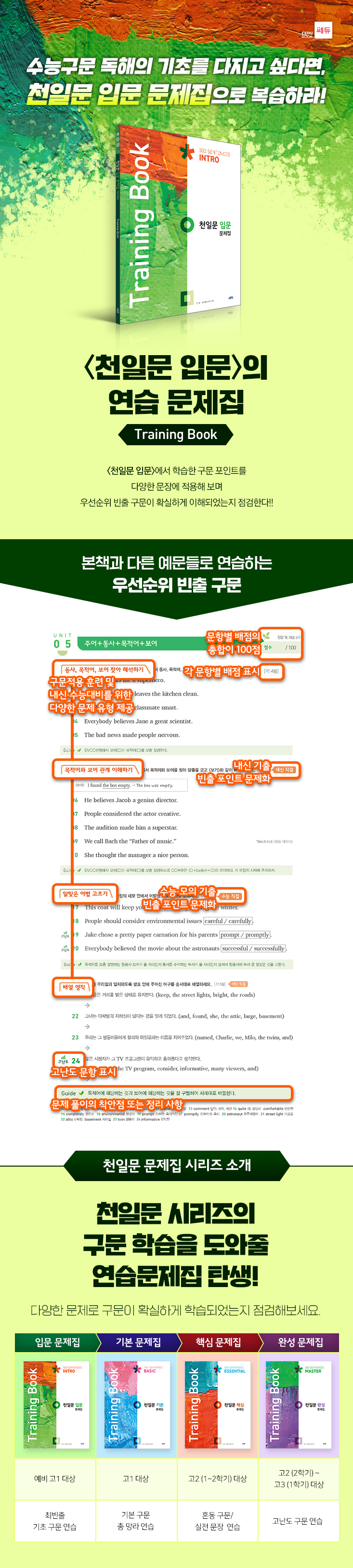
The "Cheonilmun Introduction Problem Book (Training Book)" is a practice problem book for "Cheonilmun Introduction." Through various types of problems presented in sentences different from those in the main book, you can review the basics of the grammar learned in "Cheonilmun Introduction."
You can prepare for the actual exam by studying the types of questions that frequently appear in the CSAT, mock exams, and internal exams, such as grammar, writing, and sentence transitions.
If you want to build a solid foundation for reading comprehension, I highly recommend reviewing the 'Thousand-Yi Classic Introductory Workbook (Training Book)'.
The Thousand Character Classic series, which first appeared in 2004, became the number one bestseller in Korean literature, with cumulative sales exceeding 4.3 million copies.
The Thousand-Yil Classic, which has established itself as the best English textbook in Korea, has been reborn in a new way to fit learning trends.
The Thousand-Yil Classic is characterized by learning English structure by reading representative phrases separately, and it allows for quick direct reading and accurate sentence interpretation.
The "Cheonilmun Introduction Problem Book (Training Book)" is a practice problem book for "Cheonilmun Introduction." Through various types of problems presented in sentences different from those in the main book, you can review the basics of the grammar learned in "Cheonilmun Introduction."
You can prepare for the actual exam by studying the types of questions that frequently appear in the CSAT, mock exams, and internal exams, such as grammar, writing, and sentence transitions.
If you want to build a solid foundation for reading comprehension, I highly recommend reviewing the 'Thousand-Yi Classic Introductory Workbook (Training Book)'.
- You can preview some of the book's contents.
Preview
index
PART 1: The starting point of sentence reading, verbs
CHAPTER 01 Basic sentence structure and verbs
Unit 01 Subject + Verb
Unit 02 Subject + Verb + Complement
Unit 03 Subject + Verb + Object
Unit 04 Subject + Verb + Indirect Object + Direct Object
Unit 05 Subject + Verb + Object + Complement
CHAPTER 02 Tense Revealed Through Verbs
Writing verb conjugations
Unit 06 Present Tense: Time and Meaning
Unit 07 Past Tense and Future Tense
Unit 06~07 Present Tense, Past Tense, Future Tense
Unit 08 Present progressive tense indicates time and meaning
Unit 09 Past Progressive Tense and Future Progressive Tense
Unit 10: The Concept and Meaning of the Present Perfect Tense
CHAPTER 03 Auxiliary Verbs that Add Meaning to Verbs
Unit 11 can / may
Unit 12 must / should
Unit 13 will / would / used to
Unit 14 Auxiliary Verbs + have pp
CHAPTER 04 Tense showing the relationship between subject and verb
Unit 15 Expressions where the subject receives an action, be pp
Unit 16 Passive Voice: Be Careful with Tense Forms
Unit 17 Passive Voice to Watch Out for
Unit 18 Subject+be pp+object
Unit 19 Subject + be pp + noun/adjective complement
PART 2 Another Conjugation of Verbs, Quasi-Verbs
CHAPTER 05 to-v, v-ing as nouns
Unit 20: to-v and v-ing as subjects
Unit 21: to-v and v-ing as objectsⅠ
Unit 22: to-v and v-ing used as objectsⅡ
Unit 23: to-v and v-ing supplementing the subject
Unit 24 Interrogative + to-v
CHAPTER 06 to-v, v-ing, pp modifying nouns
Unit 25: to-v Modifying Nouns
Unit 26 v-ing, pp modifying nouns
Unit 27 v-ing, pp expressing emotions
Unit 28 to-v, v, v-ing, pp supplementing the object
CHAPTER 07 To-v/Participle Phrases Functioning as Adverbs
Unit 29 Interpreting to-v as an adverb I
Unit 30 Interpreting to-v as an adverb II
Unit 31 Interpreting Participle Phrases
Unit 32 Participle Phrase Forms to Watch Out For
PART 3 Sentence Expansion, Clauses
CHAPTER 08 Noun clauses used as subjects/objects/complements
Unit 33 that clause
Unit 34 whether/if clauses
Unit 35 Interrogative Clauses I
Unit 36 Interrogative Clauses II
CHAPTER 09 Relative Clauses I
Unit 37 Nominative Relative Pronouns who, which, that
Unit 38 Objective Relative Pronouns who(m), which, that
Unit 39 Relative Pronouns whose
Unit 40 Prepositions + Relative Pronouns
Unit 41 Relative adverbs when, where, why, how
CHAPTER 10 Relative Clauses II and Adverbial Clauses
Unit 42 Relative Pronoun Clauses After Commas
Unit 43 Relative adverbial clauses after commas (,)
Unit 44 Relative Pronouns What
Unit 45 Adverbial Clauses of Time/Condition
Unit 46 Adverbial clauses of cause/purpose/result
Unit 47 Adverbial Clauses of Contrast
PART 4 KEY SYNTAX
CHAPTER 11 Negative/Comparative/Subjunctive Mood
Unit 48 Negative Sentences
Unit 49 Comparative Phrases I
Unit 50 Comparative Phrases II
Unit 51 Subjunctive Mood
CHAPTER 12 it/special syntax
Unit 52 itⅠ
Unit 53 itⅡ
Unit 54 Inversion Sentences
Unit 55 Omission/Common Sentences
Unit 56 Insertion/Appositive Constructions
[Book within a Book] Answers and Explanations
CHAPTER 01 Basic sentence structure and verbs
Unit 01 Subject + Verb
Unit 02 Subject + Verb + Complement
Unit 03 Subject + Verb + Object
Unit 04 Subject + Verb + Indirect Object + Direct Object
Unit 05 Subject + Verb + Object + Complement
CHAPTER 02 Tense Revealed Through Verbs
Writing verb conjugations
Unit 06 Present Tense: Time and Meaning
Unit 07 Past Tense and Future Tense
Unit 06~07 Present Tense, Past Tense, Future Tense
Unit 08 Present progressive tense indicates time and meaning
Unit 09 Past Progressive Tense and Future Progressive Tense
Unit 10: The Concept and Meaning of the Present Perfect Tense
CHAPTER 03 Auxiliary Verbs that Add Meaning to Verbs
Unit 11 can / may
Unit 12 must / should
Unit 13 will / would / used to
Unit 14 Auxiliary Verbs + have pp
CHAPTER 04 Tense showing the relationship between subject and verb
Unit 15 Expressions where the subject receives an action, be pp
Unit 16 Passive Voice: Be Careful with Tense Forms
Unit 17 Passive Voice to Watch Out for
Unit 18 Subject+be pp+object
Unit 19 Subject + be pp + noun/adjective complement
PART 2 Another Conjugation of Verbs, Quasi-Verbs
CHAPTER 05 to-v, v-ing as nouns
Unit 20: to-v and v-ing as subjects
Unit 21: to-v and v-ing as objectsⅠ
Unit 22: to-v and v-ing used as objectsⅡ
Unit 23: to-v and v-ing supplementing the subject
Unit 24 Interrogative + to-v
CHAPTER 06 to-v, v-ing, pp modifying nouns
Unit 25: to-v Modifying Nouns
Unit 26 v-ing, pp modifying nouns
Unit 27 v-ing, pp expressing emotions
Unit 28 to-v, v, v-ing, pp supplementing the object
CHAPTER 07 To-v/Participle Phrases Functioning as Adverbs
Unit 29 Interpreting to-v as an adverb I
Unit 30 Interpreting to-v as an adverb II
Unit 31 Interpreting Participle Phrases
Unit 32 Participle Phrase Forms to Watch Out For
PART 3 Sentence Expansion, Clauses
CHAPTER 08 Noun clauses used as subjects/objects/complements
Unit 33 that clause
Unit 34 whether/if clauses
Unit 35 Interrogative Clauses I
Unit 36 Interrogative Clauses II
CHAPTER 09 Relative Clauses I
Unit 37 Nominative Relative Pronouns who, which, that
Unit 38 Objective Relative Pronouns who(m), which, that
Unit 39 Relative Pronouns whose
Unit 40 Prepositions + Relative Pronouns
Unit 41 Relative adverbs when, where, why, how
CHAPTER 10 Relative Clauses II and Adverbial Clauses
Unit 42 Relative Pronoun Clauses After Commas
Unit 43 Relative adverbial clauses after commas (,)
Unit 44 Relative Pronouns What
Unit 45 Adverbial Clauses of Time/Condition
Unit 46 Adverbial clauses of cause/purpose/result
Unit 47 Adverbial Clauses of Contrast
PART 4 KEY SYNTAX
CHAPTER 11 Negative/Comparative/Subjunctive Mood
Unit 48 Negative Sentences
Unit 49 Comparative Phrases I
Unit 50 Comparative Phrases II
Unit 51 Subjunctive Mood
CHAPTER 12 it/special syntax
Unit 52 itⅠ
Unit 53 itⅡ
Unit 54 Inversion Sentences
Unit 55 Omission/Common Sentences
Unit 56 Insertion/Appositive Constructions
[Book within a Book] Answers and Explanations
Detailed image
GOODS SPECIFICS
- Publication date: October 18, 2021
- Page count, weight, size: 188 pages | 357g | 210*280*20mm
- ISBN13: 9788968062261
- ISBN10: 8968062269
- Reference book for use in: Pre-middle school students
- Reference book usage semester: Common semester
- Reference book difficulty: Medium Reference book difficulty guide
You may also like
카테고리
korean


korean

![ELLE 엘르 스페셜 에디션 A형 : 12월 [2025]](http://librairie.coreenne.fr/cdn/shop/files/b8e27a3de6c9538896439686c6b0e8fb.jpg?v=1766436872&width=3840)


