

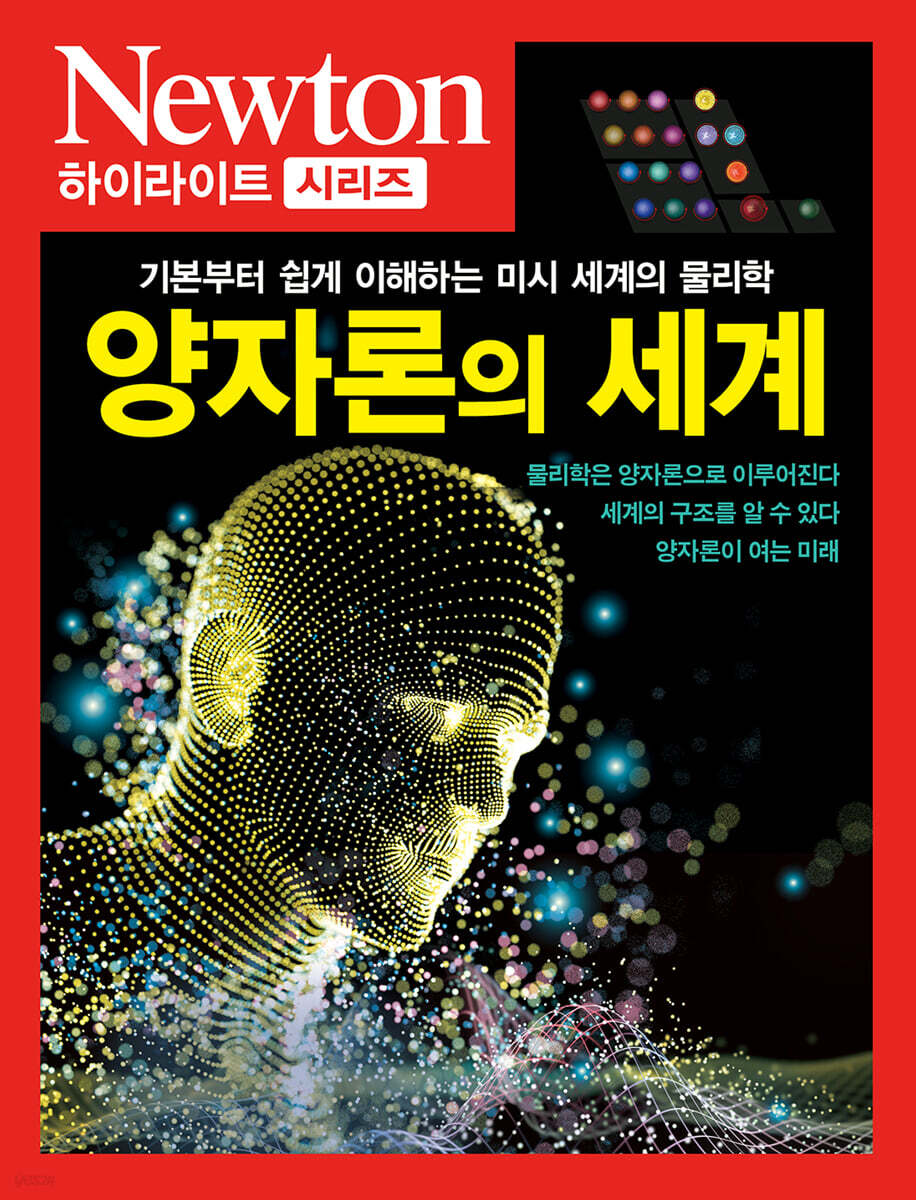
NEWTON HIGHLIGHT The World of Quantum Theory
 |
Description
Book Introduction
There are two theories that overturned the world view until the early 20th century.
The theory of relativity and quantum mechanics are the theories of time and space.
It is no exaggeration to say that these two theories are 'the most important and fundamental theories in modern physics.'
Although Einstein's theory of relativity is so famous that it tends to be overshadowed, no theory can rival quantum theory in terms of forming the foundation of modern technology, including computers.
Quantum theory is a theory that approaches the identity of the 'main characters of nature' such as atoms, electrons, and light, which appear when matter is divided into small pieces.
Quantum theory is also a theory that contains mysterious elements that troubled Einstein throughout his life.
It overturned the common sense up to that time about the ‘existence of objects.’
I believe that some people will be surprised by the depth of quantum theory they learn through this book.
We also introduced in detail unique 'interpretations' of quantum theory, including the 'many-worlds interpretation', which presents a worldview reminiscent of science fiction.
We also covered 'quantum computers', 'quantum teleportation', and 'quantum cryptography', which are rapidly developing these days.
As you read this book, you will realize that quantum theory, which is often perceived as difficult and complex, is actually the foundation of technology, applied in indispensable areas of modern life, such as semiconductors and lasers, and will feel somewhat familiar.
Now, let's take a look at the mysterious world of quantum theory.
The theory of relativity and quantum mechanics are the theories of time and space.
It is no exaggeration to say that these two theories are 'the most important and fundamental theories in modern physics.'
Although Einstein's theory of relativity is so famous that it tends to be overshadowed, no theory can rival quantum theory in terms of forming the foundation of modern technology, including computers.
Quantum theory is a theory that approaches the identity of the 'main characters of nature' such as atoms, electrons, and light, which appear when matter is divided into small pieces.
Quantum theory is also a theory that contains mysterious elements that troubled Einstein throughout his life.
It overturned the common sense up to that time about the ‘existence of objects.’
I believe that some people will be surprised by the depth of quantum theory they learn through this book.
We also introduced in detail unique 'interpretations' of quantum theory, including the 'many-worlds interpretation', which presents a worldview reminiscent of science fiction.
We also covered 'quantum computers', 'quantum teleportation', and 'quantum cryptography', which are rapidly developing these days.
As you read this book, you will realize that quantum theory, which is often perceived as difficult and complex, is actually the foundation of technology, applied in indispensable areas of modern life, such as semiconductors and lasers, and will feel somewhat familiar.
Now, let's take a look at the mysterious world of quantum theory.
- You can preview some of the book's contents.
Preview
index
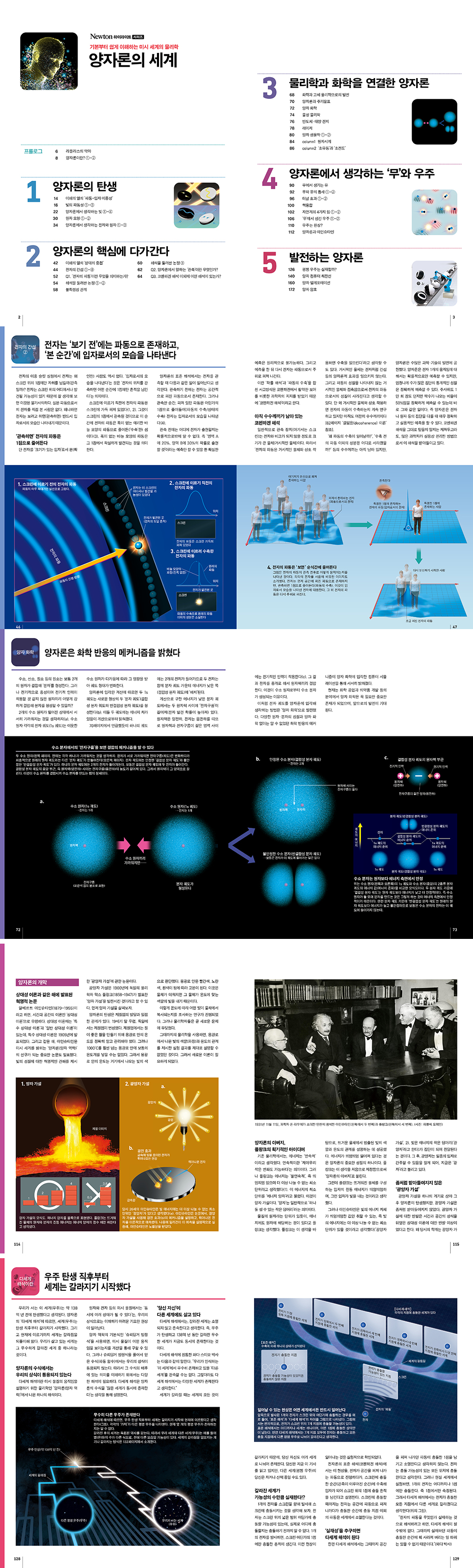
prolog
Laplace's Demon/What is Quantum Theory? ①~②
1 The Birth of Quantum Theory
The Key to Understanding: The Wave-Particle Duality / The Wave Theory of Light ①~③ / Light Considered in Quantum Theory ①~④ / Atomic Models ①~② / Electrons and Atoms Considered in Quantum Theory ①~③
2 Approaching the core of quantum theory
The key to understanding 'superposition of states'/electronic interference ①~④/Q1.
What does 'electron wave' mean? / Debate surrounding interpretation ①~② / Uncertainty relationship / Debate surrounding interpretation ③ / Q2.
What is ‘observation’ in quantum theory? /Q3.
Are there any interpretations other than the Copenhagen interpretation?
3 Quantum theory connecting physics and chemistry
Advances in Chemistry and Solid-State Physics/Quantum Theory and the Periodic Table/Quantum Chemistry/Material Physics/Semiconductors and Solar Cells/Lasers/Quantum Biology ①~②/Column 1: Atomic Clocks/Column 2: Superfluidity and Superconductivity
4. 'Nothingness' and the universe in quantum theory
The gap between existence and non-existence ①~②/Tunnel effect ①~②/Nuclear fusion/The four forces of nature ①~②/The universe created from 'nothing' ①~②/Is the universe an illusion?/Quantum theory and Einstein
5 Evolving Quantum Theory
Are Parallel Woods Real? / The Frontiers of Quantum Computing / Quantum Teleportation / Quantum Cryptography
4.
Supervision, collaboration, and writing
Hideo Kosaka, a British man
Professor, Graduate School of Engineering, Yokohama National University, Japan; Principal Investigator, Institute for Advanced Science (concurrent position); Director, Quantum Information Research Center (concurrent position).
Doctor of Engineering.
Takeda Shuntaro 武田俊太郞
Associate Professor, Graduate School of Engineering, University of Tokyo, Japan.
Doctor of Engineering.
Tsutsui Izumi 筒井 泉
Diamond Fellow, High Energy Accelerator Laboratory, Japan.
Doctor of Science.
Fujii Keisuke 藤井啓祐
Professor, Department of Basic Engineering, Graduate School of Osaka University, Japan.
Doctor of Engineering.
Matsuura So 松浦 壯
Professor of Commerce, Keio University, Japan.
Affiliated with Hiyoshi Physics Laboratory.
Doctor of Science.
Takahiko Matsubara
Professor at the Institute for Particle and Nuclear Research, High Energy Accelerator Research Organization, Japan.
Doctor of Science.
Morita Kunihisa 森田邦久
Professor, Graduate School of Human Sciences, Osaka University, Japan.
Doctor of Science.
Wada Sumio
Former full-time lecturer at the Graduate School of Interdisciplinary Studies, University of Tokyo, Japan.
Doctor of Science.
Laplace's Demon/What is Quantum Theory? ①~②
1 The Birth of Quantum Theory
The Key to Understanding: The Wave-Particle Duality / The Wave Theory of Light ①~③ / Light Considered in Quantum Theory ①~④ / Atomic Models ①~② / Electrons and Atoms Considered in Quantum Theory ①~③
2 Approaching the core of quantum theory
The key to understanding 'superposition of states'/electronic interference ①~④/Q1.
What does 'electron wave' mean? / Debate surrounding interpretation ①~② / Uncertainty relationship / Debate surrounding interpretation ③ / Q2.
What is ‘observation’ in quantum theory? /Q3.
Are there any interpretations other than the Copenhagen interpretation?
3 Quantum theory connecting physics and chemistry
Advances in Chemistry and Solid-State Physics/Quantum Theory and the Periodic Table/Quantum Chemistry/Material Physics/Semiconductors and Solar Cells/Lasers/Quantum Biology ①~②/Column 1: Atomic Clocks/Column 2: Superfluidity and Superconductivity
4. 'Nothingness' and the universe in quantum theory
The gap between existence and non-existence ①~②/Tunnel effect ①~②/Nuclear fusion/The four forces of nature ①~②/The universe created from 'nothing' ①~②/Is the universe an illusion?/Quantum theory and Einstein
5 Evolving Quantum Theory
Are Parallel Woods Real? / The Frontiers of Quantum Computing / Quantum Teleportation / Quantum Cryptography
4.
Supervision, collaboration, and writing
Hideo Kosaka, a British man
Professor, Graduate School of Engineering, Yokohama National University, Japan; Principal Investigator, Institute for Advanced Science (concurrent position); Director, Quantum Information Research Center (concurrent position).
Doctor of Engineering.
Takeda Shuntaro 武田俊太郞
Associate Professor, Graduate School of Engineering, University of Tokyo, Japan.
Doctor of Engineering.
Tsutsui Izumi 筒井 泉
Diamond Fellow, High Energy Accelerator Laboratory, Japan.
Doctor of Science.
Fujii Keisuke 藤井啓祐
Professor, Department of Basic Engineering, Graduate School of Osaka University, Japan.
Doctor of Engineering.
Matsuura So 松浦 壯
Professor of Commerce, Keio University, Japan.
Affiliated with Hiyoshi Physics Laboratory.
Doctor of Science.
Takahiko Matsubara
Professor at the Institute for Particle and Nuclear Research, High Energy Accelerator Research Organization, Japan.
Doctor of Science.
Morita Kunihisa 森田邦久
Professor, Graduate School of Human Sciences, Osaka University, Japan.
Doctor of Science.
Wada Sumio
Former full-time lecturer at the Graduate School of Interdisciplinary Studies, University of Tokyo, Japan.
Doctor of Science.
Detailed image
Publisher's Review
· Examine the birth of quantum theory and understand 'wave-particle duality'.
The keywords for understanding quantum theory are ‘wave-particle duality’ and ‘superposition of states.’
Before the advent of quantum theory, light was thought to be a wave and electrons were particles, but quantum theory believes that light and electrons in the microscopic world have both wave and particle properties.
We explain 'wave-particle duality' while tracing the process of the birth of quantum theory.
· Examine the difficult-to-understand phenomena of quantum theory and get to the core of quantum theory.
We explain 'superposition of states', another key to understanding quantum theory.
According to quantum theory, in microscopic clocks, “one object can exist in multiple locations at the same time.” In electron interference experiments, one cannot avoid considering the superposition of electron states.
Also, the superposition of states collapses when observed.
With the interpretation of these phenomena, we approach the core of quantum theory.
· Examine how quantum theory is applied in various fields.
We will examine how quantum theory is applied in fields such as chemistry, solid-state physics, and biology.
Many technologies active around us, including 'semiconductors', utilize the effects of quantum theory.
We can see that quantum theory is not just a mysterious theory, but an important physics theory that we cannot leave out in modern society.
· Tracing the history of the development of quantum theory based on the relationship between Einstein and quantum theory.
Using the quantum theory mindset, we introduce several interesting topics such as 'electrons escape walls' and 'the universe is born from nothing'.
We also trace the history of the development of quantum theory based on the relationship between quantum theory and the great physicist Albert Einstein, known for his theory of relativity.
· Learn about various interpretations of quantum theory and introduce developments in quantum theory, such as quantum cryptography and quantum computers.
First, we introduce in detail the 'many-worlds interpretation' of quantum theory.
The 'multiverse interpretation' holds that countless parallel universes exist.
Next, we will introduce the cutting edge of ‘quantum computers’, as well as the mechanisms and applications of ‘quantum teleportation’ and ‘quantum cryptography’ in an easy-to-understand manner.
The keywords for understanding quantum theory are ‘wave-particle duality’ and ‘superposition of states.’
Before the advent of quantum theory, light was thought to be a wave and electrons were particles, but quantum theory believes that light and electrons in the microscopic world have both wave and particle properties.
We explain 'wave-particle duality' while tracing the process of the birth of quantum theory.
· Examine the difficult-to-understand phenomena of quantum theory and get to the core of quantum theory.
We explain 'superposition of states', another key to understanding quantum theory.
According to quantum theory, in microscopic clocks, “one object can exist in multiple locations at the same time.” In electron interference experiments, one cannot avoid considering the superposition of electron states.
Also, the superposition of states collapses when observed.
With the interpretation of these phenomena, we approach the core of quantum theory.
· Examine how quantum theory is applied in various fields.
We will examine how quantum theory is applied in fields such as chemistry, solid-state physics, and biology.
Many technologies active around us, including 'semiconductors', utilize the effects of quantum theory.
We can see that quantum theory is not just a mysterious theory, but an important physics theory that we cannot leave out in modern society.
· Tracing the history of the development of quantum theory based on the relationship between Einstein and quantum theory.
Using the quantum theory mindset, we introduce several interesting topics such as 'electrons escape walls' and 'the universe is born from nothing'.
We also trace the history of the development of quantum theory based on the relationship between quantum theory and the great physicist Albert Einstein, known for his theory of relativity.
· Learn about various interpretations of quantum theory and introduce developments in quantum theory, such as quantum cryptography and quantum computers.
First, we introduce in detail the 'many-worlds interpretation' of quantum theory.
The 'multiverse interpretation' holds that countless parallel universes exist.
Next, we will introduce the cutting edge of ‘quantum computers’, as well as the mechanisms and applications of ‘quantum teleportation’ and ‘quantum cryptography’ in an easy-to-understand manner.
GOODS SPECIFICS
- Date of issue: May 15, 2024
- Page count, weight, size: 176 pages | 210*275*20mm
- ISBN13: 9791161961309
- ISBN10: 1161961305
You may also like
카테고리
korean


korean

![GQ KOREA Mark (Monthly): December [2025]](http://librairie.coreenne.fr/cdn/shop/files/8ef265dbbfbf186523ed75ba7319009d.jpg?v=1765340328&width=3840)


