

Minimum data literacy
 |
Description
Book Introduction
A general guide for everyone living in the age of artificial intelligence.
It is no exaggeration to say that today, with the emergence of generative artificial intelligence and its application in business, we are truly in the age of data.
Looking up restaurant reviews to choose what to eat for lunch, ordering daily necessities recommended by a shopping app, and even exchanging messages while having a heated flirtation with a blind date all contain a wealth of data.
However, as the saying goes, “A person who has a sickle in his hand doesn’t know how to interpret it,” if you lack data literacy, the ability to read and interpret data, you won’t be able to obtain any of the information contained in the data, even if it is a treasure trove of data right in front of you.
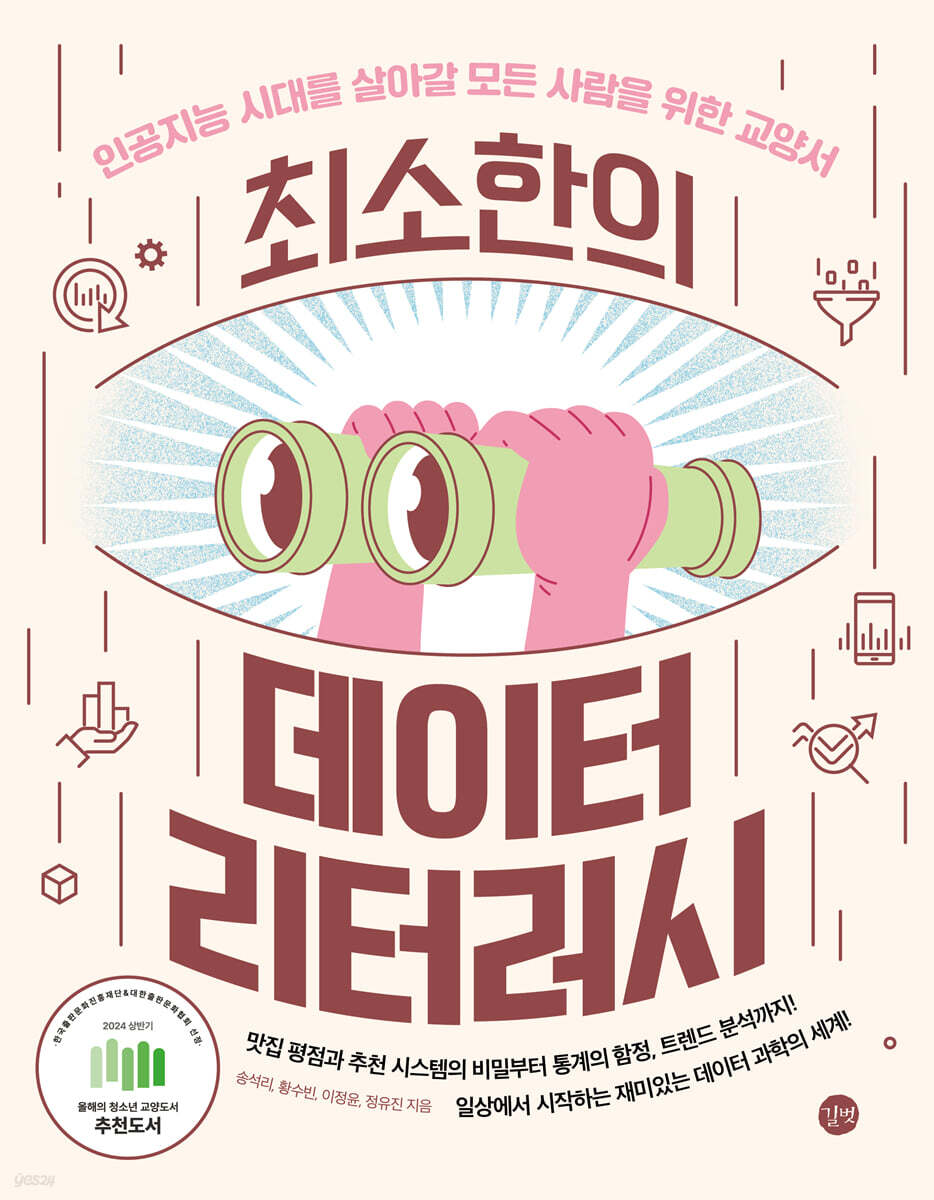
Written by a practicing teacher and data education expert, "Minimum Data Literacy" is an introductory book that helps non-majors and middle and high school students easily approach data science.
From the secrets of restaurant ratings and recommendation systems to statistics, data science, and even simple machine learning, this book will teach you how to leverage data in your daily life and work to make efficient, data-driven decisions.
It is no exaggeration to say that today, with the emergence of generative artificial intelligence and its application in business, we are truly in the age of data.
Looking up restaurant reviews to choose what to eat for lunch, ordering daily necessities recommended by a shopping app, and even exchanging messages while having a heated flirtation with a blind date all contain a wealth of data.
However, as the saying goes, “A person who has a sickle in his hand doesn’t know how to interpret it,” if you lack data literacy, the ability to read and interpret data, you won’t be able to obtain any of the information contained in the data, even if it is a treasure trove of data right in front of you.
Written by a practicing teacher and data education expert, "Minimum Data Literacy" is an introductory book that helps non-majors and middle and high school students easily approach data science.
From the secrets of restaurant ratings and recommendation systems to statistics, data science, and even simple machine learning, this book will teach you how to leverage data in your daily life and work to make efficient, data-driven decisions.
- You can preview some of the book's contents.
Preview
index
Part 1: Time to Start Data Literacy
Chapter 1 Introduction
21st Century Future Competencies, 4Cs
The History of Computers and Problem Solving
Chapter 2: Data Science: The Hottest Field of the 21st Century
Analyzing Data Field Trends with Google Search Volume
Various definitions and Venn diagrams of data science.
Chapter 3: Questioning Data in Our Lives
Collecting temperature data
Asking questions about temperature data
The station where the most people get on and off during rush hour
Collecting public transportation data
Ask questions and find answers with public transportation data
Chapter 4: How to Most Accurately Predict the Future
Collecting population data
Asking questions about population data
Developing data literacy to read and write data
Part 2: Developing Data Literacy
Chapter 5: Surviving as a Smart Media Prosumer in the Data Age
Take a closer look at the rating data
Don't be swayed by opinion poll results
Seeing Beyond the Polls
Chapter 6: The process of recommending movies
History of Recommender Systems and Various Algorithms
Using recommendation systems wisely
Practical Tips to Reduce Confirmation Bias
Chapter 7: You See What You Know! The Power of Statistics to Read Data
Beware of the Average Trap
Data visualization using boxplots
Chapter 8: Finding Hidden Relationships in Data
Identifying the relationship between two subjects using a scatter plot
Interpreting Correlations Correctly
Chapter 9: Will a movie with a high production cost be a box office success?
Showing trends between two variables
Predicting audience size with machine learning
Chapter 10: Looking Deeper into Data and Avoiding Misconceptions
Misconceptions: Solving them with mosaic plots and conditional probability
The paradox that dividing into two groups produces opposite results
Chapter 11: Can I trust my COVID-19 test results?
Keys to Improving Test Accuracy: Sensitivity and Specificity
The Blind Spot of 99% Accuracy in COVID-19 Testing
The Delicate Balance of Hypothesis Testing: Type I and Type II Errors
Chapter 12: Can bias be corrected with data?
Understanding Bayes' Law, the Foundation of Machine Learning
The process of updating beliefs through experience
Part 3: Time to Use Data Literacy
Chapter 13 What's happening in this graph?
Data Exploration through Visualization
How to Build Data Literacy with the New York Times
Chapter 14: Data Literacy in Daily Life
Guide to Using Data Literacy
Examples of Data Literacy in Daily Life
Chapter 15: Creating a Survey That Penetrates From Questions to Insights
Create a questionnaire and receive response data
Survey response data analysis using CODAP
Chapter 16: Analyzing Data Patterns to Predict Seoul's Temperature in 2050
Analyzing temperature data patterns
Predicting Temperatures in 2050 Using Machine Learning
Chapter 17: The Time for Data Ethics
The Link Between Data and Artificial Intelligence
The dangers of data bias
The Shadow of AI Development: Ethics and Responsibility
Chapter 1 Introduction
21st Century Future Competencies, 4Cs
The History of Computers and Problem Solving
Chapter 2: Data Science: The Hottest Field of the 21st Century
Analyzing Data Field Trends with Google Search Volume
Various definitions and Venn diagrams of data science.
Chapter 3: Questioning Data in Our Lives
Collecting temperature data
Asking questions about temperature data
The station where the most people get on and off during rush hour
Collecting public transportation data
Ask questions and find answers with public transportation data
Chapter 4: How to Most Accurately Predict the Future
Collecting population data
Asking questions about population data
Developing data literacy to read and write data
Part 2: Developing Data Literacy
Chapter 5: Surviving as a Smart Media Prosumer in the Data Age
Take a closer look at the rating data
Don't be swayed by opinion poll results
Seeing Beyond the Polls
Chapter 6: The process of recommending movies
History of Recommender Systems and Various Algorithms
Using recommendation systems wisely
Practical Tips to Reduce Confirmation Bias
Chapter 7: You See What You Know! The Power of Statistics to Read Data
Beware of the Average Trap
Data visualization using boxplots
Chapter 8: Finding Hidden Relationships in Data
Identifying the relationship between two subjects using a scatter plot
Interpreting Correlations Correctly
Chapter 9: Will a movie with a high production cost be a box office success?
Showing trends between two variables
Predicting audience size with machine learning
Chapter 10: Looking Deeper into Data and Avoiding Misconceptions
Misconceptions: Solving them with mosaic plots and conditional probability
The paradox that dividing into two groups produces opposite results
Chapter 11: Can I trust my COVID-19 test results?
Keys to Improving Test Accuracy: Sensitivity and Specificity
The Blind Spot of 99% Accuracy in COVID-19 Testing
The Delicate Balance of Hypothesis Testing: Type I and Type II Errors
Chapter 12: Can bias be corrected with data?
Understanding Bayes' Law, the Foundation of Machine Learning
The process of updating beliefs through experience
Part 3: Time to Use Data Literacy
Chapter 13 What's happening in this graph?
Data Exploration through Visualization
How to Build Data Literacy with the New York Times
Chapter 14: Data Literacy in Daily Life
Guide to Using Data Literacy
Examples of Data Literacy in Daily Life
Chapter 15: Creating a Survey That Penetrates From Questions to Insights
Create a questionnaire and receive response data
Survey response data analysis using CODAP
Chapter 16: Analyzing Data Patterns to Predict Seoul's Temperature in 2050
Analyzing temperature data patterns
Predicting Temperatures in 2050 Using Machine Learning
Chapter 17: The Time for Data Ethics
The Link Between Data and Artificial Intelligence
The dangers of data bias
The Shadow of AI Development: Ethics and Responsibility
Detailed image

Publisher's Review
From the secrets of restaurant ratings and recommendation systems to the pitfalls of statistics and trend analysis!
The fun world of data science begins in everyday life!
It is no exaggeration to say that today, with the emergence of generative artificial intelligence and its application in business, we are truly in the age of data.
Looking up restaurant reviews to choose what to eat for lunch, ordering daily necessities recommended by a shopping app, and even exchanging messages while having a heated flirtation with a blind date all contain a wealth of data.
However, as the saying goes, “A person who has a sickle in his hand doesn’t know how to interpret it,” if you lack data literacy, the ability to read and interpret data, you won’t be able to obtain any of the information contained in the data, even if it is a treasure trove of data right in front of you.
Written by a practicing teacher and data education expert, "Minimum Data Literacy" is an introductory book that helps non-majors and middle and high school students easily approach data science.
From the secrets of restaurant ratings and recommendation systems to statistics, data science, and even simple machine learning, this book will teach you how to leverage data in your daily life and work to make efficient, data-driven decisions.
Let's go beyond simply reading and interpreting data and see the world through new eyes, and live wisely in the complex era of artificial intelligence!
The fun world of data science begins in everyday life!
It is no exaggeration to say that today, with the emergence of generative artificial intelligence and its application in business, we are truly in the age of data.
Looking up restaurant reviews to choose what to eat for lunch, ordering daily necessities recommended by a shopping app, and even exchanging messages while having a heated flirtation with a blind date all contain a wealth of data.
However, as the saying goes, “A person who has a sickle in his hand doesn’t know how to interpret it,” if you lack data literacy, the ability to read and interpret data, you won’t be able to obtain any of the information contained in the data, even if it is a treasure trove of data right in front of you.
Written by a practicing teacher and data education expert, "Minimum Data Literacy" is an introductory book that helps non-majors and middle and high school students easily approach data science.
From the secrets of restaurant ratings and recommendation systems to statistics, data science, and even simple machine learning, this book will teach you how to leverage data in your daily life and work to make efficient, data-driven decisions.
Let's go beyond simply reading and interpreting data and see the world through new eyes, and live wisely in the complex era of artificial intelligence!
GOODS SPECIFICS
- Date of issue: February 15, 2024
- Page count, weight, size: 228 pages | 183*235*14mm
- ISBN13: 9791140708277
You may also like
카테고리
korean


korean

![GQ KOREA Mark (Monthly): December [2025]](http://librairie.coreenne.fr/cdn/shop/files/8ef265dbbfbf186523ed75ba7319009d.jpg?v=1765340328&width=3840)


