

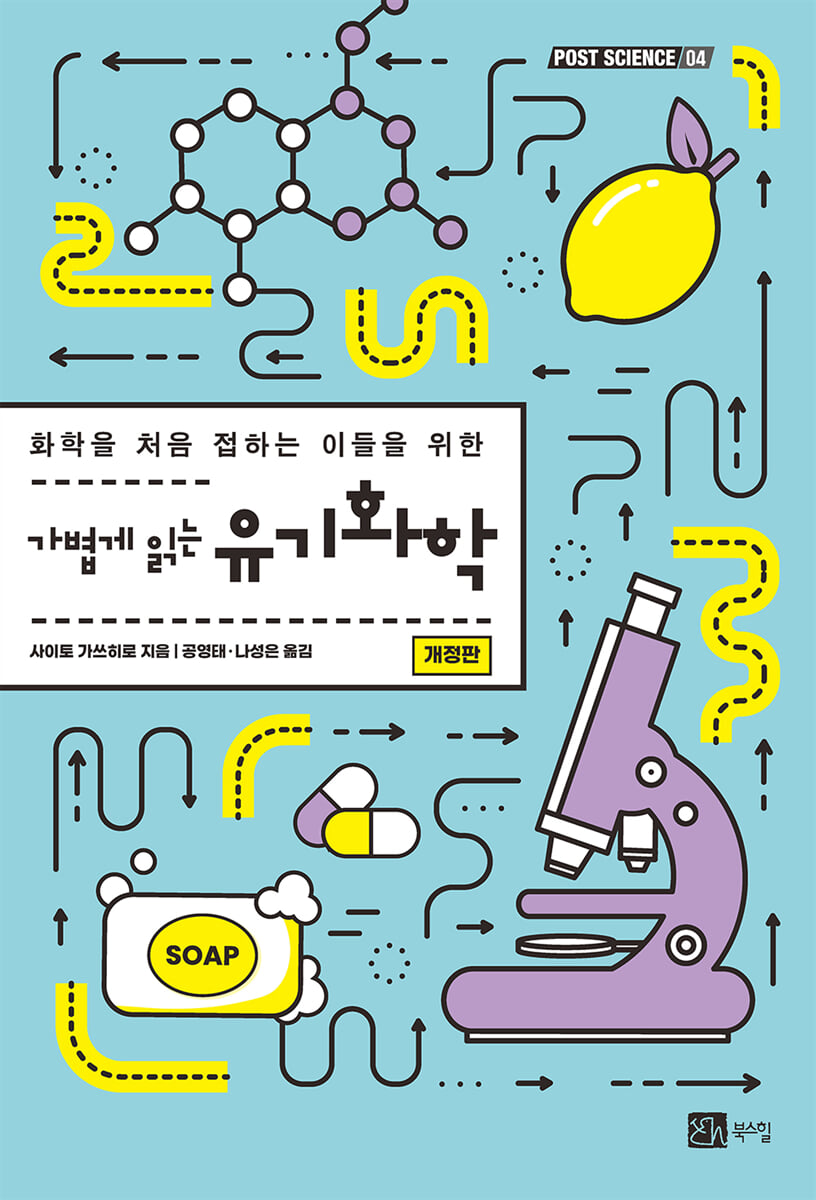
Organic Chemistry for Easy Reading
 |
Description
Book Introduction
For those new to chemistry
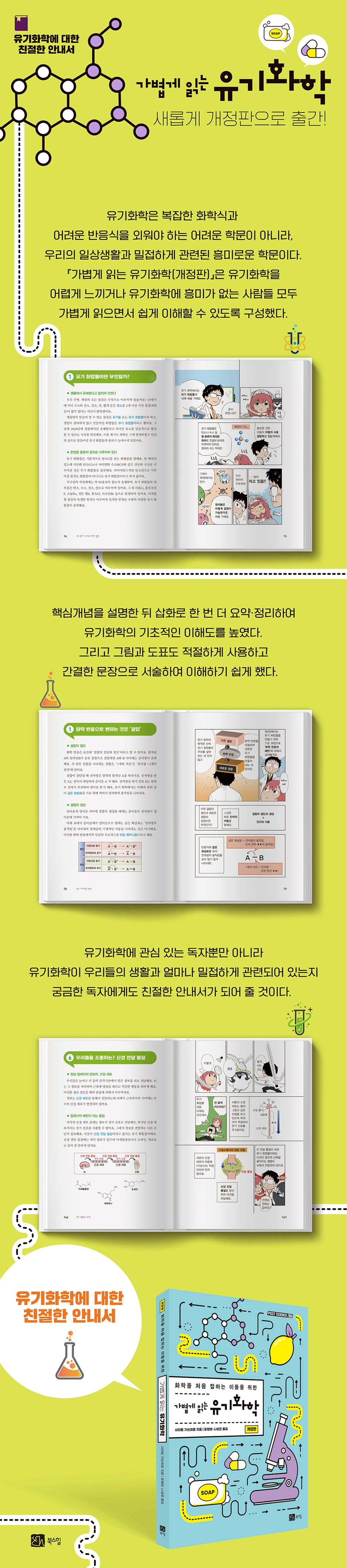
A newly published revised edition of Organic Chemistry for Easy Reading!
A revised edition of "Easy to Read Organic Chemistry," which was published in 2019 and provided concepts and knowledge to students who had difficulty with organic chemistry, has been published.
"Organic Chemistry Made Easy" was well-received for its easy and fun way to explain complex chemical formulas and difficult reactions using cartoons.
In the revised edition, the existing content has been further upgraded to increase the interest in organic chemistry.
Chapters 1 through 3 introduce the substances around us, especially what are 'organic compounds'?
You will be intrigued by the individuality and variations of the numerous materials around you.
Chapters 4 and 5 cover various organic chemical reactions.
You can read it with the feeling of anticipating 'how it will change' or putting together a puzzle.
Chapters 6 through 8 introduce many specific examples from a broader perspective.
By listening to the story of the world unraveled through structure and change, organic chemistry will help you become more familiar with it.
A newly published revised edition of Organic Chemistry for Easy Reading!
A revised edition of "Easy to Read Organic Chemistry," which was published in 2019 and provided concepts and knowledge to students who had difficulty with organic chemistry, has been published.
"Organic Chemistry Made Easy" was well-received for its easy and fun way to explain complex chemical formulas and difficult reactions using cartoons.
In the revised edition, the existing content has been further upgraded to increase the interest in organic chemistry.
Chapters 1 through 3 introduce the substances around us, especially what are 'organic compounds'?
You will be intrigued by the individuality and variations of the numerous materials around you.
Chapters 4 and 5 cover various organic chemical reactions.
You can read it with the feeling of anticipating 'how it will change' or putting together a puzzle.
Chapters 6 through 8 introduce many specific examples from a broader perspective.
By listening to the story of the world unraveled through structure and change, organic chemistry will help you become more familiar with it.
- You can preview some of the book's contents.
Preview
index
Chapter 1 Atomic Structure and Chemical Bonding
1 What are organic compounds?
2 What on earth is an atom?
3 Electrons surrounding the nucleus
4 atoms surrounding electrons
5 How do atoms combine with each other?
Stronger covalent bond than 6
7 Covalent bonds are a handshake!?
Column molecules, compounds, elemental substances, isotropes
Chapter 2 Structure of Organic Compounds
Organic compound because it has 1 carbon
2 Methane and ethane
3 Ethylene and acetylene
4. How to represent the shape of a molecule
5 Simplification of structural formula
6 Various hydrocarbons
7 Another hydrocarbon
8 Are they different substances even if the types and numbers of atoms are the same?
9 There are several isomers.
10. Isomers in three dimensions
11 Isomers that overlap when reflected in a mirror
The World of Column 1/2
Chapter 3 Types and Properties of Organic Compounds
1 What is ‘○○gi’?
2 Alcohol and phenol
3 Two types of ether
4 Ketones, carbonyl compounds
5 Types and properties of aldehydes
6 Carboxylic acid is a friendly acid
7 Esters and acid anhydrides
8 Amin and his colleagues
9 What will Amin do?
10 Conditions for aromatic compounds
11 Why are aromatics special?
Column
Chapter 4 Basic Reactions
1 What changes through chemical reactions is 'bonding'
2 Reactions that change the shape of the ring
3 A substitution reaction is a reaction that replaces
Reactions that donate 4 electrons
A substitution reaction that begins with the collision of five molecules
6 Is the elimination reaction like a start-up?
7 How does the elimination reaction proceed?
8 Hydrogen addition reaction
Why are only 9 cis bodies created?
10 Reactions that produce transgenic bodies
11 Water also reacts with addition
12 Addition reaction resulting in ring formation
13 Reactions involving oxygen
14 Breaking double bonds with oxidation!
Column
Chapter 5 Applied Reactions
1. How to synthesize ketones and aldehydes?
2 How to synthesize carboxylic acid?
3 What happens when C=O bonds are oxidized and reduced?
Addition reaction to 4 C=O bonds
5 Alcohols and amines are also nucleophilic reagents.
6 Nucleophilic reagents that act on various substances
7 Electrophilic substitution reaction of benzene
8 Various aromatic electrophilic substitution reactions
9 The function also changes
10 Reaction of benzene diazonium chloride
Column Giant Tank
Chapter 6 Polymer Compounds
1. Controversy surrounding polymers
2 Polymers are long chains of molecules
3 What types of polymers are there?
4 What are thermoplastic resins?
5 Ways to Make Thermoplastic Resins
6 What is a thermosetting resin?
7 How is a net made?
8 Plastics with crystallinity
9 How are synthetic fibers made?
10 How is rubber made?
11 Amazing! Functional Polymers
12 Friendly Functional Polymers
Column liquid crystal and organic EL
Chapter 7: The Science of Life
1 Various sugars
2 Polysaccharides
3 Carboxylic acid contained in oil = fatty acid
4. What Soap and Cell Membranes Have in Common
5 Vitamins and Hormones
6 Neurotransmitters That Control Us?
7 Protein, the foundation of the body
8. Three-dimensional structure of proteins
9 DNA and RNA, essential to living things
10 Replication of DNA
11 RNA and proteins
Column New Vaccine
Chapter 8 Organic Chemistry and the SDGs
1 What are SDGs?
2 Pollution and synthetic compounds
3 Global warming and carbon dioxide
4 Marine Pollution and Plastic
5 Diseases and Medicines
Experiment 1: Fehling reaction and silver mirror reaction
Experiment 2 Grignard reaction
1 What are organic compounds?
2 What on earth is an atom?
3 Electrons surrounding the nucleus
4 atoms surrounding electrons
5 How do atoms combine with each other?
Stronger covalent bond than 6
7 Covalent bonds are a handshake!?
Column molecules, compounds, elemental substances, isotropes
Chapter 2 Structure of Organic Compounds
Organic compound because it has 1 carbon
2 Methane and ethane
3 Ethylene and acetylene
4. How to represent the shape of a molecule
5 Simplification of structural formula
6 Various hydrocarbons
7 Another hydrocarbon
8 Are they different substances even if the types and numbers of atoms are the same?
9 There are several isomers.
10. Isomers in three dimensions
11 Isomers that overlap when reflected in a mirror
The World of Column 1/2
Chapter 3 Types and Properties of Organic Compounds
1 What is ‘○○gi’?
2 Alcohol and phenol
3 Two types of ether
4 Ketones, carbonyl compounds
5 Types and properties of aldehydes
6 Carboxylic acid is a friendly acid
7 Esters and acid anhydrides
8 Amin and his colleagues
9 What will Amin do?
10 Conditions for aromatic compounds
11 Why are aromatics special?
Column
Chapter 4 Basic Reactions
1 What changes through chemical reactions is 'bonding'
2 Reactions that change the shape of the ring
3 A substitution reaction is a reaction that replaces
Reactions that donate 4 electrons
A substitution reaction that begins with the collision of five molecules
6 Is the elimination reaction like a start-up?
7 How does the elimination reaction proceed?
8 Hydrogen addition reaction
Why are only 9 cis bodies created?
10 Reactions that produce transgenic bodies
11 Water also reacts with addition
12 Addition reaction resulting in ring formation
13 Reactions involving oxygen
14 Breaking double bonds with oxidation!
Column
Chapter 5 Applied Reactions
1. How to synthesize ketones and aldehydes?
2 How to synthesize carboxylic acid?
3 What happens when C=O bonds are oxidized and reduced?
Addition reaction to 4 C=O bonds
5 Alcohols and amines are also nucleophilic reagents.
6 Nucleophilic reagents that act on various substances
7 Electrophilic substitution reaction of benzene
8 Various aromatic electrophilic substitution reactions
9 The function also changes
10 Reaction of benzene diazonium chloride
Column Giant Tank
Chapter 6 Polymer Compounds
1. Controversy surrounding polymers
2 Polymers are long chains of molecules
3 What types of polymers are there?
4 What are thermoplastic resins?
5 Ways to Make Thermoplastic Resins
6 What is a thermosetting resin?
7 How is a net made?
8 Plastics with crystallinity
9 How are synthetic fibers made?
10 How is rubber made?
11 Amazing! Functional Polymers
12 Friendly Functional Polymers
Column liquid crystal and organic EL
Chapter 7: The Science of Life
1 Various sugars
2 Polysaccharides
3 Carboxylic acid contained in oil = fatty acid
4. What Soap and Cell Membranes Have in Common
5 Vitamins and Hormones
6 Neurotransmitters That Control Us?
7 Protein, the foundation of the body
8. Three-dimensional structure of proteins
9 DNA and RNA, essential to living things
10 Replication of DNA
11 RNA and proteins
Column New Vaccine
Chapter 8 Organic Chemistry and the SDGs
1 What are SDGs?
2 Pollution and synthetic compounds
3 Global warming and carbon dioxide
4 Marine Pollution and Plastic
5 Diseases and Medicines
Experiment 1: Fehling reaction and silver mirror reaction
Experiment 2 Grignard reaction
Detailed image
GOODS SPECIFICS
- Date of issue: December 10, 2023
- Page count, weight, size: 232 pages | 153*225*13mm
- ISBN13: 9791159715006
You may also like
카테고리
korean


korean

![GQ KOREA Mark (Monthly): December [2025]](http://librairie.coreenne.fr/cdn/shop/files/8ef265dbbfbf186523ed75ba7319009d.jpg?v=1765340328&width=3840)


