

World History in a Pharmacy
 |
Description
Book Introduction
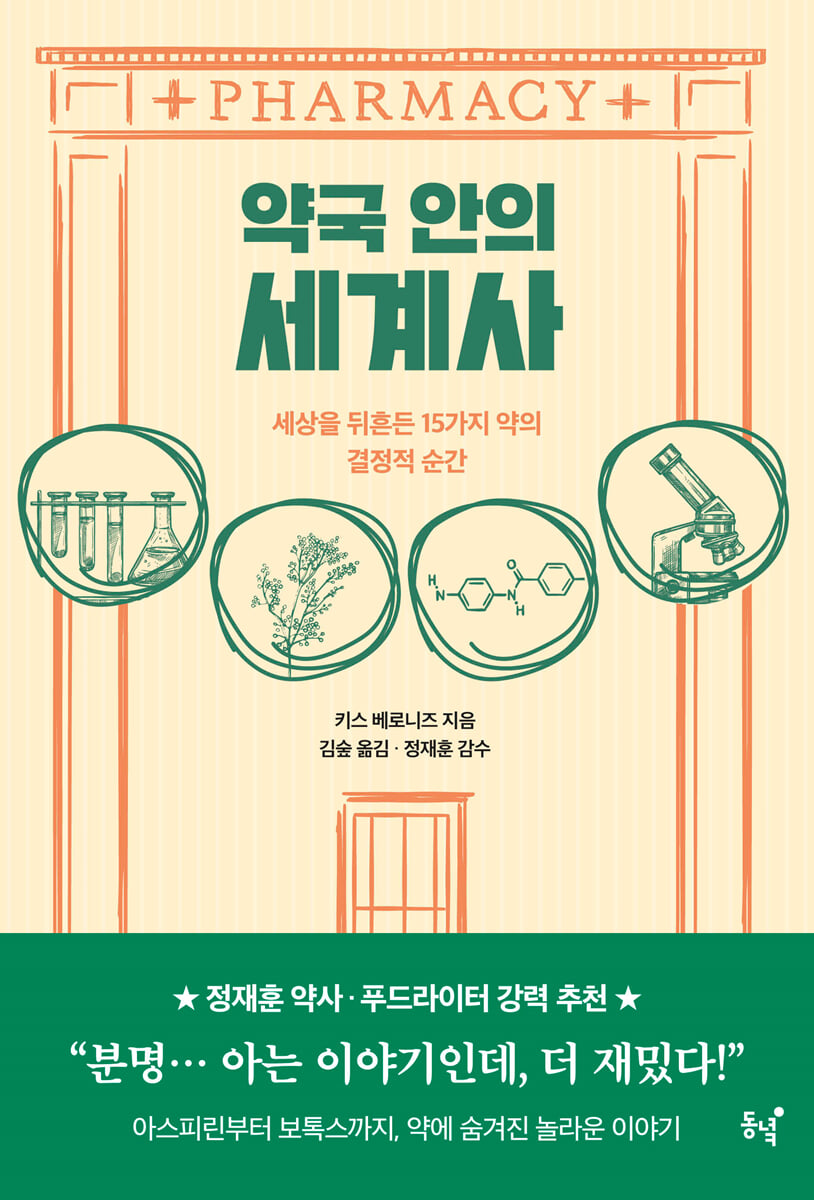
“Obviously… I know this story, but it’s even more fun!”
*Highly recommended by Jaehoon Jeong (pharmacist/food writer)!*
From Aspirin to Botox: The Amazing World of Medicine
The world has been experiencing the unprecedented COVID-19 pandemic for over three years.
During this period, the world has never been more interested in the development of new drugs than in the COVID-19 vaccine.
As a result, interest naturally focused on how vaccines are developed.
However, after the vaccine was developed, some people questioned how it was developed so quickly and whether it was truly safe.
This book explains in detail how the drugs we use today were developed, the efforts and frustrations involved, the successes and failures of countless scientists along the way, and what these drugs are used for today.
From penicillin, which saved countless lives in World War II, to aspirin, which was also used by Hippocrates and the ancient Egyptians, to quinine, an anti-malarial drug that helped European imperialist powers colonize Africa, to digoxin, which is suspected of being responsible for the yellow color often used in Van Gogh's paintings, to nitrogen mustard, a cancer treatment accidentally discovered when the Italian port of Bari was bombed, to botox, a wrinkle treatment that has become one of the most used drugs in modern medicine, the world history related to drugs is fascinatingly unfolded in this book.
Another strength of this book is that it covers not only the well-known stories of penicillin and aspirin, but also the history and stories of various types of drugs, including antidepressants and hair loss treatments, which are major concerns of the pharmaceutical industry today.
A world history tour that explores how 15 familiar drugs, from penicillin to botox, came into existence is fascinating, but those with a keen interest in medicine will also find it quite enjoyable to simply read the questions and answers covered in the "Recipes Outside the Pharmacy" section at the end of each chapter.
You will get clear answers to questions you have always wondered about, such as what off-label prescribing is, why taking two pills instead of one doesn't double the effect, why prescription drugs are advertised to the public, why diabetics shouldn't just take their insulin, and how generic drugs are made.
Plus, it contains practical information that will actually help you use your medicine.
For example, cat caregivers are advised to never use minoxidil and to never take aspirin while using minoxidil.
Pharmacist Jeong Jae-hoon, who recommended this book, praised the book, saying, “I cannot help but applaud the author for this history book that even explains why taking aspirin while using minoxidil, a hair loss treatment, reduces its effectiveness.”
It also provides comprehensive information for those studying the history of medicine, covering not only scientific but also global history, examining how the pharmaceutical industry's interests have evolved and the various methods available for developing new drugs.
Finally, in "Exiting Words," the long journey that began with penicillin is brought to a close, raising various questions about the future of medicine, including the COVID-19 vaccine, in the post-COVID era.
*Highly recommended by Jaehoon Jeong (pharmacist/food writer)!*
From Aspirin to Botox: The Amazing World of Medicine
The world has been experiencing the unprecedented COVID-19 pandemic for over three years.
During this period, the world has never been more interested in the development of new drugs than in the COVID-19 vaccine.
As a result, interest naturally focused on how vaccines are developed.
However, after the vaccine was developed, some people questioned how it was developed so quickly and whether it was truly safe.
This book explains in detail how the drugs we use today were developed, the efforts and frustrations involved, the successes and failures of countless scientists along the way, and what these drugs are used for today.
From penicillin, which saved countless lives in World War II, to aspirin, which was also used by Hippocrates and the ancient Egyptians, to quinine, an anti-malarial drug that helped European imperialist powers colonize Africa, to digoxin, which is suspected of being responsible for the yellow color often used in Van Gogh's paintings, to nitrogen mustard, a cancer treatment accidentally discovered when the Italian port of Bari was bombed, to botox, a wrinkle treatment that has become one of the most used drugs in modern medicine, the world history related to drugs is fascinatingly unfolded in this book.
Another strength of this book is that it covers not only the well-known stories of penicillin and aspirin, but also the history and stories of various types of drugs, including antidepressants and hair loss treatments, which are major concerns of the pharmaceutical industry today.
A world history tour that explores how 15 familiar drugs, from penicillin to botox, came into existence is fascinating, but those with a keen interest in medicine will also find it quite enjoyable to simply read the questions and answers covered in the "Recipes Outside the Pharmacy" section at the end of each chapter.
You will get clear answers to questions you have always wondered about, such as what off-label prescribing is, why taking two pills instead of one doesn't double the effect, why prescription drugs are advertised to the public, why diabetics shouldn't just take their insulin, and how generic drugs are made.
Plus, it contains practical information that will actually help you use your medicine.
For example, cat caregivers are advised to never use minoxidil and to never take aspirin while using minoxidil.
Pharmacist Jeong Jae-hoon, who recommended this book, praised the book, saying, “I cannot help but applaud the author for this history book that even explains why taking aspirin while using minoxidil, a hair loss treatment, reduces its effectiveness.”
It also provides comprehensive information for those studying the history of medicine, covering not only scientific but also global history, examining how the pharmaceutical industry's interests have evolved and the various methods available for developing new drugs.
Finally, in "Exiting Words," the long journey that began with penicillin is brought to a close, raising various questions about the future of medicine, including the COVID-19 vaccine, in the post-COVID era.
- You can preview some of the book's contents.
Preview
index
The fascinating history surrounding the recommended drug
A World History Journey Through Pharmacy
1.
Penicillin - The Mold That Saved Humanity
Recipe Outside the Pharmacy: Why Do I Need a Prescription to Buy Antibiotics?
2.
Quinine - The Miracle Drug That Conquered Malaria
Recipes Outside the Pharmacy: What is Off-Label Prescription?
3.
Acetylsalicylic acid—the best-selling drug in history, aspirin
Recipes Outside the Pharmacy: The Role of Natural Resources in Drug Design
4.
Lithium - The Metal That Treated Bipolar Disorder
Recipes Outside the Pharmacy: How Do Western Medicines Work? | What is Pharmacological Half-Life?
5.
Iproniazid - the first antidepressant discovered by accident
Recipe Outside the Pharmacy: Why Doesn't Taking Two Pills Make You Twice as Good?
6.
Digoxin - the world's most dangerous drug if misused
Recipe Outside the Pharmacy: Lipinski's Fifth Law
7.
Chlordiazepoxide - a tranquilizer made by a lab rat
Recipe Outside the Pharmacy: What Are Me Too Drugs?
8.
Nitrous oxide - medical laughing gas
Recipe Outside the Pharmacy: Why Can't Diabetics Just Drink Insulin?
9.
Nitrogen Mustard: The Killer Gas That Turned into a Cancer Treatment
Recipe Outside the Pharmacy: Why Advertise Prescription Drugs to the Public?
10.
Warfarin - From rat poison to life-saving drug
Recipe Outside the Pharmacy: What is Pharming, and Is It the Future of Pharma?
11.
Botulinum toxin - Botox: A deadly poison that prevents aging
Recipe Outside the Pharmacy: How to Make Rare Disease Cures
12.
Coal tar - a psoriasis treatment derived from petroleum
Recipes Outside the Pharmacy: What is Pharmacy Compounding?
13.
Minoxidil: A Hair Loss Treatment Born from Side Effects
Recipes Outside the Pharmacy: How Do Drugs Get FDA Approved? | Do Supplements Get FDA Approved?
14.
Finasteride: The Secret to Hair Loss Discovered in a Town Where Women Turn Men
Recipe Outside the Pharmacy: How Prescription Drugs Became OTC Drugs
15.
Sildenafil - Viagra, the Era Where Quality of Life Matters
Recipe Outside the Pharmacy: How Generic Drugs Are Breaking into the Market
Will we be happy in the post-corona era?
Acknowledgements
References
Copyright of the main text
Search
A World History Journey Through Pharmacy
1.
Penicillin - The Mold That Saved Humanity
Recipe Outside the Pharmacy: Why Do I Need a Prescription to Buy Antibiotics?
2.
Quinine - The Miracle Drug That Conquered Malaria
Recipes Outside the Pharmacy: What is Off-Label Prescription?
3.
Acetylsalicylic acid—the best-selling drug in history, aspirin
Recipes Outside the Pharmacy: The Role of Natural Resources in Drug Design
4.
Lithium - The Metal That Treated Bipolar Disorder
Recipes Outside the Pharmacy: How Do Western Medicines Work? | What is Pharmacological Half-Life?
5.
Iproniazid - the first antidepressant discovered by accident
Recipe Outside the Pharmacy: Why Doesn't Taking Two Pills Make You Twice as Good?
6.
Digoxin - the world's most dangerous drug if misused
Recipe Outside the Pharmacy: Lipinski's Fifth Law
7.
Chlordiazepoxide - a tranquilizer made by a lab rat
Recipe Outside the Pharmacy: What Are Me Too Drugs?
8.
Nitrous oxide - medical laughing gas
Recipe Outside the Pharmacy: Why Can't Diabetics Just Drink Insulin?
9.
Nitrogen Mustard: The Killer Gas That Turned into a Cancer Treatment
Recipe Outside the Pharmacy: Why Advertise Prescription Drugs to the Public?
10.
Warfarin - From rat poison to life-saving drug
Recipe Outside the Pharmacy: What is Pharming, and Is It the Future of Pharma?
11.
Botulinum toxin - Botox: A deadly poison that prevents aging
Recipe Outside the Pharmacy: How to Make Rare Disease Cures
12.
Coal tar - a psoriasis treatment derived from petroleum
Recipes Outside the Pharmacy: What is Pharmacy Compounding?
13.
Minoxidil: A Hair Loss Treatment Born from Side Effects
Recipes Outside the Pharmacy: How Do Drugs Get FDA Approved? | Do Supplements Get FDA Approved?
14.
Finasteride: The Secret to Hair Loss Discovered in a Town Where Women Turn Men
Recipe Outside the Pharmacy: How Prescription Drugs Became OTC Drugs
15.
Sildenafil - Viagra, the Era Where Quality of Life Matters
Recipe Outside the Pharmacy: How Generic Drugs Are Breaking into the Market
Will we be happy in the post-corona era?
Acknowledgements
References
Copyright of the main text
Search
Into the book
After returning from vacation, Fleming returned to the laboratory to find a strange mold growing on his badge.
Pyogenic bacteria were absent from the vicinity of the fungus and remained along the edges of the medium, away from the fungus.
Fleming immediately began searching for the identity of the mold that had killed the pyogenes.
In his 1929 paper, "The Special Relationship Between the Bactericidal Action of Penicillium Cultures and Haemophilus influenzae," which marked a major milestone in pharmaceutical science today and was the first to mention Penicillium rubrum, Fleming documented the discovery of penicillin.
--- p.22
According to legend, a traveler suffering from a high fever became lost and became trapped in the Andean jungle of the Peruvian Amazon rainforest, where he stumbled upon a pond.
The traveler, who was very thirsty, drank a lot of water from the pond.
The pond water tasted bitter, so I was suddenly afraid that it might be poisoned.
So people thought that the tree called “kinakina” that surrounded the pond was the culprit.
But rather, the opposite situation unfolded.
Because of this tree, the fever went down in no time.
--- p.45~46
Australian physician John Cade opened a new chapter in psychiatry by conducting a series of experiments on patients and guinea pigs at the mental hospital where he worked.
Cade followed in the footsteps of his father, David Cade, a World War I veteran and physician.
After returning home, my father suffered from the mental exhaustion caused by the war.
John Cade began to search for a way to escape the extreme fatigue that caused him to repeatedly visit his father due to mental stress and the aftereffects of the Spanish flu.
--- p.98
On December 2, 1943, during World War II, Germany launched a devastating attack on Allied forces anchored in the Italian port of Bari.
Coincidentally, this attack revealed that mustard gas can have anti-cancer effects in humans.
Seventeen ships were wrecked in this attack.
There was also the steamer John Harvey, which had a secret cargo inside: 2,000 mustard gas bombs.
--- p.215
However, the trigger that led to the discovery that warfarin was effective in preventing blood clots in humans was not a doctor or a scientist, but the suicide of a U.S. Navy recruit during the Korean War.
In 1951, a twenty-one-year-old recruit was transferred to the Philadelphia Naval Hospital, complaining of back and abdominal pain and difficulty walking. Known only as EJH, the patient initially remained mute.
--- p.246
In 1987, plastic surgeon Richard Clark accidentally severed the frontal branch of a patient's facial nerve during a routine facelift.
Clark, 37, was immediately distraught, not only by the immediate consequences for the patient (half of the forehead muscle would be completely paralyzed, creating a comical asymmetry), but also by the fact that there were few options for fixing the problem.
--- p.266
But there was one side effect that neither the patient nor the doctor expected.
Side effects include hair growth all over the face and rapid growth of hair on the head and legs.
Even all these side effects were discovered in a woman who confessed that she had never shaved her legs.
Paul Grant reported this unusual side effect to Guinter Kahn, then chairman of the Department of Dermatology at the University of Colorado School of Pharmacy.
--- p.305
Julian McGinley of Cornell University School of Medicine studied children who were born with female characteristics but physically displayed hermaphroditic traits.
As these boys entered puberty, they developed male genitalia, a deeper voice, and muscle mass in their chests and arms, just like other teenage boys.
Pyogenic bacteria were absent from the vicinity of the fungus and remained along the edges of the medium, away from the fungus.
Fleming immediately began searching for the identity of the mold that had killed the pyogenes.
In his 1929 paper, "The Special Relationship Between the Bactericidal Action of Penicillium Cultures and Haemophilus influenzae," which marked a major milestone in pharmaceutical science today and was the first to mention Penicillium rubrum, Fleming documented the discovery of penicillin.
--- p.22
According to legend, a traveler suffering from a high fever became lost and became trapped in the Andean jungle of the Peruvian Amazon rainforest, where he stumbled upon a pond.
The traveler, who was very thirsty, drank a lot of water from the pond.
The pond water tasted bitter, so I was suddenly afraid that it might be poisoned.
So people thought that the tree called “kinakina” that surrounded the pond was the culprit.
But rather, the opposite situation unfolded.
Because of this tree, the fever went down in no time.
--- p.45~46
Australian physician John Cade opened a new chapter in psychiatry by conducting a series of experiments on patients and guinea pigs at the mental hospital where he worked.
Cade followed in the footsteps of his father, David Cade, a World War I veteran and physician.
After returning home, my father suffered from the mental exhaustion caused by the war.
John Cade began to search for a way to escape the extreme fatigue that caused him to repeatedly visit his father due to mental stress and the aftereffects of the Spanish flu.
--- p.98
On December 2, 1943, during World War II, Germany launched a devastating attack on Allied forces anchored in the Italian port of Bari.
Coincidentally, this attack revealed that mustard gas can have anti-cancer effects in humans.
Seventeen ships were wrecked in this attack.
There was also the steamer John Harvey, which had a secret cargo inside: 2,000 mustard gas bombs.
--- p.215
However, the trigger that led to the discovery that warfarin was effective in preventing blood clots in humans was not a doctor or a scientist, but the suicide of a U.S. Navy recruit during the Korean War.
In 1951, a twenty-one-year-old recruit was transferred to the Philadelphia Naval Hospital, complaining of back and abdominal pain and difficulty walking. Known only as EJH, the patient initially remained mute.
--- p.246
In 1987, plastic surgeon Richard Clark accidentally severed the frontal branch of a patient's facial nerve during a routine facelift.
Clark, 37, was immediately distraught, not only by the immediate consequences for the patient (half of the forehead muscle would be completely paralyzed, creating a comical asymmetry), but also by the fact that there were few options for fixing the problem.
--- p.266
But there was one side effect that neither the patient nor the doctor expected.
Side effects include hair growth all over the face and rapid growth of hair on the head and legs.
Even all these side effects were discovered in a woman who confessed that she had never shaved her legs.
Paul Grant reported this unusual side effect to Guinter Kahn, then chairman of the Department of Dermatology at the University of Colorado School of Pharmacy.
--- p.305
Julian McGinley of Cornell University School of Medicine studied children who were born with female characteristics but physically displayed hermaphroditic traits.
As these boys entered puberty, they developed male genitalia, a deeper voice, and muscle mass in their chests and arms, just like other teenage boys.
--- p.325
Publisher's Review
How did medicine shake up world history and change the world?
The great moments that changed the course of history and the facts we got wrong.
The more you learn about the history surrounding medicine, the more fascinating it becomes.
But that history is sometimes mixed with stories and fictions made up by people without our knowledge.
There are many times when I feel frustrated because I don't know what is true and what is just empty talk.
The author of this book provides a refreshing solution to such frustration.
As a chemistry major, the author describes scientific facts in detail and clearly, while also meticulously fact-checking to weed out historical fiction.
Was it really because of Winston Churchill or Churchill's father that Alexander Fleming, who discovered penicillin, went to medical school? Was it really because of rose thorns that Albert Alexander, the first patient to be administered penicillin, got a bacterial infection? Why did it take so long for penicillin to be released as a drug for field use even after its discovery?
From the first chapter on penicillin, the book is rich in detail, based on solid research.
This book also contains the decisive moments of medicine that changed the course of history.
When Alexander Fleming, the discoverer of penicillin, returned from vacation and found a strange mold in his laboratory; when a traveler suffering from a high fever was cured by accidentally drinking water from a pond near a cinchona tree; when soldiers exposed to mysterious gases and substances during the bombing of Bari Harbor during World War II experienced strange side effects; when a soldier committed suicide because he didn't want to go to the Korean War; when a high blood pressure patient's face grew hair due to the side effects of a drug; when John Cade decided to treat his father's mental problems after he returned from the battlefield—these are the defining moments that changed the course of world history.
The author has explored numerous references, literature, papers, and history to capture that great moment in this book.
“Why doesn’t taking two pills give you twice the effect?”
An exciting story about a drug I'd heard somewhere but never really known about.
This book will be of great help to those who have vague fears due to misunderstandings about the history of medicine.
Knowing the connection between the anticancer drug nitrogen mustard and the infamous World War II killer gas, and how the bacterial neurotoxin botulinum toxin came to be used for skin care, migraines, allergic rhinitis, and urinary incontinence, will undoubtedly give you a more balanced view of the benefits and risks of each drug.
It also contains practical information about medications, such as what is different about medications labeled as "Western-release," why diabetics must inject insulin, why a prescription is required to purchase antibiotics, and why medications that used to require a prescription are now sometimes available without a prescription.
Medicine itself can be poisonous.
The book's account of the Aum Shinrikyo cult's failed attempt to use botulinum toxin as an offensive weapon is a breath of relief, but the passage about Charles Cullen, one of America's worst serial killers and the true story that inspired the Netflix film The Good Nurse, is literally chilling.
Behind every single drug lies a story of countless people's efforts, frustrations, successes and failures.
Reading about unacknowledged pioneers, scientists who died young while researching drugs, and researchers who used themselves as guinea pigs to test whether a drug worked, makes me realize that we can't take any of the drugs we use today lightly.
I hope that through this book, readers will also embark on a delightful journey into the world history hidden within pharmacies.
The great moments that changed the course of history and the facts we got wrong.
The more you learn about the history surrounding medicine, the more fascinating it becomes.
But that history is sometimes mixed with stories and fictions made up by people without our knowledge.
There are many times when I feel frustrated because I don't know what is true and what is just empty talk.
The author of this book provides a refreshing solution to such frustration.
As a chemistry major, the author describes scientific facts in detail and clearly, while also meticulously fact-checking to weed out historical fiction.
Was it really because of Winston Churchill or Churchill's father that Alexander Fleming, who discovered penicillin, went to medical school? Was it really because of rose thorns that Albert Alexander, the first patient to be administered penicillin, got a bacterial infection? Why did it take so long for penicillin to be released as a drug for field use even after its discovery?
From the first chapter on penicillin, the book is rich in detail, based on solid research.
This book also contains the decisive moments of medicine that changed the course of history.
When Alexander Fleming, the discoverer of penicillin, returned from vacation and found a strange mold in his laboratory; when a traveler suffering from a high fever was cured by accidentally drinking water from a pond near a cinchona tree; when soldiers exposed to mysterious gases and substances during the bombing of Bari Harbor during World War II experienced strange side effects; when a soldier committed suicide because he didn't want to go to the Korean War; when a high blood pressure patient's face grew hair due to the side effects of a drug; when John Cade decided to treat his father's mental problems after he returned from the battlefield—these are the defining moments that changed the course of world history.
The author has explored numerous references, literature, papers, and history to capture that great moment in this book.
“Why doesn’t taking two pills give you twice the effect?”
An exciting story about a drug I'd heard somewhere but never really known about.
This book will be of great help to those who have vague fears due to misunderstandings about the history of medicine.
Knowing the connection between the anticancer drug nitrogen mustard and the infamous World War II killer gas, and how the bacterial neurotoxin botulinum toxin came to be used for skin care, migraines, allergic rhinitis, and urinary incontinence, will undoubtedly give you a more balanced view of the benefits and risks of each drug.
It also contains practical information about medications, such as what is different about medications labeled as "Western-release," why diabetics must inject insulin, why a prescription is required to purchase antibiotics, and why medications that used to require a prescription are now sometimes available without a prescription.
Medicine itself can be poisonous.
The book's account of the Aum Shinrikyo cult's failed attempt to use botulinum toxin as an offensive weapon is a breath of relief, but the passage about Charles Cullen, one of America's worst serial killers and the true story that inspired the Netflix film The Good Nurse, is literally chilling.
Behind every single drug lies a story of countless people's efforts, frustrations, successes and failures.
Reading about unacknowledged pioneers, scientists who died young while researching drugs, and researchers who used themselves as guinea pigs to test whether a drug worked, makes me realize that we can't take any of the drugs we use today lightly.
I hope that through this book, readers will also embark on a delightful journey into the world history hidden within pharmacies.
GOODS SPECIFICS
- Date of issue: July 20, 2023
- Page count, weight, size: 384 pages | 566g | 152*224*20mm
- ISBN13: 9788972970941
- ISBN10: 8972970948
You may also like
카테고리
korean


korean

![GQ KOREA Mark (Monthly): December [2025]](http://librairie.coreenne.fr/cdn/shop/files/8ef265dbbfbf186523ed75ba7319009d.jpg?v=1765340328&width=3840)


