

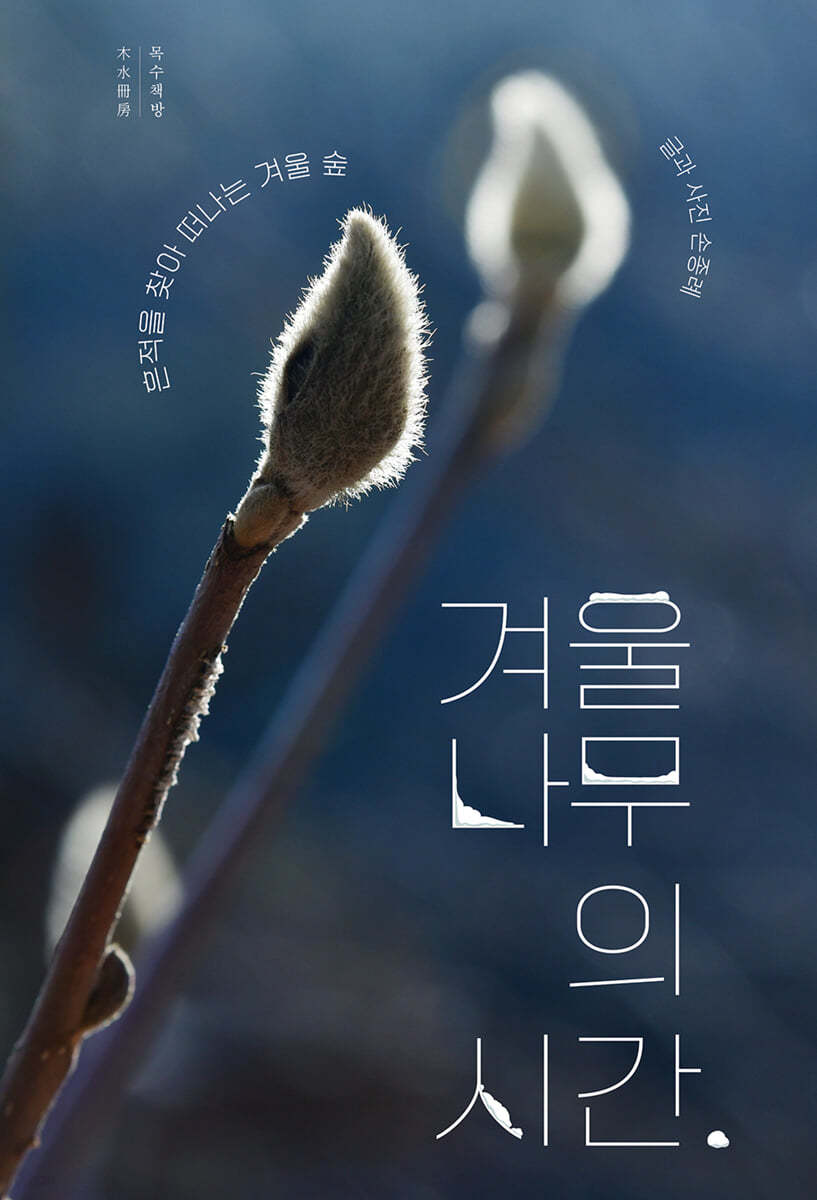
Winter Tree Time
 |
Description
Book Introduction
From how to identify trees in winter to the survival strategies trees employ to survive the cold winter.
This book guides you through a new perspective on winter trees and forests by following the traces of forest life that remain in the winter forest.
It covers 78 species of trees commonly found in the central region, and contains over 700 photographs of the winter buds as well as the moment when leaves, flowers, and branches begin to emerge from the winter buds, making it a great help to those studying winter trees and winter forests.
This book guides you through a new perspective on winter trees and forests by following the traces of forest life that remain in the winter forest.
It covers 78 species of trees commonly found in the central region, and contains over 700 photographs of the winter buds as well as the moment when leaves, flowers, and branches begin to emerge from the winter buds, making it a great help to those studying winter trees and winter forests.
- You can preview some of the book's contents.
Preview
index
Introduction: A Winter Forest in Search of Traces of Life
First Hour: Winter Forest, In Search of Hidden Beauty
Birth│Conception│Point│Line│Emptiness│Crevice│Warmth│Plan B│Circle│Accompanying
Second Hour: Looking at Winter Trees
Tree strategies to prepare for the next year and brace for the cold
Winter buds, fallen leaves, acclimatization, draining water, filling with sugar
How to take a closer look at winter trees
Shape│Bark│Bark buds│Branch outgrowth│1-year-old branches│Twigs and rhizomes│Traces│Color│Hair│Thorns│Tendilles│Winter buds
Third Hour: Forest of Comfort - Starting from Chilbosan Mountain, the mountain behind the village.
A ray of light beckoning us into the forest
Wisteria│Hazelnut│Cuddish│Redheaded pine│Chestnut│Bean pear│Horse-leafed horse chestnut│Magnolia│Peach tree│Dogwood│Rigida pine│Acacia tree│Red rose│Panthera japonica│Ceramium japonica│Oak tree│Red tree│Siberian vine│Sterling poison oak│Azalea│Water alder│Spiral tree│Ginger tree│Treasures of the forest
Fourth Hour: Forest of Coexistence - Encountering the Traces of Life Left by Trees on Mt. Surisan
A sky path created by trees living together through compromise, consideration, and respect.
Pungge tree│Snowbush tree│Wood and woody plant│Piso phenomenon│Traditional hazelnut│Bat tree│Sweet tree│Magpie tree│Gorosoe tree│Korean pine│Jangsuongdal spring│Apricot tree│Olive tree│Quercus chinensis│Quercus mume│Quercus japonica│Elm│Pine tree│Pine tree│Citrus chinensis│Citrus chinensis│Quercus chinensis│Oriental raisin tree│Sandberry tree│Pine tree
Fifth Hour: Forest of Companions - Climbing Bukhansan's Peak Together
People entering the forest to see winter trees
Forest clothes│Bottleflower│Ceramium chinensis│Sweet pine│Pine tree│Pine tree│Actina│Pepper tree│Stingthorn beech│Golden ash tree│Water alder│Small camellia│Plum blossom tree│When hiking is difficult│Azure beech│Mongolian oak│Azalea│Wakame tree│Elephant rock│Yeongbong│Thorn beech│Celamus officinalis│Pine tree│Road to descent│Insubong│Study of winter trees
Sixth Hour: Forest of Encounters - Walking Along the "Sangyeol" of Bukhansan Mountain
Winter trees that create 'sangyeol'
Ash tree│Hawthorn│Edgeleaf clover│Hairy ash tree│Evening ash tree│Raw mountain ash│Wild cherry tree│Evergreen vs. deciduous tree│Oak tree│Quercus serrata│Free-growing and fixed-growing│Song of the winter forest│Domestic dogwood│Purple crocus│Hiking on a snowy day│Tropical maple│Alder tree│Guelder tree│Chinese maple and Negundo maple│Insubong and Mangyongdae│Acer palmatum│Black woodpecker│Sweet maple│Edgeleaf ash│Wild cherry tree│Baekundae
Seventh Hour: Winter Snow Meets the Wind and Becomes Spring
The wind that awakens winter snow
Flower buds wake up first
Ginger tree│Azalea│Hazel tree│Currantia│Water alder
Unfold the leaves as seen with the naked eye
Maple tree│Pine tree│Camellia japonica
Look at the chin leaf again
Ash tree│Olive tree│Sweet maple│Magnolia│Japanese magnolia│Snow maple│Tree of life
When the scales open, buds sprout and flowers bloom.
Bat tree│Eulalia│Elm│Rowa│Oak│Acacia│Masqueflower│Rosewood│Rosewood│Dogwood│Aralia│Quercus│Quercus│Wildflower│Ginkgo
First Hour: Winter Forest, In Search of Hidden Beauty
Birth│Conception│Point│Line│Emptiness│Crevice│Warmth│Plan B│Circle│Accompanying
Second Hour: Looking at Winter Trees
Tree strategies to prepare for the next year and brace for the cold
Winter buds, fallen leaves, acclimatization, draining water, filling with sugar
How to take a closer look at winter trees
Shape│Bark│Bark buds│Branch outgrowth│1-year-old branches│Twigs and rhizomes│Traces│Color│Hair│Thorns│Tendilles│Winter buds
Third Hour: Forest of Comfort - Starting from Chilbosan Mountain, the mountain behind the village.
A ray of light beckoning us into the forest
Wisteria│Hazelnut│Cuddish│Redheaded pine│Chestnut│Bean pear│Horse-leafed horse chestnut│Magnolia│Peach tree│Dogwood│Rigida pine│Acacia tree│Red rose│Panthera japonica│Ceramium japonica│Oak tree│Red tree│Siberian vine│Sterling poison oak│Azalea│Water alder│Spiral tree│Ginger tree│Treasures of the forest
Fourth Hour: Forest of Coexistence - Encountering the Traces of Life Left by Trees on Mt. Surisan
A sky path created by trees living together through compromise, consideration, and respect.
Pungge tree│Snowbush tree│Wood and woody plant│Piso phenomenon│Traditional hazelnut│Bat tree│Sweet tree│Magpie tree│Gorosoe tree│Korean pine│Jangsuongdal spring│Apricot tree│Olive tree│Quercus chinensis│Quercus mume│Quercus japonica│Elm│Pine tree│Pine tree│Citrus chinensis│Citrus chinensis│Quercus chinensis│Oriental raisin tree│Sandberry tree│Pine tree
Fifth Hour: Forest of Companions - Climbing Bukhansan's Peak Together
People entering the forest to see winter trees
Forest clothes│Bottleflower│Ceramium chinensis│Sweet pine│Pine tree│Pine tree│Actina│Pepper tree│Stingthorn beech│Golden ash tree│Water alder│Small camellia│Plum blossom tree│When hiking is difficult│Azure beech│Mongolian oak│Azalea│Wakame tree│Elephant rock│Yeongbong│Thorn beech│Celamus officinalis│Pine tree│Road to descent│Insubong│Study of winter trees
Sixth Hour: Forest of Encounters - Walking Along the "Sangyeol" of Bukhansan Mountain
Winter trees that create 'sangyeol'
Ash tree│Hawthorn│Edgeleaf clover│Hairy ash tree│Evening ash tree│Raw mountain ash│Wild cherry tree│Evergreen vs. deciduous tree│Oak tree│Quercus serrata│Free-growing and fixed-growing│Song of the winter forest│Domestic dogwood│Purple crocus│Hiking on a snowy day│Tropical maple│Alder tree│Guelder tree│Chinese maple and Negundo maple│Insubong and Mangyongdae│Acer palmatum│Black woodpecker│Sweet maple│Edgeleaf ash│Wild cherry tree│Baekundae
Seventh Hour: Winter Snow Meets the Wind and Becomes Spring
The wind that awakens winter snow
Flower buds wake up first
Ginger tree│Azalea│Hazel tree│Currantia│Water alder
Unfold the leaves as seen with the naked eye
Maple tree│Pine tree│Camellia japonica
Look at the chin leaf again
Ash tree│Olive tree│Sweet maple│Magnolia│Japanese magnolia│Snow maple│Tree of life
When the scales open, buds sprout and flowers bloom.
Bat tree│Eulalia│Elm│Rowa│Oak│Acacia│Masqueflower│Rosewood│Rosewood│Dogwood│Aralia│Quercus│Quercus│Wildflower│Ginkgo
Into the book
The round dots on the winter tree are winter buds that the tree has condensed for next year.
Winter snow is a world of its own.
This world is the beginning of a wriggling life.
The condensed points wait for the moment when they will spread out to become lines.
The branches that stretch out in spring feel lively.
The moist lines become long and hard, and throughout the year the tree bears leaves, flowers, and fruits.
And it will create new points as well.
The cracks in the ground created by the winter cold become a home for all living things that live underground.
The gaps are filled with air and water, allowing tree roots to grow and seeds to sprout.
Ants will use the gaps as passageways, earthworms will dig burrows here, and moles will make tunnels to catch and eat the earthworms there.
The winter cold creates a space of trial and life for all living things.
The acacia tree is the treasure hiding master.
The winter buds that the acacia tree has tightly hidden can only be found by carefully observing the first-year branches.
The place where winter buds are hidden is first protected by thick thorns standing guard on both sides.
Even if you look for it among the thorns, there are only traces of fallen leaves.
So where are the winter buds hidden? They're right there, right in the traces of fallen leaves.
If you look closely at the fallen leaves, you will see a slightly gaping gap, where the winter buds are likely resting safely, avoiding not only the winter cold but also animals that eat the winter buds.
The forest and nature are beautiful in all four seasons.
Each season has its own charms to discover, each with its own good reasons, but the winter forest in particular offers enlightenment and wisdom.
When the cold winter sun shines brightly outside, visit the forest, and look through the gaps in the forest to see the nature and the life that lives there. You can learn the wisdom of the winter trees that endure winter wisely.
Winter trees remind us of the importance of emptiness and rest.
The winter forest is always full of hope for the new spring, not trials.
Watching the winter buds of a Japanese maple unfold, one is struck by the tree's focus on reproduction and growth.
Before the cold has disappeared, as soon as the spring air begins to blow, the pistils are the first to emerge, and when the spring breeze blows in all directions and scatters the pollen here and there, the male inflorescences that were exposed in winter begin to droop and scatter the pollen.
Only when the pollen reaches the pistil and becomes pollinated, does the plant begin to produce leaves to create nutrients.
Leaves that can be an obstacle while the male flower is carrying pollen to the female flower come out after the reproductive process is complete, grow, and help with reproduction and growth.
Isn't this concentration of trees for reproduction and growth the greatest driving force that has enabled them to prosper over generations?
The shrubs and vines that grow at the edge of the forest are called 'forest clothes'.
Forest clothing protects the forest from the wind and prevents landslides when it rains heavily.
And it provides a natural community space for small animals and birds to hide from danger or for breeding and feeding.
Without the forest's clothing, the tall trees in the forest would easily fall in the wind, and the ecosystem would not be able to function properly.
Although it may seem like they are growing insignificantly, these small trees silently perform the role of 'forest clothing', giving the forest a stable form.
In winter forests, you can see the shape of tree trunks in particular in detail.
Although they are usually straight, you can also see crooked trees, and in the past, it was thought that such crooked trees grew naturally by twisting their bodies.
However, if you look closely at the way branches grow from winter buds, you will see that winter buds in the direction they should not grow do not sprout, and only buds in the direction the branches should grow do.
The crooked tree is the result of giving up tens or hundreds of winter buds.
As I look at the wise figure of a tree that boldly decides to give up what it should give up and continues on with its life, I reflect on my own foolishness and indecisiveness in holding on to what I should have thrown away.
Winter snow is a world of its own.
This world is the beginning of a wriggling life.
The condensed points wait for the moment when they will spread out to become lines.
The branches that stretch out in spring feel lively.
The moist lines become long and hard, and throughout the year the tree bears leaves, flowers, and fruits.
And it will create new points as well.
The cracks in the ground created by the winter cold become a home for all living things that live underground.
The gaps are filled with air and water, allowing tree roots to grow and seeds to sprout.
Ants will use the gaps as passageways, earthworms will dig burrows here, and moles will make tunnels to catch and eat the earthworms there.
The winter cold creates a space of trial and life for all living things.
The acacia tree is the treasure hiding master.
The winter buds that the acacia tree has tightly hidden can only be found by carefully observing the first-year branches.
The place where winter buds are hidden is first protected by thick thorns standing guard on both sides.
Even if you look for it among the thorns, there are only traces of fallen leaves.
So where are the winter buds hidden? They're right there, right in the traces of fallen leaves.
If you look closely at the fallen leaves, you will see a slightly gaping gap, where the winter buds are likely resting safely, avoiding not only the winter cold but also animals that eat the winter buds.
The forest and nature are beautiful in all four seasons.
Each season has its own charms to discover, each with its own good reasons, but the winter forest in particular offers enlightenment and wisdom.
When the cold winter sun shines brightly outside, visit the forest, and look through the gaps in the forest to see the nature and the life that lives there. You can learn the wisdom of the winter trees that endure winter wisely.
Winter trees remind us of the importance of emptiness and rest.
The winter forest is always full of hope for the new spring, not trials.
Watching the winter buds of a Japanese maple unfold, one is struck by the tree's focus on reproduction and growth.
Before the cold has disappeared, as soon as the spring air begins to blow, the pistils are the first to emerge, and when the spring breeze blows in all directions and scatters the pollen here and there, the male inflorescences that were exposed in winter begin to droop and scatter the pollen.
Only when the pollen reaches the pistil and becomes pollinated, does the plant begin to produce leaves to create nutrients.
Leaves that can be an obstacle while the male flower is carrying pollen to the female flower come out after the reproductive process is complete, grow, and help with reproduction and growth.
Isn't this concentration of trees for reproduction and growth the greatest driving force that has enabled them to prosper over generations?
The shrubs and vines that grow at the edge of the forest are called 'forest clothes'.
Forest clothing protects the forest from the wind and prevents landslides when it rains heavily.
And it provides a natural community space for small animals and birds to hide from danger or for breeding and feeding.
Without the forest's clothing, the tall trees in the forest would easily fall in the wind, and the ecosystem would not be able to function properly.
Although it may seem like they are growing insignificantly, these small trees silently perform the role of 'forest clothing', giving the forest a stable form.
In winter forests, you can see the shape of tree trunks in particular in detail.
Although they are usually straight, you can also see crooked trees, and in the past, it was thought that such crooked trees grew naturally by twisting their bodies.
However, if you look closely at the way branches grow from winter buds, you will see that winter buds in the direction they should not grow do not sprout, and only buds in the direction the branches should grow do.
The crooked tree is the result of giving up tens or hundreds of winter buds.
As I look at the wise figure of a tree that boldly decides to give up what it should give up and continues on with its life, I reflect on my own foolishness and indecisiveness in holding on to what I should have thrown away.
---From the text
Publisher's Review
In search of the small 'dot' that encapsulates the future of trees
The sight of light green shoots and round flower buds emerging from dry branches in spring is a wonder in itself.
It's hard to believe that all of this was contained within that tiny 'dot' at the end of a branch.
Just as a mother with a baby makes all kinds of plans for the future of her unborn child, the branches of a winter tree also endure the harsh season and prepare for the future of the tree step by step, in preparation for the buds that will awaken in spring.
Winter is the season when trees reveal their 'naked bodies'.
The tree, which has lost all its vigorous green leaves, the flowers that bloomed brilliantly and tempted pollinators, and the luscious fruits that contained the seeds for the next generation, has returned to its original state and has a time of 'pause' to prepare for the next year.
The forest stops growing and enters a period of emptiness for survival.
The winter tree, standing silently and seemingly dead, does not easily reveal who it is.
But if you look closely with just a little interest, you can find clear clues about what kind of tree this is.
These are the traces that winter snow and trees left on my body and around me.
It is often more inaccurate to try to identify a tree by looking at its flowers that bloom only for a very short time, its leaves that change a lot, or its stems and branches that change drastically depending on the environment.
Ironically, the tiny winter buds and the marks left behind by the trees provide more reliable clues for identifying the trees.
If you carefully observe the process of sprouting from winter buds, your perspective and view of trees will change, and you will be able to understand the life of trees more deeply.
A fresh look at winter trees and winter forests
This book is a record of the author's long observations of winter trees gathering their life force within the winter forest, and is a friendly guide that helps you look at winter trees and winter forests from a new perspective.
There are explanations about the ecological characteristics of trees, but it also carefully examines the beauty that can only be felt in winter forests that we are not familiar with, the meaning of the season called 'winter', and the meaning of the traces that forest life leaves in the winter forest.
In winter, the trees have emptied their foliage, allowing us to see deep into the forest.
In winter, the body of the tree and the surrounding trees become more clearly visible.
It is also easier to find traces of birds and small animals that are not easily seen in other seasons.
This is a joy that can only be enjoyed in the winter forest.
This is why those who love trees and forests should visit the forest in winter.
The book consists of a total of 7 chapters.
Chapter 1 tells the story of the beauty and hidden meaning of the winter forest using the keywords ‘mountain, conception, point, line, emptiness, gap, warmth, Plan B, circle, and companionship.’
Chapter 2 details the basics you need to know to observe winter trees, including the various strategies trees use to prepare for the cold and the various traces that can be found in winter buds and winter trees.
Chapter 3, “Forest of Comfort,” describes the winter appearance of 22 species of trees commonly found in the hills behind villages in the central region.
Chapter 4, 'Forest of Coexistence,' tells the story of 19 types of trees that can be seen on Mt. Suri, Chapter 5, 'Forest of Accompanying,' tells the story of 18 types of trees that can be encountered while climbing Mt. Bukhan's Yeongbong Peak, and Chapter 6, 'Forest of Encounter,' tells the story of 19 types of trees that can be observed while walking along the main ridge from Mt. Bukhan's Daeseongmun to Wimun.
As you follow the stories of the trees you discover on the hiking trails the author frequently visits, you will soon feel as if you are hiking along with the author while listening to his explanations.
Finally, Chapter 7 shows, through short texts and photographs, the process of a winter tree safely completing its resting period and sprouting and blooming in spring, allowing the reader to join in the author's wondrous experience.
It teaches us that the winter forest is not a place of trials and tribulations, but rather a place where the power of life is condensed, full of the hope of a new spring.
If you love trees and forests and enjoy visiting winter mountains, this book will help you recognize and greet various trees even in winter, allowing you to become even more immersed in the charm of winter and winter mountains.
The sight of light green shoots and round flower buds emerging from dry branches in spring is a wonder in itself.
It's hard to believe that all of this was contained within that tiny 'dot' at the end of a branch.
Just as a mother with a baby makes all kinds of plans for the future of her unborn child, the branches of a winter tree also endure the harsh season and prepare for the future of the tree step by step, in preparation for the buds that will awaken in spring.
Winter is the season when trees reveal their 'naked bodies'.
The tree, which has lost all its vigorous green leaves, the flowers that bloomed brilliantly and tempted pollinators, and the luscious fruits that contained the seeds for the next generation, has returned to its original state and has a time of 'pause' to prepare for the next year.
The forest stops growing and enters a period of emptiness for survival.
The winter tree, standing silently and seemingly dead, does not easily reveal who it is.
But if you look closely with just a little interest, you can find clear clues about what kind of tree this is.
These are the traces that winter snow and trees left on my body and around me.
It is often more inaccurate to try to identify a tree by looking at its flowers that bloom only for a very short time, its leaves that change a lot, or its stems and branches that change drastically depending on the environment.
Ironically, the tiny winter buds and the marks left behind by the trees provide more reliable clues for identifying the trees.
If you carefully observe the process of sprouting from winter buds, your perspective and view of trees will change, and you will be able to understand the life of trees more deeply.
A fresh look at winter trees and winter forests
This book is a record of the author's long observations of winter trees gathering their life force within the winter forest, and is a friendly guide that helps you look at winter trees and winter forests from a new perspective.
There are explanations about the ecological characteristics of trees, but it also carefully examines the beauty that can only be felt in winter forests that we are not familiar with, the meaning of the season called 'winter', and the meaning of the traces that forest life leaves in the winter forest.
In winter, the trees have emptied their foliage, allowing us to see deep into the forest.
In winter, the body of the tree and the surrounding trees become more clearly visible.
It is also easier to find traces of birds and small animals that are not easily seen in other seasons.
This is a joy that can only be enjoyed in the winter forest.
This is why those who love trees and forests should visit the forest in winter.
The book consists of a total of 7 chapters.
Chapter 1 tells the story of the beauty and hidden meaning of the winter forest using the keywords ‘mountain, conception, point, line, emptiness, gap, warmth, Plan B, circle, and companionship.’
Chapter 2 details the basics you need to know to observe winter trees, including the various strategies trees use to prepare for the cold and the various traces that can be found in winter buds and winter trees.
Chapter 3, “Forest of Comfort,” describes the winter appearance of 22 species of trees commonly found in the hills behind villages in the central region.
Chapter 4, 'Forest of Coexistence,' tells the story of 19 types of trees that can be seen on Mt. Suri, Chapter 5, 'Forest of Accompanying,' tells the story of 18 types of trees that can be encountered while climbing Mt. Bukhan's Yeongbong Peak, and Chapter 6, 'Forest of Encounter,' tells the story of 19 types of trees that can be observed while walking along the main ridge from Mt. Bukhan's Daeseongmun to Wimun.
As you follow the stories of the trees you discover on the hiking trails the author frequently visits, you will soon feel as if you are hiking along with the author while listening to his explanations.
Finally, Chapter 7 shows, through short texts and photographs, the process of a winter tree safely completing its resting period and sprouting and blooming in spring, allowing the reader to join in the author's wondrous experience.
It teaches us that the winter forest is not a place of trials and tribulations, but rather a place where the power of life is condensed, full of the hope of a new spring.
If you love trees and forests and enjoy visiting winter mountains, this book will help you recognize and greet various trees even in winter, allowing you to become even more immersed in the charm of winter and winter mountains.
GOODS SPECIFICS
- Publication date: December 30, 2022
- Page count, weight, size: 400 pages | 730g | 152*223*30mm
- ISBN13: 9791188806379
- ISBN10: 1188806378
You may also like
카테고리
korean


korean

![GQ KOREA Mark (Monthly): December [2025]](http://librairie.coreenne.fr/cdn/shop/files/8ef265dbbfbf186523ed75ba7319009d.jpg?v=1765340328&width=3840)


