

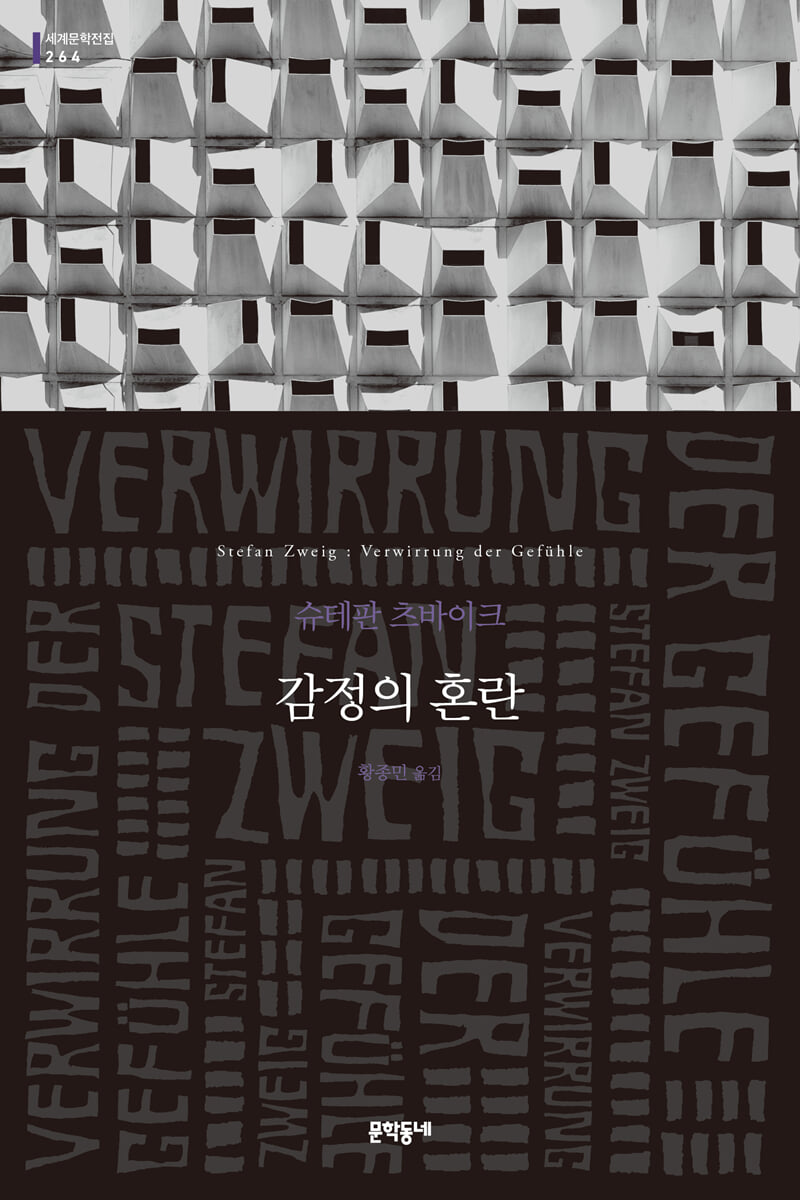
emotional turmoil
 |
Description
Book Introduction
A true archaeologist of the human soul and a master of psychological description.
A representative collection of short stories considered to be Zweig's "masterpieces"
Stefan Zweig, an Austrian Jewish writer whose works were widely read and translated in Europe in the 1920s and 1930s, was recognized for both their artistic quality and popularity.
He was a novelist who simultaneously entertained and moved people with his detailed and sophisticated psychological descriptions of the inner world and desires of his characters and his sweeping narratives. He was also famous during his lifetime for writing biographies of historical figures such as Marie Antoinette and Mary Stuart, as well as biographies of Balzac and Nietzsche.
Having experienced World War I, he was horrified by the decline of the European spirit and the destructive impulses of civilized humans. He fled Nazi persecution and lived in exile, traveling between Britain, the United States, and Brazil. Ultimately, unable to bear the frustrations of his time, he took his own life with his wife.
But as Salman Rushdie said, “the era of forgetting Zweig is over for good.”
Today, he is revered as a writer by masters such as Freud, Thomas Mann, Maxim Gorky, John Fowles, Salman Rushdie, and Wes Anderson, and has established himself as an immortal writer who, as an “archaeologist of the human soul,” has better than anyone else embodied the three-dimensional diversity of characters who are driven by desire.
Following the Munhakdongne World Literature Collection's "Chess Story? Letter from a Strange Woman," this second collection of Zweig's short stories, "Confusion of Emotions," includes four representative medium-length novellas considered "masterpieces."
★ Le Monde's '100 Best Books of the 20th Century'
A representative collection of short stories considered to be Zweig's "masterpieces"
Stefan Zweig, an Austrian Jewish writer whose works were widely read and translated in Europe in the 1920s and 1930s, was recognized for both their artistic quality and popularity.
He was a novelist who simultaneously entertained and moved people with his detailed and sophisticated psychological descriptions of the inner world and desires of his characters and his sweeping narratives. He was also famous during his lifetime for writing biographies of historical figures such as Marie Antoinette and Mary Stuart, as well as biographies of Balzac and Nietzsche.
Having experienced World War I, he was horrified by the decline of the European spirit and the destructive impulses of civilized humans. He fled Nazi persecution and lived in exile, traveling between Britain, the United States, and Brazil. Ultimately, unable to bear the frustrations of his time, he took his own life with his wife.
But as Salman Rushdie said, “the era of forgetting Zweig is over for good.”
Today, he is revered as a writer by masters such as Freud, Thomas Mann, Maxim Gorky, John Fowles, Salman Rushdie, and Wes Anderson, and has established himself as an immortal writer who, as an “archaeologist of the human soul,” has better than anyone else embodied the three-dimensional diversity of characters who are driven by desire.
Following the Munhakdongne World Literature Collection's "Chess Story? Letter from a Strange Woman," this second collection of Zweig's short stories, "Confusion of Emotions," includes four representative medium-length novellas considered "masterpieces."
★ Le Monde's '100 Best Books of the 20th Century'
- You can preview some of the book's contents.
Preview
index
Burning Secret 7
Amok Madman 109
Twenty-Four Hours in a Woman's Life 191
Emotional Confusion 275
Commentary | The Mystery of Human Psychology 391
Stefan Zweig Chronology 405
Amok Madman 109
Twenty-Four Hours in a Woman's Life 191
Emotional Confusion 275
Commentary | The Mystery of Human Psychology 391
Stefan Zweig Chronology 405
Detailed image

Into the book
The young man knew that just as a match needs a friction surface to light, he needed people to light his talents, his heart's kindness and enthusiasm, and that if he were left alone like a matchstick in a matchbox, he would become cold and useless.
--- pp.10-11 From "Burning Secret"
Nothing sharpens the intellect like a burning suspicion, and nothing awakens the child's immature reasoning like the footsteps of a prey lurking in the darkness.
Sometimes, what separates a child from the world, the so-called real world, is nothing more than a shallow door, which swings open even in the slightest gust of wind.
--- p.48
As I first sensed the diversity of life, I realized for the first time in my life the nature of humanity, that even when people seem to be enemies, they need each other, and that it is incredibly sweet to be loved by another.
The boy could not bear hatred for anything or anyone, he regretted nothing, and even to the baron, his lustful and sworn enemy, he felt a renewed gratitude for having opened the door to a world of emotions he had never tasted before.
--- p.106
I've never given my all in my life like I did then, and I never will again.
When everyone loses everything, they fight desperately to keep what they have left - and that last thing was the woman's will.
It was a woman's secret.
--- p.175 From "Amok Madman"
But I am still alive here… … I will follow the woman until the very end… … The husband, the husband must never know about it… … No matter what tricks the husband uses, I will protect the woman’s secret… … The woman died trying to escape this villain… … The husband will never find out anything, nothing… … The woman’s secret is mine.
It's mine alone...
--- p.185
The more my emotions became dulled, the more I was drawn to the place where the spinning top of life spun the fastest.
For those who cannot experience anything, the passionate commotion of others stimulates their nerves like a play or music.
--- p.211 From “Twenty-Four Hours of a Woman’s Life”
If you look at these hands, at the way they wait and hold and stop, you can tell a whole personality.
Greed in clenched hands, wastefulness in loose hands, calculation in calm wrists, and despair in trembling wrists.
--- p.213
Having lived for twenty years away from all the world's demonic powers, I never would have realized how wonderfully and strangely nature can sometimes combine passion and coolness, life and death, ecstasy and despair in a few gasping breaths.
--- p.236
The meticulously compiled index lists no fewer than two hundred names - but it leaves out the name of one man, the source of all creative impulses.
The name of the man who shaped my destiny and whose memory of my youth is now doubly vivid is missing.
I suddenly feel guilty for having cowardly kept this man hidden, for although everyone else is mentioned, the man who taught me to speak and breathed life into my words is not mentioned.
--- p.279 From "Confusion of Emotions"
Young people, in this day and age, the world's most energetic youth is at work.
To perceive any phenomenon or any human being, one must examine only their fiery form, their passion.
All spirit springs from blood, all thought from passion, all passion from enthusiasm - so look first to Shakespeare and his contemporaries.
These are the things that will truly rejuvenate you, young people! Passion comes first, effort comes second.
--- p.295
Nothing stirs and awakens the interest of young people more than a game that engages their nerves and allows them to indulge in vague speculation.
When prey suddenly appears in the midst of your leisurely daydreams, you become anxious and want to chase it stealthily.
At that time, a completely new sense developed in me, who had been a dull youth until then.
A sensitive eardrum that listens secretly without missing a single tone, a gaze that prys with the fierceness of a hunter, full of suspicion, and a curiosity that searches all around and delves into the darkness.
--- p.320
If the teacher had initially captivated me, a stranger to him, with the brilliance of his language, which erupted like an active volcano, now that I was familiar with him, he had left me heartbroken with his silence, with the cloud of sadness hovering over his forehead.
Nothing stirs the emotions of youth so much as the excellence of a noble man.
--- p.321
Even today, when I'm in the middle of a lecture and my eloquence explodes and resonates, I suddenly feel embarrassed that it's someone else speaking through my passionate mouth.
At such times, I realize that it is the voice of the deceased I respect, the deceased who breathes only through my lips, and every time I soar in excitement, I transform into a teacher.
As I know very well, the person I am today was born during that time.
--- p.331
This voice in the darkness, this voice in the darkness, how deeply I felt this voice pierce into my heart! It had a resonance I had never heard before, or even since—a resonance bursting from an abyss unfathomable to those whose fates are ordinary.
--- pp.10-11 From "Burning Secret"
Nothing sharpens the intellect like a burning suspicion, and nothing awakens the child's immature reasoning like the footsteps of a prey lurking in the darkness.
Sometimes, what separates a child from the world, the so-called real world, is nothing more than a shallow door, which swings open even in the slightest gust of wind.
--- p.48
As I first sensed the diversity of life, I realized for the first time in my life the nature of humanity, that even when people seem to be enemies, they need each other, and that it is incredibly sweet to be loved by another.
The boy could not bear hatred for anything or anyone, he regretted nothing, and even to the baron, his lustful and sworn enemy, he felt a renewed gratitude for having opened the door to a world of emotions he had never tasted before.
--- p.106
I've never given my all in my life like I did then, and I never will again.
When everyone loses everything, they fight desperately to keep what they have left - and that last thing was the woman's will.
It was a woman's secret.
--- p.175 From "Amok Madman"
But I am still alive here… … I will follow the woman until the very end… … The husband, the husband must never know about it… … No matter what tricks the husband uses, I will protect the woman’s secret… … The woman died trying to escape this villain… … The husband will never find out anything, nothing… … The woman’s secret is mine.
It's mine alone...
--- p.185
The more my emotions became dulled, the more I was drawn to the place where the spinning top of life spun the fastest.
For those who cannot experience anything, the passionate commotion of others stimulates their nerves like a play or music.
--- p.211 From “Twenty-Four Hours of a Woman’s Life”
If you look at these hands, at the way they wait and hold and stop, you can tell a whole personality.
Greed in clenched hands, wastefulness in loose hands, calculation in calm wrists, and despair in trembling wrists.
--- p.213
Having lived for twenty years away from all the world's demonic powers, I never would have realized how wonderfully and strangely nature can sometimes combine passion and coolness, life and death, ecstasy and despair in a few gasping breaths.
--- p.236
The meticulously compiled index lists no fewer than two hundred names - but it leaves out the name of one man, the source of all creative impulses.
The name of the man who shaped my destiny and whose memory of my youth is now doubly vivid is missing.
I suddenly feel guilty for having cowardly kept this man hidden, for although everyone else is mentioned, the man who taught me to speak and breathed life into my words is not mentioned.
--- p.279 From "Confusion of Emotions"
Young people, in this day and age, the world's most energetic youth is at work.
To perceive any phenomenon or any human being, one must examine only their fiery form, their passion.
All spirit springs from blood, all thought from passion, all passion from enthusiasm - so look first to Shakespeare and his contemporaries.
These are the things that will truly rejuvenate you, young people! Passion comes first, effort comes second.
--- p.295
Nothing stirs and awakens the interest of young people more than a game that engages their nerves and allows them to indulge in vague speculation.
When prey suddenly appears in the midst of your leisurely daydreams, you become anxious and want to chase it stealthily.
At that time, a completely new sense developed in me, who had been a dull youth until then.
A sensitive eardrum that listens secretly without missing a single tone, a gaze that prys with the fierceness of a hunter, full of suspicion, and a curiosity that searches all around and delves into the darkness.
--- p.320
If the teacher had initially captivated me, a stranger to him, with the brilliance of his language, which erupted like an active volcano, now that I was familiar with him, he had left me heartbroken with his silence, with the cloud of sadness hovering over his forehead.
Nothing stirs the emotions of youth so much as the excellence of a noble man.
--- p.321
Even today, when I'm in the middle of a lecture and my eloquence explodes and resonates, I suddenly feel embarrassed that it's someone else speaking through my passionate mouth.
At such times, I realize that it is the voice of the deceased I respect, the deceased who breathes only through my lips, and every time I soar in excitement, I transform into a teacher.
As I know very well, the person I am today was born during that time.
--- p.331
This voice in the darkness, this voice in the darkness, how deeply I felt this voice pierce into my heart! It had a resonance I had never heard before, or even since—a resonance bursting from an abyss unfathomable to those whose fates are ordinary.
--- pp.386-387
Publisher's Review
A true archaeologist of the human soul and a master of psychological description.
A representative collection of short stories considered to be Zweig's "masterpieces"
Stefan Zweig, an Austrian Jewish writer whose works were widely read and translated in Europe in the 1920s and 1930s, was recognized for both their artistic quality and popularity.
He was a novelist who simultaneously entertained and moved people with his detailed and sophisticated psychological descriptions of the inner world and desires of his characters and his sweeping narratives. He was also famous during his lifetime for writing biographies of historical figures such as Marie Antoinette and Mary Stuart, as well as biographies of Balzac and Nietzsche.
Having experienced World War I, he was horrified by the decline of the European spirit and the destructive impulses of civilized humans. He fled Nazi persecution and lived in exile, traveling between Britain, the United States, and Brazil. Ultimately, unable to bear the frustrations of his time, he took his own life with his wife.
But as Salman Rushdie said, “the era of forgetting Zweig is over for good.”
Today, he is revered as a writer by masters such as Freud, Thomas Mann, Maxim Gorky, John Fowles, Salman Rushdie, and Wes Anderson, and has established himself as an immortal writer who, as an “archaeologist of the human soul,” has better than anyone else embodied the three-dimensional diversity of characters who are driven by desire.
Following the Munhakdongne World Literature Collection's "Chess Story and Letter from a Strange Woman," this second collection of Zweig's short stories, "Confusion of Emotions," includes four representative medium-length novellas considered "masterpieces."
★ Le Monde's '100 Best Books of the 20th Century'
Four highly accomplished masterpieces published during his lifetime, revealing the truth contained in the abyss of human desire.
Before the Nazis came to power, and before his books were banned and he suffered as a Jewish writer, Zweig, then the world's most famous writer, published four novellas.
This collection of world literature, 『Confusion of Emotions』, is a collection of four carefully selected short stories from volumes 2 to 4 of the series.
These short stories showcase the true essence of Zweig's literature, a master of psychological novels that delves into the truth hidden within the inner self of a driven human being.
Not only are the works hailed as "masterpieces" that allow readers to experience a variety of themes, including growing pains, madness and passion, guilt and obsession, and homosexuality, in a three-dimensional way, but translator Hwang Jong-min, winner of the German-Korean Literature Translation Award, has also enhanced the immersion of readers by allowing readers to enter a realistic emotional world through his delicate and elegant translation.
The first, "Burning Secret," was included in the two-volume collection "First Experiences - Four Childhood Stories" (1911), which deals with the experience of awakening to Eros in childhood.
When it was first published, it was also published as a separate volume and sold hundreds of thousands of copies.
This novel deals with the psychological warfare that unfolds between an Austrian baron who visits a provincial hotel for vacation, a beautiful noblewoman he approaches to seduce, and her son.
Edgar, a twelve-year-old boy who stays at a hotel with his mother while she is recovering from illness, feels great admiration and passion for the baron who approaches him out of kindness despite his illness and isolation.
However, he soon feels betrayed and angry when he discovers that the playboy baron has been strategically using him to get close to his mother and that there is a suspicious relationship between the mother and the baron.
This masterpiece delicately and tensely depicts the growing pains of a boy who takes a step into the world of secret desires of adults, steeped in deception and hypocrisy.
The second, "Amoq Madman," is a short story included in the three-volume "Amoq - Novels of Passion" (1922), which depicts the desires of middle-aged humans.
Amok is a term that used to refer to a mad fever that once raged in tropical Malay cultures, and it refers to the fatal, morbid state of mania that the German doctor in this novel falls into.
The narrator, a traveler, meets a German doctor who is hiding from people on a ship from India to Europe and hears his story.
This German doctor, who was working in an isolated colony, confesses that one day, when an upper-class white woman came to him and arrogantly demanded an abortion, he projected all of his suppressed, twisted desires onto this high-handed woman. He watched the woman, who had rejected him and left him, die of an infection while receiving an illegal procedure elsewhere. He forged the woman's cause of death to protect her honor so that neither her husband nor the world would know about this, and ended up being loaded onto this ship with her coffin.
He portrays, in a powerful style, a human being who, blinded by an inexplicable impulse of the past, is consumed by a rage of guilt and maddening remorse for his past mistakes, and rushes breathlessly toward self-destruction.
The third, "Twenty-Four Hours of a Woman's Life" and the fourth, "Confusion of Feelings" were included in the four-volume "Confusion of Feelings - Three Novelles" (1927), a collection of works in which the author reminisces about past passions in the twilight of life, and were praised as "masterpieces" by literary critics including Freud and Gorky.
"Twenty-Four Hours in a Woman's Life" centers on the narrative of an elderly British woman who recalls the turbulent emotions of the past in which she was once impulsively swept up.
The story begins with a bickering between seven guests gathered at an inn about the midnight escape of the hotel owner's wife and a sly young man staying there.
Then, by chance, I, the speaker, hear a story from the past from an old British woman who was silently observing the crowd.
After losing her husband at the age of forty, she lost her passion for life and was wandering. By chance, she saw a young man who was devoting all his energy to gambling at roulette. She was captivated by his passion and spent a night with him, consumed by uncontrollable impulses, a night of ecstasy and despair.
It subtly and passionately portrays that what humans truly need to examine is not the moral conventions of an era, but rather the unconscious passions and freedom that grips their inner selves.
It has been adapted into films nine times since 1931, and even inspired Wes Anderson's 2014 film The Grand Budapest Hotel.
The fourth, "Confusion of Emotions," is the story of a sixtieth-century English literature professor who reminisces about his college teacher and confesses a long-hidden, confusing truth about his inner self: his belated love for his teacher.
I had turned my back on the boring world of academia and was living a dissolute life, but an unexpected visit from my father brought me back to my senses and I enrolled in a rural college.
There, he is completely captivated by the passionate lecture of a professor who happens to be lecturing on Shakespeare, and he quickly becomes close to his teacher. However, in the midst of his burning passion for learning, he falls into an inexplicable confusion due to his teacher's sometimes unpredictable attitude.
Then, at an unexpected moment, he has an inappropriate relationship with the professor's young wife, and when his teacher confesses his love to him, he runs away from the place in a state of endless guilt and embarrassment.
This masterpiece shows the pinnacle of Zweig's style, delving into the inner world of desire, seething with bloody sensuality and spiritual passion.
Zweig, the novelist who best portrayed the various faces of desire writhing in the abyss of humanity and the enigmatic winks of the unconscious as the true truth of life in each moment, was a writer who could not hastily pin his hopes on the future of humanity that would come after the war, but who illuminated the vibrant inner self of humanity more than anyone else and did not hesitate to sway together in the midst of that turbulent life.
A representative collection of short stories considered to be Zweig's "masterpieces"
Stefan Zweig, an Austrian Jewish writer whose works were widely read and translated in Europe in the 1920s and 1930s, was recognized for both their artistic quality and popularity.
He was a novelist who simultaneously entertained and moved people with his detailed and sophisticated psychological descriptions of the inner world and desires of his characters and his sweeping narratives. He was also famous during his lifetime for writing biographies of historical figures such as Marie Antoinette and Mary Stuart, as well as biographies of Balzac and Nietzsche.
Having experienced World War I, he was horrified by the decline of the European spirit and the destructive impulses of civilized humans. He fled Nazi persecution and lived in exile, traveling between Britain, the United States, and Brazil. Ultimately, unable to bear the frustrations of his time, he took his own life with his wife.
But as Salman Rushdie said, “the era of forgetting Zweig is over for good.”
Today, he is revered as a writer by masters such as Freud, Thomas Mann, Maxim Gorky, John Fowles, Salman Rushdie, and Wes Anderson, and has established himself as an immortal writer who, as an “archaeologist of the human soul,” has better than anyone else embodied the three-dimensional diversity of characters who are driven by desire.
Following the Munhakdongne World Literature Collection's "Chess Story and Letter from a Strange Woman," this second collection of Zweig's short stories, "Confusion of Emotions," includes four representative medium-length novellas considered "masterpieces."
★ Le Monde's '100 Best Books of the 20th Century'
Four highly accomplished masterpieces published during his lifetime, revealing the truth contained in the abyss of human desire.
Before the Nazis came to power, and before his books were banned and he suffered as a Jewish writer, Zweig, then the world's most famous writer, published four novellas.
This collection of world literature, 『Confusion of Emotions』, is a collection of four carefully selected short stories from volumes 2 to 4 of the series.
These short stories showcase the true essence of Zweig's literature, a master of psychological novels that delves into the truth hidden within the inner self of a driven human being.
Not only are the works hailed as "masterpieces" that allow readers to experience a variety of themes, including growing pains, madness and passion, guilt and obsession, and homosexuality, in a three-dimensional way, but translator Hwang Jong-min, winner of the German-Korean Literature Translation Award, has also enhanced the immersion of readers by allowing readers to enter a realistic emotional world through his delicate and elegant translation.
The first, "Burning Secret," was included in the two-volume collection "First Experiences - Four Childhood Stories" (1911), which deals with the experience of awakening to Eros in childhood.
When it was first published, it was also published as a separate volume and sold hundreds of thousands of copies.
This novel deals with the psychological warfare that unfolds between an Austrian baron who visits a provincial hotel for vacation, a beautiful noblewoman he approaches to seduce, and her son.
Edgar, a twelve-year-old boy who stays at a hotel with his mother while she is recovering from illness, feels great admiration and passion for the baron who approaches him out of kindness despite his illness and isolation.
However, he soon feels betrayed and angry when he discovers that the playboy baron has been strategically using him to get close to his mother and that there is a suspicious relationship between the mother and the baron.
This masterpiece delicately and tensely depicts the growing pains of a boy who takes a step into the world of secret desires of adults, steeped in deception and hypocrisy.
The second, "Amoq Madman," is a short story included in the three-volume "Amoq - Novels of Passion" (1922), which depicts the desires of middle-aged humans.
Amok is a term that used to refer to a mad fever that once raged in tropical Malay cultures, and it refers to the fatal, morbid state of mania that the German doctor in this novel falls into.
The narrator, a traveler, meets a German doctor who is hiding from people on a ship from India to Europe and hears his story.
This German doctor, who was working in an isolated colony, confesses that one day, when an upper-class white woman came to him and arrogantly demanded an abortion, he projected all of his suppressed, twisted desires onto this high-handed woman. He watched the woman, who had rejected him and left him, die of an infection while receiving an illegal procedure elsewhere. He forged the woman's cause of death to protect her honor so that neither her husband nor the world would know about this, and ended up being loaded onto this ship with her coffin.
He portrays, in a powerful style, a human being who, blinded by an inexplicable impulse of the past, is consumed by a rage of guilt and maddening remorse for his past mistakes, and rushes breathlessly toward self-destruction.
The third, "Twenty-Four Hours of a Woman's Life" and the fourth, "Confusion of Feelings" were included in the four-volume "Confusion of Feelings - Three Novelles" (1927), a collection of works in which the author reminisces about past passions in the twilight of life, and were praised as "masterpieces" by literary critics including Freud and Gorky.
"Twenty-Four Hours in a Woman's Life" centers on the narrative of an elderly British woman who recalls the turbulent emotions of the past in which she was once impulsively swept up.
The story begins with a bickering between seven guests gathered at an inn about the midnight escape of the hotel owner's wife and a sly young man staying there.
Then, by chance, I, the speaker, hear a story from the past from an old British woman who was silently observing the crowd.
After losing her husband at the age of forty, she lost her passion for life and was wandering. By chance, she saw a young man who was devoting all his energy to gambling at roulette. She was captivated by his passion and spent a night with him, consumed by uncontrollable impulses, a night of ecstasy and despair.
It subtly and passionately portrays that what humans truly need to examine is not the moral conventions of an era, but rather the unconscious passions and freedom that grips their inner selves.
It has been adapted into films nine times since 1931, and even inspired Wes Anderson's 2014 film The Grand Budapest Hotel.
The fourth, "Confusion of Emotions," is the story of a sixtieth-century English literature professor who reminisces about his college teacher and confesses a long-hidden, confusing truth about his inner self: his belated love for his teacher.
I had turned my back on the boring world of academia and was living a dissolute life, but an unexpected visit from my father brought me back to my senses and I enrolled in a rural college.
There, he is completely captivated by the passionate lecture of a professor who happens to be lecturing on Shakespeare, and he quickly becomes close to his teacher. However, in the midst of his burning passion for learning, he falls into an inexplicable confusion due to his teacher's sometimes unpredictable attitude.
Then, at an unexpected moment, he has an inappropriate relationship with the professor's young wife, and when his teacher confesses his love to him, he runs away from the place in a state of endless guilt and embarrassment.
This masterpiece shows the pinnacle of Zweig's style, delving into the inner world of desire, seething with bloody sensuality and spiritual passion.
Zweig, the novelist who best portrayed the various faces of desire writhing in the abyss of humanity and the enigmatic winks of the unconscious as the true truth of life in each moment, was a writer who could not hastily pin his hopes on the future of humanity that would come after the war, but who illuminated the vibrant inner self of humanity more than anyone else and did not hesitate to sway together in the midst of that turbulent life.
GOODS SPECIFICS
- Date of issue: July 25, 2025
- Page count, weight, size: 420 pages | 534g | 140*210*22mm
- ISBN13: 9791141611217
- ISBN10: 114161121X
You may also like
카테고리
korean


korean

![ELLE 엘르 스페셜 에디션 A형 : 12월 [2025]](http://librairie.coreenne.fr/cdn/shop/files/b8e27a3de6c9538896439686c6b0e8fb.jpg?v=1766436872&width=3840)


