

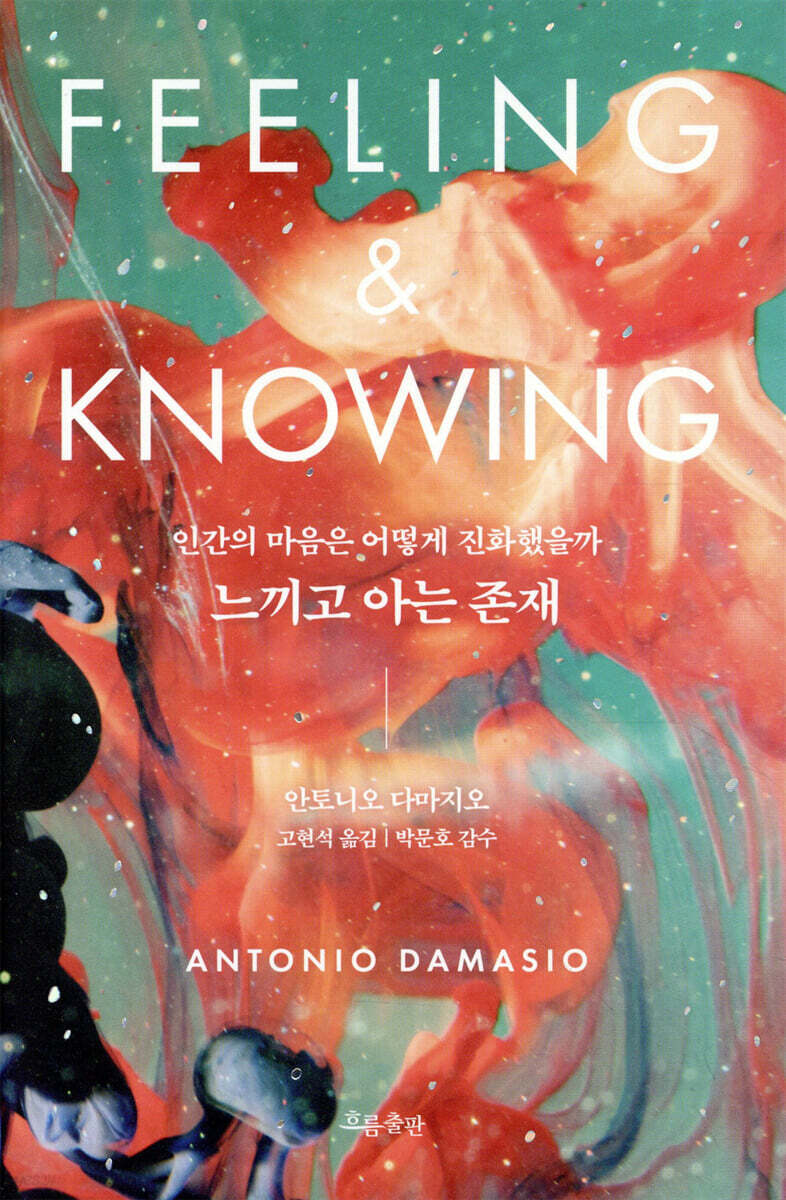
A being that feels and knows
 |
Description
Book Introduction
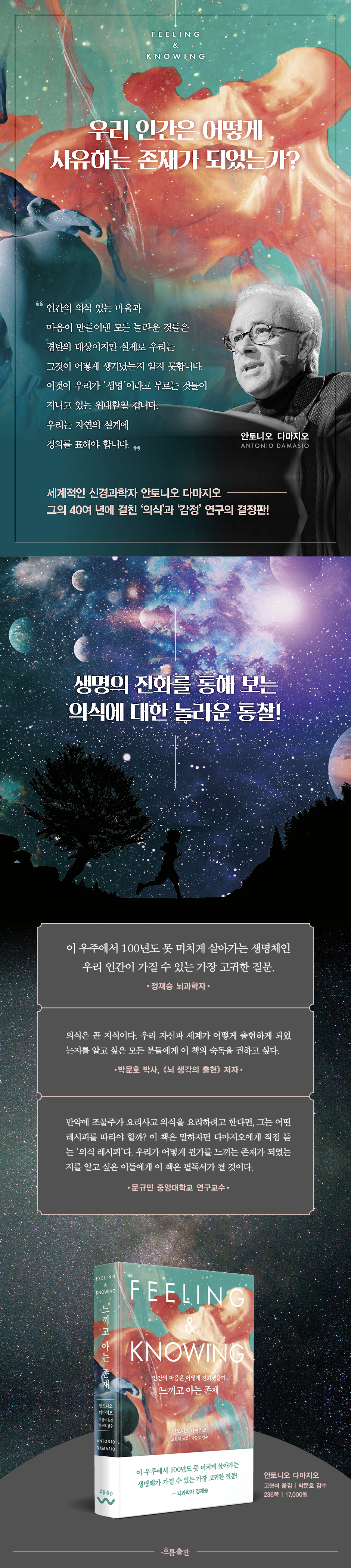
Antonio Damasio, a world-renowned neuroscientist,
The culmination of his 40 years of research on 'emotion and consciousness'!
Antonio Damasio is a leading neurobiologist recognized worldwide for his research on human emotions and feelings.
He studied the influence of human 'emotions' and 'feelings' on decision-making and the role they play in forming the self, and he considered that the human mind is a problem that cannot be reduced to the simple functioning of the brain.
He says that feelings and emotions have played a pivotal role in sustaining life throughout the long evolutionary process from the birth of life to the development of human civilization.
Seeking to get closer to the secret of consciousness, one of the world's most intractable problems, Damasio has been explaining his ideas about human emotions and consciousness to the world.
In this book, "The Feeling and Knowing Being," Damasio summarizes the results of his previous research on the problem of consciousness and adds recent research results.
This book presents Damasio's integrated view of the workings of the human body and mind more concisely and comprehensively than any other book.
The culmination of his 40 years of research on 'emotion and consciousness'!
Antonio Damasio is a leading neurobiologist recognized worldwide for his research on human emotions and feelings.
He studied the influence of human 'emotions' and 'feelings' on decision-making and the role they play in forming the self, and he considered that the human mind is a problem that cannot be reduced to the simple functioning of the brain.
He says that feelings and emotions have played a pivotal role in sustaining life throughout the long evolutionary process from the birth of life to the development of human civilization.
Seeking to get closer to the secret of consciousness, one of the world's most intractable problems, Damasio has been explaining his ideas about human emotions and consciousness to the world.
In this book, "The Feeling and Knowing Being," Damasio summarizes the results of his previous research on the problem of consciousness and adds recent research results.
This book presents Damasio's integrated view of the workings of the human body and mind more concisely and comprehensively than any other book.
- You can preview some of the book's contents.
Preview
index
Chapter 1: On Existence
In the beginning there was no Word.
The purpose of life
Viruses, the perplexing creatures
The union of the body and nervous system
The nervous system, a later creation of nature
On Being, Feeling, and Knowing
Chapter 2: On the New Technology of Mind and Representation
intelligence, mind, consciousness
A sense that does not involve the mind or consciousness
Contents of the mind
mindless intelligence
How are images created?
How Neural Activity Becomes Movement and Mind
Mind manipulation
The Mind of Plants and the Wisdom of Prince Charles
Algorithms aren't omnipotent
Chapter 3: On Feelings
The emergence of feelings
Jeongdong, a world of ideas transformed by feeling
Biological efficiency and the origins of feeling
The role of feeling
What constitutes feeling
Where feelings are created
Feeling and interoception
The function of feeling
The fire alarm called feeling
Feeling according to homeostatic command
Sociology of Feelings
“But this feeling isn’t just because of my heart.”
Chapter 4: On Consciousness and Knowledge
Why consciousness
The concept of consciousness
The 'difficult problem' of consciousness
The Usefulness of Consciousness
Mind and consciousness are not the same thing.
Consciousness and wakefulness are different.
The construction and dismantling of consciousness
expanded consciousness
The brain is wider than the sky
A true miracle brought about by feeling
Knowing what we know
Collection of knowledge
Integration is not the source of consciousness
Consciousness and Attention
What matters is temperament
loss of consciousness
The role of the cerebral cortex and brainstem in the creation of consciousness
A machine with feelings, a machine with consciousness
In the beginning there was no Word.
The purpose of life
Viruses, the perplexing creatures
The union of the body and nervous system
The nervous system, a later creation of nature
On Being, Feeling, and Knowing
Chapter 2: On the New Technology of Mind and Representation
intelligence, mind, consciousness
A sense that does not involve the mind or consciousness
Contents of the mind
mindless intelligence
How are images created?
How Neural Activity Becomes Movement and Mind
Mind manipulation
The Mind of Plants and the Wisdom of Prince Charles
Algorithms aren't omnipotent
Chapter 3: On Feelings
The emergence of feelings
Jeongdong, a world of ideas transformed by feeling
Biological efficiency and the origins of feeling
The role of feeling
What constitutes feeling
Where feelings are created
Feeling and interoception
The function of feeling
The fire alarm called feeling
Feeling according to homeostatic command
Sociology of Feelings
“But this feeling isn’t just because of my heart.”
Chapter 4: On Consciousness and Knowledge
Why consciousness
The concept of consciousness
The 'difficult problem' of consciousness
The Usefulness of Consciousness
Mind and consciousness are not the same thing.
Consciousness and wakefulness are different.
The construction and dismantling of consciousness
expanded consciousness
The brain is wider than the sky
A true miracle brought about by feeling
Knowing what we know
Collection of knowledge
Integration is not the source of consciousness
Consciousness and Attention
What matters is temperament
loss of consciousness
The role of the cerebral cortex and brainstem in the creation of consciousness
A machine with feelings, a machine with consciousness
Detailed image
Into the book
Knowledge can be explicitly perceived by an organism only when it is represented in the mind in the form of image patterns, and to be able to reason explicitly, one must be able to logically manipulate these images.
However, bacteria and plants do not appear to have minds or consciousness.
Most importantly, bacteria and plants do not have nervous systems.
Sensations alone do not give an organism a mind or consciousness.
Because consciousness can only appear in organisms that have both the ability to sense and the ability to form a mind.
---From "Senses Without the Involvement of Mind and Consciousness"
Imagine turning your heart upside down and pouring it out to take out its contents.
What content does the mind contain? It likely contains a stream of images, images created and assembled by complex creatures like humans.
This flow is the 'flow' of 'stream of consciousness' that the renowned American psychologist William James spoke of.
As I will explain later, the flow is basically a flow created by the images that make up the mind being connected almost seamlessly.
For consciousness to arise in the mind, other elements must be added to this flow.
---From "The Contents of the Heart"
The feelings that humans experience began to emerge after the evolutionary development of complex nervous systems capable of creating sensory maps and images.
The primitive feelings that emerged in this way served as an important stepping stone for the emergence of the sophisticated feelings that humans experience today.
(…) Feelings provide us with the desire and motivation to act according to the information they convey and to take the most appropriate action in the current situation.
Hiding in a hurry to avoid something or hugging someone you want to see are all actions based on feelings.
---From "The Role of Feeling"
Feelings occur within the organism, at the level of the body's internal organs and fluids, where chemical activity that governs all aspects of life takes place.
This means that feelings arise from the endocrine, immune, and circulatory systems, which are responsible for metabolic and defensive functions.
So what is the 'function' of feelings? (…) Feelings help us regulate life.
More specifically, feelings can be said to act as alert sentinels.
Feelings inform every being with a mind about the state of life within the organism to which that mind belongs.
Feelings also motivate the mind to act according to the positive or negative signals contained in the feeling's message.
---From "The Function of Feeling"
Although the brain plays a central role in the creation of consciousness, there is no evidence that the brain alone creates consciousness.
Rather, non-neural tissues within the organism's body (excluding the brain) contribute significantly to every conscious moment.
Therefore, these non-neural tissues must be part of the process of solving the problem of consciousness.
Non-neural tissues contribute to the creation of consciousness through a mixed process called feeling.
I believe that feelings play a central role in the creation of a conscious mind.
---From "The Difficult Problem of Consciousness"
Dickinson had a definite organic view of the mind and a modern conception of the human soul.
But in the end, what was wider than the sky was not the brain, but life itself.
Because life gave birth to body, brain, mind, feelings, and consciousness.
Life is greater than the entire universe.
Life as matter and process, life that enables thought and creation.
However, bacteria and plants do not appear to have minds or consciousness.
Most importantly, bacteria and plants do not have nervous systems.
Sensations alone do not give an organism a mind or consciousness.
Because consciousness can only appear in organisms that have both the ability to sense and the ability to form a mind.
---From "Senses Without the Involvement of Mind and Consciousness"
Imagine turning your heart upside down and pouring it out to take out its contents.
What content does the mind contain? It likely contains a stream of images, images created and assembled by complex creatures like humans.
This flow is the 'flow' of 'stream of consciousness' that the renowned American psychologist William James spoke of.
As I will explain later, the flow is basically a flow created by the images that make up the mind being connected almost seamlessly.
For consciousness to arise in the mind, other elements must be added to this flow.
---From "The Contents of the Heart"
The feelings that humans experience began to emerge after the evolutionary development of complex nervous systems capable of creating sensory maps and images.
The primitive feelings that emerged in this way served as an important stepping stone for the emergence of the sophisticated feelings that humans experience today.
(…) Feelings provide us with the desire and motivation to act according to the information they convey and to take the most appropriate action in the current situation.
Hiding in a hurry to avoid something or hugging someone you want to see are all actions based on feelings.
---From "The Role of Feeling"
Feelings occur within the organism, at the level of the body's internal organs and fluids, where chemical activity that governs all aspects of life takes place.
This means that feelings arise from the endocrine, immune, and circulatory systems, which are responsible for metabolic and defensive functions.
So what is the 'function' of feelings? (…) Feelings help us regulate life.
More specifically, feelings can be said to act as alert sentinels.
Feelings inform every being with a mind about the state of life within the organism to which that mind belongs.
Feelings also motivate the mind to act according to the positive or negative signals contained in the feeling's message.
---From "The Function of Feeling"
Although the brain plays a central role in the creation of consciousness, there is no evidence that the brain alone creates consciousness.
Rather, non-neural tissues within the organism's body (excluding the brain) contribute significantly to every conscious moment.
Therefore, these non-neural tissues must be part of the process of solving the problem of consciousness.
Non-neural tissues contribute to the creation of consciousness through a mixed process called feeling.
I believe that feelings play a central role in the creation of a conscious mind.
---From "The Difficult Problem of Consciousness"
Dickinson had a definite organic view of the mind and a modern conception of the human soul.
But in the end, what was wider than the sky was not the brain, but life itself.
Because life gave birth to body, brain, mind, feelings, and consciousness.
Life is greater than the entire universe.
Life as matter and process, life that enables thought and creation.
---From "The Brain is Broader Than the Sky"
Publisher's Review
How did humans become thinking beings?
Amazing insights into consciousness through the evolution of life!
How did humans become emotional and reasoning beings?
The exploration of how humans think, sense the world, and feel emotions is a long-standing question that scientists and philosophers have been grappling with.
The reality of 'consciousness and emotion' and the mechanisms that make it possible remain a 'difficult problem' even in the 21st century because we cannot capture it with our eyes.
Of course, today's advancements in science and technology, especially in brain imaging, have enabled us to visually monitor the level of activity in specific brain regions, thereby accumulating more knowledge that will help us unlock the secrets of consciousness.
However, even the information collected in this way does not directly reveal the 'origin of consciousness', but rather requires interpretation and proof, making consciousness still a difficult and intractable problem for humanity.
Perhaps the most well-known proverb about the 'thinking man' is 'I think, therefore I am', attributed to the 16th-century French philosopher Descartes.
This short but impressive phrase contains the 'thorough belief in human reason' that is the foundation of modern Western philosophy and still operates effectively today.
Descartes emphasized the role of reason by advocating for the dualism of mind and body, which separates the human body and mind.
However, Antonio Damasio argues that the ability to make the right choices comes from emotions, not reason.
The reason his research has received sensational attention worldwide and he is considered a leading figure in the field of 21st-century neuroscience is because he has highlighted the importance of 'feelings and emotions', which have been overshadowed by human reason and have not received proper attention until now, and has made them the key to explaining human consciousness.
This book, "The Being Who Feels and Knows," summarizes the results of his exploration of the problem of consciousness and concisely organizes his recent research results.
This book can be said to be the “definitive edition of Damasio’s thoughts on consciousness,” comprehensively organizing his extensive explanations presented in “Descartes’ Brain,” “The Feeling of Events,” and “Spinoza’s Brain,” commonly referred to as the “Damasio Trilogy,” as well as “The Evolution of Feeling,” which is a spin-off of this trilogy.
Damasio's sentences are difficult to understand.
As he himself admits, the books Damasio has written so far have had a fatal Achilles' heel: readers have had difficulty following the content, let alone enjoying it.
In fact, not only was the content itself difficult, but Damasio's sentences expressing the content were also very difficult.
This book actively reflects the “complaints” of readers and the author’s “reflection.”
The author has summarized the core ideas in a relatively “careful” manner, quite different from his previous works, and there are traces of him repeatedly revising the characteristically difficult sentences to make them as easy for readers to understand as possible.
But Damasio's challenging ideas and thoughts continue in this book.
In this book, Damasio briefly but by no means superficially deals with consciousness, which has been “mistakenly thought of” as a mysterious entity.
_ From the translator's note
“It is ‘feeling’ that makes our experience and consciousness possible,
Without a mind, human consciousness cannot emerge!”
This book consists of four chapters.
The order of each chapter is also the process by which the developed ability called consciousness emerges in humans.
In Chapter 1, On Being, Damasio draws attention to the inherent capacity for homeostasis in life itself.
According to him, life has continued without thought, feeling, reason, mind or consciousness.
The earliest living organisms sensed other living organisms and their surroundings, reacted intelligently to those sensations, and continued to carry out life based on the chemical ability and sense of balance that enabled these homeostatic commands.
However, as the structure of living organisms became more complex and higher levels of functional control became necessary, the nervous system emerged to maintain life more efficiently.
Complex multicellular organisms with differentiated systems such as the endocrine, respiratory, digestive, immune, and reproductive systems have been crucially helped by the nervous system, and organisms with nervous systems have been crucially helped by the nervous system in creating images, feelings, consciousness, creativity, and culture.
Chapter 2, On the New Technology of Mind and Representation, presents Damasio's ideas about how neural activity triggered by the nervous system represents specific images in our minds and combines them to create mapped patterns.
Chapter 3, On Feeling, contains the most concise and concise explanation of 'feeling,' a key concept in Damasio's study of consciousness.
According to him, feelings exist because the nervous system makes direct contact with our inner self, providing direct information about whether the organism is functioning properly according to its homeostatic commands, that is, whether the organism is functioning in a way that helps sustain life and survival.
And the feeling at this time is not simply the result of the electrical and chemical regulation processes of the nervous system, but rather a very mixed process that occurs as a result of the close dialogue between the nervous system and our body.
Chapter 4, On Consciousness and Knowledge, is the culmination of this book and is where Damasio further develops his theory of 'consciousness', which began with 'feeling'.
According to him, consciousness is the process of realizing that I am the owner of the knowledge obtained from feelings according to the homeostatic command, which is 'the awareness that I know'.
Damasio's view of human consciousness as evolving from the stage of being to the stage of feeling, and from the stage of feeling to the stage of knowing is unique in that it does not place superiority on human abilities.
Damasio admires the advanced civilization achieved by human consciousness, but traces its origins back to the need for homeostasis of primordial life forms.
The human conscious mind and the wonderful things it creates are truly awe-inspiring.
These amazing things are superior to the problem-solving methods that nature has provided before.
But we must maintain a sense of balance between explaining how humans got to where they are and the fact that the fundamental devices we have managed to create within our organisms are modifications and upgrades of devices that other life forms have long used for the survival of individuals and groups.
We must pay tribute to this wondrous intelligence and design of nature itself, which is incompletely understood.
_ From the concluding remarks
One of the most difficult problems in the world
Insight into the 'essence of consciousness'!
Antonio Damasio is a scholar in his seventies.
Yet, what is remarkable is that he never ceases his efforts as a scholar to reach the secrets of consciousness.
In the book, he reflects on and revises his views, noting that he should have called the concept of "extended consciousness," which he introduced when he first began studying the problem of consciousness and which he considered important, "the expanded mind."
His views on 'artificial intelligence', a core topic that various fields of study, including psychology, brain science, and mechanical engineering, are ultimately heading toward today, are also worth listening to.
At the end of the book, Damasio laments the tendency of AI and robotics pioneers to focus only on what they consider the most essential and useful aspect of creating machines that can think like humans (intelligence), while dismissing “feelings and emotions” as inconvenient and useless.
He argues that this exclusion stems from a significant misunderstanding of human evolution, and that it has limited the scope of artificial intelligence and robotics in achieving creative abilities and ultimate intelligence.
Damasio encourages humanity to build machines that operate according to the "feeling of homeostatic command," and argues that robots should be given bodies with some degree of vulnerability that requires adjustment and control, allowing them to sense their own state and integrate information from within.
This book, "The Being Who Feels and Knows," is a "scientific proverb book" filled with the academic passion of a veteran scholar who has been active at the forefront of consciousness research for decades.
For readers who have consistently followed Damasio's previous works, this book will provide an opportunity to further clarify his theories.
Moreover, readers who are new to his work will find that a familiarity with the key concepts he champions will give them the courage to tackle his extensive writings.
Amazing insights into consciousness through the evolution of life!
How did humans become emotional and reasoning beings?
The exploration of how humans think, sense the world, and feel emotions is a long-standing question that scientists and philosophers have been grappling with.
The reality of 'consciousness and emotion' and the mechanisms that make it possible remain a 'difficult problem' even in the 21st century because we cannot capture it with our eyes.
Of course, today's advancements in science and technology, especially in brain imaging, have enabled us to visually monitor the level of activity in specific brain regions, thereby accumulating more knowledge that will help us unlock the secrets of consciousness.
However, even the information collected in this way does not directly reveal the 'origin of consciousness', but rather requires interpretation and proof, making consciousness still a difficult and intractable problem for humanity.
Perhaps the most well-known proverb about the 'thinking man' is 'I think, therefore I am', attributed to the 16th-century French philosopher Descartes.
This short but impressive phrase contains the 'thorough belief in human reason' that is the foundation of modern Western philosophy and still operates effectively today.
Descartes emphasized the role of reason by advocating for the dualism of mind and body, which separates the human body and mind.
However, Antonio Damasio argues that the ability to make the right choices comes from emotions, not reason.
The reason his research has received sensational attention worldwide and he is considered a leading figure in the field of 21st-century neuroscience is because he has highlighted the importance of 'feelings and emotions', which have been overshadowed by human reason and have not received proper attention until now, and has made them the key to explaining human consciousness.
This book, "The Being Who Feels and Knows," summarizes the results of his exploration of the problem of consciousness and concisely organizes his recent research results.
This book can be said to be the “definitive edition of Damasio’s thoughts on consciousness,” comprehensively organizing his extensive explanations presented in “Descartes’ Brain,” “The Feeling of Events,” and “Spinoza’s Brain,” commonly referred to as the “Damasio Trilogy,” as well as “The Evolution of Feeling,” which is a spin-off of this trilogy.
Damasio's sentences are difficult to understand.
As he himself admits, the books Damasio has written so far have had a fatal Achilles' heel: readers have had difficulty following the content, let alone enjoying it.
In fact, not only was the content itself difficult, but Damasio's sentences expressing the content were also very difficult.
This book actively reflects the “complaints” of readers and the author’s “reflection.”
The author has summarized the core ideas in a relatively “careful” manner, quite different from his previous works, and there are traces of him repeatedly revising the characteristically difficult sentences to make them as easy for readers to understand as possible.
But Damasio's challenging ideas and thoughts continue in this book.
In this book, Damasio briefly but by no means superficially deals with consciousness, which has been “mistakenly thought of” as a mysterious entity.
_ From the translator's note
“It is ‘feeling’ that makes our experience and consciousness possible,
Without a mind, human consciousness cannot emerge!”
This book consists of four chapters.
The order of each chapter is also the process by which the developed ability called consciousness emerges in humans.
In Chapter 1, On Being, Damasio draws attention to the inherent capacity for homeostasis in life itself.
According to him, life has continued without thought, feeling, reason, mind or consciousness.
The earliest living organisms sensed other living organisms and their surroundings, reacted intelligently to those sensations, and continued to carry out life based on the chemical ability and sense of balance that enabled these homeostatic commands.
However, as the structure of living organisms became more complex and higher levels of functional control became necessary, the nervous system emerged to maintain life more efficiently.
Complex multicellular organisms with differentiated systems such as the endocrine, respiratory, digestive, immune, and reproductive systems have been crucially helped by the nervous system, and organisms with nervous systems have been crucially helped by the nervous system in creating images, feelings, consciousness, creativity, and culture.
Chapter 2, On the New Technology of Mind and Representation, presents Damasio's ideas about how neural activity triggered by the nervous system represents specific images in our minds and combines them to create mapped patterns.
Chapter 3, On Feeling, contains the most concise and concise explanation of 'feeling,' a key concept in Damasio's study of consciousness.
According to him, feelings exist because the nervous system makes direct contact with our inner self, providing direct information about whether the organism is functioning properly according to its homeostatic commands, that is, whether the organism is functioning in a way that helps sustain life and survival.
And the feeling at this time is not simply the result of the electrical and chemical regulation processes of the nervous system, but rather a very mixed process that occurs as a result of the close dialogue between the nervous system and our body.
Chapter 4, On Consciousness and Knowledge, is the culmination of this book and is where Damasio further develops his theory of 'consciousness', which began with 'feeling'.
According to him, consciousness is the process of realizing that I am the owner of the knowledge obtained from feelings according to the homeostatic command, which is 'the awareness that I know'.
Damasio's view of human consciousness as evolving from the stage of being to the stage of feeling, and from the stage of feeling to the stage of knowing is unique in that it does not place superiority on human abilities.
Damasio admires the advanced civilization achieved by human consciousness, but traces its origins back to the need for homeostasis of primordial life forms.
The human conscious mind and the wonderful things it creates are truly awe-inspiring.
These amazing things are superior to the problem-solving methods that nature has provided before.
But we must maintain a sense of balance between explaining how humans got to where they are and the fact that the fundamental devices we have managed to create within our organisms are modifications and upgrades of devices that other life forms have long used for the survival of individuals and groups.
We must pay tribute to this wondrous intelligence and design of nature itself, which is incompletely understood.
_ From the concluding remarks
One of the most difficult problems in the world
Insight into the 'essence of consciousness'!
Antonio Damasio is a scholar in his seventies.
Yet, what is remarkable is that he never ceases his efforts as a scholar to reach the secrets of consciousness.
In the book, he reflects on and revises his views, noting that he should have called the concept of "extended consciousness," which he introduced when he first began studying the problem of consciousness and which he considered important, "the expanded mind."
His views on 'artificial intelligence', a core topic that various fields of study, including psychology, brain science, and mechanical engineering, are ultimately heading toward today, are also worth listening to.
At the end of the book, Damasio laments the tendency of AI and robotics pioneers to focus only on what they consider the most essential and useful aspect of creating machines that can think like humans (intelligence), while dismissing “feelings and emotions” as inconvenient and useless.
He argues that this exclusion stems from a significant misunderstanding of human evolution, and that it has limited the scope of artificial intelligence and robotics in achieving creative abilities and ultimate intelligence.
Damasio encourages humanity to build machines that operate according to the "feeling of homeostatic command," and argues that robots should be given bodies with some degree of vulnerability that requires adjustment and control, allowing them to sense their own state and integrate information from within.
This book, "The Being Who Feels and Knows," is a "scientific proverb book" filled with the academic passion of a veteran scholar who has been active at the forefront of consciousness research for decades.
For readers who have consistently followed Damasio's previous works, this book will provide an opportunity to further clarify his theories.
Moreover, readers who are new to his work will find that a familiarity with the key concepts he champions will give them the courage to tackle his extensive writings.
GOODS SPECIFICS
- Publication date: August 30, 2021
- Format: Hardcover book binding method guide
- Page count, weight, size: 236 pages | 350g | 115*180*20mm
- ISBN13: 9788965964636
- ISBN10: 8965964636
You may also like
카테고리
korean


korean

![GQ KOREA Mark (Monthly): December [2025]](http://librairie.coreenne.fr/cdn/shop/files/8ef265dbbfbf186523ed75ba7319009d.jpg?v=1765340328&width=3840)


