

Jeong Bu-hee's entomology lecture
 |
Description
Book Introduction
The Barometer of Entomology Theory: Jeong Bu-hee's Entomology Lectures
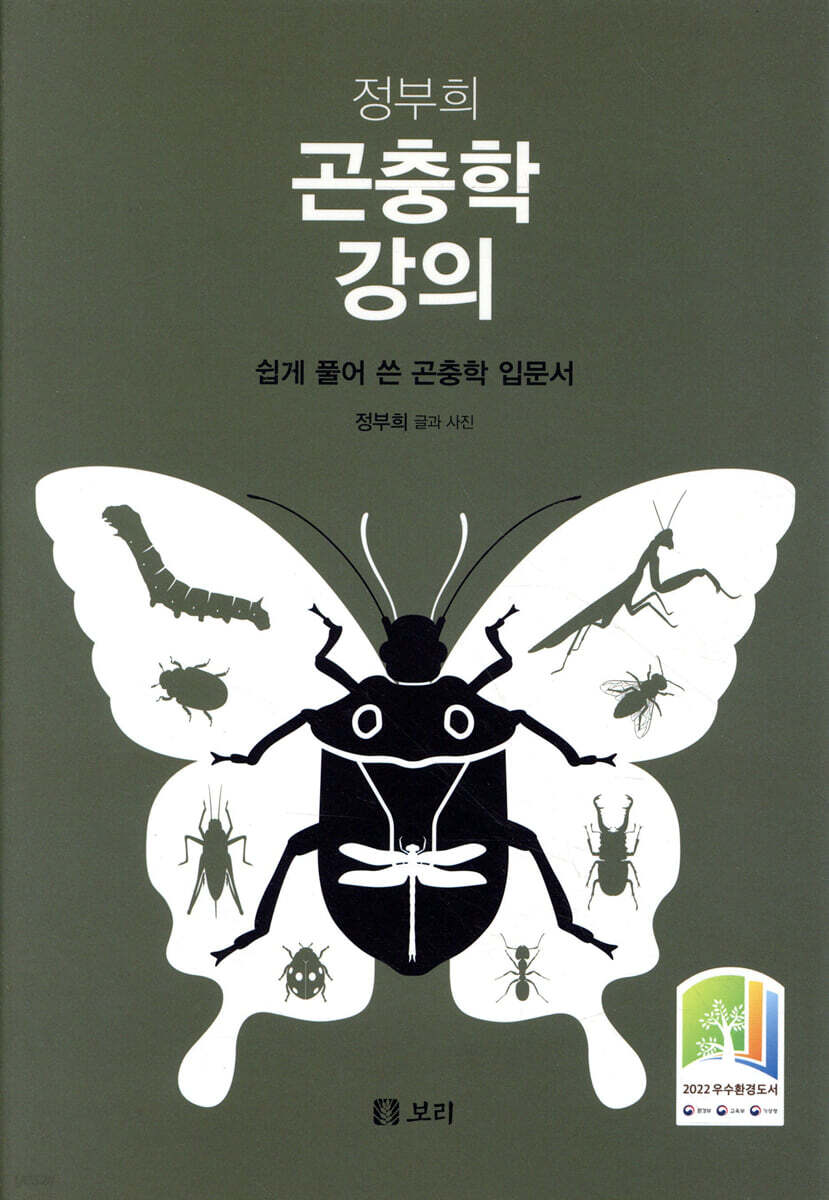
『Jung Boo-hee's Entomology Lectures』 is an introductory book on entomology written by Dr. Jung Boo-hee, the 'Fabre of Korea,' in which he explains the basic knowledge you need to know about insects in an easy-to-understand manner.
From the birth and evolution of insects to their body shapes, various metamorphoses, life cycles, and survival strategies, the results of past research have been explained in an easy-to-understand text with abundant photographic data.
In addition, we have systematically organized the insects that we commonly see around us by species and how the previous theories are applied to each insect.
This book is accessible not only to students majoring in entomology but also to anyone who wants to learn more about insects. It is based on the latest research and contains a variety of case studies on the appearance, ecology, and behavior of insects.
Let's dive into the world of 'real' insects, something you've never experienced before, through 『Jungbuhee's Entomology Lectures』.
『Jung Boo-hee's Entomology Lectures』 is an introductory book on entomology written by Dr. Jung Boo-hee, the 'Fabre of Korea,' in which he explains the basic knowledge you need to know about insects in an easy-to-understand manner.
From the birth and evolution of insects to their body shapes, various metamorphoses, life cycles, and survival strategies, the results of past research have been explained in an easy-to-understand text with abundant photographic data.
In addition, we have systematically organized the insects that we commonly see around us by species and how the previous theories are applied to each insect.
This book is accessible not only to students majoring in entomology but also to anyone who wants to learn more about insects. It is based on the latest research and contains a variety of case studies on the appearance, ecology, and behavior of insects.
Let's dive into the world of 'real' insects, something you've never experienced before, through 『Jungbuhee's Entomology Lectures』.
- You can preview some of the book's contents.
Preview
index
Author's Note 4
Chapter 1: The Birth and Prosperity of Insects
1.
When were insects born? 14
(1) The birth and evolution of insects 14
(2) Direction of insect evolution 16
2.
What will the insect genealogy be like? 17
(1) Relatives of insects 17
(2) Ancestors of arthropods 18
(3) Genealogy of the 20 bead-shaped mosquitoes
3.
How many insects live on Earth? 21
4.
Why did insects thrive on Earth? 23
(1) Small body 23
(2) It has wings 24
(3) Living in a skeletal outfit 25
(4) Transformation (metamorphosis) 26
(5) One year is short 27
(6) The reproductive capacity is amazing 28
(7) Diverse physiological and ecological characteristics 29
(8) There are various survival strategies 30
(9) Don't touch other people's food 30
Chapter 2: Insect Body Structure
Insect body - three-car train with head, thorax, and abdomen 34
1.
Head, where the sense organs are concentrated 36
(1) Compound eyes 36
(2) Single eye 39
(3) Mouthpiece 40
(4) Various mouthpiece shapes 43
(5) Antenna 48
(6) Other terms 56
2.
Chest, where the moving organs are gathered 60
(1) Chest 60
(2) Bridge 62
(3) Wing 67
3.
77 Where the stomach, digestive and reproductive organs are located
(1) Structure 77
(2) Reproductive organs and tail hairs 78
(3) Digestive system 81
Chapter 3: Principles and physiological functions of the insect body
1.
Bone, insect skin 88
(1) Cuticle 88
(2) Stripping 90
(3) Hormone 95 that spearheads shedding
2.
Insect Metamorphosis 96
(1) Division of Labor in Insects 96
(2) Various forms of metamorphosis 98
(3) Which insects are more common on Earth, insects undergoing complete metamorphosis or insects undergoing incomplete metamorphosis? 104
3.
The Life Cycle of an Insect 107
(1) Egg 107
(2) Larva 121
(3) Pupa 129
(4) Adult insect 135
4.
139 Curious Things About the Insect Body
(1) How to breathe 139
(2) How do insects reproduce? 143
(3) Reflex bleeding in insects 147
(4) How do social insects manage their households? 150
(5) Insects with respiratory pigments 152
Chapter 4: Insect Survival Strategies
1.
Rest and Dormancy 156
(1) Quiescence 156
(2) Diapause 157
2.
Insect Communication 162
(1) Insects that communicate with light 163
(2) Insects that communicate through sound 166
(3) Insects that communicate by smell 172
3.
Insect Defense Strategies 178
(1) Defending with the body 178
(2) Fake Death 179
(3) Make a sound 180
(4) Protective coloration 181
(5) Boundary color (warning color) 184
(6) Mimicry (mimetic) 188
(7) Chemical defense (toxic substances) 197
Chapter 5: Insects You Must Know
Insect Taxonomy 202
Hexagonal sacrum with a mouth frame inside the head
1.
Sickle-footed Protura 205
2.
Diplura 206
3.
Collembola 207
Hexagonal sulcus with the mouthpiece on the outside of the head
1.
Archaeognatha, Microcoryphia 210
2.
Thysanura, Zygentoma 211
3.
Ephemeroptera 212
4.
Odonata 219
5.
Plecoptera 237
6.
Blattodea 242
7.
Mantodea 247
8.
Dermaptera 251
9.
Orthoptera 254
10.
Phasmatodea, Phasmida 272
11.
Hemiptera 276
12.
Neuroptera 288
13.
Raphidioptera 293
14.
Megaloptera 294
15.
Coleoptera 296
16.
Diptera 314
17.
Mecoptera 318
18.
Trichoptera 320
19.
Lepidoptera 326
20.
Hymenoptera 353
Appendix List of Insect Classification Systems in Korea 362
Search alphabetically 372
Reference 378
Chapter 1: The Birth and Prosperity of Insects
1.
When were insects born? 14
(1) The birth and evolution of insects 14
(2) Direction of insect evolution 16
2.
What will the insect genealogy be like? 17
(1) Relatives of insects 17
(2) Ancestors of arthropods 18
(3) Genealogy of the 20 bead-shaped mosquitoes
3.
How many insects live on Earth? 21
4.
Why did insects thrive on Earth? 23
(1) Small body 23
(2) It has wings 24
(3) Living in a skeletal outfit 25
(4) Transformation (metamorphosis) 26
(5) One year is short 27
(6) The reproductive capacity is amazing 28
(7) Diverse physiological and ecological characteristics 29
(8) There are various survival strategies 30
(9) Don't touch other people's food 30
Chapter 2: Insect Body Structure
Insect body - three-car train with head, thorax, and abdomen 34
1.
Head, where the sense organs are concentrated 36
(1) Compound eyes 36
(2) Single eye 39
(3) Mouthpiece 40
(4) Various mouthpiece shapes 43
(5) Antenna 48
(6) Other terms 56
2.
Chest, where the moving organs are gathered 60
(1) Chest 60
(2) Bridge 62
(3) Wing 67
3.
77 Where the stomach, digestive and reproductive organs are located
(1) Structure 77
(2) Reproductive organs and tail hairs 78
(3) Digestive system 81
Chapter 3: Principles and physiological functions of the insect body
1.
Bone, insect skin 88
(1) Cuticle 88
(2) Stripping 90
(3) Hormone 95 that spearheads shedding
2.
Insect Metamorphosis 96
(1) Division of Labor in Insects 96
(2) Various forms of metamorphosis 98
(3) Which insects are more common on Earth, insects undergoing complete metamorphosis or insects undergoing incomplete metamorphosis? 104
3.
The Life Cycle of an Insect 107
(1) Egg 107
(2) Larva 121
(3) Pupa 129
(4) Adult insect 135
4.
139 Curious Things About the Insect Body
(1) How to breathe 139
(2) How do insects reproduce? 143
(3) Reflex bleeding in insects 147
(4) How do social insects manage their households? 150
(5) Insects with respiratory pigments 152
Chapter 4: Insect Survival Strategies
1.
Rest and Dormancy 156
(1) Quiescence 156
(2) Diapause 157
2.
Insect Communication 162
(1) Insects that communicate with light 163
(2) Insects that communicate through sound 166
(3) Insects that communicate by smell 172
3.
Insect Defense Strategies 178
(1) Defending with the body 178
(2) Fake Death 179
(3) Make a sound 180
(4) Protective coloration 181
(5) Boundary color (warning color) 184
(6) Mimicry (mimetic) 188
(7) Chemical defense (toxic substances) 197
Chapter 5: Insects You Must Know
Insect Taxonomy 202
Hexagonal sacrum with a mouth frame inside the head
1.
Sickle-footed Protura 205
2.
Diplura 206
3.
Collembola 207
Hexagonal sulcus with the mouthpiece on the outside of the head
1.
Archaeognatha, Microcoryphia 210
2.
Thysanura, Zygentoma 211
3.
Ephemeroptera 212
4.
Odonata 219
5.
Plecoptera 237
6.
Blattodea 242
7.
Mantodea 247
8.
Dermaptera 251
9.
Orthoptera 254
10.
Phasmatodea, Phasmida 272
11.
Hemiptera 276
12.
Neuroptera 288
13.
Raphidioptera 293
14.
Megaloptera 294
15.
Coleoptera 296
16.
Diptera 314
17.
Mecoptera 318
18.
Trichoptera 320
19.
Lepidoptera 326
20.
Hymenoptera 353
Appendix List of Insect Classification Systems in Korea 362
Search alphabetically 372
Reference 378
Publisher's Review
The World of Insects Guided by Dr. Fabre Jeong-hui of Korea
The saying “You see as much as you know, and you love as much as you know” comes to mind.
Although the ecosystem is being seriously destroyed, you can still encounter locusts bouncing around in the grass when you go out into the mountains and fields.
Those 'grasshoppers' may be of different types, but usually, when we see them, we call out, "Grasshopper!"
There are 176 species of grasshoppers living in our country, and each has a distinct name.
It would be great if we knew the identities of each of those guys, but let's leave that to the experts.
But after reading this book, I hope that you will be able to distinguish between a group of locusts that cannot make a sound and a group of cicadas that are rubbing their wings vigorously to make a sound just by looking at the grasshoppers.” _From the author’s note
Jeong Bu-hee's Entomology Lectures: A Gateway to the Deep World of Insects
Insects have lived on Earth since long before the birth of mankind, and they still live in the places closest to humans.
Of the approximately 1.5 million species of animals living on Earth, insects account for approximately 1 million species, making them innumerable compared to other animals.
Although insects have lived close to humans for such a long time, not many people know what they look like or how they live.
Studying insects as a discipline is difficult because the number of insect species is as vast as the number of known species.
"Jung Boo-hee's Entomology Lectures" is an introductory book on entomology written by Jung Boo-hee, an entomologist who has studied insects for over 20 years, in an easy-to-understand way that makes entomological theories easy for anyone to study.
This book contains essential theories for an in-depth study of insects, from the process of their birth and evolution to their body structure, physiological functions such as life cycle and metamorphosis, and various survival strategies.
Complex and difficult technical terms are explained in friendly and easy-to-understand everyday language, and concepts that are difficult to grasp when encountered only in text are explained with abundant visual aids such as photos, drawings, and diagrams, allowing readers to understand the knowledge intuitively and accurately.
Dr. Jeong Bu-hee, who has published numerous insect observation journals and given lectures on insects to various organizations, has called himself an insect evangelist. After three years of writing, he published “Jeong Bu-hee’s Entomology Lectures,” which will serve as an “entomology textbook” for all those who wish to gain a deeper understanding of insects.
“Although the field of entomology in our country is advancing day by day, unfortunately, there is a lack of proper entomological theory books.
Even university students who major in insects usually study from original or translated books, so it is inevitable that non-specialists who are curious about insects will have a harder time accessing insect theory.
To me, the phrase 'insects are difficult' gradually became a homework assignment that needed to be solved.
“I thought that one day I would write a book on ‘Entomology Theory’ that anyone can easily study, to repay the love I have received from readers.” _From the author’s note on page 4
“The body of an insect is made up of three segments: head, thorax, and abdomen.
It's similar to a three-car train.
A train connected by the first compartment, the head, the second compartment, the chest, and the third compartment, the stomach.
“The body is flexible because the head and chest, and the chest and stomach, are connected by soft membranes.” _34p.
From the article 'The insect's body - a three-car train connected by the head, chest, and abdomen'
A friendly and clear entomological theory book based on long-term observation and research.
Many people are familiar with the basic knowledge about insects, such as that the insect body is made up of the head, thorax, and abdomen, and that, depending on the species, it undergoes incomplete metamorphosis, going through the stages of egg, larva, and adult, or complete metamorphosis, going through the stages of egg, larva, pupa, and adult.
However, it is not easy to know what organs are attached to the three segments of the head, thorax, and abdomen, what role those organs play, and what form insects take during each stage of metamorphosis.
Not only are there not many domestic entomology books that specifically address the aforementioned topics, but existing entomology books require specialized background knowledge to understand the content.
This book explains the structure and function of the insect body in more detail and in a more friendly way.
For example, the antennae attached to the head have multiple segments connected like beads on a thread, and the main function of the antennae is to be a sense organ for smelling. The antennae have shapes such as sawtooth, thread-like, and baseball glove-like.
It also contains detailed information about the life cycle of insects, including molting, metamorphosis, pupation, and wing development, as well as survival strategies such as communication and defense methods.
The theoretical knowledge above can be incredibly difficult.
The author has selected only the essential information, leaving out overly technical content, and has written it in an easy-to-understand manner so that even people with little knowledge about insects can understand it.
We also wanted to increase accessibility to entomology by translating technical terms filled with Chinese characters into easy-to-understand Korean.
The theories in this book are the result of the author's long-term, persistent observation and intense research on insects.
So, when you read the book, rather than simply acquiring knowledge, it feels like you are observing insects in the field with the author and listening to his stories.
“When you touch a ladybug, a yellow liquid oozes out from the joints of its legs.
When faced with danger, ladybugs employ a variety of defensive behaviors.
The body color is a warning color, and when touched, it curls its six legs and antennae toward its abdomen as if it were dead and turns over.” _From the article ‘Reflex Bleeding of Insects’ on page 147
It is rich in photographic material that intuitively shows the ecology of insects.
《Jungbuhee Entomology Lectures》 is filled with photos of insect ecology that solidly support the theories contained in the book.
These photos help you intuitively acquire knowledge by showing at a glance how each insect's appearance, physiological functions, and behavior patterns appear throughout its life cycle, as described by the author.
You can learn how insects that you can easily find around you appear based on theory.
Chapter 5 of Jeongbuhee's Entomology Lectures covers how the theories covered in Chapters 1-4 are applied to 20 insect orders that can be easily found in Korea, such as mayflies, dragonflies, butterflies, and flies.
The wing structure, shape of the proboscis, and metamorphosis methods are described in detail for each insect order, allowing you to get closer to studying entomology.
The saying “You see as much as you know, and you love as much as you know” comes to mind.
Although the ecosystem is being seriously destroyed, you can still encounter locusts bouncing around in the grass when you go out into the mountains and fields.
Those 'grasshoppers' may be of different types, but usually, when we see them, we call out, "Grasshopper!"
There are 176 species of grasshoppers living in our country, and each has a distinct name.
It would be great if we knew the identities of each of those guys, but let's leave that to the experts.
But after reading this book, I hope that you will be able to distinguish between a group of locusts that cannot make a sound and a group of cicadas that are rubbing their wings vigorously to make a sound just by looking at the grasshoppers.” _From the author’s note
Jeong Bu-hee's Entomology Lectures: A Gateway to the Deep World of Insects
Insects have lived on Earth since long before the birth of mankind, and they still live in the places closest to humans.
Of the approximately 1.5 million species of animals living on Earth, insects account for approximately 1 million species, making them innumerable compared to other animals.
Although insects have lived close to humans for such a long time, not many people know what they look like or how they live.
Studying insects as a discipline is difficult because the number of insect species is as vast as the number of known species.
"Jung Boo-hee's Entomology Lectures" is an introductory book on entomology written by Jung Boo-hee, an entomologist who has studied insects for over 20 years, in an easy-to-understand way that makes entomological theories easy for anyone to study.
This book contains essential theories for an in-depth study of insects, from the process of their birth and evolution to their body structure, physiological functions such as life cycle and metamorphosis, and various survival strategies.
Complex and difficult technical terms are explained in friendly and easy-to-understand everyday language, and concepts that are difficult to grasp when encountered only in text are explained with abundant visual aids such as photos, drawings, and diagrams, allowing readers to understand the knowledge intuitively and accurately.
Dr. Jeong Bu-hee, who has published numerous insect observation journals and given lectures on insects to various organizations, has called himself an insect evangelist. After three years of writing, he published “Jeong Bu-hee’s Entomology Lectures,” which will serve as an “entomology textbook” for all those who wish to gain a deeper understanding of insects.
“Although the field of entomology in our country is advancing day by day, unfortunately, there is a lack of proper entomological theory books.
Even university students who major in insects usually study from original or translated books, so it is inevitable that non-specialists who are curious about insects will have a harder time accessing insect theory.
To me, the phrase 'insects are difficult' gradually became a homework assignment that needed to be solved.
“I thought that one day I would write a book on ‘Entomology Theory’ that anyone can easily study, to repay the love I have received from readers.” _From the author’s note on page 4
“The body of an insect is made up of three segments: head, thorax, and abdomen.
It's similar to a three-car train.
A train connected by the first compartment, the head, the second compartment, the chest, and the third compartment, the stomach.
“The body is flexible because the head and chest, and the chest and stomach, are connected by soft membranes.” _34p.
From the article 'The insect's body - a three-car train connected by the head, chest, and abdomen'
A friendly and clear entomological theory book based on long-term observation and research.
Many people are familiar with the basic knowledge about insects, such as that the insect body is made up of the head, thorax, and abdomen, and that, depending on the species, it undergoes incomplete metamorphosis, going through the stages of egg, larva, and adult, or complete metamorphosis, going through the stages of egg, larva, pupa, and adult.
However, it is not easy to know what organs are attached to the three segments of the head, thorax, and abdomen, what role those organs play, and what form insects take during each stage of metamorphosis.
Not only are there not many domestic entomology books that specifically address the aforementioned topics, but existing entomology books require specialized background knowledge to understand the content.
This book explains the structure and function of the insect body in more detail and in a more friendly way.
For example, the antennae attached to the head have multiple segments connected like beads on a thread, and the main function of the antennae is to be a sense organ for smelling. The antennae have shapes such as sawtooth, thread-like, and baseball glove-like.
It also contains detailed information about the life cycle of insects, including molting, metamorphosis, pupation, and wing development, as well as survival strategies such as communication and defense methods.
The theoretical knowledge above can be incredibly difficult.
The author has selected only the essential information, leaving out overly technical content, and has written it in an easy-to-understand manner so that even people with little knowledge about insects can understand it.
We also wanted to increase accessibility to entomology by translating technical terms filled with Chinese characters into easy-to-understand Korean.
The theories in this book are the result of the author's long-term, persistent observation and intense research on insects.
So, when you read the book, rather than simply acquiring knowledge, it feels like you are observing insects in the field with the author and listening to his stories.
“When you touch a ladybug, a yellow liquid oozes out from the joints of its legs.
When faced with danger, ladybugs employ a variety of defensive behaviors.
The body color is a warning color, and when touched, it curls its six legs and antennae toward its abdomen as if it were dead and turns over.” _From the article ‘Reflex Bleeding of Insects’ on page 147
It is rich in photographic material that intuitively shows the ecology of insects.
《Jungbuhee Entomology Lectures》 is filled with photos of insect ecology that solidly support the theories contained in the book.
These photos help you intuitively acquire knowledge by showing at a glance how each insect's appearance, physiological functions, and behavior patterns appear throughout its life cycle, as described by the author.
You can learn how insects that you can easily find around you appear based on theory.
Chapter 5 of Jeongbuhee's Entomology Lectures covers how the theories covered in Chapters 1-4 are applied to 20 insect orders that can be easily found in Korea, such as mayflies, dragonflies, butterflies, and flies.
The wing structure, shape of the proboscis, and metamorphosis methods are described in detail for each insect order, allowing you to get closer to studying entomology.
GOODS SPECIFICS
- Date of issue: May 21, 2021
- Page count, weight, size: 384 pages | 844g | 160*231*25mm
- ISBN13: 9791163141969
- ISBN10: 1163141968
You may also like
카테고리
korean


korean

![GQ KOREA Mark (Monthly): December [2025]](http://librairie.coreenne.fr/cdn/shop/files/8ef265dbbfbf186523ed75ba7319009d.jpg?v=1765340328&width=3840)


