

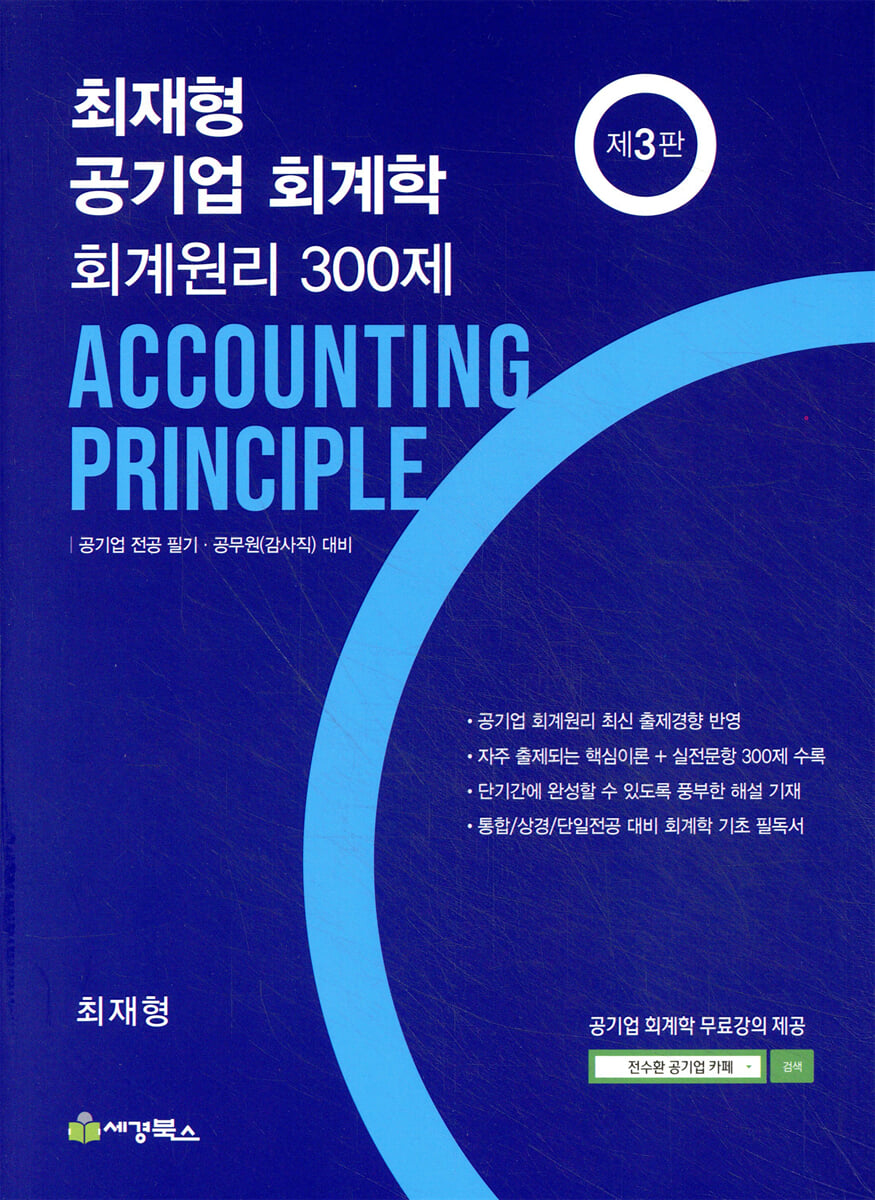
Choi Jae-hyung Public Enterprise Accounting Accounting Principles 300
 |
Description
Book Introduction
Study efficient accounting principles
In the written examination for public corporations, the accounting subject is a field that is tested as part of the integrated office work major or the business (management) major.
Although the number of questions on the major exam at the accounting principles level is not large, the scope of the exam is vast and the content is complex, making it difficult for test takers to prepare for the exam.
The time available to prepare for the written exam is limited, and the number of subjects and volume of study is overwhelming.
Therefore, to get a good score, you need an efficient strategy to pass.
In the written examination for public corporations, the accounting subject is a field that is tested as part of the integrated office work major or the business (management) major.
Although the number of questions on the major exam at the accounting principles level is not large, the scope of the exam is vast and the content is complex, making it difficult for test takers to prepare for the exam.
The time available to prepare for the written exam is limited, and the number of subjects and volume of study is overwhelming.
Therefore, to get a good score, you need an efficient strategy to pass.
index
CHAPTER 01 Fundamentals of Financial Accounting
Section 1: Fundamentals of Accounting | 6
Section 2 Financial Reporting and Accounting Standards | 10
Section 3: Basis of Financial Statements | 14
Section 4: Balance Sheets and Income Statements | 19
· OX | 23
· Practice Problems | 24
· Multiple choice questions | 28
CHAPTER 02 Accounting Cycle
Section 1: Fundamentals of the Accounting Cycle | 46
Section 2: Indignation and Electricity | 47
Section 3 Preparation of the Trial Balance Sheet and Adjustment of the Settlement of Accounts | 59
· OX | 81
· Practice Problems | 82
· Multiple Choice Questions | 87
CHAPTER 03 Accounting Treatment of the Above Businesses
Section 1: Business of the above-mentioned businesses | 104
Section 2 Accounting Principles for Merchandise Sales | 105
Section 3 Fare O Enuri O Refund O Discount | 111
· Practice Problems | 119
· Multiple Choice Questions | 123
CHAPTER 04 Receivables and Payables
Section 1 Receivables | 130
Section 2 Payment Obligations | 141
Section 3 Long-Term Debts O Debts | 145
· OX | 160
· Practice Problems | 161
· Multiple Choice Questions | 168
CHAPTER 05 Inventory Assets
Section 1: Fundamentals of Inventory Assets | 180
Section 2: Determining Inventory Flows | 183
· OX | 193
· Practice Problems | 194
· Multiple Choice Questions | 196
CHAPTER 06 Tangible Assets
Section 1: The Basics of Tangible Assets | 220
Section 2 Recognition of Costs | 221
Section 3 Components of Cost | 222
Section 4: Cost Models | 224
Section 5: Reevaluation Model | 233
· OX | 234
· Practice Problems | 236
· Multiple Choice Questions | 239
CHAPTER 07 Financial Assets
Section 1: The Meaning of Financial Assets | 254
Section 2 Cash and Cash Equivalents | 255
Section 3 Accounting for Financial Assets | 259
Section 4 Equity Products | 261
Section 5 Debt Instruments | 267
· OX | 278
· Practice Problems | 279
· Multiple Choice Questions | 284
CHAPTER 08 Debt and Equity
Section 1 Financial Liabilities | 308
Section 2: Provisions for Liabilities | 317
Section 3: Capital | 322
· OX | 331
· Practice Problems | 333
· Multiple Choice Questions | 336
Section 1: Fundamentals of Accounting | 6
Section 2 Financial Reporting and Accounting Standards | 10
Section 3: Basis of Financial Statements | 14
Section 4: Balance Sheets and Income Statements | 19
· OX | 23
· Practice Problems | 24
· Multiple choice questions | 28
CHAPTER 02 Accounting Cycle
Section 1: Fundamentals of the Accounting Cycle | 46
Section 2: Indignation and Electricity | 47
Section 3 Preparation of the Trial Balance Sheet and Adjustment of the Settlement of Accounts | 59
· OX | 81
· Practice Problems | 82
· Multiple Choice Questions | 87
CHAPTER 03 Accounting Treatment of the Above Businesses
Section 1: Business of the above-mentioned businesses | 104
Section 2 Accounting Principles for Merchandise Sales | 105
Section 3 Fare O Enuri O Refund O Discount | 111
· Practice Problems | 119
· Multiple Choice Questions | 123
CHAPTER 04 Receivables and Payables
Section 1 Receivables | 130
Section 2 Payment Obligations | 141
Section 3 Long-Term Debts O Debts | 145
· OX | 160
· Practice Problems | 161
· Multiple Choice Questions | 168
CHAPTER 05 Inventory Assets
Section 1: Fundamentals of Inventory Assets | 180
Section 2: Determining Inventory Flows | 183
· OX | 193
· Practice Problems | 194
· Multiple Choice Questions | 196
CHAPTER 06 Tangible Assets
Section 1: The Basics of Tangible Assets | 220
Section 2 Recognition of Costs | 221
Section 3 Components of Cost | 222
Section 4: Cost Models | 224
Section 5: Reevaluation Model | 233
· OX | 234
· Practice Problems | 236
· Multiple Choice Questions | 239
CHAPTER 07 Financial Assets
Section 1: The Meaning of Financial Assets | 254
Section 2 Cash and Cash Equivalents | 255
Section 3 Accounting for Financial Assets | 259
Section 4 Equity Products | 261
Section 5 Debt Instruments | 267
· OX | 278
· Practice Problems | 279
· Multiple Choice Questions | 284
CHAPTER 08 Debt and Equity
Section 1 Financial Liabilities | 308
Section 2: Provisions for Liabilities | 317
Section 3: Capital | 322
· OX | 331
· Practice Problems | 333
· Multiple Choice Questions | 336
Publisher's Review
preface
Study efficient accounting principles
In the public enterprise major written examination, accounting is a subject that is tested as part of the integrated office major or business (management) major.
Although the number of questions on the major exam at the accounting principles level is not large, the scope of the exam is vast and the content is complex, making it difficult for test takers to prepare for the exam.
The time available to prepare for the written exam is limited, and the number of subjects and volume of study is overwhelming.
Therefore, to get a good score, you need an efficient strategy to pass.
Composition of the textbook
1.
Theory
This textbook was compiled to efficiently prepare for the major exam, which covers accounting principles among the major written exams for public corporations.
Therefore, it covers the basics of accounting and the preparation of financial statements, as well as general accounting methods for assets, liabilities, and capital.
It also includes the basics of accounting that must be studied in order to begin studying accounting.
Therefore, we are confident that this textbook thoroughly covers the essential accounting theory required for the Accounting Principles and Accounting Science exams.
2.
Problem section
The problems in this textbook are composed of ① examples for practicing basic theory, ② practice problems for comprehensive organization of theory, ③ true or false quizzes for mastering the text of the standard, and ④ 250 multiple-choice questions for preparation for actual major exams.
We have included a sufficient number of problems without any duplicate types to ensure that you can prepare for any type of problem.
Lastly, I would like to express my gratitude to all the staff at Segyeong Books who have contributed both materially and spiritually to the publication.
We wish all students who studied with this book success in their exams.
2021.
10.
Certified Public Accountant Choi Jae-hyung
Study efficient accounting principles
In the public enterprise major written examination, accounting is a subject that is tested as part of the integrated office major or business (management) major.
Although the number of questions on the major exam at the accounting principles level is not large, the scope of the exam is vast and the content is complex, making it difficult for test takers to prepare for the exam.
The time available to prepare for the written exam is limited, and the number of subjects and volume of study is overwhelming.
Therefore, to get a good score, you need an efficient strategy to pass.
Composition of the textbook
1.
Theory
This textbook was compiled to efficiently prepare for the major exam, which covers accounting principles among the major written exams for public corporations.
Therefore, it covers the basics of accounting and the preparation of financial statements, as well as general accounting methods for assets, liabilities, and capital.
It also includes the basics of accounting that must be studied in order to begin studying accounting.
Therefore, we are confident that this textbook thoroughly covers the essential accounting theory required for the Accounting Principles and Accounting Science exams.
2.
Problem section
The problems in this textbook are composed of ① examples for practicing basic theory, ② practice problems for comprehensive organization of theory, ③ true or false quizzes for mastering the text of the standard, and ④ 250 multiple-choice questions for preparation for actual major exams.
We have included a sufficient number of problems without any duplicate types to ensure that you can prepare for any type of problem.
Lastly, I would like to express my gratitude to all the staff at Segyeong Books who have contributed both materially and spiritually to the publication.
We wish all students who studied with this book success in their exams.
2021.
10.
Certified Public Accountant Choi Jae-hyung
GOODS SPECIFICS
- Publication date: October 15, 2021
- Page count, weight, size: 360 pages | 676g | 188*258*18mm
- ISBN13: 9791159732782
- ISBN10: 1159732787
You may also like
카테고리
korean


korean

![GQ KOREA Mark (Monthly): December [2025]](http://librairie.coreenne.fr/cdn/shop/files/8ef265dbbfbf186523ed75ba7319009d.jpg?v=1765340328&width=3840)


