

Montaigne's Essays
 |
Description
Book Introduction
A classic of essay literature that first perfected the essay format!
Based on philosophical reflection and experience
Life and Death, Insight into Humanity
“Montaigne’s writings are not only philosophical, but also portraits of the soul.
His essays reveal human nature in its complexity, contradiction, and constant struggle.” Émile Zola
We have selected some of the most valuable content from Montaigne's Essays, which is considered a classic of essay literature and the foundation of French moralist literature.
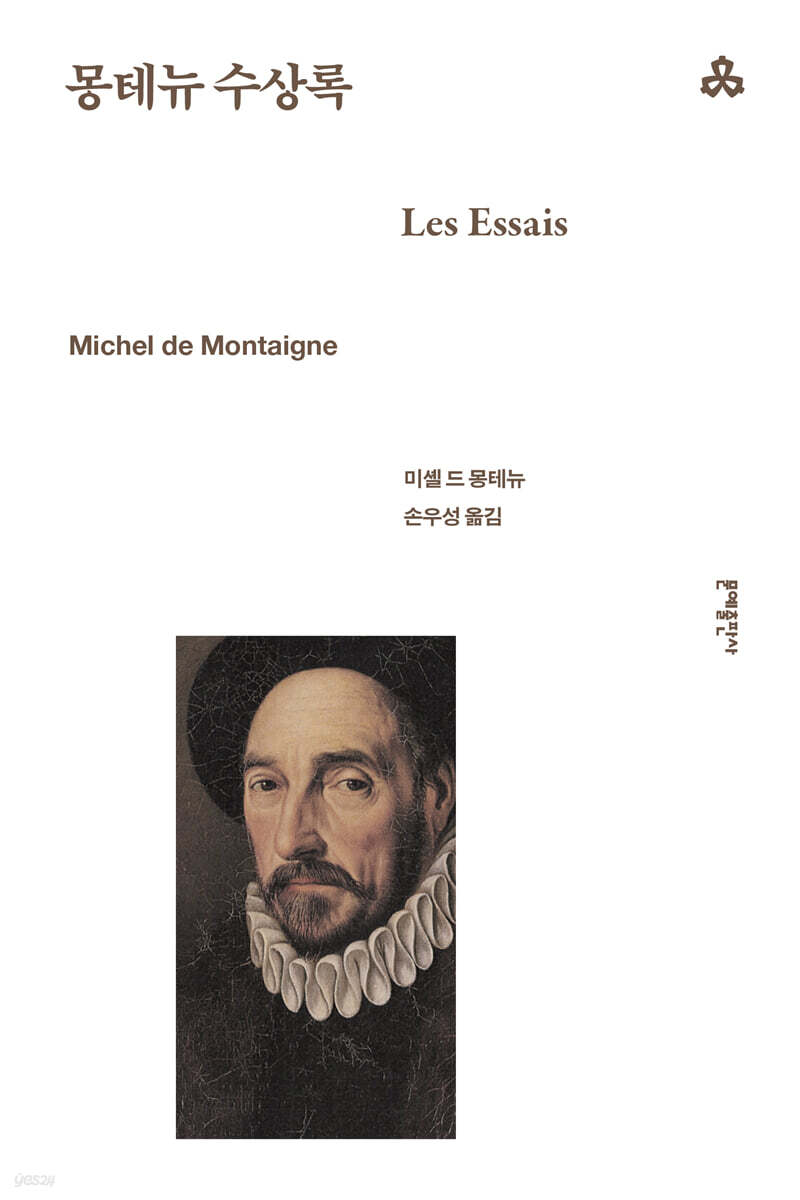
《Essays》 is considered Montaigne's greatest masterpiece, encompassing both literature and philosophy, and is the first book to perfect the essay format.
Rather than a philosophical treatise, this book deals with life and death, human nature, education, politics, and more, drawing on personal experience and classical quotations.
Montaigne's Essays contains many quotes from classical literature such as Plato, Aristotle, Horace, and Seneca, and explores and reflects on life through dialogue with himself about how to live and what to do.
It had a great influence on Descartes and Pascal in the 17th century, and was later banned as a book that dealt with atheism.
★Recommended books from Seoul National University and Korea University
Based on philosophical reflection and experience
Life and Death, Insight into Humanity
“Montaigne’s writings are not only philosophical, but also portraits of the soul.
His essays reveal human nature in its complexity, contradiction, and constant struggle.” Émile Zola
We have selected some of the most valuable content from Montaigne's Essays, which is considered a classic of essay literature and the foundation of French moralist literature.
《Essays》 is considered Montaigne's greatest masterpiece, encompassing both literature and philosophy, and is the first book to perfect the essay format.
Rather than a philosophical treatise, this book deals with life and death, human nature, education, politics, and more, drawing on personal experience and classical quotations.
Montaigne's Essays contains many quotes from classical literature such as Plato, Aristotle, Horace, and Seneca, and explores and reflects on life through dialogue with himself about how to live and what to do.
It had a great influence on Descartes and Pascal in the 17th century, and was later banned as a book that dealt with atheism.
★Recommended books from Seoul National University and Korea University
- You can preview some of the book's contents.
Preview
index
To the reader
human condition
About glory and fame
On pride
Our desires are heightened by our disabilities.
Cruelty comes from cowardice.
Raymond Sebon's defense
About reading
About study life
About the conversation
About the intention
About marriage and love
About disease
By what principles should we govern our actions?
On the narrowness of power
About politics
In times of chaos and disaster
On partisanship
About hobbies
About travel
About life in this world
About illusions
About death
Commentary on the work
Chronology of Michel de Montaigne
human condition
About glory and fame
On pride
Our desires are heightened by our disabilities.
Cruelty comes from cowardice.
Raymond Sebon's defense
About reading
About study life
About the conversation
About the intention
About marriage and love
About disease
By what principles should we govern our actions?
On the narrowness of power
About politics
In times of chaos and disaster
On partisanship
About hobbies
About travel
About life in this world
About illusions
About death
Commentary on the work
Chronology of Michel de Montaigne
Detailed image

Into the book
Other people decorate humans.
I speak of humans, and I express humans in a special way that is wrongly created.
If I were to remake him, I would make him very different from the real him.
But now there is nothing we can do.
---p.9
At this age, habits seem to give us the freedom to rambling and speaking carelessly.
It is common for the craftsman and his work to be at odds, but that doesn't happen here.
---p.11
There are names and things in the world.
A name is a sound that points to something and gives it meaning.
A name is neither a part of a thing nor its substance.
It is a different piece of material attached to things from outside the thing.
---p.13
We are all empty voids.
We should not fill our hearts with wind and sound alone.
We need a more solid foundation to fix ourselves.
It would be very foolish for a hungry person to seek good clothes rather than a good meal.
We have to run towards the more urgent side.
In the prayers we sometimes pray, it is as if we say, “How great is the glory, if it is only glory?”
We are hungry for beauty (p.mi), health, wisdom, morality, and such fundamental qualities.
External decoration should be sought after we have the necessary items.
---pp.13-14
It is our innate nature to feel sweet when we receive compliments from people.
But we place too much importance on it.
I don't care what other people think of me.
It's like I don't worry about how I look to myself.
I do not want to borrow from others, but rather try to become wealthy on my own.
Other people only see what is outwardly apparent and what is happening.
Each person can appear calm on the outside while being filled with fever and fear inside.
They don't see my heart.
They only see my appearance.
---p.20
If I have any vanity, it is because it is superficially instilled in me, and has no substance to reveal to my judgment.
I am just a person splashed with the color of vanity, not a person who is dyed to the core.
For, indeed, as a matter of mental effect, nothing comes from me that satisfies me in any way.
And I have no reason to be grateful at all for the compliments I get from others.
My hobbies are both gentle and demanding.
---p.28
I constantly deny myself.
And because I am weak, I feel excited and bent everywhere.
There is nothing of mine that can satisfy my judgment.
I have a fairly clear and controlled power of observation.
But when it comes to work, it causes confusion.
This becomes especially evident when you write poetry.
I love poetry immensely, and I'm quite familiar with other people's work.
But if I write poetry, it becomes childish writing and I can't bear to read it.
A man can make foolish remarks anywhere, but not with poetry.
---p.29
No matter how powerful beauty is, it cannot be enjoyed without this kind of mediation.
In Italy, there are many beauties who are sold for money, and even more so, exceptionally beautiful beauties. Look at the unique methods and techniques they use to make themselves look pretty.
But the truth is, no matter what they do, their bodies are put up for sale in front of the public, so these women are always weak and powerless.
Likewise, in virtue (p. 德性), of two equal effects, the one with fewer obstacles and risks is considered more beautiful and valuable.
---p.44
No matter how our wars change shape, become more frequent, or split into new factions, I remain unmoved.
And among the many armed families, I alone, as far as I know, in France, am of my station, and have left the protection of my house entirely to Heaven.
And I never put my silver spoon away or locked my house.
I don't want to fear or run away from my work.
If I can receive grace through my full gratitude to God, that grace will continue to the end, and even if not, I have lived long enough to deserve to be mentioned here.
What? Haven't I been holding on for 30 years?
---p.48
I have often heard it said that cowardice is the mother of cruelty.
And we have learned from experience that the viciousness and cruelty of a malicious and inhuman heart are usually habitual companions of the feminine and weak character.
I have seen the most cruel men cry easily for the most trivial of reasons.
Alexander, the tyrant of Pheres, was unable to bear to watch the tragedy performed in the theater, fearing that the citizens would see him weeping after seeing the tragedy of Hecuba and Andromache. He mercilessly murdered people every day.
Could it be that they are so weak-minded that they are prone to all kinds of extremes?
---p.49
It's like when timid dogs come home and tear and bite the skins of wild beasts that they couldn't attack in the fields.
Why do people of our time risk their lives fighting each other? Our ancestors had multiple stages of revenge, but why do we now begin with the final stage, and why do we resort to nothing more than blindly killing each other? What else could this be but cowardice? Everyone knows that there is greater courage and contempt in defeating an enemy than in severing his lifeline, in forcing him to yield than in killing him.
The desire for revenge is more satiated and satisfied by this.
---pp.50-51
This philosophy ultimately only teaches us to follow the example of athletes and donkey drivers.
These people are usually much less sensitive to death, pain, and other unpleasant things, and have a stronger mind than learning can give to the weak-minded who cannot endure hardships by their own natural habits.
Is it not the ignorance of children that makes the soft, tender flesh of children easier to tear, slice, and operate on than that of adults? And what of horse flesh? How many people fall ill because of their imagination?
---p.70
The human body cannot fly in the sky.
This is your part.
The sun moves in a fixed orbit without rest.
The boundary between sea and land is not confused.
Water has no definite shape and no solidity.
If there are no gaps in the wall, solids cannot penetrate.
A man cannot preserve his life in a fire.
A person cannot physically be in heaven, on earth, and in countless places at the same time.
These laws were made by God for you.
---p.90
The god of fate changes our places, handles our beliefs as if they were water jugs, and although we constantly fill and empty them with different ideas, the last one always remains the sure and infallible one.
For this idea, one must give up everything: wealth, honor, life, salvation of the soul, and everything else.
---p.114
We have already gone through many different kinds of death, and we are going through many different kinds of death, so it is foolish for us to fear something like death.
As Heraclitus said, when fire dies it becomes air, and when air dies it becomes water, but we can see it more clearly in ourselves.
When old age approaches, the flowery years fade away, youth ends in full bloom, boyhood ends in youth, and childhood ends in boyhood.
And yesterday will disappear today, and today will disappear tomorrow.
Nothing stays the same and nothing remains the same forever.
---p.135
People don't get married for themselves, no matter what anyone says.
People marry more for their descendants and families than for that.
The customs and interests of marriage extend far beyond us and are tied to our lineage.
Therefore, I think it would be better to be led by a third party rather than by the parties themselves, and to marry based on the judgment of others rather than one's own.
How contrary to the conventions of love! Therefore, as I have said elsewhere, to entrust this sacred and solemn bond of kinship (marriage) to the vain and self-indulgent efforts of love is a form of adultery.
---pp.165-166
If there is such a thing as a good marriage, it is the companionship of love and the rejection of conditions.
A good marriage strives to reproduce the conditions of friendship.
A good marriage is a peaceful communal life filled with fidelity, trust, and countless useful and solid mutual services and obligations.
---p.167
We never go from good to bad.
The corruption and rampant robbery of society seem to be the most difficult things to endure at the moment.
If you get robbed, it's less frustrating to get robbed in the woods than in a safe place.
It was as if every single part of the body was rotting away, and the individual rotten parts were clumping together, most of them becoming chronic and incurable, like a boil that did not require treatment.
---p.206
But if I could choose where to die, I would rather die on horseback than in bed, away from my family and away from my friends.
Saying goodbye to close friends is more heartbreaking than comforting.
I will sweetly forget this duty which our customs require.
Because among the services of friendship, this alone is unpleasant.
So I would gladly forget to say such a great and eternal farewell.
Even if there are some advantages to attending a deathbed like this, there are countless more inconveniences.
I speak of humans, and I express humans in a special way that is wrongly created.
If I were to remake him, I would make him very different from the real him.
But now there is nothing we can do.
---p.9
At this age, habits seem to give us the freedom to rambling and speaking carelessly.
It is common for the craftsman and his work to be at odds, but that doesn't happen here.
---p.11
There are names and things in the world.
A name is a sound that points to something and gives it meaning.
A name is neither a part of a thing nor its substance.
It is a different piece of material attached to things from outside the thing.
---p.13
We are all empty voids.
We should not fill our hearts with wind and sound alone.
We need a more solid foundation to fix ourselves.
It would be very foolish for a hungry person to seek good clothes rather than a good meal.
We have to run towards the more urgent side.
In the prayers we sometimes pray, it is as if we say, “How great is the glory, if it is only glory?”
We are hungry for beauty (p.mi), health, wisdom, morality, and such fundamental qualities.
External decoration should be sought after we have the necessary items.
---pp.13-14
It is our innate nature to feel sweet when we receive compliments from people.
But we place too much importance on it.
I don't care what other people think of me.
It's like I don't worry about how I look to myself.
I do not want to borrow from others, but rather try to become wealthy on my own.
Other people only see what is outwardly apparent and what is happening.
Each person can appear calm on the outside while being filled with fever and fear inside.
They don't see my heart.
They only see my appearance.
---p.20
If I have any vanity, it is because it is superficially instilled in me, and has no substance to reveal to my judgment.
I am just a person splashed with the color of vanity, not a person who is dyed to the core.
For, indeed, as a matter of mental effect, nothing comes from me that satisfies me in any way.
And I have no reason to be grateful at all for the compliments I get from others.
My hobbies are both gentle and demanding.
---p.28
I constantly deny myself.
And because I am weak, I feel excited and bent everywhere.
There is nothing of mine that can satisfy my judgment.
I have a fairly clear and controlled power of observation.
But when it comes to work, it causes confusion.
This becomes especially evident when you write poetry.
I love poetry immensely, and I'm quite familiar with other people's work.
But if I write poetry, it becomes childish writing and I can't bear to read it.
A man can make foolish remarks anywhere, but not with poetry.
---p.29
No matter how powerful beauty is, it cannot be enjoyed without this kind of mediation.
In Italy, there are many beauties who are sold for money, and even more so, exceptionally beautiful beauties. Look at the unique methods and techniques they use to make themselves look pretty.
But the truth is, no matter what they do, their bodies are put up for sale in front of the public, so these women are always weak and powerless.
Likewise, in virtue (p. 德性), of two equal effects, the one with fewer obstacles and risks is considered more beautiful and valuable.
---p.44
No matter how our wars change shape, become more frequent, or split into new factions, I remain unmoved.
And among the many armed families, I alone, as far as I know, in France, am of my station, and have left the protection of my house entirely to Heaven.
And I never put my silver spoon away or locked my house.
I don't want to fear or run away from my work.
If I can receive grace through my full gratitude to God, that grace will continue to the end, and even if not, I have lived long enough to deserve to be mentioned here.
What? Haven't I been holding on for 30 years?
---p.48
I have often heard it said that cowardice is the mother of cruelty.
And we have learned from experience that the viciousness and cruelty of a malicious and inhuman heart are usually habitual companions of the feminine and weak character.
I have seen the most cruel men cry easily for the most trivial of reasons.
Alexander, the tyrant of Pheres, was unable to bear to watch the tragedy performed in the theater, fearing that the citizens would see him weeping after seeing the tragedy of Hecuba and Andromache. He mercilessly murdered people every day.
Could it be that they are so weak-minded that they are prone to all kinds of extremes?
---p.49
It's like when timid dogs come home and tear and bite the skins of wild beasts that they couldn't attack in the fields.
Why do people of our time risk their lives fighting each other? Our ancestors had multiple stages of revenge, but why do we now begin with the final stage, and why do we resort to nothing more than blindly killing each other? What else could this be but cowardice? Everyone knows that there is greater courage and contempt in defeating an enemy than in severing his lifeline, in forcing him to yield than in killing him.
The desire for revenge is more satiated and satisfied by this.
---pp.50-51
This philosophy ultimately only teaches us to follow the example of athletes and donkey drivers.
These people are usually much less sensitive to death, pain, and other unpleasant things, and have a stronger mind than learning can give to the weak-minded who cannot endure hardships by their own natural habits.
Is it not the ignorance of children that makes the soft, tender flesh of children easier to tear, slice, and operate on than that of adults? And what of horse flesh? How many people fall ill because of their imagination?
---p.70
The human body cannot fly in the sky.
This is your part.
The sun moves in a fixed orbit without rest.
The boundary between sea and land is not confused.
Water has no definite shape and no solidity.
If there are no gaps in the wall, solids cannot penetrate.
A man cannot preserve his life in a fire.
A person cannot physically be in heaven, on earth, and in countless places at the same time.
These laws were made by God for you.
---p.90
The god of fate changes our places, handles our beliefs as if they were water jugs, and although we constantly fill and empty them with different ideas, the last one always remains the sure and infallible one.
For this idea, one must give up everything: wealth, honor, life, salvation of the soul, and everything else.
---p.114
We have already gone through many different kinds of death, and we are going through many different kinds of death, so it is foolish for us to fear something like death.
As Heraclitus said, when fire dies it becomes air, and when air dies it becomes water, but we can see it more clearly in ourselves.
When old age approaches, the flowery years fade away, youth ends in full bloom, boyhood ends in youth, and childhood ends in boyhood.
And yesterday will disappear today, and today will disappear tomorrow.
Nothing stays the same and nothing remains the same forever.
---p.135
People don't get married for themselves, no matter what anyone says.
People marry more for their descendants and families than for that.
The customs and interests of marriage extend far beyond us and are tied to our lineage.
Therefore, I think it would be better to be led by a third party rather than by the parties themselves, and to marry based on the judgment of others rather than one's own.
How contrary to the conventions of love! Therefore, as I have said elsewhere, to entrust this sacred and solemn bond of kinship (marriage) to the vain and self-indulgent efforts of love is a form of adultery.
---pp.165-166
If there is such a thing as a good marriage, it is the companionship of love and the rejection of conditions.
A good marriage strives to reproduce the conditions of friendship.
A good marriage is a peaceful communal life filled with fidelity, trust, and countless useful and solid mutual services and obligations.
---p.167
We never go from good to bad.
The corruption and rampant robbery of society seem to be the most difficult things to endure at the moment.
If you get robbed, it's less frustrating to get robbed in the woods than in a safe place.
It was as if every single part of the body was rotting away, and the individual rotten parts were clumping together, most of them becoming chronic and incurable, like a boil that did not require treatment.
---p.206
But if I could choose where to die, I would rather die on horseback than in bed, away from my family and away from my friends.
Saying goodbye to close friends is more heartbreaking than comforting.
I will sweetly forget this duty which our customs require.
Because among the services of friendship, this alone is unpleasant.
So I would gladly forget to say such a great and eternal farewell.
Even if there are some advantages to attending a deathbed like this, there are countless more inconveniences.
---pp.259-260
Publisher's Review
“What do I know (Que sais-je)?”
Asking about the meaning of life and exploring human nature
The essence of Montaigne's essays!
A classic of essay literature that first perfected the essay format
Montaigne is famous for his autobiographical stories and for his material that allows us to discover profound and weighty themes in everyday life.
In particular, he created a literary form called the essay and published a collection of his writings called “Susangrok.”
Essays is one of the most influential works of Renaissance philosophy and literature, containing profound reflections on human nature, personal experience, and the complexities of life.
It was first published in 1580, and was subsequently revised and expanded, leading to a new edition in 1588.
Montaigne wrote in his Essays a newer, more personal, and more intimate story, and his writing style marked a turning point in philosophical writing.
While traditional philosophical works of the time were more formal and systematic, Montaigne's writings were free and natural, containing an intellectual journey that was both personal and universal.
The Essays explore a wide range of topics, from human behavior and ethics to politics and education, and contain skeptical reflections on the human spirit and a deep knowledge of the Latin classics.
Not only is it one of the most widely read essays in existence today, it has also inspired countless writers, including Shakespeare, Emerson, Nietzsche, and Rousseau.
The tenacity to never let go of the thread of self-discovery and reflection
The core of Montaigne's essays is self-exploration.
Montaigne famously said, “Que sais-je?” (What do I know?), and his essays embark on an exploration of the self, examining the human condition, the nature of knowledge, and the role of reason in understanding life.
He confronts his own uncertainties and contradictions, and says that the more he knows himself, the more he realizes how little he understands about the world.
Montaigne's philosophical approach is a very personal reflection on his own life, thoughts, and experiences.
He reveals his doubts, fears, and curiosities, making his work relatable and intimate.
Montaigne covers a wide range of topics, most notably human nature, morality, education, and death.
He approaches these topics with a thoughtful and open-minded approach, encouraging readers to hypothesize, question, and explore from various perspectives rather than offering concrete answers.
A 16th-century classic that makes you look at the world and humanity anew
Montaigne's Essays is not simply a work of philosophy, but a deeply personal journey into the nature of existence.
Montaigne invites us to rethink our own perspectives and assumptions through reflections on life and death, self-awareness, and human nature.
His work remains a timeless resource for anyone interested in the complexities of the human condition and the pursuit of meaningful life.
It is also a source of endless inspiration and insight, offering profound insights into life, humanity, and the world as a timeless classic.
Asking about the meaning of life and exploring human nature
The essence of Montaigne's essays!
A classic of essay literature that first perfected the essay format
Montaigne is famous for his autobiographical stories and for his material that allows us to discover profound and weighty themes in everyday life.
In particular, he created a literary form called the essay and published a collection of his writings called “Susangrok.”
Essays is one of the most influential works of Renaissance philosophy and literature, containing profound reflections on human nature, personal experience, and the complexities of life.
It was first published in 1580, and was subsequently revised and expanded, leading to a new edition in 1588.
Montaigne wrote in his Essays a newer, more personal, and more intimate story, and his writing style marked a turning point in philosophical writing.
While traditional philosophical works of the time were more formal and systematic, Montaigne's writings were free and natural, containing an intellectual journey that was both personal and universal.
The Essays explore a wide range of topics, from human behavior and ethics to politics and education, and contain skeptical reflections on the human spirit and a deep knowledge of the Latin classics.
Not only is it one of the most widely read essays in existence today, it has also inspired countless writers, including Shakespeare, Emerson, Nietzsche, and Rousseau.
The tenacity to never let go of the thread of self-discovery and reflection
The core of Montaigne's essays is self-exploration.
Montaigne famously said, “Que sais-je?” (What do I know?), and his essays embark on an exploration of the self, examining the human condition, the nature of knowledge, and the role of reason in understanding life.
He confronts his own uncertainties and contradictions, and says that the more he knows himself, the more he realizes how little he understands about the world.
Montaigne's philosophical approach is a very personal reflection on his own life, thoughts, and experiences.
He reveals his doubts, fears, and curiosities, making his work relatable and intimate.
Montaigne covers a wide range of topics, most notably human nature, morality, education, and death.
He approaches these topics with a thoughtful and open-minded approach, encouraging readers to hypothesize, question, and explore from various perspectives rather than offering concrete answers.
A 16th-century classic that makes you look at the world and humanity anew
Montaigne's Essays is not simply a work of philosophy, but a deeply personal journey into the nature of existence.
Montaigne invites us to rethink our own perspectives and assumptions through reflections on life and death, self-awareness, and human nature.
His work remains a timeless resource for anyone interested in the complexities of the human condition and the pursuit of meaningful life.
It is also a source of endless inspiration and insight, offering profound insights into life, humanity, and the world as a timeless classic.
GOODS SPECIFICS
- Date of issue: January 15, 2025
- Page count, weight, size: 288 pages | 140*210*20mm
- ISBN13: 9788931024319
- ISBN10: 8931024312
You may also like
카테고리
korean


korean

![ELLE 엘르 스페셜 에디션 A형 : 12월 [2025]](http://librairie.coreenne.fr/cdn/shop/files/b8e27a3de6c9538896439686c6b0e8fb.jpg?v=1766436872&width=3840)


