

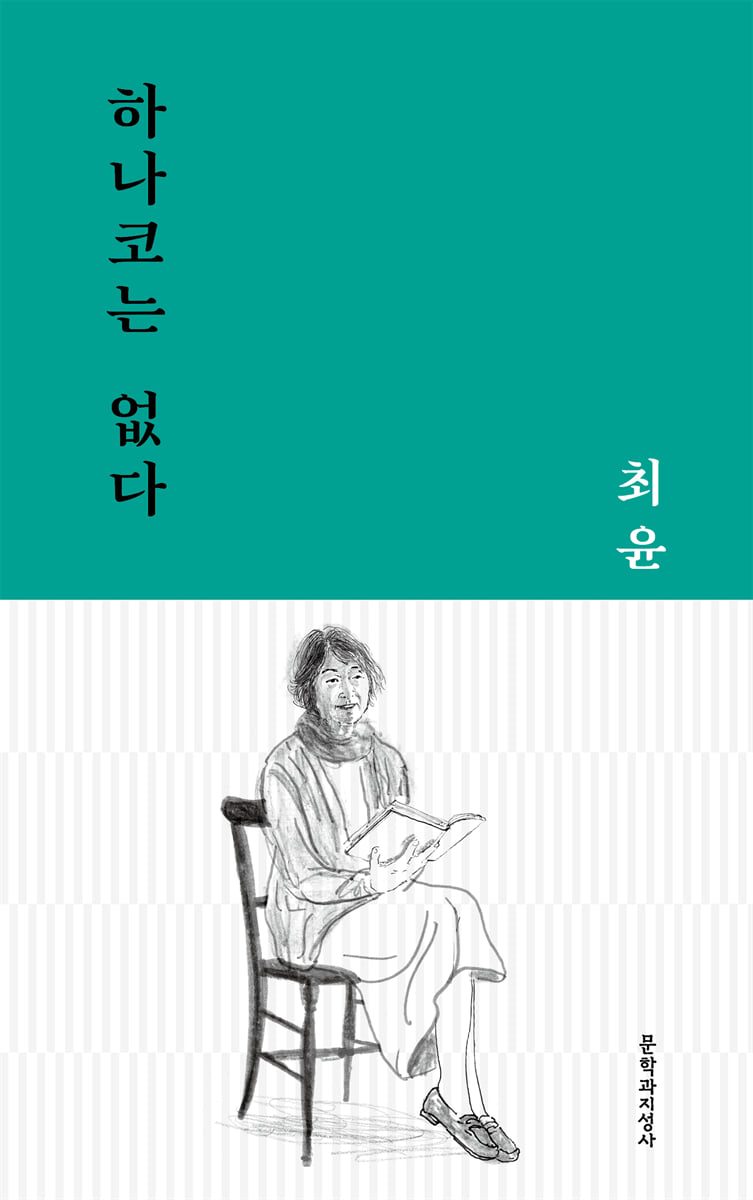
Hanako is not there
 |
Description
Book Introduction
Munhak-kwa-Jiseongsa's novel series "Munji Writer's Selection"
"Munji Writer's Selection," a collection of yesterday's literature reread through today's eyes, launched in July 2019.
In 2019, the year that marks the end of another decade, Munhak-kwa-Jiseongsa has decided that it is time to compile a list of authors and their works that have left a profound mark on Korean literary history and, by extension, modern Korean history, highlighting their literary value and imbuing them with new meaning.
To this day, we have selected authors who have continued to engage in meaningful creative activities as the backbone of Korean literature while also receiving support from a wide range of readers, and we have consistently presented their works to readers through a critical perspective.
Additionally, we add commentary by literary critics who were in charge of editing each volume, providing a detailed look into the literary and historical significance of the author and his/her work.
The starting point of the "Munji Writers' Selection" is the "April 19 Generation" writers who, during a period of political upheaval in an oppressed era, expressed criticism and resistance against power and society through literary language.
Following the short story collections of Choi In-hun, Kim Seung-ok, Seo Jeong-in, Lee Cheong-jun, Yun Heung-gil, and Kim Won-il, as well as Oh Jeong-hee and Park Wan-seo, the originators of modern Korean women's fiction, we present a short story collection by Choi Yun.
"Munji Writer's Selection," a collection of yesterday's literature reread through today's eyes, launched in July 2019.
In 2019, the year that marks the end of another decade, Munhak-kwa-Jiseongsa has decided that it is time to compile a list of authors and their works that have left a profound mark on Korean literary history and, by extension, modern Korean history, highlighting their literary value and imbuing them with new meaning.
To this day, we have selected authors who have continued to engage in meaningful creative activities as the backbone of Korean literature while also receiving support from a wide range of readers, and we have consistently presented their works to readers through a critical perspective.
Additionally, we add commentary by literary critics who were in charge of editing each volume, providing a detailed look into the literary and historical significance of the author and his/her work.
The starting point of the "Munji Writers' Selection" is the "April 19 Generation" writers who, during a period of political upheaval in an oppressed era, expressed criticism and resistance against power and society through literary language.
Following the short story collections of Choi In-hun, Kim Seung-ok, Seo Jeong-in, Lee Cheong-jun, Yun Heung-gil, and Kim Won-il, as well as Oh Jeong-hee and Park Wan-seo, the originators of modern Korean women's fiction, we present a short story collection by Choi Yun.
- You can preview some of the book's contents.
Preview
index
gray snowman
Your water spout
Washington Square
Whisper, whisper
Hanako is not there
The fragrance of flowers with thirteen names
A Journey to Wax Lake
Goodbye
Accompanying
woman in pink top
clear
Friendship in the Absence of Proof | Jo Yeon-jeong
Your water spout
Washington Square
Whisper, whisper
Hanako is not there
The fragrance of flowers with thirteen names
A Journey to Wax Lake
Goodbye
Accompanying
woman in pink top
clear
Friendship in the Absence of Proof | Jo Yeon-jeong
Into the book
Even the beautiful face of a person whose smile has disappeared, now comes to mind with a blank expression.
This last face only deepened and widened the edges of the void.
No face can fill that void.
[… … ]
Still, she returns for a moment to this last face.
A sudden appearance and an unwavering conviction that takes hold before she can even begin to doubt it sends a cold gust of wind through her body.
---pp.33~34 From "Goodbye"
But regardless of agnosticism, the world of science always produces surprising and unexpected results, and scientists are faced with the beautifully contradictory laws of the universe: limitations and infinity.
That's when the scientist learns to admit that he asked the wrong question and that he should ask the question differently.
---p.87 From "Your Water Splash"
One morning, my head was filled with a duet song.
Not just the small universe in my head, but the whole room, the whole city, and even the distant universe.
It wasn't like any other refreshing early morning whistle, a small token of happiness slipping through your lips.
It's a popular song that's outdated, a duet that's closer to a cry than music.
---p.91 From "Washington Square"
Oh, when it comes to pleasant places, there is probably no one in Seoul who knows how to choose a place that is comfortable and suits their state of mind better than she does.
The places she chose, whether teahouses or bars, were located in such ordinary places on streets they often passed by that it was hard to believe she had never discovered them before.
But it has one feature that definitely leaves an impression.
A seat with a comfortable backrest that was memorable, a special decoration, or a teacup with a unique shape… She never forgot to point out such things, and even he, who was somewhat insensitive to such things, soon became able to speak up.
---p.173 From "There Is No Hanako"
“You don’t know me like that?” Hanako’s voice, speaking on the phone, sometimes rang in his ears like a ghost’s voice.
But his life was too busy for grand reasons to answer that kind of question.
---p.192 From "There Is No Hanako"
The presenter steps aside and J begins performing card magic on a prepared table, drawing a pre-staged rhythm.
J's movements, expressions, and hand movements are all beautiful.
The reason J is so beautiful is because she survived.
This last face only deepened and widened the edges of the void.
No face can fill that void.
[… … ]
Still, she returns for a moment to this last face.
A sudden appearance and an unwavering conviction that takes hold before she can even begin to doubt it sends a cold gust of wind through her body.
---pp.33~34 From "Goodbye"
But regardless of agnosticism, the world of science always produces surprising and unexpected results, and scientists are faced with the beautifully contradictory laws of the universe: limitations and infinity.
That's when the scientist learns to admit that he asked the wrong question and that he should ask the question differently.
---p.87 From "Your Water Splash"
One morning, my head was filled with a duet song.
Not just the small universe in my head, but the whole room, the whole city, and even the distant universe.
It wasn't like any other refreshing early morning whistle, a small token of happiness slipping through your lips.
It's a popular song that's outdated, a duet that's closer to a cry than music.
---p.91 From "Washington Square"
Oh, when it comes to pleasant places, there is probably no one in Seoul who knows how to choose a place that is comfortable and suits their state of mind better than she does.
The places she chose, whether teahouses or bars, were located in such ordinary places on streets they often passed by that it was hard to believe she had never discovered them before.
But it has one feature that definitely leaves an impression.
A seat with a comfortable backrest that was memorable, a special decoration, or a teacup with a unique shape… She never forgot to point out such things, and even he, who was somewhat insensitive to such things, soon became able to speak up.
---p.173 From "There Is No Hanako"
“You don’t know me like that?” Hanako’s voice, speaking on the phone, sometimes rang in his ears like a ghost’s voice.
But his life was too busy for grand reasons to answer that kind of question.
---p.192 From "There Is No Hanako"
The presenter steps aside and J begins performing card magic on a prepared table, drawing a pre-staged rhythm.
J's movements, expressions, and hand movements are all beautiful.
The reason J is so beautiful is because she survived.
---p.390 From "Accompaniment"
Publisher's Review
“And go into the maze.
The more you fear it, the more you will lose your way.”
About the friendship that is completed in the absence of others
Choi Yun's short story collection, "There Is No Hanako"
“For the past 30 years, novelist Choi Yun has been exploring the most perfect form of friendship through ‘friendship of absence’ told in the form of a monologue” (Jo Yeon-jeong). Her short story collection, “There is No Hanako,” has been published as the ninth in the Munji Writers’ Series.
This selection of short stories includes ten of Choi Yun's representative works, published from the early days of her career to the present, including the title work, which won the 18th Yi Sang Literary Award in 1994, as well as "Gray Snowman" (winner of the 23rd Dong-in Literary Award in 1992), "Your Water Swallow" (1992), "Washington Square" (1994), "Goodbye" (1999), and "The Woman in the Pink Top" (2015).
Among the included works, eight stories, including “Washington Square,” “Whisper, Whisper” (1993), and “The Fragrance of Flowers with Thirteen Names” (1995), were not included in Choi Yun’s short story collection “There, a Petal Falls Silently,” published in 2018 as Munji Classic 6.
Literary critic Jo Yeon-jeong, who was in charge of editing and annotating the book, rereads Choi Yun's novel after categorizing it into several categories.
"Gray Snowman," "Whisper, Whisper," and "Washington Square," which contain the "testimony" of those who have witnessed the secret lives of others, and "Your Water Swallow," "Journey to the Wax Lake" (2002), "Goodbye," and "Companionship" (2012), which reconstruct the painful experiences surrounding the mysterious deaths of family members as "monologues."
Furthermore, there are “The Gray Snowman” and “The Woman in the Pink Top,” which depict “the extraordinary friendship of being the only witness to someone’s death.”
In Choi Yun's novel, friendship, which is "completed in the place of absence," includes, in other words, the surviving "I" overcoming the misfortune of being alone and saving my own future life by crossing over into the lives of others, which can never be fully fathomed, and groping for absence.
Choi Yun introduces a narrator who “experiences in advance the unconfirmable absence of oneself” (Jo Yeon-jeong) in the absence of others, and expands the ethics of the author’s own novel writing from this perspective.
The 'mourning' of the speaker, standing in the midst of suffering, is not only directed towards the dead through 'writing on their behalf' through testimony or monologue, but also embraces the speaker's own period and wounds that are recalled in the process of recording.
This is the greatest characteristic of Choi Yun's novels, which coolly recognize the barbarism of the times while carefully observing the tenacious vitality and human life that blooms and falls within it.
There was nothing to hurt Hanako's pride.
Even if things got worse with Hanako, I wasn't particularly afraid.
Even after that, he still tries to visit her using his business trip as an excuse.
Why is that?
“We are friends.”
It was something Hanako said one day to cover up his slip of the tongue.
Of course, I had no memory of what the mistake was.
But the uncomfortable ripples those words caused remain vivid in my memory.
"There is no Hanako" (p.
178)
The title work, "There Is No Hanako" (1994), is written from the perspective of a male narrator, unlike most of the works included in the book.
Hanako's personality, mysterious yet generous, friendly yet cautious, is objectified and consumed by boys her age.
Eventually, Hanako, who was caught up in the commotion caused by their uncontrollable violence and impulsiveness, becomes estranged from the narrator and her male friends who were part of the group.
As time passes, she becomes a companion and business partner, and she has achieved international fame as an interior designer, but to the speaker's eyes, she seems like a stranger.
The narrator's dull gaze upon encountering the true Hanako, Jang Jinja, who had been hidden behind the thickness of men's animalistic desires, and his ignorance in not being able to interpret the shock he had received, consistently stimulate the objectivity of the reader reading the work, leaving a chilling resonance.
Not only novels, but also the writer's life becomes third person.
On a personal level, I think it is a gift given to the novelist that all personal life, including 'my', is objectified.
Otherwise, there would be no way for someone like me, a writer, who is endowed with a certain degree of this sensitivity, to survive the turbulent, capricious, chaotic, and often uglier human life.
[… … ]
I think that writing a good novel depends on how well you maintain the balance of this third person, 'I'.
This balance could be called ethical balance in a broad sense.
This balance of third person calls for humility in the novelist.
(Choi Yun, “How I Write,” in “Desert, Deer,” Moonji Publishing, 2024, p.
45)
The author published the short story “There, a Petal Falls Silently” (1988), which deals with the tragedy of Gwangju in May, and was recognized as “the literature of the most outstanding testimony” (Kim Byeong-ik).
The novel was also made into the film “A Petal” (directed by Jang Sun-woo, 1996) and has been loved by the public for a long time.
What is the author trying to convey through his lifelong exploration of the tragedy of modern history, deeply rooted in individuals and their diverse relationships, as seen in works like "Gray Snowman," set in the 1970s when censorship under the Yushin regime reached its peak, and "Whisper, Whisper," steeped in the pain of national division and ideological conflict? Choi Yun's novels evoke memories.
In my memory, I revive others, and in the memory of others, I revive myself.
As memories turn, characters freed from the constraints of chaotic time are rewritten in the past, present, and future.
As seen in many of Choi Yun's works, the narrator's record, which begins with longing and yearning in a state of death-like solitude, is ultimately a journey to find 'myself' by turning to others and understanding them.
Literary critic Jo Yeon-jeong, who wrote the commentary on the work, says:
“A relationship where we remember someone’s secret life, where we never forget someone’s absence in pain, and where we share a friendship that keeps each other alive,” and so it would not be wrong to say that “what Choi Yun’s novels have shown us throughout is this kind of caring heart.”
“The monologues in Choi Yun’s novels ultimately explore the hearts of others through speaking about oneself.”
Rereading Choi Yun's novels today, we see the power of love hidden behind life's tragedies as a powerful indicator of friendship that pushes us to step out into the world again.
Sometimes the reasons that make people write something are so damn simple.
Is it really necessary to write when death is not visible at every moment?
Everyone writes with the illusion that they might not disappear completely.
(Choi Yun, “Why do we write?”, Confessions of a shy outsider, Munhakdongne, 1994, p.
205.)
The more you fear it, the more you will lose your way.”
About the friendship that is completed in the absence of others
Choi Yun's short story collection, "There Is No Hanako"
“For the past 30 years, novelist Choi Yun has been exploring the most perfect form of friendship through ‘friendship of absence’ told in the form of a monologue” (Jo Yeon-jeong). Her short story collection, “There is No Hanako,” has been published as the ninth in the Munji Writers’ Series.
This selection of short stories includes ten of Choi Yun's representative works, published from the early days of her career to the present, including the title work, which won the 18th Yi Sang Literary Award in 1994, as well as "Gray Snowman" (winner of the 23rd Dong-in Literary Award in 1992), "Your Water Swallow" (1992), "Washington Square" (1994), "Goodbye" (1999), and "The Woman in the Pink Top" (2015).
Among the included works, eight stories, including “Washington Square,” “Whisper, Whisper” (1993), and “The Fragrance of Flowers with Thirteen Names” (1995), were not included in Choi Yun’s short story collection “There, a Petal Falls Silently,” published in 2018 as Munji Classic 6.
Literary critic Jo Yeon-jeong, who was in charge of editing and annotating the book, rereads Choi Yun's novel after categorizing it into several categories.
"Gray Snowman," "Whisper, Whisper," and "Washington Square," which contain the "testimony" of those who have witnessed the secret lives of others, and "Your Water Swallow," "Journey to the Wax Lake" (2002), "Goodbye," and "Companionship" (2012), which reconstruct the painful experiences surrounding the mysterious deaths of family members as "monologues."
Furthermore, there are “The Gray Snowman” and “The Woman in the Pink Top,” which depict “the extraordinary friendship of being the only witness to someone’s death.”
In Choi Yun's novel, friendship, which is "completed in the place of absence," includes, in other words, the surviving "I" overcoming the misfortune of being alone and saving my own future life by crossing over into the lives of others, which can never be fully fathomed, and groping for absence.
Choi Yun introduces a narrator who “experiences in advance the unconfirmable absence of oneself” (Jo Yeon-jeong) in the absence of others, and expands the ethics of the author’s own novel writing from this perspective.
The 'mourning' of the speaker, standing in the midst of suffering, is not only directed towards the dead through 'writing on their behalf' through testimony or monologue, but also embraces the speaker's own period and wounds that are recalled in the process of recording.
This is the greatest characteristic of Choi Yun's novels, which coolly recognize the barbarism of the times while carefully observing the tenacious vitality and human life that blooms and falls within it.
There was nothing to hurt Hanako's pride.
Even if things got worse with Hanako, I wasn't particularly afraid.
Even after that, he still tries to visit her using his business trip as an excuse.
Why is that?
“We are friends.”
It was something Hanako said one day to cover up his slip of the tongue.
Of course, I had no memory of what the mistake was.
But the uncomfortable ripples those words caused remain vivid in my memory.
"There is no Hanako" (p.
178)
The title work, "There Is No Hanako" (1994), is written from the perspective of a male narrator, unlike most of the works included in the book.
Hanako's personality, mysterious yet generous, friendly yet cautious, is objectified and consumed by boys her age.
Eventually, Hanako, who was caught up in the commotion caused by their uncontrollable violence and impulsiveness, becomes estranged from the narrator and her male friends who were part of the group.
As time passes, she becomes a companion and business partner, and she has achieved international fame as an interior designer, but to the speaker's eyes, she seems like a stranger.
The narrator's dull gaze upon encountering the true Hanako, Jang Jinja, who had been hidden behind the thickness of men's animalistic desires, and his ignorance in not being able to interpret the shock he had received, consistently stimulate the objectivity of the reader reading the work, leaving a chilling resonance.
Not only novels, but also the writer's life becomes third person.
On a personal level, I think it is a gift given to the novelist that all personal life, including 'my', is objectified.
Otherwise, there would be no way for someone like me, a writer, who is endowed with a certain degree of this sensitivity, to survive the turbulent, capricious, chaotic, and often uglier human life.
[… … ]
I think that writing a good novel depends on how well you maintain the balance of this third person, 'I'.
This balance could be called ethical balance in a broad sense.
This balance of third person calls for humility in the novelist.
(Choi Yun, “How I Write,” in “Desert, Deer,” Moonji Publishing, 2024, p.
45)
The author published the short story “There, a Petal Falls Silently” (1988), which deals with the tragedy of Gwangju in May, and was recognized as “the literature of the most outstanding testimony” (Kim Byeong-ik).
The novel was also made into the film “A Petal” (directed by Jang Sun-woo, 1996) and has been loved by the public for a long time.
What is the author trying to convey through his lifelong exploration of the tragedy of modern history, deeply rooted in individuals and their diverse relationships, as seen in works like "Gray Snowman," set in the 1970s when censorship under the Yushin regime reached its peak, and "Whisper, Whisper," steeped in the pain of national division and ideological conflict? Choi Yun's novels evoke memories.
In my memory, I revive others, and in the memory of others, I revive myself.
As memories turn, characters freed from the constraints of chaotic time are rewritten in the past, present, and future.
As seen in many of Choi Yun's works, the narrator's record, which begins with longing and yearning in a state of death-like solitude, is ultimately a journey to find 'myself' by turning to others and understanding them.
Literary critic Jo Yeon-jeong, who wrote the commentary on the work, says:
“A relationship where we remember someone’s secret life, where we never forget someone’s absence in pain, and where we share a friendship that keeps each other alive,” and so it would not be wrong to say that “what Choi Yun’s novels have shown us throughout is this kind of caring heart.”
“The monologues in Choi Yun’s novels ultimately explore the hearts of others through speaking about oneself.”
Rereading Choi Yun's novels today, we see the power of love hidden behind life's tragedies as a powerful indicator of friendship that pushes us to step out into the world again.
Sometimes the reasons that make people write something are so damn simple.
Is it really necessary to write when death is not visible at every moment?
Everyone writes with the illusion that they might not disappear completely.
(Choi Yun, “Why do we write?”, Confessions of a shy outsider, Munhakdongne, 1994, p.
205.)
GOODS SPECIFICS
- Date of issue: November 25, 2024
- Page count, weight, size: 472 pages | 558g | 130*207*25mm
- ISBN13: 9788932041919
You may also like
카테고리
korean


korean

![GQ KOREA Mark (Monthly): December [2025]](http://librairie.coreenne.fr/cdn/shop/files/8ef265dbbfbf186523ed75ba7319009d.jpg?v=1765340328&width=3840)


