

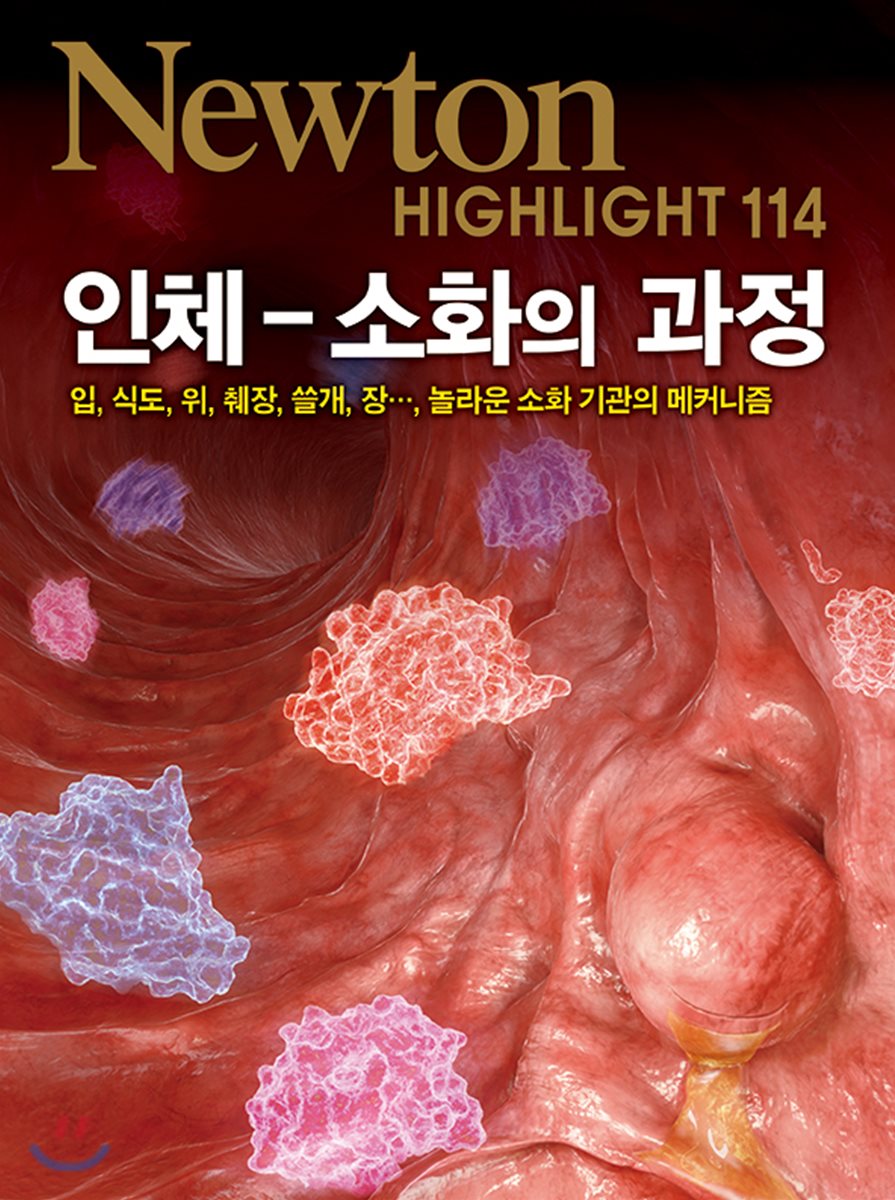
NEWTON HIGHLIGHT Newton Highlights Human Body - The Digestive Process
 |
Description
Book Introduction
See the digestive process with your own eyes
All foods, including rice, meat, fish, and vegetables, are rich in nutrients such as carbohydrates, proteins, and vitamins.
Nutrients perform various functions in the body, such as creating energy for our lives, forming body parts, and assisting chemical reactions.
Digestion is the process by which 'large' food that can be picked up with chopsticks or hands is broken down into small pieces that can be inserted into cells through the action of the stomach, pancreas, intestines, etc.
It's a well-known fact, but if we look closely at each organ responsible for digestion, we find a surprisingly unique world unfolding within.
This book takes you on a grand 'digestive journey', as if you were inside our bodies.
The various organs inside the body, which are difficult to see in person, are introduced through world-class illustrations and electron microscope photos, allowing you to see the entire digestive process as if you were watching it up close.
In Chapter 1, we encounter the 'wonderful joint operation' that takes place in the mouth, throat, and esophagus before being chewed and swallowed.
In Chapter 2, we enter the stomach, where gastric juice, which is made up of powerful acids and digestive enzymes, is active.
In Chapter 3, we will learn about the role of the pancreas and gallbladder, the "heart of digestion" that are often overlooked but are actually responsible for digesting all kinds of food.
In Chapter 4, we finally reach the chapter.
We look into the workings of the small intestine (small intestine), which has a dense surface structure to absorb many nutrients, and the large intestine (large intestine), where a large number of intestinal bacteria hide to effectively use the remainder that is not absorbed there.
This chapter, along with Chapter 5, also traces the whereabouts of nutrients as they are transported and utilized in the body from the small intestine.
And in Chapter 6, we focus on appetite, basal metabolism, and calories related to our eating habits.
Finally, the data section introduces the nutritional intake standards for Koreans and the results of a survey that provides information on nutritional intake and health status.
The grand process of digestion, which begins in the mouth and continues to the large intestine, can be completely summarized in this one book.
All foods, including rice, meat, fish, and vegetables, are rich in nutrients such as carbohydrates, proteins, and vitamins.
Nutrients perform various functions in the body, such as creating energy for our lives, forming body parts, and assisting chemical reactions.
Digestion is the process by which 'large' food that can be picked up with chopsticks or hands is broken down into small pieces that can be inserted into cells through the action of the stomach, pancreas, intestines, etc.
It's a well-known fact, but if we look closely at each organ responsible for digestion, we find a surprisingly unique world unfolding within.
This book takes you on a grand 'digestive journey', as if you were inside our bodies.
The various organs inside the body, which are difficult to see in person, are introduced through world-class illustrations and electron microscope photos, allowing you to see the entire digestive process as if you were watching it up close.
In Chapter 1, we encounter the 'wonderful joint operation' that takes place in the mouth, throat, and esophagus before being chewed and swallowed.
In Chapter 2, we enter the stomach, where gastric juice, which is made up of powerful acids and digestive enzymes, is active.
In Chapter 3, we will learn about the role of the pancreas and gallbladder, the "heart of digestion" that are often overlooked but are actually responsible for digesting all kinds of food.
In Chapter 4, we finally reach the chapter.
We look into the workings of the small intestine (small intestine), which has a dense surface structure to absorb many nutrients, and the large intestine (large intestine), where a large number of intestinal bacteria hide to effectively use the remainder that is not absorbed there.
This chapter, along with Chapter 5, also traces the whereabouts of nutrients as they are transported and utilized in the body from the small intestine.
And in Chapter 6, we focus on appetite, basal metabolism, and calories related to our eating habits.
Finally, the data section introduces the nutritional intake standards for Koreans and the results of a survey that provides information on nutritional intake and health status.
The grand process of digestion, which begins in the mouth and continues to the large intestine, can be completely summarized in this one book.
- You can preview some of the book's contents.
Preview
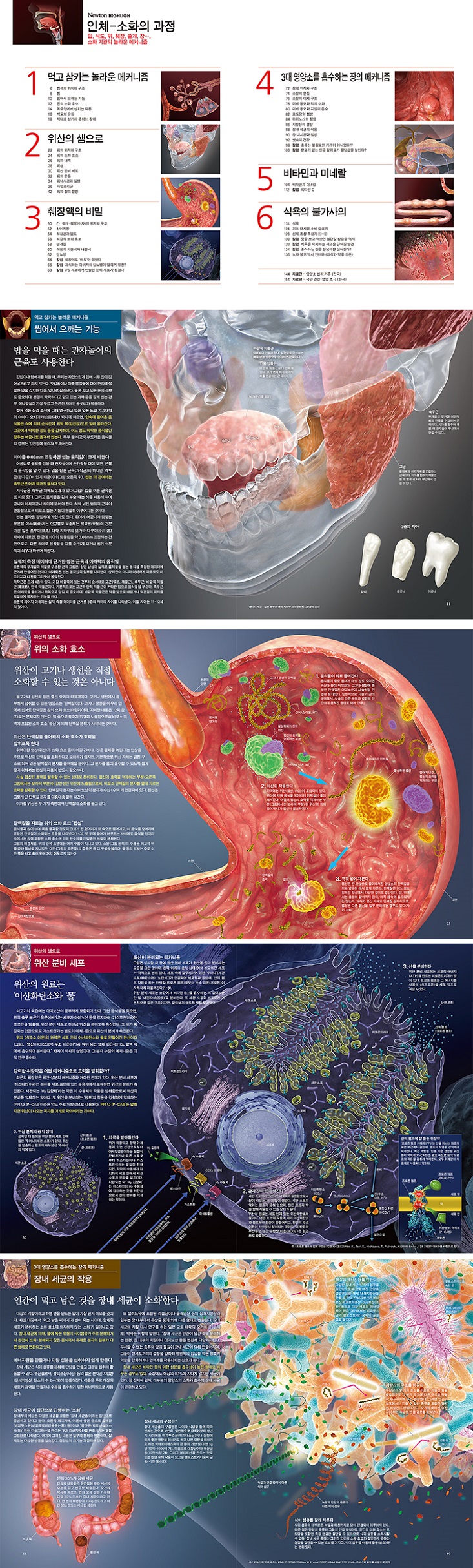
index
Chapter 1: The Amazing Mechanism of Eating and Swallowing
Location and structure of the salivary glands / Saliva / Chewing and crushing function / Digestive enzymes in saliva / Swallowing function in the throat / Movement of the esophagus / Disorders of proper swallowing
Chapter 2: The Source of Gastric Acid
Location and structure of the stomach / Digestive enzymes of the stomach / Inner wall of the stomach / Gastric glands / Acid-secreting cells of the stomach / Motility of the stomach / Gastroscopy and diseases / E. coli / Diseases of the stomach and intestines
Chapter 3: The Secret of Pancreatic Juice
Location and structure of the liver, gallbladder, and pancreas / Duodenum / Pancreatic duct and biliary tract / Digestive enzymes of the pancreas / Bile / Exocrine and endocrine functions of the pancreas / Diabetes
The Pancreas Has a Sense of Taste Too
Column: Does a father who overeats pass on diabetes to his daughter?
Insulin-secreting cells were generated from columnar iPS cells.
Chapter 4: The Intestinal Mechanism for Absorbing the Three Major Nutrients
Location and structure of the intestine / Movement of the small intestine / Microstructure of the small intestine / Digestion of microvilli and membrane / Microvilli and lipid absorption / Whereabouts of glucose / Whereabouts of amino acids / Whereabouts of fatty acids / Function of intestinal bacteria / Colonoscopy and diseases / Health of the stomach
The appendix wasn't an unnecessary organ!?
Column: Do Calorie-Free Artificial Sweeteners Raise Blood Sugar Levels?
Chapter 5 Vitamins and Minerals
Vitamins and Minerals / Column Vitamin C
Chapter 6: The Mystery of Appetite
Appetite / Basal Metabolism and Calories Burned / Body Composition Meter ①~②
Taste the column and eat it to suppress blood sugar level rise
Column: New Appetite-Suppressing Protein Discovered
If you give up on something you like, you'll start to hate it?
* Interview with Dr. Nora Volko (Overeating and Drug Dependence)
Data - Nutrient Intake Standards (Korea)
Data - National Health and Nutrition Survey (Korea)
Location and structure of the salivary glands / Saliva / Chewing and crushing function / Digestive enzymes in saliva / Swallowing function in the throat / Movement of the esophagus / Disorders of proper swallowing
Chapter 2: The Source of Gastric Acid
Location and structure of the stomach / Digestive enzymes of the stomach / Inner wall of the stomach / Gastric glands / Acid-secreting cells of the stomach / Motility of the stomach / Gastroscopy and diseases / E. coli / Diseases of the stomach and intestines
Chapter 3: The Secret of Pancreatic Juice
Location and structure of the liver, gallbladder, and pancreas / Duodenum / Pancreatic duct and biliary tract / Digestive enzymes of the pancreas / Bile / Exocrine and endocrine functions of the pancreas / Diabetes
The Pancreas Has a Sense of Taste Too
Column: Does a father who overeats pass on diabetes to his daughter?
Insulin-secreting cells were generated from columnar iPS cells.
Chapter 4: The Intestinal Mechanism for Absorbing the Three Major Nutrients
Location and structure of the intestine / Movement of the small intestine / Microstructure of the small intestine / Digestion of microvilli and membrane / Microvilli and lipid absorption / Whereabouts of glucose / Whereabouts of amino acids / Whereabouts of fatty acids / Function of intestinal bacteria / Colonoscopy and diseases / Health of the stomach
The appendix wasn't an unnecessary organ!?
Column: Do Calorie-Free Artificial Sweeteners Raise Blood Sugar Levels?
Chapter 5 Vitamins and Minerals
Vitamins and Minerals / Column Vitamin C
Chapter 6: The Mystery of Appetite
Appetite / Basal Metabolism and Calories Burned / Body Composition Meter ①~②
Taste the column and eat it to suppress blood sugar level rise
Column: New Appetite-Suppressing Protein Discovered
If you give up on something you like, you'll start to hate it?
* Interview with Dr. Nora Volko (Overeating and Drug Dependence)
Data - Nutrient Intake Standards (Korea)
Data - National Health and Nutrition Survey (Korea)
Detailed image
Publisher's Review
Saliva, location and structure of salivary glands, digestive enzymes in saliva, chewing and swallowing food, movement of the esophagus, etc.
The mouth is the first gateway to the ‘digestive journey’.
The food we eat first enters our mouths, where it is broken down into small pieces, mixed with saliva, and passes from our mouths through our throats into our esophagus.
It involves saliva, salivary glands, digestive enzymes, and the movement of swallowing food and sending it down the esophagus.
This seemingly simple process involves the cooperation of many bones, muscles, and nerves.
We explore the fascinating collaboration that takes place between the mouth and the esophagus.
The above structure, digestive enzymes, lining, gastric glands, gastric acid-secreting cells, gastric motility, diseases and endoscopy of the stomach and intestines, pylori, etc.
Food that has passed through the esophagus is transported to the stomach.
The stomach contains gastric juice containing strong acid and digestive enzymes, which is responsible for sterilization and digestion.
This involves gastric glands and gastric acid-secreting cells.
And thanks to the efficient movement of the stomach, the food can pass on to the next stage, the intestines.
Meanwhile, the pylori bacteria hiding in the stomach in this 'extreme environment' are bacteria that have been found to be related to gastric ulcers and gastric cancer.
We will also learn about the above diseases and the endoscopic examinations that detect them.
Location and structure of the liver, gallbladder, and pancreas, duodenum, pancreatic duct, and bile duct, digestive enzymes and bile of the pancreas, diabetes, etc.
When we say 'digestive system', the stomach and intestines come to mind first.
However, the organs that are actually very important for digestion are the pancreas and the gallbladder.
Pancreatic juice (pancreatic juice) from the pancreas contains digestive enzymes that can break down nutrients such as carbohydrates, lipids, and proteins, and the gallbladder concentrates bile, which helps digest lipids.
We provide detailed information about the pancreas and gallbladder, which are surprisingly unknown and often hidden by other organs.
Location and structure of the intestine, movement and microstructure of the small intestine, microvilli and lipid absorption, whereabouts of glucose, amino acids, and fatty acids, intestinal bacteria, intestinal diseases and endoscopy
Food that has moved through the digestive tract finally reaches the intestines.
The final digestion and absorption of food takes place in the small intestine, which is densely lined with microvilli.
In the large intestine (colon), a vast number of intestinal bacteria produce helpful substances from the 'leftovers of food'.
What movements occur in the small intestine, and what mechanisms are involved in the digestion of each nutrient? What role do colonic bacteria play? How is endoscopy used to diagnose intestinal diseases? We'll explore the intestines, the final stage of the digestive journey and the epic stage of digestion and absorption.
Vitamins and minerals, appetite, basal metabolism and calorie consumption, body composition, blood sugar, etc.
Vitamins and minerals are called the five major nutrients along with carbohydrates, proteins, and lipids.
Vitamins and minerals are of various types and are only needed in very small amounts, but they play many important roles in our bodies, such as helping enzymes function.
Meanwhile, ‘appetite’ is closely related to digestion.
Consuming the right amount of nutrients for our body is very important for maintaining good health.
However, if you are indifferent to your health, it is easy for things like nutritional imbalances or overeating to occur.
The final part of the book covers topics related to health, such as appetite, calories, and body fat.
And through the data section, we introduce statistical data on the appropriate nutrient intake and health status of Koreans.
The mouth is the first gateway to the ‘digestive journey’.
The food we eat first enters our mouths, where it is broken down into small pieces, mixed with saliva, and passes from our mouths through our throats into our esophagus.
It involves saliva, salivary glands, digestive enzymes, and the movement of swallowing food and sending it down the esophagus.
This seemingly simple process involves the cooperation of many bones, muscles, and nerves.
We explore the fascinating collaboration that takes place between the mouth and the esophagus.
The above structure, digestive enzymes, lining, gastric glands, gastric acid-secreting cells, gastric motility, diseases and endoscopy of the stomach and intestines, pylori, etc.
Food that has passed through the esophagus is transported to the stomach.
The stomach contains gastric juice containing strong acid and digestive enzymes, which is responsible for sterilization and digestion.
This involves gastric glands and gastric acid-secreting cells.
And thanks to the efficient movement of the stomach, the food can pass on to the next stage, the intestines.
Meanwhile, the pylori bacteria hiding in the stomach in this 'extreme environment' are bacteria that have been found to be related to gastric ulcers and gastric cancer.
We will also learn about the above diseases and the endoscopic examinations that detect them.
Location and structure of the liver, gallbladder, and pancreas, duodenum, pancreatic duct, and bile duct, digestive enzymes and bile of the pancreas, diabetes, etc.
When we say 'digestive system', the stomach and intestines come to mind first.
However, the organs that are actually very important for digestion are the pancreas and the gallbladder.
Pancreatic juice (pancreatic juice) from the pancreas contains digestive enzymes that can break down nutrients such as carbohydrates, lipids, and proteins, and the gallbladder concentrates bile, which helps digest lipids.
We provide detailed information about the pancreas and gallbladder, which are surprisingly unknown and often hidden by other organs.
Location and structure of the intestine, movement and microstructure of the small intestine, microvilli and lipid absorption, whereabouts of glucose, amino acids, and fatty acids, intestinal bacteria, intestinal diseases and endoscopy
Food that has moved through the digestive tract finally reaches the intestines.
The final digestion and absorption of food takes place in the small intestine, which is densely lined with microvilli.
In the large intestine (colon), a vast number of intestinal bacteria produce helpful substances from the 'leftovers of food'.
What movements occur in the small intestine, and what mechanisms are involved in the digestion of each nutrient? What role do colonic bacteria play? How is endoscopy used to diagnose intestinal diseases? We'll explore the intestines, the final stage of the digestive journey and the epic stage of digestion and absorption.
Vitamins and minerals, appetite, basal metabolism and calorie consumption, body composition, blood sugar, etc.
Vitamins and minerals are called the five major nutrients along with carbohydrates, proteins, and lipids.
Vitamins and minerals are of various types and are only needed in very small amounts, but they play many important roles in our bodies, such as helping enzymes function.
Meanwhile, ‘appetite’ is closely related to digestion.
Consuming the right amount of nutrients for our body is very important for maintaining good health.
However, if you are indifferent to your health, it is easy for things like nutritional imbalances or overeating to occur.
The final part of the book covers topics related to health, such as appetite, calories, and body fat.
And through the data section, we introduce statistical data on the appropriate nutrient intake and health status of Koreans.
GOODS SPECIFICS
- Date of issue: December 15, 2017
- Page count, weight, size: 160 pages | 608g | 210*277*20mm
- ISBN13: 9791161960203
- ISBN10: 1161960201
You may also like
카테고리
korean


korean

![GQ KOREA Mark (Monthly): December [2025]](http://librairie.coreenne.fr/cdn/shop/files/8ef265dbbfbf186523ed75ba7319009d.jpg?v=1765340328&width=3840)


