

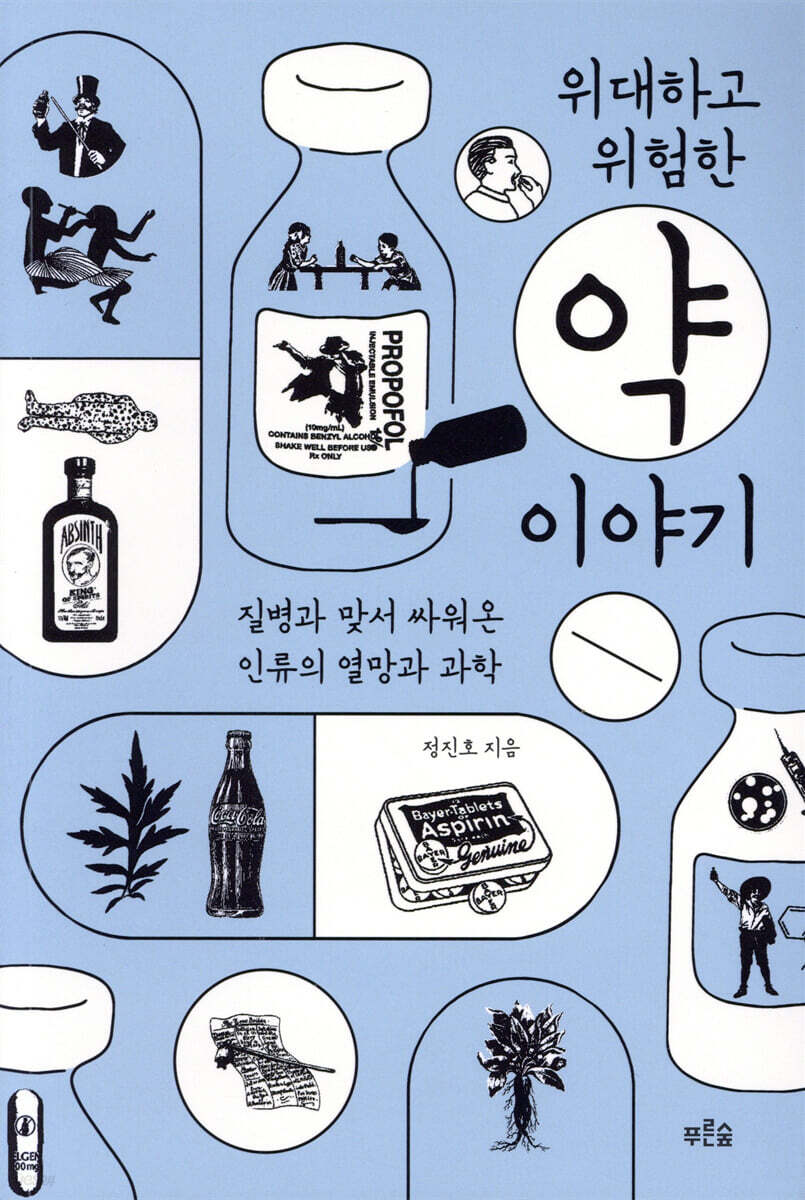
The Story of a Great and Dangerous Drug
 |
Description
Book Introduction
For health and happiness
What should I believe and what should I not believe?
Everything You Need to Know About Medicine from Professor Jin-ho Jeong, a World-renowned Toxicologist
Qin Shi Huang dreamed of eternal youth.
He was obsessed with the elixir of life, and when Seo Bok, who had gone to get the elixir, did not return, he took a mercury-containing herbal medicine instead.
He believed this herbal medicine was an elixir of immortality, as his skin became taut due to the toxic heavy metal mercury, and he eventually died of mercury poisoning at the age of 49.
In December 2016, when Professor Juan Carlos Belmonte of the Salt Institute in the United States announced the results of a study showing that “old mice can be made younger” using induced pluripotent stem cell technology, the world, including Korea, was excited.
I believed that we had come one step closer to fulfilling the long-held human desire to regain youth, beyond anti-aging that slows or prevents aging.
“Is what we have believed to be medicine really medicine?”
We all want to live healthy lives.
A 'happy life' is considered to be one in which one lives without getting sick or suffering greatly.
Humanity's desire to live a healthy life has been around for thousands of years.
Qin Shi Huang, who dreamed of immortality, took a decoction containing the heavy metal mercury for several months, and eventually died at the age of 49 from the side effects of the mercury.
With the average life expectancy now reaching 80 years, the development of anti-aging agents using stem cells to increase the average human lifespan is in full swing.
The human desire to live long is sometimes realized or frustrated by the science of "medicine."
What should I believe and what should I not believe?
Everything You Need to Know About Medicine from Professor Jin-ho Jeong, a World-renowned Toxicologist
Qin Shi Huang dreamed of eternal youth.
He was obsessed with the elixir of life, and when Seo Bok, who had gone to get the elixir, did not return, he took a mercury-containing herbal medicine instead.
He believed this herbal medicine was an elixir of immortality, as his skin became taut due to the toxic heavy metal mercury, and he eventually died of mercury poisoning at the age of 49.
In December 2016, when Professor Juan Carlos Belmonte of the Salt Institute in the United States announced the results of a study showing that “old mice can be made younger” using induced pluripotent stem cell technology, the world, including Korea, was excited.
I believed that we had come one step closer to fulfilling the long-held human desire to regain youth, beyond anti-aging that slows or prevents aging.
“Is what we have believed to be medicine really medicine?”
We all want to live healthy lives.
A 'happy life' is considered to be one in which one lives without getting sick or suffering greatly.
Humanity's desire to live a healthy life has been around for thousands of years.
Qin Shi Huang, who dreamed of immortality, took a decoction containing the heavy metal mercury for several months, and eventually died at the age of 49 from the side effects of the mercury.
With the average life expectancy now reaching 80 years, the development of anti-aging agents using stem cells to increase the average human lifespan is in full swing.
The human desire to live long is sometimes realized or frustrated by the science of "medicine."
- You can preview some of the book's contents.
Preview
index
Preface: Science Born from a Passion for Life and Curiosity
Part 1: Misconceptions and Truths Surrounding Drugs
The Placebo Effect: How Faith Works
Vitamins, the Nobel Prize's favorite topic
Aren't antidepressants dangerous?
The most scientific folk remedy for curing diarrhea
A hangover cure: A problem science hasn't solved.
Part 2: How Medicine Becomes Poison
The Two Faces of Medicine and Poison
Children killed by thalidomide
Why the Humidifier Disinfectant Case Shouldn't End Like This
Opium, a welcome painkiller and narcotic
Our body's defense engine is better than detox products.
Part 3: The Birth of a Great Medicine That Saved Humanity
Anesthetics that brought about revolutionary advancements in surgical procedures
Vaccines: A Fruit of Courage for the Times
A simple disinfectant that saved countless lives.
The germ theory that elucidated the cause of disease and the discovery of antibiotics
Aspirin: A History of Rise and Fall
The never-ending war against malaria
Viagra, the happy drug just for men
Part 4: The Endless Desire for Health and Longevity
There is no panacea, no eternal lie.
Superfoods, health functional foods, and medicines
How long will the average human lifespan increase?
Could AI Replace Doctors and Pharmacists?
Search
Part 1: Misconceptions and Truths Surrounding Drugs
The Placebo Effect: How Faith Works
Vitamins, the Nobel Prize's favorite topic
Aren't antidepressants dangerous?
The most scientific folk remedy for curing diarrhea
A hangover cure: A problem science hasn't solved.
Part 2: How Medicine Becomes Poison
The Two Faces of Medicine and Poison
Children killed by thalidomide
Why the Humidifier Disinfectant Case Shouldn't End Like This
Opium, a welcome painkiller and narcotic
Our body's defense engine is better than detox products.
Part 3: The Birth of a Great Medicine That Saved Humanity
Anesthetics that brought about revolutionary advancements in surgical procedures
Vaccines: A Fruit of Courage for the Times
A simple disinfectant that saved countless lives.
The germ theory that elucidated the cause of disease and the discovery of antibiotics
Aspirin: A History of Rise and Fall
The never-ending war against malaria
Viagra, the happy drug just for men
Part 4: The Endless Desire for Health and Longevity
There is no panacea, no eternal lie.
Superfoods, health functional foods, and medicines
How long will the average human lifespan increase?
Could AI Replace Doctors and Pharmacists?
Search
Into the book
“This book is about medicine, but it is also a story about how the desperate desire to prevent death and disease evolved from superstition to science.
Things that were considered superstitions thousands of years ago are now proven scientifically, and things that emerged in the 21st century and were considered science are sometimes proven false.
What we believe can always be wrong.
However, humanity's desire to eliminate the suffering of disease and live happier lives, as well as its endless curiosity toward science, will remain unchanged.”
-From the Preface
Things that were considered superstitions thousands of years ago are now proven scientifically, and things that emerged in the 21st century and were considered science are sometimes proven false.
What we believe can always be wrong.
However, humanity's desire to eliminate the suffering of disease and live happier lives, as well as its endless curiosity toward science, will remain unchanged.”
-From the Preface
--- From the text
Publisher's Review
The history of medicine is the history of humanity.
Humanity's aspirations and science in the fight against disease
From ancient times to the present, the human desire to live a long and healthy life has remained unchanged.
Mark Twain also expressed his fear of aging when he said, “If people were born at eighty and gradually grew younger to eighteen, life would be a very happy one.”
Living healthily without getting sick is the universal and longest-held standard of happiness shared by mankind.
But humanity's journey to find happiness was not easy.
Only as awareness and methods of scientific verification developed did we become able to know what was good for the body and what was bad for the body.
Ancient people had no choice but to use their own bodies as test subjects to test the efficacy of plants collected from nature.
Dioscorides, Nero's military physician, wrote about the identification and therapeutic effects of 600 kinds of medicinal herbs in his Pharmacognosy, and medicine has been used in the West based on this book for about 1,500 years.
Since the 18th century, as science has developed, scientists' efforts to find the causes of disease have led to the discovery of medicine.
But the discovery of a drug did not always have a rosy future.
Scientists have been plagued by vested interests, accusations of conspiracy theories, and countless lives have been lost.
In mid-18th century European cities, many mothers died of puerperal fever because doctors entered delivery rooms without washing their hands after touching corpses.
But it took another 100 years before the theory that simple disinfection could save lives was accepted.
The new book, "The Story of the Great and Dangerous Medicine" (published by Blue Forest), is a book that unfolds the story of how humanity's desire to fight against death and disease blossomed into 'medicine' from the time when people suffered from a lack of medicine to the present when the average life expectancy is approaching 80 years, from the perspective of a scientist.
Professor Jin-ho Jeong, who wrote this book, is a world-renowned toxicologist.
Professor Jin-Ho Jeong, who has been researching the human toxicity of chemicals contained in medicine, food, air, and water and the safety of hazardous chemicals for the past 30 years, was recognized for his research that the heavy metal arsenic can cause cardiovascular disease and cancer. He was selected as one of the '300 people who have made major contributions to toxicology research over the past 20 years' by The Chemical Research in Toxicology, the most authoritative journal in the field of toxicology, and was featured on the cover of a special issue as the only Korean scholar.
This book closely examines how the 'drugs' that determine health and death, pain and happiness, become medicine and poison, not only the great drugs that saved humanity, such as anesthetics, vaccines, antibiotics, disinfectants, and antimalarials selected by the British Medical Journal, but also the life-threatening drugs such as opium, thalidomide, and humidifier disinfectants.
It also covers the most misunderstood topics and controversies surrounding health, such as placebos, vitamins, antidepressants, hangover cures, and detoxification, aspirin, the "happy drug" Viagra that improved the quality of life, and even healthcare issues in the age of artificial intelligence, covering the latest life science and medical knowledge.
Unlike health books that emphasize convenience and short-term efficacy, such as what to eat, what not to eat, and which medicines are effective, this book analyzes and provides insight into the meaning of medicine to humanity and how modern people should approach medicine, using the latest science.
After reading this book, you will gain scientific insight into what to choose for your health and happiness, and what to avoid to protect your body.
The two faces of medicine and poison,
How do drugs become poison in our bodies?
In this book, the author, a toxicologist, precisely defines 'drugs and poisons' and scientifically explains how drugs can become poisons in our bodies.
Opium, which shows the duality of medicine and poison to the extreme, has been used as a powerful pain reliever since before the Common Era.
Heroin, made from opium extract, was also excellent for pain relief, but it was so addictive that it ruined the minds and bodies of many people.
The author answers the question of whether a person can quit drugs like this:
“Humans, who are born with the drug receptor endorphin in their brains, are very weak to the temptation of pleasure.
Although detox products claim to remove toxins from the body, there are no toxins that can be removed from our bodies with detox products.
Moreover, detox products can actually be toxic.
Detoxification, as defined by science, refers to a treatment method tailored to a specific poison when a highly toxic substance, such as pesticides, chemical weapons, or heavy metals, enters the body.
Over time, patients who were administered heroin developed severe physical and psychological addiction.
…as the symptoms worsened, doctors injected more heroin, resulting in more severe addictions.
-Page 107
Our bodies have strong regenerative abilities, so if we are exposed to extreme toxins, we need to use detoxifiers, but normal people do not need detox products.
Rather, taking detox products places unnecessary burden on the body.
-Page 115
What about the vitamin supplements many people take daily? While our bodies certainly need vitamins, those who eat a balanced diet with a variety of foods are far less likely to experience vitamin deficiencies.
This book presents recent research that questions whether multivitamins help maintain health.
In 2011, the Journal of the American Medical Association (JAMA) published a study showing that taking too much vitamin E increases the risk of developing prostate cancer, and in 2012, it published a study showing that there is no evidence that antioxidant multivitamins prevent chronic diseases, and that beta-carotene and vitamin E may actually increase mortality.
Vitamins are not a panacea and can be dangerous if taken in excess.
The author says that feeling better after taking a multivitamin is no different from the placebo effect.
Multivitamins are not a substitute for a balanced, healthy diet.
This is because food contains not only vitamins but also various natural ingredients that help maintain health.
However, if you are at risk for vitamin deficiency or have difficulty maintaining a normal diet, you can consult a specialist and take a multivitamin supplement that contains the recommended intake of vitamins.
-Page 37
There have been cases where medicines that were believed to protect health and hygiene have turned out to be poison and ruined the lives of countless people due to the irresponsible attitude of experts.
The thalidomide and humidifier disinfectant incidents occurred 50 years apart.
In 1960, over 10,000 babies around the world were born with birth defects due to the side effects of the morning sickness drug thalidomide, and thalidomide was banned from sale just five years after its release.
However, thalidomide is still used as a medicine because new properties have been discovered that make it effective in treating leprosy and blood cancer.
The humidifier disinfectant incident that occurred in the 21st century took about 20 years to resolve, from 1994, when the first victim came forward, to 2016, when a special law was enacted.
It's like neglecting the victims for 20 years.
The author, who served as an expert member of the humidifier disinfectant investigation committee, analyzed why the humidifier disinfectant incident was not quickly resolved and what the problems were, dividing it into three stages.
The humidifier disinfectant incident occurred because companies, the government, experts, and the media failed to fulfill their roles, but the author argues that urgent reform of the system for pharmaceutical and chemical safety management is necessary to prevent a second humidifier disinfectant incident.
This is why the humidifier disinfectant incident cannot end like this.
But thalidomide did not disappear.
In 1964, an Israeli doctor noticed that when he injected thalidomide into patients with Hansen's disease, a severe form of leprosy, the pain disappeared.
Subsequent clinical trials confirmed that thalidomide could treat leprosy.
-Page 87
Ultimately, five years passed without identifying the cause of the disease, and the number of victims continued to increase.
Lung disease is a disease caused by bacteria such as viruses, harmful chemicals, and physiological and genetic factors.
However, the Korea Centers for Disease Control and Prevention does not have a dedicated department to deal with diseases caused by hazardous chemicals.
-Page 101
Are the things we believe to be medicines really medicines?
The story of how the desperate desire to prevent disease evolved from superstition to science.
Throughout human history, science and non-science have always coexisted.
Sometimes ancient folk remedies are proven scientific in modern times, and sometimes what was once believed to be scientific is revealed to be outrageous lies.
Until the late 19th century, the representative treatment method that dominated the West was 'bloodlet therapy', which involved removing blood from the body to treat illness.
Both Charles II of England and George Washington, the first president of the United States, died from lack of blood while receiving bloodletting treatment.
It is surprising that Western doctors trusted bloodletting without question for nearly 2,000 years, from William Harvey's theory of blood circulation to Marcello Malpighi's microscopic discovery of the network of capillaries.
Even after Malpighi verified his theory of blood circulation, many doctors continued to practice bloodletting for over 200 years.
The idea that illness was caused by an imbalance of bodily fluids was still prevalent, and there were no other specific alternatives to treat the disease.
-Page 219
'Placebo', which we commonly think of as a psychological phenomenon, has recently been proven to be neurophysiologically effective.
When patients expect their symptoms to improve when they take a placebo, they actually feel their pain decrease due to the release of endorphins.
The science behind placebos is supported by studies that verify how the placebo effect occurs in the mind-brain-body triangle and studies that show that taking a placebo changes the human immune system.
In developed countries, doctors actively prescribe placebos when there is no suitable treatment, especially for pain relief, rheumatism, depression, anxiety, and sleep disorders.
Since the concept of placebo was first introduced, doctors have been elucidating the neurophysiological and psychosocial mechanisms of the placebo effect for about 200 years.
Recently, there has been ongoing research into how the placebo effect occurs in the mind-brain-body triangle.
-Page 22
Scientists have been trying to figure out what causes hangovers in order to develop a hangover cure.
However, the cause of hangovers has not yet been clearly identified.
Soon, hangover cures were created without knowing the cause of hangovers.
Meanwhile, an example of a folk remedy that has been scientifically proven in modern times is an anti-diarrheal medicine.
Regardless of East or West, children with diarrhea have been fed porridge or soup since ancient times.
This method, also known as 'Grandma's Recipe' in the West, was a very scientific treatment for children whose lives were in danger due to diarrhea that had caused them to lose water and electrolytes from their bodies.
Scientists, inspired by 'Grandma's Recipes,' created oral rehydration solutions made from food, saving the lives of many young children at risk from diarrhea.
It is inconsistent to develop a hangover cure without knowing the cause of the hangover.
From ancient times to the present, many herbal medicines, foods, and folk remedies claimed to be hangover cures in the East and the West have caught people's attention.
However, while hangover cures may alleviate one or two of the symptoms associated with a hangover, they cannot completely eliminate the overall symptoms of a hangover.
-Page 68
Since the 1980s, oral rehydration solutions based on food have been developed.
Oral rehydration solutions were made from grains and legumes rich in carbohydrates and proteins, rice or corn powder, and fed to patients with diarrhea.
As a result, compared to standard oral rehydration solutions, the food-based oral rehydration solution was found to be very useful for infant diarrhea as it reduced the amount of diarrhea by 50% and shortened the duration of diarrhea.
-Pages 59-60
When we examine the emergence of various methods to save lives and defeat disease, we discover courage that did not yield to the persuasion and criticism of those around us.
Lady Mary Montagu, who first experimented with the method of inoculation by vaccination (p. 143), Edward Jenner, who developed the method of inoculation by cowpox and widely spread the vaccine (p. 146), Ignaz Semmelweis, who made known the importance of disinfection (p. 153), John Snow, who first tried chlorine disinfection of water supplies (p. 163), scientists who discovered that bacteria were the cause of disease (p. 166), Samuel Adams, who exposed the fraudulent practices of the patent drug industry and led to the enactment of the Food and Drug Act (p. 223), and Francis Kelsey, who refused to allow the sale of thalidomide in the United States (p. 86), all had to risk social threats and economic damage to discover new facts that went against universal beliefs and group egoism and to correct what was wrong.
Sometimes they risked their own lives or those of their families.
At the intersection of the fervent desire to overcome disease and humanity's endless curiosity about life, there was 'medicine.'
Humanity's aspirations and science in the fight against disease
From ancient times to the present, the human desire to live a long and healthy life has remained unchanged.
Mark Twain also expressed his fear of aging when he said, “If people were born at eighty and gradually grew younger to eighteen, life would be a very happy one.”
Living healthily without getting sick is the universal and longest-held standard of happiness shared by mankind.
But humanity's journey to find happiness was not easy.
Only as awareness and methods of scientific verification developed did we become able to know what was good for the body and what was bad for the body.
Ancient people had no choice but to use their own bodies as test subjects to test the efficacy of plants collected from nature.
Dioscorides, Nero's military physician, wrote about the identification and therapeutic effects of 600 kinds of medicinal herbs in his Pharmacognosy, and medicine has been used in the West based on this book for about 1,500 years.
Since the 18th century, as science has developed, scientists' efforts to find the causes of disease have led to the discovery of medicine.
But the discovery of a drug did not always have a rosy future.
Scientists have been plagued by vested interests, accusations of conspiracy theories, and countless lives have been lost.
In mid-18th century European cities, many mothers died of puerperal fever because doctors entered delivery rooms without washing their hands after touching corpses.
But it took another 100 years before the theory that simple disinfection could save lives was accepted.
The new book, "The Story of the Great and Dangerous Medicine" (published by Blue Forest), is a book that unfolds the story of how humanity's desire to fight against death and disease blossomed into 'medicine' from the time when people suffered from a lack of medicine to the present when the average life expectancy is approaching 80 years, from the perspective of a scientist.
Professor Jin-ho Jeong, who wrote this book, is a world-renowned toxicologist.
Professor Jin-Ho Jeong, who has been researching the human toxicity of chemicals contained in medicine, food, air, and water and the safety of hazardous chemicals for the past 30 years, was recognized for his research that the heavy metal arsenic can cause cardiovascular disease and cancer. He was selected as one of the '300 people who have made major contributions to toxicology research over the past 20 years' by The Chemical Research in Toxicology, the most authoritative journal in the field of toxicology, and was featured on the cover of a special issue as the only Korean scholar.
This book closely examines how the 'drugs' that determine health and death, pain and happiness, become medicine and poison, not only the great drugs that saved humanity, such as anesthetics, vaccines, antibiotics, disinfectants, and antimalarials selected by the British Medical Journal, but also the life-threatening drugs such as opium, thalidomide, and humidifier disinfectants.
It also covers the most misunderstood topics and controversies surrounding health, such as placebos, vitamins, antidepressants, hangover cures, and detoxification, aspirin, the "happy drug" Viagra that improved the quality of life, and even healthcare issues in the age of artificial intelligence, covering the latest life science and medical knowledge.
Unlike health books that emphasize convenience and short-term efficacy, such as what to eat, what not to eat, and which medicines are effective, this book analyzes and provides insight into the meaning of medicine to humanity and how modern people should approach medicine, using the latest science.
After reading this book, you will gain scientific insight into what to choose for your health and happiness, and what to avoid to protect your body.
The two faces of medicine and poison,
How do drugs become poison in our bodies?
In this book, the author, a toxicologist, precisely defines 'drugs and poisons' and scientifically explains how drugs can become poisons in our bodies.
Opium, which shows the duality of medicine and poison to the extreme, has been used as a powerful pain reliever since before the Common Era.
Heroin, made from opium extract, was also excellent for pain relief, but it was so addictive that it ruined the minds and bodies of many people.
The author answers the question of whether a person can quit drugs like this:
“Humans, who are born with the drug receptor endorphin in their brains, are very weak to the temptation of pleasure.
Although detox products claim to remove toxins from the body, there are no toxins that can be removed from our bodies with detox products.
Moreover, detox products can actually be toxic.
Detoxification, as defined by science, refers to a treatment method tailored to a specific poison when a highly toxic substance, such as pesticides, chemical weapons, or heavy metals, enters the body.
Over time, patients who were administered heroin developed severe physical and psychological addiction.
…as the symptoms worsened, doctors injected more heroin, resulting in more severe addictions.
-Page 107
Our bodies have strong regenerative abilities, so if we are exposed to extreme toxins, we need to use detoxifiers, but normal people do not need detox products.
Rather, taking detox products places unnecessary burden on the body.
-Page 115
What about the vitamin supplements many people take daily? While our bodies certainly need vitamins, those who eat a balanced diet with a variety of foods are far less likely to experience vitamin deficiencies.
This book presents recent research that questions whether multivitamins help maintain health.
In 2011, the Journal of the American Medical Association (JAMA) published a study showing that taking too much vitamin E increases the risk of developing prostate cancer, and in 2012, it published a study showing that there is no evidence that antioxidant multivitamins prevent chronic diseases, and that beta-carotene and vitamin E may actually increase mortality.
Vitamins are not a panacea and can be dangerous if taken in excess.
The author says that feeling better after taking a multivitamin is no different from the placebo effect.
Multivitamins are not a substitute for a balanced, healthy diet.
This is because food contains not only vitamins but also various natural ingredients that help maintain health.
However, if you are at risk for vitamin deficiency or have difficulty maintaining a normal diet, you can consult a specialist and take a multivitamin supplement that contains the recommended intake of vitamins.
-Page 37
There have been cases where medicines that were believed to protect health and hygiene have turned out to be poison and ruined the lives of countless people due to the irresponsible attitude of experts.
The thalidomide and humidifier disinfectant incidents occurred 50 years apart.
In 1960, over 10,000 babies around the world were born with birth defects due to the side effects of the morning sickness drug thalidomide, and thalidomide was banned from sale just five years after its release.
However, thalidomide is still used as a medicine because new properties have been discovered that make it effective in treating leprosy and blood cancer.
The humidifier disinfectant incident that occurred in the 21st century took about 20 years to resolve, from 1994, when the first victim came forward, to 2016, when a special law was enacted.
It's like neglecting the victims for 20 years.
The author, who served as an expert member of the humidifier disinfectant investigation committee, analyzed why the humidifier disinfectant incident was not quickly resolved and what the problems were, dividing it into three stages.
The humidifier disinfectant incident occurred because companies, the government, experts, and the media failed to fulfill their roles, but the author argues that urgent reform of the system for pharmaceutical and chemical safety management is necessary to prevent a second humidifier disinfectant incident.
This is why the humidifier disinfectant incident cannot end like this.
But thalidomide did not disappear.
In 1964, an Israeli doctor noticed that when he injected thalidomide into patients with Hansen's disease, a severe form of leprosy, the pain disappeared.
Subsequent clinical trials confirmed that thalidomide could treat leprosy.
-Page 87
Ultimately, five years passed without identifying the cause of the disease, and the number of victims continued to increase.
Lung disease is a disease caused by bacteria such as viruses, harmful chemicals, and physiological and genetic factors.
However, the Korea Centers for Disease Control and Prevention does not have a dedicated department to deal with diseases caused by hazardous chemicals.
-Page 101
Are the things we believe to be medicines really medicines?
The story of how the desperate desire to prevent disease evolved from superstition to science.
Throughout human history, science and non-science have always coexisted.
Sometimes ancient folk remedies are proven scientific in modern times, and sometimes what was once believed to be scientific is revealed to be outrageous lies.
Until the late 19th century, the representative treatment method that dominated the West was 'bloodlet therapy', which involved removing blood from the body to treat illness.
Both Charles II of England and George Washington, the first president of the United States, died from lack of blood while receiving bloodletting treatment.
It is surprising that Western doctors trusted bloodletting without question for nearly 2,000 years, from William Harvey's theory of blood circulation to Marcello Malpighi's microscopic discovery of the network of capillaries.
Even after Malpighi verified his theory of blood circulation, many doctors continued to practice bloodletting for over 200 years.
The idea that illness was caused by an imbalance of bodily fluids was still prevalent, and there were no other specific alternatives to treat the disease.
-Page 219
'Placebo', which we commonly think of as a psychological phenomenon, has recently been proven to be neurophysiologically effective.
When patients expect their symptoms to improve when they take a placebo, they actually feel their pain decrease due to the release of endorphins.
The science behind placebos is supported by studies that verify how the placebo effect occurs in the mind-brain-body triangle and studies that show that taking a placebo changes the human immune system.
In developed countries, doctors actively prescribe placebos when there is no suitable treatment, especially for pain relief, rheumatism, depression, anxiety, and sleep disorders.
Since the concept of placebo was first introduced, doctors have been elucidating the neurophysiological and psychosocial mechanisms of the placebo effect for about 200 years.
Recently, there has been ongoing research into how the placebo effect occurs in the mind-brain-body triangle.
-Page 22
Scientists have been trying to figure out what causes hangovers in order to develop a hangover cure.
However, the cause of hangovers has not yet been clearly identified.
Soon, hangover cures were created without knowing the cause of hangovers.
Meanwhile, an example of a folk remedy that has been scientifically proven in modern times is an anti-diarrheal medicine.
Regardless of East or West, children with diarrhea have been fed porridge or soup since ancient times.
This method, also known as 'Grandma's Recipe' in the West, was a very scientific treatment for children whose lives were in danger due to diarrhea that had caused them to lose water and electrolytes from their bodies.
Scientists, inspired by 'Grandma's Recipes,' created oral rehydration solutions made from food, saving the lives of many young children at risk from diarrhea.
It is inconsistent to develop a hangover cure without knowing the cause of the hangover.
From ancient times to the present, many herbal medicines, foods, and folk remedies claimed to be hangover cures in the East and the West have caught people's attention.
However, while hangover cures may alleviate one or two of the symptoms associated with a hangover, they cannot completely eliminate the overall symptoms of a hangover.
-Page 68
Since the 1980s, oral rehydration solutions based on food have been developed.
Oral rehydration solutions were made from grains and legumes rich in carbohydrates and proteins, rice or corn powder, and fed to patients with diarrhea.
As a result, compared to standard oral rehydration solutions, the food-based oral rehydration solution was found to be very useful for infant diarrhea as it reduced the amount of diarrhea by 50% and shortened the duration of diarrhea.
-Pages 59-60
When we examine the emergence of various methods to save lives and defeat disease, we discover courage that did not yield to the persuasion and criticism of those around us.
Lady Mary Montagu, who first experimented with the method of inoculation by vaccination (p. 143), Edward Jenner, who developed the method of inoculation by cowpox and widely spread the vaccine (p. 146), Ignaz Semmelweis, who made known the importance of disinfection (p. 153), John Snow, who first tried chlorine disinfection of water supplies (p. 163), scientists who discovered that bacteria were the cause of disease (p. 166), Samuel Adams, who exposed the fraudulent practices of the patent drug industry and led to the enactment of the Food and Drug Act (p. 223), and Francis Kelsey, who refused to allow the sale of thalidomide in the United States (p. 86), all had to risk social threats and economic damage to discover new facts that went against universal beliefs and group egoism and to correct what was wrong.
Sometimes they risked their own lives or those of their families.
At the intersection of the fervent desire to overcome disease and humanity's endless curiosity about life, there was 'medicine.'
GOODS SPECIFICS
- Date of issue: August 7, 2017
- Page count, weight, size: 272 pages | 453g | 148*218*20mm
- ISBN13: 9791156757009
- ISBN10: 1156757002
You may also like
카테고리
korean


korean

![GQ KOREA Mark (Monthly): December [2025]](http://librairie.coreenne.fr/cdn/shop/files/8ef265dbbfbf186523ed75ba7319009d.jpg?v=1765340328&width=3840)


