

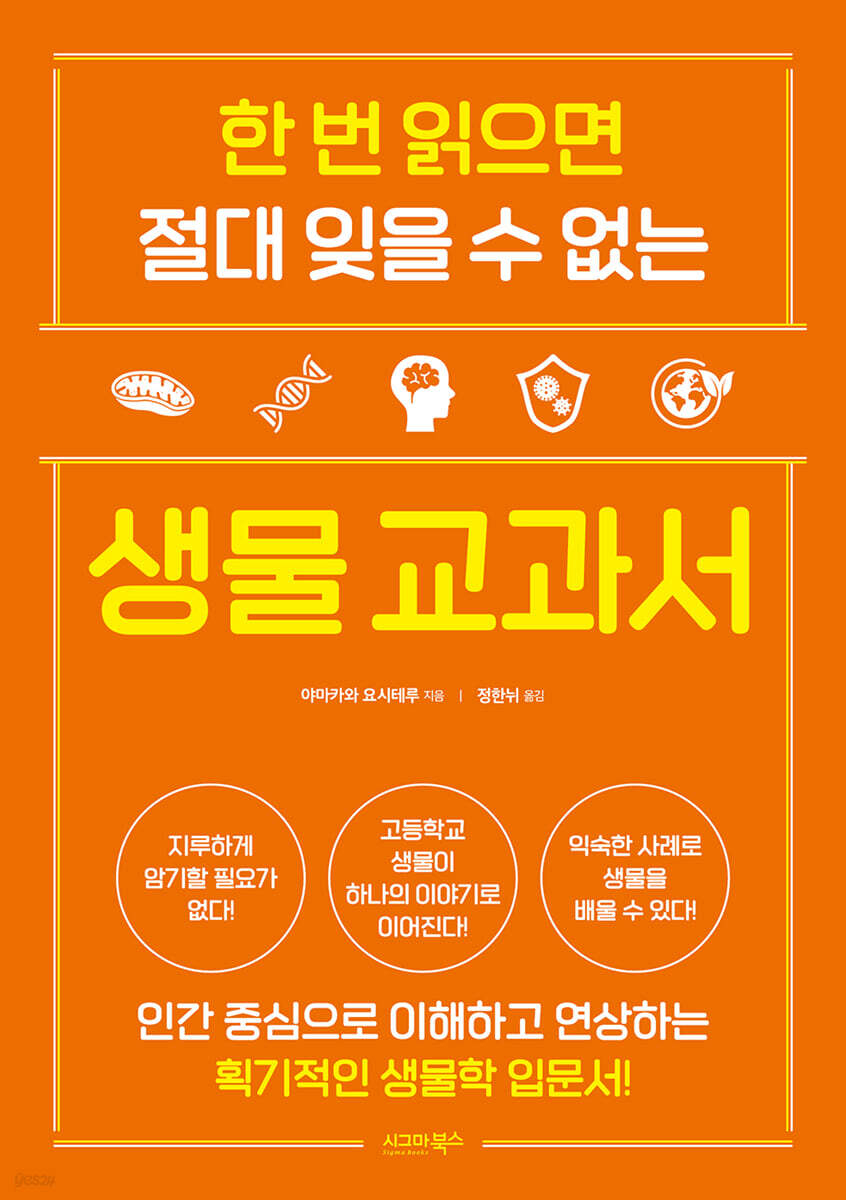
A biology textbook you'll never forget once you read it.
 |
Description
Book Introduction
Life science, which adds term to term and concept to concept,
If you understand it from a human-centered perspective, it becomes one story!
“Life science is a subject that you have to memorize from beginning to end.” Many people say this.
As time passes and I look back on the 'biology' or 'life science' I studied in high school, I feel like I memorized countless terms like I was memorizing English words.
However, even in high school subjects, the number of life science-related terms is not simply a few dozen.
In severe cases, it can be in the hundreds.
Will the terms and concepts memorized so haphazardly even stick in your head? Is there anything more futile than studying something that quickly fades from memory?
But even with countless terms, a story makes all the difference! The human brain evolved to remember "stories," so even when it comes to subjects requiring extensive memorization, memorizing them as stories significantly improves learning and facilitates long-term memory transfer! "A Biology Textbook You'll Never Forget Once You Read It" organizes terms and concepts related to life phenomena, which cannot be defined in a single formula, into stories.
It also tells an interesting story of life science using minimal concepts centered around ourselves, that is, 'humans'.
If you gave up on life science (biology) in the past because it was too difficult, or if you are thinking of giving up right now because studying it is too difficult, this book will help you find true enjoyment.
If you understand it from a human-centered perspective, it becomes one story!
“Life science is a subject that you have to memorize from beginning to end.” Many people say this.
As time passes and I look back on the 'biology' or 'life science' I studied in high school, I feel like I memorized countless terms like I was memorizing English words.
However, even in high school subjects, the number of life science-related terms is not simply a few dozen.
In severe cases, it can be in the hundreds.
Will the terms and concepts memorized so haphazardly even stick in your head? Is there anything more futile than studying something that quickly fades from memory?
But even with countless terms, a story makes all the difference! The human brain evolved to remember "stories," so even when it comes to subjects requiring extensive memorization, memorizing them as stories significantly improves learning and facilitates long-term memory transfer! "A Biology Textbook You'll Never Forget Once You Read It" organizes terms and concepts related to life phenomena, which cannot be defined in a single formula, into stories.
It also tells an interesting story of life science using minimal concepts centered around ourselves, that is, 'humans'.
If you gave up on life science (biology) in the past because it was too difficult, or if you are thinking of giving up right now because studying it is too difficult, this book will help you find true enjoyment.
- You can preview some of the book's contents.
Preview
index
Entering_Life science is one story!
[Homeroom ①] Why I Hate Life Sciences
[Homeroom ②] When learning life science, focus on stories with humans as the main characters!
[Homeroom ③] Why should we learn life science?
Chapter 1 Cell Biology
[Biodiversity] Diversity and Commonality: Contrasting Characteristics of Life
[Evolution of Life] What is evolution?
Commonalities of Living Things: Common characteristics of all living things
[Human Evolution] How did humanity evolve?
[Cell Structure] Prokaryotic and Eukaryotic Cells
[Biology and Energy] Where is energy created?
[Respiration and Photosynthesis] Respiration in Living Things and Photosynthesis in Plants
[Fermentation] ATP can be obtained even without cellular respiration!
[Metabolism and Enzymes] Enzymes responsible for metabolism
Chapter 2 Molecular Biology
[Genetics] How are traits passed from parents to children?
[DNA] What is DNA?
[The body of the gene] The identity of the substance responsible for genetic information
[DNA Replication] How is DNA replicated?
[DNA Distribution] Somatic Cell Division and Meiosis
[Genes and Proteins] Genes are the blueprints for proteins.
[Gene expression] The process by which proteins are synthesized based on genetic information.
[Genome] What is a genome?
Chapter 3 Physiology
[Body Environment and Homeostasis] Regulation of Body Functions
[Nervous System] Information transmission and control through the nervous system
[Endocrine System and Hormones] Information Transmission and Regulation Through the Endocrine System
[Blood Sugar Control] How is blood sugar controlled?
[Principles of Body Temperature Regulation] How is body temperature maintained at a constant level?
Chapter 4 Immunology
[Blood Coagulation] The Principle of Blood Coagulation
[Biological Defense] Immune Response
[Acquired Immunity] The Principle of Acquired Immunity
[Immunity and Disease] Do you get sick because of your immune response?
[Immunity and Medicine] Principles of Immunity Applied to Medicine
[Magnetic and Non-Magnetic] The Principle of Distinguishing Magnetic and Non-Magnetic
[Immune Response and Cancer Treatment] Immune Response in Cancer Treatment
Chapter 5 Ecology
[Vegetation] Vegetation and Environment
[Transition] How will vegetation change?
[Biome] Temperature and precipitation determine biomes
[Biodiversity] Ecosystems and Biodiversity
[Ecosystem Balance] Ecosystem Balance and Conservation
[Human Activity] Human Activity and the Ecosystem
Coming out
Key References
[Homeroom ①] Why I Hate Life Sciences
[Homeroom ②] When learning life science, focus on stories with humans as the main characters!
[Homeroom ③] Why should we learn life science?
Chapter 1 Cell Biology
[Biodiversity] Diversity and Commonality: Contrasting Characteristics of Life
[Evolution of Life] What is evolution?
Commonalities of Living Things: Common characteristics of all living things
[Human Evolution] How did humanity evolve?
[Cell Structure] Prokaryotic and Eukaryotic Cells
[Biology and Energy] Where is energy created?
[Respiration and Photosynthesis] Respiration in Living Things and Photosynthesis in Plants
[Fermentation] ATP can be obtained even without cellular respiration!
[Metabolism and Enzymes] Enzymes responsible for metabolism
Chapter 2 Molecular Biology
[Genetics] How are traits passed from parents to children?
[DNA] What is DNA?
[The body of the gene] The identity of the substance responsible for genetic information
[DNA Replication] How is DNA replicated?
[DNA Distribution] Somatic Cell Division and Meiosis
[Genes and Proteins] Genes are the blueprints for proteins.
[Gene expression] The process by which proteins are synthesized based on genetic information.
[Genome] What is a genome?
Chapter 3 Physiology
[Body Environment and Homeostasis] Regulation of Body Functions
[Nervous System] Information transmission and control through the nervous system
[Endocrine System and Hormones] Information Transmission and Regulation Through the Endocrine System
[Blood Sugar Control] How is blood sugar controlled?
[Principles of Body Temperature Regulation] How is body temperature maintained at a constant level?
Chapter 4 Immunology
[Blood Coagulation] The Principle of Blood Coagulation
[Biological Defense] Immune Response
[Acquired Immunity] The Principle of Acquired Immunity
[Immunity and Disease] Do you get sick because of your immune response?
[Immunity and Medicine] Principles of Immunity Applied to Medicine
[Magnetic and Non-Magnetic] The Principle of Distinguishing Magnetic and Non-Magnetic
[Immune Response and Cancer Treatment] Immune Response in Cancer Treatment
Chapter 5 Ecology
[Vegetation] Vegetation and Environment
[Transition] How will vegetation change?
[Biome] Temperature and precipitation determine biomes
[Biodiversity] Ecosystems and Biodiversity
[Ecosystem Balance] Ecosystem Balance and Conservation
[Human Activity] Human Activity and the Ecosystem
Coming out
Key References
Detailed image

Into the book
Mitochondria and chloroplasts in eukaryotic cells have their own DNA.
And both cell organelles are structures surrounded by double membranes.
Based on these characteristics, scientists speculate that mitochondria and chloroplasts may have originally been independent prokaryotes.
This means that bacteria that break down organic matter with oxygen (aerobic bacteria) enter other cells and become mitochondria, or bacteria that photosynthesize (cyanobacteria) enter other cells and become chloroplasts.
This phenomenon of cells living within other cells is called endosymbiosis.
--- "Chapter 1 Cell Biology"
These experimental results show that the substance that causes transformation is DNA.
In other words, the book that contained the instructions for 'making a membrane' was contained in the DNA of the S-type bacteria, and the R-type bacteria, which received this information, made the membrane themselves.
The efficiency of transformation may seem surprisingly low at 1-2%, but it is a very high number compared to genetic mutation.
The reason why only the S strain was detected in the bodies of the mice that developed the disease in Griffith's experiment was because the untransformed R strain was killed by the mice's immune system, and only the S strain that survived through transformation proliferated.
Avery's experiment was so important that it is introduced in high school textbooks today, and it is significant in that it revealed that the body of genes is DNA.
--- "Chapter 2 Molecular Biology"
In the autonomic nervous system, the sympathetic nerves mostly secrete norepinephrine, and the parasympathetic nerves mostly secrete acetylcholine, a neurotransmitter.
When a neurotransmitter binds to a receptor on a cell, a unique response occurs.
Therefore, by administering neurotransmitters or similar substances with a similar structure, it is possible to artificially induce the body's state when the autonomic nervous system is activated.
For example, eye drops used to dilate the pupil during fundus examinations contain chemicals that stimulate noradrenaline receptors.
And the anaphylactic shock adjuvant treatment known as the 'EpiPen' contains adrenaline, which is structurally similar to noradrenaline, and adrenaline acts on sympathetic nerve receptors to accelerate the heartbeat, increase blood pressure, and induce bronchial dilation.
--- "Chapter 3 Physiology"
The COVID-19 vaccine, which many people have already been vaccinated with, is an mRNA vaccine developed for the purpose of preventing COVID-19.
Here, we will learn about the principles of the COVID-19 vaccine.
To understand how the COVID-19 vaccine works, we must first understand how the novel coronavirus infects our bodies.
The surface of the novel coronavirus (hereinafter referred to as the 'virus') has countless protrusions called spike proteins.
When the virus infects a human cell, the spike protein binds to the ACE2 protein on the cell surface and uses this as a foothold to invade the cell.
So, if you put the key called the spike protein into the keyhole called ACE2, the door to enter the cell opens.
So if we could induce an immune response to make antibodies that block the spike protein from binding to ACE2, we might be able to prevent infection.
--- "Chapter 4 Immunology"
So, what position do we humans occupy in the ecosystem? Are we truly the creatures that reign supreme at the top of the food chain? Perhaps 10,000 years ago, when the population was smaller than today and humans lived a hunter-gatherer lifestyle, we could be considered members of the food chain.
But things have changed in modern times.
Our usual diet consists mostly of crops such as rice and wheat flour, and meat dishes such as beef and pork.
This is the result of repeated breeding of wild species for human consumption.
In other words, neither humans nor their food sources are species that make up the natural food chain.
So, to put it in the current context, perhaps we should say, “Humanity exists outside the natural food chain” or “Humanity is in the middle of a food chain that we have created to our advantage.”
And both cell organelles are structures surrounded by double membranes.
Based on these characteristics, scientists speculate that mitochondria and chloroplasts may have originally been independent prokaryotes.
This means that bacteria that break down organic matter with oxygen (aerobic bacteria) enter other cells and become mitochondria, or bacteria that photosynthesize (cyanobacteria) enter other cells and become chloroplasts.
This phenomenon of cells living within other cells is called endosymbiosis.
--- "Chapter 1 Cell Biology"
These experimental results show that the substance that causes transformation is DNA.
In other words, the book that contained the instructions for 'making a membrane' was contained in the DNA of the S-type bacteria, and the R-type bacteria, which received this information, made the membrane themselves.
The efficiency of transformation may seem surprisingly low at 1-2%, but it is a very high number compared to genetic mutation.
The reason why only the S strain was detected in the bodies of the mice that developed the disease in Griffith's experiment was because the untransformed R strain was killed by the mice's immune system, and only the S strain that survived through transformation proliferated.
Avery's experiment was so important that it is introduced in high school textbooks today, and it is significant in that it revealed that the body of genes is DNA.
--- "Chapter 2 Molecular Biology"
In the autonomic nervous system, the sympathetic nerves mostly secrete norepinephrine, and the parasympathetic nerves mostly secrete acetylcholine, a neurotransmitter.
When a neurotransmitter binds to a receptor on a cell, a unique response occurs.
Therefore, by administering neurotransmitters or similar substances with a similar structure, it is possible to artificially induce the body's state when the autonomic nervous system is activated.
For example, eye drops used to dilate the pupil during fundus examinations contain chemicals that stimulate noradrenaline receptors.
And the anaphylactic shock adjuvant treatment known as the 'EpiPen' contains adrenaline, which is structurally similar to noradrenaline, and adrenaline acts on sympathetic nerve receptors to accelerate the heartbeat, increase blood pressure, and induce bronchial dilation.
--- "Chapter 3 Physiology"
The COVID-19 vaccine, which many people have already been vaccinated with, is an mRNA vaccine developed for the purpose of preventing COVID-19.
Here, we will learn about the principles of the COVID-19 vaccine.
To understand how the COVID-19 vaccine works, we must first understand how the novel coronavirus infects our bodies.
The surface of the novel coronavirus (hereinafter referred to as the 'virus') has countless protrusions called spike proteins.
When the virus infects a human cell, the spike protein binds to the ACE2 protein on the cell surface and uses this as a foothold to invade the cell.
So, if you put the key called the spike protein into the keyhole called ACE2, the door to enter the cell opens.
So if we could induce an immune response to make antibodies that block the spike protein from binding to ACE2, we might be able to prevent infection.
--- "Chapter 4 Immunology"
So, what position do we humans occupy in the ecosystem? Are we truly the creatures that reign supreme at the top of the food chain? Perhaps 10,000 years ago, when the population was smaller than today and humans lived a hunter-gatherer lifestyle, we could be considered members of the food chain.
But things have changed in modern times.
Our usual diet consists mostly of crops such as rice and wheat flour, and meat dishes such as beef and pork.
This is the result of repeated breeding of wild species for human consumption.
In other words, neither humans nor their food sources are species that make up the natural food chain.
So, to put it in the current context, perhaps we should say, “Humanity exists outside the natural food chain” or “Humanity is in the middle of a food chain that we have created to our advantage.”
--- "Chapter 5 Ecology"
Publisher's Review
Life sciences, which are closely related to real life,
How can I study so that it is fun and stays in my head for a long time?
Life science can be said to be the field most closely related to us humans.
It is literally the science of life phenomena, and considering that we are living beings that breathe and eat, the importance of this cannot be overemphasized.
Moreover, without basic knowledge of life sciences, when you see news stories like 'new drug discovery, introduction of new clinical drugs, autoimmune diseases, genome editing' that frequently appear in the news, you can easily end up thinking 'I know something is great, but I don't know exactly what it is.'
It sounds like great news, but wouldn't it be frustrating if you didn't know what it was?
"A Biology Textbook You'll Never Forget Once You Read It" is "the easiest book to understand life science," written by a famous Japanese cram school instructor and author of numerous life science reference books.
This book discusses life sciences through three principles.
First, we understand life phenomena from a human-centered perspective.
Related fields such as cell biology, molecular biology, and physiology are organized into human-centered stories.
Second, we do not even consider exceptions to the rule.
As with all sciences, there are countless exceptions to life science, but they have been reduced in importance or omitted altogether as they can hinder early understanding of life science.
Thirdly, it was made quickly understandable through a bold teleological explanation.
Unless a serious error occurs, I have summarized the explanation in an easy-to-understand manner.
Building the basics step by step,
Life science that doesn't need to be memorized!
Life science is a field where terms follow terms, and you have to understand one concept to understand the next.
For example, to understand the concept of 'genome', you need to know the molecular structure of DNA, and to understand DNA, you need a certain level of knowledge of chemistry.
If you delve into the content like this, you will have to study knowledge from other disciplines as well.
And most people give up because of this huge amount.
But memorizing is different when you understand and memorize it.
Moreover, life science is a field where real fun awaits you once you overcome the initial stages of grasping the main concepts and terminology.
It contains interesting scientific facts, such as cell biology, which explains how humans obtain energy through breathing; molecular biology, which explains how our physical characteristics are inherited from our parents; physiology, which explains how our body functions are exquisitely regulated; and immunology, which deals with the principles of distinguishing between 'self' and 'non-self' in our body.
In this book, consisting of five chapters, you will discover the fun of life sciences like never before.
How can I study so that it is fun and stays in my head for a long time?
Life science can be said to be the field most closely related to us humans.
It is literally the science of life phenomena, and considering that we are living beings that breathe and eat, the importance of this cannot be overemphasized.
Moreover, without basic knowledge of life sciences, when you see news stories like 'new drug discovery, introduction of new clinical drugs, autoimmune diseases, genome editing' that frequently appear in the news, you can easily end up thinking 'I know something is great, but I don't know exactly what it is.'
It sounds like great news, but wouldn't it be frustrating if you didn't know what it was?
"A Biology Textbook You'll Never Forget Once You Read It" is "the easiest book to understand life science," written by a famous Japanese cram school instructor and author of numerous life science reference books.
This book discusses life sciences through three principles.
First, we understand life phenomena from a human-centered perspective.
Related fields such as cell biology, molecular biology, and physiology are organized into human-centered stories.
Second, we do not even consider exceptions to the rule.
As with all sciences, there are countless exceptions to life science, but they have been reduced in importance or omitted altogether as they can hinder early understanding of life science.
Thirdly, it was made quickly understandable through a bold teleological explanation.
Unless a serious error occurs, I have summarized the explanation in an easy-to-understand manner.
Building the basics step by step,
Life science that doesn't need to be memorized!
Life science is a field where terms follow terms, and you have to understand one concept to understand the next.
For example, to understand the concept of 'genome', you need to know the molecular structure of DNA, and to understand DNA, you need a certain level of knowledge of chemistry.
If you delve into the content like this, you will have to study knowledge from other disciplines as well.
And most people give up because of this huge amount.
But memorizing is different when you understand and memorize it.
Moreover, life science is a field where real fun awaits you once you overcome the initial stages of grasping the main concepts and terminology.
It contains interesting scientific facts, such as cell biology, which explains how humans obtain energy through breathing; molecular biology, which explains how our physical characteristics are inherited from our parents; physiology, which explains how our body functions are exquisitely regulated; and immunology, which deals with the principles of distinguishing between 'self' and 'non-self' in our body.
In this book, consisting of five chapters, you will discover the fun of life sciences like never before.
GOODS SPECIFICS
- Date of issue: December 1, 2025
- Page count, weight, size: 270 pages | 148*210*16mm
- ISBN13: 9791168624252
- ISBN10: 1168624258
You may also like
카테고리
korean


korean

![GQ KOREA Mark (Monthly): December [2025]](http://librairie.coreenne.fr/cdn/shop/files/8ef265dbbfbf186523ed75ba7319009d.jpg?v=1765340328&width=3840)


