

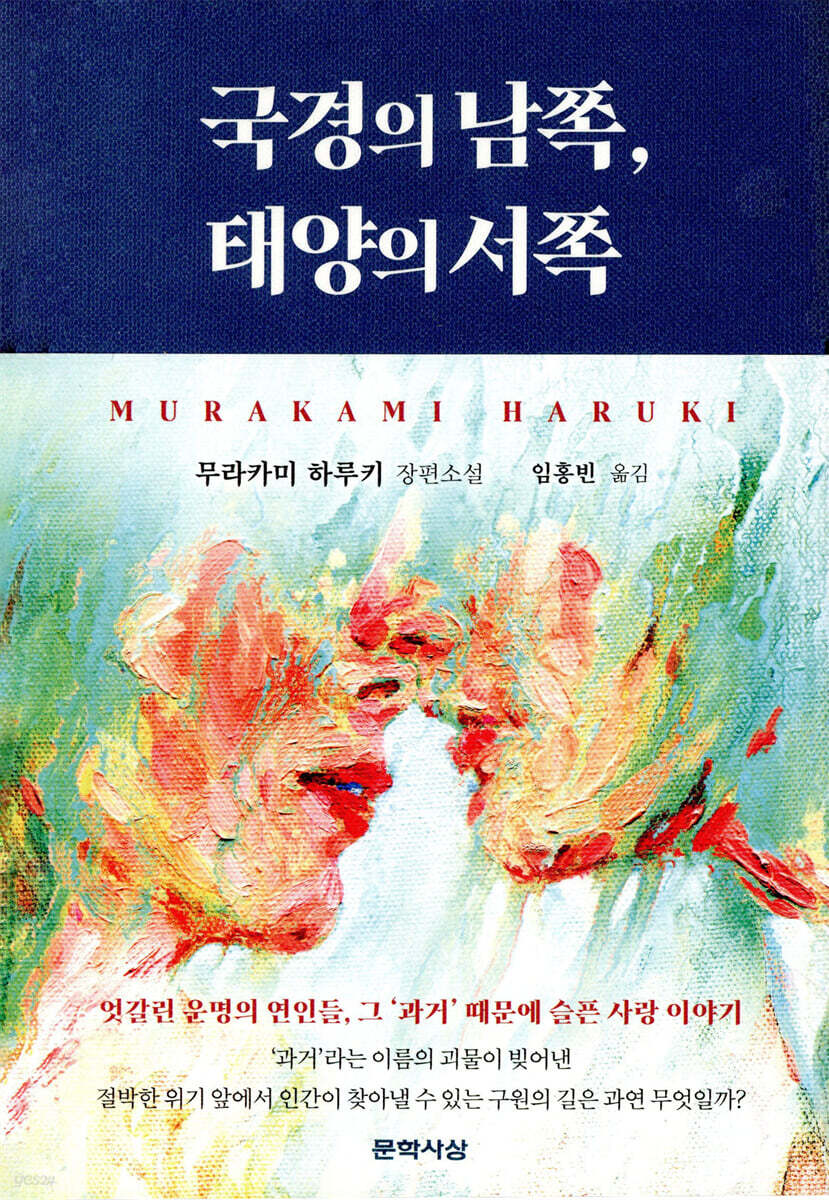
South of the border, west of the sun
 |
Description
Book Introduction
Escape from the trap of the monster called 'the past'
Finding the strength to accept loss
Haruki Murakami's novel South of the Border, West of the Sun, which was evaluated as the final installment of the international bestseller and steady seller, Norwegian Wood, and which garnered the attention of readers around the world at the time of its publication, is meeting readers again in a revised edition suited to the times.
In this work, Haruki Murakami leaves behind the 1970s, a period he has consistently focused on since his debut work, “Hear the Wind Sing,” and talks about the “present.”
In his words, it is 'a sign that one is changing now' and that one's 'heart is beginning to open outward'.
In "South of the Border, West of the Sun," the protagonist Hajime does not list or try to find what he has lost.
He's just trying to lose everything overnight by meeting another woman.
Through Shimamoto, he realizes that something is missing in his life, which he had been living without much complaint until then, and begins to question his own identity once again.
The search for such an identity fills the daily life of a successful thirty-something businessman with 'discord', 'discomfort', and 'chaos'.
In this chaos, Hajime eventually finds the path to 'self-recovery' by accepting and rebuilding himself.
The reason Haruki Murakami started talking about the present instead of the 1970s is probably because he wanted to talk about that kind of 'era of regeneration.'
This novel is a work that makes us seriously think about how the human mind changes and does not change in an era of dramatic social change.
Finding the strength to accept loss
Haruki Murakami's novel South of the Border, West of the Sun, which was evaluated as the final installment of the international bestseller and steady seller, Norwegian Wood, and which garnered the attention of readers around the world at the time of its publication, is meeting readers again in a revised edition suited to the times.
In this work, Haruki Murakami leaves behind the 1970s, a period he has consistently focused on since his debut work, “Hear the Wind Sing,” and talks about the “present.”
In his words, it is 'a sign that one is changing now' and that one's 'heart is beginning to open outward'.
In "South of the Border, West of the Sun," the protagonist Hajime does not list or try to find what he has lost.
He's just trying to lose everything overnight by meeting another woman.
Through Shimamoto, he realizes that something is missing in his life, which he had been living without much complaint until then, and begins to question his own identity once again.
The search for such an identity fills the daily life of a successful thirty-something businessman with 'discord', 'discomfort', and 'chaos'.
In this chaos, Hajime eventually finds the path to 'self-recovery' by accepting and rebuilding himself.
The reason Haruki Murakami started talking about the present instead of the 1970s is probably because he wanted to talk about that kind of 'era of regeneration.'
This novel is a work that makes us seriously think about how the human mind changes and does not change in an era of dramatic social change.
- You can preview some of the book's contents.
Preview
index
1.
First Love at Twelve ㆍ07
2.
Memories of My First Kiss ㆍ31
3.
The Isolated Self Trapped in a World of Itself ㆍ46
4.
Cruel Lies ㆍ63
5.
In Disappointment, Loneliness, and Silence ㆍ75
6.
The End of the Strange Tailing ㆍ86
7.
All that remains is desert ㆍ100
8.
Suction Power Reunited ㆍ123
9.
The Distance of Love and Guilt ㆍ147
10.
The Flow of Rivers and Situations ㆍ166
11.
A Life Just a Shell ㆍ187
12.
The Airless Surface of the Moon ㆍ209
13.
Labyrinth of Wandering ㆍ231
14.
South of the Border, West of the Sun ㆍ244
15.
Rain Falling on the Dark Night Sea ㆍ278
Notes for Appreciating the Work 317
Translator's Note: 332
ㆍMusic from "South of the Border, West of the Sun" ㆍ350
First Love at Twelve ㆍ07
2.
Memories of My First Kiss ㆍ31
3.
The Isolated Self Trapped in a World of Itself ㆍ46
4.
Cruel Lies ㆍ63
5.
In Disappointment, Loneliness, and Silence ㆍ75
6.
The End of the Strange Tailing ㆍ86
7.
All that remains is desert ㆍ100
8.
Suction Power Reunited ㆍ123
9.
The Distance of Love and Guilt ㆍ147
10.
The Flow of Rivers and Situations ㆍ166
11.
A Life Just a Shell ㆍ187
12.
The Airless Surface of the Moon ㆍ209
13.
Labyrinth of Wandering ㆍ231
14.
South of the Border, West of the Sun ㆍ244
15.
Rain Falling on the Dark Night Sea ㆍ278
Notes for Appreciating the Work 317
Translator's Note: 332
ㆍMusic from "South of the Border, West of the Sun" ㆍ350
Into the book
I was an only child.
As a child, I always felt inferior because of that.
I am, so to speak, a special being in this world, something that others take for granted, but I do not have.
--- p.9
She carried out each of the tasks her father had taught her with a very serious expression.
I squinted my eyes and held my breath.
I always sat on the sofa and watched her do that.
After putting the record back in the cabinet, Shimamoto finally looked at me and smiled faintly as usual.
Every time that happened, I thought to myself.
What she was dealing with was not a simple record, but perhaps someone's fragile soul trapped in a glass bottle.
--- p.17
Even after I stopped seeing Shimamoto, I kept missing her and thinking about her.
During the sad and turbulent years of adolescence, I was often encouraged and healed by those warm memories.
And I think I've had a special part of my heart open to her for a long time.
Just as one might discreetly place a reserved table sign in a quiet corner of a restaurant, I left that spot for her.
Even though I thought I would never meet Shimamoto again.
--- p.29
But at that time, I didn't know.
The fact that someday, I might hurt someone so deeply that it can't be undone.
In some cases, the mere existence of a human being can cause harm to others.
--- p.44~45
What is needed is an accumulation of small things.
We can move forward little by little by diligently building up small, concrete facts, not just simple words or promises.
I thought that was probably what she wanted after all.
--- p.52
It was the fact that the country was ultimately a human being capable of doing evil.
I have never once intended to do evil to anyone.
But whatever my motivations or thoughts, I could be arbitrary and cruel when necessary.
I was a person who could inflict irreparable and fatal wounds even on someone I truly cherished, using plausible excuses.
--- p.73
Someone's life is, in the end, someone's life.
You can't take responsibility for someone else.
This is a desert place, and we all have to get used to it.
--- p.121
“You know, Hajime,” she said.
“It’s really unfortunate, but some things can’t be undone.
Once you move forward, no matter how hard you try, you can't go back.
If something is even slightly distorted at that time, it will remain distorted and frozen in place.” --- p.217
There were times when I thought that if I could cry, I would feel better.
But I didn't know what I should cry for.
I didn't know who I should cry for.
I was too self-centered to cry for others, and I was too old to cry for myself.
--- p.229
I had no choice but to be myself.
The lack I was holding on to, the lack of something, was always the same lack.
No matter how much the scenery around me changed, no matter how much the tone of voice people used to speak to me changed, I was still just one imperfect human being.
There was always the same fatal lack within me, a lack that brought me intense hunger and thirst.
I have always suffered from hunger and thirst, and I will probably continue to suffer from it.
In a sense, that deficiency itself is me.
As a child, I always felt inferior because of that.
I am, so to speak, a special being in this world, something that others take for granted, but I do not have.
--- p.9
She carried out each of the tasks her father had taught her with a very serious expression.
I squinted my eyes and held my breath.
I always sat on the sofa and watched her do that.
After putting the record back in the cabinet, Shimamoto finally looked at me and smiled faintly as usual.
Every time that happened, I thought to myself.
What she was dealing with was not a simple record, but perhaps someone's fragile soul trapped in a glass bottle.
--- p.17
Even after I stopped seeing Shimamoto, I kept missing her and thinking about her.
During the sad and turbulent years of adolescence, I was often encouraged and healed by those warm memories.
And I think I've had a special part of my heart open to her for a long time.
Just as one might discreetly place a reserved table sign in a quiet corner of a restaurant, I left that spot for her.
Even though I thought I would never meet Shimamoto again.
--- p.29
But at that time, I didn't know.
The fact that someday, I might hurt someone so deeply that it can't be undone.
In some cases, the mere existence of a human being can cause harm to others.
--- p.44~45
What is needed is an accumulation of small things.
We can move forward little by little by diligently building up small, concrete facts, not just simple words or promises.
I thought that was probably what she wanted after all.
--- p.52
It was the fact that the country was ultimately a human being capable of doing evil.
I have never once intended to do evil to anyone.
But whatever my motivations or thoughts, I could be arbitrary and cruel when necessary.
I was a person who could inflict irreparable and fatal wounds even on someone I truly cherished, using plausible excuses.
--- p.73
Someone's life is, in the end, someone's life.
You can't take responsibility for someone else.
This is a desert place, and we all have to get used to it.
--- p.121
“You know, Hajime,” she said.
“It’s really unfortunate, but some things can’t be undone.
Once you move forward, no matter how hard you try, you can't go back.
If something is even slightly distorted at that time, it will remain distorted and frozen in place.” --- p.217
There were times when I thought that if I could cry, I would feel better.
But I didn't know what I should cry for.
I didn't know who I should cry for.
I was too self-centered to cry for others, and I was too old to cry for myself.
--- p.229
I had no choice but to be myself.
The lack I was holding on to, the lack of something, was always the same lack.
No matter how much the scenery around me changed, no matter how much the tone of voice people used to speak to me changed, I was still just one imperfect human being.
There was always the same fatal lack within me, a lack that brought me intense hunger and thirst.
I have always suffered from hunger and thirst, and I will probably continue to suffer from it.
In a sense, that deficiency itself is me.
--- p.307~308
Publisher's Review
Haruki Murakami's novel South of the Border, West of the Sun, which was evaluated as the final installment of the international bestseller and steady seller Norwegian Wood and garnered the attention of readers around the world at the time of its publication, is meeting readers again in a revised edition suited to the times.
In this work, Haruki Murakami leaves behind the 1970s, which he has consistently focused on since his debut work, “Hear the Wind Sing,” and talks about the “present.”
In his words, it is 'a sign that one is changing now' and that one's 'heart is beginning to open outward'.
The first work to suggest the path to salvation
Most of the protagonists in Haruki Murakami's works struggle to find salvation from the trap called the past—the emotional wounds caused by heartbreak, loss, and loneliness.
However, from "Hear the Wind Sing" to Haruki Murakami's early five-part youth novel series, culminating with "A Time of Loss," the path to salvation was not presented.
A representative example is the protagonist of "The Age of Loss," 'I', who opens his eyes in a fantastical world of heartbreak and loss, and calls out to Midori, his realistic lover in this world, but ends up not knowing where he is or where he should go.
However, in "South of the Border, West of the Sun," published five years after "A Time of Loss," Haruki Murakami clearly presented, for the first time in 16 years since his debut, where the wounded "I" stand and where I should go.
The answer to salvation can be found in shaking off the dark shadow of the past that has deeply penetrated our present lives and in making a pledge of reconciliation and regeneration.
People who live with 'lack'
The main character, Hajime, has lived his life feeling like an imperfect human being due to his birth characteristic of being an only child.
The awareness that I do not have what others take for granted served as a driving force to overcome it during my growth process.
Moreover, this feeling of lack made Hajime feel a sense of unity and affection for the only child he had met during his six years of elementary school, something he had never felt for anyone else.
Shimamoto, a transfer student who suffered from polio immediately after birth and had a slight limp on her left leg, was a child who caused tension in those around her due to her excellent grades and kindness, but her strikingly beautiful appearance, her unusual coolness for a child, and the isolation that comes with being an only child.
However, Hajime felt infinitely more at ease when he was with Shimamoto.
The two, who love music and books, become people who can communicate well and understand each other's feelings.
The two of them walked to and from school together every day and talked a lot while listening to records at her house, but they gradually grew apart as they moved to different middle schools.
Even after Hajime stopped seeing Shimamoto, he still missed her and thought about her all the time.
During the turbulent years of adolescence, he would often find encouragement and healing in the memory of Shimamoto.
During the time when Shimamoto is not around, high school student Hajime meets a female student named Izumi and they begin dating.
Izumi, who is innocent, cute, and warm, but has two younger siblings, does not understand the sense of isolation that Hajime inevitably feels.
Moreover, when Hajime, who feels intense sexual urges towards Izumi's older cousin, becomes absorbed in 'sex' rather than 'love', the stubborn Izumi is deeply hurt.
This incident is the first time Hajime realizes that there is evil within humans that he cannot control, but it is already too late to undo Izumi's wounds.
After that, Hajime, who was living in despair due to the isolation and loneliness of being alone, meets 'Yukiko'.
She once attempted suicide after suffering from heartbreak, but through Hajime, she begins to dream of a peaceful and stable life again.
The moment Hajime sees her like that, he naturally falls in love with her, and the two get married.
And with the help of his father-in-law, who is the president of a construction company, he opens a jazz bar.
Hajime runs a successful jazz bar and finds enough financial stability to open another bar.
He lived a life without any shortcomings, with a loving wife, two lovely daughters, a nice house, a luxury imported car, and even a villa.
Thanks to his thriving business, Hajime gets an interview for a men's magazine, which brings an unexpected person to his bar: Shimamoto.
The temptation of Thanatos, rushing westward toward the sun
Shimamoto, who had surgery on her left leg that was limping when she was young, appears before Hajime with perfect beauty.
Hajime, who was living a stable and peaceful life but was obsessed with the feeling that it was not 'his life', is overcome with the urge to give up everything he has and be with her when he encounters the 'attractive power' of the woman he had longed for his entire life.
Even as he berates himself, Hajime is overcome by the urge to cross the line.
That impulse is so powerful that it can destroy everything you've accomplished in an instant.
This is the same force that pushed Japan toward militarism in the past, the force that led mass protests in the 1970s, and the driving force behind the bubble economy of modern post-industrial society.
Hajime is unable to resist the temptation of Shimamoto, who approaches him with the power of his great strength.
Seeing that a deep-seated dissatisfaction is not satisfied with his near-perfect, stable life with Yukiko, he listens to Nat King Cole's music with Shimamoto in an attempt to return to his old innocence.
His desire to find lost innocence and lost time is so desperate.
However, Shimamoto is a symbolic figure in this novel.
Rather than a realistic figure, he is a mysterious figure who shows the other side of the bubble economy, and he is a character who crosses the boundary between reality and fiction, symbolizing unconscious impulses.
The fact that Shimamoto is a character with such an unrealistic symbolic role may lead readers to conclude that this novel is not simply a romance novel.
Shimamoto was Hajime's unconscious.
Hajime, who has always lived in her shadow even after their breakup, realizes how fragile and easily hurtful humans can be when faced with impulses that shake the peace of their home.
This novel clearly presents the path to salvation when faced with a desperate crisis caused by a monster called the 'past'.
The power to accept loss and absence
We lose so much for the quiet routine and stability of life.
And as the years go by, the sense of loss only deepens.
The person who exquisitely highlights that sense of loss is Haruki Murakami.
His debut novel, "Hear the Wind Sing," was a "story written for lost things," and his subsequent novels were stories about "searching for" and "discovering" "lost things."
But strangely enough, in "South of the Border, West of the Sun," the protagonist Hajime does not list or try to find what he has lost.
He's just trying to lose everything overnight by meeting another woman.
Through Shimamoto, he realizes that something is missing in his life, which he had been living without much complaint until then, and begins to question his own identity once again.
The search for such an identity fills the daily life of a successful thirty-something businessman with 'discord', 'discomfort', and 'chaos'.
In this chaos, Hajime eventually finds the path to 'self-recovery' by accepting and rebuilding himself.
The reason Haruki Murakami started talking about the present instead of the 1970s is probably because he wanted to talk about that kind of 'era of regeneration.'
This novel makes us seriously think about how the human mind changes and remains unchanged in an era of dramatic social change.
In this work, Haruki Murakami leaves behind the 1970s, which he has consistently focused on since his debut work, “Hear the Wind Sing,” and talks about the “present.”
In his words, it is 'a sign that one is changing now' and that one's 'heart is beginning to open outward'.
The first work to suggest the path to salvation
Most of the protagonists in Haruki Murakami's works struggle to find salvation from the trap called the past—the emotional wounds caused by heartbreak, loss, and loneliness.
However, from "Hear the Wind Sing" to Haruki Murakami's early five-part youth novel series, culminating with "A Time of Loss," the path to salvation was not presented.
A representative example is the protagonist of "The Age of Loss," 'I', who opens his eyes in a fantastical world of heartbreak and loss, and calls out to Midori, his realistic lover in this world, but ends up not knowing where he is or where he should go.
However, in "South of the Border, West of the Sun," published five years after "A Time of Loss," Haruki Murakami clearly presented, for the first time in 16 years since his debut, where the wounded "I" stand and where I should go.
The answer to salvation can be found in shaking off the dark shadow of the past that has deeply penetrated our present lives and in making a pledge of reconciliation and regeneration.
People who live with 'lack'
The main character, Hajime, has lived his life feeling like an imperfect human being due to his birth characteristic of being an only child.
The awareness that I do not have what others take for granted served as a driving force to overcome it during my growth process.
Moreover, this feeling of lack made Hajime feel a sense of unity and affection for the only child he had met during his six years of elementary school, something he had never felt for anyone else.
Shimamoto, a transfer student who suffered from polio immediately after birth and had a slight limp on her left leg, was a child who caused tension in those around her due to her excellent grades and kindness, but her strikingly beautiful appearance, her unusual coolness for a child, and the isolation that comes with being an only child.
However, Hajime felt infinitely more at ease when he was with Shimamoto.
The two, who love music and books, become people who can communicate well and understand each other's feelings.
The two of them walked to and from school together every day and talked a lot while listening to records at her house, but they gradually grew apart as they moved to different middle schools.
Even after Hajime stopped seeing Shimamoto, he still missed her and thought about her all the time.
During the turbulent years of adolescence, he would often find encouragement and healing in the memory of Shimamoto.
During the time when Shimamoto is not around, high school student Hajime meets a female student named Izumi and they begin dating.
Izumi, who is innocent, cute, and warm, but has two younger siblings, does not understand the sense of isolation that Hajime inevitably feels.
Moreover, when Hajime, who feels intense sexual urges towards Izumi's older cousin, becomes absorbed in 'sex' rather than 'love', the stubborn Izumi is deeply hurt.
This incident is the first time Hajime realizes that there is evil within humans that he cannot control, but it is already too late to undo Izumi's wounds.
After that, Hajime, who was living in despair due to the isolation and loneliness of being alone, meets 'Yukiko'.
She once attempted suicide after suffering from heartbreak, but through Hajime, she begins to dream of a peaceful and stable life again.
The moment Hajime sees her like that, he naturally falls in love with her, and the two get married.
And with the help of his father-in-law, who is the president of a construction company, he opens a jazz bar.
Hajime runs a successful jazz bar and finds enough financial stability to open another bar.
He lived a life without any shortcomings, with a loving wife, two lovely daughters, a nice house, a luxury imported car, and even a villa.
Thanks to his thriving business, Hajime gets an interview for a men's magazine, which brings an unexpected person to his bar: Shimamoto.
The temptation of Thanatos, rushing westward toward the sun
Shimamoto, who had surgery on her left leg that was limping when she was young, appears before Hajime with perfect beauty.
Hajime, who was living a stable and peaceful life but was obsessed with the feeling that it was not 'his life', is overcome with the urge to give up everything he has and be with her when he encounters the 'attractive power' of the woman he had longed for his entire life.
Even as he berates himself, Hajime is overcome by the urge to cross the line.
That impulse is so powerful that it can destroy everything you've accomplished in an instant.
This is the same force that pushed Japan toward militarism in the past, the force that led mass protests in the 1970s, and the driving force behind the bubble economy of modern post-industrial society.
Hajime is unable to resist the temptation of Shimamoto, who approaches him with the power of his great strength.
Seeing that a deep-seated dissatisfaction is not satisfied with his near-perfect, stable life with Yukiko, he listens to Nat King Cole's music with Shimamoto in an attempt to return to his old innocence.
His desire to find lost innocence and lost time is so desperate.
However, Shimamoto is a symbolic figure in this novel.
Rather than a realistic figure, he is a mysterious figure who shows the other side of the bubble economy, and he is a character who crosses the boundary between reality and fiction, symbolizing unconscious impulses.
The fact that Shimamoto is a character with such an unrealistic symbolic role may lead readers to conclude that this novel is not simply a romance novel.
Shimamoto was Hajime's unconscious.
Hajime, who has always lived in her shadow even after their breakup, realizes how fragile and easily hurtful humans can be when faced with impulses that shake the peace of their home.
This novel clearly presents the path to salvation when faced with a desperate crisis caused by a monster called the 'past'.
The power to accept loss and absence
We lose so much for the quiet routine and stability of life.
And as the years go by, the sense of loss only deepens.
The person who exquisitely highlights that sense of loss is Haruki Murakami.
His debut novel, "Hear the Wind Sing," was a "story written for lost things," and his subsequent novels were stories about "searching for" and "discovering" "lost things."
But strangely enough, in "South of the Border, West of the Sun," the protagonist Hajime does not list or try to find what he has lost.
He's just trying to lose everything overnight by meeting another woman.
Through Shimamoto, he realizes that something is missing in his life, which he had been living without much complaint until then, and begins to question his own identity once again.
The search for such an identity fills the daily life of a successful thirty-something businessman with 'discord', 'discomfort', and 'chaos'.
In this chaos, Hajime eventually finds the path to 'self-recovery' by accepting and rebuilding himself.
The reason Haruki Murakami started talking about the present instead of the 1970s is probably because he wanted to talk about that kind of 'era of regeneration.'
This novel makes us seriously think about how the human mind changes and remains unchanged in an era of dramatic social change.
GOODS SPECIFICS
- Date of issue: January 14, 2022
- Format: Hardcover book binding method guide
- Page count, weight, size: 360 pages | 458g | 140*200*25mm
- ISBN13: 9788970125220
- ISBN10: 8970125221
You may also like
카테고리
korean


korean

![GQ KOREA Mark (Monthly): December [2025]](http://librairie.coreenne.fr/cdn/shop/files/8ef265dbbfbf186523ed75ba7319009d.jpg?v=1765340328&width=3840)


