

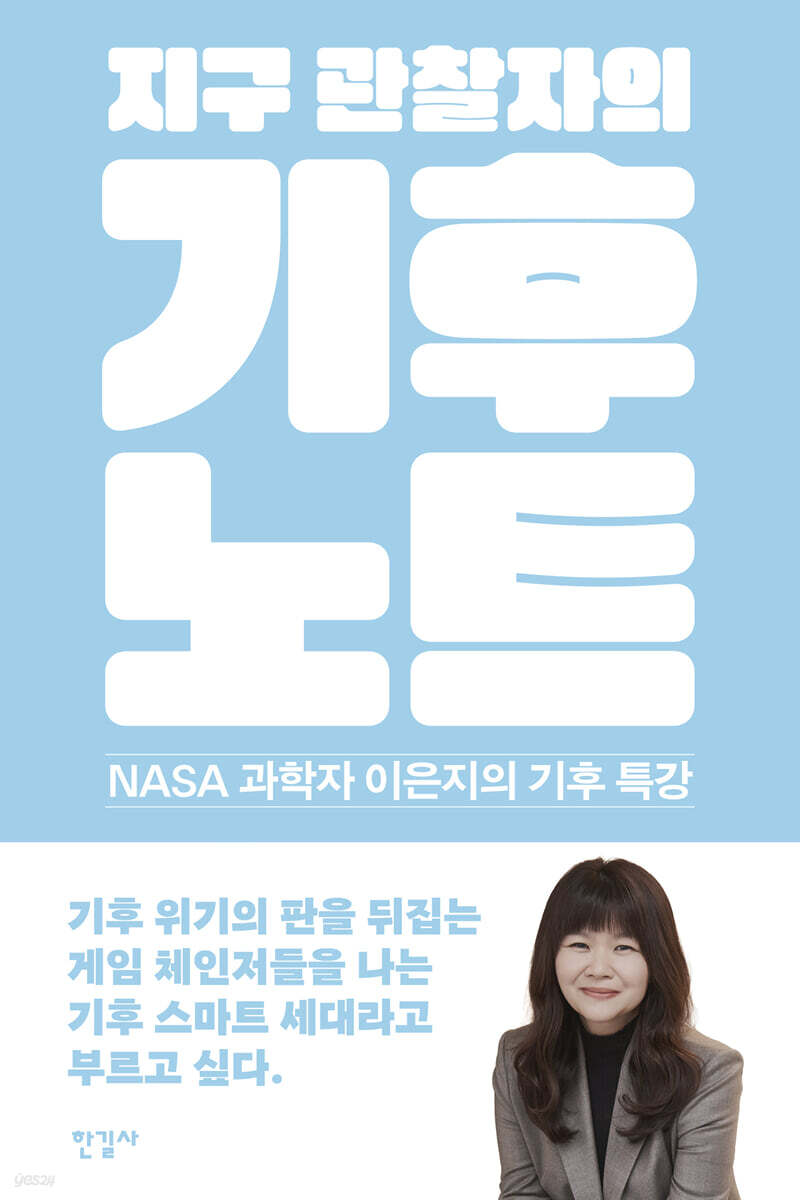
Earth Observer's Climate Notes
 |
Description
Book Introduction
The first step toward understanding the uncertainty of the climate crisis
We are now in the midst of a massive transition: the climate crisis.
This is a 'scientific fact' that we cannot ignore even if we want to.
While the political debate over climate change continues, the observational numbers tell a clear story.
How should we understand this scientific fact? We know that the weather is different than it used to be, and we recognize that if we don't act, it will pose a grave threat to human civilization.
But properly understanding the nebulous concept of climate change is a completely different matter.
The author, who is conducting research on the front lines of the climate crisis, provides a balanced perspective on the intertwined elements of climate change, including extreme weather events, global warming, carbon flows, and the water cycle.
"Earth Observer's Climate Notes" is an "introductory book to the climate crisis" and a "record for the future" for those who want to understand the climate crisis but are vague about it.
The author, who has long observed the Earth and traced the traces of climate change, dreams of a game changer that will turn the tide on the climate crisis. As a scientist and NASA research associate, Dr. Eunji Lee coldly analyzes the real phenomenon of the climate crisis, yet she also maintains hope for the future that our actions and policies can create to overcome it.
There is no single right answer to solve the climate crisis.
However, various attempts will create a 'climate-smart generation', which will be the key to solving the climate crisis, a common problem for humanity.
Will we truly be remembered by future generations as the "generation that overcame the climate crisis," as the author hopes? This book is the first step.
We are now in the midst of a massive transition: the climate crisis.
This is a 'scientific fact' that we cannot ignore even if we want to.
While the political debate over climate change continues, the observational numbers tell a clear story.
How should we understand this scientific fact? We know that the weather is different than it used to be, and we recognize that if we don't act, it will pose a grave threat to human civilization.
But properly understanding the nebulous concept of climate change is a completely different matter.
The author, who is conducting research on the front lines of the climate crisis, provides a balanced perspective on the intertwined elements of climate change, including extreme weather events, global warming, carbon flows, and the water cycle.
"Earth Observer's Climate Notes" is an "introductory book to the climate crisis" and a "record for the future" for those who want to understand the climate crisis but are vague about it.
The author, who has long observed the Earth and traced the traces of climate change, dreams of a game changer that will turn the tide on the climate crisis. As a scientist and NASA research associate, Dr. Eunji Lee coldly analyzes the real phenomenon of the climate crisis, yet she also maintains hope for the future that our actions and policies can create to overcome it.
There is no single right answer to solve the climate crisis.
However, various attempts will create a 'climate-smart generation', which will be the key to solving the climate crisis, a common problem for humanity.
Will we truly be remembered by future generations as the "generation that overcame the climate crisis," as the author hopes? This book is the first step.
- You can preview some of the book's contents.
Preview
index
Introduction 07
First Story | Climate Change Recorded in Nature
Traces of Temperature Change 15
Checks and Balances 27
Carbon Sin? 40
Unscheduled Detour 51
Beautiful Sea 61
Story Two | How Science Records
CCTV 79 orbiting the Earth
A Glimpse into the Future of Nature 90
The Third Story | Expanding the Record
Connected Earth 107
How to Drink Coffee 117
Water, Lost 130
Story Four | A Record for the Future
Not everyone has been sitting idle all this time. 143
As it turns out, a close relationship 157
Can we bring back carbon that has left our homes? 167
The record we will make
Appendix | Climate Change Encyclopedia
How to Read the IPCC Report 191
Concluding the story 199
Acknowledgments 203
Reference 207
First Story | Climate Change Recorded in Nature
Traces of Temperature Change 15
Checks and Balances 27
Carbon Sin? 40
Unscheduled Detour 51
Beautiful Sea 61
Story Two | How Science Records
CCTV 79 orbiting the Earth
A Glimpse into the Future of Nature 90
The Third Story | Expanding the Record
Connected Earth 107
How to Drink Coffee 117
Water, Lost 130
Story Four | A Record for the Future
Not everyone has been sitting idle all this time. 143
As it turns out, a close relationship 157
Can we bring back carbon that has left our homes? 167
The record we will make
Appendix | Climate Change Encyclopedia
How to Read the IPCC Report 191
Concluding the story 199
Acknowledgments 203
Reference 207
Into the book
The Earth's average temperature remained largely unchanged for about 2,000 years, but began to rise rapidly in the 1900s.
--- p.21
In addition to the greenhouse gases that were originally present in nature, carbon dioxide newly introduced by human activities also participates in infrared screening and absorption, creating an additional insulating effect.
This is the core cause of the rise in the average temperature of the Earth, i.e. global warming.
--- p.46
NASA's Earth Observation System is similar to the idea of installing CCTVs in various locations to record phenomena as they occur, and then building a control room to view everything from one place.
--- p.83
What this means is that if we continue to emit greenhouse gases, the risks posed by climate change will intensify, and the window of opportunity to avoid catastrophic impacts is rapidly closing.
--- p.102
There are also research results that predict that by the latter half of the 21st century, atmospheric stagnation on the Korean Peninsula due to climate change will increase to about 1.5 times its current level.
As atmospheric stagnation worsens, fine dust remains for a longer period of time, causing greater negative impacts on our health.
--- p.127
For people who have difficulty coping with change, this impact will be even greater.
The problem is the inequality that climate change causes in society.
This is why the question of how public funds should be secured naturally follows.
--- p.178
I like to call these game changers who can turn the tables on the climate crisis the Climate Smart Generation.
A truly smart generation that can actively judge whether their actions help solve the climate crisis and creatively apply them.
--- p.21
In addition to the greenhouse gases that were originally present in nature, carbon dioxide newly introduced by human activities also participates in infrared screening and absorption, creating an additional insulating effect.
This is the core cause of the rise in the average temperature of the Earth, i.e. global warming.
--- p.46
NASA's Earth Observation System is similar to the idea of installing CCTVs in various locations to record phenomena as they occur, and then building a control room to view everything from one place.
--- p.83
What this means is that if we continue to emit greenhouse gases, the risks posed by climate change will intensify, and the window of opportunity to avoid catastrophic impacts is rapidly closing.
--- p.102
There are also research results that predict that by the latter half of the 21st century, atmospheric stagnation on the Korean Peninsula due to climate change will increase to about 1.5 times its current level.
As atmospheric stagnation worsens, fine dust remains for a longer period of time, causing greater negative impacts on our health.
--- p.127
For people who have difficulty coping with change, this impact will be even greater.
The problem is the inequality that climate change causes in society.
This is why the question of how public funds should be secured naturally follows.
--- p.178
I like to call these game changers who can turn the tables on the climate crisis the Climate Smart Generation.
A truly smart generation that can actively judge whether their actions help solve the climate crisis and creatively apply them.
--- p.186
Publisher's Review
A journey in pursuit of Earth's records
『Earth Observer's Climate Notes』 consists of four stories.
It begins with 'Climate Change Recorded in Nature', which diagnoses the current situation, and gradually expands to 'Records for the Future', which seeks response measures.
Dr. Eunji Lee helps us understand climate change, which often seems like an abstract and grand concept, through concrete examples and data.
The author's account of the climate crisis, told like a story, serves as a kind of reference for us who will continue to live on Earth.
The first story, "Climate Change as Recorded in Nature," presents reliable observational data on the marked changes in the global average temperature since the mid-20th century.
He then points out that the cause of the problem is that there is too much 'carbon' in the atmosphere.
As we trace how the carbon that made Earth a habitable planet came to threaten human civilization, we come to realize that the cause of the problem lies with 'us'.
The second story, "How Science Records," introduces NASA, known primarily for space exploration, as a frontline observer of the climate crisis. Through its fleet of over 20 Earth observation satellites, NASA records changes in the Earth's environment in real time, creating crucial data for climate change research.
We also use these observations to create climate change prediction models to project what the Earth will look like in the future if we don't act.
The third story, 'Expanding the Record', shows how climate and human life are closely linked.
Starting from the phenomenon of teleconnection, where weather and environments around the globe interact, it reveals that the climate crisis is not just a phenomenon, but is affecting the economy, policy, and our daily lives.
It highlights that climate change is shaking the very fabric of our society, disrupting not only our food supply chains but also the foundations of essential resources such as electricity production.
The fourth story, “Records for the Future,” highlights humanity’s efforts to combat the climate crisis.
It shows that various efforts are underway, including reducing carbon emissions and increasing carbon absorption, fundamental changes in the energy production structure, and the development and commercialization of carbon capture technology.
Ultimately, the true "game changers" who will overcome the climate crisis are ourselves, the climate-smart generation, who will judge and act on whether our actions contribute to solving the climate problem.
At the end of the book, an appendix on how to understand the IPCC report is included so that readers can read and judge climate-related information on their own, providing a practical guide to transforming into a "climate-smart generation."
Become a climate-smart generation before it's too late.
The climate crisis is not a story of the distant future, but a reality that affects our daily lives.
To truly understand the massive discourse of climate change and become a climate-smart generation capable of overcoming it, we must be able to understand the climate crisis based on data. This book by NASA scientist Dr. Eunji Lee serves as a practical compass to help readers find their own path.
Above all, this book analyzes the climate crisis with a cool-headed scientist's eye, while showing that we can still find hope.
Instead of feeling helpless in the face of a massive threat, we can become game changers in the face of the climate crisis only when we identify concrete information and the potential for action.
This is precisely why we must read this book.
The climate crisis is everyone's story, and the solution depends on our choices and actions.
Dr. Eunji Lee has an unusual background, having planned a "performance that tells climate stories" with jazz musicians beyond the NASA lab.
This was an attempt to resolve the emotional debt that he felt for not being able to sufficiently convey his knowledge to the public despite being at the forefront of climate research.
The show started out as a simple way to relieve his guilt, but with each performance, the encouragement and support that came from unexpected places kept him going.
This is strangely similar to our society's response to the climate crisis.
It's like throwing eggs at a rock, feeling helpless, but then you meet a climate-smart generation that is truly concerned about the climate crisis in an unexpected place and find hope.
The climate-smart generation that is truly making a difference is already here.
Despite imperfect agreements, slow progress in commercializing technologies that clash with economic logic, and sometimes taking two steps forward and one step back, efforts have made a clear difference.
Dr. Eunji Lee hopes that through "Climate Notes from an Earth Observer," readers will find hope for the future and discover the courage and potential for action to confront the climate crisis in their own positions.
Only then will we become a 'climate-smart generation.'
『Earth Observer's Climate Notes』 consists of four stories.
It begins with 'Climate Change Recorded in Nature', which diagnoses the current situation, and gradually expands to 'Records for the Future', which seeks response measures.
Dr. Eunji Lee helps us understand climate change, which often seems like an abstract and grand concept, through concrete examples and data.
The author's account of the climate crisis, told like a story, serves as a kind of reference for us who will continue to live on Earth.
The first story, "Climate Change as Recorded in Nature," presents reliable observational data on the marked changes in the global average temperature since the mid-20th century.
He then points out that the cause of the problem is that there is too much 'carbon' in the atmosphere.
As we trace how the carbon that made Earth a habitable planet came to threaten human civilization, we come to realize that the cause of the problem lies with 'us'.
The second story, "How Science Records," introduces NASA, known primarily for space exploration, as a frontline observer of the climate crisis. Through its fleet of over 20 Earth observation satellites, NASA records changes in the Earth's environment in real time, creating crucial data for climate change research.
We also use these observations to create climate change prediction models to project what the Earth will look like in the future if we don't act.
The third story, 'Expanding the Record', shows how climate and human life are closely linked.
Starting from the phenomenon of teleconnection, where weather and environments around the globe interact, it reveals that the climate crisis is not just a phenomenon, but is affecting the economy, policy, and our daily lives.
It highlights that climate change is shaking the very fabric of our society, disrupting not only our food supply chains but also the foundations of essential resources such as electricity production.
The fourth story, “Records for the Future,” highlights humanity’s efforts to combat the climate crisis.
It shows that various efforts are underway, including reducing carbon emissions and increasing carbon absorption, fundamental changes in the energy production structure, and the development and commercialization of carbon capture technology.
Ultimately, the true "game changers" who will overcome the climate crisis are ourselves, the climate-smart generation, who will judge and act on whether our actions contribute to solving the climate problem.
At the end of the book, an appendix on how to understand the IPCC report is included so that readers can read and judge climate-related information on their own, providing a practical guide to transforming into a "climate-smart generation."
Become a climate-smart generation before it's too late.
The climate crisis is not a story of the distant future, but a reality that affects our daily lives.
To truly understand the massive discourse of climate change and become a climate-smart generation capable of overcoming it, we must be able to understand the climate crisis based on data. This book by NASA scientist Dr. Eunji Lee serves as a practical compass to help readers find their own path.
Above all, this book analyzes the climate crisis with a cool-headed scientist's eye, while showing that we can still find hope.
Instead of feeling helpless in the face of a massive threat, we can become game changers in the face of the climate crisis only when we identify concrete information and the potential for action.
This is precisely why we must read this book.
The climate crisis is everyone's story, and the solution depends on our choices and actions.
Dr. Eunji Lee has an unusual background, having planned a "performance that tells climate stories" with jazz musicians beyond the NASA lab.
This was an attempt to resolve the emotional debt that he felt for not being able to sufficiently convey his knowledge to the public despite being at the forefront of climate research.
The show started out as a simple way to relieve his guilt, but with each performance, the encouragement and support that came from unexpected places kept him going.
This is strangely similar to our society's response to the climate crisis.
It's like throwing eggs at a rock, feeling helpless, but then you meet a climate-smart generation that is truly concerned about the climate crisis in an unexpected place and find hope.
The climate-smart generation that is truly making a difference is already here.
Despite imperfect agreements, slow progress in commercializing technologies that clash with economic logic, and sometimes taking two steps forward and one step back, efforts have made a clear difference.
Dr. Eunji Lee hopes that through "Climate Notes from an Earth Observer," readers will find hope for the future and discover the courage and potential for action to confront the climate crisis in their own positions.
Only then will we become a 'climate-smart generation.'
GOODS SPECIFICS
- Date of issue: October 10, 2025
- Page count, weight, size: 208 pages | 370g | 140*210*14mm
- ISBN13: 9788935679096
- ISBN10: 8935679097
You may also like
카테고리
korean


korean

![GQ KOREA Mark (Monthly): December [2025]](http://librairie.coreenne.fr/cdn/shop/files/8ef265dbbfbf186523ed75ba7319009d.jpg?v=1765340328&width=3840)


