

bad genes
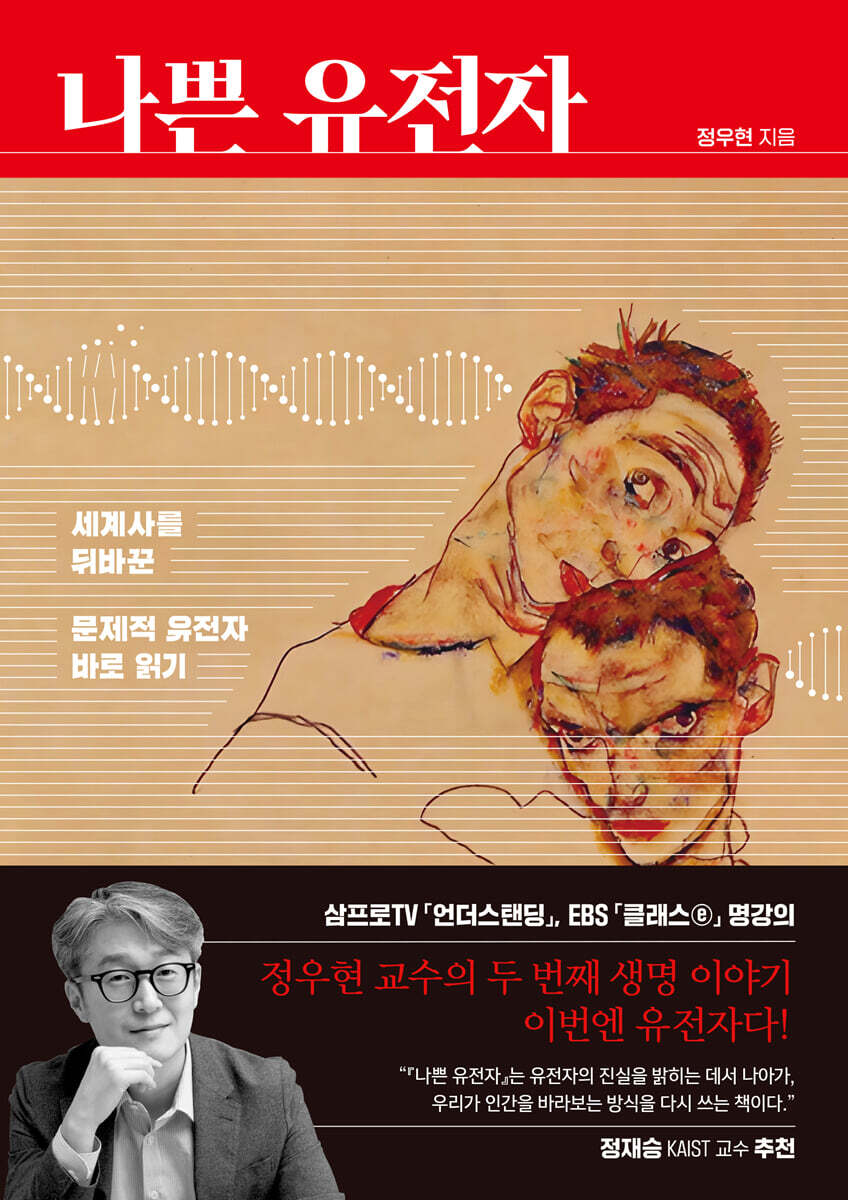 |
Description
Book Introduction
It is a society dominated by so-called 'genetic determinism'.
People want to believe that certain genes directly determine a person's appearance, health, personality, environment, cognitive function, behavior, and even destiny.
This is because our 'essentialist' bias, which believes that there is an ultimate cause, is strongly projected onto genes.
As if an unchangeable fate were engraved in our DNA.
But this belief misleads our thinking about genes.
Is it because of ‘bad genes’ that I am like this?
This book introduces the true nature of genes, which were previously unknown, in an exciting way, focusing on eight representative "problematic" genes that have caused great misunderstandings at important turning points in human history.
The 'skin color gene' that created the fictional concept of race and became the basis for discrimination, the 'rare disease gene' due to hemophilia and inbreeding that brought down European royal families, the 'ferocious gene' that changed humans into social animals in the evolutionary process, the 'inferior gene' that gave birth to the tragic history of eugenics, the 'crime gene' that causes crime and violence, the 'homosexuality gene' that determines sexual orientation such as homosexuality, the 'cancer gene' that engages in a power struggle between induction and suppression in our bodies, and Dawkins' 'selfish gene' that has become the bible of genetic determinism today.
There is a certain unease in these numerous naming conventions, as if genes act with intention.
Genes that have become the target of human anxiety, disgust, and prejudice.
Could such a gene really exist? The author summarizes the theories of leading geneticists and evolutionary biologists and, through the latest research papers, unfolds the story of genetics throughout history.
From the tragedy of eugenics in the past to the discourse of modern gene therapy, it gently but firmly dismantles the entrenched myth of "genetic determinism," which we have unintentionally believed, by peeling away the misunderstandings surrounding genes one by one.
This book makes us reflect on the essence of humanity and life, and rewrites the way we view humanity.
People want to believe that certain genes directly determine a person's appearance, health, personality, environment, cognitive function, behavior, and even destiny.
This is because our 'essentialist' bias, which believes that there is an ultimate cause, is strongly projected onto genes.
As if an unchangeable fate were engraved in our DNA.
But this belief misleads our thinking about genes.
Is it because of ‘bad genes’ that I am like this?
This book introduces the true nature of genes, which were previously unknown, in an exciting way, focusing on eight representative "problematic" genes that have caused great misunderstandings at important turning points in human history.
The 'skin color gene' that created the fictional concept of race and became the basis for discrimination, the 'rare disease gene' due to hemophilia and inbreeding that brought down European royal families, the 'ferocious gene' that changed humans into social animals in the evolutionary process, the 'inferior gene' that gave birth to the tragic history of eugenics, the 'crime gene' that causes crime and violence, the 'homosexuality gene' that determines sexual orientation such as homosexuality, the 'cancer gene' that engages in a power struggle between induction and suppression in our bodies, and Dawkins' 'selfish gene' that has become the bible of genetic determinism today.
There is a certain unease in these numerous naming conventions, as if genes act with intention.
Genes that have become the target of human anxiety, disgust, and prejudice.
Could such a gene really exist? The author summarizes the theories of leading geneticists and evolutionary biologists and, through the latest research papers, unfolds the story of genetics throughout history.
From the tragedy of eugenics in the past to the discourse of modern gene therapy, it gently but firmly dismantles the entrenched myth of "genetic determinism," which we have unintentionally believed, by peeling away the misunderstandings surrounding genes one by one.
This book makes us reflect on the essence of humanity and life, and rewrites the way we view humanity.
- You can preview some of the book's contents.
Preview
index
ㆍRecommendation
ㆍIntroduction_There are no bad genes in the world.
1. Skin Color Genes: The Painful History of Discrimination Caused by Skin Color
How was skin color created? | Critical misunderstandings about skin color | The prejudice of race born in the Age of Enlightenment | How did racial discrimination begin? | The shackles of race extend beyond skin color | Is race real or fiction? | What genetics tells us about race | The history of discrimination must be rewritten | What on earth is skin color?
2 Rare Disease Genes: The Terrifying Diseases That Changed the Course of World History
A country where the sun never sets and a royal family whose blood never stops flowing | If there had been no hemophilia gene, there would have been no Soviet Union | The coup and dictatorship in Spain brought about by hemophilia | The crazy marriage of the great Habsburgs | Why incest should be avoided | And yet incest continues | How rare does a disease have to be to be considered rare | How did mutations change the world | Are genetic diseases an inevitable fate?
3 Fierce Genes: How We Became Human
When was the 'time of dog and wolf'? | If a fierce fox can be tamed? | The mystery of how the more tame one becomes, the cuter one becomes? | Who tamed whom? | Where have all the fierce genes gone? | The hasty belief that the affectionate survives? | The disease of affection: Affection is not a panacea. | Hobbes vs.
Rousseau: Were Humans Originally Violent? | The Two Faces of Tenderness
4 Inferior Genes: A Society That Worships Superiority and the Illusion That You Are Inferior
Three generations of fools are enough | The story of the Kallikak family's inheritance | Britain narrowly avoided the nightmare of eugenics | Eugenics is ultimately Darwin's legacy: Why evolution became progress | Life not worth living | The specter of eugenics has not yet disappeared | Were their genes truly superior? | The misconception of inferior genes | Recessive genes are not inferior
5 Criminal Genes: You Were Born to Be Misunderstood
The Hypermasculine Syndrome Controversy | Are Criminals Born? | Testosterone, the Frequent Suspect, Gets a Bad Deal
The crime gene has finally been discovered. It's not my fault, it's my genes. Do genes overpower the influence of the environment? Brave New World: A world of environment and upbringing. Is crime really declining? Misconceptions about humans.
6 Gay Genes: Mom, thank you for the Xq28 gene!
Gender is a state of deficiency for perfection | Who has the right to determine gender | Gender assigned at birth vs.
Determined Sex | Sex is never fixed | Homosexuality, its history of taboo and discrimination | Is homosexuality a disease? | In search of the homosexual gene | If the environment creates homosexuality | Only nature is extremely natural
7 Cancer Genes: The Multi-Step Deviation of Cells Dreaming of Immortality
Is cancer a modern disease? | Bad habits that cause cancer | Parasites cause cancer? | Declaring war on cancer | Cancer is a monster we nurture within ourselves | Triggered vs.
Suppression: The Endless Power Struggle Between Two Worlds | God Plays Dice | Giving Genes 'Bad' Names | The Dream of Eternal Life Unfulfilled by Cancer Cells
8 The Selfish Gene: The Whisper That Genes Are the Masters of My Life
You are not the protagonist, but your genes | How did genes become selfish beings | Sociobiology and genetic determinism | Even if you hate it, once again, nature or nurture | There is no such gene | The truly selfish gene is me | Genes evolve along with culture | Dawkins' dangerous idea | Die, selfish gene, die
ㆍOutgoing post
ㆍReferences
ㆍSource and location of the illustration
ㆍIntroduction_There are no bad genes in the world.
1. Skin Color Genes: The Painful History of Discrimination Caused by Skin Color
How was skin color created? | Critical misunderstandings about skin color | The prejudice of race born in the Age of Enlightenment | How did racial discrimination begin? | The shackles of race extend beyond skin color | Is race real or fiction? | What genetics tells us about race | The history of discrimination must be rewritten | What on earth is skin color?
2 Rare Disease Genes: The Terrifying Diseases That Changed the Course of World History
A country where the sun never sets and a royal family whose blood never stops flowing | If there had been no hemophilia gene, there would have been no Soviet Union | The coup and dictatorship in Spain brought about by hemophilia | The crazy marriage of the great Habsburgs | Why incest should be avoided | And yet incest continues | How rare does a disease have to be to be considered rare | How did mutations change the world | Are genetic diseases an inevitable fate?
3 Fierce Genes: How We Became Human
When was the 'time of dog and wolf'? | If a fierce fox can be tamed? | The mystery of how the more tame one becomes, the cuter one becomes? | Who tamed whom? | Where have all the fierce genes gone? | The hasty belief that the affectionate survives? | The disease of affection: Affection is not a panacea. | Hobbes vs.
Rousseau: Were Humans Originally Violent? | The Two Faces of Tenderness
4 Inferior Genes: A Society That Worships Superiority and the Illusion That You Are Inferior
Three generations of fools are enough | The story of the Kallikak family's inheritance | Britain narrowly avoided the nightmare of eugenics | Eugenics is ultimately Darwin's legacy: Why evolution became progress | Life not worth living | The specter of eugenics has not yet disappeared | Were their genes truly superior? | The misconception of inferior genes | Recessive genes are not inferior
5 Criminal Genes: You Were Born to Be Misunderstood
The Hypermasculine Syndrome Controversy | Are Criminals Born? | Testosterone, the Frequent Suspect, Gets a Bad Deal
The crime gene has finally been discovered. It's not my fault, it's my genes. Do genes overpower the influence of the environment? Brave New World: A world of environment and upbringing. Is crime really declining? Misconceptions about humans.
6 Gay Genes: Mom, thank you for the Xq28 gene!
Gender is a state of deficiency for perfection | Who has the right to determine gender | Gender assigned at birth vs.
Determined Sex | Sex is never fixed | Homosexuality, its history of taboo and discrimination | Is homosexuality a disease? | In search of the homosexual gene | If the environment creates homosexuality | Only nature is extremely natural
7 Cancer Genes: The Multi-Step Deviation of Cells Dreaming of Immortality
Is cancer a modern disease? | Bad habits that cause cancer | Parasites cause cancer? | Declaring war on cancer | Cancer is a monster we nurture within ourselves | Triggered vs.
Suppression: The Endless Power Struggle Between Two Worlds | God Plays Dice | Giving Genes 'Bad' Names | The Dream of Eternal Life Unfulfilled by Cancer Cells
8 The Selfish Gene: The Whisper That Genes Are the Masters of My Life
You are not the protagonist, but your genes | How did genes become selfish beings | Sociobiology and genetic determinism | Even if you hate it, once again, nature or nurture | There is no such gene | The truly selfish gene is me | Genes evolve along with culture | Dawkins' dangerous idea | Die, selfish gene, die
ㆍOutgoing post
ㆍReferences
ㆍSource and location of the illustration
Detailed image

Into the book
If someone had perfect genes, they would be a stagnant being.
We are not complete 'human beings', but rather 'human becomings' that are gradually changing.
--- p.16
When we talk about "biological race," we intuitively think of a few prominent biological traits—skin color, eye color, lips—but this is clearly an overstatement compared to the countless other important traits that are often overlooked.
--- p.53
Because of the Queen's reputation as a carrier, hemophilia earned the nickname "the disease of royalty."
And because Queen Victoria's children and grandchildren became dukes and duchesses in many European countries, including Prussia, Spain, Russia, Greece, Romania, and Norway, in accordance with the political marriage policy of the time, Queen Victoria was called the 'grandmother of Europe' even at the time.
Hemophilia also quietly followed them and spread to the major royal families of Europe.
There are over 20 European royals who have inherited this unfortunate gene.
--- p.75
For example, no single gene or genes are known to cause autism.
It is only speculated that a vast biochemical network of dozens or hundreds of genetic factors interacting in unknown ways, combined with various environmental factors, may cause autism.
So why do we continue to suspect that an autism gene might be lurking somewhere?
--- p.100
If the laws of evolution teach us anything, it is undoubtedly that evolution is a principle that produces 'diversity', not kindness or cruelty.
In fact, securing genetic diversity is the driving force behind the health of nature, ecosystems, and even society.
Self-domestication alone cannot explain the violence and cruelty hidden behind human affinity.
--- p.148
Mutants are not villains who make the perfect imperfect.
Conversely, evolution does not mean the process of changing something imperfect into something perfect.
Even if some genes seem superior and some seem inferior to us today, we cannot know which one nature will select tomorrow.
--- p.192
A single gene doesn't directly determine a specific behavior or disease! What matters is how it interacts with environmental factors.
If a person is found to have a genetic defect, it only speaks of 'risk', not 'fate'.
Genes can have a huge impact on our behavior.
But there is no reason to believe that it ever governs or determines our actions.
--- p.228
If we recall that homosexuality has been rejected in human society for being 'unnatural', we need to think about what is 'natural' or what is 'closer to nature'.
The word 'unnatural' is often used as a tool to reinforce prejudice and stereotypes.
But nature does not force us to believe that only a certain way is right.
Everything that nature allows is literally natural.
Therefore, in the true sense, only nature can be natural.
--- p.278
Didn't you say 'the enemy is within'?
Cancer can be said to be an 'internal rebel' rather than an external invader.
Cancer is an inherently unstable disease.
The English word 'metastasis', meaning 'transition', is a compound word of the Latin word 'meta', meaning 'beyond something', and 'stasis', meaning 'stop'.
That is, it means 'beyond the state of stillness'.
Cancer is a persistent, tenacious organism that constantly moves and wiggles.
It is an excessive pathology in which an excessively strong vitality actually brings about death.
--- p.305
We (and especially the media) like to give genes provocative names like “breast cancer gene” or “crime gene.”
This naming can mislead people into thinking the genes act with purpose. The BRCA1 gene's function, when functioning normally, is to repair damaged DNA, not to cause breast cancer when mutated.
Just as the heart isn't there to cause heart attacks, genes aren't there to fulfill their "bad" destiny.
--- p.313
Dawkins called DNA the 'immortal coil'.
Immortality is immortal, but it has no meaning or purpose for the entity that contains it.
All life simply follows the dictates of its genetic mission and has no inherent purpose.
What on earth were the genes that acted as if their ultimate goal was to reproduce themselves infinitely ultimately creating a phenotype that had no purpose?
We are not complete 'human beings', but rather 'human becomings' that are gradually changing.
--- p.16
When we talk about "biological race," we intuitively think of a few prominent biological traits—skin color, eye color, lips—but this is clearly an overstatement compared to the countless other important traits that are often overlooked.
--- p.53
Because of the Queen's reputation as a carrier, hemophilia earned the nickname "the disease of royalty."
And because Queen Victoria's children and grandchildren became dukes and duchesses in many European countries, including Prussia, Spain, Russia, Greece, Romania, and Norway, in accordance with the political marriage policy of the time, Queen Victoria was called the 'grandmother of Europe' even at the time.
Hemophilia also quietly followed them and spread to the major royal families of Europe.
There are over 20 European royals who have inherited this unfortunate gene.
--- p.75
For example, no single gene or genes are known to cause autism.
It is only speculated that a vast biochemical network of dozens or hundreds of genetic factors interacting in unknown ways, combined with various environmental factors, may cause autism.
So why do we continue to suspect that an autism gene might be lurking somewhere?
--- p.100
If the laws of evolution teach us anything, it is undoubtedly that evolution is a principle that produces 'diversity', not kindness or cruelty.
In fact, securing genetic diversity is the driving force behind the health of nature, ecosystems, and even society.
Self-domestication alone cannot explain the violence and cruelty hidden behind human affinity.
--- p.148
Mutants are not villains who make the perfect imperfect.
Conversely, evolution does not mean the process of changing something imperfect into something perfect.
Even if some genes seem superior and some seem inferior to us today, we cannot know which one nature will select tomorrow.
--- p.192
A single gene doesn't directly determine a specific behavior or disease! What matters is how it interacts with environmental factors.
If a person is found to have a genetic defect, it only speaks of 'risk', not 'fate'.
Genes can have a huge impact on our behavior.
But there is no reason to believe that it ever governs or determines our actions.
--- p.228
If we recall that homosexuality has been rejected in human society for being 'unnatural', we need to think about what is 'natural' or what is 'closer to nature'.
The word 'unnatural' is often used as a tool to reinforce prejudice and stereotypes.
But nature does not force us to believe that only a certain way is right.
Everything that nature allows is literally natural.
Therefore, in the true sense, only nature can be natural.
--- p.278
Didn't you say 'the enemy is within'?
Cancer can be said to be an 'internal rebel' rather than an external invader.
Cancer is an inherently unstable disease.
The English word 'metastasis', meaning 'transition', is a compound word of the Latin word 'meta', meaning 'beyond something', and 'stasis', meaning 'stop'.
That is, it means 'beyond the state of stillness'.
Cancer is a persistent, tenacious organism that constantly moves and wiggles.
It is an excessive pathology in which an excessively strong vitality actually brings about death.
--- p.305
We (and especially the media) like to give genes provocative names like “breast cancer gene” or “crime gene.”
This naming can mislead people into thinking the genes act with purpose. The BRCA1 gene's function, when functioning normally, is to repair damaged DNA, not to cause breast cancer when mutated.
Just as the heart isn't there to cause heart attacks, genes aren't there to fulfill their "bad" destiny.
--- p.313
Dawkins called DNA the 'immortal coil'.
Immortality is immortal, but it has no meaning or purpose for the entity that contains it.
All life simply follows the dictates of its genetic mission and has no inherent purpose.
What on earth were the genes that acted as if their ultimate goal was to reproduce themselves infinitely ultimately creating a phenotype that had no purpose?
--- p.365
Publisher's Review
Life is not something determined solely by genes.
A history of misunderstanding, ignorance, and prejudice created by genes
* Recommended by Jeong Jae-seung (KAIST professor), Kim Yu-tae (poet, journalist, author of "Bad Book")
* Recommended by Eunhee Lee (Harihara, science communicator), Hyeyoon Jeong (writer, CBS Radio PD)
Is it because of 'bad genes' that I became like this?
It is a society dominated by so-called 'genetic determinism'.
People want to believe that certain genes directly determine a person's appearance, health, personality, environment, cognitive function, behavior, and even destiny.
So all kinds of genes with negative and uncomfortable names came into being.
Intelligence genes, inferiority genes, criminal genes, gay genes, philandering genes, cancer genes, selfish genes, etc.
This is because our 'essentialist' bias, which believes that any event or phenomenon has an ultimate cause, is particularly strongly projected onto our genes.
As if an unchangeable fate were engraved in our DNA.
But this belief misleads our thinking about genes.
I think about this quite seriously.
Is it really true that I ended up like this because some 'bad genes' sneaked into my family's bloodline?
An exciting genetic story you never knew about
What is a gene? Professor Woo-Hyun Jeong, a molecular biologist, delves into the core theme of "biology with a human face" in his previous work, "Asking About Life."
"Bad Genes" is a fascinating introduction to the true nature of genes, which have been largely unknown and poorly known, focusing on eight representative "problematic" genes that have caused great misunderstandings at important turning points in human history.
These are the eight problematic genes that make up the book.
The 'skin color gene' that created the fictional concept of race and became the basis for discrimination, the 'rare disease gene' due to hemophilia and inbreeding that brought down European royal families, the 'ferocious gene' that changed humans into social animals in the evolutionary process, the 'inferior gene' that gave birth to the tragic history of eugenics, the 'crime gene' that causes crime and violence, the 'homosexuality gene' that determines sexual orientation such as homosexuality, the 'cancer gene' that engages in a power struggle between induction and suppression in our bodies, and lastly, Richard Dawkins' 'The Selfish Gene' that became the bible of genetic determinism.
There is a certain unease in these numerous naming conventions, as if genes act with intention.
The author summarizes the theories of leading geneticists and evolutionary biologists and unfolds the story of genetics throughout history through the latest research papers.
From the tragedy of eugenics in the past to the discourse of modern gene therapy, it gently but firmly dismantles the entrenched myth of "genetic determinism," which we have unintentionally believed, by peeling away the misunderstandings surrounding genes one by one.
Life is not something determined solely by genes.
The author points out several problems with genetic determinism.
First, it fosters the obsession in human society to eliminate “bad genes” and leave only “good genes,” and further fosters the illusion that there are perfect genes.
In other words, the shadow of eugenics that was rampant in the 20th century still looms over us under the guise of ‘gene therapy.’
Second, it promotes the undesirable outcome of the 'end of evolution'.
Since humans are the ones who decide what a 'good gene' is, evolution by natural selection becomes meaningless.
Third, and most seriously, the belief that genes determine everything closes off countless human possibilities.
How can life be determined by genes alone?
The author emphasizes that “if there were people with perfect genes, they would be nothing more than stagnant beings.”
Life is not fixed, but rather an existence in change and process.
If you think about it, all genes are 'multiplayers'
Some of the misconceptions and prejudices about genes stem from Mendel's long-standing laws of inheritance.
The observation that a single gene (genotype), which fits exactly only in peas, produces a single trait (phenotype) has become a stereotype, tending to lead us to believe that there is a single gene that determines any human trait.
If you have one gene that makes beans wrinkled, you'll get wrinkled beans, and if you have one gene that makes you tall, you'll get tall beans.
But today's genetics tells us that no single gene directly determines a particular behavior or disease.
For example, no single gene or genes are known to cause autism.
It is only assumed that a huge biochemical network of tens or hundreds of genetic factors combines with various environmental factors to cause it (p. 100).
A recent study published in Nature reported that there are as many as 12,000 genetic variations that determine differences in human height (p. 164).
Of all known genetic diseases, only about 2 percent are caused by a single gene mutation (p. 99). While BRCA1 is often synonymous with the "breast cancer gene," only 5 to 10 percent of breast cancer patients carry this mutation.
Rather, in men, this variant increases the incidence of prostate cancer by six times, so it would not be strange to call it the 'prostate cancer gene' (p. 313).
The MAOA variant also has the dubious distinction of being called the 'crime gene', but it is actually a 'pleiotropic' gene.
It is a multiplayer gene that affects a wide variety of phenotypes (p. 218).
'Recessive' genes are not 'inferior'
Mendel's concepts of 'dominant' and 'recessive', which only indicate whether the frequency of expression of a certain trait is high or low, were often perceived as 'superior' and 'inferior'.
It creates the illusion that there are superior genes and inferior genes.
For example, the monolid, which is considered to be recessive, is not at all an 'inferior trait' compared to the double eyelid.
Just because double eyelids look more attractive and beautiful doesn't mean they are a 'superior trait'.
The standard of superiority always comes from human discriminatory judgment.
In fact, genetically, humanity is practically a 'clone'.
The base sequence across the entire genome of any given person is 99.9 percent identical.
Only 0.1 percent of the base sequences are different.
This means that 'polymorphisms' are found in about 3 million of the 3 billion pairs of bases that make up human DNA.
In short, we are not mutants of each other, but rather beings with ‘various forms.’
The author says:
“We are not superior or inferior beings, but rather diverse beings.
“Our genes are not the cause of superiority or inferiority, but the source of our diversity.”
We are all abnormal somewhere
Mutations are taboo and considered abnormal, but they are an essential part of the evolutionary process.
What is normal and what is abnormal? What is superior and what is inferior? Who decides? We are what we are today, created through gradual mutations in the genes of our ancestors.
Mutants are not villains who make the perfect imperfect.
Conversely, evolution does not mean the process of changing something imperfect into something perfect.
Even if some genes seem superior and some seem inferior to us today, we cannot know which one nature will select tomorrow.
Humans are not beings who can be perfected by simply removing a few flaws.
We are all abnormal somewhere.
If someone wants to eradicate anything imperfect or abnormal in our human genes, the only way is to wipe out the entire human race.
A book that rewrites the way we view humanity
In conclusion, contrary to its title, this book says that 'there are no bad genes.'
There is only the narrow-minded view of humans that wants to see it in a bad light.
Genes are not a destiny that governs life, but rather information that creates meaning under a given environment, through effort and chance.
There have been long-standing, ongoing debates about issues such as genes and environment, nature and nurture, and free will and determinism.
However, we increasingly understand that humans are not simply creatures determined by their genes, but rather complex beings who constantly interact with their environment.
"Bad Genes" examines the history of misunderstanding, ignorance, and prejudice about genes, and prompts a re-examination of the essence of humanity and life.
Beyond revealing the truth about genes, this book rewrites the way we view humanity.
A history of misunderstanding, ignorance, and prejudice created by genes
* Recommended by Jeong Jae-seung (KAIST professor), Kim Yu-tae (poet, journalist, author of "Bad Book")
* Recommended by Eunhee Lee (Harihara, science communicator), Hyeyoon Jeong (writer, CBS Radio PD)
Is it because of 'bad genes' that I became like this?
It is a society dominated by so-called 'genetic determinism'.
People want to believe that certain genes directly determine a person's appearance, health, personality, environment, cognitive function, behavior, and even destiny.
So all kinds of genes with negative and uncomfortable names came into being.
Intelligence genes, inferiority genes, criminal genes, gay genes, philandering genes, cancer genes, selfish genes, etc.
This is because our 'essentialist' bias, which believes that any event or phenomenon has an ultimate cause, is particularly strongly projected onto our genes.
As if an unchangeable fate were engraved in our DNA.
But this belief misleads our thinking about genes.
I think about this quite seriously.
Is it really true that I ended up like this because some 'bad genes' sneaked into my family's bloodline?
An exciting genetic story you never knew about
What is a gene? Professor Woo-Hyun Jeong, a molecular biologist, delves into the core theme of "biology with a human face" in his previous work, "Asking About Life."
"Bad Genes" is a fascinating introduction to the true nature of genes, which have been largely unknown and poorly known, focusing on eight representative "problematic" genes that have caused great misunderstandings at important turning points in human history.
These are the eight problematic genes that make up the book.
The 'skin color gene' that created the fictional concept of race and became the basis for discrimination, the 'rare disease gene' due to hemophilia and inbreeding that brought down European royal families, the 'ferocious gene' that changed humans into social animals in the evolutionary process, the 'inferior gene' that gave birth to the tragic history of eugenics, the 'crime gene' that causes crime and violence, the 'homosexuality gene' that determines sexual orientation such as homosexuality, the 'cancer gene' that engages in a power struggle between induction and suppression in our bodies, and lastly, Richard Dawkins' 'The Selfish Gene' that became the bible of genetic determinism.
There is a certain unease in these numerous naming conventions, as if genes act with intention.
The author summarizes the theories of leading geneticists and evolutionary biologists and unfolds the story of genetics throughout history through the latest research papers.
From the tragedy of eugenics in the past to the discourse of modern gene therapy, it gently but firmly dismantles the entrenched myth of "genetic determinism," which we have unintentionally believed, by peeling away the misunderstandings surrounding genes one by one.
Life is not something determined solely by genes.
The author points out several problems with genetic determinism.
First, it fosters the obsession in human society to eliminate “bad genes” and leave only “good genes,” and further fosters the illusion that there are perfect genes.
In other words, the shadow of eugenics that was rampant in the 20th century still looms over us under the guise of ‘gene therapy.’
Second, it promotes the undesirable outcome of the 'end of evolution'.
Since humans are the ones who decide what a 'good gene' is, evolution by natural selection becomes meaningless.
Third, and most seriously, the belief that genes determine everything closes off countless human possibilities.
How can life be determined by genes alone?
The author emphasizes that “if there were people with perfect genes, they would be nothing more than stagnant beings.”
Life is not fixed, but rather an existence in change and process.
If you think about it, all genes are 'multiplayers'
Some of the misconceptions and prejudices about genes stem from Mendel's long-standing laws of inheritance.
The observation that a single gene (genotype), which fits exactly only in peas, produces a single trait (phenotype) has become a stereotype, tending to lead us to believe that there is a single gene that determines any human trait.
If you have one gene that makes beans wrinkled, you'll get wrinkled beans, and if you have one gene that makes you tall, you'll get tall beans.
But today's genetics tells us that no single gene directly determines a particular behavior or disease.
For example, no single gene or genes are known to cause autism.
It is only assumed that a huge biochemical network of tens or hundreds of genetic factors combines with various environmental factors to cause it (p. 100).
A recent study published in Nature reported that there are as many as 12,000 genetic variations that determine differences in human height (p. 164).
Of all known genetic diseases, only about 2 percent are caused by a single gene mutation (p. 99). While BRCA1 is often synonymous with the "breast cancer gene," only 5 to 10 percent of breast cancer patients carry this mutation.
Rather, in men, this variant increases the incidence of prostate cancer by six times, so it would not be strange to call it the 'prostate cancer gene' (p. 313).
The MAOA variant also has the dubious distinction of being called the 'crime gene', but it is actually a 'pleiotropic' gene.
It is a multiplayer gene that affects a wide variety of phenotypes (p. 218).
'Recessive' genes are not 'inferior'
Mendel's concepts of 'dominant' and 'recessive', which only indicate whether the frequency of expression of a certain trait is high or low, were often perceived as 'superior' and 'inferior'.
It creates the illusion that there are superior genes and inferior genes.
For example, the monolid, which is considered to be recessive, is not at all an 'inferior trait' compared to the double eyelid.
Just because double eyelids look more attractive and beautiful doesn't mean they are a 'superior trait'.
The standard of superiority always comes from human discriminatory judgment.
In fact, genetically, humanity is practically a 'clone'.
The base sequence across the entire genome of any given person is 99.9 percent identical.
Only 0.1 percent of the base sequences are different.
This means that 'polymorphisms' are found in about 3 million of the 3 billion pairs of bases that make up human DNA.
In short, we are not mutants of each other, but rather beings with ‘various forms.’
The author says:
“We are not superior or inferior beings, but rather diverse beings.
“Our genes are not the cause of superiority or inferiority, but the source of our diversity.”
We are all abnormal somewhere
Mutations are taboo and considered abnormal, but they are an essential part of the evolutionary process.
What is normal and what is abnormal? What is superior and what is inferior? Who decides? We are what we are today, created through gradual mutations in the genes of our ancestors.
Mutants are not villains who make the perfect imperfect.
Conversely, evolution does not mean the process of changing something imperfect into something perfect.
Even if some genes seem superior and some seem inferior to us today, we cannot know which one nature will select tomorrow.
Humans are not beings who can be perfected by simply removing a few flaws.
We are all abnormal somewhere.
If someone wants to eradicate anything imperfect or abnormal in our human genes, the only way is to wipe out the entire human race.
A book that rewrites the way we view humanity
In conclusion, contrary to its title, this book says that 'there are no bad genes.'
There is only the narrow-minded view of humans that wants to see it in a bad light.
Genes are not a destiny that governs life, but rather information that creates meaning under a given environment, through effort and chance.
There have been long-standing, ongoing debates about issues such as genes and environment, nature and nurture, and free will and determinism.
However, we increasingly understand that humans are not simply creatures determined by their genes, but rather complex beings who constantly interact with their environment.
"Bad Genes" examines the history of misunderstanding, ignorance, and prejudice about genes, and prompts a re-examination of the essence of humanity and life.
Beyond revealing the truth about genes, this book rewrites the way we view humanity.
GOODS SPECIFICS
- Date of issue: September 15, 2025
- Page count, weight, size: 396 pages | 536g | 152*215*21mm
- ISBN13: 9791198285072
- ISBN10: 1198285079
You may also like
카테고리
korean


korean

![GQ KOREA Mark (Monthly): December [2025]](http://librairie.coreenne.fr/cdn/shop/files/8ef265dbbfbf186523ed75ba7319009d.jpg?v=1765340328&width=3840)


