

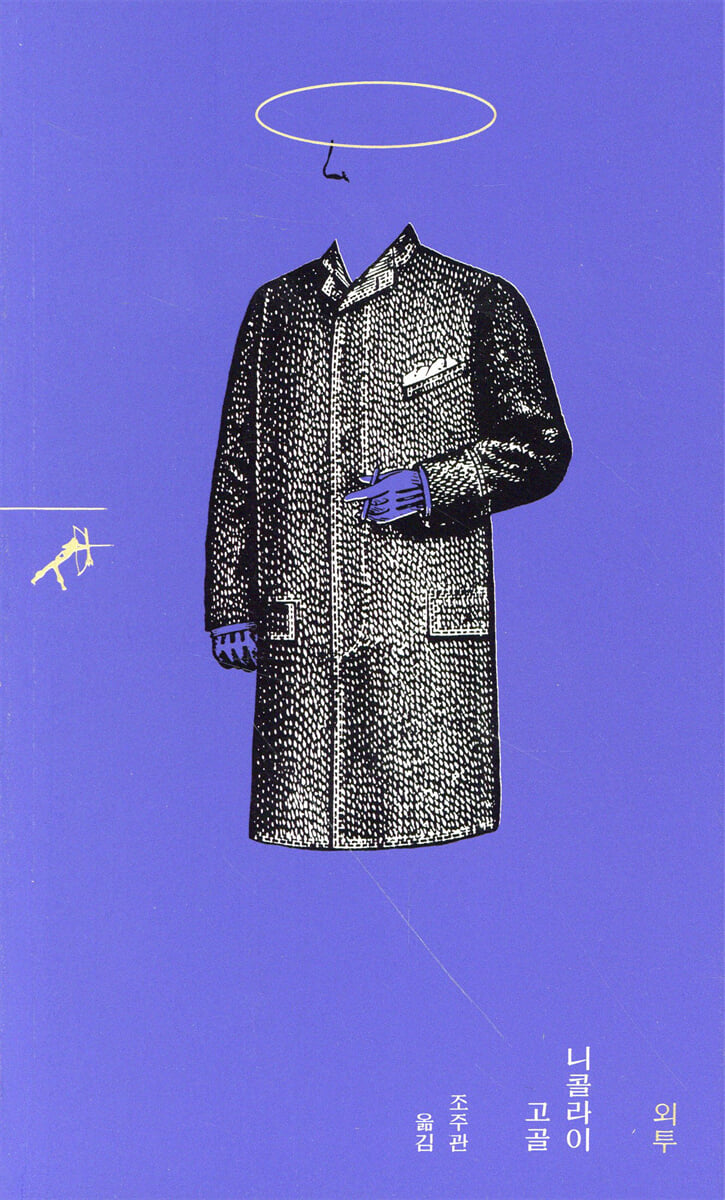
coat
 |
Description
Book Introduction
“All Russian writers have come from Gogol’s ‘Overcoat.’” (Dostoevsky)
Three stories that reveal the true nature of Gogol, the extraordinary storyteller.
Akaki Akakievich could find mental satisfaction in imagining endless ideals of the future overcoat.
From this time on, his own existence seemed more complete, as if he were married, as if he were with someone else.
So, it felt like I had found a cheerful companion who I decided to spend the rest of my life with, rather than being alone.
That companion was none other than a coat lined with thick cotton and a durable, unbreakable lining.
For some reason, he felt more energetic and his personality became stronger, like someone who had set his own goals.
The anxiety and indecision that had been visible in his face and actions, the uncertain and hesitant features that had always made him hesitate, were now gone.
Sometimes I saw a spark in my eyes, and I even had some very impudent and bold thoughts in my head. - From "The Overcoat"
Three stories that reveal the true nature of Gogol, the extraordinary storyteller.
Akaki Akakievich could find mental satisfaction in imagining endless ideals of the future overcoat.
From this time on, his own existence seemed more complete, as if he were married, as if he were with someone else.
So, it felt like I had found a cheerful companion who I decided to spend the rest of my life with, rather than being alone.
That companion was none other than a coat lined with thick cotton and a durable, unbreakable lining.
For some reason, he felt more energetic and his personality became stronger, like someone who had set his own goals.
The anxiety and indecision that had been visible in his face and actions, the uncertain and hesitant features that had always made him hesitate, were now gone.
Sometimes I saw a spark in my eyes, and I even had some very impudent and bold thoughts in my head. - From "The Overcoat"
- You can preview some of the book's contents.
Preview
index
Recommendation: Gogol, Gogol, Gogol, and… … Gogol? (Geum Jeong-yeon)
nose
coat
Madman's Diary
nose
coat
Madman's Diary
Publisher's Review
Editor's Note: Why am I presenting this work?
The Overcoat, a collection of three representative works by Nikolai Vasilyevich Gogol, a pioneer of modern Russian literature, has been republished by "Sonsal Bunko."
This book contains three stories set in St. Petersburg, the capital of Imperial Russia: the already well-known "The Nose" and "The Overcoat," as well as "A Madman's Diary" and "A Word of Recommendation" by book critic Geum Jeong-yeon.
These works all uniquely blend fantasy and reality, powerfully portraying the alienated reality of humans living in an absurd world.
Moreover, Gogol's unique yet extremely modern imagination and sharp satirical sense of reality placed him at the origin of modern Russian literature.
St. Petersburg, the setting of the three stories, is a world of falsehood and chaos, ruled by material desires and class order.
Therefore, most of the characters in these works are bureaucrats, and they all move according to class, and their entire lives are determined by class.
In particular, class consciousness is soon linked to materialistic greed.
In "The Nose," the disappearance of Kovalev's nose as he boasts about his rank, and in "The Overcoat," the high-ranking officials who nag a poor lower-ranking official to death for not upholding the hierarchy are all examples that clearly show the false consciousness of class.
In this way, the upper class, who represent materialism and greed (or those who cling to it), easily trample on the poor lower class who silently live as they are given. ("The Overcoat") The distorted image of the modern city, where everything is judged and determined by class and materialism, is revealed in all the works in this book.
But the most characteristic feature of Gogol's short stories is that they do not lose their laughter even in the face of harsh reality.
The protagonist politely asks the nose, who is acting like a fifth-grade official, “Aren’t you my nose?” (“The Nose”), and when the ghost runs at him shouting, “Give me my clothes!”, the arrogant high-ranking official is terrified and runs away (“The Overcoat”). And when the protagonist says to the shy young lady, “Actually, I have something to talk to your dog about” (“The Diary of a Madman”), any reader cannot help but laugh.
In fact, laughter is the essence of being human, so if you don't laugh, you're not human.
Therefore, Gogol's works, which seek to find humor in the harsh reality of materialism and greed, are imbued with a warm humanism.
And this laughter, as we can see from the examples of the three stories, is possible because it possesses a fantasy that transcends the real world.
In Gogol's work, fantasy is not used to avoid reality, but rather to satirize reality by maximizing its realism.
The three stories included in "The Overcoat" each possess outstanding imagination and exquisitely combine reality and fantasy, thereby criticizing the absurdity of the real world more powerfully than any other work.
The scene where the owner of the nose is sulking in front of the 'nose' wearing the uniform of a 5th-grade official ("Nose"), and the scene where the soul of a person who was unjustly killed after having his coat stolen rushes to steal the clothes of a high-ranking official ("Overcoat") are the results of an amazing imagination that evokes fear, pity, and even laughter.
Gogol's fantastical vision not only transcended the imagination of the common people in the early 19th century, but it still effectively allows today's readers to see the absurdity of the world.
The Overcoat, a collection of three representative works by Nikolai Vasilyevich Gogol, a pioneer of modern Russian literature, has been republished by "Sonsal Bunko."
This book contains three stories set in St. Petersburg, the capital of Imperial Russia: the already well-known "The Nose" and "The Overcoat," as well as "A Madman's Diary" and "A Word of Recommendation" by book critic Geum Jeong-yeon.
These works all uniquely blend fantasy and reality, powerfully portraying the alienated reality of humans living in an absurd world.
Moreover, Gogol's unique yet extremely modern imagination and sharp satirical sense of reality placed him at the origin of modern Russian literature.
St. Petersburg, the setting of the three stories, is a world of falsehood and chaos, ruled by material desires and class order.
Therefore, most of the characters in these works are bureaucrats, and they all move according to class, and their entire lives are determined by class.
In particular, class consciousness is soon linked to materialistic greed.
In "The Nose," the disappearance of Kovalev's nose as he boasts about his rank, and in "The Overcoat," the high-ranking officials who nag a poor lower-ranking official to death for not upholding the hierarchy are all examples that clearly show the false consciousness of class.
In this way, the upper class, who represent materialism and greed (or those who cling to it), easily trample on the poor lower class who silently live as they are given. ("The Overcoat") The distorted image of the modern city, where everything is judged and determined by class and materialism, is revealed in all the works in this book.
But the most characteristic feature of Gogol's short stories is that they do not lose their laughter even in the face of harsh reality.
The protagonist politely asks the nose, who is acting like a fifth-grade official, “Aren’t you my nose?” (“The Nose”), and when the ghost runs at him shouting, “Give me my clothes!”, the arrogant high-ranking official is terrified and runs away (“The Overcoat”). And when the protagonist says to the shy young lady, “Actually, I have something to talk to your dog about” (“The Diary of a Madman”), any reader cannot help but laugh.
In fact, laughter is the essence of being human, so if you don't laugh, you're not human.
Therefore, Gogol's works, which seek to find humor in the harsh reality of materialism and greed, are imbued with a warm humanism.
And this laughter, as we can see from the examples of the three stories, is possible because it possesses a fantasy that transcends the real world.
In Gogol's work, fantasy is not used to avoid reality, but rather to satirize reality by maximizing its realism.
The three stories included in "The Overcoat" each possess outstanding imagination and exquisitely combine reality and fantasy, thereby criticizing the absurdity of the real world more powerfully than any other work.
The scene where the owner of the nose is sulking in front of the 'nose' wearing the uniform of a 5th-grade official ("Nose"), and the scene where the soul of a person who was unjustly killed after having his coat stolen rushes to steal the clothes of a high-ranking official ("Overcoat") are the results of an amazing imagination that evokes fear, pity, and even laughter.
Gogol's fantastical vision not only transcended the imagination of the common people in the early 19th century, but it still effectively allows today's readers to see the absurdity of the world.
GOODS SPECIFICS
- Date of issue: June 30, 2017
- Page count, weight, size: 132 pages | 144g | 113*188*20mm
- ISBN13: 9788937429156
- ISBN10: 8937429152
You may also like
카테고리
korean


korean

![GQ KOREA Mark (Monthly): December [2025]](http://librairie.coreenne.fr/cdn/shop/files/8ef265dbbfbf186523ed75ba7319009d.jpg?v=1765340328&width=3840)


