

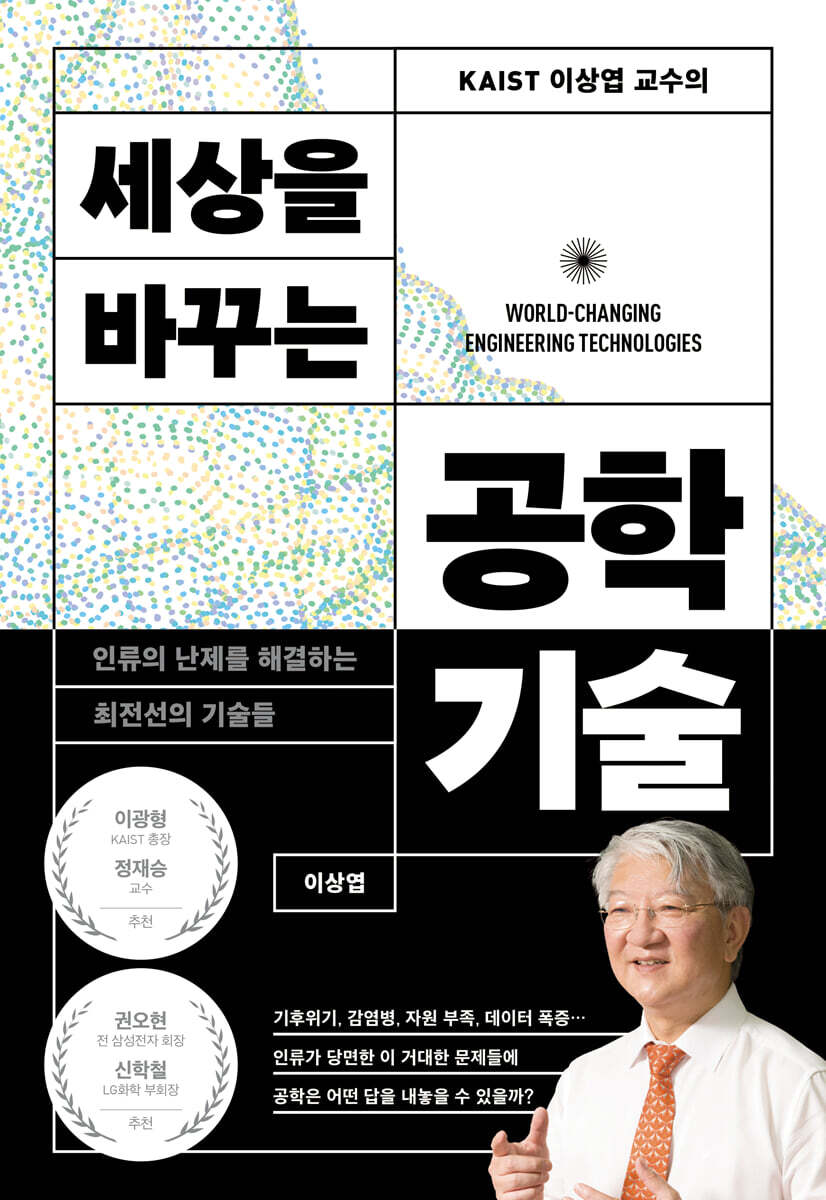
KAIST Professor Sang-Yeop Lee's Engineering Technology That Changes the World
 |
Description
Book Introduction
“Ultimately, it is engineering that changes the world!”
Climate crisis, infectious diseases, resource shortages, data explosion, etc.
What answers can engineering provide to these enormous problems facing humanity?
Professor Sang-Yeop Lee of KAIST, a leading scholar in the Korean science and technology community and a world authority in metabolic engineering, shares cutting-edge technologies that will solve humanity's challenges and Korea's leading strategies in the era of technological hegemony.
This book contains the thoughts and solutions we have gathered so far on how science and technology, especially engineering, can solve the challenges facing humanity, such as the climate crisis, infectious diseases, energy depletion, aging, and the flood of digital information.
This book views engineering not simply as a technology but as a "practical tool for solving the world's problems." It covers a wide range of topics, from environmental issues like climate and energy to medicine, biotechnology, and information and communication technology, and easily explains the specific ways in which technology is transforming reality.
From technologies that convert carbon dioxide into resources, to biofuel production using microorganisms, to the development of new drugs based on artificial intelligence, to data storage in DNA, cutting-edge engineering technologies previously only seen in brief news reports are now unfolding before your eyes with vivid examples.
Engineering is a force for problem solving and a language of change.
For anyone who wants to learn the language, this book will serve as a solid starting point.
Climate crisis, infectious diseases, resource shortages, data explosion, etc.
What answers can engineering provide to these enormous problems facing humanity?
Professor Sang-Yeop Lee of KAIST, a leading scholar in the Korean science and technology community and a world authority in metabolic engineering, shares cutting-edge technologies that will solve humanity's challenges and Korea's leading strategies in the era of technological hegemony.
This book contains the thoughts and solutions we have gathered so far on how science and technology, especially engineering, can solve the challenges facing humanity, such as the climate crisis, infectious diseases, energy depletion, aging, and the flood of digital information.
This book views engineering not simply as a technology but as a "practical tool for solving the world's problems." It covers a wide range of topics, from environmental issues like climate and energy to medicine, biotechnology, and information and communication technology, and easily explains the specific ways in which technology is transforming reality.
From technologies that convert carbon dioxide into resources, to biofuel production using microorganisms, to the development of new drugs based on artificial intelligence, to data storage in DNA, cutting-edge engineering technologies previously only seen in brief news reports are now unfolding before your eyes with vivid examples.
Engineering is a force for problem solving and a language of change.
For anyone who wants to learn the language, this book will serve as a solid starting point.
- You can preview some of the book's contents.
Preview
index
Recommendation
Seomun Engineering: Answering the World's Problems
Part 1: The Earth is Warming: It's Time for Engineering to Take Action
1. Global Risk Factors Facing Us
2 Climate Crisis: A Warning to the Earth
3 Ways to Reduce Carbon by Sector
4 Carbon Neutrality: A Choice for the Future
5 Technology to convert carbon dioxide into resources
6 The chemical industry evolving toward an eco-friendly future
7 Is plastic really the enemy of the environment?
8 Reusing Resources: The Evolution of the 4R Strategy
9 Circulating Digital: The Second Life of Electronic Products
10 New Waves in Manufacturing
11 War on Fine Dust
12 For a sustainable sky road
13 Power-Guzzling Monsters: Data Centers
Part 2: Longer, Healthier: The Future of Medicine Opened by Engineering
1 War on Disease X: Prepare for Future Infectious Diseases
2 Scientific and Technological Lessons from the COVID-19 Pandemic
3 The Power of Technology to Prevent the Next Infectious Disease Crisis
4 What Engineering Should Do in the Age of Infectious Diseases
5 The Birth of Antibiotics and the Era of Microbial Control
6 In the Age of Antibiotic Resistance, Searching for New Antibiotics
7. Is there an end to the fight against cancer?
8 Scientific Solutions to Fight Obesity
9 When AI and Medicine Meet
10 New Drugs Designed by Artificial Intelligence
11 The era of digital treatment
12 Will the dream of immortality come true?
13 Sweet without sugar, the art of sugar replacement
14 The Science Behind Tears: A Window to Emotion and Health
15 Food is the best medicine
16 Scientific Reasons Why Exercise Is Good for Your Health
Part 3: Designing Life: The New World of Biotechnology
1 A new trend that is turning the tables on life sciences
2 Ambitious Challenges for the Korean Bio Industry
3 Biomanufacturing Innovations: A Bold Challenge
4 Bio-fidelity of all industries becomes a reality.
5. The Path to a Biotechnology Powerhouse Created by Convergence
6. Metabolic Engineering and Synthetic Biology: Reassembling the Future
7 Protein Engineering, the Technology of Designing Proteins
8 Biofoundries: A New Horizon for Automation
9. Biomimetic Engineering: Technology that Resembles Nature
10 Functional Natural Substances Made from Microorganisms
11 Color-Coated Biotechnology: Natural Pigments Made by Microorganisms
12 Cultured Meat and Alternative Meat: New Potential for the Table
13 The Age of Microbially Made Food
14 Towards a Sustainable Food System
15 For the development of K-food
16 Journey to Becoming a New Drug Development Powerhouse
Part 4: Technology's Turning Point: Accelerating Towards the Future
1 Future technologies that will lead the world
2 Nine Revolutionary Technologies Leading the Fourth Industrial Revolution
3 Future-Changing Technologies That Are Capturing Europe's Attention
4 AI and AIX2, for smarter technology
5 AI Tools on the Rise
6 AI agents working 24 hours a day are coming.
7. The Balance Between AI Promotion and Regulation
8 Data, data, data
9 How to store data in DNA
10 Metaverse Beyond Virtual Reality
11 Exploding Batteries: Safety Strategies
12 The Communications War in the Sky: The Story of Low-Earth Orbit Satellites
13 Quantum Computers: Pushing the Limits of Computation
14 Transforming Trust Structure with Blockchain
15 Cryptocurrencies: The Future of Money or a Bubble?
16 Korea's Strategy in the Era of Technological Hegemony
References
Seomun Engineering: Answering the World's Problems
Part 1: The Earth is Warming: It's Time for Engineering to Take Action
1. Global Risk Factors Facing Us
2 Climate Crisis: A Warning to the Earth
3 Ways to Reduce Carbon by Sector
4 Carbon Neutrality: A Choice for the Future
5 Technology to convert carbon dioxide into resources
6 The chemical industry evolving toward an eco-friendly future
7 Is plastic really the enemy of the environment?
8 Reusing Resources: The Evolution of the 4R Strategy
9 Circulating Digital: The Second Life of Electronic Products
10 New Waves in Manufacturing
11 War on Fine Dust
12 For a sustainable sky road
13 Power-Guzzling Monsters: Data Centers
Part 2: Longer, Healthier: The Future of Medicine Opened by Engineering
1 War on Disease X: Prepare for Future Infectious Diseases
2 Scientific and Technological Lessons from the COVID-19 Pandemic
3 The Power of Technology to Prevent the Next Infectious Disease Crisis
4 What Engineering Should Do in the Age of Infectious Diseases
5 The Birth of Antibiotics and the Era of Microbial Control
6 In the Age of Antibiotic Resistance, Searching for New Antibiotics
7. Is there an end to the fight against cancer?
8 Scientific Solutions to Fight Obesity
9 When AI and Medicine Meet
10 New Drugs Designed by Artificial Intelligence
11 The era of digital treatment
12 Will the dream of immortality come true?
13 Sweet without sugar, the art of sugar replacement
14 The Science Behind Tears: A Window to Emotion and Health
15 Food is the best medicine
16 Scientific Reasons Why Exercise Is Good for Your Health
Part 3: Designing Life: The New World of Biotechnology
1 A new trend that is turning the tables on life sciences
2 Ambitious Challenges for the Korean Bio Industry
3 Biomanufacturing Innovations: A Bold Challenge
4 Bio-fidelity of all industries becomes a reality.
5. The Path to a Biotechnology Powerhouse Created by Convergence
6. Metabolic Engineering and Synthetic Biology: Reassembling the Future
7 Protein Engineering, the Technology of Designing Proteins
8 Biofoundries: A New Horizon for Automation
9. Biomimetic Engineering: Technology that Resembles Nature
10 Functional Natural Substances Made from Microorganisms
11 Color-Coated Biotechnology: Natural Pigments Made by Microorganisms
12 Cultured Meat and Alternative Meat: New Potential for the Table
13 The Age of Microbially Made Food
14 Towards a Sustainable Food System
15 For the development of K-food
16 Journey to Becoming a New Drug Development Powerhouse
Part 4: Technology's Turning Point: Accelerating Towards the Future
1 Future technologies that will lead the world
2 Nine Revolutionary Technologies Leading the Fourth Industrial Revolution
3 Future-Changing Technologies That Are Capturing Europe's Attention
4 AI and AIX2, for smarter technology
5 AI Tools on the Rise
6 AI agents working 24 hours a day are coming.
7. The Balance Between AI Promotion and Regulation
8 Data, data, data
9 How to store data in DNA
10 Metaverse Beyond Virtual Reality
11 Exploding Batteries: Safety Strategies
12 The Communications War in the Sky: The Story of Low-Earth Orbit Satellites
13 Quantum Computers: Pushing the Limits of Computation
14 Transforming Trust Structure with Blockchain
15 Cryptocurrencies: The Future of Money or a Bubble?
16 Korea's Strategy in the Era of Technological Hegemony
References
Detailed image

Into the book
Engineering is the practice that moves the world and the language that turns human imagination into reality.
From physical infrastructure like bridges, dams, power plants, and automobiles to technologies that design the invisible world like the Internet, artificial intelligence, and microbial cell factories, humanity has always asked "Why?" and "How?" when faced with challenges and dreams.
And the answer has always been made real through engineering.
--- p.6
The biochemical industry is an industry that produces the chemicals we need using biomass, such as plants and microalgae, which grow and reproduce in nature in a renewable form every year, as raw materials instead of crude oil or natural gas.
However, since food resources cannot be used as raw materials to develop the biochemical industry, non-edible biomass must be used.
Once the raw materials are secured, a biochemical plant equivalent to a petrochemical plant is needed.
Microorganisms are ideally suited for this factory role because they are free from ethical and safety concerns.
That is, we feed microorganisms glucose or sugar derived from biomass and make them produce the chemicals we want through metabolic activities.
However, since microorganisms isolated from nature have low production efficiency, the technology to improve this is metabolic engineering.
--- p.51
Where does the plastic problem we face today stem from? Isn't it not the inherent nature of plastic itself, but rather our indiscriminate use and disposition of it? In fact, there are many non-biodegradable materials, such as metal and stone, and we have been using each for its intended purpose.
Without plastic, the indiscriminate use of natural resources, such as logging, would have had a greater and more negative impact on the environment.
As industry developed rapidly, we ended up using too much fossil fuel to produce various petrochemical products in order to live more comfortably and well.
As a result, petrochemical products have contributed greatly to industrial development, but they are also recognized as the main culprit of climate change and environmental pollution.
If we had produced only the amount needed and recycled it after use, the plastic problem we have today might not have existed.
Rather, it may be that plastics are being evaluated as having played an important role in preventing the depletion of natural resources and protecting the environment.
--- p.60
Most early cell phones had removable batteries, so if the battery performance deteriorated or a problem arose, you could simply replace the battery.
However, since most phones are now integrated, there are many cases where a perfectly good phone has to be replaced entirely due to battery problems.
What if consumers could, if they so desired, retrieve even phones sold five or ten years ago and upgrade their functionality and performance through component replacement? Furthermore, we could consider ways to improve the speed of various programs by linking them to the cloud, thereby achieving high performance without relying solely on the device's performance.
From a recycling perspective, if we design and manufacture our phones with the intention of reusing parts and components from the end-of-life, we can significantly increase the recycling rate.
--- p.69
Corporate CEOs must have a deep understanding of technology.
In this age of transformation, you can't survive by leaving technology solely to the CTO.
Since no single company can master all technologies, collaboration with universities, research institutes, and other companies must be further strengthened.
Meanwhile, as manufacturing transforms, many tasks will be automated, leading to a loss of existing jobs and the creation of new ones.
The nation and society must support its members in continuously upgrading their knowledge and skills, and cultivate talent suited to emerging jobs to prepare for the changes in the manufacturing industry.
--- p.76
Protein structure prediction technology using AI plays a very important role in the new drug development process.
Knowing the exact structure of a target protein allows us to design a drug with a molecular structure that fits it perfectly, and we can quickly review numerous candidate compounds using computers.
This will help evaluate the potential of drugs and reduce wasted time and money on low-potency compounds or the wrong targets.
This will allow new drug development companies to use their resources much more efficiently.
Due to its enormous ripple effects across drug development and biotechnology, Professor David Baker of the University of Washington, who developed RosettaFold, and Demis Hassabis and John Jumper of DeepMind, who developed AlphaFold, were jointly awarded the 2024 Nobel Prize in Chemistry.
--- p.151
Life science has developed by observing all or part of living organisms, exploring changes in living organisms due to environmental changes, and focusing on anatomical structures.
However, with the emergence of key technologies such as the technology to reveal DNA base sequences, the discovery of enzymes that cut and paste DNA, recombinant DNA technology, DNA amplification technology using polymerase chain reaction (PCR), and DNA synthesis technology, the research paradigm in life sciences has rapidly changed.
These technological innovations have enabled the mass production of various therapeutic proteins, including insulin, human growth hormone, and anemia treatment proteins, which have contributed significantly to the treatment of diseases and the promotion of human health.
Since then, with the continuous development of sophisticated genome manipulation tools such as CRISPR-Cas technology and microRNA technology, an era has opened in which living organisms can be manipulated with greater precision.
--- p.181
Advances in biotechnology have led to the creation of a variety of innovative new products.
Products like mRNA vaccines, which have made a significant contribution to preventing further spread of COVID-19, as well as treatments like immunotherapy, have driven significant changes in the medical field.
Biofuels such as sustainable aviation fuel, produced from crude oil, industrial solvents, and chemicals such as plastics are also being developed.
Natural medicines, which can be extracted in trace amounts from plants, can also be produced through fermentation using microbial cell factories created through metabolic engineering.
(192
Can these secondary metabolites be produced only by directly growing plants or culturing plant cells? No.
Metabolic engineering technology allows the production of secondary metabolites through microorganisms rather than plants.
By utilizing microorganisms, stable production with consistent quality is possible regardless of climate, weather, soil quality, or cultivation personnel.
--- p.222
Microorganisms possess all the requirements for a sustainable future food resource.
Unlike plants and animals, which take months or more to grow and eat, microorganisms grow very quickly while using less water and land than livestock.
Some microorganisms can multiply rapidly, doubling every 20 to 30 minutes, and some even grow by consuming carbon dioxide.
It contains 40-65% protein based on dry weight and is also rich in various vitamins, antioxidants, and physiologically active substances, making it nutritionally comparable to meat.
There are no ethical issues in the cultivation, acquisition, or consumption process.
--- p.238~239
DNA storage technology has advanced rapidly over the past several years.
In 2017, Professor George Church's team at Harvard University announced that they had used CRISPR DNA editing technology to store an image of a human hand in the genome of E. coli and then read it again with 90 percent accuracy.
Additionally, it demonstrated the possibility of storing video information by storing and reading video of a person riding a horse.
In addition to CRISPR DNA editing technology, various recombinant enzymes can be used to record and edit DNA.
It is expected to develop even more rapidly in the future when combined with DNA barcoding technology.
From physical infrastructure like bridges, dams, power plants, and automobiles to technologies that design the invisible world like the Internet, artificial intelligence, and microbial cell factories, humanity has always asked "Why?" and "How?" when faced with challenges and dreams.
And the answer has always been made real through engineering.
--- p.6
The biochemical industry is an industry that produces the chemicals we need using biomass, such as plants and microalgae, which grow and reproduce in nature in a renewable form every year, as raw materials instead of crude oil or natural gas.
However, since food resources cannot be used as raw materials to develop the biochemical industry, non-edible biomass must be used.
Once the raw materials are secured, a biochemical plant equivalent to a petrochemical plant is needed.
Microorganisms are ideally suited for this factory role because they are free from ethical and safety concerns.
That is, we feed microorganisms glucose or sugar derived from biomass and make them produce the chemicals we want through metabolic activities.
However, since microorganisms isolated from nature have low production efficiency, the technology to improve this is metabolic engineering.
--- p.51
Where does the plastic problem we face today stem from? Isn't it not the inherent nature of plastic itself, but rather our indiscriminate use and disposition of it? In fact, there are many non-biodegradable materials, such as metal and stone, and we have been using each for its intended purpose.
Without plastic, the indiscriminate use of natural resources, such as logging, would have had a greater and more negative impact on the environment.
As industry developed rapidly, we ended up using too much fossil fuel to produce various petrochemical products in order to live more comfortably and well.
As a result, petrochemical products have contributed greatly to industrial development, but they are also recognized as the main culprit of climate change and environmental pollution.
If we had produced only the amount needed and recycled it after use, the plastic problem we have today might not have existed.
Rather, it may be that plastics are being evaluated as having played an important role in preventing the depletion of natural resources and protecting the environment.
--- p.60
Most early cell phones had removable batteries, so if the battery performance deteriorated or a problem arose, you could simply replace the battery.
However, since most phones are now integrated, there are many cases where a perfectly good phone has to be replaced entirely due to battery problems.
What if consumers could, if they so desired, retrieve even phones sold five or ten years ago and upgrade their functionality and performance through component replacement? Furthermore, we could consider ways to improve the speed of various programs by linking them to the cloud, thereby achieving high performance without relying solely on the device's performance.
From a recycling perspective, if we design and manufacture our phones with the intention of reusing parts and components from the end-of-life, we can significantly increase the recycling rate.
--- p.69
Corporate CEOs must have a deep understanding of technology.
In this age of transformation, you can't survive by leaving technology solely to the CTO.
Since no single company can master all technologies, collaboration with universities, research institutes, and other companies must be further strengthened.
Meanwhile, as manufacturing transforms, many tasks will be automated, leading to a loss of existing jobs and the creation of new ones.
The nation and society must support its members in continuously upgrading their knowledge and skills, and cultivate talent suited to emerging jobs to prepare for the changes in the manufacturing industry.
--- p.76
Protein structure prediction technology using AI plays a very important role in the new drug development process.
Knowing the exact structure of a target protein allows us to design a drug with a molecular structure that fits it perfectly, and we can quickly review numerous candidate compounds using computers.
This will help evaluate the potential of drugs and reduce wasted time and money on low-potency compounds or the wrong targets.
This will allow new drug development companies to use their resources much more efficiently.
Due to its enormous ripple effects across drug development and biotechnology, Professor David Baker of the University of Washington, who developed RosettaFold, and Demis Hassabis and John Jumper of DeepMind, who developed AlphaFold, were jointly awarded the 2024 Nobel Prize in Chemistry.
--- p.151
Life science has developed by observing all or part of living organisms, exploring changes in living organisms due to environmental changes, and focusing on anatomical structures.
However, with the emergence of key technologies such as the technology to reveal DNA base sequences, the discovery of enzymes that cut and paste DNA, recombinant DNA technology, DNA amplification technology using polymerase chain reaction (PCR), and DNA synthesis technology, the research paradigm in life sciences has rapidly changed.
These technological innovations have enabled the mass production of various therapeutic proteins, including insulin, human growth hormone, and anemia treatment proteins, which have contributed significantly to the treatment of diseases and the promotion of human health.
Since then, with the continuous development of sophisticated genome manipulation tools such as CRISPR-Cas technology and microRNA technology, an era has opened in which living organisms can be manipulated with greater precision.
--- p.181
Advances in biotechnology have led to the creation of a variety of innovative new products.
Products like mRNA vaccines, which have made a significant contribution to preventing further spread of COVID-19, as well as treatments like immunotherapy, have driven significant changes in the medical field.
Biofuels such as sustainable aviation fuel, produced from crude oil, industrial solvents, and chemicals such as plastics are also being developed.
Natural medicines, which can be extracted in trace amounts from plants, can also be produced through fermentation using microbial cell factories created through metabolic engineering.
(192
Can these secondary metabolites be produced only by directly growing plants or culturing plant cells? No.
Metabolic engineering technology allows the production of secondary metabolites through microorganisms rather than plants.
By utilizing microorganisms, stable production with consistent quality is possible regardless of climate, weather, soil quality, or cultivation personnel.
--- p.222
Microorganisms possess all the requirements for a sustainable future food resource.
Unlike plants and animals, which take months or more to grow and eat, microorganisms grow very quickly while using less water and land than livestock.
Some microorganisms can multiply rapidly, doubling every 20 to 30 minutes, and some even grow by consuming carbon dioxide.
It contains 40-65% protein based on dry weight and is also rich in various vitamins, antioxidants, and physiologically active substances, making it nutritionally comparable to meat.
There are no ethical issues in the cultivation, acquisition, or consumption process.
--- p.238~239
DNA storage technology has advanced rapidly over the past several years.
In 2017, Professor George Church's team at Harvard University announced that they had used CRISPR DNA editing technology to store an image of a human hand in the genome of E. coli and then read it again with 90 percent accuracy.
Additionally, it demonstrated the possibility of storing video information by storing and reading video of a person riding a horse.
In addition to CRISPR DNA editing technology, various recombinant enzymes can be used to record and edit DNA.
It is expected to develop even more rapidly in the future when combined with DNA barcoding technology.
--- p.319
Publisher's Review
“Ultimately, it is engineering that changes the world!”
★Kwang-Hyung Lee (President of KAIST), Jae-Seung Jeong (Professor of Brain and Cognitive Sciences, KAIST),
★Highly recommended by Kwon Oh-hyun (former Chairman of Samsung Electronics) and Shin Hak-cheol (Vice Chairman and CEO of LG Chem)!
Climate crisis, infectious diseases, resource shortages, data explosion, etc.
These huge problems facing humanity
What answers can engineering provide?
Humanity is now facing more challenges than ever before: the accelerating climate crisis, food, energy, and water shortages, plastic waste polluting the environment, infectious diseases like the COVID-19 pandemic, aging and obesity threatening human health, and even fake news and cybersecurity issues brought on by the rapid development of AI and digital technology.
How can we overcome these complex and multifaceted challenges? And where do the answers lie? Professor Sang-Yeop Lee of KAIST, a leading figure in South Korea's science and technology community and a world-renowned authority on metabolic engineering, has written columns for various media outlets, emphasizing that the solution lies in "engineering technology" based on decades of research and reflection.
All these insights have been compiled, refined, and updated into a single book.
This book illuminates engineering beyond the realm of simple calculations and mechanical tools, to 'the most practical tool for solving the world's problems.'
From the environmental crisis caused by climate change to sustainable solutions to energy depletion, medical and biotechnology technologies to combat infectious diseases and aging that threaten health, and information and communications technologies that navigate the information deluge, this book clearly and easily explains how engineering is innovatively addressing the wide range of challenges facing humanity.
For example, the world of cutting-edge engineering technologies that we have only seen in brief news so far, including technology to convert carbon dioxide, a major contributor to global warming, into a high-value-added resource rather than a simple waste; biofuel production technology using microorganisms that will be responsible for the future of clean energy; AI-based new drug development technology that will end another pandemic early; and DNA data storage technology that will solve data processing and storage problems caused by the explosive increase in data, are vividly unfolding before our eyes through Professor Lee Sang-yeop's vivid explanations and specific examples.
For students seeking to take their first steps into the complex and challenging world of engineering, the general public eager to understand the trends of future technology, and anyone seeking to create a better world through innovation, this book will serve as a solid starting point and essential guide.
The only Korean to be elected to all three of the world's major scientific academies
A world-renowned expert in metabolic engineering
The story of engineering unfolds with KAIST Professor Sang-Yeop Lee, a "21st-century alchemist."
Professor Lee Sang-yeop is called the '21st century alchemist.'
In 2010, they developed a spider silk protein stronger than steel using E. coli modified through metabolic engineering, and in 2013, they surprised the world by producing gasoline using microorganisms.
In 2016, the company produced polylactate-co-glycolate (PLGA), a biocompatible polymer for medical use, and in 2017, it produced lactam, a raw material for nylon, from microorganisms.
In 2018, heme, which is added to plant-based proteins to give them a meaty flavor and is also used as a treatment for anemia, was produced by fermenting E. coli.
In 2021, they successfully manufactured carminic acid, a high-quality natural pigment extracted from insects, through microbial metabolic engineering, and in 2022, they successfully manufactured lutein, an eye health-related ingredient previously only available from marigolds.
And in 2024, the world's first eco-friendly liquid egg substitute was created using microbial metabolic engineering.
However, he is more than just a biotechnology expert; he is a master who possesses an integrated vision that encompasses engineering and science, industry and policy, technology and the future of humanity, and who has contemplated the impact of technology on society, policy, and industry as a whole.
As Vice Chairman of the National Bio-Presidential Committee and Vice President of Research at KAIST, he is leading the direction of domestic research. He also served as Chairman of the World Economic Forum's 'Future Technology Global Agenda Committee' and 'Biotechnology Global Future Committee', and was deeply involved in setting agendas in various fields such as AI, climate change, energy transition, and global risk.
Furthermore, his record as the only scientist in the world to have been elected as a foreign member to all three of the world's top scientific academies - the National Academy of Sciences of the United States, the National Academy of Engineering of the United States, and the Royal Society of London - clearly demonstrates his unparalleled status and academic depth.
This book captures the experiences and vision Professor Lee has accumulated over the past 30 years, spanning the boundaries of research, industry, policy consulting, and international cooperation.
Beyond explaining specific technologies, it presents concrete examples and in-depth insights into what problems technologies can solve, what direction they can lead society in, and what strategies Korea should develop in the global race for technological supremacy.
From plastics and gasoline made from microorganisms,
From leading strategies in the era of technological hegemony to
The latest engineering trends, topography, and unparalleled insights!
The book is divided into four parts.
Part 1, “The Earth is Getting Hotter, It’s Time for Engineering to Take Action,” focuses on the climate crisis and environmental issues.
Based on the Global Risk Report published annually at the Davos Forum, this report examines global risk factors year by year, revealing that since 2014, climate crisis-related risk factors have consistently ranked at the top.
Next, we'll explore how to turn carbon dioxide into a resource, and revisit the petrochemical industry and plastics, which are considered major contributors to global warming and environmental pollution.
The importance of sustainable aviation fuel is also discussed in the aviation sector, where electrification of power sources is difficult, unlike in automobiles.
This book broadens readers' perspectives on the climate crisis and energy transition, exploring the reality that data centers have become power-hungry monsters and eco-friendly information and communications technology infrastructure strategies to address this.
Part 2, "Longer, Healthier: The Future of Medicine Opened by Engineering," explores the accelerated innovation in biotechnology and healthcare following the COVID-19 pandemic.
From the behind-the-scenes story of vaccine development to the threat of antibiotic-resistant superbugs and countermeasures, to the now essential development of AI-based new drugs, we explore how engineering can contribute to a healthier human life through real-world examples and research data.
We explore the potential of digital therapeutics, life-extending technologies that challenge immortality, and even sugar substitutes that offer a healthy sweetness.
Part 3, "Designing Life: A New World of Biotechnology," focuses on the new world that can be opened up by the convergence of life science and engineering, Professor Lee Sang-yeop's fields of expertise.
We examine the present and future of metabolic engineering and synthetic biology, explaining how microorganisms can replace chemical plants, drawing on research results and industrial examples.
Cosmetic raw materials produced by microorganisms are attracting attention in the global market, and by utilizing advanced biotechnology, microorganisms can produce 1,4-butanediol, spandex, and even natural pigments.
Cultured meat and alternative meats have emerged as future food strategies beyond the laboratory table, and it is no exaggeration to say that the competitiveness of K-food now depends on microbial design.
Part 4, "Turning Point of Technology, Acceleration Towards the Future," examines the flow of future technology and the world it will reshape.
We examine the "Top 10 Emerging Technologies" announced annually by the World Economic Forum, and then closely analyze how ongoing technological advancements are transforming the structure of industry and society, from generative artificial intelligence and AI agents to DNA data storage technology, the metaverse, low-orbit communication satellites, non-explosive batteries, and the computational revolution of quantum computing.
Blockchain is being re-evaluated as a technology that goes beyond cryptocurrency to redesign the "structure of trust," and it also addresses the ethical and social issues that will arise with the spread of AI technology.
In particular, in an era of technological hegemony where cutting-edge science and engineering technologies significantly impact not only a nation's economic growth but also its diplomacy and security, it presents a clear and specific direction for how Korea should prepare for the future.
In particular, it strongly criticizes the government's sudden cut in the R&D budget in 2024, which shocked and disappointed many scientists and engineers, and also suggests solutions to the problem of supply and demand for science and technology personnel.
The most practical imagination that changes the world
The power to find answers in the face of crisis
People who know engineering technology lead the future!
An era where anxiety that “technology is too advanced” and desperation that “there is no future without technology” coexist.
We are now witnessing an inflection point where artificial intelligence is changing jobs, the climate crisis is reshaping industrial structures, and technology is positioned at the center of social and economic decision-making.
Now more than ever, we need a clear understanding of technology and a keen insight into how engineering moves the world.
As technological hegemony intensifies, engineering is no longer the domain of a select few. Instead, it's an essential language that everyone who seeks to understand the times and lead the future must master.
In this book, Professor Lee Sang-yeop presents engineering as the “language of change” and “a tool for designing the future.”
The world of technology, once perceived as complex, is explained with clear language and concrete examples, providing a glimpse into the previously vague landscape of future technologies.
This book goes beyond mere engineering to understand the structure of the world, trains problem-solving thinking, and serves as a practical guide to preparing for a better tomorrow.
For readers who are not familiar with engineering, it provides a perspective on the trends of cutting-edge science and engineering technology, and for readers who are familiar with technology, it provides an opportunity for reflection on the social significance of engineering.
Readers will find this book inspiring and inspiring to explore the implications of engineering imagination.
That imagination is the power to ask questions and design answers in the face of a crisis.
★Kwang-Hyung Lee (President of KAIST), Jae-Seung Jeong (Professor of Brain and Cognitive Sciences, KAIST),
★Highly recommended by Kwon Oh-hyun (former Chairman of Samsung Electronics) and Shin Hak-cheol (Vice Chairman and CEO of LG Chem)!
Climate crisis, infectious diseases, resource shortages, data explosion, etc.
These huge problems facing humanity
What answers can engineering provide?
Humanity is now facing more challenges than ever before: the accelerating climate crisis, food, energy, and water shortages, plastic waste polluting the environment, infectious diseases like the COVID-19 pandemic, aging and obesity threatening human health, and even fake news and cybersecurity issues brought on by the rapid development of AI and digital technology.
How can we overcome these complex and multifaceted challenges? And where do the answers lie? Professor Sang-Yeop Lee of KAIST, a leading figure in South Korea's science and technology community and a world-renowned authority on metabolic engineering, has written columns for various media outlets, emphasizing that the solution lies in "engineering technology" based on decades of research and reflection.
All these insights have been compiled, refined, and updated into a single book.
This book illuminates engineering beyond the realm of simple calculations and mechanical tools, to 'the most practical tool for solving the world's problems.'
From the environmental crisis caused by climate change to sustainable solutions to energy depletion, medical and biotechnology technologies to combat infectious diseases and aging that threaten health, and information and communications technologies that navigate the information deluge, this book clearly and easily explains how engineering is innovatively addressing the wide range of challenges facing humanity.
For example, the world of cutting-edge engineering technologies that we have only seen in brief news so far, including technology to convert carbon dioxide, a major contributor to global warming, into a high-value-added resource rather than a simple waste; biofuel production technology using microorganisms that will be responsible for the future of clean energy; AI-based new drug development technology that will end another pandemic early; and DNA data storage technology that will solve data processing and storage problems caused by the explosive increase in data, are vividly unfolding before our eyes through Professor Lee Sang-yeop's vivid explanations and specific examples.
For students seeking to take their first steps into the complex and challenging world of engineering, the general public eager to understand the trends of future technology, and anyone seeking to create a better world through innovation, this book will serve as a solid starting point and essential guide.
The only Korean to be elected to all three of the world's major scientific academies
A world-renowned expert in metabolic engineering
The story of engineering unfolds with KAIST Professor Sang-Yeop Lee, a "21st-century alchemist."
Professor Lee Sang-yeop is called the '21st century alchemist.'
In 2010, they developed a spider silk protein stronger than steel using E. coli modified through metabolic engineering, and in 2013, they surprised the world by producing gasoline using microorganisms.
In 2016, the company produced polylactate-co-glycolate (PLGA), a biocompatible polymer for medical use, and in 2017, it produced lactam, a raw material for nylon, from microorganisms.
In 2018, heme, which is added to plant-based proteins to give them a meaty flavor and is also used as a treatment for anemia, was produced by fermenting E. coli.
In 2021, they successfully manufactured carminic acid, a high-quality natural pigment extracted from insects, through microbial metabolic engineering, and in 2022, they successfully manufactured lutein, an eye health-related ingredient previously only available from marigolds.
And in 2024, the world's first eco-friendly liquid egg substitute was created using microbial metabolic engineering.
However, he is more than just a biotechnology expert; he is a master who possesses an integrated vision that encompasses engineering and science, industry and policy, technology and the future of humanity, and who has contemplated the impact of technology on society, policy, and industry as a whole.
As Vice Chairman of the National Bio-Presidential Committee and Vice President of Research at KAIST, he is leading the direction of domestic research. He also served as Chairman of the World Economic Forum's 'Future Technology Global Agenda Committee' and 'Biotechnology Global Future Committee', and was deeply involved in setting agendas in various fields such as AI, climate change, energy transition, and global risk.
Furthermore, his record as the only scientist in the world to have been elected as a foreign member to all three of the world's top scientific academies - the National Academy of Sciences of the United States, the National Academy of Engineering of the United States, and the Royal Society of London - clearly demonstrates his unparalleled status and academic depth.
This book captures the experiences and vision Professor Lee has accumulated over the past 30 years, spanning the boundaries of research, industry, policy consulting, and international cooperation.
Beyond explaining specific technologies, it presents concrete examples and in-depth insights into what problems technologies can solve, what direction they can lead society in, and what strategies Korea should develop in the global race for technological supremacy.
From plastics and gasoline made from microorganisms,
From leading strategies in the era of technological hegemony to
The latest engineering trends, topography, and unparalleled insights!
The book is divided into four parts.
Part 1, “The Earth is Getting Hotter, It’s Time for Engineering to Take Action,” focuses on the climate crisis and environmental issues.
Based on the Global Risk Report published annually at the Davos Forum, this report examines global risk factors year by year, revealing that since 2014, climate crisis-related risk factors have consistently ranked at the top.
Next, we'll explore how to turn carbon dioxide into a resource, and revisit the petrochemical industry and plastics, which are considered major contributors to global warming and environmental pollution.
The importance of sustainable aviation fuel is also discussed in the aviation sector, where electrification of power sources is difficult, unlike in automobiles.
This book broadens readers' perspectives on the climate crisis and energy transition, exploring the reality that data centers have become power-hungry monsters and eco-friendly information and communications technology infrastructure strategies to address this.
Part 2, "Longer, Healthier: The Future of Medicine Opened by Engineering," explores the accelerated innovation in biotechnology and healthcare following the COVID-19 pandemic.
From the behind-the-scenes story of vaccine development to the threat of antibiotic-resistant superbugs and countermeasures, to the now essential development of AI-based new drugs, we explore how engineering can contribute to a healthier human life through real-world examples and research data.
We explore the potential of digital therapeutics, life-extending technologies that challenge immortality, and even sugar substitutes that offer a healthy sweetness.
Part 3, "Designing Life: A New World of Biotechnology," focuses on the new world that can be opened up by the convergence of life science and engineering, Professor Lee Sang-yeop's fields of expertise.
We examine the present and future of metabolic engineering and synthetic biology, explaining how microorganisms can replace chemical plants, drawing on research results and industrial examples.
Cosmetic raw materials produced by microorganisms are attracting attention in the global market, and by utilizing advanced biotechnology, microorganisms can produce 1,4-butanediol, spandex, and even natural pigments.
Cultured meat and alternative meats have emerged as future food strategies beyond the laboratory table, and it is no exaggeration to say that the competitiveness of K-food now depends on microbial design.
Part 4, "Turning Point of Technology, Acceleration Towards the Future," examines the flow of future technology and the world it will reshape.
We examine the "Top 10 Emerging Technologies" announced annually by the World Economic Forum, and then closely analyze how ongoing technological advancements are transforming the structure of industry and society, from generative artificial intelligence and AI agents to DNA data storage technology, the metaverse, low-orbit communication satellites, non-explosive batteries, and the computational revolution of quantum computing.
Blockchain is being re-evaluated as a technology that goes beyond cryptocurrency to redesign the "structure of trust," and it also addresses the ethical and social issues that will arise with the spread of AI technology.
In particular, in an era of technological hegemony where cutting-edge science and engineering technologies significantly impact not only a nation's economic growth but also its diplomacy and security, it presents a clear and specific direction for how Korea should prepare for the future.
In particular, it strongly criticizes the government's sudden cut in the R&D budget in 2024, which shocked and disappointed many scientists and engineers, and also suggests solutions to the problem of supply and demand for science and technology personnel.
The most practical imagination that changes the world
The power to find answers in the face of crisis
People who know engineering technology lead the future!
An era where anxiety that “technology is too advanced” and desperation that “there is no future without technology” coexist.
We are now witnessing an inflection point where artificial intelligence is changing jobs, the climate crisis is reshaping industrial structures, and technology is positioned at the center of social and economic decision-making.
Now more than ever, we need a clear understanding of technology and a keen insight into how engineering moves the world.
As technological hegemony intensifies, engineering is no longer the domain of a select few. Instead, it's an essential language that everyone who seeks to understand the times and lead the future must master.
In this book, Professor Lee Sang-yeop presents engineering as the “language of change” and “a tool for designing the future.”
The world of technology, once perceived as complex, is explained with clear language and concrete examples, providing a glimpse into the previously vague landscape of future technologies.
This book goes beyond mere engineering to understand the structure of the world, trains problem-solving thinking, and serves as a practical guide to preparing for a better tomorrow.
For readers who are not familiar with engineering, it provides a perspective on the trends of cutting-edge science and engineering technology, and for readers who are familiar with technology, it provides an opportunity for reflection on the social significance of engineering.
Readers will find this book inspiring and inspiring to explore the implications of engineering imagination.
That imagination is the power to ask questions and design answers in the face of a crisis.
GOODS SPECIFICS
- Date of issue: June 30, 2025
- Page count, weight, size: 364 pages | 564g | 148*215*20mm
- ISBN13: 9791173322235
- ISBN10: 117332223X
You may also like
카테고리
korean


korean

![GQ KOREA Mark (Monthly): December [2025]](http://librairie.coreenne.fr/cdn/shop/files/8ef265dbbfbf186523ed75ba7319009d.jpg?v=1765340328&width=3840)


