

The Master and Margarita
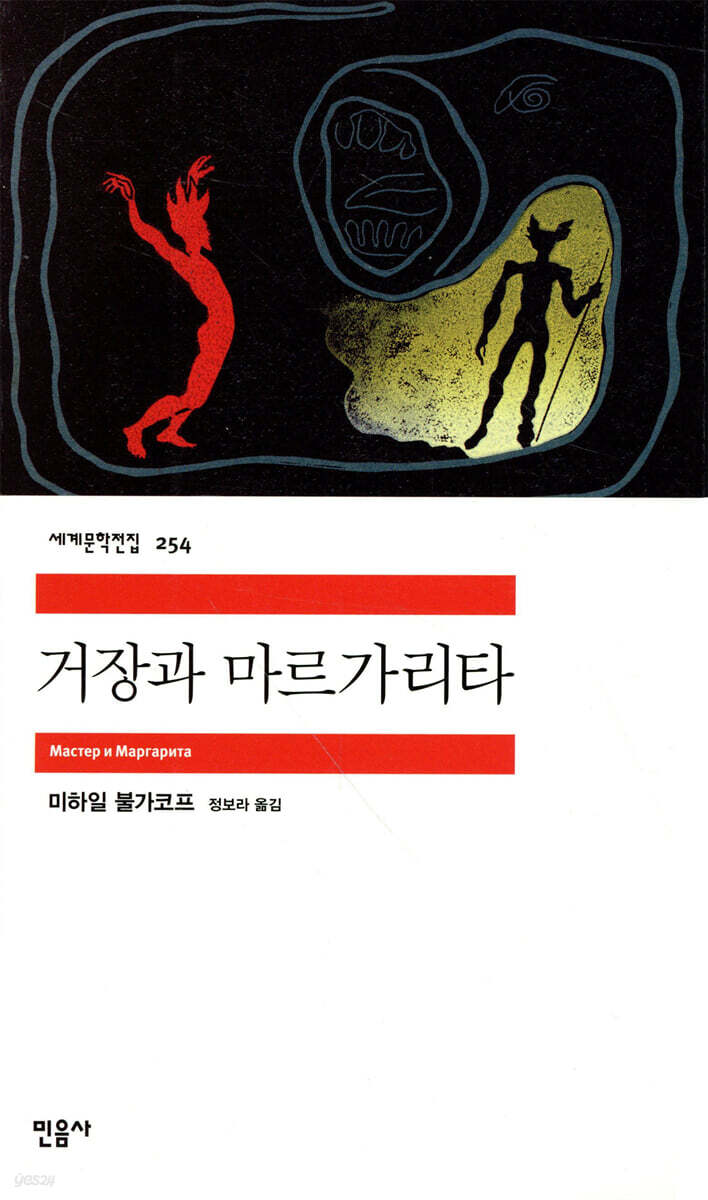 |
Description
Book Introduction
"Manuscripts do not burn." The living artist's last masterpiece, Mikhail Bulgakov. "The Master and Margarita" is the story of a foreign professor named Boland, who calls himself a black magician, appearing in Moscow under the Soviet regime and causing a stir. The president of the literary society is beheaded, and the young poet tracking down Boland's gang is taken to a mental hospital. The man named 'Master', who lived in the room next to where the young poet 'Ivan' was taken, wrote a work about Jesus and Pontius Pilate, but after receiving harsh criticism from the literary world, he became so frustrated that he left his lover and confined himself to a mental hospital. His lover, Margarita, dreams of reuniting with the master, but the Boland gang, who are reaching out to them, make a proposal to Margarita… . Not only does it satirize the literary censorship of the time, but the intertextuality between the concepts of good and evil, the story of the secret police that appears throughout the novel, and the story of Pilate and the present-day story that unfolds within the novel tell us why this work is a masterpiece. This novel tells us that, like the manuscript the master in the novel had to burn, the author also lived a difficult life. Ultimately, Mikhail Bulgakov was honored as the greatest Russian writer of the 20th century with his book, The Master and Margarita, which was published over thirty years after his death. |
- You can preview some of the book's contents.
Preview
index
Main characters
Part 1
1.
Never talk to strangers
2.
Pontius Pilate
3.
Seventh evidence
4.
Pursuit
5.
There was something going on with Griboyedov
6.
Schizophrenia, as predicted
7.
bad apartment
8.
A confrontation between a professor and a poet
9.
Korobyov's prank
10.
News from Yalta
11.
The divided Ivan
12.
Black Magic and Exposure
13.
The main character's appearance
14.
The rooster is bowing
15.
Nikanor Ivanovic's Dream
16.
execution
17.
A noisy day
18.
Unlucky visitors
Part 2
19.
Margarita
20.
Azazello's Cream
21.
flight
22.
In front of the candlelight
23.
Satan's Ball
24.
The Master's Rescue
25.
The governor tries to save Judas Iscariot
26.
burial
27.
The Last of Apartment 50
28.
The Last Adventure of Korobyov and Behemoth
29.
The fate of the Master and Margarita is decided
30.
The time has come! The time has come!
31.
On Sparrow Hill
32.
Farewell and Eternal Rest
Epilogue
Commentary on the work
Author's chronology
Part 1
1.
Never talk to strangers
2.
Pontius Pilate
3.
Seventh evidence
4.
Pursuit
5.
There was something going on with Griboyedov
6.
Schizophrenia, as predicted
7.
bad apartment
8.
A confrontation between a professor and a poet
9.
Korobyov's prank
10.
News from Yalta
11.
The divided Ivan
12.
Black Magic and Exposure
13.
The main character's appearance
14.
The rooster is bowing
15.
Nikanor Ivanovic's Dream
16.
execution
17.
A noisy day
18.
Unlucky visitors
Part 2
19.
Margarita
20.
Azazello's Cream
21.
flight
22.
In front of the candlelight
23.
Satan's Ball
24.
The Master's Rescue
25.
The governor tries to save Judas Iscariot
26.
burial
27.
The Last of Apartment 50
28.
The Last Adventure of Korobyov and Behemoth
29.
The fate of the Master and Margarita is decided
30.
The time has come! The time has come!
31.
On Sparrow Hill
32.
Farewell and Eternal Rest
Epilogue
Commentary on the work
Author's chronology
Publisher's Review
Mikhail Bulgakov's novel and playwright, who is an indispensable figure in the history of 20th-century Russian literature, has published "The Master and Margarita" in Minumsa's World Literature Collection (254).
Whether classified as fantasy, social critique, or religious fiction, this work invites readers into a world of fantastical flight with its blend of supernatural commotion, captivating characters, and pictorial descriptions.
Bulgakov, who never lost his passion for literature despite harsh criticism from critics calling him an “anti-Soviet writer” and Stalin’s accusation that “Bulgakov is not on our side,” still lives on among readers through the life of the “master” that reflected his own life.
The bizarre events unfolding as a group of demons appear in the heart of a large city.
Moscow under Soviet rule.
A great commotion breaks out in the city when a foreign professor, self-proclaimed black magic expert, and his gang appear.
Berlioz, the president of the literary association Masolite, is beheaded as predicted by Woland, and the young poet Ivan Bezdomny, who witnessed this, chases the gang and causes a disturbance, ending up in a mental hospital.
In the mental hospital, next door to Bezdomny, lives a man who introduces himself as a 'master'.
He was formerly a writer, and with the love and encouragement of his mistress, Margarita, he wrote a work about Jesus and Pontius Pilate.
However, his novel, which dealt with Jesus out of touch with the times, was harshly criticized by the literary world, and the 'master' was buried in the literary world and lived like a wreck until he left Margarita and entered a mental hospital of his own accord.
Meanwhile, the antics of Boland's gang are shaking up all of Moscow.
Executives of the Variete Theater disappear one after another, and even those in charge of the apartment on Sadovaya Street where Berlioz lived and literary officials are also subjected to the gang's misfortune.
Moreover, the citizens of Moscow are thrown into chaos when Boland's gang performs black magic in the theater and scatters fake money, clothes, and shoes.
Meanwhile, Margarita, the lover of the 'Master', accepts the offer from Boland's gang to act as the hostess at Satan's ball, with the sole hope of being reunited with the 'Master'.
She flies naked on a broomstick, trashing the house of a critic who criticized her lover, and endures the torment of standing at the entrance to a ball for hours greeting the dead.
As promised, Boland's gang takes out the 'master' and reunites him with Margarita.
The Master and Margarita bring salvation to Pilate, who is suffering from the execution of Jesus, and find eternal rest.
A comedy unfolding on the stage of the Soviet system
Mikhail Bulgakov lived a life as turbulent as any 'master'.
The situation of a 'master' whose work, which he had poured his heart and soul into, was condemned by the harsh criticism of unfair critics is quite similar to that of Bulgakov, whose work was often banned from publication and performance for political reasons under the Soviet regime.
In addition to the 'masters', Bulgakov also put forward writers, critics, theater executives, and literary officials to satirize the times when people flattered those in power and corruption was rampant, in a sharp and witty way.
"The Master and Margarita" faithfully depicts the reality of Soviet Russia from beginning to end.
The title of Chapter 1, “Never talk to strangers,” is a propaganda slogan that the Communist Party instilled in its citizens, and it is also a sentence that clearly reflects the social atmosphere of the time.
In the closed and highly controlled Soviet Russian society, foreigners of unknown identity were regarded as spies for Western capitalist society, and even Russian citizens frequently disappeared without a trace at the slightest hint of suspicious activity.
Housing shortages and material shortages were also major problems, so many common people lived in rooms divided into several apartments, with no privacy.
This zeitgeist is reflected throughout the work, including the alien registration system, apartment residents who keep disappearing without reason, and characters who are arrested for possessing foreign currency.
Bulgakov's satirical spirit, which also worked as a journalist, is most evident in the black magic performances of the Woland gang.
The sight of audience members, lured by the word "free," rushing onto the stage, snatching clothes and shoes, and bumping into each other to grab fake money, reflects not only the universal element of human greed but also the gloomy social and historical background.
In addition, the arrogant writers and critics of Masolite, who enjoy their privileges by wielding their membership in the Writers' Guild like an official position while writing poorly written articles that flatter the Communist line, and Poplawski, who shows no sympathy for the death of his nephew and only uses tricks to take over his apartment, vividly reveal the weakness, cowardice, hypocrisy, tricks, contradictions, and weaknesses of the characters in the tumult of Woland's group.
"The Master and Margarita" is a satirical play set in Soviet Russia, featuring a cast of vulgar people who criticize the problems of contemporary society.
Manuscripts do not burn, and the artistic spirit does not go out.
A work as critical as The Master and Margarita would have been impossible to publish in 1930s Russia.
Finally, in 1967, seventeen years after Bulgakov's death, a censored version, in which 12 percent of the original text was deleted and the remainder heavily altered, was published in the magazine Moscow.
However, the sharp and satirical depiction of a distorted society, an absurd system, and the vulgarity of human nature revealed in such an environment shook the hearts of Russians.
Readers began to create their own self-published editions, supplementing the censored version with changes and deletions based on the uncensored version published in Paris, and marking which parts had been changed or deleted. They also visited 302-2 Sadovaya Street, where apartment number 50 is located in the work, and covered the walls with graffiti such as "Boland, we want you" or "Come to Moscow, Boland."
Thanks to this popularity, The Master and Margarita was officially published in its entirety in 1973, and was later honored as "the greatest Russian novel of the 20th century."
Bulgakov, a renowned playwright and theater director, vividly colored this story, which moves between Moscow and ancient Jerusalem, like a painting or a film, and not only general readers but also artists were captivated by the novel's fantastic atmosphere.
Several songs, including "Sympathy for the Devil" by the Rolling Stones and "Love and Destroy" by Franz Ferdinand, were inspired by this work, and the 2005 Russian TV movie "The Master and Margarita" became a "national drama" with a 50% viewership rating.
As Boland had said, “Manuscripts don’t burn,” “The Master and Margarita” ultimately survived.
Bulgakov continued his creative work steadfastly despite numerous trials, including publication bans, performance bans, and declining health.
In this work, which he wrote over the course of 12 years, even dictating from his sickbed, he revealed his beliefs by contrasting Pilate, who relied on the power of reality to execute Jesus and suffered, with the 'master' who pursued his ideals without yielding to the trials of reality.
Bulgakov's life, which could be called the life of a 'master', and his literary soul remind today's readers that "the greatest flaw is cowardice" and urge them not to sink into insignificance in the face of harsh reality.
Whether classified as fantasy, social critique, or religious fiction, this work invites readers into a world of fantastical flight with its blend of supernatural commotion, captivating characters, and pictorial descriptions.
Bulgakov, who never lost his passion for literature despite harsh criticism from critics calling him an “anti-Soviet writer” and Stalin’s accusation that “Bulgakov is not on our side,” still lives on among readers through the life of the “master” that reflected his own life.
The bizarre events unfolding as a group of demons appear in the heart of a large city.
Moscow under Soviet rule.
A great commotion breaks out in the city when a foreign professor, self-proclaimed black magic expert, and his gang appear.
Berlioz, the president of the literary association Masolite, is beheaded as predicted by Woland, and the young poet Ivan Bezdomny, who witnessed this, chases the gang and causes a disturbance, ending up in a mental hospital.
In the mental hospital, next door to Bezdomny, lives a man who introduces himself as a 'master'.
He was formerly a writer, and with the love and encouragement of his mistress, Margarita, he wrote a work about Jesus and Pontius Pilate.
However, his novel, which dealt with Jesus out of touch with the times, was harshly criticized by the literary world, and the 'master' was buried in the literary world and lived like a wreck until he left Margarita and entered a mental hospital of his own accord.
Meanwhile, the antics of Boland's gang are shaking up all of Moscow.
Executives of the Variete Theater disappear one after another, and even those in charge of the apartment on Sadovaya Street where Berlioz lived and literary officials are also subjected to the gang's misfortune.
Moreover, the citizens of Moscow are thrown into chaos when Boland's gang performs black magic in the theater and scatters fake money, clothes, and shoes.
Meanwhile, Margarita, the lover of the 'Master', accepts the offer from Boland's gang to act as the hostess at Satan's ball, with the sole hope of being reunited with the 'Master'.
She flies naked on a broomstick, trashing the house of a critic who criticized her lover, and endures the torment of standing at the entrance to a ball for hours greeting the dead.
As promised, Boland's gang takes out the 'master' and reunites him with Margarita.
The Master and Margarita bring salvation to Pilate, who is suffering from the execution of Jesus, and find eternal rest.
A comedy unfolding on the stage of the Soviet system
Mikhail Bulgakov lived a life as turbulent as any 'master'.
The situation of a 'master' whose work, which he had poured his heart and soul into, was condemned by the harsh criticism of unfair critics is quite similar to that of Bulgakov, whose work was often banned from publication and performance for political reasons under the Soviet regime.
In addition to the 'masters', Bulgakov also put forward writers, critics, theater executives, and literary officials to satirize the times when people flattered those in power and corruption was rampant, in a sharp and witty way.
"The Master and Margarita" faithfully depicts the reality of Soviet Russia from beginning to end.
The title of Chapter 1, “Never talk to strangers,” is a propaganda slogan that the Communist Party instilled in its citizens, and it is also a sentence that clearly reflects the social atmosphere of the time.
In the closed and highly controlled Soviet Russian society, foreigners of unknown identity were regarded as spies for Western capitalist society, and even Russian citizens frequently disappeared without a trace at the slightest hint of suspicious activity.
Housing shortages and material shortages were also major problems, so many common people lived in rooms divided into several apartments, with no privacy.
This zeitgeist is reflected throughout the work, including the alien registration system, apartment residents who keep disappearing without reason, and characters who are arrested for possessing foreign currency.
Bulgakov's satirical spirit, which also worked as a journalist, is most evident in the black magic performances of the Woland gang.
The sight of audience members, lured by the word "free," rushing onto the stage, snatching clothes and shoes, and bumping into each other to grab fake money, reflects not only the universal element of human greed but also the gloomy social and historical background.
In addition, the arrogant writers and critics of Masolite, who enjoy their privileges by wielding their membership in the Writers' Guild like an official position while writing poorly written articles that flatter the Communist line, and Poplawski, who shows no sympathy for the death of his nephew and only uses tricks to take over his apartment, vividly reveal the weakness, cowardice, hypocrisy, tricks, contradictions, and weaknesses of the characters in the tumult of Woland's group.
"The Master and Margarita" is a satirical play set in Soviet Russia, featuring a cast of vulgar people who criticize the problems of contemporary society.
Manuscripts do not burn, and the artistic spirit does not go out.
A work as critical as The Master and Margarita would have been impossible to publish in 1930s Russia.
Finally, in 1967, seventeen years after Bulgakov's death, a censored version, in which 12 percent of the original text was deleted and the remainder heavily altered, was published in the magazine Moscow.
However, the sharp and satirical depiction of a distorted society, an absurd system, and the vulgarity of human nature revealed in such an environment shook the hearts of Russians.
Readers began to create their own self-published editions, supplementing the censored version with changes and deletions based on the uncensored version published in Paris, and marking which parts had been changed or deleted. They also visited 302-2 Sadovaya Street, where apartment number 50 is located in the work, and covered the walls with graffiti such as "Boland, we want you" or "Come to Moscow, Boland."
Thanks to this popularity, The Master and Margarita was officially published in its entirety in 1973, and was later honored as "the greatest Russian novel of the 20th century."
Bulgakov, a renowned playwright and theater director, vividly colored this story, which moves between Moscow and ancient Jerusalem, like a painting or a film, and not only general readers but also artists were captivated by the novel's fantastic atmosphere.
Several songs, including "Sympathy for the Devil" by the Rolling Stones and "Love and Destroy" by Franz Ferdinand, were inspired by this work, and the 2005 Russian TV movie "The Master and Margarita" became a "national drama" with a 50% viewership rating.
As Boland had said, “Manuscripts don’t burn,” “The Master and Margarita” ultimately survived.
Bulgakov continued his creative work steadfastly despite numerous trials, including publication bans, performance bans, and declining health.
In this work, which he wrote over the course of 12 years, even dictating from his sickbed, he revealed his beliefs by contrasting Pilate, who relied on the power of reality to execute Jesus and suffered, with the 'master' who pursued his ideals without yielding to the trials of reality.
Bulgakov's life, which could be called the life of a 'master', and his literary soul remind today's readers that "the greatest flaw is cowardice" and urge them not to sink into insignificance in the face of harsh reality.
GOODS SPECIFICS
- Date of issue: September 10, 2010
- Page count, weight, size: 687 pages | 788g | 132*224*35mm
- ISBN13: 9788937462542
- ISBN10: 8937462540
You may also like
카테고리
korean


korean

![GQ KOREA Mark (Monthly): December [2025]](http://librairie.coreenne.fr/cdn/shop/files/8ef265dbbfbf186523ed75ba7319009d.jpg?v=1765340328&width=3840)


