

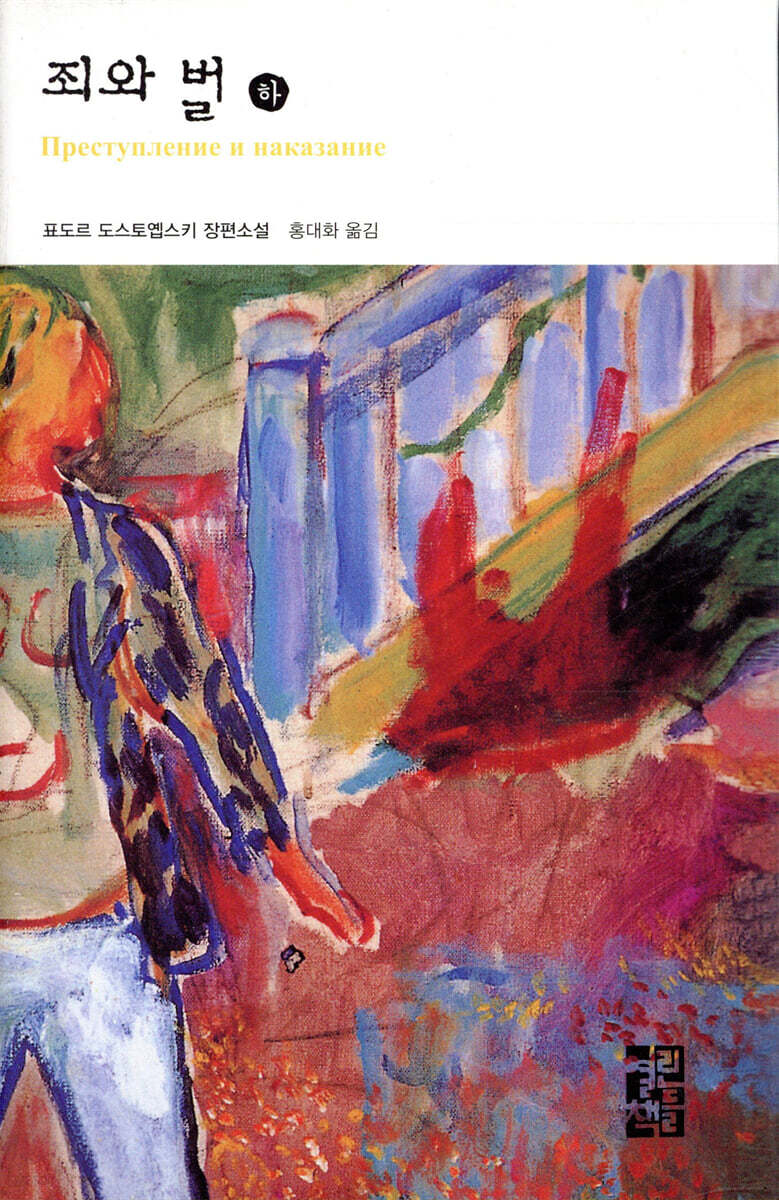
Crime and Punishment (Part 2)
 |
Description
Book Introduction
The Holy Whore, the Tormented Soul, the Beauty of Contradiction
This work, a masterpiece by Russian novelist Dostoevsky, was serialized in the Russian Newspaper from January to December 1866 with the help of stenographer Anna Grigoryevna under urgent circumstances, and was then published as a book in 1867 with some revisions.
Crime and Punishment, the first of the five later novels that truly solidified Dostoevsky's reputation as a writer, ostensibly takes the form of a detective novel dealing with a murder case.
However, this work focuses on revealing the psychological process of crime and punishment through the crime of a poor college student, and on presenting the interrelationship between reason and emotion, good and evil, God and man, social environment and personal morality, and the practical problems of revolutionary thought.
Conceived during four years of imprisonment in Siberia, Crime and Punishment contains the essence of humanism that transcends time and space.
In this novel, which contains a story of an indelible crime and a lonely love, what the author truly seeks to convey is, in the end, the 'beauty of the human soul.'
The author depicts the soul of the prostitute Sonya and expresses his fundamental idea of 'purification through suffering'.
Sonya is the only character in this novel who shines a bright light of hope.
Sonya, who advises Raskolnikov, who has defiled his hands with murder, to prostrate himself on the ground, kiss it, and atone for his sins, is probably the person who has received the most blessings from God, even though she is a prostitute with a yellow sash.
This work, a masterpiece by Russian novelist Dostoevsky, was serialized in the Russian Newspaper from January to December 1866 with the help of stenographer Anna Grigoryevna under urgent circumstances, and was then published as a book in 1867 with some revisions.
Crime and Punishment, the first of the five later novels that truly solidified Dostoevsky's reputation as a writer, ostensibly takes the form of a detective novel dealing with a murder case.
However, this work focuses on revealing the psychological process of crime and punishment through the crime of a poor college student, and on presenting the interrelationship between reason and emotion, good and evil, God and man, social environment and personal morality, and the practical problems of revolutionary thought.
Conceived during four years of imprisonment in Siberia, Crime and Punishment contains the essence of humanism that transcends time and space.
In this novel, which contains a story of an indelible crime and a lonely love, what the author truly seeks to convey is, in the end, the 'beauty of the human soul.'
The author depicts the soul of the prostitute Sonya and expresses his fundamental idea of 'purification through suffering'.
Sonya is the only character in this novel who shines a bright light of hope.
Sonya, who advises Raskolnikov, who has defiled his hands with murder, to prostrate himself on the ground, kiss it, and atone for his sins, is probably the person who has received the most blessings from God, even though she is a prostitute with a yellow sash.
- You can preview some of the book's contents.
Preview
index
Part 4
Part 5
Part 6
Epilogue
The Duality of Human Nature and Moral Nihilism - Translator's Note
Crime and Punishment as a Tragedy in Five Acts - A Review | Konstantin Mochulsky / Translated by Hong Dae-hwa
Crime and Punishment synopsis
Dostoevsky's chronology
Part 5
Part 6
Epilogue
The Duality of Human Nature and Moral Nihilism - Translator's Note
Crime and Punishment as a Tragedy in Five Acts - A Review | Konstantin Mochulsky / Translated by Hong Dae-hwa
Crime and Punishment synopsis
Dostoevsky's chronology
GOODS SPECIFICS
- Date of issue: November 30, 2009
- Format: Hardcover book binding method guide
- Page count, weight, size: 894 pages | 541g | 128*188*40mm
- ISBN13: 9788932909165
- ISBN10: 8932909164
You may also like
카테고리
korean


korean

![GQ KOREA Mark (Monthly): December [2025]](http://librairie.coreenne.fr/cdn/shop/files/8ef265dbbfbf186523ed75ba7319009d.jpg?v=1765340328&width=3840)


