

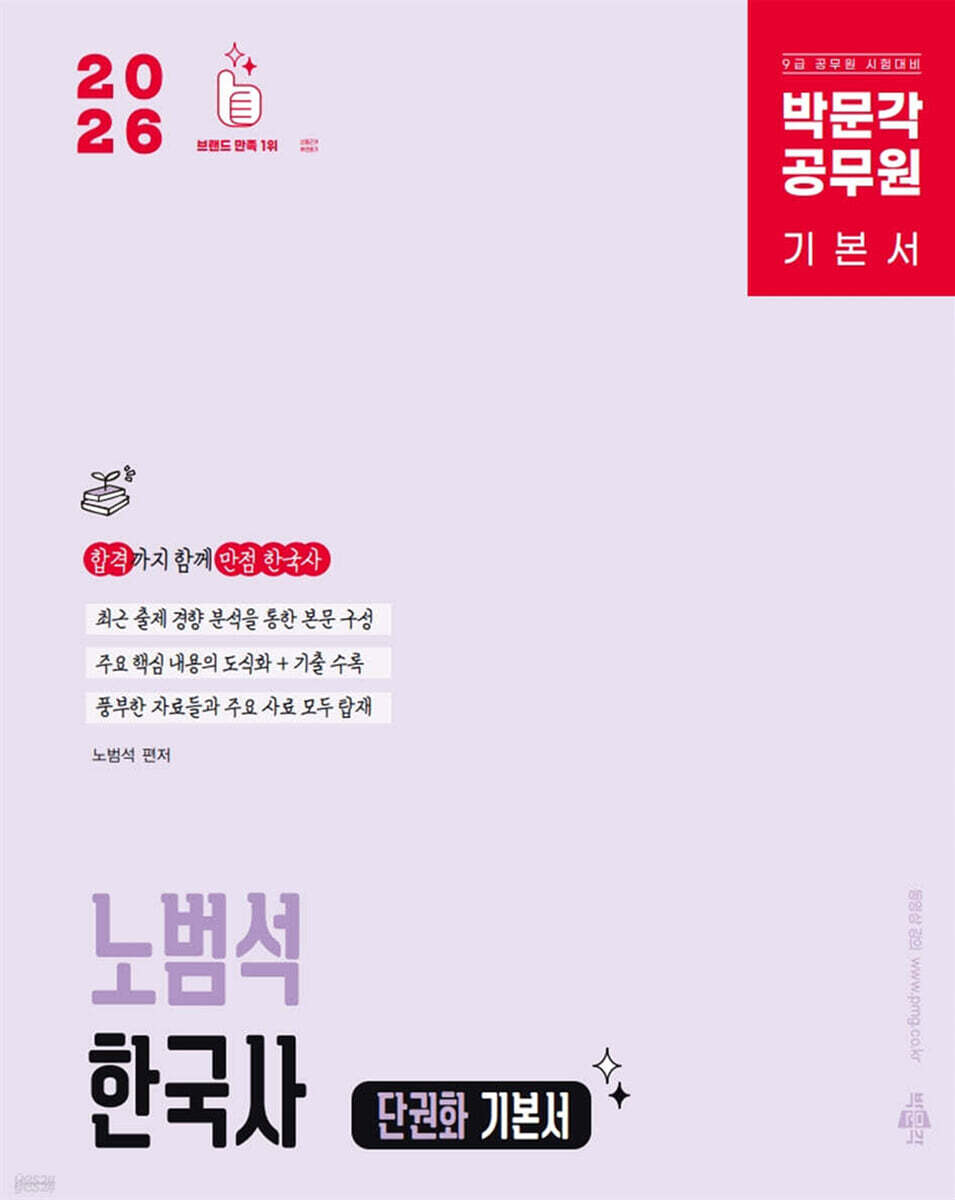
2026 Park Mun-gak Civil Servant Noh Beom-seok Korean History
 |
Description
Book Introduction
"2026 Park Moon-gak Civil Servant Noh Beom-seok's Korean History" is a textbook that has been painstakingly designed to help test takers prepare for the civil service Korean history exam with the least amount of effort, ensuring maximum results and perfect preparation for any testing environment.
The newly published "2026 Park Moon-gak Civil Servant Noh Beom-seok's Korean History," which has been republished to enable efficient learning, features the following:
▶ A 'solution cradle' that summarizes the key contents of each unit 'lecture'!
The core content of each 'lecture', which is a short unit, has been summarized and organized into a 'solution cradle'.
You can quickly grasp concepts, maximizing learning efficiency when reviewing and practicing.
▶ 'Solution Past Exam Pulse' analyzes the past 7 years' past exam questions by dividing them into each chapter!
We have analyzed in detail the 9th grade national, local, and court exam questions from 2019 to 2025 for a total of 7 years to help you understand the frequency of questions, major topics, and key points of questions.
▶ 'Solution Analysis' adds detail!
For each sub-unit, we analyzed past exam questions from 2008 to 2025 to help you see key points at a glance and grasp the context of important concepts.
▶ The largest and most comprehensive learning content, including references to high school textbooks, the CSAT, and the Korean History Proficiency Test!
We have compiled a comprehensive collection of materials and information that have appeared in various Korean history exams, utilizing various structures ranging from ‘Advanced Materials’, ‘In-depth Materials’, and ‘9th Grade Korean History’ to ‘Solution Help’.
▶ 'Representative past exam questions' that enable concept completion and practical preparation!
At the end of each unit, the author has carefully selected and explained past exam questions.
You can assess your level of understanding of concepts through key past exam questions, and the latest past exam questions are included to help you check the latest exam trends.
In addition, we have provided detailed explanations so that you can completely digest the previous exam questions on your own.
We hope that through 『2026 Park Moon-gak Civil Servant Noh Beom-seok's Korean History』, which meticulously explains every theoretical detail, reflecting the latest exam trends, test takers will no longer have to feel difficulties or worry about studying civil service Korean history.
The newly published "2026 Park Moon-gak Civil Servant Noh Beom-seok's Korean History," which has been republished to enable efficient learning, features the following:
▶ A 'solution cradle' that summarizes the key contents of each unit 'lecture'!
The core content of each 'lecture', which is a short unit, has been summarized and organized into a 'solution cradle'.
You can quickly grasp concepts, maximizing learning efficiency when reviewing and practicing.
▶ 'Solution Past Exam Pulse' analyzes the past 7 years' past exam questions by dividing them into each chapter!
We have analyzed in detail the 9th grade national, local, and court exam questions from 2019 to 2025 for a total of 7 years to help you understand the frequency of questions, major topics, and key points of questions.
▶ 'Solution Analysis' adds detail!
For each sub-unit, we analyzed past exam questions from 2008 to 2025 to help you see key points at a glance and grasp the context of important concepts.
▶ The largest and most comprehensive learning content, including references to high school textbooks, the CSAT, and the Korean History Proficiency Test!
We have compiled a comprehensive collection of materials and information that have appeared in various Korean history exams, utilizing various structures ranging from ‘Advanced Materials’, ‘In-depth Materials’, and ‘9th Grade Korean History’ to ‘Solution Help’.
▶ 'Representative past exam questions' that enable concept completion and practical preparation!
At the end of each unit, the author has carefully selected and explained past exam questions.
You can assess your level of understanding of concepts through key past exam questions, and the latest past exam questions are included to help you check the latest exam trends.
In addition, we have provided detailed explanations so that you can completely digest the previous exam questions on your own.
We hope that through 『2026 Park Moon-gak Civil Servant Noh Beom-seok's Korean History』, which meticulously explains every theoretical detail, reflecting the latest exam trends, test takers will no longer have to feel difficulties or worry about studying civil service Korean history.
- You can preview some of the book's contents.
Preview
index
Act 1: A Correct Understanding of Korean History and Prehistoric Culture
Chapter 1: The Development of Prehistoric Culture and the Formation of the State
Pulse diagnosis method
Lecture 1: A Correct Understanding of Korean History
Lecture 2: Prehistoric times in Korea
The Founding and Development of Gojoseon
Growth of several countries in the four major powers
Act 2: The Development of Ancient Society
Chapter 1: Political Development in Ancient Times
Pulse diagnosis method
Political development of the Three Kingdoms
Foreign Relations of the Three Powers and Their Unification
Political changes during the era of the three powers, North and South
4. Ancient Government Organization and Reorganization
Chapter 2: Ancient Economy, Society, and Culture
Pulse diagnosis method
Lecture 1: Ancient Economic Policy and Economic Life
Lecture 2: Ancient Society
Lecture 3: Ancient Buddhism and the Development of Learning
4. Traces and Style of Ancient People
Act 3: The Development of Medieval Society
Chapter 1 Political Changes in the Middle Ages
Pulse diagnosis method
Lecture 1: The Formation of Medieval Society
Reorganization of the two-party political structure
The establishment of the three-power aristocratic society and its foreign relations
The Four Powers Military Coup and the Mongol Invasion
Political Changes in the Late Goryeo Dynasty
Chapter 2: Economy, Society, and Culture of the Middle Ages
Pulse diagnosis method
Lecture 1: Economic Policy and Economic Activity in the Middle Ages
Lecture 2: Goryeo's Class System and Social Landscape
Lecture 3: The Development of Buddhist Thought and Academics
The development of science, technology, and aristocratic culture
Act 4: Development of Early Modern Society
Chapter 1: Modern Political Changes and the Reorganization of the Governing System
Pulse diagnosis method
Lecture 1: The Formation of Modern Society and the Establishment of the Political System
The rise of the two-class Sarim and the formation of political factions
Joseon's Foreign Relations and Overcoming Difficulties
Chapter 2: Modern Economy, Society, and Culture
Pulse diagnosis method
Lecture 1: Modern Economy
Lecture 2: Modern Society
The flourishing of the three national cultures
The Development of Neo-Confucianism and Buddhism
Act 5: Changes in the Early Modern Era
Chapter 1 Politics in the Dawn of Modernity
Pulse diagnosis method
Reorganization of the first-class ruling system
The Transformation of Two-Party Politics and the Politics of Peace
The politics of the three powers and foreign relations in the late Joseon Dynasty
Chapter 2: Economy, Society, and Culture in the Early Modern Era
Pulse diagnosis method
Lecture 1: The Economy of the Dawn of Modernity
Lecture 2: Society in the Early Modern Era
3. Changes in Neo-Confucianism
The development of Silhak (practical learning)
Lecture 5: Advances in Science and Technology and New Trends in Culture
Act 6: The Development of Modern Society
Chapter 1: The Opening of Ports and the Promotion of Modern Reforms
Pulse diagnosis method
Lecture 1: Heungseon Daewongun's reform policies
The opening of two ports and the conclusion of unequal treaties
The Three Powers of Wijeongcheoksa and Enlightenment
The Im-o Incident and the Gapsin Coup
Chapter 2: The Development of the National Salvation Movement
Pulse diagnosis method
Lecture 1: The Development of the Donghak Peasant Movement
The 2nd Gabo and Eulmi Reforms
The Three Powers Independence Association and the Korean Empire
The invasion of the four powers by Japan and the loss of national sovereignty
5. Anti-Japanese Righteous Army and Patriotic Enlightenment Movement
Chapter 3: Economy, Society, and Culture after the Opening of Ports
Pulse diagnosis method
Lecture 1: Modern Economy and Society
Lecture 2: Modern Culture
Act 7: Japanese Invasion and the Korean Independence Movement
Chapter 1: Japanese Colonial Rule and the Suffering of the Nation
Pulse diagnosis method
Lecture 1: The Establishment of a Colonial Regime and Economic Exploitation
Lecture 2: The March 1st Movement and the Provisional Government of the Republic of Korea
Chapter 2: Anti-Japanese Movements at Home and Abroad
Pulse diagnosis method
Lecture 1: Anti-Japanese Movement in Korea
The development of the two-party armed independence war
Chapter 3: Economy, Society, and Culture during the Japanese Colonial Period
Pulse diagnosis method
Lecture 1: Economy and Society during the Japanese Colonial Period
Lecture 2: Culture during the Japanese colonial period
Act 8: The Development of Modern Society
Chapter 1 Liberation and the Establishment of the Republic of Korea
Pulse diagnosis method
Lecture 1: Liberation on August 15 and the Establishment of the Republic of Korea
2nd Korean War
Chapter 2: The Trials and Development of Democracy
Pulse diagnosis method
Lecture 1: The April 19 Revolution and the Growth of Democracy
2nd lecture: The democratization movement and the development of democracy
Chapter 3: Peaceful Unification and Economic, Social, and Cultural Change
Pulse diagnosis method
Lecture 1: Unification Policy and Changes in North Korea
Lecture 2: Economic Development and Social and Cultural Change
supplement
- Local history on a map
- Korea's World Heritage
Chapter 1: The Development of Prehistoric Culture and the Formation of the State
Pulse diagnosis method
Lecture 1: A Correct Understanding of Korean History
Lecture 2: Prehistoric times in Korea
The Founding and Development of Gojoseon
Growth of several countries in the four major powers
Act 2: The Development of Ancient Society
Chapter 1: Political Development in Ancient Times
Pulse diagnosis method
Political development of the Three Kingdoms
Foreign Relations of the Three Powers and Their Unification
Political changes during the era of the three powers, North and South
4. Ancient Government Organization and Reorganization
Chapter 2: Ancient Economy, Society, and Culture
Pulse diagnosis method
Lecture 1: Ancient Economic Policy and Economic Life
Lecture 2: Ancient Society
Lecture 3: Ancient Buddhism and the Development of Learning
4. Traces and Style of Ancient People
Act 3: The Development of Medieval Society
Chapter 1 Political Changes in the Middle Ages
Pulse diagnosis method
Lecture 1: The Formation of Medieval Society
Reorganization of the two-party political structure
The establishment of the three-power aristocratic society and its foreign relations
The Four Powers Military Coup and the Mongol Invasion
Political Changes in the Late Goryeo Dynasty
Chapter 2: Economy, Society, and Culture of the Middle Ages
Pulse diagnosis method
Lecture 1: Economic Policy and Economic Activity in the Middle Ages
Lecture 2: Goryeo's Class System and Social Landscape
Lecture 3: The Development of Buddhist Thought and Academics
The development of science, technology, and aristocratic culture
Act 4: Development of Early Modern Society
Chapter 1: Modern Political Changes and the Reorganization of the Governing System
Pulse diagnosis method
Lecture 1: The Formation of Modern Society and the Establishment of the Political System
The rise of the two-class Sarim and the formation of political factions
Joseon's Foreign Relations and Overcoming Difficulties
Chapter 2: Modern Economy, Society, and Culture
Pulse diagnosis method
Lecture 1: Modern Economy
Lecture 2: Modern Society
The flourishing of the three national cultures
The Development of Neo-Confucianism and Buddhism
Act 5: Changes in the Early Modern Era
Chapter 1 Politics in the Dawn of Modernity
Pulse diagnosis method
Reorganization of the first-class ruling system
The Transformation of Two-Party Politics and the Politics of Peace
The politics of the three powers and foreign relations in the late Joseon Dynasty
Chapter 2: Economy, Society, and Culture in the Early Modern Era
Pulse diagnosis method
Lecture 1: The Economy of the Dawn of Modernity
Lecture 2: Society in the Early Modern Era
3. Changes in Neo-Confucianism
The development of Silhak (practical learning)
Lecture 5: Advances in Science and Technology and New Trends in Culture
Act 6: The Development of Modern Society
Chapter 1: The Opening of Ports and the Promotion of Modern Reforms
Pulse diagnosis method
Lecture 1: Heungseon Daewongun's reform policies
The opening of two ports and the conclusion of unequal treaties
The Three Powers of Wijeongcheoksa and Enlightenment
The Im-o Incident and the Gapsin Coup
Chapter 2: The Development of the National Salvation Movement
Pulse diagnosis method
Lecture 1: The Development of the Donghak Peasant Movement
The 2nd Gabo and Eulmi Reforms
The Three Powers Independence Association and the Korean Empire
The invasion of the four powers by Japan and the loss of national sovereignty
5. Anti-Japanese Righteous Army and Patriotic Enlightenment Movement
Chapter 3: Economy, Society, and Culture after the Opening of Ports
Pulse diagnosis method
Lecture 1: Modern Economy and Society
Lecture 2: Modern Culture
Act 7: Japanese Invasion and the Korean Independence Movement
Chapter 1: Japanese Colonial Rule and the Suffering of the Nation
Pulse diagnosis method
Lecture 1: The Establishment of a Colonial Regime and Economic Exploitation
Lecture 2: The March 1st Movement and the Provisional Government of the Republic of Korea
Chapter 2: Anti-Japanese Movements at Home and Abroad
Pulse diagnosis method
Lecture 1: Anti-Japanese Movement in Korea
The development of the two-party armed independence war
Chapter 3: Economy, Society, and Culture during the Japanese Colonial Period
Pulse diagnosis method
Lecture 1: Economy and Society during the Japanese Colonial Period
Lecture 2: Culture during the Japanese colonial period
Act 8: The Development of Modern Society
Chapter 1 Liberation and the Establishment of the Republic of Korea
Pulse diagnosis method
Lecture 1: Liberation on August 15 and the Establishment of the Republic of Korea
2nd Korean War
Chapter 2: The Trials and Development of Democracy
Pulse diagnosis method
Lecture 1: The April 19 Revolution and the Growth of Democracy
2nd lecture: The democratization movement and the development of democracy
Chapter 3: Peaceful Unification and Economic, Social, and Cultural Change
Pulse diagnosis method
Lecture 1: Unification Policy and Changes in North Korea
Lecture 2: Economic Development and Social and Cultural Change
supplement
- Local history on a map
- Korea's World Heritage
Detailed image

Publisher's Review
"2026 Park Moon-gak Civil Servant Noh Beom-seok's Korean History" is a Korean history exam preparation textbook designed to help test takers preparing for the 9th-grade civil service national, local, and court exams easily and quickly understand the long flow of history.
It uses a narrative concept structure with a storytelling teaching method, enabling concept learning based on understanding rather than simple memorization. It also provides a wealth of materials and illustrations to help students actively prepare for various types of civil service examinations.
In addition, we have organized the latest exam trends so that you can grasp them at a glance, and we have included an in-depth analysis of the contents of Korean history textbooks currently used in high schools to actively reflect the revised Korean history contents, which are the recent trend in the civil service Korean history exam.
Representative past exam questions are included at the end of each unit to help you review what you've learned, and appendices include "Local History Through Maps" and "UNESCO Cultural Heritage," ensuring you don't miss out on any comprehensively tested sections.
With the author's 20 years of teaching experience and proven field experience, we hope that your efforts will shine brightly with the best results, along with "2026 Park Moon-gak Civil Servant Noh Beom-seok's Korean History."
It uses a narrative concept structure with a storytelling teaching method, enabling concept learning based on understanding rather than simple memorization. It also provides a wealth of materials and illustrations to help students actively prepare for various types of civil service examinations.
In addition, we have organized the latest exam trends so that you can grasp them at a glance, and we have included an in-depth analysis of the contents of Korean history textbooks currently used in high schools to actively reflect the revised Korean history contents, which are the recent trend in the civil service Korean history exam.
Representative past exam questions are included at the end of each unit to help you review what you've learned, and appendices include "Local History Through Maps" and "UNESCO Cultural Heritage," ensuring you don't miss out on any comprehensively tested sections.
With the author's 20 years of teaching experience and proven field experience, we hope that your efforts will shine brightly with the best results, along with "2026 Park Moon-gak Civil Servant Noh Beom-seok's Korean History."
GOODS SPECIFICS
- Date of issue: July 15, 2025
- Page count, weight, size: 584 pages | 205*260*35mm
- ISBN13: 9791172629700
- ISBN10: 1172629706
You may also like
카테고리
korean


korean

![GQ KOREA Mark (Monthly): December [2025]](http://librairie.coreenne.fr/cdn/shop/files/8ef265dbbfbf186523ed75ba7319009d.jpg?v=1765340328&width=3840)


