

Safety tactics
 |
Description
Book Introduction
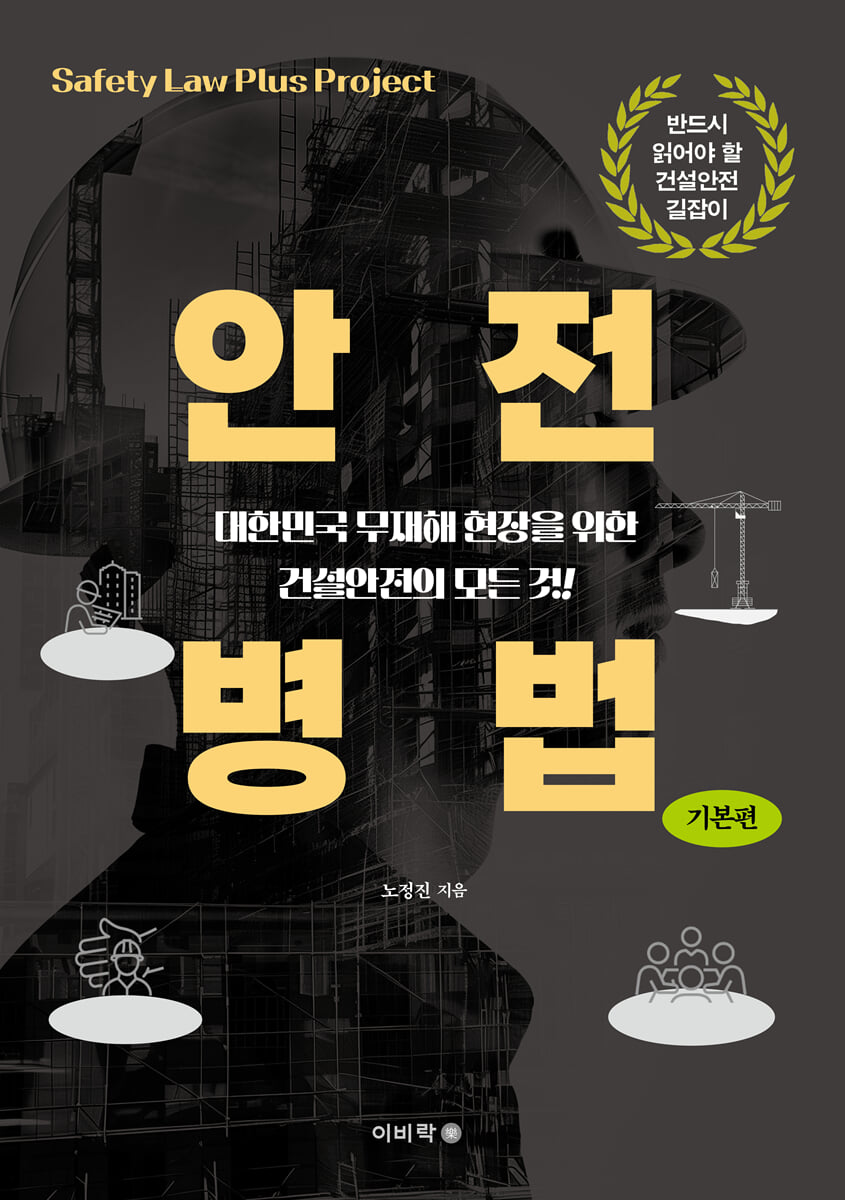
A must-know construction safety guide
- So that all workers do not get hurt or die while working!
'Safety' is a concern for all workers in Korea, and it is something that all business leaders must pay attention to. Above all, leaders (managers) must keep in mind that the more effort they put into creating a work environment where workers do not get injured or die on the job, the more likely it is that they will do so.
This book details the strategies the author, who was in charge of safety at an actual plant construction site, implemented to prevent a single safety accident during the project, dividing it into the early, mid, and late stages of construction.
It vividly captures the practical safety activities, safety strategies, and safety technologies implemented with 12,000 print personnel over approximately 500 days of the project period. It also records and compares the results with the Occupational Safety and Health Act to assist students studying to obtain safety and health-related certifications.
Additionally, during the writing process, we collaborated with actual safety officials and safety engineers to enhance our expertise.
- So that all workers do not get hurt or die while working!
'Safety' is a concern for all workers in Korea, and it is something that all business leaders must pay attention to. Above all, leaders (managers) must keep in mind that the more effort they put into creating a work environment where workers do not get injured or die on the job, the more likely it is that they will do so.
This book details the strategies the author, who was in charge of safety at an actual plant construction site, implemented to prevent a single safety accident during the project, dividing it into the early, mid, and late stages of construction.
It vividly captures the practical safety activities, safety strategies, and safety technologies implemented with 12,000 print personnel over approximately 500 days of the project period. It also records and compares the results with the Occupational Safety and Health Act to assist students studying to obtain safety and health-related certifications.
Additionally, during the writing process, we collaborated with actual safety officials and safety engineers to enhance our expertise.
- You can preview some of the book's contents.
Preview
index
prolog
Part 1 Early Construction
01 Before starting construction, establish a detailed safety plan.
02 Check and implement government and company governance without fail.
03 Anticipate all possible safety hazards.
04 Provide a broad scope of the safety and health coordinator's role, but respect it.
05 Psychological strategies must be fully disclosed.
06 See the skills of the technicians with your own eyes.
07 Demonstrate leadership solely focused on zero accidents.
08 Make every effort to prevent human error.
09 There are definitely people who engage in intentional unsafe behavior (1)
10 There are definitely people who engage in intentional unsafe behavior (2)
11. Intellectual verification must be absolutely carried out.
12 Safety exercises are not just about warming up the body.
13. Doing TBM formally is worse than not doing it at all.
14. Words of advice given at the first meeting of the Safety and Health Council
15 There are always beginner workers on construction sites.
16 Sensitive safety rules need to be enforced.
17 It is a mistake to think that what is instructed will be followed.
Part 2: Mid-term construction
01 When the construction safety system is established, listen to communication.
02 Increase the difficulty of risk assessment during the mid-construction period.
03 Workers' safety equipment must be inspected daily.
04 All heavy equipment must be used in accordance with the safety work plan.
05 Signaler's work level prevents accidents involving unloading machinery.
06 Eliminate bad practices when handling handling equipment.
07 Rules that operators of handling equipment must follow
08 Use a forklift equipped with safety devices.
09 Observe carefully when loading and unloading cargo.
10. Know the rules for leaving the driver's seat.
11. Observe the safety standards of vehicle safety equipment.
12 Even a small mistake in a crane can lead to a serious accident.
13 Establish safety rules tailored to the characteristics of each crane.
14 Legal requirements for crane installation, dismantling, inspection and repair
15 Key Points to Consider When Preventing Accidents While Working with Cranes
16. The safe installation and use standards for lifts must be followed.
17 Periodically inspect the safety devices of the lift.
18 Elevators at construction sites are more dangerous than regular elevators.
Applying a safety factor of 19 can prevent accidents.
20 Wire rope breakage accidents can cause fatal damage.
21. The installation of stairs must prioritize the safety of the workers using them.
22. Be sure to understand the structure and installation requirements of safety railings.
23 Check the condition of the work floor daily.
24 Entrances and exits must be managed so as not to obstruct passage.
25 Consider safety standards when installing windows in the workplace.
26. Make sure that all facilities are free from the risk of collapse.
27 Identify areas where there is a risk of falling objects.
28 Store hazardous materials in designated locations in the required quantities.
29 Install emergency exits with appropriate structures and secure evacuation routes.
30 Emergency equipment should be marked and readily available.
31 Keep the work passageway accessible to workers at all times.
Falling from the 32nd opening is a sure death.
33 Why did I do the ladder work in groups of three?
34 As construction neared its end, I was lost in thought.
Part 3: The Final Stage of Construction
01 Completely complete the actual disaster response scenario.
02 What role should the manager play at the end of the construction period?
03 Be especially careful about your scene behavior during the final stages of construction.
04 The habit of observing only those skilled in the field is a wrong practice.
05 Don't let your guard down when removing scaffolding.
06 Recognize and manage the risks of chemicals until the end.
07 Test driving is a high-risk task with many variables.
08 Manage employees so that they do not lack motivation.
09 It is time to manage worker fatigue.
10. Contractors who have completed the final work must clean up safely.
11 Don't be complacent about achieving zero accidents.
Epilogue
Glossary of terms
Citations and References, Contributors
Part 1 Early Construction
01 Before starting construction, establish a detailed safety plan.
02 Check and implement government and company governance without fail.
03 Anticipate all possible safety hazards.
04 Provide a broad scope of the safety and health coordinator's role, but respect it.
05 Psychological strategies must be fully disclosed.
06 See the skills of the technicians with your own eyes.
07 Demonstrate leadership solely focused on zero accidents.
08 Make every effort to prevent human error.
09 There are definitely people who engage in intentional unsafe behavior (1)
10 There are definitely people who engage in intentional unsafe behavior (2)
11. Intellectual verification must be absolutely carried out.
12 Safety exercises are not just about warming up the body.
13. Doing TBM formally is worse than not doing it at all.
14. Words of advice given at the first meeting of the Safety and Health Council
15 There are always beginner workers on construction sites.
16 Sensitive safety rules need to be enforced.
17 It is a mistake to think that what is instructed will be followed.
Part 2: Mid-term construction
01 When the construction safety system is established, listen to communication.
02 Increase the difficulty of risk assessment during the mid-construction period.
03 Workers' safety equipment must be inspected daily.
04 All heavy equipment must be used in accordance with the safety work plan.
05 Signaler's work level prevents accidents involving unloading machinery.
06 Eliminate bad practices when handling handling equipment.
07 Rules that operators of handling equipment must follow
08 Use a forklift equipped with safety devices.
09 Observe carefully when loading and unloading cargo.
10. Know the rules for leaving the driver's seat.
11. Observe the safety standards of vehicle safety equipment.
12 Even a small mistake in a crane can lead to a serious accident.
13 Establish safety rules tailored to the characteristics of each crane.
14 Legal requirements for crane installation, dismantling, inspection and repair
15 Key Points to Consider When Preventing Accidents While Working with Cranes
16. The safe installation and use standards for lifts must be followed.
17 Periodically inspect the safety devices of the lift.
18 Elevators at construction sites are more dangerous than regular elevators.
Applying a safety factor of 19 can prevent accidents.
20 Wire rope breakage accidents can cause fatal damage.
21. The installation of stairs must prioritize the safety of the workers using them.
22. Be sure to understand the structure and installation requirements of safety railings.
23 Check the condition of the work floor daily.
24 Entrances and exits must be managed so as not to obstruct passage.
25 Consider safety standards when installing windows in the workplace.
26. Make sure that all facilities are free from the risk of collapse.
27 Identify areas where there is a risk of falling objects.
28 Store hazardous materials in designated locations in the required quantities.
29 Install emergency exits with appropriate structures and secure evacuation routes.
30 Emergency equipment should be marked and readily available.
31 Keep the work passageway accessible to workers at all times.
Falling from the 32nd opening is a sure death.
33 Why did I do the ladder work in groups of three?
34 As construction neared its end, I was lost in thought.
Part 3: The Final Stage of Construction
01 Completely complete the actual disaster response scenario.
02 What role should the manager play at the end of the construction period?
03 Be especially careful about your scene behavior during the final stages of construction.
04 The habit of observing only those skilled in the field is a wrong practice.
05 Don't let your guard down when removing scaffolding.
06 Recognize and manage the risks of chemicals until the end.
07 Test driving is a high-risk task with many variables.
08 Manage employees so that they do not lack motivation.
09 It is time to manage worker fatigue.
10. Contractors who have completed the final work must clean up safely.
11 Don't be complacent about achieving zero accidents.
Epilogue
Glossary of terms
Citations and References, Contributors
Detailed image
Publisher's Review
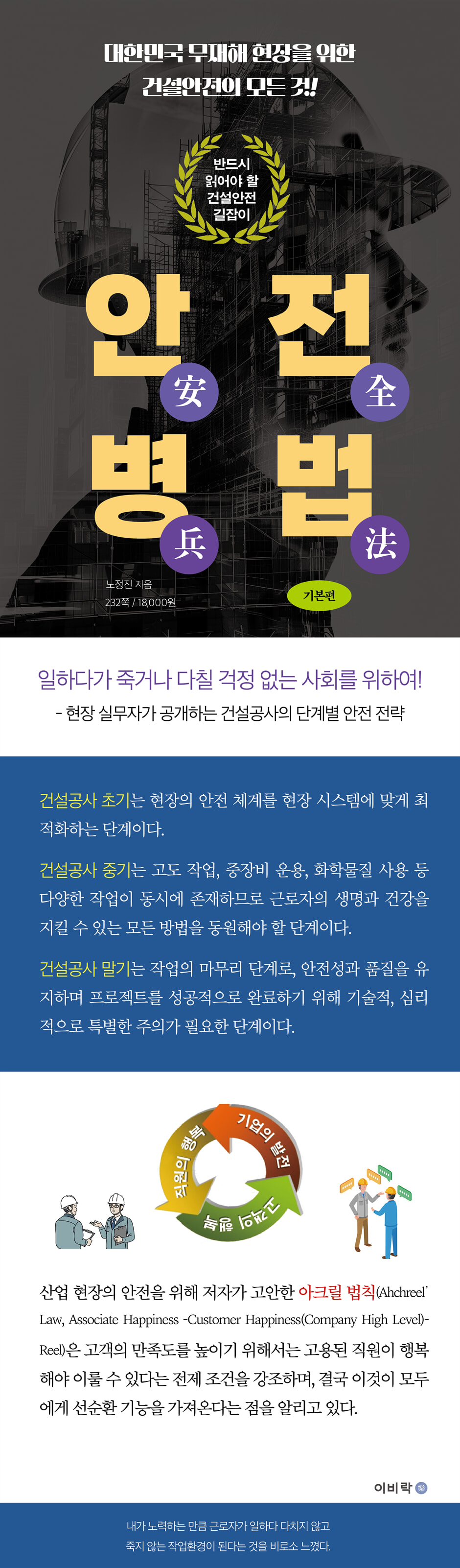
For a society where people don't have to worry about dying or getting hurt while working!
- Construction safety strategies for each stage revealed by field workers
We remember the unfortunate accident suffered by a young man who was employed as a subcontractor at the S Power Plant in Taean, South Chungcheong Province, in December 2018.
Inside the dark factory, where no light shines, Kim was found dead after being caught in a conveyor belt while trying to remove the stuck-on bombs by putting his arm into the inspection section alone in a place where all sides were black with the flying debris and contaminated dust.
What mission did the S Power Plant leaders fail to fulfill? Inferring the circumstances surrounding the incident, it's possible to infer that the plant was operating with a low-level worker working alone, the conveyor belt not being equipped with safety devices, and flawed work processes.
Even after that unfortunate accident, industrial accidents continue to occur.
Workers still frequently suffer injuries and deaths at work, and are often exposed to occupational diseases caused by construction, equipment, raw materials, gases, steam, and dust.
As evidenced by an article showing that Korea has never lost the highest industrial accident mortality rate among OECD member countries except for two occasions in 23 years, revision of laws related to industrial accidents is urgent.
The logic that safety in the field should only be protected by the workers on the job cannot be established.
While it's a company's role to do everything it can to increase sales and grow the business, it's also a company's role to create a safe workplace and an accident-free work environment, and to take proactive measures to protect workers.
Workers have the right to work without injury or loss of health.
This book is a memoir, written by the author, who is currently working as a field worker, and vividly records the safety strategies for each stage of construction work, dividing it into the early, middle, and late stages of construction.
It is presented in a story format using actual cases experienced in the field, so that anyone can easily understand and apply them in the field.
I sincerely hope that this book will help workers and leaders across all workplaces in Korea find a path toward life, safety, and coexistence.
- Construction safety strategies for each stage revealed by field workers
We remember the unfortunate accident suffered by a young man who was employed as a subcontractor at the S Power Plant in Taean, South Chungcheong Province, in December 2018.
Inside the dark factory, where no light shines, Kim was found dead after being caught in a conveyor belt while trying to remove the stuck-on bombs by putting his arm into the inspection section alone in a place where all sides were black with the flying debris and contaminated dust.
What mission did the S Power Plant leaders fail to fulfill? Inferring the circumstances surrounding the incident, it's possible to infer that the plant was operating with a low-level worker working alone, the conveyor belt not being equipped with safety devices, and flawed work processes.
Even after that unfortunate accident, industrial accidents continue to occur.
Workers still frequently suffer injuries and deaths at work, and are often exposed to occupational diseases caused by construction, equipment, raw materials, gases, steam, and dust.
As evidenced by an article showing that Korea has never lost the highest industrial accident mortality rate among OECD member countries except for two occasions in 23 years, revision of laws related to industrial accidents is urgent.
The logic that safety in the field should only be protected by the workers on the job cannot be established.
While it's a company's role to do everything it can to increase sales and grow the business, it's also a company's role to create a safe workplace and an accident-free work environment, and to take proactive measures to protect workers.
Workers have the right to work without injury or loss of health.
This book is a memoir, written by the author, who is currently working as a field worker, and vividly records the safety strategies for each stage of construction work, dividing it into the early, middle, and late stages of construction.
It is presented in a story format using actual cases experienced in the field, so that anyone can easily understand and apply them in the field.
I sincerely hope that this book will help workers and leaders across all workplaces in Korea find a path toward life, safety, and coexistence.
GOODS SPECIFICS
- Date of issue: January 20, 2025
- Page count, weight, size: 232 pages | 400g | 148*210*15mm
- ISBN13: 9788962452341
- ISBN10: 8962452340
You may also like
카테고리
korean


korean

![GQ KOREA Mark (Monthly): December [2025]](http://librairie.coreenne.fr/cdn/shop/files/8ef265dbbfbf186523ed75ba7319009d.jpg?v=1765340328&width=3840)


