

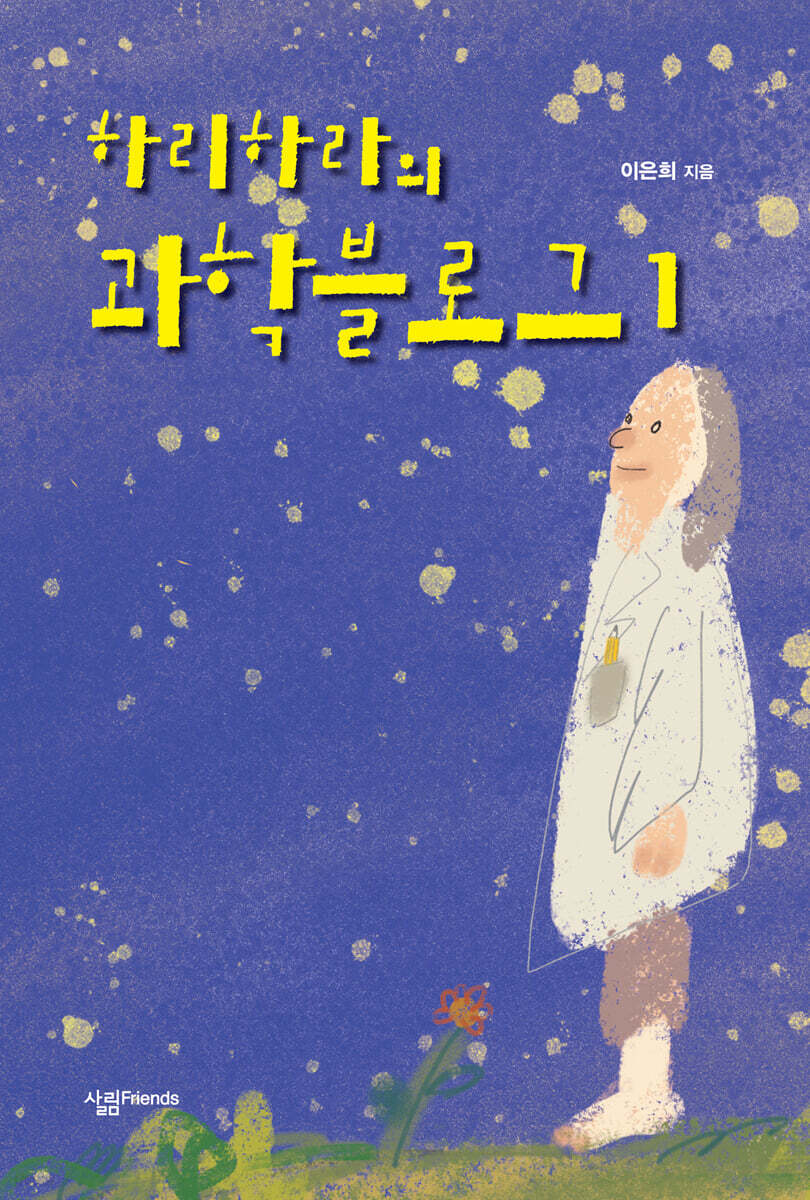
Harihara's Science Blog 1
 |
Description
Book Introduction
Essential science textbook for teenagers that fosters convergent thinking skills
From the scientific revolution that swept the Earth
Top 10 Hot Science Issues of the Year
『Harihara's Science Blog 1, 2』
Back with a completely revised edition!
Korean Publication Ethics Commission_Recommended Books for Youth
Korean Publishers Association_Youth Book of the Year
Teachers Creating a Warm World with Books_Booktase Recommended Books
Recommended books by the Hanuri Reading Culture Movement Headquarters
Busan Metropolitan Office of Education Recommended Books
Korean Publishers Association_Living Room as Study Books
The "Harihara's Science Blog 1, 2" series, now fully revised after 20 years.
The new school year of 2024 will bring a wave of knowledge and excitement.
The Harihara Series, a representative work of science education for young people, returns with a new edition!
From the antibiotic debate and test-tube babies, to the COVID-19 pandemic and vaccines that swept the world in 2020, to the alchemy and nuclear chemistry research that will surely pique anyone's interest in science, author Eun-hee Lee, who has published numerous bestsellers in the Harihara series, returns with a revised edition of "Harihara's Science Blog" after 20 years.
First published in 2005, "Harihara's Science Blog" captivated countless readers with its themes of the duality of modern science and science in everyday life, and was designated as a recommended book in various youth categories, establishing itself as a representative work of science education for youth that is easily accessible and understandable to anyone.
As time passes, the world constantly changes.
This revised edition includes updated content to reflect recent scientific discoveries and controversies, and a changing world.
The diverse topics and deeper, richer content will provide fresh enjoyment to both existing and new readers.
For anyone who wants to delve deeply into the mysteries of science and the scientific issues we face in the real world, the revised edition of Harihara's Science Blog is a must-read.
From the scientific revolution that swept the Earth
Top 10 Hot Science Issues of the Year
『Harihara's Science Blog 1, 2』
Back with a completely revised edition!
Korean Publication Ethics Commission_Recommended Books for Youth
Korean Publishers Association_Youth Book of the Year
Teachers Creating a Warm World with Books_Booktase Recommended Books
Recommended books by the Hanuri Reading Culture Movement Headquarters
Busan Metropolitan Office of Education Recommended Books
Korean Publishers Association_Living Room as Study Books
The "Harihara's Science Blog 1, 2" series, now fully revised after 20 years.
The new school year of 2024 will bring a wave of knowledge and excitement.
The Harihara Series, a representative work of science education for young people, returns with a new edition!
From the antibiotic debate and test-tube babies, to the COVID-19 pandemic and vaccines that swept the world in 2020, to the alchemy and nuclear chemistry research that will surely pique anyone's interest in science, author Eun-hee Lee, who has published numerous bestsellers in the Harihara series, returns with a revised edition of "Harihara's Science Blog" after 20 years.
First published in 2005, "Harihara's Science Blog" captivated countless readers with its themes of the duality of modern science and science in everyday life, and was designated as a recommended book in various youth categories, establishing itself as a representative work of science education for youth that is easily accessible and understandable to anyone.
As time passes, the world constantly changes.
This revised edition includes updated content to reflect recent scientific discoveries and controversies, and a changing world.
The diverse topics and deeper, richer content will provide fresh enjoyment to both existing and new readers.
For anyone who wants to delve deeply into the mysteries of science and the scientific issues we face in the real world, the revised edition of Harihara's Science Blog is a must-read.
index
preface
1.
Have humans won the battle against microbes? - The antibiotic debate.
Science Episode Microbial Reproduction
2.
The future of dining is ours! - Genetically modified crops
Science Episode: Meet Watson and Crick, Masters of Molecular Biology
3.
The Mystery of Life Outside the Womb: The Birth of Test Tube Babies
Science Episode Do you know Google Baby?
4.
The Light and Darkness of Life-Alternating Technologies - Advances in Organ Transplantation
Science Episode: The Development of Immunosuppressants: A Trigger for Organ Transplantation
5.
Another Battle for Quality of Life: The Obesity Overcoming Project
Science Episode: The Principles of Body Fat Analysis
6.
Silent Spring is Coming - The Attack of Endocrine Disruptors
Science Episode: Smaller is more dangerous
7.
Angels and Demons on the Table: The Age of White Food Overload
Science Episode: The Role of Vitamins and Minerals
8.
The Nobel Prize Built on the Ivory Tower of Life - The Invention of Dynamite
Science Episode: Scientists Who Rejected the Nobel Prize
9.
The Alluring, Yet Deadly Temptation of Nuclear Energy
Science Episode: Petrov, the Hidden Hero Who Saved Humanity from Destruction
10.
Why God Hidden Dark Energy So Deep - The Development of Petroleum Energy
Science Episode: The Modern Transformation of Leaves
References
1.
Have humans won the battle against microbes? - The antibiotic debate.
Science Episode Microbial Reproduction
2.
The future of dining is ours! - Genetically modified crops
Science Episode: Meet Watson and Crick, Masters of Molecular Biology
3.
The Mystery of Life Outside the Womb: The Birth of Test Tube Babies
Science Episode Do you know Google Baby?
4.
The Light and Darkness of Life-Alternating Technologies - Advances in Organ Transplantation
Science Episode: The Development of Immunosuppressants: A Trigger for Organ Transplantation
5.
Another Battle for Quality of Life: The Obesity Overcoming Project
Science Episode: The Principles of Body Fat Analysis
6.
Silent Spring is Coming - The Attack of Endocrine Disruptors
Science Episode: Smaller is more dangerous
7.
Angels and Demons on the Table: The Age of White Food Overload
Science Episode: The Role of Vitamins and Minerals
8.
The Nobel Prize Built on the Ivory Tower of Life - The Invention of Dynamite
Science Episode: Scientists Who Rejected the Nobel Prize
9.
The Alluring, Yet Deadly Temptation of Nuclear Energy
Science Episode: Petrov, the Hidden Hero Who Saved Humanity from Destruction
10.
Why God Hidden Dark Energy So Deep - The Development of Petroleum Energy
Science Episode: The Modern Transformation of Leaves
References
Into the book
Volume 1
In the preface to the previous edition, I found a passage that said the book was written with the thought that “if we look at it from a different angle, we might be able to perceive the facts differently.”
At this very moment, this sentence comes to me in a new way.
There is one basic perspective on the ten stories in the book.
Everything in the world can be interpreted in many ways.
Science is truth, technology is advancing, and new developments inevitably bring us convenience and benefit, but there may be other aspects behind them that we haven't even considered.
---From the "Preface"
It is true that antibiotics have saved humanity from bacterial diseases that have plagued us for a long time and improved our quality of life.
However, humans often make the mistake of cutting themselves by wielding this capable sword given to them too carelessly.
Science is a very useful tool for those who use it well, but if misused, it can become a double-edged sword that can actually harm oneself.
Actually, not only antibiotics, but everything is like that.
What we need to do is understand the possibilities and limitations of science, and strive to ensure that useful scientific achievements are not lost in the shadows.
--- p.27
Nature is never easygoing.
If we dig into the natural balance without considering it and only extract what is beneficial to us, the results will circle around the ecosystem and eventually hit us in the back of the head.
The 20th century was the century of chemistry, and if the era of biology dawns in the future, we must not only launch a massive offensive of materials, but also pay attention to the organic connections between each living organism and plan to utilize and coexist with nature without disrupting these relationships.
In the preface to the previous edition, I found a passage that said the book was written with the thought that “if we look at it from a different angle, we might be able to perceive the facts differently.”
At this very moment, this sentence comes to me in a new way.
There is one basic perspective on the ten stories in the book.
Everything in the world can be interpreted in many ways.
Science is truth, technology is advancing, and new developments inevitably bring us convenience and benefit, but there may be other aspects behind them that we haven't even considered.
---From the "Preface"
It is true that antibiotics have saved humanity from bacterial diseases that have plagued us for a long time and improved our quality of life.
However, humans often make the mistake of cutting themselves by wielding this capable sword given to them too carelessly.
Science is a very useful tool for those who use it well, but if misused, it can become a double-edged sword that can actually harm oneself.
Actually, not only antibiotics, but everything is like that.
What we need to do is understand the possibilities and limitations of science, and strive to ensure that useful scientific achievements are not lost in the shadows.
--- p.27
Nature is never easygoing.
If we dig into the natural balance without considering it and only extract what is beneficial to us, the results will circle around the ecosystem and eventually hit us in the back of the head.
The 20th century was the century of chemistry, and if the era of biology dawns in the future, we must not only launch a massive offensive of materials, but also pay attention to the organic connections between each living organism and plan to utilize and coexist with nature without disrupting these relationships.
--- p.114
Publisher's Review
A new form of science essay that deepens thinking through science.
Eunhee Lee, a rare science communicator who conveys hard and cold science in a warm and friendly manner, is famous under the pen name "Harihara." She points out 10 issues facing modern science and encourages readers to develop an "eye for science."
The author says that in this book, he focused on providing readers with an easy-to-understand explanation of the important research findings of modern science that are essential for general knowledge, while also giving them the opportunity to reflect on the dark shadows that lie behind them.
Through this book, young readers can go beyond simply accepting scientific knowledge and develop logical and critical thinking skills, improving their argumentative and logical thinking abilities.
Author Eunhee Lee's unique and insightful approach provides an excellent opportunity to cultivate interest in science and develop the ability to understand and analyze the world more deeply through logical thinking.
10 Hot Issues Revealing the Light and Darkness of Modern Science
While science brings us the dream of infinite life extension and convenience in life, it also seems to push us into a swamp at some point.
Antibiotics developed to prevent viral infections have left humanity under the constant threat of mutant viruses, and genetically modified foods, which were created to be pest-resistant and nutritious, are embroiled in controversy over the side effects of causing genetic mutations.
That doesn't mean we can throw away science and return to nature.
What is needed to rescue our dreams and hopes from the Pandora's box of modern science is for us to become wiser about science.
By exploring ten pressing issues facing modern science with science communicator Eunhee Lee, you'll gain a deeper understanding of the crucial research achievements of modern science, essential for general education, while also having the opportunity to reflect on the dark shadows cast behind them.
Develop scientific judgment through doubt and verification.
As we go through life, there are times when we have difficulty distinguishing between pseudoscience disguised as plausible lies and real science.
If you are not careful, there may come a time when you could waste your life on prejudice and misunderstanding.
What is needed at this time is ‘scientific judgment.’
We call the ability to seek understanding by considering rationality and efficiency, even without being armed with grand theories and logic, "scientific judgment," and we teach that this ability should be cultivated from childhood.
So where does scientific judgment come from? The author provides profound insights into the source of scientific judgment.
According to her, scientific judgment is formed through a process of 'doubt and confirmation' rather than simple accumulation or memorization of knowledge.
Science constantly expands and modifies knowledge by confirming its universality and validity through verification and experimentation.
The experience and insight gained through this process are considered to be the source of scientific judgment.
As you continue to train yourself to develop this scientific judgment, you will gain insight into how to apply it in various real-life situations.
Eunhee Lee, a rare science communicator who conveys hard and cold science in a warm and friendly manner, is famous under the pen name "Harihara." She points out 10 issues facing modern science and encourages readers to develop an "eye for science."
The author says that in this book, he focused on providing readers with an easy-to-understand explanation of the important research findings of modern science that are essential for general knowledge, while also giving them the opportunity to reflect on the dark shadows that lie behind them.
Through this book, young readers can go beyond simply accepting scientific knowledge and develop logical and critical thinking skills, improving their argumentative and logical thinking abilities.
Author Eunhee Lee's unique and insightful approach provides an excellent opportunity to cultivate interest in science and develop the ability to understand and analyze the world more deeply through logical thinking.
10 Hot Issues Revealing the Light and Darkness of Modern Science
While science brings us the dream of infinite life extension and convenience in life, it also seems to push us into a swamp at some point.
Antibiotics developed to prevent viral infections have left humanity under the constant threat of mutant viruses, and genetically modified foods, which were created to be pest-resistant and nutritious, are embroiled in controversy over the side effects of causing genetic mutations.
That doesn't mean we can throw away science and return to nature.
What is needed to rescue our dreams and hopes from the Pandora's box of modern science is for us to become wiser about science.
By exploring ten pressing issues facing modern science with science communicator Eunhee Lee, you'll gain a deeper understanding of the crucial research achievements of modern science, essential for general education, while also having the opportunity to reflect on the dark shadows cast behind them.
Develop scientific judgment through doubt and verification.
As we go through life, there are times when we have difficulty distinguishing between pseudoscience disguised as plausible lies and real science.
If you are not careful, there may come a time when you could waste your life on prejudice and misunderstanding.
What is needed at this time is ‘scientific judgment.’
We call the ability to seek understanding by considering rationality and efficiency, even without being armed with grand theories and logic, "scientific judgment," and we teach that this ability should be cultivated from childhood.
So where does scientific judgment come from? The author provides profound insights into the source of scientific judgment.
According to her, scientific judgment is formed through a process of 'doubt and confirmation' rather than simple accumulation or memorization of knowledge.
Science constantly expands and modifies knowledge by confirming its universality and validity through verification and experimentation.
The experience and insight gained through this process are considered to be the source of scientific judgment.
As you continue to train yourself to develop this scientific judgment, you will gain insight into how to apply it in various real-life situations.
GOODS SPECIFICS
- Date of issue: April 5, 2024
- Page count, weight, size: 192 pages | 312g | 152*225*12mm
- ISBN13: 9788952248770
- ISBN10: 8952248775
You may also like
카테고리
korean


korean

![GQ KOREA Mark (Monthly): December [2025]](http://librairie.coreenne.fr/cdn/shop/files/8ef265dbbfbf186523ed75ba7319009d.jpg?v=1765340328&width=3840)


