

imperfect beings
 |
Description
Book Introduction
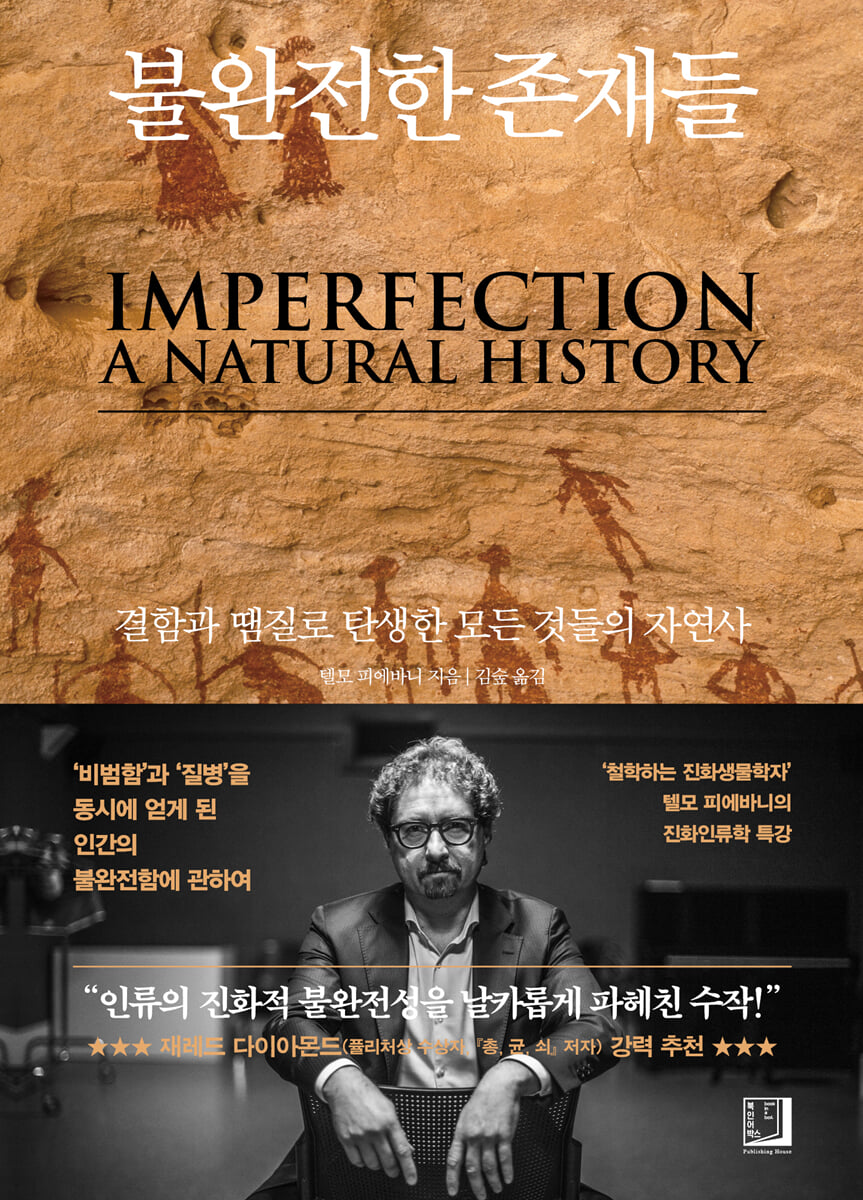
“We are just lucky primates, made of imperfect compromises.” Obtaining both 'extraordinaryness' and 'disease' at the same time Evolutionary Anthropology Lecture on Human Imperfection From the beginning of the universe to the birth of life, DNA, and mutations, And the 'imperfect' natural history of all things, up to the emergence of the haphazard human race. “A masterpiece that sharply examines the evolutionary imperfections of humanity!” ★ Jared Diamond (author of Guns, Germs, and Steel) ★ Advances in modern medicine and technology have played a significant role in extending human life and improving the quality of life. And today we continue to pursue a deep desire to live longer and healthier lives. But as this obsession with longevity deepens, we must simultaneously accept the inevitable decline that comes with increasing imperfection. The protective mechanisms developed during human evolution begin to lose their effectiveness after the reproductive years, and when we try to delay aging in any way, we are resisting the natural evolutionary flow. Life expectancy will increase, but psychological and physical imperfections will inevitably worsen. In this book, Telmo Pievani, an Italian evolutionary biologist and author of "Imperfect Beings," illuminates the evolutionary origins of humans as imperfect beings who suffer from various diseases and defects along with extraordinary abilities. From the birth of the universe from a crack, to the emergence of life, DNA, mutations, and the emergence of humans as a new "ruler," this fascinating look at the evolutionary biological process that gave modern humans their unique imperfections. In all that time of evolution, there is no trace of a 'perfect human'. All that is found is the appearance of a 'disorganized humanity' created by natural selection, a mixture of countless coincidences and patchwork. How did such imperfect humans become the dominant species of all species today? And how can Homo sapiens, still riddled with imperfections, navigate the opaque challenges of evolution? "A smart brain" and "bipedalism" are not sufficient answers. ??Imperfect Beings??, which was even nominated for Italy's top science writing award, contains an unusual reflection on this age-old question from the perspective of evolutionary biology. As you follow the fascinating evolutionary trajectory this book presents, it will come as no surprise that the only species that continues down the wrong path, even after realizing it, is the stubborn Homo sapiens. |
index
Recommendation by Ian Tattersall (Curator Emeritus, Department of Anthropology, American Museum of Natural History)
Chapter 1: A Crack in the Moment, and It All Began
An empty space containing everything│Anisotropy│Chance│'Afterlife' is poison│The grenade of the universe
Chapter 2: Incomplete Evolution
The Most Creative Imperfection│The Great Compromise, Multicellularity│From a Microbial Perspective│Sex and Other Disasters│The Champion of Imperfection│A World of Possibilities
Chapter 3: How Imperfection Works
The First Two Rules of Imperfection and the Great Deer│Useless Traces│Useful Oddities│The Problem of the Perfect Organ│Possibility is More Powerful than Reality
―Chapter 4: Useless Things Imprinted in DNA
Atavistic Genes and Chikinosaurus│Even Trash Has Its Own Types│From Junk DNA to Jungle DNA│The Law of the Onion
Chapter 5: The Human Brain: Upside-Down Common Sense
The Late-Developing Brain│Two Small Brains Overturn Common Sense│So Many Compromises for the Brain│Tweaking the Brain│Us and Them
Chapter 6: The Flawed Sage
The Most Imperfect Innovation: Walking│How to Turn Vulnerability into Strength│Excuse Me, Could You Say That Again?│Evolution's Dissonance
―Chapter 7: Buying a used car sold by Homo sapiens?
The Beautiful but Imperfect Typewriter│The Feats of the Self-Proclaimed Sapiens│The Flat-Earth Planners Are on a Roll│We Have No Foresight│Conclusion: The Law of Imperfection
Huzhou
Chapter 1: A Crack in the Moment, and It All Began
An empty space containing everything│Anisotropy│Chance│'Afterlife' is poison│The grenade of the universe
Chapter 2: Incomplete Evolution
The Most Creative Imperfection│The Great Compromise, Multicellularity│From a Microbial Perspective│Sex and Other Disasters│The Champion of Imperfection│A World of Possibilities
Chapter 3: How Imperfection Works
The First Two Rules of Imperfection and the Great Deer│Useless Traces│Useful Oddities│The Problem of the Perfect Organ│Possibility is More Powerful than Reality
―Chapter 4: Useless Things Imprinted in DNA
Atavistic Genes and Chikinosaurus│Even Trash Has Its Own Types│From Junk DNA to Jungle DNA│The Law of the Onion
Chapter 5: The Human Brain: Upside-Down Common Sense
The Late-Developing Brain│Two Small Brains Overturn Common Sense│So Many Compromises for the Brain│Tweaking the Brain│Us and Them
Chapter 6: The Flawed Sage
The Most Imperfect Innovation: Walking│How to Turn Vulnerability into Strength│Excuse Me, Could You Say That Again?│Evolution's Dissonance
―Chapter 7: Buying a used car sold by Homo sapiens?
The Beautiful but Imperfect Typewriter│The Feats of the Self-Proclaimed Sapiens│The Flat-Earth Planners Are on a Roll│We Have No Foresight│Conclusion: The Law of Imperfection
Huzhou
Detailed image
Into the book
The history of our home planet, Earth, was also open to other alternatives.
We could have lived in a completely different world, but our world now is a very special event for us because it is the only one that actually happened.
According to those lucky enough to gaze upon the Earth from the windows of a spaceship, the Earth appears incredibly fragile from space, yet it also makes us feel a sense of responsibility towards it.
The Earth seems truly special, and as far as we know, it really is.
In short, the Earth seems perfectly suited to us and to many other cohabiting life forms.
---From "Space Grenade"
If a mutation occurs in a germ cell, the mutation will be inherited and passed on to the next generation.
However, mass-producing identical individuals through infinite replication is useless.
To survive in a changing environment, we must become diverse.
Random mutations mean that every individual has unique differences.
And it broadens the range of opportunities to survive and reproduce in a given environment.
Natural selection is a safety net that allows organisms to evolve through chance.
Its fuel is the innovative little imperfections, the slight deviations from the norm, and the intergenerational disobedience that all beings are born with.
---From "The Most Creative Imperfection"
The existence of multicellular life is an imperfect compromise between selfish cells and organisms that require cooperation.
In the process of evolution, several parts begin to develop together, and soon after, 'free riders' appear who enjoy the help of those around them but do nothing for the public good.
Free riders, who benefit from the cooperation of others without contributing anything themselves, reap powerful benefits of Darwinism.
It's like a tax evader who doesn't pay taxes but seeks health insurance when he needs it.
So our bodies build their own internal police, but problems arise when selfish cells try to escape control and revert to single-cell logic.
---From "The Great Compromise, Multicellularity"
Just because a species survived a mass extinction doesn't necessarily mean it was well-adapted to its environment.
The incident happened so suddenly that I didn't even have time to adjust.
Sometimes, omnivorous animals that could adapt well to different environments by eating a variety of foods survived, but sometimes, animals that were simply lucky enough to be in the right place at the right time survived.
The extinction event that occurred at the end of the Triassic period, 202 million years ago, wiped out most of the large, monstrous reptiles of the time.
This event provided an opportunity for the dinosaurs that appeared during the Jurassic period to gradually increase in numbers, and they dominated the world until the end of the Cretaceous period 66 million years ago.
But the lucky survivors who survived the previous disaster eventually became victims of the next one.
---From "The World of Possibility"
The male giant deer is unusually large and has many branches on its antlers.
It reached a maximum width of 3.65 meters and grew new leaves every year.
This meant a significant expenditure of energy, the purpose of which was to gain dominance over other males and gain access to females.
That is, it was sexual selection.
The antlers were the 'signature' of the giant deer, an adaptation that increased their reproductive success by attracting as many females as possible and avoiding fighting with other males without causing injury.
But if the giant deer were so well adapted to reproduction, why did they go extinct?
---From "The Bighorn Deer and the First Two Rules of Imperfection"
Darwin's theory of evolution stems from the dialectic between 'anatomical similarity (inherited morphological structure)' and 'existence conditions (external selective pressure)'.
In other words, it was born between historical inertia and constraints on the one hand and fortuitous environmental circumstances on the other.
There is no prerequisite for mechanical perfection here.
The human arm, the forelimbs of a mole and a horse, the front flippers of a dolphin, and the wings of a bat are all used today for completely different purposes (grasping, digging holes, running, swimming, or flying), but these structures all originate from the same skeleton, the same prototype, observed in the same location.
---From "Useless Traces"
Some ancestral functions (e.g., those needed to support gill spur and breathe) can be 'readapted' to perform new functions (e.g., those needed to chew food with the jaws of the first four-legged animals on land).
Of course, this process of natural selection is not economical, so it cannot start from zero.
It is better to utilize existing institutions that are small and imperfect, but have immediate benefits (which are much more useful than vague, imperfect, and expensive future institutions).
Moreover, organisms have little incentive to discard abilities (organs) they already possess, as they must continue to survive until they find a replacement.
---From "The Problem of the Perfect Institution"
Certain anatomical details found in pandas provide good evidence for 'ad hoc' adaptation.
Grabbing bamboo with bare hands would have been quite a challenge for a panda.
Natural selection favored those individuals that were better at grasping objects.
Over time, pandas developed a 'sixth finger' that enabled them to grasp.
The bone that started from the small bone in the wrist, the sesamoid bone, became the sixth finger.
But in fact, it was not a real thumb from the beginning, but rather was selectively reused.
Organs that were created to perform a specific function can evolve into completely different forms to perform different functions as environmental conditions change (in this case, food problems).
So, pandas are the result of evolutionary tinkering.
---From "Possibility is more powerful than reality"
How can we explain the fact that the onion genome is five times larger than the human genome? No one can claim that the onion is five times more complex than ours.
Rather, it is much simpler to point out that in plant evolution, speciation through crossbreeding and the fusion of parental genomes are the main processes that create new generations.
DNA can grow much larger and heavier, as early farmers in the Fertile Crescent of Mesopotamia experimented with randomly breeding primitive plants to create soft wheat, which has three times as many chromosomes as today.
Soft wheat, with its monstrously large genes, has become the bread we eat every day today.
---From "The Law of the Onion"
Nothing is more undignified and vulnerable, let alone two-faced and unpredictable, than our brains.
This part can also be seen from Jacob's perspective.
“The human brain is a result of the accumulation of new structures on the old mammalian brain.
The neocortex was added to the old mammalian brain, and this probably played a major role in quickly, or rather, very quickly, assuming the leading role in the long evolutionary flow of humanity.” Yes.
Too soon! We'll cover this in more detail in the next chapter.
For now, let's just consider the unique anatomical structures and functions of various brains, including our own.
And let's evaluate this rigorously on an evolutionary level.
Why are all these nervous systems imperfect?
---From "The Late-Developing Brain"
The maintenance costs of this amazing invention in our heads are very high.
This invention consumes 20 percent of the total energy we use.
Yet, considering our body mass, our digestive systems are not as well-equipped as those of other mammals.
During evolution, we had to increase brain size at the expense of saving energy that could have been used elsewhere.
Perhaps in the digestive system, or in the process of growing and living, and even slowing down the rate of energy expenditure associated with it.
Without a doubt, our diets have become much richer with more animal protein.
---From "Too Many Compromises for the Brain"
The evolution of the brain is a bit like fitting a Ferrari engine into a fancy racing car from the last century.
While the performance is exceptional, it's reasonable to assume that not everything will work perfectly.
Let's borrow Jacob's words again:
“The process by which the neocortex was formed and some of the ancient nervous and hormonal systems that remain today are located below the autonomic nervous system, and some are located below the neocortex.
This evolutionary process is very much like tinkering.” As you might expect, intellectual and behavioral achievements, like strange devices, can be met with ambivalence.
It can be amazing in some ways and terrifying in others.
---From "Tinkering the Brain"
In men, why does the urethra, which serves only as a passage for urination, pass right through the center of the prostate? This causes the prostate to become inflamed over the years, and as men age, it enlarges, causing unnecessary pain.
Well, this doesn't seem like a very important issue.
Until recently, we had been so old that we could live without suffering from these diseases.
All of this incomprehensible is evolution.
Most of the other diseases and afflictions that come with age can be understood when we consider that evolutionary selection has little interest in humans past their reproductive years.
The annoying imperfections that plague old age are not revealed until after we have reproduced, so our genes can be passed on to the next generation without issue.
---From "The Most Imperfect Innovation: Walking"
Our spine did not evolve from nothing.
The flexible spine of animals that walked on all fours or climbed trees was erected as straight as possible, and the entire body weight was shifted to one side, putting a load on both legs.
As a result, the spine becomes curved and the vertebrae are subjected to excessive pressure.
The nerves and muscles adapted to this change as best they could, but sciatica, hernias, and flat feet could not be avoided.
Moreover, if a bipedal animal, having worked so hard to stand on two feet, has to sit at a desk or in a car all day, it means jumping into the pain of imperfection with its own feet.
---From "The Most Imperfect Innovation: Walking"
The changes brought about by bipedalism had negative consequences for almost every part of the body.
Walking using the entire sole of the foot applies a tremendous amount of load.
Our neck, which supports our heavy and shaky head, is our weak point.
The abdomen, which contains all the internal organs, is susceptible to trauma.
The peritoneum often sinks down due to gravity, causing hernias and prolapses.
It even affects the face.
If you ever catch a cold and feel mucus oozing from every pore in your face, remember that your maxillary sinuses, which drain against gravity and up through your nostrils, are also clogged with mucus! This passage is incredibly inefficient and easily clogged with mucus and other slimy substances.
This is a very inefficient design for us, but it does its job in the front of the face of quadrupedal animals and is always open.
---From "The Most Imperfect Innovation: Walking"
We have become primates with a strange ambition to age unusually late.
That ambition was admirable, but it also brought with it imperfections.
Primates are the slowest and most clumsy species of mammals.
Unlike herbivores who stand on all fours and follow their mothers around to protect themselves from predators, primates like us raise and protect our young in communities for longer periods of time.
This gives primate offspring more time to socialize, play, and prepare for future crises.
Just as bipedalism required a large brain, this too was a costly and risky adaptation.
---From "How to Turn Vulnerability into Strength"
Evolutionary mismatches can cause serious problems.
For example, our digestive systems, which have adapted to long-term environments of food scarcity and uncertainty, may have evolved to store as many calories (sugar and fat) as possible until the next uncertain meal.
It may be several days before your next meal, so you should consume as much as you can while you can.
But these adaptations can backfire when humans are suddenly thrust into a world of fast food and junk food, often packed with fat and sugar, wrapped in bulky, unhealthy, and useless plastic wrappers.
---From "The Inconsistency of Evolution"
People don't particularly question some of the typewriter's time-honored features, namely the layout of the keys.
Why is the keyboard laid out the way it is today? Lowercase letters are arranged across three rows, with a single keyboard that switches to uppercase.
The six letters from the left on the top row are 'QWERTY'.
This is odd considering that over 70 percent of English words are formed from the 'DIATHENSOR' sequence.
The most rational and efficient arrangement is to place frequently used characters in the easiest-to-reach places.
In other words, it would have been better if it had been placed mainly in the center of the second row.
In 1893, this keyboard was put into practical use and appeared on the market, but it was not very successful.
---From "A Beautiful but Imperfect Typewriter"
There is a wealth of clear evidence supporting the idea that our brains are a contradictory, messy, and functionally flawed machine.
We make countless mistakes, and we know very well that we are making mistakes even when we make them.
Even though we clearly know it's wrong (and we already have the intellectual and practical tools to understand it), we push on anyway, whether it's due to cognitive dissonance, habit, or social climate.
But the point to remember is that, just as we have been engaged in a primal struggle between reason and instinct since the beginning of time, we often find ourselves trapped in the pools of old emotions that have dominated us, and we lose control.
In fact, this is just one cross-section of many stories.
We could have lived in a completely different world, but our world now is a very special event for us because it is the only one that actually happened.
According to those lucky enough to gaze upon the Earth from the windows of a spaceship, the Earth appears incredibly fragile from space, yet it also makes us feel a sense of responsibility towards it.
The Earth seems truly special, and as far as we know, it really is.
In short, the Earth seems perfectly suited to us and to many other cohabiting life forms.
---From "Space Grenade"
If a mutation occurs in a germ cell, the mutation will be inherited and passed on to the next generation.
However, mass-producing identical individuals through infinite replication is useless.
To survive in a changing environment, we must become diverse.
Random mutations mean that every individual has unique differences.
And it broadens the range of opportunities to survive and reproduce in a given environment.
Natural selection is a safety net that allows organisms to evolve through chance.
Its fuel is the innovative little imperfections, the slight deviations from the norm, and the intergenerational disobedience that all beings are born with.
---From "The Most Creative Imperfection"
The existence of multicellular life is an imperfect compromise between selfish cells and organisms that require cooperation.
In the process of evolution, several parts begin to develop together, and soon after, 'free riders' appear who enjoy the help of those around them but do nothing for the public good.
Free riders, who benefit from the cooperation of others without contributing anything themselves, reap powerful benefits of Darwinism.
It's like a tax evader who doesn't pay taxes but seeks health insurance when he needs it.
So our bodies build their own internal police, but problems arise when selfish cells try to escape control and revert to single-cell logic.
---From "The Great Compromise, Multicellularity"
Just because a species survived a mass extinction doesn't necessarily mean it was well-adapted to its environment.
The incident happened so suddenly that I didn't even have time to adjust.
Sometimes, omnivorous animals that could adapt well to different environments by eating a variety of foods survived, but sometimes, animals that were simply lucky enough to be in the right place at the right time survived.
The extinction event that occurred at the end of the Triassic period, 202 million years ago, wiped out most of the large, monstrous reptiles of the time.
This event provided an opportunity for the dinosaurs that appeared during the Jurassic period to gradually increase in numbers, and they dominated the world until the end of the Cretaceous period 66 million years ago.
But the lucky survivors who survived the previous disaster eventually became victims of the next one.
---From "The World of Possibility"
The male giant deer is unusually large and has many branches on its antlers.
It reached a maximum width of 3.65 meters and grew new leaves every year.
This meant a significant expenditure of energy, the purpose of which was to gain dominance over other males and gain access to females.
That is, it was sexual selection.
The antlers were the 'signature' of the giant deer, an adaptation that increased their reproductive success by attracting as many females as possible and avoiding fighting with other males without causing injury.
But if the giant deer were so well adapted to reproduction, why did they go extinct?
---From "The Bighorn Deer and the First Two Rules of Imperfection"
Darwin's theory of evolution stems from the dialectic between 'anatomical similarity (inherited morphological structure)' and 'existence conditions (external selective pressure)'.
In other words, it was born between historical inertia and constraints on the one hand and fortuitous environmental circumstances on the other.
There is no prerequisite for mechanical perfection here.
The human arm, the forelimbs of a mole and a horse, the front flippers of a dolphin, and the wings of a bat are all used today for completely different purposes (grasping, digging holes, running, swimming, or flying), but these structures all originate from the same skeleton, the same prototype, observed in the same location.
---From "Useless Traces"
Some ancestral functions (e.g., those needed to support gill spur and breathe) can be 'readapted' to perform new functions (e.g., those needed to chew food with the jaws of the first four-legged animals on land).
Of course, this process of natural selection is not economical, so it cannot start from zero.
It is better to utilize existing institutions that are small and imperfect, but have immediate benefits (which are much more useful than vague, imperfect, and expensive future institutions).
Moreover, organisms have little incentive to discard abilities (organs) they already possess, as they must continue to survive until they find a replacement.
---From "The Problem of the Perfect Institution"
Certain anatomical details found in pandas provide good evidence for 'ad hoc' adaptation.
Grabbing bamboo with bare hands would have been quite a challenge for a panda.
Natural selection favored those individuals that were better at grasping objects.
Over time, pandas developed a 'sixth finger' that enabled them to grasp.
The bone that started from the small bone in the wrist, the sesamoid bone, became the sixth finger.
But in fact, it was not a real thumb from the beginning, but rather was selectively reused.
Organs that were created to perform a specific function can evolve into completely different forms to perform different functions as environmental conditions change (in this case, food problems).
So, pandas are the result of evolutionary tinkering.
---From "Possibility is more powerful than reality"
How can we explain the fact that the onion genome is five times larger than the human genome? No one can claim that the onion is five times more complex than ours.
Rather, it is much simpler to point out that in plant evolution, speciation through crossbreeding and the fusion of parental genomes are the main processes that create new generations.
DNA can grow much larger and heavier, as early farmers in the Fertile Crescent of Mesopotamia experimented with randomly breeding primitive plants to create soft wheat, which has three times as many chromosomes as today.
Soft wheat, with its monstrously large genes, has become the bread we eat every day today.
---From "The Law of the Onion"
Nothing is more undignified and vulnerable, let alone two-faced and unpredictable, than our brains.
This part can also be seen from Jacob's perspective.
“The human brain is a result of the accumulation of new structures on the old mammalian brain.
The neocortex was added to the old mammalian brain, and this probably played a major role in quickly, or rather, very quickly, assuming the leading role in the long evolutionary flow of humanity.” Yes.
Too soon! We'll cover this in more detail in the next chapter.
For now, let's just consider the unique anatomical structures and functions of various brains, including our own.
And let's evaluate this rigorously on an evolutionary level.
Why are all these nervous systems imperfect?
---From "The Late-Developing Brain"
The maintenance costs of this amazing invention in our heads are very high.
This invention consumes 20 percent of the total energy we use.
Yet, considering our body mass, our digestive systems are not as well-equipped as those of other mammals.
During evolution, we had to increase brain size at the expense of saving energy that could have been used elsewhere.
Perhaps in the digestive system, or in the process of growing and living, and even slowing down the rate of energy expenditure associated with it.
Without a doubt, our diets have become much richer with more animal protein.
---From "Too Many Compromises for the Brain"
The evolution of the brain is a bit like fitting a Ferrari engine into a fancy racing car from the last century.
While the performance is exceptional, it's reasonable to assume that not everything will work perfectly.
Let's borrow Jacob's words again:
“The process by which the neocortex was formed and some of the ancient nervous and hormonal systems that remain today are located below the autonomic nervous system, and some are located below the neocortex.
This evolutionary process is very much like tinkering.” As you might expect, intellectual and behavioral achievements, like strange devices, can be met with ambivalence.
It can be amazing in some ways and terrifying in others.
---From "Tinkering the Brain"
In men, why does the urethra, which serves only as a passage for urination, pass right through the center of the prostate? This causes the prostate to become inflamed over the years, and as men age, it enlarges, causing unnecessary pain.
Well, this doesn't seem like a very important issue.
Until recently, we had been so old that we could live without suffering from these diseases.
All of this incomprehensible is evolution.
Most of the other diseases and afflictions that come with age can be understood when we consider that evolutionary selection has little interest in humans past their reproductive years.
The annoying imperfections that plague old age are not revealed until after we have reproduced, so our genes can be passed on to the next generation without issue.
---From "The Most Imperfect Innovation: Walking"
Our spine did not evolve from nothing.
The flexible spine of animals that walked on all fours or climbed trees was erected as straight as possible, and the entire body weight was shifted to one side, putting a load on both legs.
As a result, the spine becomes curved and the vertebrae are subjected to excessive pressure.
The nerves and muscles adapted to this change as best they could, but sciatica, hernias, and flat feet could not be avoided.
Moreover, if a bipedal animal, having worked so hard to stand on two feet, has to sit at a desk or in a car all day, it means jumping into the pain of imperfection with its own feet.
---From "The Most Imperfect Innovation: Walking"
The changes brought about by bipedalism had negative consequences for almost every part of the body.
Walking using the entire sole of the foot applies a tremendous amount of load.
Our neck, which supports our heavy and shaky head, is our weak point.
The abdomen, which contains all the internal organs, is susceptible to trauma.
The peritoneum often sinks down due to gravity, causing hernias and prolapses.
It even affects the face.
If you ever catch a cold and feel mucus oozing from every pore in your face, remember that your maxillary sinuses, which drain against gravity and up through your nostrils, are also clogged with mucus! This passage is incredibly inefficient and easily clogged with mucus and other slimy substances.
This is a very inefficient design for us, but it does its job in the front of the face of quadrupedal animals and is always open.
---From "The Most Imperfect Innovation: Walking"
We have become primates with a strange ambition to age unusually late.
That ambition was admirable, but it also brought with it imperfections.
Primates are the slowest and most clumsy species of mammals.
Unlike herbivores who stand on all fours and follow their mothers around to protect themselves from predators, primates like us raise and protect our young in communities for longer periods of time.
This gives primate offspring more time to socialize, play, and prepare for future crises.
Just as bipedalism required a large brain, this too was a costly and risky adaptation.
---From "How to Turn Vulnerability into Strength"
Evolutionary mismatches can cause serious problems.
For example, our digestive systems, which have adapted to long-term environments of food scarcity and uncertainty, may have evolved to store as many calories (sugar and fat) as possible until the next uncertain meal.
It may be several days before your next meal, so you should consume as much as you can while you can.
But these adaptations can backfire when humans are suddenly thrust into a world of fast food and junk food, often packed with fat and sugar, wrapped in bulky, unhealthy, and useless plastic wrappers.
---From "The Inconsistency of Evolution"
People don't particularly question some of the typewriter's time-honored features, namely the layout of the keys.
Why is the keyboard laid out the way it is today? Lowercase letters are arranged across three rows, with a single keyboard that switches to uppercase.
The six letters from the left on the top row are 'QWERTY'.
This is odd considering that over 70 percent of English words are formed from the 'DIATHENSOR' sequence.
The most rational and efficient arrangement is to place frequently used characters in the easiest-to-reach places.
In other words, it would have been better if it had been placed mainly in the center of the second row.
In 1893, this keyboard was put into practical use and appeared on the market, but it was not very successful.
---From "A Beautiful but Imperfect Typewriter"
There is a wealth of clear evidence supporting the idea that our brains are a contradictory, messy, and functionally flawed machine.
We make countless mistakes, and we know very well that we are making mistakes even when we make them.
Even though we clearly know it's wrong (and we already have the intellectual and practical tools to understand it), we push on anyway, whether it's due to cognitive dissonance, habit, or social climate.
But the point to remember is that, just as we have been engaged in a primal struggle between reason and instinct since the beginning of time, we often find ourselves trapped in the pools of old emotions that have dominated us, and we lose control.
In fact, this is just one cross-section of many stories.
---From "We Have No Foresight"
Publisher's Review
The birth of Homo sapiens, a mixture of ‘defects’ and ‘tinkering’
How did they become rulers of the world?
“Darwin understood perfectly well that where there is perfection there is no history.
Any naturalist curious about how evolution works must look into imperfection.
We need to find useless and traceable features.
These features symbolize traces of changes that have occurred in the past and promise the future.” (Text p.
259
By the standards of 'engineering perfection', Homo sapiens is remarkably clumsy, belying the 'king of creation'.
Although they began to walk on two legs and gained a broader field of vision, they suffered from back pain and arthritis. Their complex brains gave them the ability to build civilizations, but they also suffered from chronic headaches and psychological anxiety.
Neither the suffering of respiratory distress due to mucus blockage nor the risk of suffocation due to unclear esophagus and trachea are found in quadrupedal animals.
Moreover, newborn chicks are a troublesome and cumbersome species that must be raised under parental care for over a dozen years, and they are the only animals on Earth that do not hesitate to act even when they know it is wrong.
Yet, this seemingly imperfect species emerged a full 4 billion years after life on Earth, becoming the only one to “walk on two feet, compose symphonies, and launch rockets to the moon.”
Was it due to the development of the brain? Or was it due to the beginning of bipedal walking? A look at the long history of evolution reveals that these answers are insufficient.
Besides Homo sapiens, there were several species of hominins that had large brains and walked on two legs and lived with us until they became extinct.
What would have been different?
In this book, “Imperfect Beings,” Italian evolutionary biologist Telmo Pievani explores the process from the birth of the universe to the emergence of the Earth, life, DNA, mutations, and the emergence of the new “dominant” human, and provides an interesting look at the reasons why modern humans were able to become the “dominant species” despite their unique imperfections from an evolutionary biological perspective.
In particular, he points out that no trace of a 'perfect human' can be found anywhere in the long history of evolution.
However, the only characteristic that emerges from our humanity is the imperfections of natural selection, compromised by countless coincidences and tinkering.
Therein lies the paradox of evolution.
The author points out that our unique 'imperfection' has made Homo sapiens a more flexible and creative species.
Even compared to our once most formidable competitors, the Neanderthals, Homo sapiens made a bold but imperfect choice.
For example, Homo sapiens chose a long neck, unlike Neanderthals who chose a thick, short neck to support their enlarged brain.
The long neck was a flawed structure to support the enlarged brain, but it was an imperfect compromise: the larynx, which moved down the neck, separated the trachea and vocal cords, allowing breathing, eating, and speaking simultaneously through a single throat.
Although choking hazards and chronic cervical disc problems still plague us to this day, it was a pretty good compromise that we can't complain about since it gave us language.
Becoming a new ruler through compromise and adjustment
Homo sapiens, the 'champion of imperfection'
“Natural selection improves organisms by adapting to the contingent, organic and inorganic conditions of life, without striving unreasonably for perfection.
Adaptation is therefore a relative concept, and the past leaves its mark in the form of imperfections and oddities.
According to Darwin, this is evidenced by the numerous traits that remain in animals today despite being completely useless.” (p.
94
Evolution is a process of adaptation and change, not optimization.
The extinction of the dinosaurs and the survival of the small mammals that were ancestors of modern humans demonstrate that past advantages can become future disadvantages.
This means that evolution sustains life through continuous adaptation.
The key is flexibility and mobility.
In a rapidly changing environment, reusing or recycling existing products rather than creating something new from scratch increases competitiveness.
Imperfect tinkering, not perfect optimization, is the key to evolution.
The reason Homo sapiens, which appeared long after life on Earth, was able to quickly become the dominant species is because it was a champion of imperfection.
For example, unlike other species, they have been able to nimbly adapt to changing environments by reusing osteocrin cells, which function in vertebrate bone formation, in their brains for learning and memory, or by making an evolutionary compromise of giving birth to premature offspring when their pelvis narrowed after they began walking on two legs.
These imperfect choices were extreme compromises, but they ultimately contributed to human characteristics such as late maturation (late growth and maturity), which enhanced social cooperation and learning abilities.
In other words, they became dominant through nimble adaptation and compromise, reusing the environment and resources that were already given, rather than designing from scratch.
In the author's words, "Our imperfections function a little better than the imperfections of other creatures."
In this way, the author reinterprets imperfection not as a simple flaw, but as a core driving force for survival and evolution.
Compromise and adaptation born of imperfection have played a crucial role in overcoming the numerous challenges humanity has faced.
But as evolution always does, today's advantage can become tomorrow's weakness.
Despite numerous evolutionary achievements, humanity now stands at another evolutionary juncture.
While there is still a possibility that we will survive through other adaptations, there is no guarantee that we will not go the way of the dinosaurs.
'What are we, where are we going?'
Evolutionary Biology Reflections on the Question
“Evolutionary honors come with sacrifices.
Our brains are an accidental product of evolution, not entirely built from the ground up.
That's why the brain is easily sick and loses self-control.
Given these negative evolutionary features, it would be much simpler to acknowledge that brain imperfections plague us with various forms of mental suffering than to search for a hidden, unique advantage in human mental illness, as some scholars have done.” (p.
180
There is a serious gap between our bodies, which were frozen in time when sugar and calories were scarce, and today's abundant diet.
Cardiovascular problems, including obesity and diabetes, are the result of this so-called evolutionary mismatch.
Sexual pleasure, once given in exchange for expensive breeding, is now pursued without any relation to reproduction.
There are also problems arising from the evolutionary conflict between unicellular and multicellular organisms, such as tumors, and the problem of life extension and the resulting evolutionary delay.
Moreover, the brain, which has evolved to be smart, carries various emotional wounds and anxieties throughout its life and makes irrational choices as if it were nothing.
What about the destruction of ecosystems and climate change, which we ignore despite knowing they are wrong? These evolutionary mismatches threaten everything we have built, and technological change demands a redefinition of the very essence of our existence.
In this book, the author explores specific and practical ways to overcome the complex challenges facing modern society through profound insights into human evolution.
And as the evolutionary success of Homo sapiens demonstrates, imperfection and creative compromise will likely become humanity's most powerful weapons in combating massive challenges such as healthcare, climate change, the destruction of ecosystems, and ethical issues surrounding artificial intelligence.
For example, by understanding cancer as an evolutionary conflict between unicellular selfishness and multicellular logic, there is ample room for developing treatments, or by recognizing obesity as a problem of evolutionary mismatch, there is ample room for improving our overall lives.
Likewise, if we look at geriatric diseases that come with aging from a new perspective of natural selection's neglect, it becomes possible to address both physical and psychological issues.
The fear of 'perfect' AI also leaves ample room for other solutions, considering that humanity is armed with eccentricity and imperfection.
We can find a new path simply by not mistaking humanity for perfection.
Unraveling the nature of human evolution goes beyond mere scientific inquiry; it's a process of answering fundamental questions about who we are, where we came from, and where we're going.
In this book, the author cleverly shows readers how humanity's inherent imperfections actually contribute to revealing the beauty and creativity of our existence, and the true value of life.
From the birth of the universe, through the emergence of the solar system, the Earth, life, and the disappearance of countless life forms, it points out that imperfection is the providence and essence of evolution.
This book demonstrates to readers that by understanding themselves and the world within an evolutionary context, they can approach the challenges of modern society more creatively and humbly.
How did they become rulers of the world?
“Darwin understood perfectly well that where there is perfection there is no history.
Any naturalist curious about how evolution works must look into imperfection.
We need to find useless and traceable features.
These features symbolize traces of changes that have occurred in the past and promise the future.” (Text p.
259
By the standards of 'engineering perfection', Homo sapiens is remarkably clumsy, belying the 'king of creation'.
Although they began to walk on two legs and gained a broader field of vision, they suffered from back pain and arthritis. Their complex brains gave them the ability to build civilizations, but they also suffered from chronic headaches and psychological anxiety.
Neither the suffering of respiratory distress due to mucus blockage nor the risk of suffocation due to unclear esophagus and trachea are found in quadrupedal animals.
Moreover, newborn chicks are a troublesome and cumbersome species that must be raised under parental care for over a dozen years, and they are the only animals on Earth that do not hesitate to act even when they know it is wrong.
Yet, this seemingly imperfect species emerged a full 4 billion years after life on Earth, becoming the only one to “walk on two feet, compose symphonies, and launch rockets to the moon.”
Was it due to the development of the brain? Or was it due to the beginning of bipedal walking? A look at the long history of evolution reveals that these answers are insufficient.
Besides Homo sapiens, there were several species of hominins that had large brains and walked on two legs and lived with us until they became extinct.
What would have been different?
In this book, “Imperfect Beings,” Italian evolutionary biologist Telmo Pievani explores the process from the birth of the universe to the emergence of the Earth, life, DNA, mutations, and the emergence of the new “dominant” human, and provides an interesting look at the reasons why modern humans were able to become the “dominant species” despite their unique imperfections from an evolutionary biological perspective.
In particular, he points out that no trace of a 'perfect human' can be found anywhere in the long history of evolution.
However, the only characteristic that emerges from our humanity is the imperfections of natural selection, compromised by countless coincidences and tinkering.
Therein lies the paradox of evolution.
The author points out that our unique 'imperfection' has made Homo sapiens a more flexible and creative species.
Even compared to our once most formidable competitors, the Neanderthals, Homo sapiens made a bold but imperfect choice.
For example, Homo sapiens chose a long neck, unlike Neanderthals who chose a thick, short neck to support their enlarged brain.
The long neck was a flawed structure to support the enlarged brain, but it was an imperfect compromise: the larynx, which moved down the neck, separated the trachea and vocal cords, allowing breathing, eating, and speaking simultaneously through a single throat.
Although choking hazards and chronic cervical disc problems still plague us to this day, it was a pretty good compromise that we can't complain about since it gave us language.
Becoming a new ruler through compromise and adjustment
Homo sapiens, the 'champion of imperfection'
“Natural selection improves organisms by adapting to the contingent, organic and inorganic conditions of life, without striving unreasonably for perfection.
Adaptation is therefore a relative concept, and the past leaves its mark in the form of imperfections and oddities.
According to Darwin, this is evidenced by the numerous traits that remain in animals today despite being completely useless.” (p.
94
Evolution is a process of adaptation and change, not optimization.
The extinction of the dinosaurs and the survival of the small mammals that were ancestors of modern humans demonstrate that past advantages can become future disadvantages.
This means that evolution sustains life through continuous adaptation.
The key is flexibility and mobility.
In a rapidly changing environment, reusing or recycling existing products rather than creating something new from scratch increases competitiveness.
Imperfect tinkering, not perfect optimization, is the key to evolution.
The reason Homo sapiens, which appeared long after life on Earth, was able to quickly become the dominant species is because it was a champion of imperfection.
For example, unlike other species, they have been able to nimbly adapt to changing environments by reusing osteocrin cells, which function in vertebrate bone formation, in their brains for learning and memory, or by making an evolutionary compromise of giving birth to premature offspring when their pelvis narrowed after they began walking on two legs.
These imperfect choices were extreme compromises, but they ultimately contributed to human characteristics such as late maturation (late growth and maturity), which enhanced social cooperation and learning abilities.
In other words, they became dominant through nimble adaptation and compromise, reusing the environment and resources that were already given, rather than designing from scratch.
In the author's words, "Our imperfections function a little better than the imperfections of other creatures."
In this way, the author reinterprets imperfection not as a simple flaw, but as a core driving force for survival and evolution.
Compromise and adaptation born of imperfection have played a crucial role in overcoming the numerous challenges humanity has faced.
But as evolution always does, today's advantage can become tomorrow's weakness.
Despite numerous evolutionary achievements, humanity now stands at another evolutionary juncture.
While there is still a possibility that we will survive through other adaptations, there is no guarantee that we will not go the way of the dinosaurs.
'What are we, where are we going?'
Evolutionary Biology Reflections on the Question
“Evolutionary honors come with sacrifices.
Our brains are an accidental product of evolution, not entirely built from the ground up.
That's why the brain is easily sick and loses self-control.
Given these negative evolutionary features, it would be much simpler to acknowledge that brain imperfections plague us with various forms of mental suffering than to search for a hidden, unique advantage in human mental illness, as some scholars have done.” (p.
180
There is a serious gap between our bodies, which were frozen in time when sugar and calories were scarce, and today's abundant diet.
Cardiovascular problems, including obesity and diabetes, are the result of this so-called evolutionary mismatch.
Sexual pleasure, once given in exchange for expensive breeding, is now pursued without any relation to reproduction.
There are also problems arising from the evolutionary conflict between unicellular and multicellular organisms, such as tumors, and the problem of life extension and the resulting evolutionary delay.
Moreover, the brain, which has evolved to be smart, carries various emotional wounds and anxieties throughout its life and makes irrational choices as if it were nothing.
What about the destruction of ecosystems and climate change, which we ignore despite knowing they are wrong? These evolutionary mismatches threaten everything we have built, and technological change demands a redefinition of the very essence of our existence.
In this book, the author explores specific and practical ways to overcome the complex challenges facing modern society through profound insights into human evolution.
And as the evolutionary success of Homo sapiens demonstrates, imperfection and creative compromise will likely become humanity's most powerful weapons in combating massive challenges such as healthcare, climate change, the destruction of ecosystems, and ethical issues surrounding artificial intelligence.
For example, by understanding cancer as an evolutionary conflict between unicellular selfishness and multicellular logic, there is ample room for developing treatments, or by recognizing obesity as a problem of evolutionary mismatch, there is ample room for improving our overall lives.
Likewise, if we look at geriatric diseases that come with aging from a new perspective of natural selection's neglect, it becomes possible to address both physical and psychological issues.
The fear of 'perfect' AI also leaves ample room for other solutions, considering that humanity is armed with eccentricity and imperfection.
We can find a new path simply by not mistaking humanity for perfection.
Unraveling the nature of human evolution goes beyond mere scientific inquiry; it's a process of answering fundamental questions about who we are, where we came from, and where we're going.
In this book, the author cleverly shows readers how humanity's inherent imperfections actually contribute to revealing the beauty and creativity of our existence, and the true value of life.
From the birth of the universe, through the emergence of the solar system, the Earth, life, and the disappearance of countless life forms, it points out that imperfection is the providence and essence of evolution.
This book demonstrates to readers that by understanding themselves and the world within an evolutionary context, they can approach the challenges of modern society more creatively and humbly.
GOODS SPECIFICS
- Date of issue: April 1, 2024
- Format: Hardcover book binding method guide
- Page count, weight, size: 276 pages | 440g | 128*188*20mm
- ISBN13: 9791198563224
- ISBN10: 1198563222
You may also like
카테고리
korean


korean

![GQ KOREA Mark (Monthly): December [2025]](http://librairie.coreenne.fr/cdn/shop/files/8ef265dbbfbf186523ed75ba7319009d.jpg?v=1765340328&width=3840)


