

Bulbous planting design
 |
Description
Book Introduction
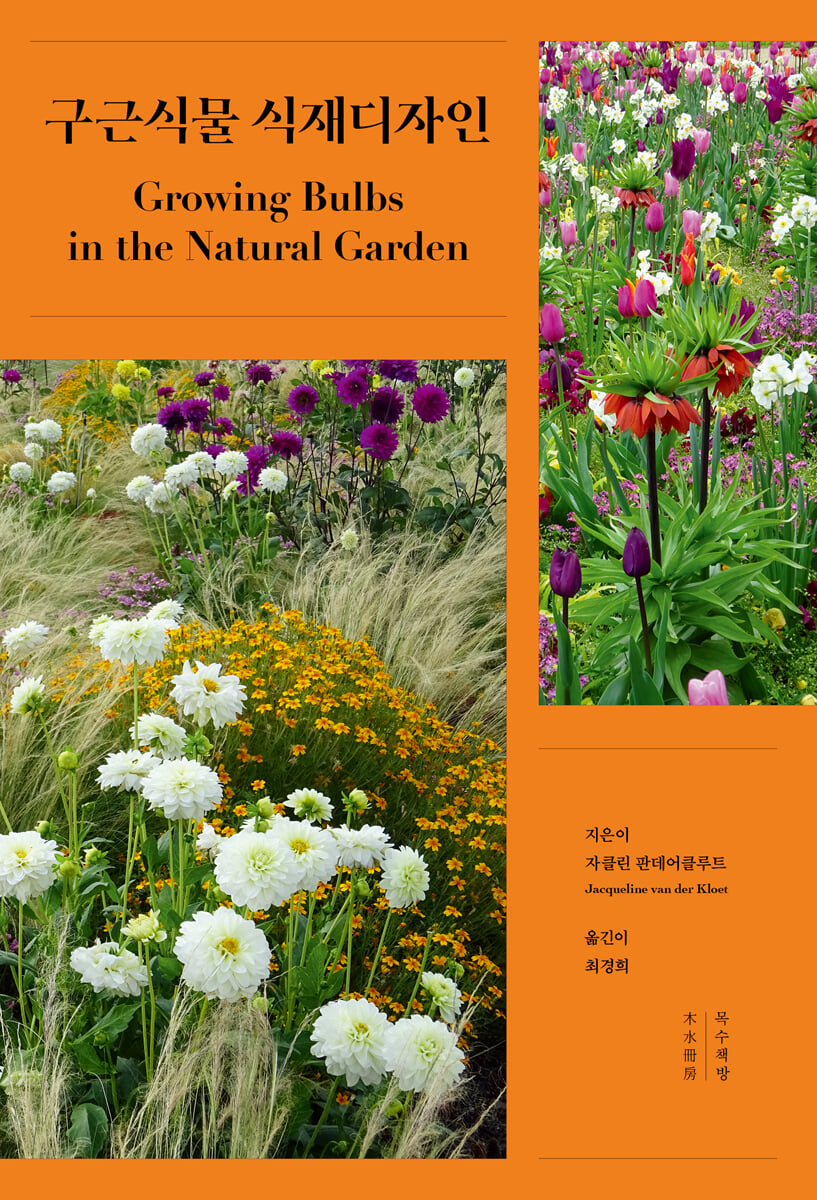
This is the book 《Bulb Planting Design》!
This guide to bulbs is a reflection of the long experience of a world-renowned bulb plant designer who has brought a natural yet magical style to gardens.
This book provides information on bulb plants that grow throughout the year in the order of their blooming, and it also provides helpful information on types of bulb plants, planting methods, useful tools, color combinations, and seasonal planting combinations that go well with various perennials.
This guide to bulbs is a reflection of the long experience of a world-renowned bulb plant designer who has brought a natural yet magical style to gardens.
This book provides information on bulb plants that grow throughout the year in the order of their blooming, and it also provides helpful information on types of bulb plants, planting methods, useful tools, color combinations, and seasonal planting combinations that go well with various perennials.
- You can preview some of the book's contents.
Preview
index
Introduction
Chapter 1 Basic Information
A History of Bulbs | What Are Flowering Bulbs? | Too Much Work? | Bulbs for Beginners 1 | Bulbs for Beginners 2 | Planting Tools | Colors | White | Gray and Gray-Green | Blue and Turquoise | Blue is My Favorite | Green and Lilac | Yellow | Orange | Who Wants Orange? | Pink and Red | Purple and Violet | Bulbs for Enthusiasts 1 | Bulbs for Enthusiasts 2
Chapter 2: Preparing Ingredients
Planning and Planting | Traditional or Modern? | For Effortless Results | Perennial Bulbs | Perennial Tulips for Flower Beds | The Best Perennial Tulips | Bulbs for Lawns | Great Companions for February | Great Companions for March and April | Great Companions for May | Fall-Flowering Bulbs
Chapter 3: Bulbs You Can Plant Anywhere
Potted Planting | Spring Balcony Planting | Summer Balcony Planting | Which Bulbs Where? | Number Per Square Meter | Fence Flower Beds | Bulbs for Green Roofs | Bulbs for Bees | Perennial Summer-Flowering Bulbs | Bulbs for Cut Flowers
Chapter 4: Bulb Planting Design Cases from Around the World
Keukenhof | Floriade 2022 | Germany | Clumber Park (UK) | Lurie Garden (USA) | Yokohama New Port Central Plaza (Japan)
Chapter 5 My Favorite Bulbs
Spring-Flowering Bulbs | Summer-Flowering Bulbs | Fall-Flowering Bulbs
supplement
Tulip Taxonomy | Daffodil Taxonomy
Translator's Note
List of plants
Chapter 1 Basic Information
A History of Bulbs | What Are Flowering Bulbs? | Too Much Work? | Bulbs for Beginners 1 | Bulbs for Beginners 2 | Planting Tools | Colors | White | Gray and Gray-Green | Blue and Turquoise | Blue is My Favorite | Green and Lilac | Yellow | Orange | Who Wants Orange? | Pink and Red | Purple and Violet | Bulbs for Enthusiasts 1 | Bulbs for Enthusiasts 2
Chapter 2: Preparing Ingredients
Planning and Planting | Traditional or Modern? | For Effortless Results | Perennial Bulbs | Perennial Tulips for Flower Beds | The Best Perennial Tulips | Bulbs for Lawns | Great Companions for February | Great Companions for March and April | Great Companions for May | Fall-Flowering Bulbs
Chapter 3: Bulbs You Can Plant Anywhere
Potted Planting | Spring Balcony Planting | Summer Balcony Planting | Which Bulbs Where? | Number Per Square Meter | Fence Flower Beds | Bulbs for Green Roofs | Bulbs for Bees | Perennial Summer-Flowering Bulbs | Bulbs for Cut Flowers
Chapter 4: Bulb Planting Design Cases from Around the World
Keukenhof | Floriade 2022 | Germany | Clumber Park (UK) | Lurie Garden (USA) | Yokohama New Port Central Plaza (Japan)
Chapter 5 My Favorite Bulbs
Spring-Flowering Bulbs | Summer-Flowering Bulbs | Fall-Flowering Bulbs
supplement
Tulip Taxonomy | Daffodil Taxonomy
Translator's Note
List of plants
Into the book
The term 'bulb' is a general term for not only the 'true flower bulb', such as a tulip or daffodil, but also the corm, root tuber, rhizome, and tuber.
To reduce confusion, the term 'geophytes' might be more appropriate, meaning 'plants with nutrient storage organs underground'.
However, for convenience, let's just use the term 'bulb'.
'True bulbs' are usually globose, but in some cases the underground part that will become the future flower may be more elongated.
The buds that will become future flowers are already hidden in the center of the bulb, and can be seen when the bulb is cut in half.
It is surrounded by 'scales', which are enlarged white leaves that resemble onions.
These scale leaves store all the nutrients necessary for the growth of young shoots.
The exterior is covered with a thin, brown, papery film that protects the scale leaves and bulb.
Just as spring-flowering bulbs don't necessarily mean they're a lot of work, neither do fall- or winter-flowering bulbs, such as colchicum, cyclamen, or fall-flowering crocuses.
Only summer flowering bulbs require time and effort.
Because of its cold resistance, it must be dug up when the flowers wither.
But on the other hand, summer flowering bulbs also have great advantages.
It is said to show quick results.
If you plant summer-flowering bulbs in May, you can see flowers starting in late June.
My ideal garden is one where bulbs added later blend in well with the elegant existing plants, making it seem effortless.
A place where the appearance, height, and color of the plants are in harmony, making it look as if they had grown naturally from the beginning.
I like to plant a mix of bulbs that bloom continuously in this garden.
This will ensure a gradual flowering in the same spot, starting in early spring.
The bulbs that have finished flowering will gradually disappear among the newly emerging perennials.
The greatest effect is achieved by creating a mix of bulbs that are suitable for natural propagation or that will continue to bloom for several years.
Because once you plant it, you can enjoy it for a long time.
Tulips are picky and do not grow well in just any soil.
They also dislike soils that are always wet and peat soils that are only sandy are not good conditions either.
It can be grown in all other soil types, but if the soil is poor in nutrients, add compost, and if the soil is high in clay and has poor drainage, add sand.
Tulips hate to root in soil that is always wet.
In addition, you need at least six hours of sunlight per day.
If you just remember this fact, you're halfway there.
First of all, let's make one thing clear: when we talk about tulips here, we mean horticultural varieties.
I am not talking about the original or 'wild' tulips, which exhibit contrasting characteristics.
They are generally much stronger and less finicky.
The expression 'minimum input, maximum effect' applies even to small planting spaces.
If you plant too many species in a limited space, it becomes too crowded.
Instead of limiting yourself to two or three types of plants, you can create much more impressive effects by increasing their number.
This is also true for planting bulbous plants.
To reduce confusion, the term 'geophytes' might be more appropriate, meaning 'plants with nutrient storage organs underground'.
However, for convenience, let's just use the term 'bulb'.
'True bulbs' are usually globose, but in some cases the underground part that will become the future flower may be more elongated.
The buds that will become future flowers are already hidden in the center of the bulb, and can be seen when the bulb is cut in half.
It is surrounded by 'scales', which are enlarged white leaves that resemble onions.
These scale leaves store all the nutrients necessary for the growth of young shoots.
The exterior is covered with a thin, brown, papery film that protects the scale leaves and bulb.
Just as spring-flowering bulbs don't necessarily mean they're a lot of work, neither do fall- or winter-flowering bulbs, such as colchicum, cyclamen, or fall-flowering crocuses.
Only summer flowering bulbs require time and effort.
Because of its cold resistance, it must be dug up when the flowers wither.
But on the other hand, summer flowering bulbs also have great advantages.
It is said to show quick results.
If you plant summer-flowering bulbs in May, you can see flowers starting in late June.
My ideal garden is one where bulbs added later blend in well with the elegant existing plants, making it seem effortless.
A place where the appearance, height, and color of the plants are in harmony, making it look as if they had grown naturally from the beginning.
I like to plant a mix of bulbs that bloom continuously in this garden.
This will ensure a gradual flowering in the same spot, starting in early spring.
The bulbs that have finished flowering will gradually disappear among the newly emerging perennials.
The greatest effect is achieved by creating a mix of bulbs that are suitable for natural propagation or that will continue to bloom for several years.
Because once you plant it, you can enjoy it for a long time.
Tulips are picky and do not grow well in just any soil.
They also dislike soils that are always wet and peat soils that are only sandy are not good conditions either.
It can be grown in all other soil types, but if the soil is poor in nutrients, add compost, and if the soil is high in clay and has poor drainage, add sand.
Tulips hate to root in soil that is always wet.
In addition, you need at least six hours of sunlight per day.
If you just remember this fact, you're halfway there.
First of all, let's make one thing clear: when we talk about tulips here, we mean horticultural varieties.
I am not talking about the original or 'wild' tulips, which exhibit contrasting characteristics.
They are generally much stronger and less finicky.
The expression 'minimum input, maximum effect' applies even to small planting spaces.
If you plant too many species in a limited space, it becomes too crowded.
Instead of limiting yourself to two or three types of plants, you can create much more impressive effects by increasing their number.
This is also true for planting bulbous plants.
--- From the text
Publisher's Review
Why Bulbs Are Essential in Your Garden
For gardeners, bulbs are a welcome and welcome sign of spring, a time of eager anticipation all winter.
Because, while the garden soil has not yet awakened from its winter sleep, it vigorously sprouts light green buds and unfolds beautiful, luscious petals.
However, surprisingly, not many people who are interested in gardening know much about bulb plants.
Most people only know a few species of spring-flowering bulbs, such as tulips or daffodils, and often have little information about the types of bulbs, how to plant them, or how to combine them to create a more unique and beautiful garden.
This book is a faithful guide for these people.
Jacqueline van der Kloot, a Dutch native who became interested in bulbs early on and experimented with them, becoming a world-renowned bulb planting expert, says that the main purpose of this book is to “show why bulbs are so essential.”
It emphasizes that bulbs are not just one-time plants that decorate the garden only in spring, but are essential and useful garden plants that add character to a wide forest edge, a small flower bed, and even a potted plant on a veranda, creating the atmosphere desired by gardeners in all seasons.
For beautiful and natural bulb planting
The bulbs featured in this book are presented in the order in which they bloom from spring through fall, making it a helpful resource for those planning their annual gardening with bulbs in mind.
For those who have never planted bulbs before, this list of relatively easy-to-grow bulbs is for those who are new to bulbs, and for those who are more interested in bulbs that require a little more care and preparation but are worth the effort. It also includes advice on good planting tools and harmonious color combinations, making it a great resource for those just getting started with bulbs.
Chapters 2 and 3 outline some things to keep in mind when planning your bulb plantings.
In particular, the author provides detailed guidance on planting bulb plants that “produce natural, effortless results.”
The author emphasizes that the most natural and beautiful results can be achieved when bulbs are grown interspersed with perennials, and suggests the possibility of plant combinations using various companion plants depending on the season.
Many people think that bulbs are a lot of work because they have to be planted and dug up every year, but the author also devotes a lot of space to information about perennial bulbs that can be left in the ground after flowering and will naturally reproduce on their own.
With countless new bulb varieties emerging each year, another strength of this book is that it covers long-lived, hardy, and naturally reproducing bulbs, as proven by the author's extensive experience.
Bulbs can be planted in a variety of places to change the atmosphere, such as under tall trees in the forest, in small flower beds, on lawns, on fences, rooftops, in flower pots, and on balconies.
The book also contains technical information on planting bulbs, including how to use them in different locations, as well as where, how much, and how deep to plant them.
Chapter 4 introduces global projects in which the author participated as a bulb planting designer, including Keukenhof Gardens in the Netherlands, the international horticultural exhibition 'Floriade 2022' in the Netherlands, various projects in Germany, Clumber Park in the UK, Lurie Garden in the US, and Yokohama New Port Central Square in Japan.
In the final chapter, the author recommends a variety of bulb plants, his favorites, in order of flowering, and provides key information to help readers discover a variety of attractive bulb plants.
As an appendix, we have compiled a classification of representative bulb plants, tulips and daffodils, for Korean readers.
The numerous varieties and blooming seasons of tulips and daffodils will help you understand them.
For gardeners, bulbs are a welcome and welcome sign of spring, a time of eager anticipation all winter.
Because, while the garden soil has not yet awakened from its winter sleep, it vigorously sprouts light green buds and unfolds beautiful, luscious petals.
However, surprisingly, not many people who are interested in gardening know much about bulb plants.
Most people only know a few species of spring-flowering bulbs, such as tulips or daffodils, and often have little information about the types of bulbs, how to plant them, or how to combine them to create a more unique and beautiful garden.
This book is a faithful guide for these people.
Jacqueline van der Kloot, a Dutch native who became interested in bulbs early on and experimented with them, becoming a world-renowned bulb planting expert, says that the main purpose of this book is to “show why bulbs are so essential.”
It emphasizes that bulbs are not just one-time plants that decorate the garden only in spring, but are essential and useful garden plants that add character to a wide forest edge, a small flower bed, and even a potted plant on a veranda, creating the atmosphere desired by gardeners in all seasons.
For beautiful and natural bulb planting
The bulbs featured in this book are presented in the order in which they bloom from spring through fall, making it a helpful resource for those planning their annual gardening with bulbs in mind.
For those who have never planted bulbs before, this list of relatively easy-to-grow bulbs is for those who are new to bulbs, and for those who are more interested in bulbs that require a little more care and preparation but are worth the effort. It also includes advice on good planting tools and harmonious color combinations, making it a great resource for those just getting started with bulbs.
Chapters 2 and 3 outline some things to keep in mind when planning your bulb plantings.
In particular, the author provides detailed guidance on planting bulb plants that “produce natural, effortless results.”
The author emphasizes that the most natural and beautiful results can be achieved when bulbs are grown interspersed with perennials, and suggests the possibility of plant combinations using various companion plants depending on the season.
Many people think that bulbs are a lot of work because they have to be planted and dug up every year, but the author also devotes a lot of space to information about perennial bulbs that can be left in the ground after flowering and will naturally reproduce on their own.
With countless new bulb varieties emerging each year, another strength of this book is that it covers long-lived, hardy, and naturally reproducing bulbs, as proven by the author's extensive experience.
Bulbs can be planted in a variety of places to change the atmosphere, such as under tall trees in the forest, in small flower beds, on lawns, on fences, rooftops, in flower pots, and on balconies.
The book also contains technical information on planting bulbs, including how to use them in different locations, as well as where, how much, and how deep to plant them.
Chapter 4 introduces global projects in which the author participated as a bulb planting designer, including Keukenhof Gardens in the Netherlands, the international horticultural exhibition 'Floriade 2022' in the Netherlands, various projects in Germany, Clumber Park in the UK, Lurie Garden in the US, and Yokohama New Port Central Square in Japan.
In the final chapter, the author recommends a variety of bulb plants, his favorites, in order of flowering, and provides key information to help readers discover a variety of attractive bulb plants.
As an appendix, we have compiled a classification of representative bulb plants, tulips and daffodils, for Korean readers.
The numerous varieties and blooming seasons of tulips and daffodils will help you understand them.
GOODS SPECIFICS
- Date of issue: March 11, 2024
- Page count, weight, size: 294 pages | 550g | 152*223*15mm
- ISBN13: 9791188806515
- ISBN10: 1188806513
You may also like
카테고리
korean


korean

![GQ KOREA Mark (Monthly): December [2025]](http://librairie.coreenne.fr/cdn/shop/files/8ef265dbbfbf186523ed75ba7319009d.jpg?v=1765340328&width=3840)


