![[99 Gram Edition] A Man of Science and Literature](http://librairie.coreenne.fr/cdn/shop/files/d153ebb678fb0a797d0b83b09359cb67.jpg?v=1765452230&width=3840)

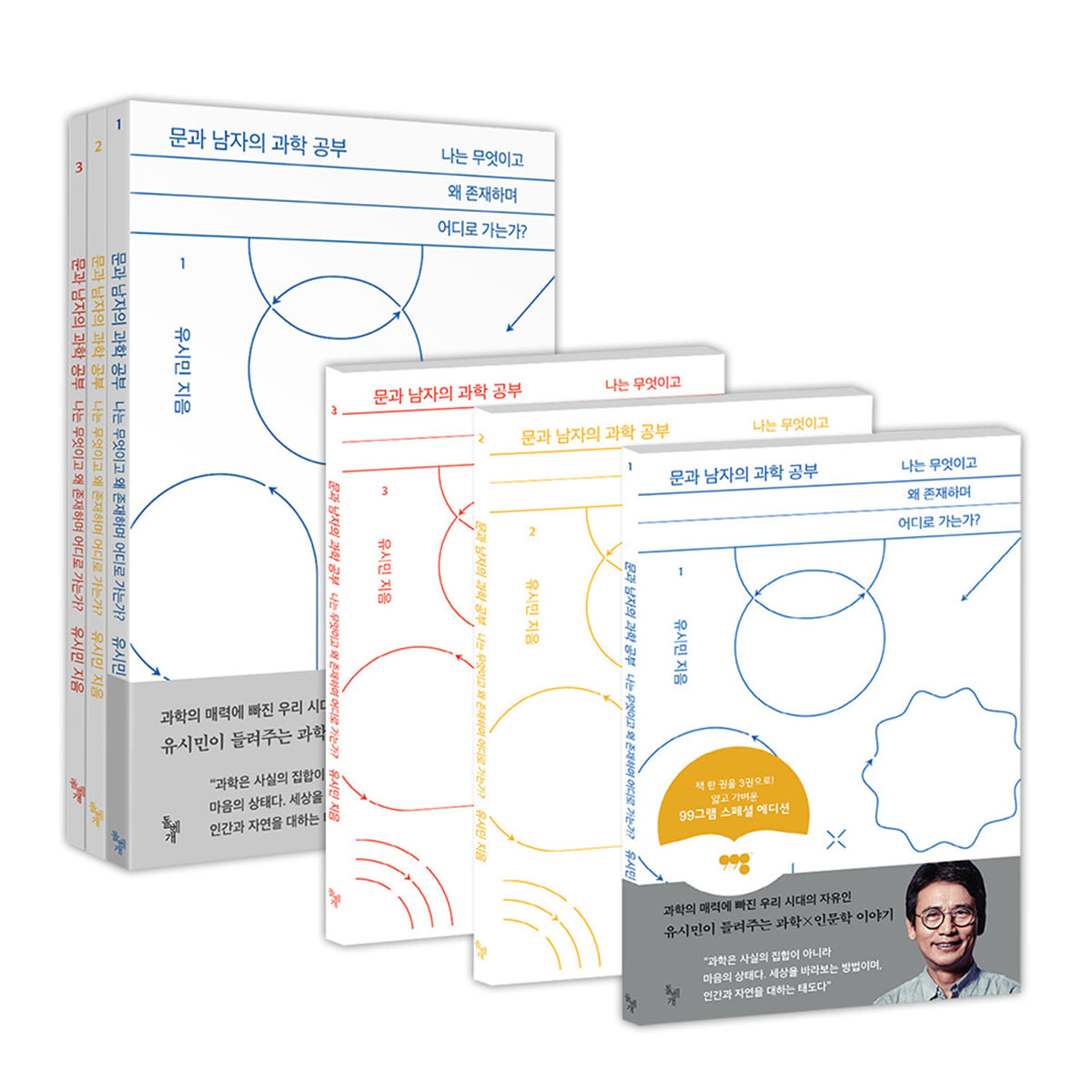
[99 Gram Edition] A Man of Science and Literature
 |
Description
Book Introduction
The truth about life and the universe, developed through scientific study, and how to understand humanity and society. “What meaning will I fill my life with?” A new paradigm of knowledge and culture, here and now An intellectual journey combining scientific reasoning and humanistic reflection. “Even liberal arts students can think scientifically!” "The Science Study of a Man of Humanities" is the first book written on science by author Yoo Si-min, who has written about humanities such as history, politics, economics, writing, and travel. For Yoo Si-min, “I selected and reinterpreted scientific theories that provided intellectual stimulation and emotional inspiration, and information that corrected my thoughts on humanity, society, and history.” The story of science and humanities intersecting and converging is fascinating. By reading science books, the author was able to acquire knowledge and information that he could not acquire through studying the humanities, and to think in various ways based on the foundation of science. So, he says with a sense of regret that in order to have a complete education, one must study science along with humanities. "If I could go back to being twenty years old again, I would study science along with the humanities." He advises that to overcome the current crisis and limitations facing the humanities, we must embrace the achievements of science. Humanities become precise through science, and science becomes deeper through humanities. *This is a special edition of 『Science Studies for Men with Humanities』 divided into three volumes. |
- You can preview some of the book's contents.
Preview
index
Introduction - The Joy of Studying Science
1.
A plausible story and a certain truth (humanities and science)
The Arrogant Fool · The Sorrow of the Fateful Literature Department · The Asymmetry of the Humanities and Sciences · The Truth About Our Home and Our Mother
2.
What am I (Brain Science)
Who Can Tell Who I Am? · The 1.4-Kilogram Universe · Neurons and Economic Laws · Phenomena and the Things-in-Themselves · Kantian Philosophy and Quantum Mechanics · Compassion and Mirror Neurons · Free Will
3.
Why We Exist (Biology)
Left, Right, Darwinism · The Alphabet of Life · Genes and the Philosophy of Life · Biological Hegemony · Sociobiology and Socialism · The Secret of Altruistic Behavior
4.
Can the simple explain the complex (chemistry)?
Chemistry is unfair · The great electron · The periodic table · Carbon, the competent middle ground · The reductionist debate · The difficulty of integration
5.
Where We Come From and Where We Go (Physics)
Uncertainty principle, relativity, My Love from the Star, quantum mechanics, Buddhism, material dialectics, entropy apocalypse
6.
Is it the language of the universe or the play of geniuses? (Mathematics)
The Beauty of Mathematics · Intellectual Play of Geniuses · I'm Not Envious
Postscript - The Reckless Challenge of One Who Barely Escaped Foolishness
Search
1.
A plausible story and a certain truth (humanities and science)
The Arrogant Fool · The Sorrow of the Fateful Literature Department · The Asymmetry of the Humanities and Sciences · The Truth About Our Home and Our Mother
2.
What am I (Brain Science)
Who Can Tell Who I Am? · The 1.4-Kilogram Universe · Neurons and Economic Laws · Phenomena and the Things-in-Themselves · Kantian Philosophy and Quantum Mechanics · Compassion and Mirror Neurons · Free Will
3.
Why We Exist (Biology)
Left, Right, Darwinism · The Alphabet of Life · Genes and the Philosophy of Life · Biological Hegemony · Sociobiology and Socialism · The Secret of Altruistic Behavior
4.
Can the simple explain the complex (chemistry)?
Chemistry is unfair · The great electron · The periodic table · Carbon, the competent middle ground · The reductionist debate · The difficulty of integration
5.
Where We Come From and Where We Go (Physics)
Uncertainty principle, relativity, My Love from the Star, quantum mechanics, Buddhism, material dialectics, entropy apocalypse
6.
Is it the language of the universe or the play of geniuses? (Mathematics)
The Beauty of Mathematics · Intellectual Play of Geniuses · I'm Not Envious
Postscript - The Reckless Challenge of One Who Barely Escaped Foolishness
Search
Detailed image

Publisher's Review
■ An exciting story of science and humanities intersecting and integrating
"The Science Study of a Man of Humanities" is the first book written on science by author Yoo Si-min, who has written about humanities such as history, politics, economics, writing, and travel.
For Yoo Si-min, “I selected and reinterpreted scientific theories that provided intellectual stimulation and emotional inspiration, and information that corrected my thoughts on humanity, society, and history.”
The story of science and humanities intersecting and converging is fascinating.
By reading science books, the author was able to acquire knowledge and information that he could not acquire through studying the humanities, and to think in various ways based on the foundation of science.
So, he says with a sense of regret that in order to have a complete education, one must study science along with humanities.
"If I could go back to being twenty years old again, I would study science along with the humanities." He advises that to overcome the current crisis and limitations facing the humanities, we must embrace the achievements of science.
Humanities become precise through science, and science becomes deeper through humanities.
■ The reason for organizing it in the order of brain science → biology → chemistry → physics → mathematics
Because knowing about oneself is the fundamental purpose of the humanities, brain science can serve as a familiar path to science for readers who wish to begin studying science.
By exploring the material conditions of the "self," neuroscience can scientifically answer the question, "What am I?" and this can serve as a starting point for elucidating the long-standing question in humanities, "Who am I?"
Interest in 'me' leads to curiosity about other life phenomena, and leads to interest in biology, which elucidates the meaning of life's existence ("why do we exist?").
When you realize that life is composed of and functions as a variety of substances, you will want to study chemistry, which deals with the smallest units of matter: atoms, molecules, and elementary particles.
After that, I want to move on to physics, which explains the movement of matter, and after studying quantum mechanics, I become curious about cosmology.
Finally, mathematics, the 'language of the universe' and the 'play of geniuses', concludes the story.
Author Yoo Si-min meticulously structured and arranged the content, taking into account the reader's interests and the connection between the fields, in introducing scientific fields.
Even readers who are not familiar with science can continue reading without losing interest until the end.
■ Expanding the meaning and limitations of humanities such as economics, philosophy, oriental classics, and social sciences through scientific theory
"The Humanities Man's Science Study" is a book about science, but it's quite enjoyable to read the story of how the author, who has studied the humanities for a long time, connects it with science.
This book's highlight is its ability to offer a fresh understanding and reflection on the meaning of humanities discourse through scientific theory, demonstrating how science expands the horizons of the humanities, and the author's innovative and original ideas.
For example, the scientific validity of Mencius's compassion is explained through the brain's mirror neurons, and the failure of socialism is explained through sociobiology.
Understanding Kant's philosophy from the perspective of quantum mechanics, or interpreting the law of diminishing marginal utility in economics as not a "law" but simply the way brain neurons work, is an astonishingly comprehensive thought that only the author could conceive.
The author connects and combines the humanities and sciences, including economics, philosophy, Eastern classics, and social sciences, to expand the meaning and limitations of the humanities, along with the diverse explanatory possibilities of science.
"The Science Study of a Man of Humanities" is the first book written on science by author Yoo Si-min, who has written about humanities such as history, politics, economics, writing, and travel.
For Yoo Si-min, “I selected and reinterpreted scientific theories that provided intellectual stimulation and emotional inspiration, and information that corrected my thoughts on humanity, society, and history.”
The story of science and humanities intersecting and converging is fascinating.
By reading science books, the author was able to acquire knowledge and information that he could not acquire through studying the humanities, and to think in various ways based on the foundation of science.
So, he says with a sense of regret that in order to have a complete education, one must study science along with humanities.
"If I could go back to being twenty years old again, I would study science along with the humanities." He advises that to overcome the current crisis and limitations facing the humanities, we must embrace the achievements of science.
Humanities become precise through science, and science becomes deeper through humanities.
■ The reason for organizing it in the order of brain science → biology → chemistry → physics → mathematics
Because knowing about oneself is the fundamental purpose of the humanities, brain science can serve as a familiar path to science for readers who wish to begin studying science.
By exploring the material conditions of the "self," neuroscience can scientifically answer the question, "What am I?" and this can serve as a starting point for elucidating the long-standing question in humanities, "Who am I?"
Interest in 'me' leads to curiosity about other life phenomena, and leads to interest in biology, which elucidates the meaning of life's existence ("why do we exist?").
When you realize that life is composed of and functions as a variety of substances, you will want to study chemistry, which deals with the smallest units of matter: atoms, molecules, and elementary particles.
After that, I want to move on to physics, which explains the movement of matter, and after studying quantum mechanics, I become curious about cosmology.
Finally, mathematics, the 'language of the universe' and the 'play of geniuses', concludes the story.
Author Yoo Si-min meticulously structured and arranged the content, taking into account the reader's interests and the connection between the fields, in introducing scientific fields.
Even readers who are not familiar with science can continue reading without losing interest until the end.
■ Expanding the meaning and limitations of humanities such as economics, philosophy, oriental classics, and social sciences through scientific theory
"The Humanities Man's Science Study" is a book about science, but it's quite enjoyable to read the story of how the author, who has studied the humanities for a long time, connects it with science.
This book's highlight is its ability to offer a fresh understanding and reflection on the meaning of humanities discourse through scientific theory, demonstrating how science expands the horizons of the humanities, and the author's innovative and original ideas.
For example, the scientific validity of Mencius's compassion is explained through the brain's mirror neurons, and the failure of socialism is explained through sociobiology.
Understanding Kant's philosophy from the perspective of quantum mechanics, or interpreting the law of diminishing marginal utility in economics as not a "law" but simply the way brain neurons work, is an astonishingly comprehensive thought that only the author could conceive.
The author connects and combines the humanities and sciences, including economics, philosophy, Eastern classics, and social sciences, to expand the meaning and limitations of the humanities, along with the diverse explanatory possibilities of science.
GOODS SPECIFICS
- Date of issue: July 14, 2023
- Page count, weight, size: Checking page count | Checking size
- ISBN13: 9791192836232
- ISBN10: 1192836235
You may also like
카테고리
korean


korean

![GQ KOREA Mark (Monthly): December [2025]](http://librairie.coreenne.fr/cdn/shop/files/8ef265dbbfbf186523ed75ba7319009d.jpg?v=1765340328&width=3840)


