

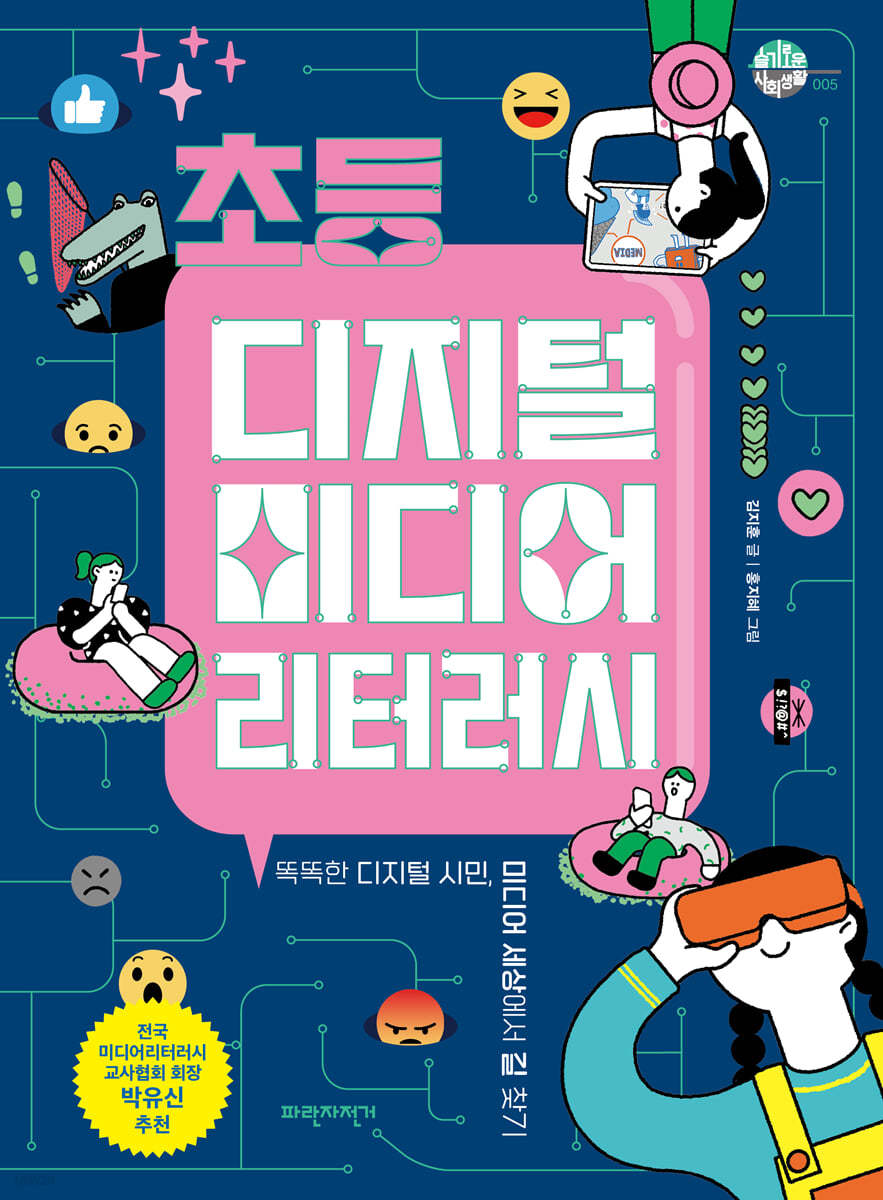
Elementary Digital Media Literacy
 |
Description
Book Introduction
A new force that turns risks into opportunities and transforms everyday life.
The development of digital technology is evolving from the new media era into the next media era.
The term "artificial intelligence," which was unfamiliar until recently, is now familiar, and the number of people using NFTs and ChatGPT is increasing exponentially.
Amid the COVID-19 pandemic, face-to-face interactions have been replaced by virtual ones, physical activity has been replaced by smartphones, and children have come to regard media as their best friends.
Generation Z, who were born after the popularization of smartphones and experienced the digital age, and Generation Alpha, who were directly influenced by the ubiquitous society that allows them to easily access any information they want, anytime, anywhere, are called the virtual generation because they consume and simultaneously create unlimited content.
The so-called "well-off generation" is exposed to malicious content, malicious information, and malicious platforms hidden in the midst of pleasure and benefit, as they are well-managed and exposed to a lot of it. As a result, sexual crimes and digital damages are increasing every year.
Moreover, indiscriminate ‘sharing’ can unknowingly turn you into a secondary perpetrator.
Digital media is the foundation of the modern world, a vast new community where people can freely travel 46,250 kilometers in a single second.
For a community to be well-maintained, communication between members as well as social infrastructure are very important.
Communication requires the ability to read, write, speak, and understand text.
It is ‘literacy’.
Children who live in today's world, transformed by digital media, and who will create the future, must acquire the ability to read, write, speak, and understand the digital media world—in other words, "digital media literacy."
《Elementary Digital Media Literacy》 serves as a guide through the labyrinthine world of digital media, opposing prejudice, hatred, and discrimination in digital media, breaking the cycle of recommendation algorithms, filtering out and blocking misinformation and fake news, and avoiding being deceived by tracking ads and consuming unnecessary items.
The author says:
“Let’s not be anxious, but rather cultivate the strength to easily cope with the media world with digital media literacy that turns risks into opportunities and leads new changes, and create a better world.”
By learning common sense and etiquette in the digital media world, and how to use various media, and setting your own standards to recognize risks and deception, I hope you will become the best "digital citizen" who can enjoy a safe, fun, and convenient life.
The development of digital technology is evolving from the new media era into the next media era.
The term "artificial intelligence," which was unfamiliar until recently, is now familiar, and the number of people using NFTs and ChatGPT is increasing exponentially.
Amid the COVID-19 pandemic, face-to-face interactions have been replaced by virtual ones, physical activity has been replaced by smartphones, and children have come to regard media as their best friends.
Generation Z, who were born after the popularization of smartphones and experienced the digital age, and Generation Alpha, who were directly influenced by the ubiquitous society that allows them to easily access any information they want, anytime, anywhere, are called the virtual generation because they consume and simultaneously create unlimited content.
The so-called "well-off generation" is exposed to malicious content, malicious information, and malicious platforms hidden in the midst of pleasure and benefit, as they are well-managed and exposed to a lot of it. As a result, sexual crimes and digital damages are increasing every year.
Moreover, indiscriminate ‘sharing’ can unknowingly turn you into a secondary perpetrator.
Digital media is the foundation of the modern world, a vast new community where people can freely travel 46,250 kilometers in a single second.
For a community to be well-maintained, communication between members as well as social infrastructure are very important.
Communication requires the ability to read, write, speak, and understand text.
It is ‘literacy’.
Children who live in today's world, transformed by digital media, and who will create the future, must acquire the ability to read, write, speak, and understand the digital media world—in other words, "digital media literacy."
《Elementary Digital Media Literacy》 serves as a guide through the labyrinthine world of digital media, opposing prejudice, hatred, and discrimination in digital media, breaking the cycle of recommendation algorithms, filtering out and blocking misinformation and fake news, and avoiding being deceived by tracking ads and consuming unnecessary items.
The author says:
“Let’s not be anxious, but rather cultivate the strength to easily cope with the media world with digital media literacy that turns risks into opportunities and leads new changes, and create a better world.”
By learning common sense and etiquette in the digital media world, and how to use various media, and setting your own standards to recognize risks and deception, I hope you will become the best "digital citizen" who can enjoy a safe, fun, and convenient life.
- You can preview some of the book's contents.
Preview
index
Recommendation: A solid and smart digital media map
Author's Note: To the Best Digital Citizen
1.
Welcome to the world of media
This is the media world we live in.
The world of essential media
The world of media you need to learn and understand
I'm a Digital Citizen: Fact-Checking Articles
2.
Exploring the world of media
Explore the news
Explore YouTube
Explore online communities
Explore social media
◆ I'm a Digital Citizen: Let's Create an Article, Gatekeeping
3.
A proper look at the media world
Misconceptions about the media
I'm being fooled by the media
Prejudice and hate in the media
The ever-increasing number of crimes in the media
◆ I'm a Digital Citizen: Creating My Own Criteria for Selecting Good Content
4.
How to avoid getting lost in the media world
Literacy and Digital Citizenship
Smart Digital Citizen
Safe Digital Citizens
Responsible Digital Citizen
◆ I am also a digital citizen: -What kind of creator am I?
A new beginning in the media world
-Digital Citizen Checklist
- Digital citizenship certificates are issued
Author's Note: To the Best Digital Citizen
1.
Welcome to the world of media
This is the media world we live in.
The world of essential media
The world of media you need to learn and understand
I'm a Digital Citizen: Fact-Checking Articles
2.
Exploring the world of media
Explore the news
Explore YouTube
Explore online communities
Explore social media
◆ I'm a Digital Citizen: Let's Create an Article, Gatekeeping
3.
A proper look at the media world
Misconceptions about the media
I'm being fooled by the media
Prejudice and hate in the media
The ever-increasing number of crimes in the media
◆ I'm a Digital Citizen: Creating My Own Criteria for Selecting Good Content
4.
How to avoid getting lost in the media world
Literacy and Digital Citizenship
Smart Digital Citizen
Safe Digital Citizens
Responsible Digital Citizen
◆ I am also a digital citizen: -What kind of creator am I?
A new beginning in the media world
-Digital Citizen Checklist
- Digital citizenship certificates are issued
Detailed image

Publisher's Review
Current teachers who received the Ministry of Education's media education award
A Living Digital Media Literacy Textbook
There are often unbelievable news articles about elementary school students being victims of crimes through digital media or using digital media for school violence.
These events suggest that people of all ages are being blindly exposed to the world of digital media.
However, current media education is focused on netiquette, privacy protection, and video production, and there is an urgent need for digital media literacy education that enables critical understanding and use of media.
Accordingly, the Ministry of Education has decided to “educate digital media literacy, logical thinking, and procedural problem-solving skills” in the revised 2022 curriculum.
As an elementary school teacher, author Ji-Hoon Kim develops educational materials that children can learn in an interesting way in the field of education, and consistently lectures to parents and teachers who have never received media education and are at a loss as to how to teach. This book, "Elementary Digital Media Literacy," is filled with the hopes and efforts of the author, Ji-Hoon Kim, and is a textbook and a welcome gift that is absolutely necessary for the field of education.
In recognition of his long-term efforts to think, research, and share with many people, he received the 2020 Ministry of Education Media Education Award and the Grand Prize in the Media Education Class Contest in the same year.
The author has structured the book so that children, who are in daily life but therefore even more hesitant to question, can learn step-by-step from 'background-concept-utilization-application-practice', and has refined it so that it can serve as a stepping stone for guardians who need to guide them into good lifestyle habits and help them cope with risks well, so that they can take interest and keep pace with them.
Digital media literacy is a basic knowledge and ability that not only experts but everyone living in the present must know and possess.
Therefore, we are all digital 'citizens' and we must strive to become the best digital citizens: safe, happy, and enjoyable.
I believe that Mr. Kim Ji-hoon's support will be a great help in the first step of that effort.
Smart, safe, and responsible digital citizens
Finding Your Way in the Media World
Children believe that digital media, which conveys fun and necessary information in the form of messages, is 'obviously good'.
So it's easy to enjoy and use it without overlooking the need for digital media literacy.
Accordingly, this book is divided into four chapters and explains step-by-step how to correctly read and use digital media, which is constantly developing and changing.
The first chapter explains the history of media, the necessity of media in the present and future, and the essential knowledge needed to distinguish lies and discern the truth within them.
Chapter 2 explains how to read news, YouTube, online communities, and social media, what precautions to take when using them, and the standards for critical attitudes and thinking.
Chapter 3 introduces ways to deal with deception and danger, citing examples of phishing, crimes using deepfake technology, and violence in digital media, each with its own unique characteristics. It also provides standards and methods for effectively utilizing media, avoiding the pitfalls that are useful but lurking everywhere.
Finally, we encourage responsible digital citizens to reflect on their digital footprints, emphasizing that our actions outside of the media accumulate to create who we are.
In particular, it contains useful information that children who must live as digital citizens should keep in mind throughout their lives, such as how to respect and confirm the copyrights of others in the midst of a sea of information and how to set their own standards for distinguishing good content.
Navigating the complex and dangerous, yet fun and informative, labyrinthine world of digital media requires a proper guide.
This guide to strong and smart digital media literacy contains essential digital media knowledge, how to properly watch the news and YouTube, how to communicate well with friends in online communities, how to develop a responsible influence on social media, how to filter out false and manipulated information, and how to keep yourself safe in the digital media world. You will discover yourself as a digital citizen who can check for yourself, “Am I acting properly as a digital citizen now?”
Don't think of it as a panacea!
Full of worksheets to help you review and practice
We must not hesitate in fear of the traps lurking in the media, but must move forward with the will to overcome the dangers.
If you don't use a knife because it's dangerous and scary, you can't operate on a sick person or cook delicious food.
Not everyone can become a digital citizen just by reading books, learning, and becoming familiar with them.
Because digital media literacy becomes complete when you act based on your thoughts.
You have to review and practice it consistently until it becomes a habit.
The author, who has developed teaching materials in the educational field to help children live as digital citizens, presents exciting and practical activity sheets through the corner "I am also a digital citizen."
By checking the facts in the children's newspaper articles, I examine the biases and hatred hidden within me and learn how to accurately understand the media.
By directly participating in 'gatekeeping' and creating articles appropriate to the situation, you will develop the ability to distinguish good news from bad news.
I set my own standards for distinguishing and creating good content, and I personally evaluate what kind of creator I am.
Finally, the 'Digital Citizenship Checklist' helps you plan and develop your steps as a digital citizen.
A harmonious life between online and offline
Now, you need to log out!
We trade our personal information for 'clicks' that we consider free for more than half of the day, we lose our true selves for 'likes' on social media, and we become so swayed by the number of comments and views that we confuse our online and offline selves.
Too much is worse than not enough.
No matter how good a food is, eating too much of it can cause illness.
While comments and "likes" are certainly good forms of communication, we must not forget that it is crucial to actually engage in a conversation, paying attention to the other person's facial expressions and intonation, and engaging in a deep conversation.
Practicing digital media literacy, enjoying it, and setting your own time for it will create a healthy balance between a fun and rewarding online life and a happy and vibrant offline life.
A Living Digital Media Literacy Textbook
There are often unbelievable news articles about elementary school students being victims of crimes through digital media or using digital media for school violence.
These events suggest that people of all ages are being blindly exposed to the world of digital media.
However, current media education is focused on netiquette, privacy protection, and video production, and there is an urgent need for digital media literacy education that enables critical understanding and use of media.
Accordingly, the Ministry of Education has decided to “educate digital media literacy, logical thinking, and procedural problem-solving skills” in the revised 2022 curriculum.
As an elementary school teacher, author Ji-Hoon Kim develops educational materials that children can learn in an interesting way in the field of education, and consistently lectures to parents and teachers who have never received media education and are at a loss as to how to teach. This book, "Elementary Digital Media Literacy," is filled with the hopes and efforts of the author, Ji-Hoon Kim, and is a textbook and a welcome gift that is absolutely necessary for the field of education.
In recognition of his long-term efforts to think, research, and share with many people, he received the 2020 Ministry of Education Media Education Award and the Grand Prize in the Media Education Class Contest in the same year.
The author has structured the book so that children, who are in daily life but therefore even more hesitant to question, can learn step-by-step from 'background-concept-utilization-application-practice', and has refined it so that it can serve as a stepping stone for guardians who need to guide them into good lifestyle habits and help them cope with risks well, so that they can take interest and keep pace with them.
Digital media literacy is a basic knowledge and ability that not only experts but everyone living in the present must know and possess.
Therefore, we are all digital 'citizens' and we must strive to become the best digital citizens: safe, happy, and enjoyable.
I believe that Mr. Kim Ji-hoon's support will be a great help in the first step of that effort.
Smart, safe, and responsible digital citizens
Finding Your Way in the Media World
Children believe that digital media, which conveys fun and necessary information in the form of messages, is 'obviously good'.
So it's easy to enjoy and use it without overlooking the need for digital media literacy.
Accordingly, this book is divided into four chapters and explains step-by-step how to correctly read and use digital media, which is constantly developing and changing.
The first chapter explains the history of media, the necessity of media in the present and future, and the essential knowledge needed to distinguish lies and discern the truth within them.
Chapter 2 explains how to read news, YouTube, online communities, and social media, what precautions to take when using them, and the standards for critical attitudes and thinking.
Chapter 3 introduces ways to deal with deception and danger, citing examples of phishing, crimes using deepfake technology, and violence in digital media, each with its own unique characteristics. It also provides standards and methods for effectively utilizing media, avoiding the pitfalls that are useful but lurking everywhere.
Finally, we encourage responsible digital citizens to reflect on their digital footprints, emphasizing that our actions outside of the media accumulate to create who we are.
In particular, it contains useful information that children who must live as digital citizens should keep in mind throughout their lives, such as how to respect and confirm the copyrights of others in the midst of a sea of information and how to set their own standards for distinguishing good content.
Navigating the complex and dangerous, yet fun and informative, labyrinthine world of digital media requires a proper guide.
This guide to strong and smart digital media literacy contains essential digital media knowledge, how to properly watch the news and YouTube, how to communicate well with friends in online communities, how to develop a responsible influence on social media, how to filter out false and manipulated information, and how to keep yourself safe in the digital media world. You will discover yourself as a digital citizen who can check for yourself, “Am I acting properly as a digital citizen now?”
Don't think of it as a panacea!
Full of worksheets to help you review and practice
We must not hesitate in fear of the traps lurking in the media, but must move forward with the will to overcome the dangers.
If you don't use a knife because it's dangerous and scary, you can't operate on a sick person or cook delicious food.
Not everyone can become a digital citizen just by reading books, learning, and becoming familiar with them.
Because digital media literacy becomes complete when you act based on your thoughts.
You have to review and practice it consistently until it becomes a habit.
The author, who has developed teaching materials in the educational field to help children live as digital citizens, presents exciting and practical activity sheets through the corner "I am also a digital citizen."
By checking the facts in the children's newspaper articles, I examine the biases and hatred hidden within me and learn how to accurately understand the media.
By directly participating in 'gatekeeping' and creating articles appropriate to the situation, you will develop the ability to distinguish good news from bad news.
I set my own standards for distinguishing and creating good content, and I personally evaluate what kind of creator I am.
Finally, the 'Digital Citizenship Checklist' helps you plan and develop your steps as a digital citizen.
A harmonious life between online and offline
Now, you need to log out!
We trade our personal information for 'clicks' that we consider free for more than half of the day, we lose our true selves for 'likes' on social media, and we become so swayed by the number of comments and views that we confuse our online and offline selves.
Too much is worse than not enough.
No matter how good a food is, eating too much of it can cause illness.
While comments and "likes" are certainly good forms of communication, we must not forget that it is crucial to actually engage in a conversation, paying attention to the other person's facial expressions and intonation, and engaging in a deep conversation.
Practicing digital media literacy, enjoying it, and setting your own time for it will create a healthy balance between a fun and rewarding online life and a happy and vibrant offline life.
GOODS SPECIFICS
- Date of issue: April 25, 2023
- Page count, weight, size: 168 pages | 388g | 165*225*11mm
- ISBN13: 9791192308333
- ISBN10: 1192308336
- KC Certification: Certification Type: Conformity Confirmation
You may also like
카테고리
korean


korean

![GQ KOREA Mark (Monthly): December [2025]](http://librairie.coreenne.fr/cdn/shop/files/8ef265dbbfbf186523ed75ba7319009d.jpg?v=1765340328&width=3840)


