

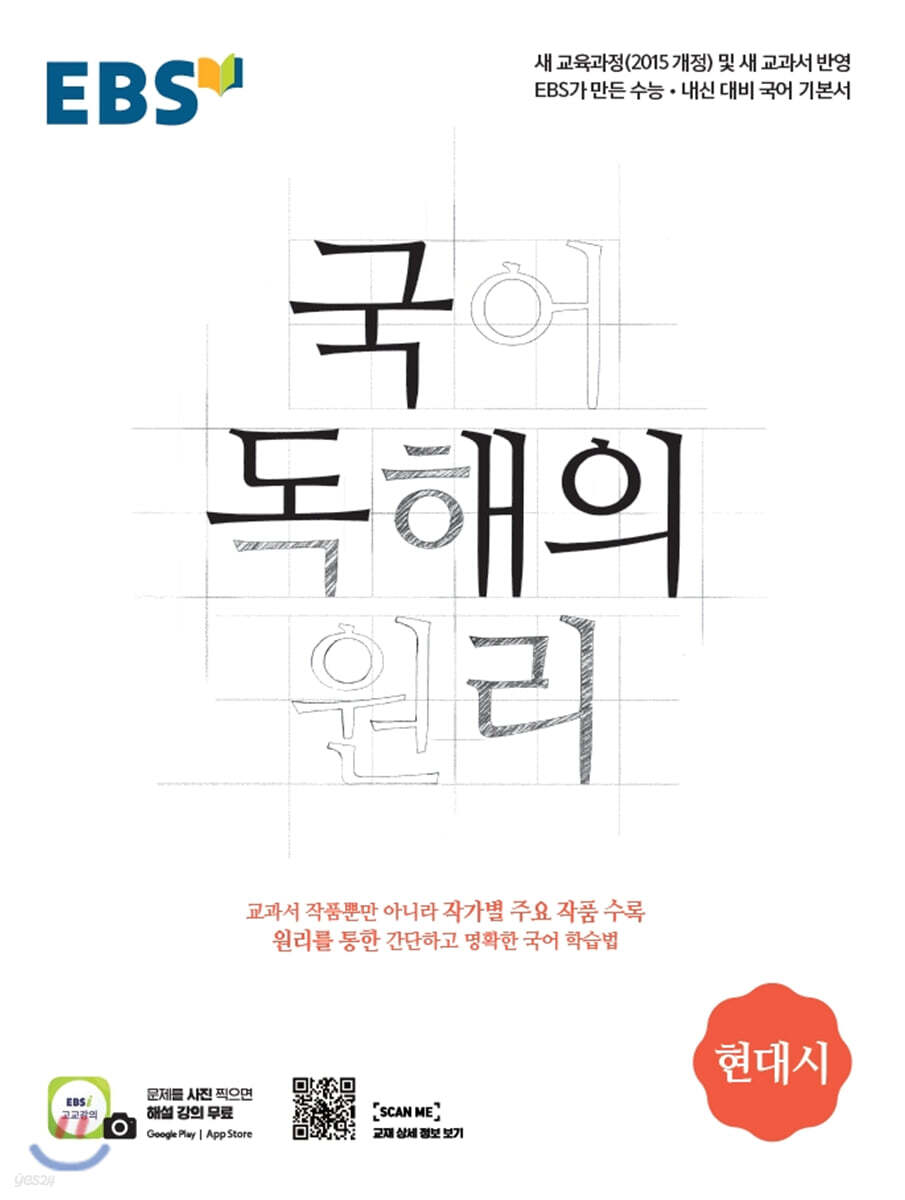
EBS Korean Reading Principles Modern Poetry
 |
Description
Book Introduction
This book summarizes methods for reading literary works and reading (non-literature) texts for prospective high school freshmen and sophomores.
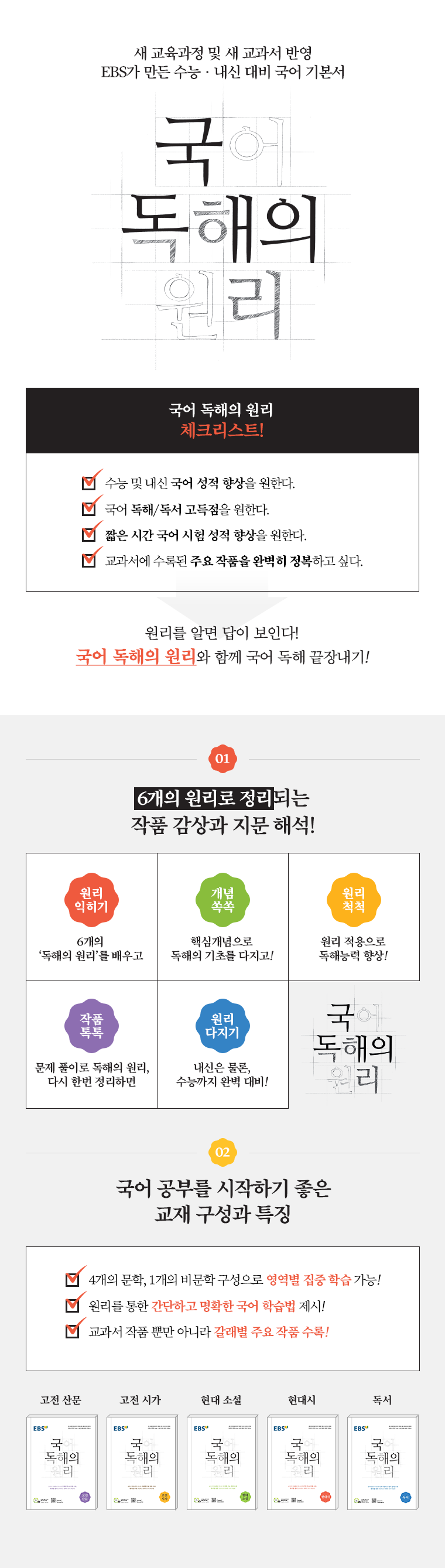
By organizing the reading method into six principles, you can learn all the elements necessary for reading works and texts at once, and it is composed of five volumes: modern poetry, modern novels, classical poetry, classical prose, and reading (non-literature), so you can focus on studying by area.
In 'Learning the Principles', you learn the principles, and in 'Strengthening the Principles', you learn by applying the principles. The step-by-step structure and detailed explanations and abundant supplementary materials are provided for each work and text, allowing for in-depth learning.
By arranging various types of questions, such as internal exam-type questions, short answer questions, descriptive questions, and CSAT-type questions, students can prepare for both internal exams and the CSAT at the same time.
By organizing the reading method into six principles, you can learn all the elements necessary for reading works and texts at once, and it is composed of five volumes: modern poetry, modern novels, classical poetry, classical prose, and reading (non-literature), so you can focus on studying by area.
In 'Learning the Principles', you learn the principles, and in 'Strengthening the Principles', you learn by applying the principles. The step-by-step structure and detailed explanations and abundant supplementary materials are provided for each work and text, allowing for in-depth learning.
By arranging various types of questions, such as internal exam-type questions, short answer questions, descriptive questions, and CSAT-type questions, students can prepare for both internal exams and the CSAT at the same time.
- You can preview some of the book's contents.
Preview
index
Part 1: Mastering the Principles of Reading
1.
Identify the speaker and audience in the work.
01.
Let's understand the speaker in the work.
02.
Let's identify the subject (audience) in the work.
2.
Understand the speaker's emotions and attitude based on the situation in the work.
01.
Let's understand the situation of the work and grasp the speaker's emotions.
02.
Let's understand the speaker's attitude toward the subject or situation.
3.
Identify the poetic language and imagery used in the work.
01.
Let's understand the meaning of the poetic language used in the work.
02.
Let's understand the imagery used in the work.
4.
Understand the poet's ideas and expressions as they appear in the work.
01.
Let's understand the poet's ideas and expressions.
02.
Let's understand the various expressions that appear in the work.
5.
Understand the work's development of themes and poetic imagery.
01.
Let's understand the way the work unfolds.
02.
Let's understand the poetic form of the work.
6.
Understand and appreciate the work by considering its communication structure and various contexts.
01.
Let's understand and appreciate the work by considering the communication structure of the poem.
02.
Let's understand and appreciate the work by considering various contexts.
Part 2: Strengthening the Principles of Reading
1.
Kang Eun-kyo ~ Kim Ki-taek
2.
Kim Nam-jo ~ Kim Chun-soo
3.
Kim Hyun-seung ~ Park Jae-sam
4.
Baek Seok ~ Shin Kyeong-rim
5.
Shin Dong-yup ~ Jang Seok-nam
6.
Jang Jeong-il ~ Hwang In-sook
1.
Identify the speaker and audience in the work.
01.
Let's understand the speaker in the work.
02.
Let's identify the subject (audience) in the work.
2.
Understand the speaker's emotions and attitude based on the situation in the work.
01.
Let's understand the situation of the work and grasp the speaker's emotions.
02.
Let's understand the speaker's attitude toward the subject or situation.
3.
Identify the poetic language and imagery used in the work.
01.
Let's understand the meaning of the poetic language used in the work.
02.
Let's understand the imagery used in the work.
4.
Understand the poet's ideas and expressions as they appear in the work.
01.
Let's understand the poet's ideas and expressions.
02.
Let's understand the various expressions that appear in the work.
5.
Understand the work's development of themes and poetic imagery.
01.
Let's understand the way the work unfolds.
02.
Let's understand the poetic form of the work.
6.
Understand and appreciate the work by considering its communication structure and various contexts.
01.
Let's understand and appreciate the work by considering the communication structure of the poem.
02.
Let's understand and appreciate the work by considering various contexts.
Part 2: Strengthening the Principles of Reading
1.
Kang Eun-kyo ~ Kim Ki-taek
2.
Kim Nam-jo ~ Kim Chun-soo
3.
Kim Hyun-seung ~ Park Jae-sam
4.
Baek Seok ~ Shin Kyeong-rim
5.
Shin Dong-yup ~ Jang Seok-nam
6.
Jang Jeong-il ~ Hwang In-sook
Detailed image
GOODS SPECIFICS
- Publication date: November 10, 2019
- Page count, weight, size: 364 pages | 948g | 227*300*13mm
- ISBN13: 9788954750950
- ISBN10: 8954750958
You may also like
카테고리
korean


korean

![GQ KOREA Mark (Monthly): December [2025]](http://librairie.coreenne.fr/cdn/shop/files/8ef265dbbfbf186523ed75ba7319009d.jpg?v=1765340328&width=3840)


